Alexei Navalny
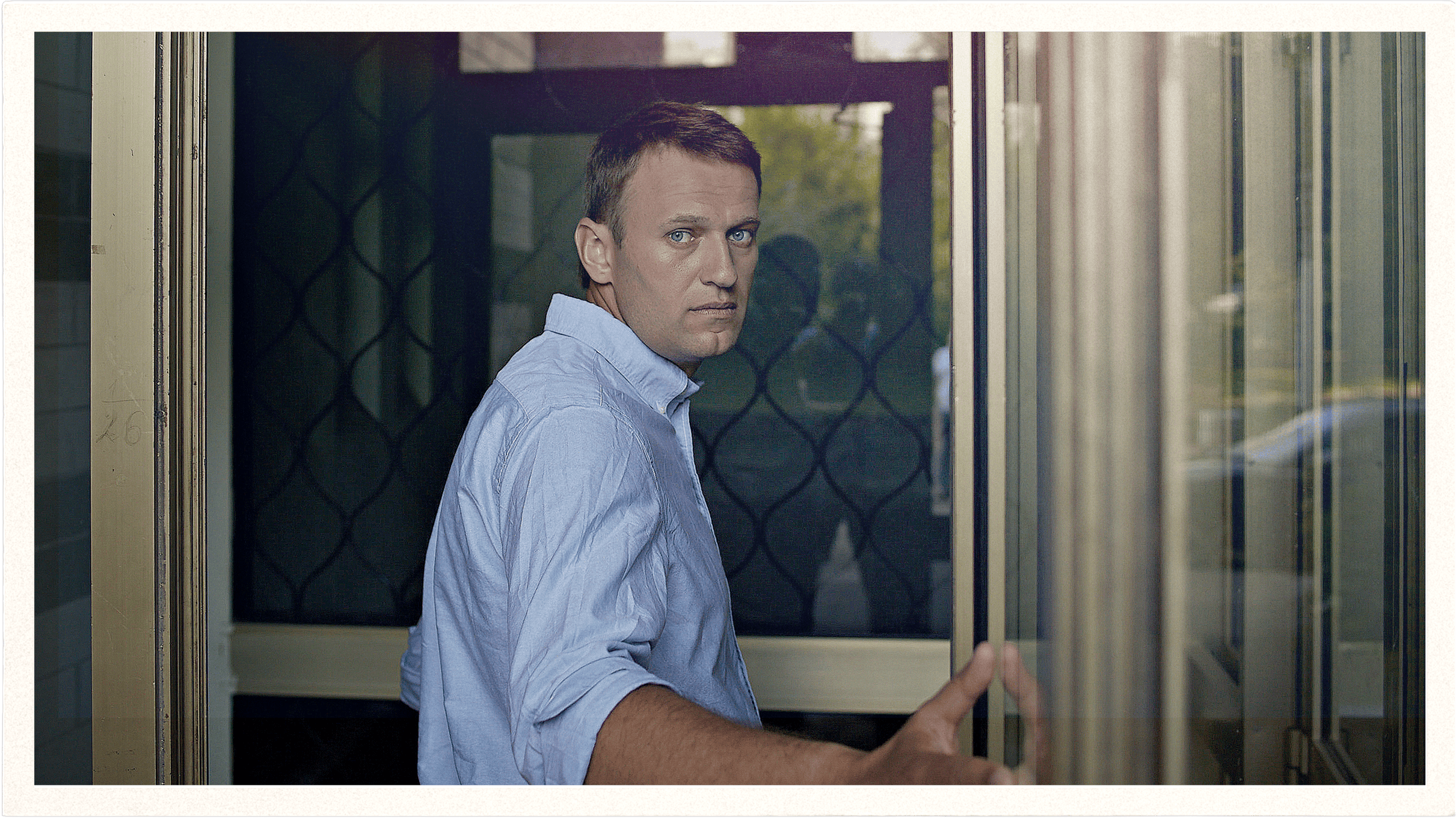
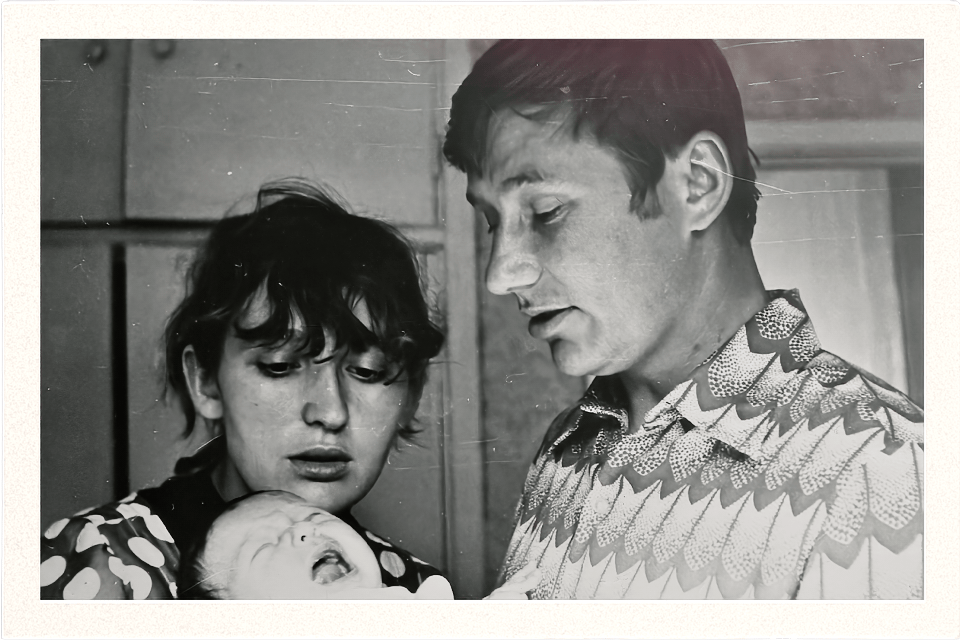
Alexei Navalny was born on June 4, 1976, into a military family. His father, Anatoly Navalny, came from the village of Zalesye near Chernobyl. His mother, Lyudmila Navalnaya, grew up in Zelenograd, graduated from the Moscow Institute of Management, and worked in the electronics industry.
Childhood
Alexei Navalny grew up moving between military towns, as his family frequently relocated. He later described them as places defined by strict rules and the absurdities of Soviet life: checkpoints, permits, military personnel — and, at the same time, a hole in the fence used to sneak in people who had not managed to get a pass. Young Alexei was often entrusted with guiding them through, a role he remembered with pride.
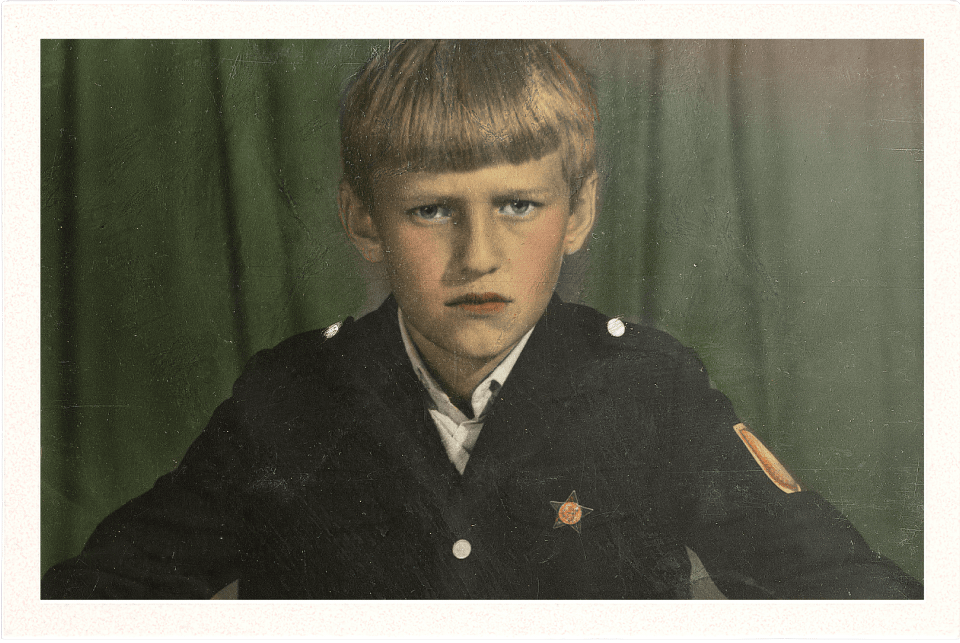
Navalny wrote that, as a child, he never had to choose which school to attend — there was only one. But he always valued education and had a strong drive to keep learning. He graduated from the law faculty of the Peoples’ Friendship University of Russia and later studied at the Financial Academy.
In 2010, he became a Yale World Fellow at Yale University. Learning remained a constant throughout his life: he studied English and French, taught himself the Python programming language, and was an avid reader.
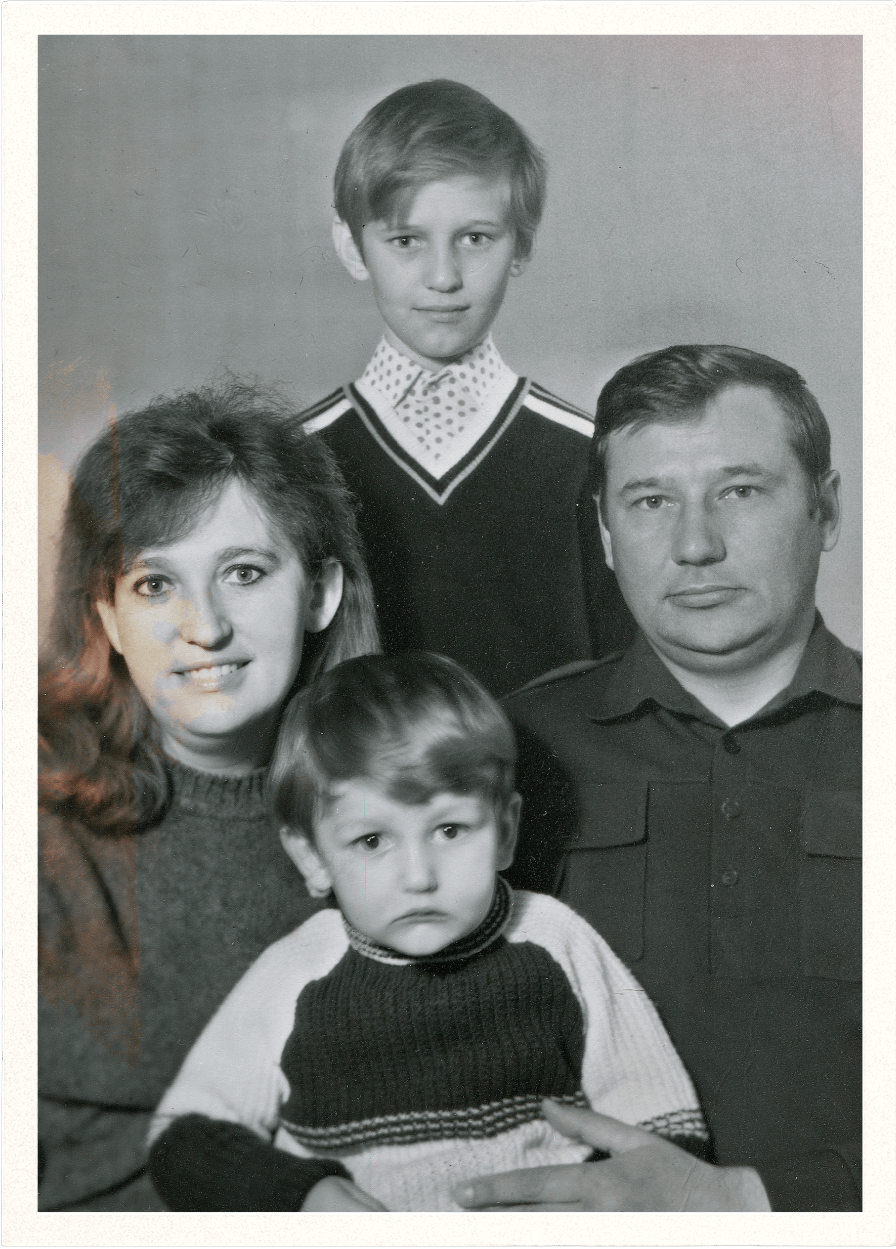
Navalny often said that his parents taught him to distinguish between the country and the state. He loved his country as the place where his people lived — fellow citizens who deserved dignity and a normal life. And he believed the state existed to serve those people, not to dominate them.
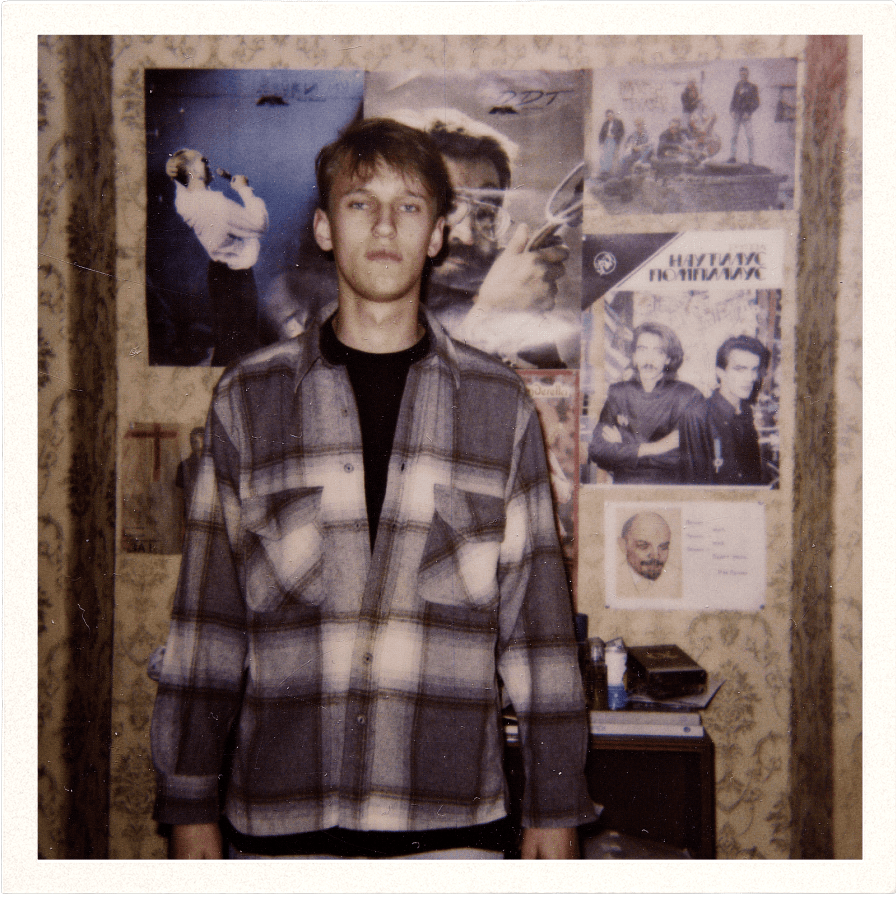
The Formative Years
Alexei Navalny was someone who could pursue many different things at once. Early in his career, he worked as a lawyer, ran businesses, continued studying, and constantly came up with new ideas and projects.
He was quick to throw himself into anything he felt mattered, and politics became one of those pursuits. He joined the Yabloko party, attended rallies, and took part in party work because, from the very beginning, he did not trust Putin and wanted to make his disagreement clear. Over time, politics occupied more and more of his life until it became its central purpose.
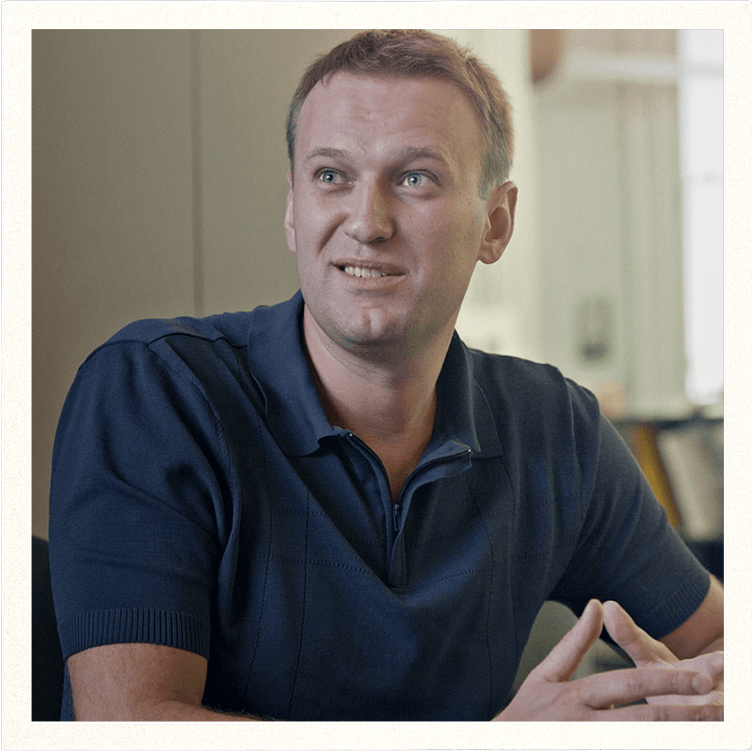
Family
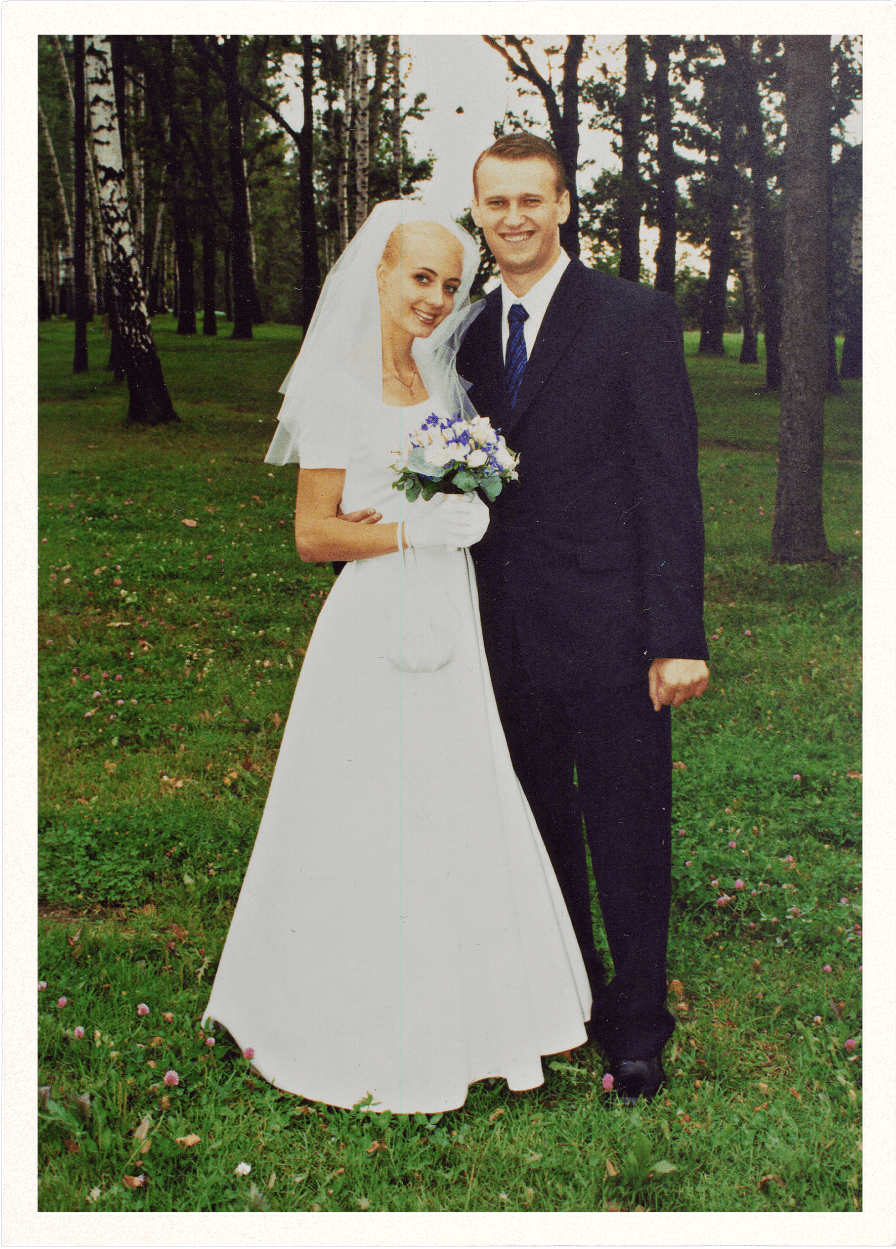
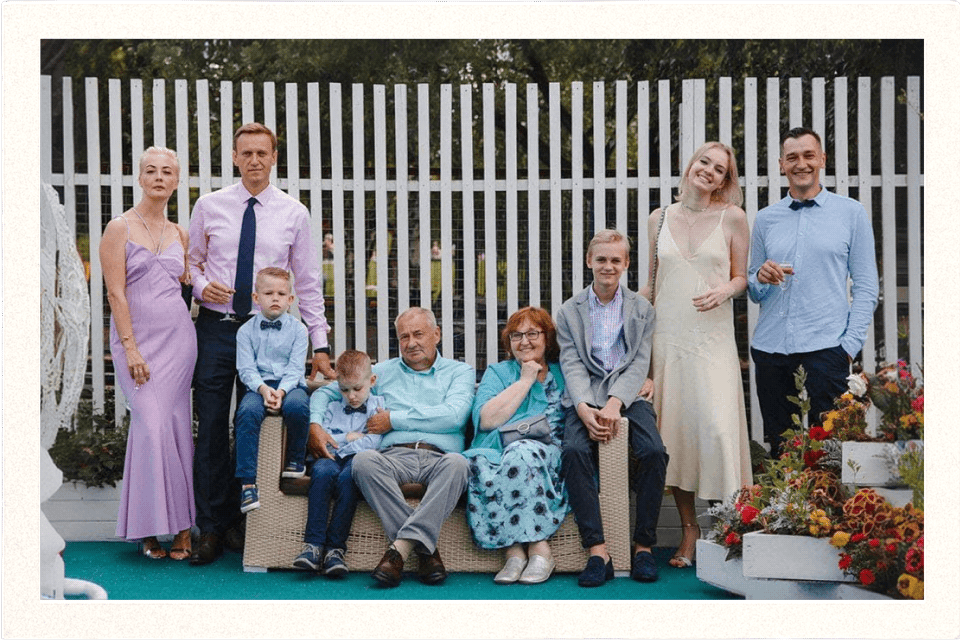
Alexei Navalny married Yulia in 2000. They met in Turkey during a sightseeing trip, exchanging smiles through the window of a tour bus. He later recalled immediately feeling that he had met the person he wanted to spend his life with. Their daughter, Dasha, was born in 2001, followed by their son, Zakhar, six years later.
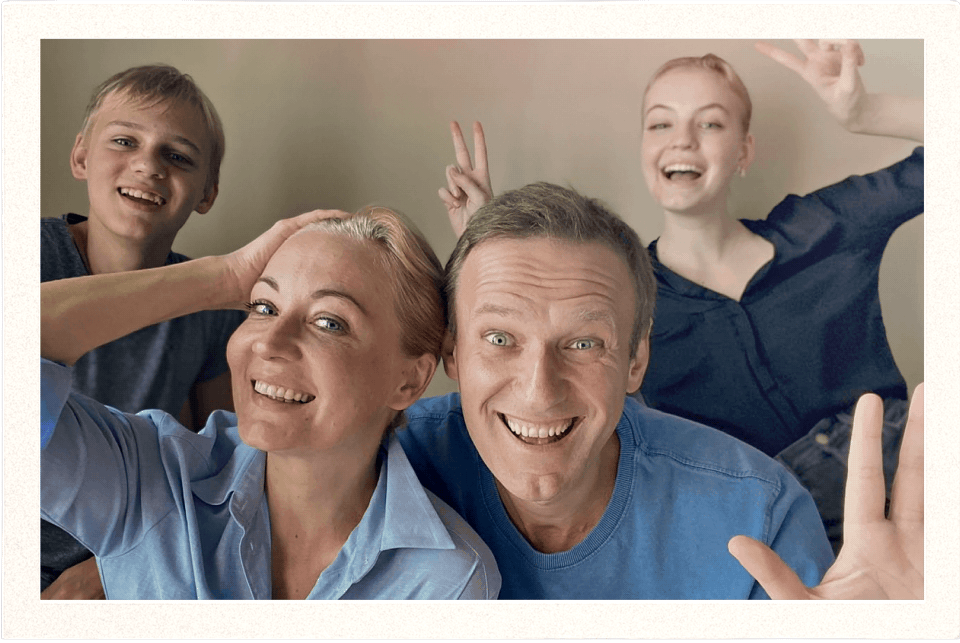
Navalny never kept his family separate from his public life. Yulia, Dasha, and Zakhar stood beside him not only at rallies, polling stations, and campaign events — they also appeared in his posts, videos, and stories: making blini together, singing in the car, joking, laughing, and sharing everyday moments. For Navalny, family and politics were never separate parts of life. They were simply his life.
Blog and Politics
The internet gave Alexei Navalny a direct line to people. He started a blog on LiveJournal, where he wrote about political news, argued, joked, asked questions, and engaged with readers in real time. He wrote with the energy of someone who had spotted a lie and refused to let it pass unnoticed.
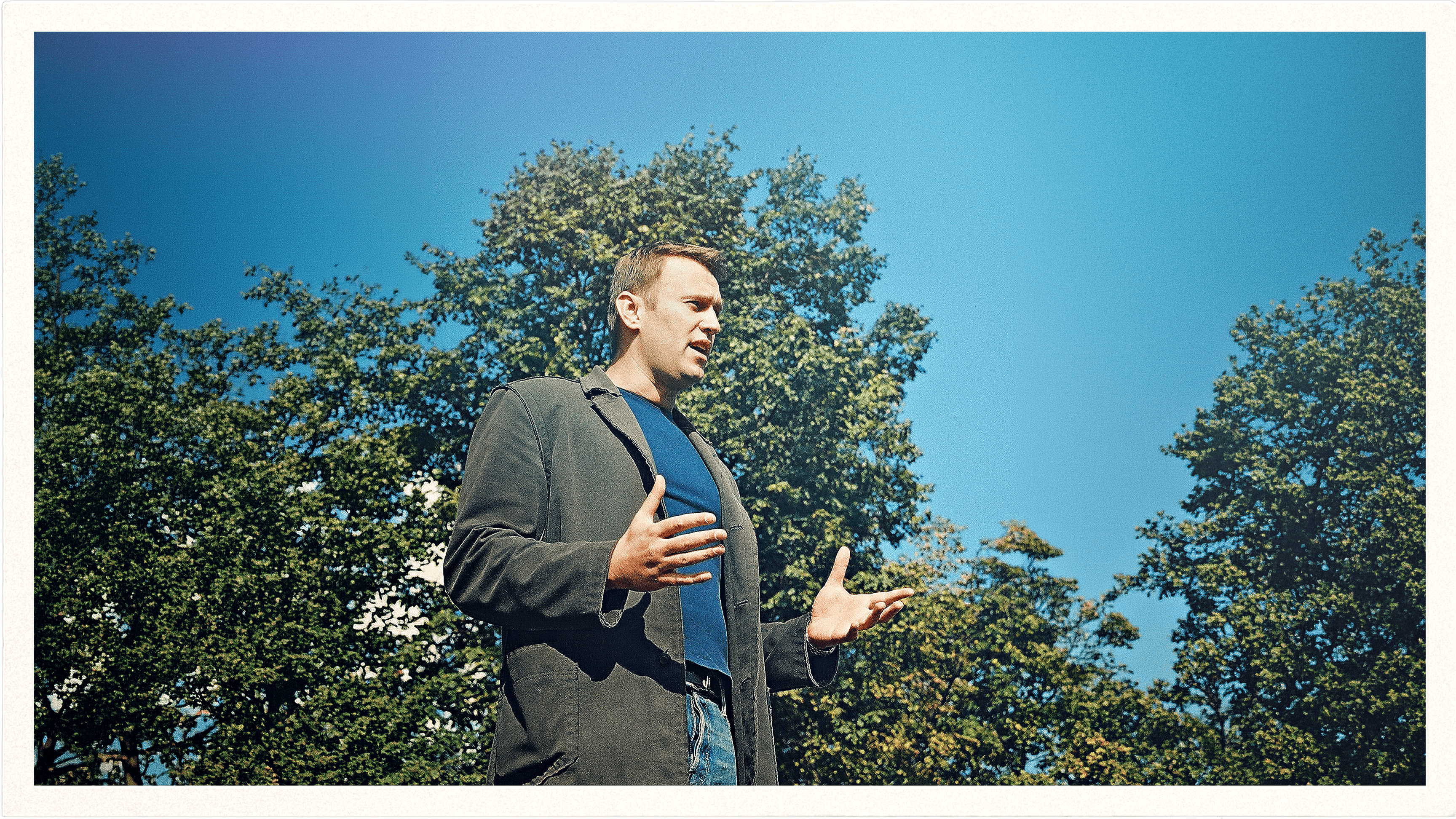
People did not read his early posts and investigations because public procurement had suddenly become exciting. They read them because Navalny had a gift for making complicated, technical subjects feel immediate and personal. Behind the dry language and bureaucracy, he revealed a simple truth: money was being stolen, people were being misled, and it did not have to stay that way.
He drew people in with his outrage, but he also gave them a sense of what could be done. Over time, supporters gathered around him — people who no longer wanted simply to follow his work, but to take part in it and act alongside him.
Fighting Corruption
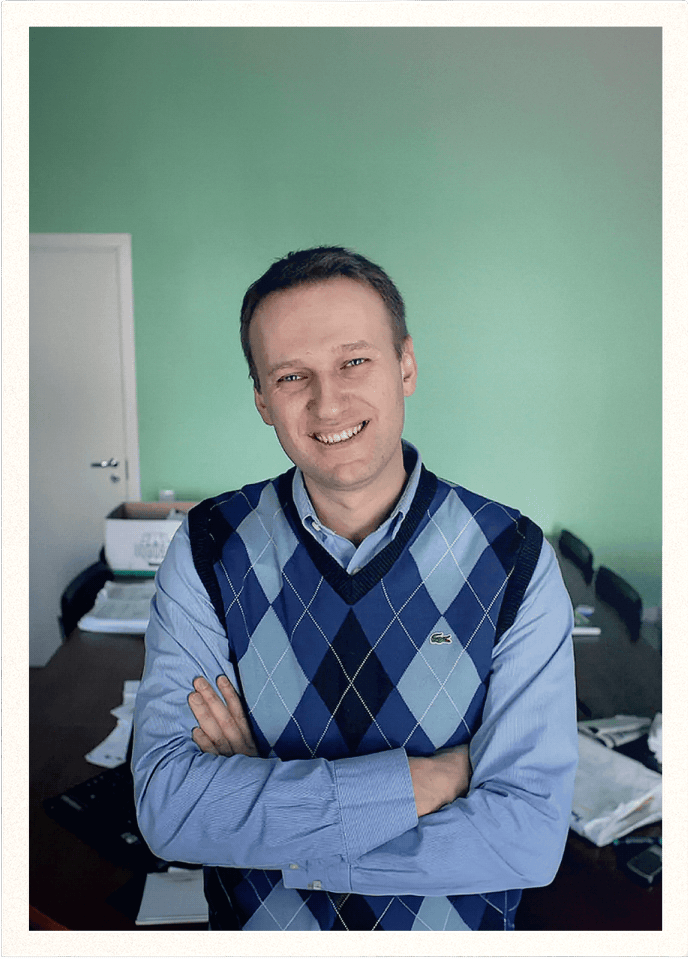
In 2010, Alexei Navalny launched RosPil, a project dedicated to investigating government procurement. It later grew into the Anti-Corruption Foundation.
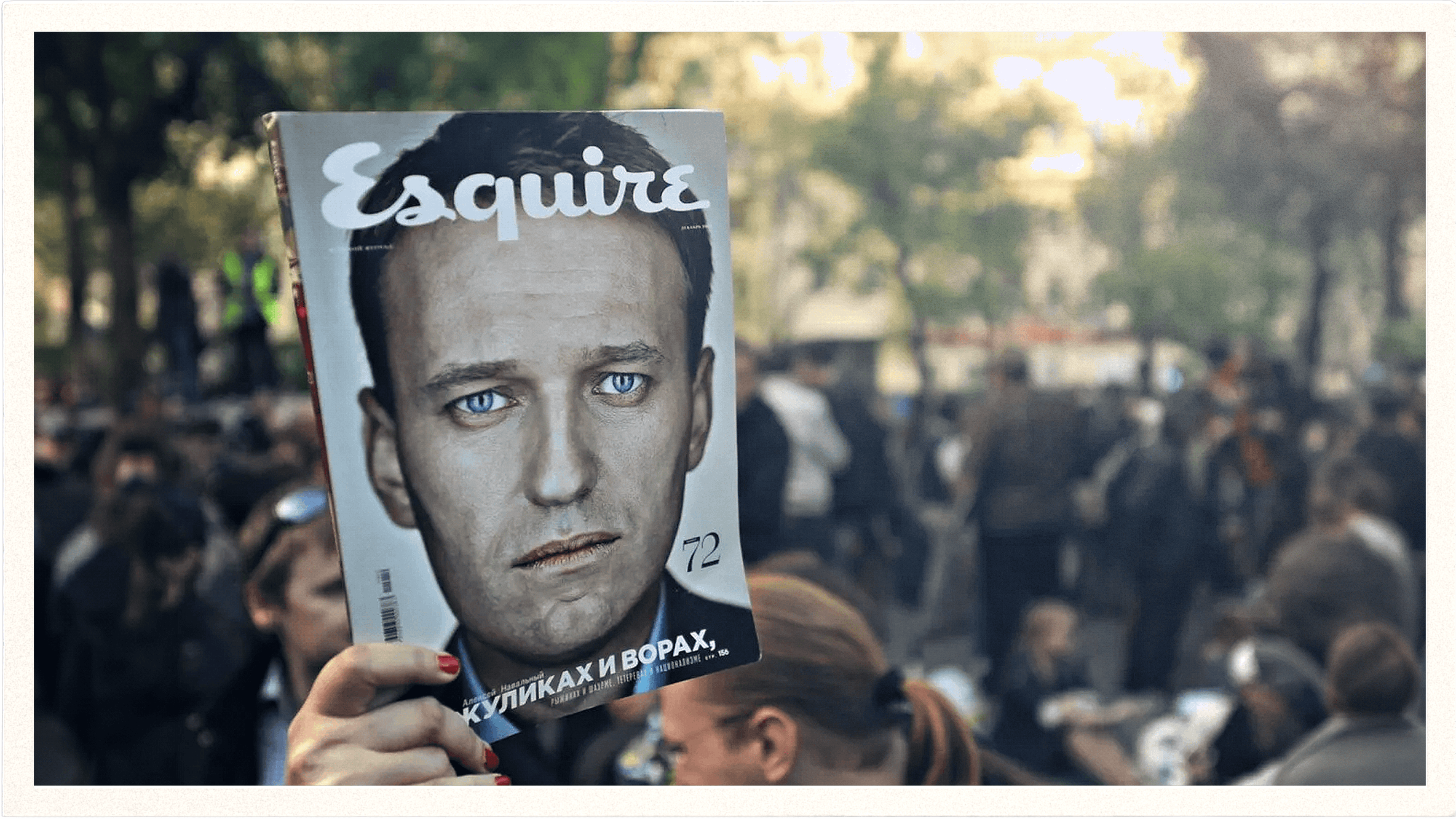
Through the ACF, Navalny and his team turned anti-corruption investigations into a sustained public effort. They investigated officials, state companies, business figures, security services, and people close to Vladimir Putin. Navalny often described it as an endless series about corruption in Russia: the team uncovered luxury estates, filmed them with drones, traced ownership records, compared assets with officials’ declared incomes, and published supporting documents. But the investigations were never just about exposing corruption. Navalny encouraged people to turn outrage into action — to protest, vote, and speak openly with those around them.
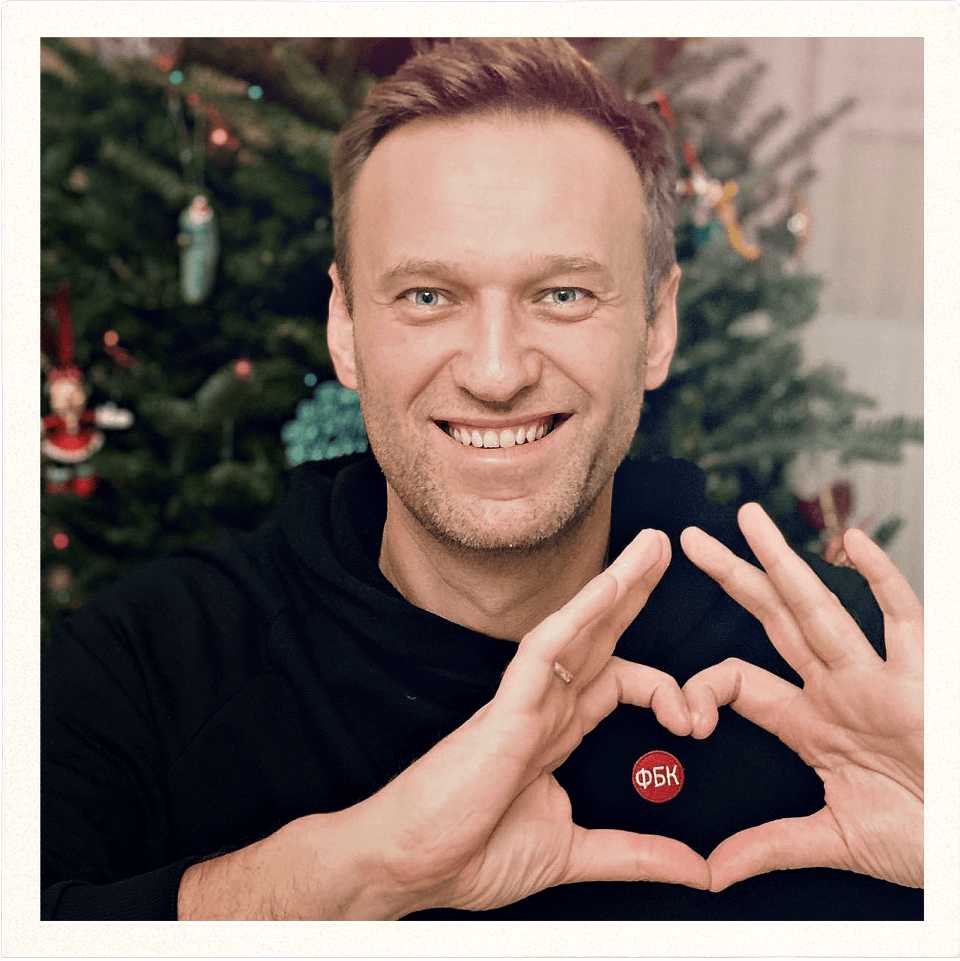
Ahead of the 2011 State Duma elections, he launched the campaign Against the Party of Crooks and Thieves, a slogan aimed at the ruling party that quickly entered public discourse and was followed by large opposition protests across the country.
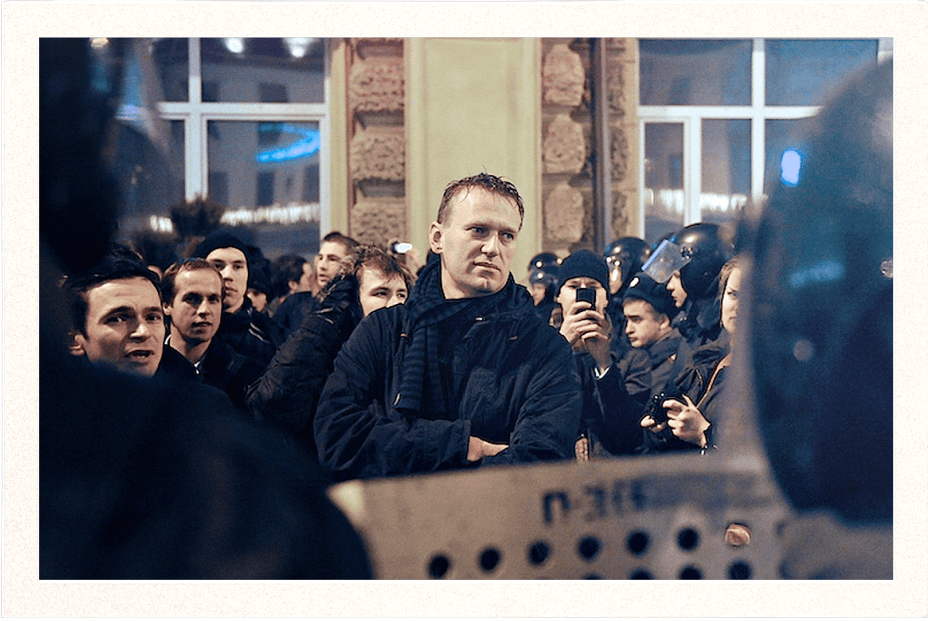
2013 Moscow Mayoral Campaign
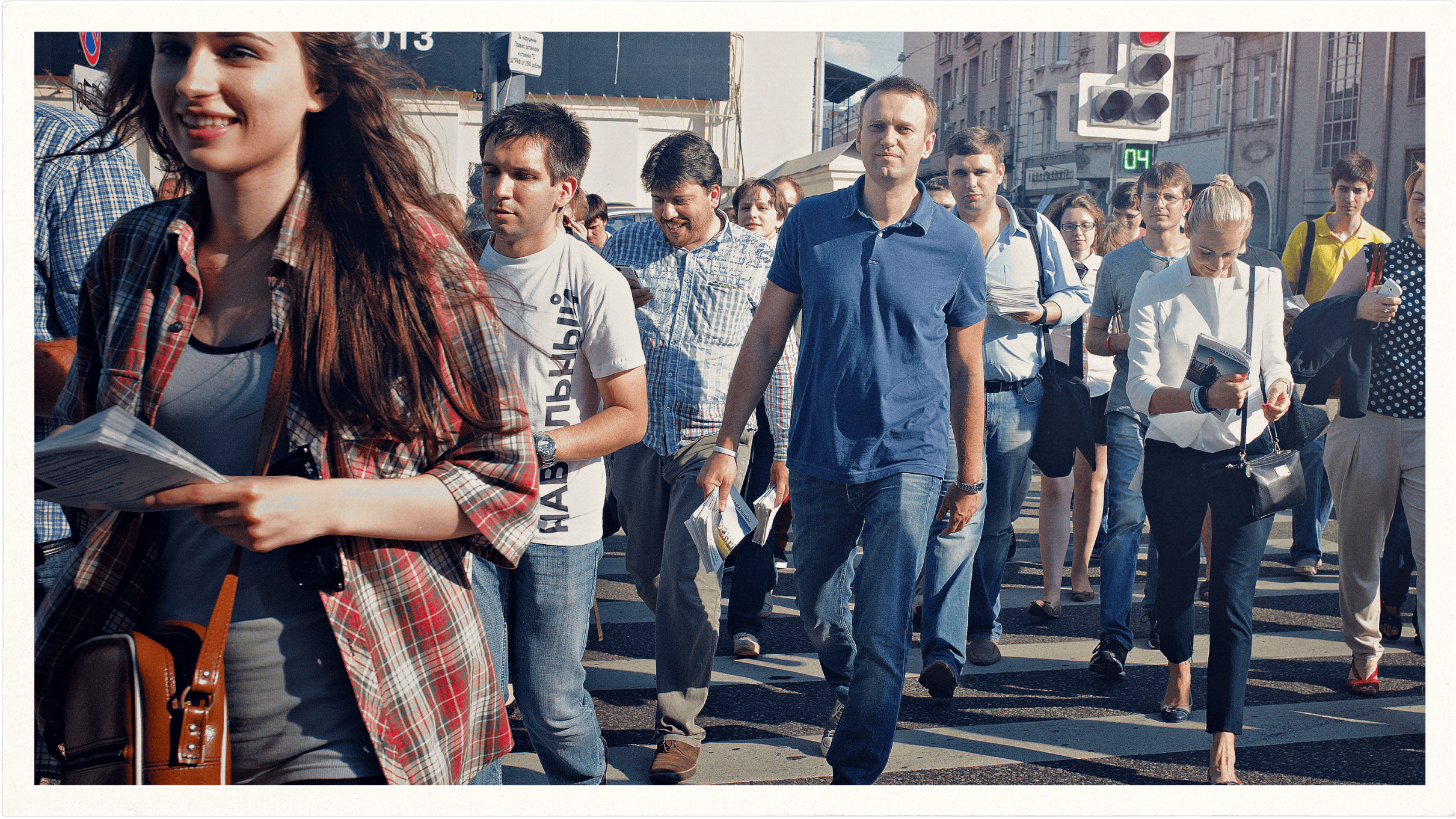
In 2013, Alexei Navalny ran for mayor of Moscow. The campaign transformed the city’s political life: volunteers filled the streets, campaign cubes appeared across Moscow, and Navalny met voters in courtyards throughout the city. He was not simply running for office — he was showing that elections could be real and that public participation could change the world around them.
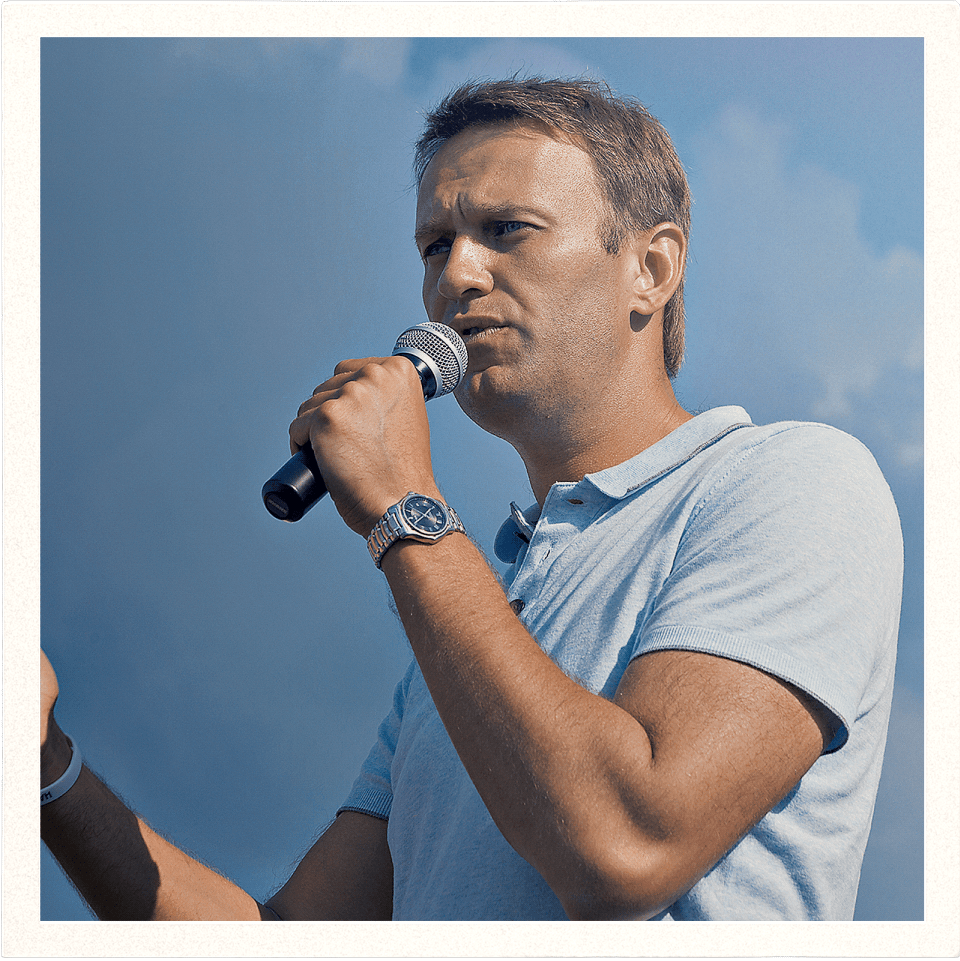
The campaign marked a turning point. Navalny went from being a well-known opposition figure to someone an entire city came to know personally. Many people already knew him through his blog, investigations, and protests, but the mayoral race brought him closer to voters. He went into neighbourhoods, spoke directly with residents, answered questions, debated, and tried to persuade people face to face. Moscow suddenly started seeing that politics could be different: not something happening on television or inside state institutions, but as a real conversation with someone who wanted to change the city.
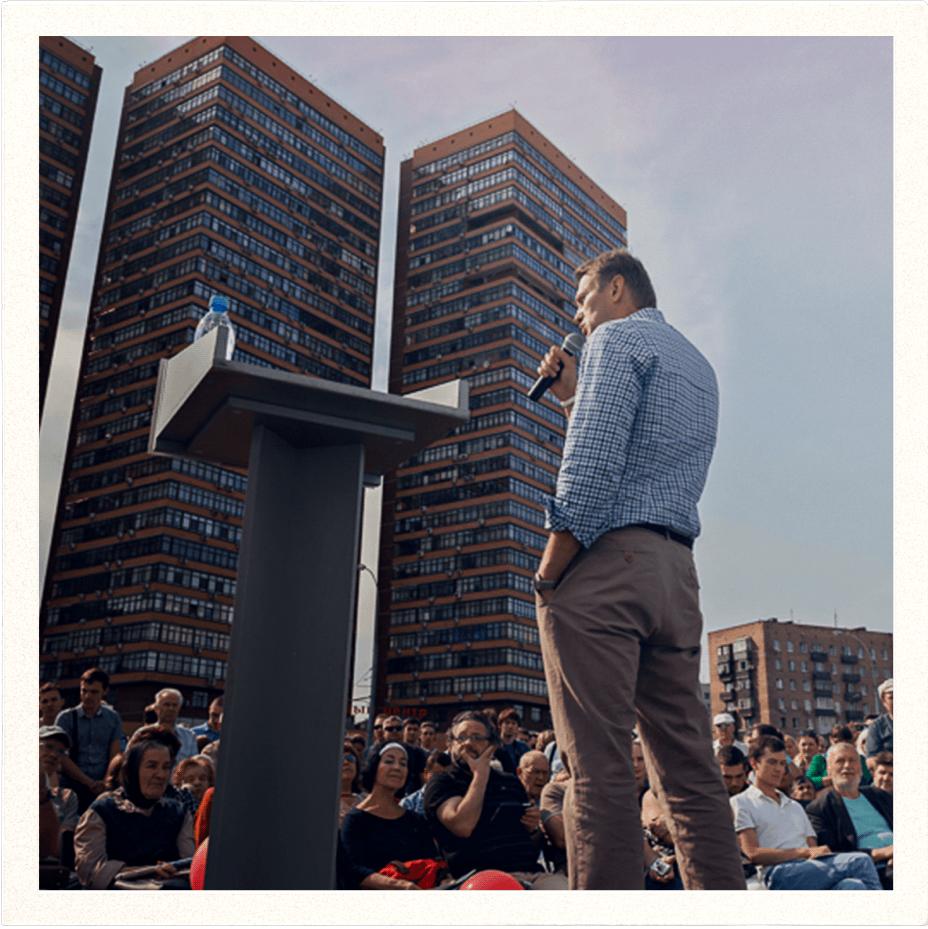
For many people, it was the first genuine political campaign of their lives. They signed up as volunteers, stood at campaign cubes, handed out leaflets, talked to neighbours, argued with relatives, donated small amounts of money, and felt — often for the first time — that their participation mattered. Only electoral fraud prevented Navalny from winning. But even the official result made one thing clear: the authorities now faced a strong, dynamic political opponent with genuine public support.
2018 Presidential Campaign
At the end of 2016, Alexei Navalny announced his intention to run for president. In early 2017, he released one of his most influential investigations — Don’t Call Him Dimon, a documentary exposing corruption linked to then–Prime Minister Dmitry Medvedev. The film quickly reached tens of millions of viewers, giving the campaign new momentum and helping trigger some of the largest protests in modern Russian history.
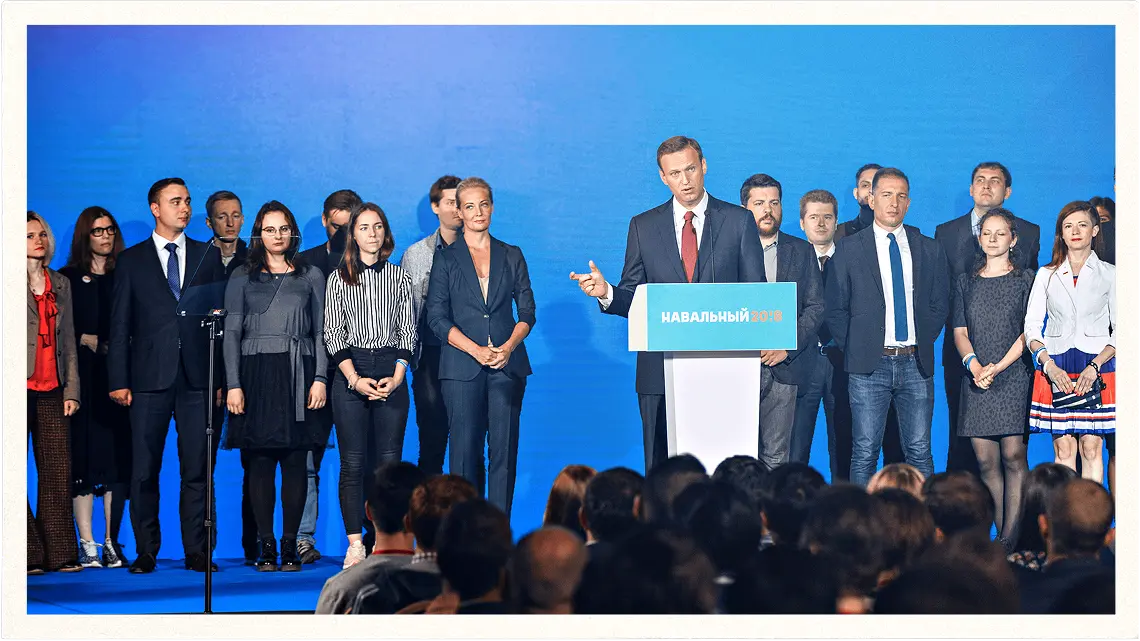
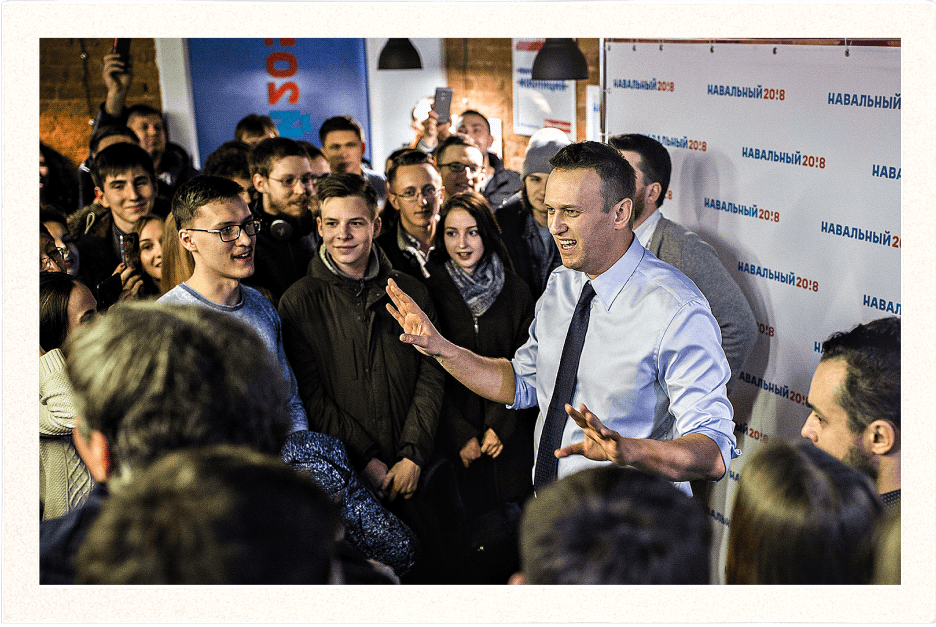
The presidential campaign soon grew beyond Moscow and became a nationwide movement. Navalny traveled across Russia, visiting dozens of cities, opening campaign headquarters, meeting voters, and speaking to people in places where national politics had long felt distant and out of reach. The regional headquarters became hubs for staff, volunteers, observers, and activists — people who, often for the first time, were taking part in politics rather than simply watching it.
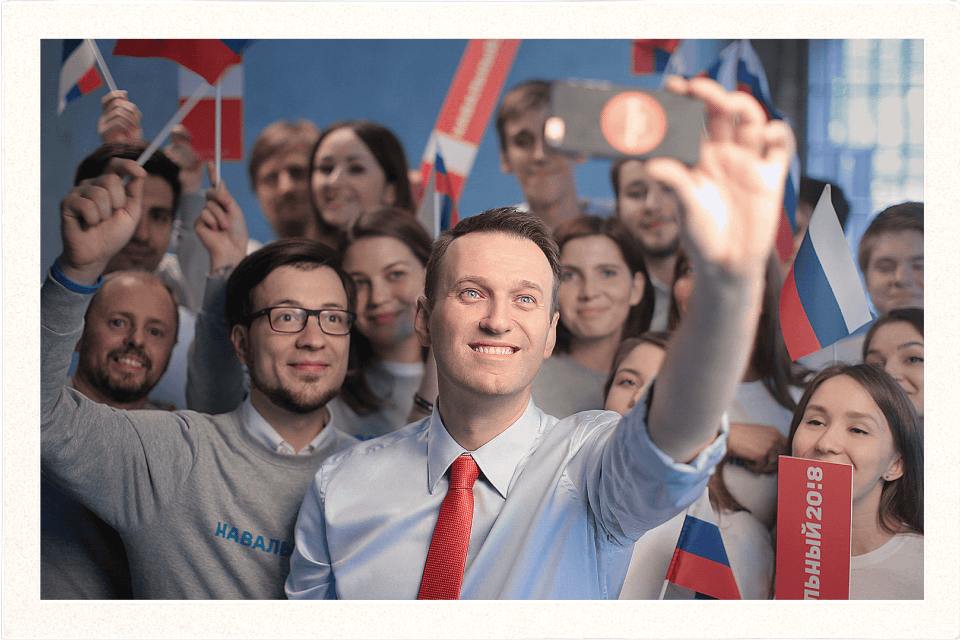
Navalny had a rare ability to inspire and unite people. He traveled the country, opening headquarters and meeting supporters, while volunteers and campaign teams organized locally and carried forward the message at the heart of his campaign: tell the truth and demand justice.
Although Navalny was ultimately barred from running, the campaign left a lasting mark. It drew an entire generation into politics and inspired thousands across Russia to become active participants in public life.
Persecution by the Authorities
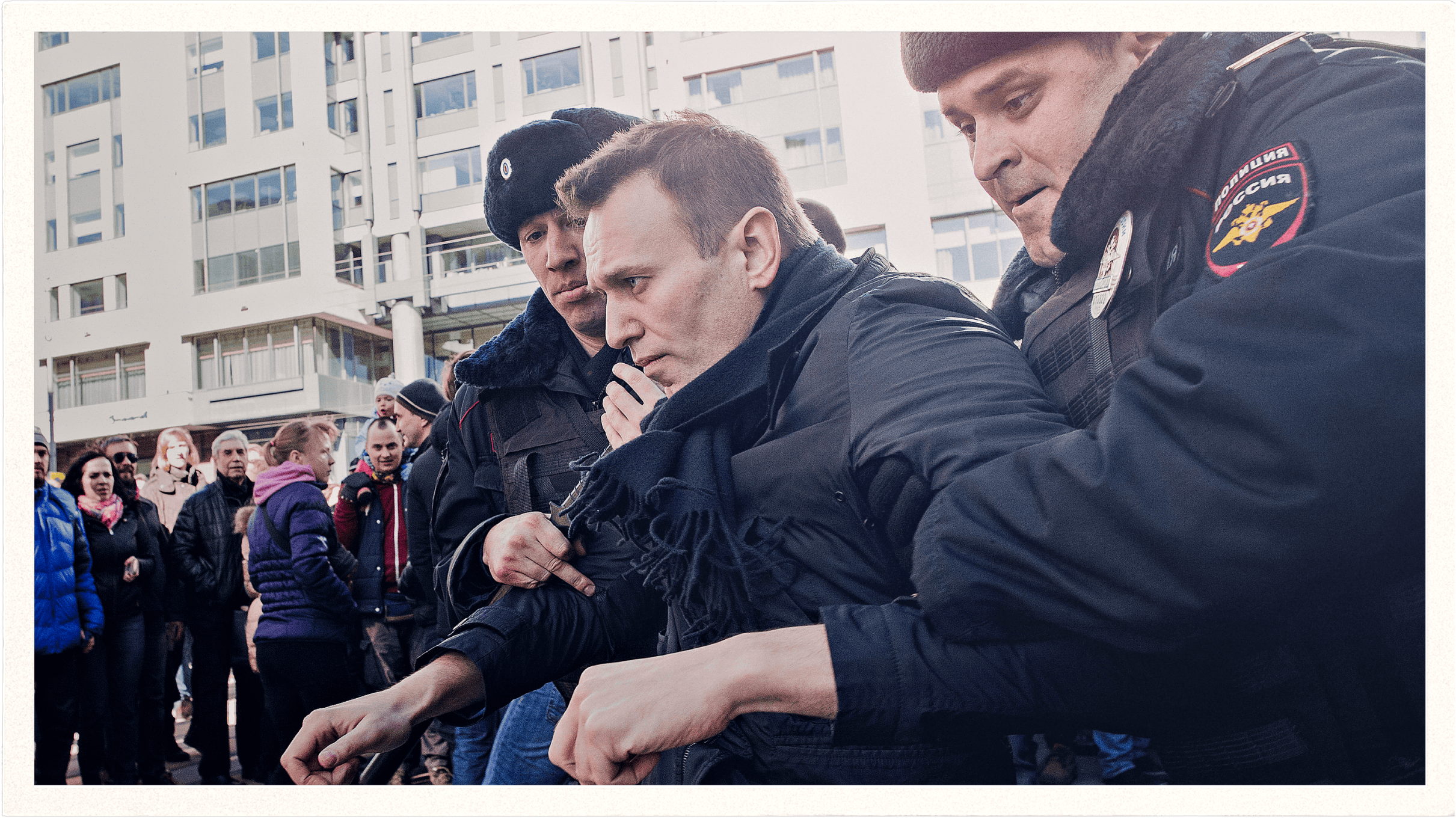
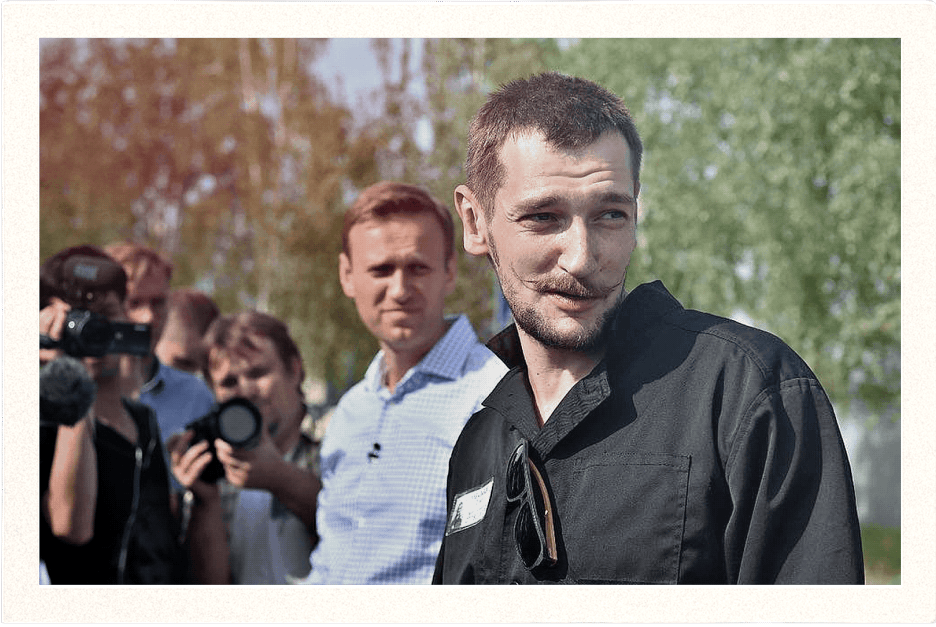
As Alexei Navalny’s influence grew, so did the pressure against him. Criminal prosecutions, arrests, raids, physical attacks, censorship, and pressure on staff, coordinators, volunteers, and even their families became part of everyday life around his movement. His brother, Oleg Navalny, was imprisoned on a fabricated case. Alexei himself was repeatedly detained and jailed. The Anti-Corruption Foundation and Navalny’s regional headquarters were eventually designated as “extremist organizations.”
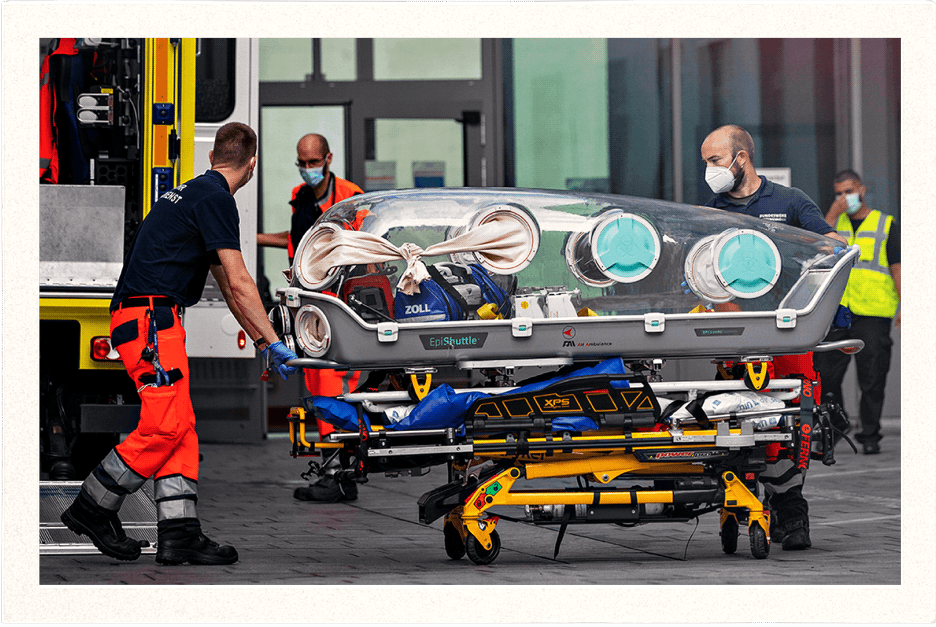
In August 2020, Navalny was flying from Tomsk to Moscow after a trip filming regional investigations when he suddenly fell seriously ill on board. The plane made an emergency landing in Omsk. The days that followed became a race against time. Yulia Navalnaya and Navalny’s supporters fought to secure his transfer from the hospital in Omsk and permission for him to receive treatment abroad.
That permission came only after intense public pressure and prolonged negotiations. Later, laboratories in several countries concluded that Navalny had been poisoned with a Novichok nerve agent.
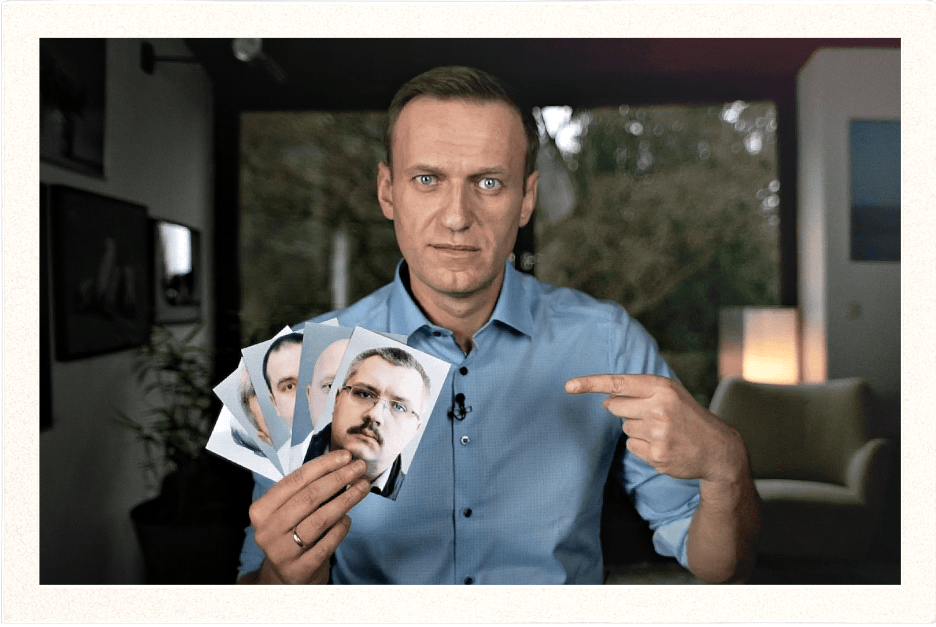
After recovering from the coma, Navalny helped expose the operation behind the attempt on his life and obtained what amounted to a confession from one of those involved. He then released what would become his most-viewed investigation: the film about Vladimir Putin’s palace.
Imprisonment
After completing his treatment, Alexei Navalny returned to Russia on January 17, 2021, and was arrested at the airport. Soon afterward, a court converted the suspended sentence in the politically motivated case against him into a prison term.
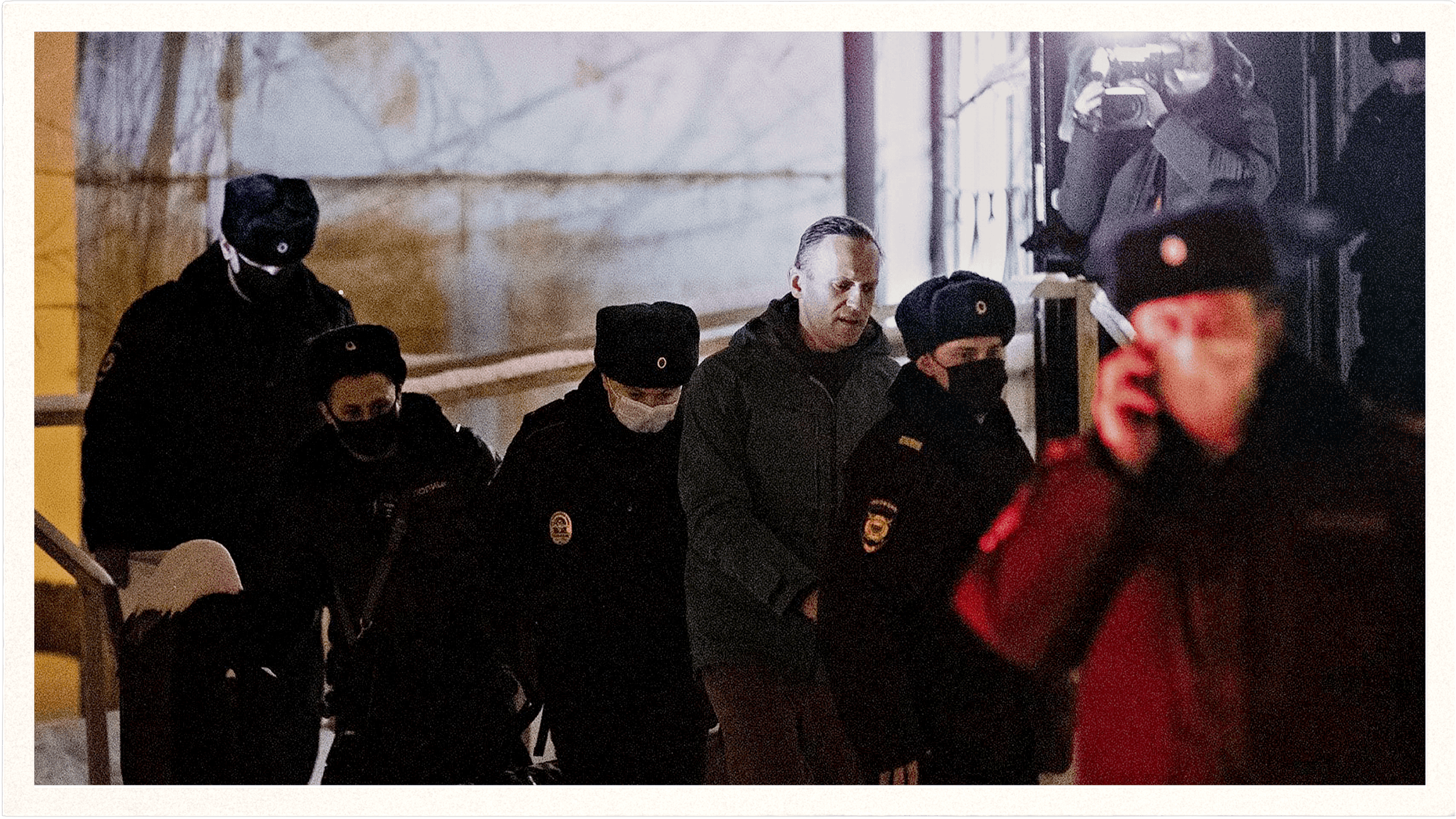
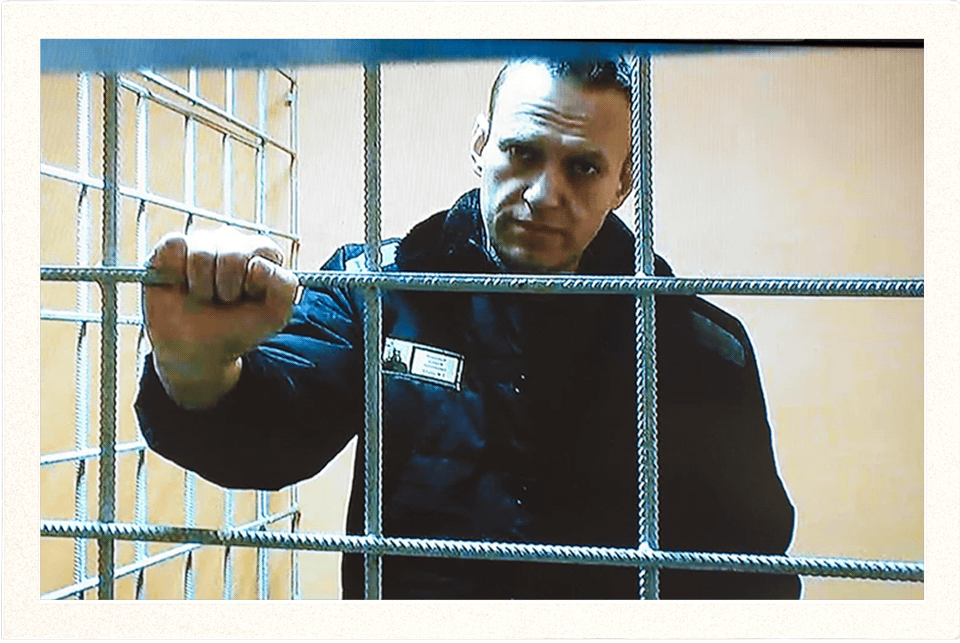
The conditions Navalny faced are difficult to imagine from the outside. Russian prisons are harsh even by their own standards, but in his case, supporters often described it as a prison within a prison. He was repeatedly placed in solitary confinement, denied visits, cut off from the outside world, and transferred from colony to colony, each one farther from his family and lawyers. He was subjected to constant physical and psychological pressure: sleep deprivation, denial of food and medical care, and conditions designed to turn each day into an ordeal.
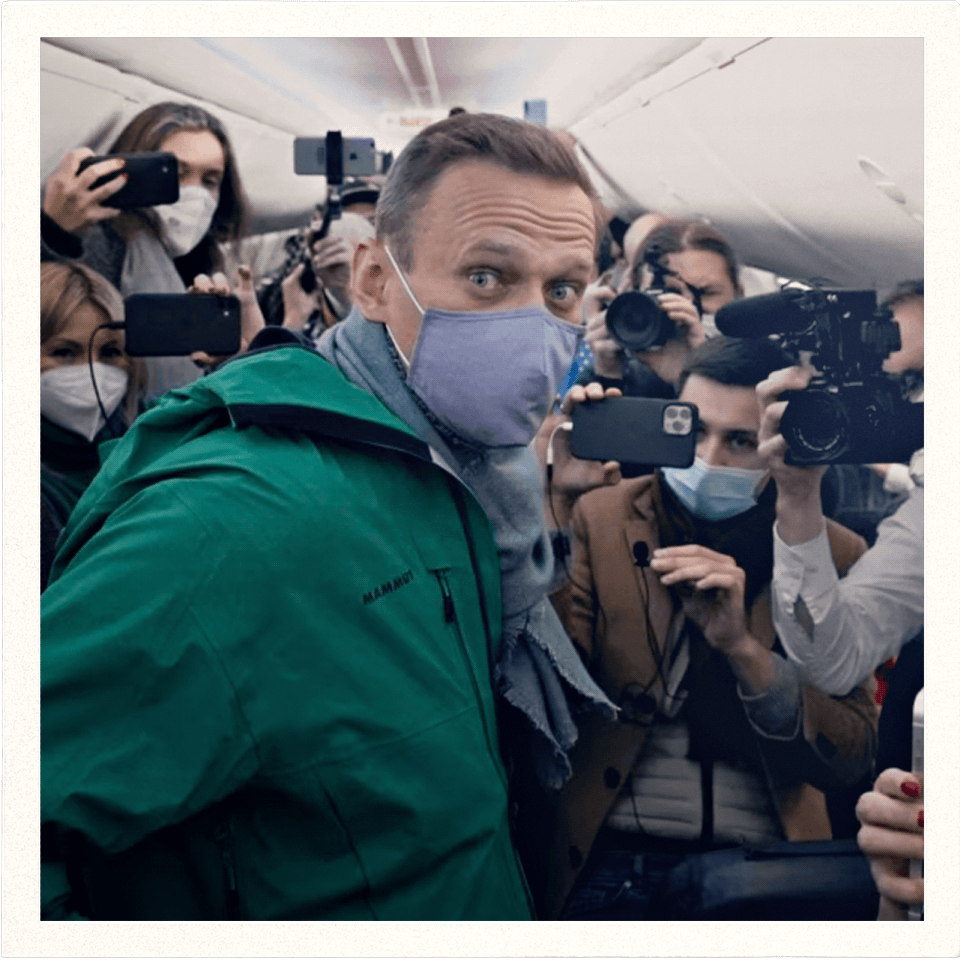
And yet he continued to support those who remained free. He kept writing with the same clarity, irony, and determination; speaking about the war, the future, and the importance of refusing fear. Despite the isolation and the pressure, Navalny remained a voice that thousands of people continued to listen to — and one that helped many of them not lose hope.

Assassination
On February 16, 2024, Vladimir Putin finally succeeded in murdering Alexei Navalny, killing him with poison. It is a loss that is impossible to accept and impossible to come to terms with.
But people live on as long as their memory endures. This archive of his memory is therefore more than a collection of materials. It is an attempt to preserve Alexei through his writings, videos, letters, investigations, courtroom speeches, photographs, and the work he devoted his life to.
Even though he is no longer with us, it is still possible to return to him, to his words — and to feel again the strength, courage, and hope he gave to others.