Anti-Corruption Investigations
Alexei Navalny’s investigations were one of the defining parts of his political work. For many people, they were also their first encounter with Navalny: films and videos that exposed the corruption of the Russian authorities in unprecedented detail and named those responsible for poverty and depravation in the country’. Over time, these investigations grew into something much larger — a detailed account of how Putin’s system works. It was a world of officials’ relatives and close associates, proxy owners, offshore companies, state contractors, unexplained wealth, and an untouchable circle of people for whom the country had become a source of money and privilege. Navalny and his team showed not only how Russia’s ruling elite lived, but also the rules of the world they inhabited.
We have everything we need to significantly reduce corruption. There is only one thing missing: political will.
Alexei Navalny2018 presidential platform
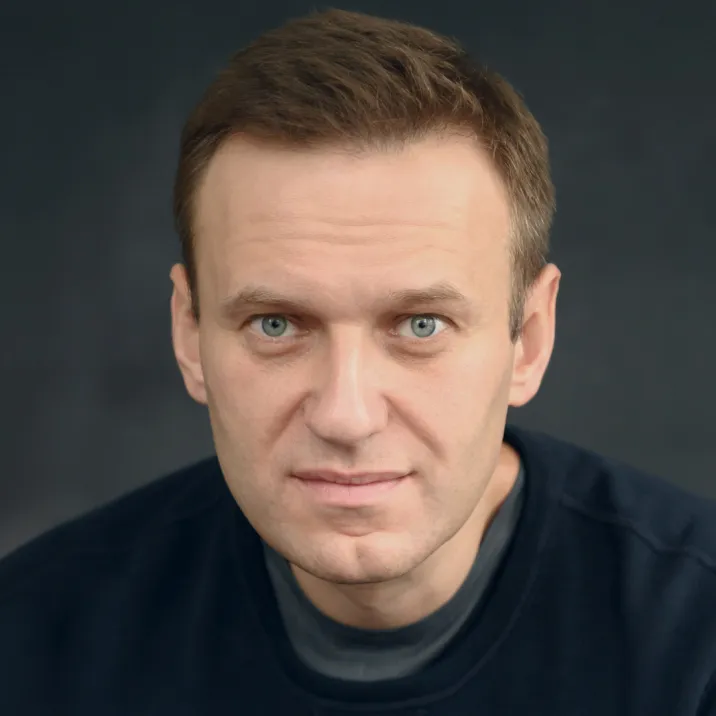
Navalny’s investigations mattered because they moved people to act. Some went to protests. Some became election observers. Others simply began getting involved in local politics. This was perhaps the greatest impact of the investigations: corruption stopped feeling like background noise — something everyone had accepted as inevitable. Instead, it became personal. It had names. Palaces. Apartments. Yachts. Offshore accounts. And once people saw that, it became much harder to shrug and say: “Everyone steals. You won’t change that.”
Where It Started
Navalny’s anti-corruption work began long before the large investigation films. Back on LiveJournal in the late 2000s and early 2010s, he was already publishing stories that contained the foundations of his future investigative work. He deliberately became a minority shareholder in major state-owned companies to gain access to corporate documents and raise questions about suspicious transactions. One of the best-known early cases involved VTB, where Navalny wrote about the purchase of thirty drilling rigs at inflated prices through intermediaries.
Another major investigation focused on Transneft and the construction of the Eastern Siberia–Pacific Ocean pipeline. Navalny published internal audit documents and exposed large-scale embezzlement linked to the project.
Gradually, this work became its own genre. Each new investigation was more than a story about a villa, an aircraft, or a piece of land. Every film added another piece to a larger picture. And that picture showed something important: corruption in modern Russia was not a flaw in Putin’s system. It was the system.
One of Navalny’s early investigation films focused on the family of Prosecutor General Yuri Chaika and showed how deeply corruption had penetrated the Russian state. An office meant to represent the law was shown to be intertwined with business interests and criminal networks.
This was one of those investigations where a single detail explained the entire system better than a long political speech. The image of dogs flying on a private jet instantly became a symbol of how detached Russian officials had become from ordinary life.
Don’t Call Him Dimon
The anti-corruption investigations I have conducted over the past several years have shown me clearly how little Putin and the Kremlin will stop at to stay in power.
Alexei Navalnyannouncing his 2018 presidential campaign
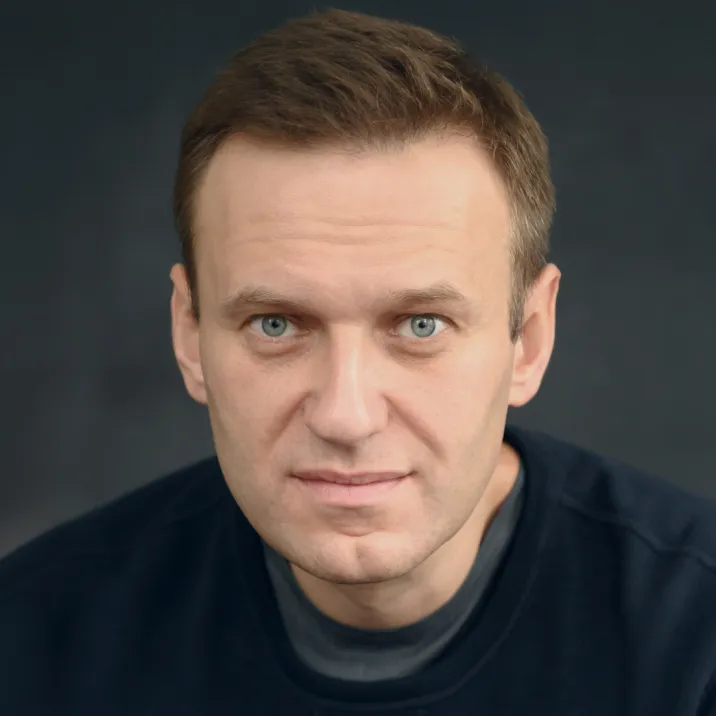
The turning point came with Don’t Call Him Dimon, released on March 2, 2017. The film investigated the hidden empire of Dmitry Medvedev, then Prime Minister of Russia, and quickly became much more than a major exposé. It was after this investigation that Navalny’s campaign attracted tens of thousands of new volunteers. For the first time in years, many people felt that the scale of corruption and impunity had become impossible to ignore — and that the country needed change.
The power of the film lay in the fact that viewers were not shown abstract corruption. They were shown an entire parallel life: residences, vineyards, yachts, charitable foundations used to hold assets, and networks of trusted associates concealing the real owners. The investigation was also shocking because Medvedev had seemed different. Compared with Putin and his security-service allies, he often appeared harmless, awkward, even mildly liberal during his presidency. Navalny’s investigation showed that he was no different — and perhaps even worse than many other corrupt officials.
Investigations as a Map of Putin’s Elite
In Navalny’s investigations, palaces, yachts, aircraft, and villas were never just visual symbols of corruption.They were evidence. When an official, propagandist, or member of the ruling elite spends years talking about modesty, patriotism, public service, and foreign enemies — while living in a vast mansion and owning billions in overseas assets through offshore structures — the hypocrisy becomes impossible to ignore. This was why Alexei Navalny’s investigations had such an impact. They dismantled the official image of the Russian authorities and revealed their real priorities. The people featured in these investigations formally occupied very different roles in public life. Some were officials, others businessmen, others television propagandists. In reality, they existed within the same system — one that distributed access to money, property, and power. One of Navalny’s best-known films, this investigation focused on Deputy Prime Minister Sergei Prikhodko and businessman Oleg Deripaska. The story revolved around a yacht, model Nastya Rybka, and the hidden connections between a senior official and an oligarch.
This investigation focused on Minister Mikhail Abyzov and his luxury villa in Italy. The film was released amid rising utility prices in Russia, including a particularly controversial increase in Novosibirsk linked to a utilities monopoly connected to Abyzov. In 2019, Abyzov was arrested on charges that echoed many of the findings in Navalny’s investigation. In 2023, the former minister was sentenced to twelve years in prison.
This investigation focused on Dmitry Peskov’s luxury watches. Navalny drew attention to a Richard Mille watch worth tens of millions of rubles that Peskov regularly wore in public. It was obvious that a presidential press secretary could not afford such things on his official salary. The investigation contained all the familiar elements of Putin-era corruption: extraordinary luxury, a glaring mismatch between income and lifestyle, and awkward denials after exposure. The story later expanded into a series of investigations about Peskov and his family. First came the house. Then the honeymoon aboard the Maltese Falcon yacht, reportedly costing around 26 million rubles per week. Later came the story of Peskov’s son, Nikolai Choles, who had lived in the United Kingdom, received a criminal sentence there for assaults and theft, and after returning to Russia lived the life typical of the privileged children of Putin’s elite.
One of Navalny’s best-known investigations into Russian propaganda as a profitable business. Navalny showed that Solovyov — who spent decades speaking about patriotism and Russia’s enemies — himself owned expensive real estate, including property in Italy.
Putin’s Friends
Gradually, another picture emerged: around Putin there existed a small circle of especially trusted people. Many of them held no formal government position at all, yet acted as the real owners and custodians of major assets. This film focused on Sergei Chemezov and an ultra-expensive apartment that became one of the clearest symbols of the luxury enjoyed by Putin’s inner circle.Stories like this required no elaborate metaphor. The price alone was enough to show the gap between an official biography and real life.
This 2014 investigation focused on Gennady Timchenko and his overseas real estate empire hidden behind offshore companies and associated structures. Formally, the story began with Timchenko’s dog, Romy. The investigation itself was structured as a tour through the places the dog had supposedly visited: an estate in Saint-Raphaël, a house in Le Lavandou, properties in Biarritz and Geneva, and an apartment in Berlin. Through this unusual framing, Navalny showed that one of Putin’s closest associates lived like an international billionaire — owning luxury property across Europe while the Russian authorities spoke endlessly about patriotism and enemies abroad.
In this investigation, Navalny examined the wealth of Boris and Arkady Rotenberg, two of Putin’s closest friends. The Rotenberg brothers received enormous state contracts in Russia, and the film showed where much of that money went.
State Contracts — The Elite’s Feeding Trough
Another major strand of Navalny’s investigations focused on how public money was siphoned off through large state contracts in Russia. The larger the project, the greater the opportunity for those close to Putin to profit from it.
Fighting corruption without fighting corrupt people is hypocrisy.
Alexei NavalnyThe Guardian
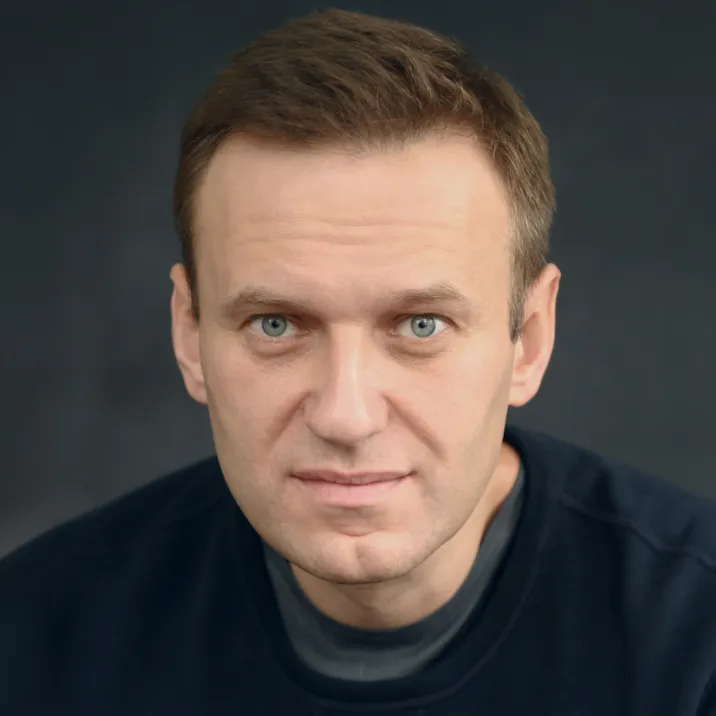
This investigation looked at corruption surrounding the Crimean Bridge and related projects, showing how enormous sums could be extracted under the banner of “patriotism.” It became an important example of how state symbols and propaganda projects were turned into sources of enrichment for people close to the Kremlin.
An investigation into procurement contracts for the Russian National Guard. Navalny showed how Putin’s former bodyguard Viktor Zolotov and affiliated suppliers profited from inflated prices — effectively taking money from the food and equipment budgets of ordinary servicemen. It is one of the most important investigations into corruption within Russia’s security apparatus.
A film about Dmitry Rogozin and his family: expensive real estate and the lifestyle of people responsible for Russia’s space industry and its state funding. The contrast was especially striking against endless rhetoric about national greatness, rockets, and technological “breakthroughs” — behind which the same corruption repeatedly appeared.
Regional Investigations
Regional investigations occupied a special place in Navalny’s work. They mattered because corruption was not only a Moscow story — it shaped everyday life across the country. The same proxy schemes. The same theft of public money. The same closed world of officials. The same contempt for the people paying for it all. A film about clan rule in the North Caucasus. Power, wealth, and violence existed there as a single system: luxury cars, palaces, and displays of wealth alongside political control, family networks, and killings. The investigation focused on Rauf Arashukov and the Kaitov clan in Karachay-Cherkessia and showed how regional power structures could function as de facto feudal regimes.
This investigation focused on Andrei Metelsky and was part of a broader Moscow series released almost daily during the 2019 Moscow City Duma elections. Navalny wanted to show, through concrete examples, that corruption was not the exception but the norm within Moscow’s political establishment. Metelsky was an especially revealing figure: not an ordinary deputy, but the leader of United Russia in Moscow. That year Smart Voting won a major victory: Metelsky lost his seat and United Russia lost its majority in the Moscow City Duma.
An investigation into the real estate linked to St. Petersburg governor Alexander Beglov. Investigations like this showed that even politicians who presented themselves as practical administrators often used power simply to accumulate assets.
An investigation into how local political groups and affiliated businesses turned city government into a closed system for distributing resources. Tomsk was presented as a typical example of how corruption functioned at the regional level within Putin’s system.
Putin’s Palace — Corruption at Its Peak
Putin’s Palace: The Story of the World’s Largest Bribe became the culmination of an entire era of investigations. By this point, Russians already understood the scale of corruption and how luxury was hidden behind proxy owners and complex structures. But Putin’s Palace brought all of those elements together in a single story.
This was no longer a story about a minister, a mayor, or the relatives of a senior official. It was about Putin himself. And about the place where state power and personal wealth merged completely.
Where do these palaces come from? Toilet brushes costing fifty thousand rubles each? We know money does not come out of nowhere. It came from the budget. It was stolen from this very veteran. Someone was denied treatment. Someone was denied an education. Someone never received a wheelchair. Someone never got medicine — so that a palace could be built.
Alexei Navalnyfinal statement in the “veteran insult” case
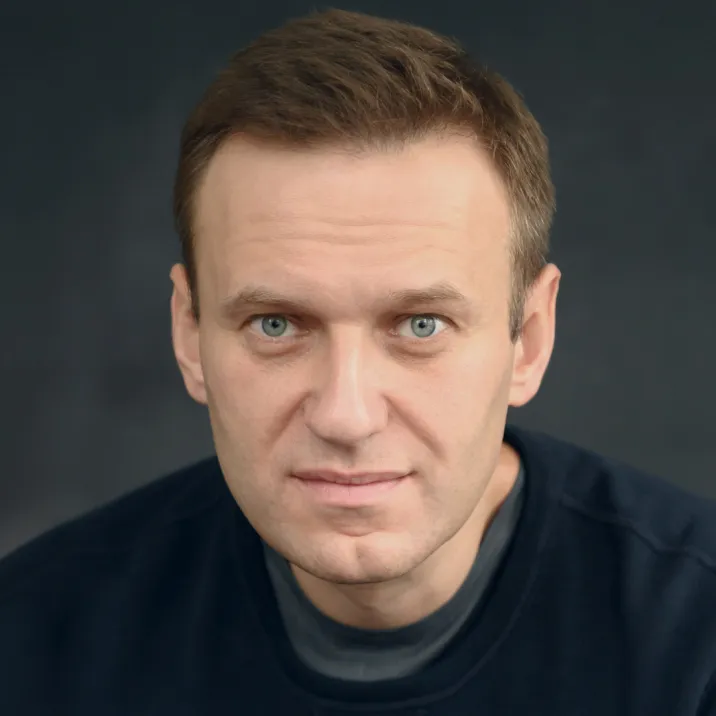
From Corruption to Murder
Navalny’s later investigations moved into entirely new territory. If the early films showed how the ruling elite stole, later investigations showed that the same system was capable not only of hiding wealth, but of organizing violence. After Alexei’s poisoning, the investigations no longer focused only on property and money. They began uncovering the assassination attempt itself. This investigation identified members of the FSB group involved in Navalny’s Novichok poisoning: names, routes, false identities, and surveillance operations. It was no longer a film about corruption. It was a direct exposure of a state crime.
The famous phone call with Konstantin Kudryavtsev, one of the participants in the poisoning operation. Without realizing who he was speaking to, Kudryavtsev began describing details of the attack and the effort to destroy evidence. The investigation became a global sensation because it contained something which seemed almost impossible: practically a confession by one of the perpetrators.
We will not stop our investigations. We will not stop our fight against corruption.
Alexei Navalnyfinal statement in the Kirovles case
Alexei Navalny’s Legacy
Today, Navalny’s investigations read and feel like a detailed chronicle of the Putin era — assembled despite censorship, repression, and direct violence. Each investigation mattered in its own way. Chaika showed the fusion of state power, business interests, and organized crime. Don’t Call him Dimon exposed the hidden empire of one of Russia’s most senior officials and became a political event of national significance. Investigations into Shuvalov, Peskov, Sobyanin, Rogozin, the National Guard, Solovyov, and many others showed how deeply corruption had spread through the entire system. Putin’s Palace revealed the luxury surrounding the country’s most powerful figure. And the investigations into Navalny’s poisoning and murder showed something even darker: that this was no longer simply a corrupt system, but one willing to kill in order to preserve itself. These investigations document real crimes committed by Putin and his inner circle against the people of their own country. And one day, those responsible will answer before both the people and the law.