Alexei Navalny presents his platform for the 2013 Moscow mayoral election at the congress of RPR–PARNAS.
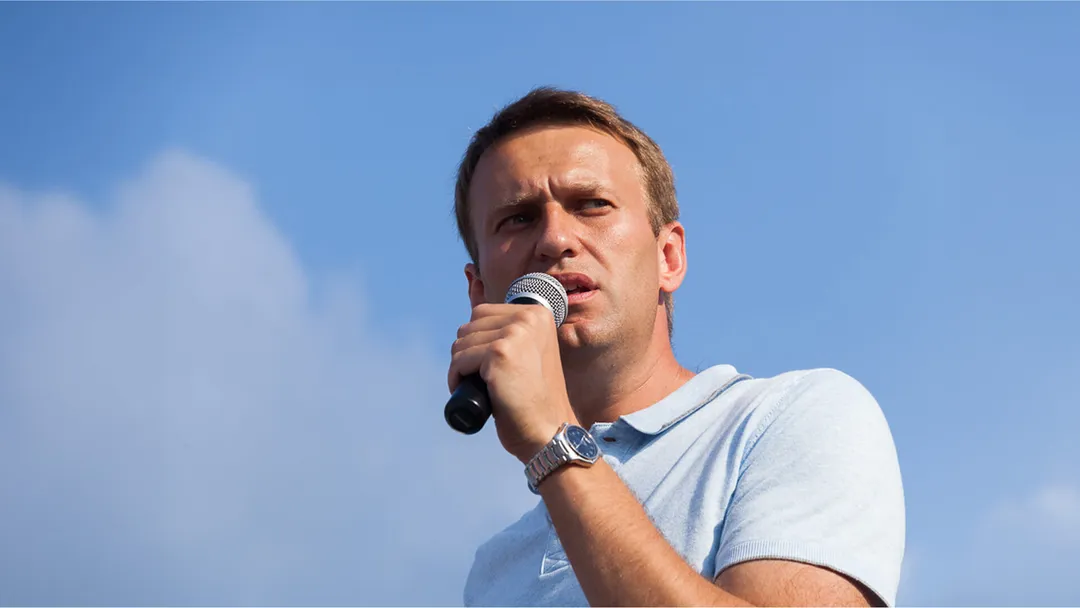
[applause]
Thank you very much to Mikhail and Boris for the warm
words. True, Boris started to build things up a little
by talking about criminal cases,
first this, then that, meetings, and so on.
I was expecting someone in the hall to say, well, maybe
we shouldn’t get involved with him. I was already
told today: once people get involved with you, it’s nothing but
problems from
you. I understand that some of you are probably
already a little tired of me. First of all,
of course I would like
to thank all of you for finding the opportunity
to gather here today and hold
the general meeting, the federal political council,
and the Moscow political council, which supported
my movement. And of course I want
to thank, overall, the People’s Freedom Party,
the PARNAS party, which in these
very difficult political conditions,
when we supposedly have freedom
to register political parties, but in practice
the reality is that truly
independent parties such as the People’s
Alliance or the December 5 Party are not
registered. Under these conditions, PARNAS
remains the only
registered and independent party
that is ready to provide its
political infrastructure to those
who genuinely want to engage
in politics in order to make people’s lives
better, rather than engage in
political manipulation or petty bargaining with
the authorities. Thank you, friends.
[applause]
Thank you very much. I want to ask for your support
for my nomination for mayor of the city
of Moscow, the city where we live, the city
that we love, and the city that has, unfortunately,
become a symbol of the complete
absence of power for its residents. In Moscow,
10% of the country’s population lives here, and you could say
there is arguably not a single other locality
in the country where residents
would have even
less power. In Moscow, the number of deputies in the Moscow City Duma is laughably
small, and
each deputy is elected by a number of voters
comparable, in fact, to those who vote
for the mayor of a fairly large, even very
large, city in this country. In Moscow,
district deputies have the
fewest powers and practically do not
resolve any issues at all related
to the budget. In Moscow, even the most basic unfulfilled
requirements for holding local or
citywide referendums remain unmet. Power in the city
of Moscow does not belong to its residents. Power in
Moscow belongs to appointees
of the federal nomenklatura (state bureaucracy), appointed by
construction and various other oligarchs, and by
the United Russia party, whose real name
Boris Nemtsov has already mentioned today.
And despite the fact that United Russia in
Moscow is despised and hated by everyone, and even
their own candidate is embarrassed by them
to the point of disguising himself
as an independent candidate, United Russia has sunk its claws into
Moscow with a death grip and does not want to
let go. I am entering this election in order
to pull our city out of the clutches
of Mr. Putin,
Mr. Sobyanin, and the United
Russia party. I am entering this election to return
power to the people and return power
to Muscovites. If you support me,
in my platform and speeches I will
speak about what Boris already said today:
that our city is very rich.
Moscow’s budget is
larger than Paris’s with a comparable population, but
when we look around the world, we
understand that Moscow still lags somewhat
behind the city of Paris. I will speak about
new ideas for the development of our city, about how
we must build and plan it not
for 5 years, not for 15, and not even for 25. We must not
set ourselves the goal
the executive branch must not set itself the task
of cramming in a new shopping center somewhere,
making a little money on it, while forgetting
that our children and
our grandchildren will forever lose
that urban space simply so that
we can build, here and now,
another shopping mall like Yevropeysky. I will
speak about real, proper
city planning based on calculations and urban planning
science for Moscow.
It must completely rule out situations where
some functionary with only three years of
education in the Presidential Property Management Department
simply informs Muscovites
that, you know, I have decided
the parliamentary center will be here, and tomorrow
I decide it will be there, or we have decided
that half the city center should be blocked off with fences impassable to
Muscovites
because that is more convenient for the Federal Protective
Service. We must demand
a new master plan and high-quality development
for our city for decades ahead. I
will propose solutions to the problems of
healthcare, on which we are now
spending truly fantastic sums and
getting no
budget funding per Muscovite
for healthcare is four times higher than
the Russian average, but for that money we do not
receive absolutely nothing. In countries
that spend on healthcare
as much as Moscow does, life expectancy
is 10 years higher
than in Moscow. In Moscow, we cannot treat
even basic illnesses. When people
face truly serious
problems such as
If you support me, I will offer truly
high-quality solutions to transportation
problems, based on a scientific approach and
modern experience in the development of major
cities, rather than what the
Moscow mayor's office is doing now, which has already been recognized as
outdated and misguided back in the
1970s in
major cities.
Right now, the colossal sums of money
that we spend on Moscow's transportation system
benefit only the contractors
who are building in Moscow the most expensive
roads in the world, the most expensive in the world
interchanges, the most expensive tunnels in the world. Here,
the people dealing with the city's transportation problems
are people who have absolutely no
understanding whatsoever of
public transport or urban planning.
These are builders who still live in the
mindset of the builders of the Moscow Canal
for whom solving a problem means
building something the most
enormous, spending 100 million tons of concrete where
half of it can be stolen and used to build
luxury dachas on Rublyovka (an elite suburb outside Moscow) and in Spain.
There are no calculations whatsoever, no scientific
approaches to Moscow's planning in solving
transportation problems right now. We are already
stuck in traffic on the supposedly
light-free Leningradskoye Highway that we were
promised. We are stuck in traffic on
those wonderful exits of the Third
Transport Ring, and so on. And now
Sobyanin and the current authorities are proposing
to spend hundreds of billions more
so that in 3–4 years we will be standing
in traffic jams on the supposedly reconstructed
Leninsky Prospekt and the Northwestern route. I
if you support me, will propose
real solutions to migration issues,
real proposals, not the disgusting
hypocrisy offered by the current
government, which is the main
employer of migrants and
at the same time appears on television
posing as fighters against those migrants while signing
new decisions at the same time to create
more of these migrant enclaves in
Moscow. I will speak
honestly about the economy, and first of all about housing and utilities, where
the city-run, city-controlled
DEZ offices (municipal housing maintenance agencies) have turned into feeding troughs for
officials. Yet what we see every
day, every year, is rising utility costs. But as
ordinary Muscovites, we see that over the course of
the last 10–15 years, the quality of housing and utility services in
Moscow has not improved at all
for the better. Of course, my colleagues and I
will propose real solutions in the areas
that we work on
professionally, first and foremost in
fighting corruption, in effective management of
property, and in state contracting and
public procurement. We will propose
a serious decentralization of power.
It is absolutely impossible to govern a city with
a population comparable to that of a fairly large country
from a single office. And I firmly believe that
most of the power and most of the
money should be spent where people
live, where we live our daily lives
as ordinary city residents, where we take
our children to school and kindergarten, where we
go to the clinic, where we walk
the dog and look at the lawn where
landscaping is being done. And I believe that
it is precisely to municipalities and district
deputies that these powers should be transferred.
In the near future, very soon,
my colleagues and I will present our own
detailed, concrete, and positive
program for the development of the city of Moscow, for which
we are preparing by bringing in specialists.
Right now, I can tell you with satisfaction and
pleasure that Sergei Guriev
has agreed to work with me on
the economic part of our program.
When I speak of a positive
program, when I speak of a positive
program, I will not allow either myself or
my colleagues to be lured into the trap of this
you know, 'let's talk only about
practical matters.' I will continue
to speak about corruption in Moscow and at the federal level,
and about the right of assembly. I will
speak about stolen votes, about
electoral fraud, and about political
prisoners. All of this will be an absolutely
important part of our
program. In conclusion, I want to say that
you and I love going to rallies together
and chanting the slogan there: 'This is our city.'
It is always a very popular slogan; everyone
picks it up, Muscovites love it, and I
I ask you to support me and, together with
me, engage in a real struggle for power
in our city. This struggle must continue
until we achieve what
we entered politics for: to return
power to the people. This is our city.
Thank you, colleagues. Before, uh,
asking Alexei Navalny questions