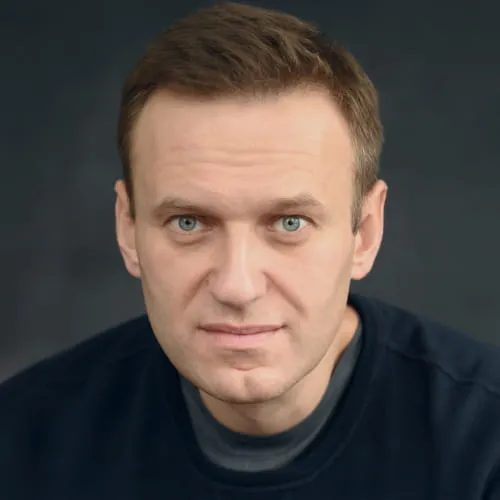
So, shall we create one? A huge and magnificent deputy.
We really need one—the current deputies are not only nowhere near huge and not the least bit magnificent, they usually don’t want to do anything at all.
I’m a deputy. I don’t want to introduce the bills people actually need—I want a big salary, a government car, and a dacha (country house).
(the first image in Google results for the query "deputy")
Our deputy is nothing like that. He is a true representative of the people, introduces bills in the interests of the majority, and has no need for dachas or cars at all.
"Who is he, then?" you cried impatiently. "We’ve never seen deputies like that in our lives."
You haven’t seen one before, but now you will. And not only will you see him—you’ll even take part in creating him. No, of course I don’t mean taking a dead deputy and reviving him with electric current or badger blood collected under a full moon.
The point is that citizens who unite into a group have the right of legislative initiative. At the federal level, this mechanism is still not fully worked out—you can submit an initiative through the Russian Public Initiative platform (ROI), but officials have plenty of ways to drag it out and alter it beyond recognition.
At the regional level, however, there are fairly clear procedures—though they are difficult to carry out in practice. Let’s look at the Charter of Moscow.
Article 36. Adoption by the Moscow City Duma of laws, resolutions, and other acts The right of legislative initiative belongs to deputies, commissions of the Moscow City Duma, and factions in the Moscow City Duma, the Mayor of Moscow, the Prosecutor of the city of Moscow, the representative of the Moscow City Duma in the Federation Council of the Federal Assembly of the Russian Federation, representative bodies of local self-government, as well as citizens exercising the right of civic legislative initiative in the manner established by the law of the city of Moscow. The right of legislative initiative in the Moscow City Duma also belongs to the Chair of the Moscow City Court, the Chair of the Moscow Arbitration Court, the Charter Court of the city of Moscow, the Human Rights Commissioner in the city of Moscow, the Moscow City Election Commission on matters within its competence, and, in cases предусмотренных by the laws of the city of Moscow, the Council of Municipal Formations of the city of Moscow.
In other words, the possibility of civic legislative initiative is explicitly provided for.
Now let’s look at the special Moscow law: "On Civic Legislative Initiative in the City of Moscow." It’s long, but in short: an initiative group that collects 50,000 signatures in support of a bill is granted the right of legislative initiative. And here everything is much clearer and more straightforward than at the federal level. No "review by an expert group." 50,000 signatures means a legislative initiative.
Exactly what we need. We already have initiatives that Moscow needs. We even have several ready-made draft laws: I wrote about them here. I do not doubt for a second that 99% of Moscow residents support bills like these. In any case, these bills and initiatives were part of my election platform, so we can say with certainty that they are supported by at least 27.24% of city residents, according to the official election results. That should probably be enough for the Moscow City Duma to consider these proposals.
In fact, the campaign promise to do everything possible to get these bills considered by the Moscow City Duma was itself part of the election campaign.
So that is exactly what we are doing—and at the same time creating this very "People’s Deputy": a mechanism through which Muscovites will be able to submit necessary bills to the Moscow City Duma.
So far, not a single civic legislative initiative has actually been carried out. There are reasons for that: a) political: the Moscow City Duma, where 95% are United Russia members, does not want to consider anything, does not want to see any initiatives, and simply refuses to register initiative groups on formal pretexts; b) and most importantly, organizational: the procedure for implementing a civic legislative initiative is written in such a way that carrying it out is practically impossible. Only members of the initiative group may collect signatures, and the collection period is one month. Ordinary people can maybe assemble a group of 50 to 100 people, after which each person would have to collect 500 to 1,000 signatures, complete with passport details and so on. That is an impossible task, as anyone who has ever collected signatures—rather than faked them—knows.
Our situation is different. a) politically: a refusal to register the initiative group would not be a refusal to just any citizens, but to citizens representing the interests of every third voter in the last election; Putin has already spoken about the "arrogance of Moscow officials," and refusing registration here would be arrogance squared; Sobyanin has said he will take into account the views of those who voted against him; and the Kremlin crowd keeps repeating that "the opposition has nothing to offer"—well, here we are offering something, constructively and positively. b) organizationally: "Navalny in Every Home" alone means 32,000 people. Yes, not all of them have permanent Moscow registration, but almost all of them have relatives and friends. Then there are the databases of RosPil, RosYama, RosZhKH, and so on. We know for sure that there are some 80,000 people in this city who will read this post, each of whom can get us 1 to 3 properly completed signatures. That is more than enough.
(there he is, handsome as can be)
The conclusion: we need an initiative group of 500 to 1,000 people, each of whom we will connect with 50 to 200 people living in nearby buildings, who can walk 100 meters (about 330 feet) to them and sign. It gets even easier if each signature collector tells our system: on Tuesdays and Thursdays from 7 to 9 p.m. I’ll be at the cafe "Khinkali and Lagman by Rafik". The system will send a message to people living within a 500-meter radius (about 0.3 miles): come to the cafe "Khinkali and Lagman by Rafik" on Tuesdays and Thursdays from 7 to 9 p.m.; ~~Rafik~~ Kolya (Masha) will be waiting there to take your signature.
That way, we plan to collect 60,000 signatures (50,000 plus a margin for invalid ones) in ten days.
One person can participate in only one initiative group, and since we still cannot say how many people we will recruit, we will start with one group and one bill.
Which one should we choose?
We studied the entire history of refusals to register civic initiatives, and even examined the laughable objections raised by Platonov, the chairman of the Moscow City Duma against our draft laws during the election campaign. It is clear that the pilot bill must: address a real problem; matter to broad sections of the public, not just the most politically engaged residents; genuinely improve the situation; be short, simple, and clear.
After weighing everything, for the pilot project we chose a bill on the transparency and justification of housing and utility service tariffs.
Its official title is: ON THE APPLICATION OF CERTAIN METHODS FOR VERIFYING THE JUSTIFICATION OF THE ESTABLISHMENT, CHANGE, OR APPLICATION OF PRICES (TARIFFS) FOR UTILITY SERVICES
Tariffs in Moscow are unjustifiably high and keep rising. Those of us who have tried to figure out where these numbers even come from know that no justification can be found. Everywhere it is "confidential information." Somehow, on the basis of this "confidential information"—such as unpublished investment programs of monopolies—they squeeze money out of us. And then that money goes, for example, as sponsorship support to United Russia.
The bill in brief, if you can’t be bothered to read it:
*Now All decisions approving tariffs are made by the Moscow Regional Energy Commission (REC), and it is there that the justification for the tariff is assessed. How objective and impartial REC staff are in carrying out such an assessment is unknown. The validity of a tariff could be checked by independent organizations through an expert review (audit), but at present the REC does not use this option. All tariff approval decisions are made in a semi-closed process. Moscow residents are left with nothing but the dry lines of the meeting minutes. What actually happens there, whether the tariff is discussed or everyone simply votes "as instructed," is again unknown. If you write to the Moscow government now and ask: why am I paying this much for electricity now when I was paying that much two years ago, they will reply: two years ago, under REC Resolution No. X; now, under REC Resolution No. Y. A standard brush-off. What it will be For tariff approval for large companies (those providing utility services to more than 10% of Muscovites), an independent audit (expert review) of those companies’ production and investment programs—the basis from which the tariff is formed—will be mandatory. The results of such an audit will be open for analysis by any of us. All meetings on tariff approval for large companies will become open and public. Moscow residents and media representatives will have the right to attend. Deputies of the Moscow City Duma will have the right to an advisory vote at such meetings. In response to citizens’ complaints about utility charges, the relevant authority will be required to conduct an inspection. The complainant will have the right to be present during the inspection, provide explanations, submit motions, and so on.*
We would like to include much more in it, but that creates a risk of conflicting with federal legislation, and in that case United Russia would refuse to register our initiative group with cheerful snickering. So for now we will limit ourselves to this, but we are convinced that even independent and transparent auditing of housing and utility tariffs alone would have enormous significance: we would finally understand what we are paying for, and it would become much harder to jack up tariffs and steal through unjustified expenses.
Now let’s move on to practice. The infrastructure for building the "People’s Deputy" is on us, and for that we have made this thing: http://deputat.fbk.info
But it cannot be launched without a collective effort. We need help:
People for the initiative group, who will become the heart of the project and collect signatures. Please join us—we need you. But remember that three criteria matter: a) permanent registration in Moscow; b) reliability. Once you join the initiative group, we will not be able to replace you with anyone else. Someone else would have to do your work for you; c) free time this Sunday, October 6, in the second half of the day. We will be holding the initiative group meeting required by law. We will confirm the exact time and place by sending each registered participant an email (SMS).
People who will provide a signature. Permanent registration in Moscow is also required here. You just need to fill out the online form here if you have not previously registered in any of the projects. If you have registered before, you can still fill out the form—it will help us find you faster.
People who will handle promoting and publicizing all this on the internet. You do not even have to be a Muscovite for this. Just help us spread the word about all the news related to the project. 60,000 people will give signatures, but at least two million need to know that such an initiative exists. If everything goes well in Moscow, we will try to push this forward in those regions where civic initiative mechanisms exist.
Fill out the form:
Become part of the "People’s Deputy" and take part in lawmaking without intermediaries.
Once again, the basic principle is this: you become members of the initiative group, and we connect you with people who want to provide signatures and live in nearby buildings.
One important thing: with this campaign, we will begin correcting an unfortunate flaw in how we worked with volunteers during the mayoral election—we will track activist activity and keep something like a "karma" score. What happened was that we had some truly extraordinary people who worked brilliantly and moved mountains, and we failed to record their achievements in any way. Obviously, an activist’s authority should be directly proportional to their practical work. From now on, we will track everyone’s activity and then promote them, listen to them, and hand out laurels according to their real contribution.
So get involved and don’t be lazy—good laws will not introduce or pass themselves in the Moscow City Duma.
Let’s build the "People’s Deputy" together and, after the bill on auditing housing and utility tariffs, submit other important draft laws developed by the Anti-Corruption Foundation. A great many things need fixing, and we have proposals to offer.
Let’s make sure we are heard.