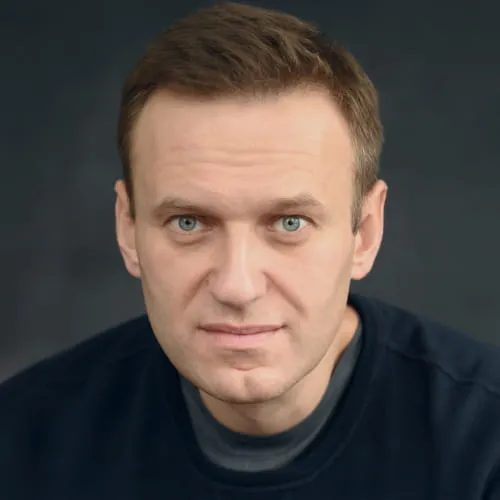
Excellent work by Katya Petrova from the Urals branch of RosPil.
The story began in 2012. On May 10, the federal state institution Uralupravadtor announced a tender for the reconstruction of several sections of the Yekaterinburg–Tyumen highway. A total of 1,749,247,300 rubles from the federal budget was allocated for the project. That was a substantial sum, and naturally businesses from both Sverdlovsk and Tyumen were interested in winning the government contract. Three major companies took part in the tender: Aerodromdorstroy, Sverdlovskavtodor, and Khanty-Mansiyskdorstroy.
Everyone expected the bidders to fight tooth and nail—the contract was worth millions—but to everyone’s surprise, friendship won out in the end. Or rather, something like friendship: formally, Aerodromdorstroy won the tender, but later ADS and Sverdlovskavtodor signed a subcontract under which the latter company actually carried out the road reconstruction work. It all looked suspiciously like what antitrust law calls “price collusion.” The Sverdlovsk Region office of the Federal Antimonopoly Service opened a case on alleged price collusion in the construction project, and it is, quite comfortably, still under review.
The picture would be incomplete without a few details: Dmitry Rybin, CEO of Sverdlovskavtodor, is the former head of the Tyumen Region housing construction fund and also the husband of Solodovnikov’s sister. Solodovnikov himself is the CEO of MDS-GRUPP, the group of companies that includes Aerodromdorstroy. Solodovnikov is known as nothing less than the right-hand man and “wallet” of Sergei Sobyanin’s business empire.
Naturally, the companies overseen by Sobyanin protégé Solodovnikov kept winning government contracts worth billions of rubles for road construction and repairs, but for some reason they just could not manage to finish repairing the roads on time. The contracting authority was the federal Ural Highway Administration (FUAD-Ural). That was when RosPil took an interest in the MDS-GRUPP group of companies and began reviewing all contracts concluded by Aerodromdorstroy and SU-1 (part of MDS-GRUPP) with FUAD-Ural.
Remarkably, every single contract showed delays in the work—and in almost all cases the deadlines were exceeded by more than a year. That was when Yekaterina Petrova from RosPil-UrFO stepped in and started bombarding the authorities with complaints about the violations. Before her intervention, FUAD-Ural had apparently never thought to demand anything from the contractors, even though the violations were constant. After RosPil-UrFO sent a series of complaints to the prosecutor’s office about misconduct by the construction companies, law enforcement agencies were forced to do their jobs. And after Yuri Ponomarev, the deputy prosecutor general for the Urals Federal District, ordered officials to verify media reports, staff from the Sverdlovsk Region prosecutor’s office and the regional FSB directorate got involved.
In the end, it was finally possible to get lawsuits filed against the crooked contractors. At present, the total value of the five claims brought against the companies linked to Sobyanin’s protégé has reached 90 million rubles. Hearings on the merits in most of the cases are scheduled for early June. No new billion-ruble contracts have been seen for the “Tyumen clan” lately.
Meanwhile, the real patriots—RosPil-UrFO head Yekaterina Petrova and the head of Yekaterinburg’s RosYama (a road-defect monitoring project), Alexei Bezzub—are now checking roadwork estimates for inflated prices. For example, in one contract they found that the budgeted amount for installing temporary signs alone was seven times higher than the market average. So to be continued.