
In today’s Vedomosti (a Russian business daily), Russia’s Minister of Economic Development, Alexei Ulyukayev, has published a programmatic article titled The Ideological Model of the Rentier State Is Not for Russia.
The essence of the policy statement is very simple: let’s take all those oil rubles we’ve saved up and invest them in some good projects. We’ll make money on that, and with the money we’ll buy gingerbread and poppy-seed rolls.
Ulyukayev himself puts it in more academic language:
It’s a fairly popular idea, especially among those who don’t ask the obvious questions: invest where, exactly? And who will be doing the investing?
If Alexei Ulyukayev had included a couple of examples in his article showing how state investments in the Putin era were actually made in a way that delivered returns, reliability, and stimulus, the piece would have looked far more convincing.
And the final collapse of Alexei Ulyukayev’s programmatic article is supplied by his old buddy and major state investor, Anatoly Chubais. In the same issue of Vedomosti, there is a piece that perfectly describes the typical fate of government investments:
There you have it. They invested. They spent 7.5 billion rubles on construction, and then it SUDDENLY turned out that they had “miscalculated” the business plan so badly that three years later the plant had to be declared bankrupt and the real estate sold off. A real success story for state investment. A triumph, I’d say.
To fully appreciate this triumph, let’s hear from Anatoly Chubais himself:
And here is the opening of the plant in November 2012. At 1:44 in this video, I ask everyone—and above all Alexei Ulyukayev—to pay special attention: Chubais, wearing a white lab coat, walks up to a metal cabinet and PRESSES A BUTTON.
Very convincing. Strange that nothing ever came of it.
Apparently, it was the button that zeroed out our 7.5 billion rubles.
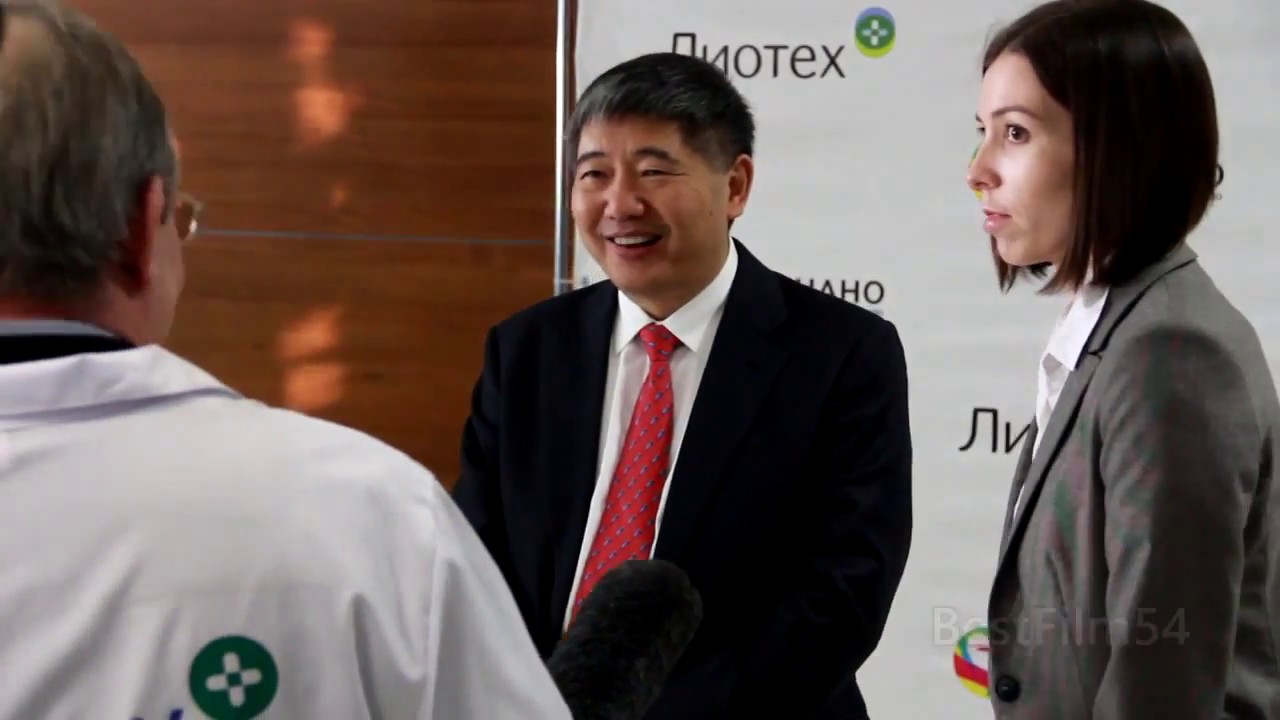
All that remains is to be glad that Anatoly Chubais himself is doing far better than the Liotech plant:
212 million rubles a year, or 17.6 million rubles a month. It would be interesting to compare that with the returns on Rusnano’s investments. A textbook example of the superiority of private investment over state investment.
So I’d like to send Alexei Valentinovich Ulyukayev my warm regards and wish that he would write articles grounded not in abstract theorizing, but in the real context of the Russian economy—a context that includes the Rotenbergs, the Kovalchuks, Timchenko, Rostec, Rusnano, Chubais, and, incidentally, the state bank VTB, on whose supervisory board Ulyukayev sat for many years, and whose business can be described in the words: WE STOLE EVERYTHING.
The state should not be in the business of investing money. It should be improving public institutions so that businesses and private individuals can invest successfully. And the rules of the game should be such that Ulyukayev’s deputies do not have to apologize to citizens for the theft of pension savings.
To assume that those who pulled $74 billion out of Russia in the first half of 2014 are idiots, while state officials are much smarter and can invest under the same conditions safely and profitably, is, at the very least, naive.