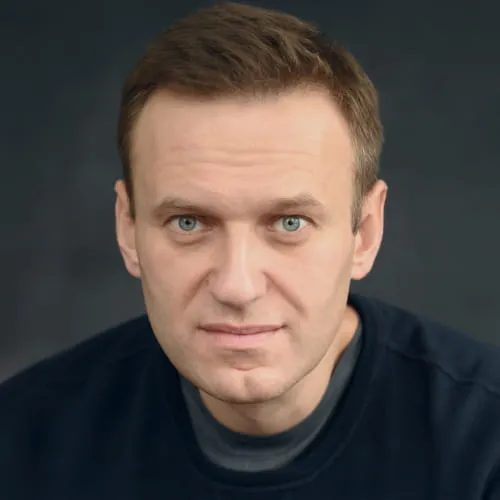
We all pay this man’s salary. What’s more, our financial well-being during that stage of life—which, unfortunately, comes for everyone—when we depend far more on the state and our children than on ourselves, depends on the organization he runs.
That is why I think this case of illicit enrichment, published as part of our #Twenty campaign, will catch your attention.
Anton Viktorovich Drozdov has been in public service since 1986: the Finance Ministry, the Treasury, and nearly 10 years in the Government Office. Since 2008, Drozdov has served as Chairman of the Board of the Pension Fund of the Russian Federation.
Drozdov has had a textbook bureaucratic career: nearly 30 years of service to the Motherland, an Honored Economist, and a member of the United Russia party.
Drozdov says little about himself and is reluctant to comment on his own reforms:
And how could he not count on it? Anton Viktorovich is right. He has a big family, his income is modest, and he is hardly likely to save enough for a comfortable old age.
As you can see, nothing impressive. His wife’s large income in 2009 is explained by the sale of property, and everything else—especially over the last two years—looks exactly as a civil servant’s finances are supposed to look.
That made our surprise all the greater when, while monitoring whether spending matched declared income, we discovered a gigantic iceberg of luxury beneath the seemingly calm waters of Anton Viktorovich Drozdov’s public-service career.
In 2009, the Drozdov family bought a seven-room apartment measuring 335.5 square meters in a luxury building at Patriarch’s Ponds (an elite central Moscow neighborhood). The place is so famous that even people who have never lived in Moscow understand how insanely expensive housing is there.
This is the building. Anyone who has walked around central Moscow has passed by it more than once.
According to an extract from Rosreestr (Russia’s state real estate registry), the apartment is registered to Olga Valeryevna Demchinskaya (46%), Andrei Antonovich Drozdov (27%), and Anna Antonovna Drozdova (27%)—that is, the official’s wife, son, and daughter.
Anton Drozdov himself lists it as being “for use”:
You understand yourself: it is impossible to receive an apartment of that size as official housing. There are no standards anywhere in the world under which a family of four would be allocated a 335-square-meter apartment.
So they bought it. Let’s find out how much such apartments cost. Today, a much smaller apartment in this building can be purchased for eight million dollars.
On CIAN, there are plenty of listings in this building; the average price comes to around $25,000 per square meter, meaning that even by the most conservative estimate, Drozdov’s apartment is worth $8.4 million.
According to an estimate that takes annual price indexation into account, such an apartment should have cost just under $8 million in 2009. At a notional average exchange rate of 30 rubles to the dollar, that comes to 240 million rubles.
Thus, relying only on the numbers and the facts, we can conclude:
Even taking into account the wife’s abnormally high income from the sale of property in 2009 (24 million rubles), the Drozdov family could not possibly have earned enough—even approximately—to buy an apartment in one of Moscow’s most prestigious districts in a luxury residential complex. The family’s income in the year of purchase was an order of magnitude lower than the expense.
Nevertheless, let us try to give official Drozdov the benefit of the doubt and look for lawful sources of income for his family. Perhaps he earned it honestly but failed to declare it?
Drozdov’s own income only once came close to 4 million rubles, while in recent years he has earned around 1.6 million rubles.
His wife Demchinskaya’s income is less transparent. Aside from the years in which major financial transactions took place (the sale of property in 2009 and the sale of securities in 2011), she earned relatively modest sums ranging from 200,000 rubles to 2 million rubles. There is no trace of an active business connected to Demchinskaya; today she is listed only as a co-founder of the endowment of the Moscow School of Economics. There she is identified as an adviser to the CEO of the Azimut Hotels chain, but it is obvious that we are not talking about millions—in 2012 she earned 1.2 million rubles, and in 2012, 2 million.
Incidentally, both of Drozdov’s children study at that same school.
A year of study at this school costs 650,000 rubles. That means Drozdov pays 1.3 million rubles for two children, which is almost equal to his official annual income.
We at the ACF (Anti-Corruption Foundation) could not find any explanation for how a career official with 30 years of service came to own a seven-room apartment at Patriarch’s Ponds. We tried, but it simply does not add up:
So this is a story about pensions, the pension fund, and state power in Russia.
I should note that the Pension Fund deficit is one of the most important problems facing our country’s budget. And it is precisely this deficit that has twice led to the so-called “pension robbery”—the seizure of pension savings from non-state pension funds, affecting millions of working-age citizens.
Fierce debates rage on this subject, constantly spilling over into scandal. And only the head of the Pension Fund remains silent. Now it is clear why: talk too much, and people will remind you about the $8 million apartment.
This is exactly the kind of case for which we drafted this bill. If our initiative is adopted, an investigator will come straight to Drozdov on Maly Kozikhinsky Street and question him at length about what this apartment was bought with. After all, it should not be difficult to explain lawfully earned money.
Decide for yourself how to respond to this case. You can simply shrug and meekly accept the fact that we are being robbed and plundered so openly every day. Or you can make your own small contribution to our common fight against illicit enrichment and for the ratification of Article 20 of the UN Convention against Corruption. - cast your vote for the bill; - ask someone you know to vote; - share this post; - sign up as a volunteer for our campaign and support our activities on a regular basis; There is even a very simple thing you can do—everyone has relatives or acquaintances who are pensioners. Do something simple: first, in a warm and sympathetic tone, ask them about the size of their pension and the quality of the Pension Fund’s work, and then tell them about the miraculous acquisition of a 240-million-ruble apartment by the man supposedly “in charge of looking after pensioners.”
I assure you, your story will go over very well.