If you live in the Moscow Region:
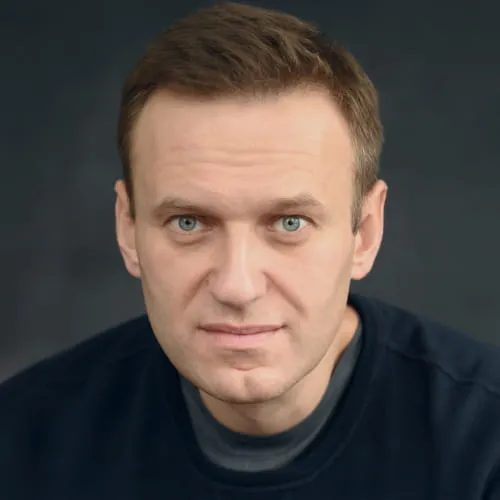
Andrei Shalnev is the chairman of the unregistered Libertarian Party of Russia, one of the originators and organizers of the annual social and political forum “Adam Smith Readings” and the regular “Free People Forums,” liberal educational events held in the regions.
In 2012, Andrei headed Vera Kichanova’s campaign in the Yuzhnoye Tushino elections. Vera was elected to the district municipal assembly and became the first libertarian deputy in Russian history. In 2014, Andrei himself became the second, winning election to the Council of Deputies of the city of Pushkino. As a deputy, he launched a number of local projects aimed at building urban communities: in particular, he organized a city discussion club and the “Square in the Triangle” competition to improve the small park with the Mayakovsky monument.
At the heart of Andrei’s current campaign, just as in his work as a municipal deputy, are meetings with district residents and follow-through on their requests. The Moscow Region has many housing and utilities problems, and Shalnev’s team, by collecting residents’ complaints, has been able to address them more effectively than people usually can on their own. During the campaign alone, Andrei has managed to secure the demolition of an abandoned electrical substation, save a small park from development by having it transferred into municipal ownership, and restore hot water service to one of Pushkino’s neighborhoods.
Andrei knows how to get answers from the people who are supposed to give them: he can go all the way to the Moscow Region Ministry of Housing and Utilities and make Deputy Minister Andrei Laptev personally oversee the restoration of hot water service in settlements of the Sergiyevo-Posad District, or invite Andrei Razdorsky, director of the district branch of the Moscow Region Territorial Mandatory Health Insurance Fund, to his office and tell him about the quality of medical care in the district—which is low. The team Shalnev has built keeps pace with him and also knows how to win court cases against the Sergiyev Posad administration, which refused to approve campaign cubes (portable campaign stands): during the campaign, six lawsuits challenging those refusals as unlawful were upheld.
Much to his rivals’ surprise, Shalnev’s campaign has become one of the most visible in the district: it has already drawn the attention of NOD activists in Korolyov and members of pro-Kremlin youth groups. Campaigners have had their banners stolen, and provocateurs have been sent to meetings. Apparently, Andrei’s main opponent—United Russia candidate Sergey Pakhomov, the current head of the Sergiyevo-Posad District—has already taken notice of his work. It would be wrong if district residents were not able to judge it for themselves after the election.
Residents of the Dmitrov District, Taldom District, and Dubna also have an excellent chance on September 18 to elect a decent and responsible deputy—someone who will actually work instead of sitting idle after handing out yet another round of empty campaign promises. That candidate is Vladislav Naganov, a member of the political council of the Party of Progress. He has already run an active campaign throughout the district and has a strong chance of success. He is now assembling a large-scale election monitoring mission in the Dmitrov District to protect the vote, and he is inviting experienced independent observers to sign up through the form and take a short test.
Among all the districts of the Moscow Region, Dmitrov stands out in particular. An effectively irremovable district head has ruled here for 25 years (since the Gorbachev era), the district’s electoral system has been stagnant for a quarter of a century, and there has never been large-scale election monitoring here.
It is precisely the absence of observers that has made it possible, year after year, to deliver exceptionally high results there for United Russia and its candidates.
For example, in the 2011 State Duma elections, United Russia supposedly received 46% of the vote in the Dmitrov District, while across the rest of the Moscow Region its average result was 28.7%. You have to admit, that looks rather strange. What explanation could there be for this other than ballot stuffing or rewriting vote-count protocols? If there are no independent observers at a polling station, that is easy to do.
And here is how observers were dealt with in the urban settlement of Nekrasovsky during the 2013 local head election. Watch this video—you won’t regret it. The police simply drag an observer out of the polling station with complete lawlessness so that he cannot prevent the commission from rewriting the vote-count protocol.
Monitoring in the Dmitrov District is very likely to be hardcore this time as well, which is exactly why Naganov urgently needs experienced people at every polling station. So if you want to test yourself and your abilities, sign up and help ensure fair elections in the Dmitrov District.
If you have any questions, you can write to info@naganov.ru.