The affairs of Vladimir Putin’s younger daughter Katerina Tikhonova’s foundation have clearly remained beyond the double solid line for most media outlets, but we figured many people would still be interested to know how things are going for her now—in this time of crisis.
The ACF (Anti-Corruption Foundation) doesn’t have any double solid lines, so we’ll tell you—and even show you:
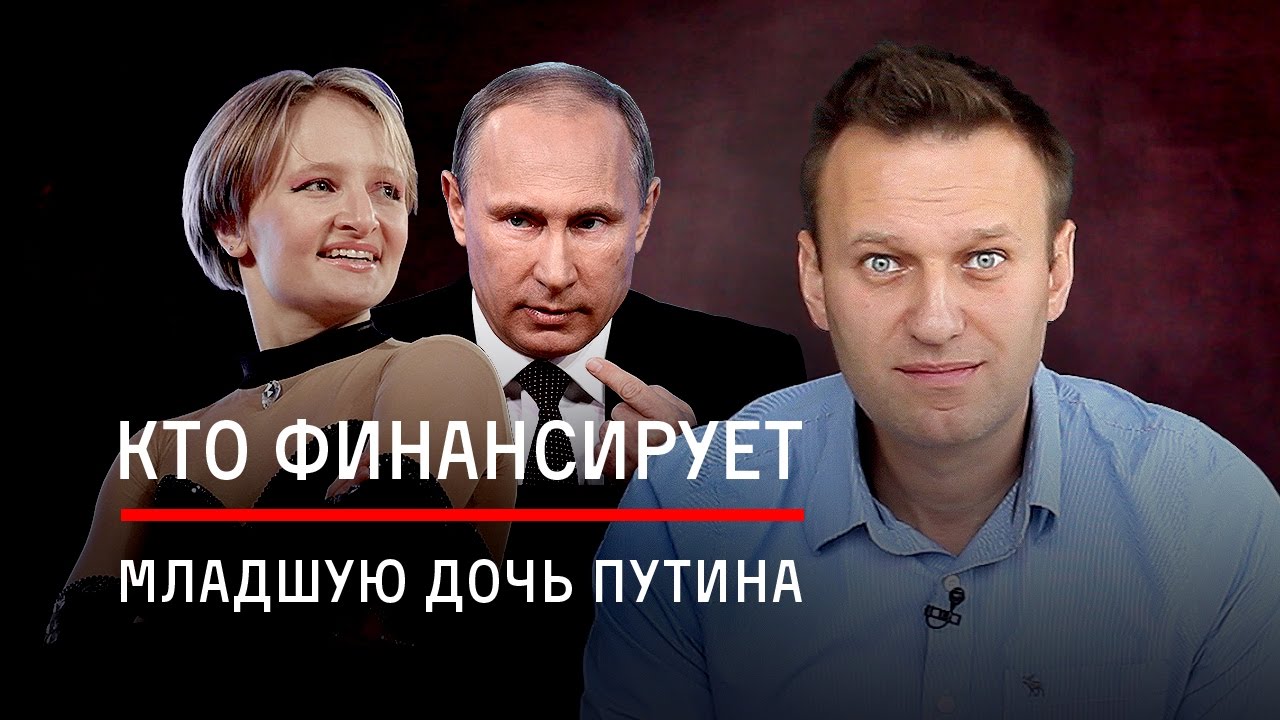
Katerina Tikhonova’s foundation is officially called “National Intellectual Development,” but it operates under the brand name “Innopraktika,” so that’s what we’ll call it from here on.
The foundation’s stated goal is to support young scientists and their initiatives. If you’re about to say sympathetically, poor Katerina, science funding in Russia has fallen dramatically—by 14%, so her foundation is probably struggling too, don’t. Things are going just fine there.
Let’s compare this with previously known information.
In 2013–2014, Tikhonova’s foundation “won” tenders worth nearly 100 million rubles. At the same time, the foundation’s annual budget was 281 million rubles.
Since then:
Innopraktika has “won” another 452 million rubles in tenders from state-owned companies. Here is a table listing every tender.
Including 179 million rubles from Rosneft handed to Putin’s daughter;
221 million from Transneft;
59 million from Rosatom.
And the stream of astonishing and mysterious “targeted contributions” has not dried up either. Someone tossed in 425 million rubles’ worth of them in 2015.
Who exactly it was cannot be verified, and we would very much like Katerina Tikhonova to publish that information herself. Just so there’s no room for speculation.
Thus, there is documentary proof that Putin’s younger daughter’s foundation received 877 million rubles in 2015–2016. And we are 100% sure the total will be even higher, because we still do not see the “targeted contributions” for 2016. If we assume they were no smaller than in 2015, the total would exceed 1 billion rubles.
You may ask: what kind of work was all this money paid for?
Well, for various kinds of innovation. No one in Russia really knows what that means. Skolkovo and Rusnano are good examples. A lot of money was spent—and there’s nothing to show for it.
We were especially impressed by the breakthrough, high-tech work Katerina Tikhonova’s foundation did for one of the organizations of the Russian Academy of Sciences (an organization in dire financial straits, by the way). For 2.5 million rubles, they cobbled together documentation for the “technical working project of the KFU IIS regarding psychological and pedagogical requirements for users in the context of its integration into the ecosystem of the Digital Valley of Crimea.”
Still not clear? Here it is in simpler terms, straight from the technical specification:
And so you can better understand what our Silicon Valley will look like, here are excerpts from another part of the technical specification:
Crimea’s Digital Valley under full state control. It is simply destined to prosper.
Isn’t it delightful? Do you really begrudge spending 2,500,000 rubles on something like this?
Where does Katerina put the money she receives? Answer: we don’t know.
The “Our Results” section of the foundation’s website says that some kind of Congress was held and some kind of projects were carried out for those same state-owned companies—Rosneft, Transneft, and Rosatom. No specifics at all. The only regular and concrete updates on the foundation’s activities are news digests about all sorts of things. That’s it—nothing else happens.
In the video, I addressed the Innopraktika foundation, and I’ll do so again here: guys, since you are funded by state-owned companies, it would be great if you voluntarily told the Russian public a bit more about what you actually do. Including:
Tell us the source of the foundation’s targeted contributions.
Publish the results of the foundation’s work.
We are also sending an official written request and will report on the outcome.
Don’t forget to subscribe to our channel.
Don’t forget to support ACF financially. Thanks to you, we work without double solid lines.