One of the most baffling things to me in the Russian debate about the American election is why Putin-aligned media and officials are so sure that a Trump presidency is a gift to them.
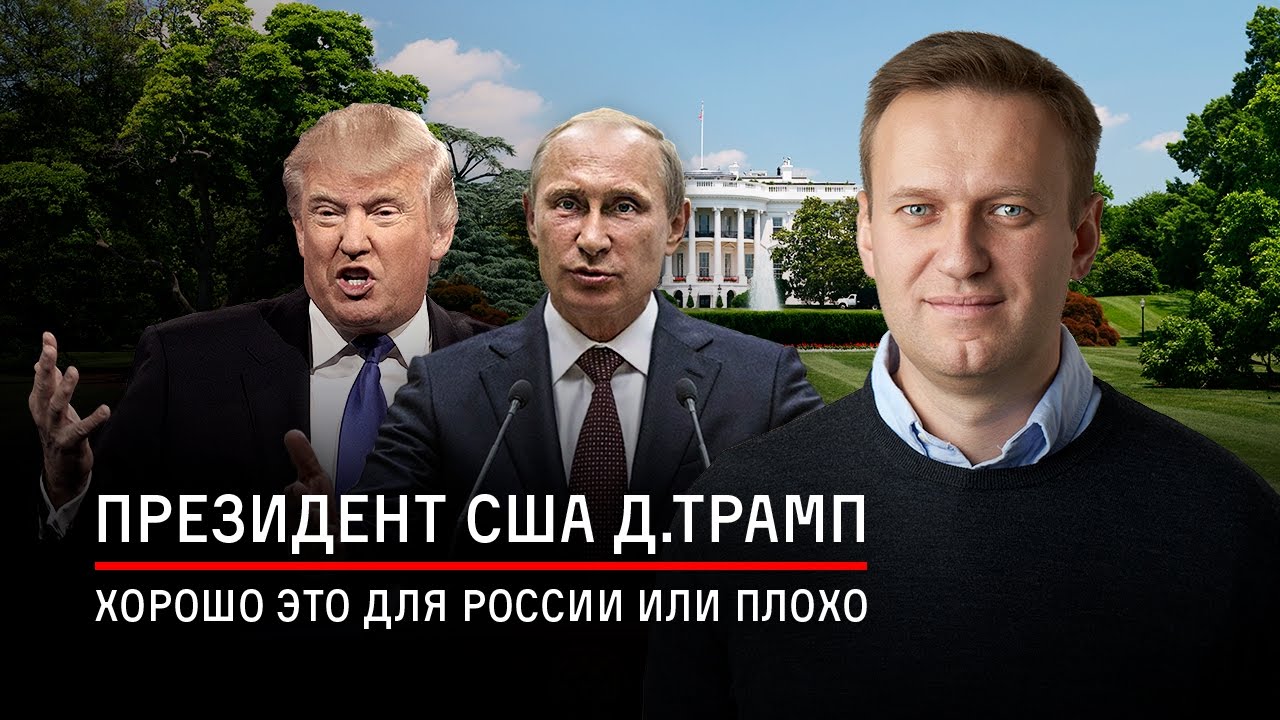
I don’t think that at all, and I even recorded a new video on the subject:
Yes, most likely there will be no element of personal animosity between the leaders in future U.S.-Russian relations. Hillary talked so much about Putin in the final stretch of her campaign that it certainly would have emerged; now it won’t.
And in what other way does Trump’s supposedly pro-Russian—or even pro-Putin—stance show itself?
Let’s take Trump’s platform and his most important campaign speech (in my view) and break them down.
Trump’s actions as president will likely lead to lower oil prices (they already fell on the news of his election):
The United States has enormous oil reserves. Their production and export were artificially constrained for years. Giving oil companies a full green light will increase supply and put downward pressure on prices.
It’s obvious what that will do to the Russian budget.
Recognition of Crimea, lifting sanctions. Yes, Trump said he would consider recognizing Crimea, but that was back in 2014. He said Putin was great and better than Obama, but that was a long time ago too. Less than a month ago, however, he was already condemning the bombing of Aleppo and saying he was reconsidering his view of Putin and didn’t know what their relationship would be like, allowing that it might become “terrible.”
And as for sanctions, here’s a historical example: the Jackson–Vanik amendments. They were introduced in 1974 and only repealed in 2012. Even though the USSR had collapsed, Jews were freely emigrating without restrictions, there was the whole “Friend Bill, Friend Boris” era (a reference to the warm public rapport between Bill Clinton and Boris Yeltsin), and the measure had effectively not been enforced in its final years. America does not lift sanctions quickly (though, to be fair, it doesn’t impose them quickly either).
The arms race.
So to maintain parity, we will still have to spend huge amounts of money, draining our budget.
The most sensitive defense issue for us is missile defense, and here the new vice president, Pence, is a much bigger hawk than any previous administration:
Until now, the line was that U.S. missile defense was aimed not at Russia, but at “rogue states.”
Putin and Trump are, fundamentally, politicians with opposite views. Take almost any issue:
- Immigration. Trump: a wall. Putin: against a visa regime with the countries of Central Asia.
- The state in the economy. Trump: less of it. Putin: state capitalism and a growing bureaucracy.
- Civilian gun ownership. Trump: in favor. Putin: absolutely not.
- Islamization. Trump: ban migration from troubled Muslim countries. Putin: absurd lines about Orthodoxy being closer to Islam.

- Corruption. Trump built his campaign around speeches about fighting it. Those were his main promises.
Putin, by contrast, made corruption the foundation of his regime.
And so on, and so forth. On every point.
Most importantly, this is why I think Trump’s election will change nothing for us. It won’t make things better or worse.
American foreign policy is not a race car driven by one person. Here, that kind of thing is possible—over the course of two months, the Turks can be our main allies, then our main enemies, then our best friends again.
In a country with functioning institutions, it doesn’t work like that. It’s more like a fully loaded tanker. Even if you really want it to turn, it will keep plowing along the same course for a long time out of inertia.
Congress, the Senate, the media, public opinion, experts, ambassadors—all of it matters, and none of it can be changed at once. Obama, for example, very much wanted to close the prison at Guantánamo. He was president for eight years. Did he close it? No. He couldn’t; Republicans blocked it.
And tomorrow, those same Republicans in Congress—who criticized Obama for being soft on Russia and demanded deliveries of lethal weapons to Ukraine—will still be there. They have their own views, and those views will have to be reckoned with.
It’s long-term work: start now, and you’ll see the effect years later.
So Trump is neither for Russia nor against Russia. What this is really about is one part of American society mobilizing and showing up more strongly in the election than the other.
What we should pay attention to is the victory of a candidate whose defeat was predicted by all the media, experts, and pollsters. All the stars and opinion leaders were against him. It seems only Chuck Norris came out for Trump, which gives us an excuse for some new jokes about Chuck Norris being unbeatable.
And yet he won. Once again, we saw what real elections look like—with genuine competition and a real fight for votes.
Let’s work to achieve the same in Russia. No one will do it for us—not even Trump.