
A lyrical introduction.
I strongly recommend watching the video in which I explain, as simply as possible, why I believe Usmanov is trying to mislead us with his stories about his business. All that talk about “I never took part in privatization,” about “buying assets for billions of dollars,” about “hundreds of millions of dollars” in taxes paid.
In short, none of it is true. He did privatize assets, he paid peanuts for them by any relative standard, and those “hundreds of millions of dollars” in taxes are only a small fraction of what he really should have paid.
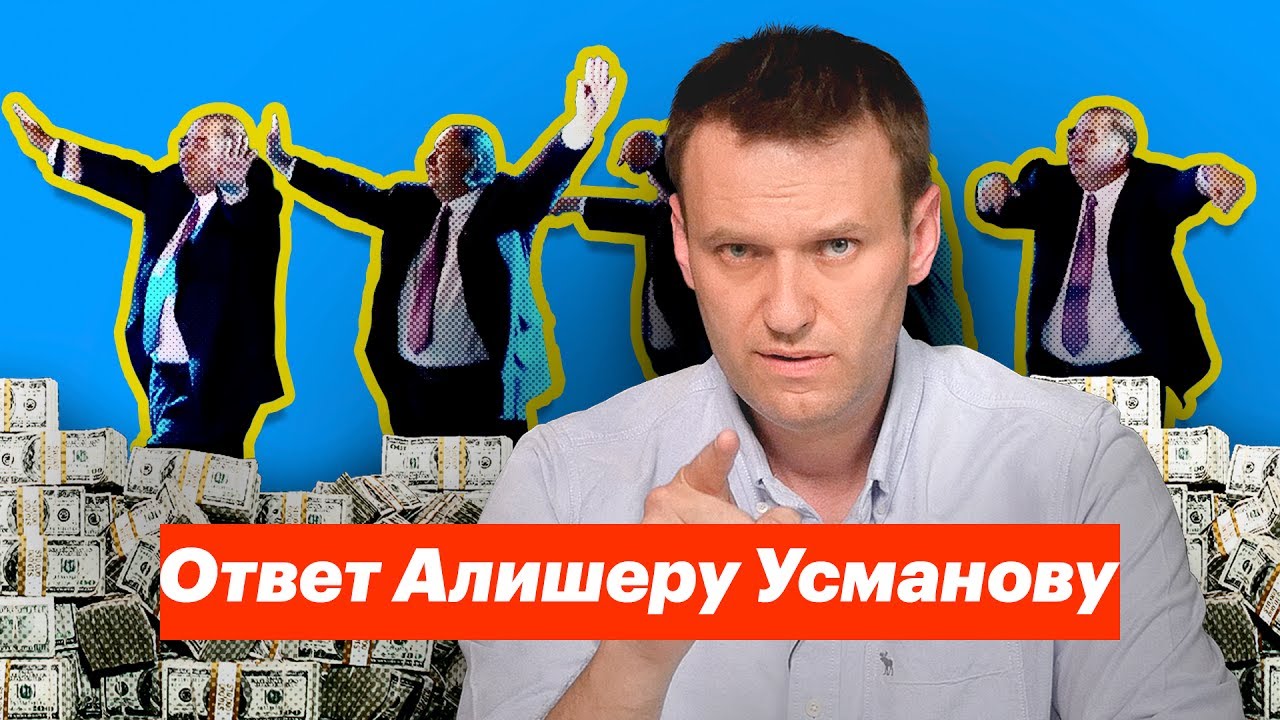
And if you want the longer version, read on. I hope my video and this text will provide some much-needed clarity about where an oligarch like Usmanov came from and how he became one of the richest people on the planet. That clarity is long overdue, because the “official” version of Usmanov’s business biography falls apart under even minimal scrutiny.
Part 1. How Usmanov made his first money.
If you rewatch Usmanov’s first video carefully, you’ll notice that when Alisher Burkhanovich talks about his business, he mostly refers to events from the last 10 years or so. Maybe he briefly mentions 2004. But otherwise it’s mostly fairly recent events—as if he only started doing business in the mid-2000s.
An excellent question, and I’m sure I’m not the only one who asked it: “And what exactly happened before that, if you don’t mind?”
The thing is, Alisher Burkhanovich starts telling his story from the middle. That’s a mistake, because the most interesting part was in the opening episodes.
But finding out what happened at the beginning is not easy. Usmanov’s biographies and “success stories,” published by many Russian business outlets, have been polished to a mirror shine. They present a perfect image of a genius investor who got richer in the 1990s from everything he touched.
The official version goes like this: he studied in Moscow, returned to Tashkent, was imprisoned for eight years, was released early, was invited to work at the Soviet Peace Committee (because of course they recruited exclusively former convicts there), then made his first attempts at business—making plastic bags, importing cigarettes—and then came his first truly serious venture: the investment company Interfin, where he traded securities. Supposedly, it was created thanks to partners who believed in his talent and chipped in $10 million each.
Such a company really was created in 1995. But once again, Usmanov tells only part of the truth. And the most interesting part lies in what he left out.
Interfin had another founder. From the moment it was established, 40% of the investment company Interfin belonged to a British firm called Middlesex Holding plc.
And what do we do when we see a company registered in the UK? Exactly—we rejoice. Because it’s a wonderful jurisdiction: every year, you have to file extremely detailed reports. Financials, plus accompanying commentary on how the business is going.
The Anti-Corruption Foundation (ACF) studied more than two thousand pages of annual reports, minutes, and other documents, and I’m about to give you a summary. A very brief one, believe me. We still have so much material left that you could write books about Usmanov’s dealings.
On October 15, 1993, the new managing director of the long-established English firm Middlesex Holding became a certain Iranian businessman already operating in Russia. He brought with him a group of “Russian investors,” each of whom received roughly 2% of the shares.
And on that list we see our old acquaintance—Alisher Burkhanovich Usmanov.
Let me remind you: this is 1993. Strange, of course, but fine—we still don’t yet understand what this company does or what Usmanov has to do with it.
Let’s keep flipping the calendar. In 1994, the company specialized in trading Russian oil and coal, and business was booming. In 1995, Russia and the CIS became the company’s main focus, the Interfin subsidiary was created—the one Alisher Usmanov talks about in interviews—and the British company named its main supplier for the first time: the Oskol Electrometallurgical Plant, abbreviated OEMK. The very same one Usmanov talks about in his video blog.
In 1996, the British company bought an offshore firm holding EXCLUSIVE rights to export and distribute direct reduced iron (produced directly from ore) from the Oskol plant. They paid a fairly substantial sum for it—almost £3 million.
You may find it strange that a Russian enterprise in 1996 would sell its products abroad through a shell offshore company. And on an exclusive basis, no less.
It will stop seeming strange once I tell you who owned that offshore company. It was Alisher Usmanov. Shortly before that, he had registered the offshore company for himself, then signed an exclusive contract to export OEMK’s products, and then SOLD that company to his British partners THE VERY NEXT DAY.
So as early as 1996, Usmanov controlled OEMK enough to be able to sign such a contract and make money from assigning it—literally out of thin air. As a result of that deal, Usmanov increased his stake in the British company by several more percentage points.
In 1997, Usmanov was appointed vice president of Middlesex. Curiously, Alisher Burkhanovich says nothing about this position in his interviews.
The company stopped limiting itself to trading OEMK’s products. It began buying up the enterprises themselves. The British company’s direct stake in OEMK grew every year; by 1998, it already owned 14.5% of the Oskol Electrometallurgical Plant. It was also buying shares in Lebedinsky GOK (a mining and processing plant)—2% in 1998.
Let me remind you about the Russian subsidiary Interfin. It, too, was fully under Usmanov’s control. He was both a shareholder and its director from the moment it was created. Interfin was also buying up shares in OEMK and Lebedinsky GOK. The reports here are less detailed, but it can be assumed with reasonable confidence that by 1998 this whole conglomerate of Usmanov’s companies controlled more than half of OEMK’s shares and at least 40% of Lebedinsky GOK.
But who owned the rest?
You’ll laugh. At the same time all this was going on, Usmanov went to work for Gazprom. By 1997, he was already deputy head of Gazprom’s investment subsidiary, Gazprominvestholding. And in PARALLEL, he was buying the remaining shares of Lebedinsky GOK and OEMK—not for his own companies this time, but for Gazprom.
It’s an incredible triple split personality: Usmanov was buying shares in these enterprises through the English Middlesex, which he partly owned; through the Russian Interfin, which he partly owned; and through Gazprominvestholding, which he managed.
Then Alisher Burkhanovich decided, so to speak, to get rid of unnecessary shareholders—namely, the English company, which he controlled but did not fully own. But why spend his own money to buy out their stakes when he could spend ours instead? Why else would he be running Gazprominvestholding? Under Usmanov’s leadership, Gazprominvestholding in 2002 created a subsidiary in the British Virgin Islands—Eastern European Income Fund (EEIF)—which bought Middlesex’s Russian business for $23.5 million: $19.5 million for 14.5% of OEMK, $3 million for shares in Lebedinsky GOK, and another $1 million for that same DRI offshore company that Usmanov had sold to the British in 1996.
This is a very important point, so let me dwell on it again in detail. Usmanov heads the state-owned company Gazprominvestholding. Gazprominvestholding, using Russian budget money, buys stakes in OEMK and Lebedinsky GOK from a British company that also belongs to Usmanov.
As a result, all the significant stakes in Lebedinsky GOK and OEMK ended up in the hands of only two entities: Gazprominvestholding, which Usmanov headed, and Interfin, which belonged to Usmanov and his partners. They decided to pool these stakes into a single holding company—Gazmetall. In total, it ended up with 80% of Lebedinsky GOK and 70% of OEMK.
Let me add some context here. I am still describing events from 2002, and by that point Usmanov had already spent nearly 10 years buying up and consolidating shares in these two raw-materials plants by every possible means. In the famous video, let me remind you, he claims that he “bought them for 2.5 billion francs in 2006.”
And now we come to the most interesting part: privatization.
Part 2. How Usmanov PRIVATIZED the metallurgical plants.
Let’s applaud the art of phrasing. But, Alisher Burkhanovich, privatization is not limited to loans-for-shares auctions. Usmanov recommended that I read books about the land code; I recommend that he at least flip through a dictionary to the letter P. Privatization is when something that belonged to the state—fully or partially—is transferred to a private owner. Whether through an auction, loans-for-shares or otherwise, through vouchers, or as the result of a crooked backroom deal.
And in Usmanov’s case, that is exactly what happened. In 2002, Gazprom SUDDENLY decided it no longer needed these metallurgical assets. Yes, that’s right—it had just bought stakes from the British company that very same month, and then changed its mind.
Gazprominvestholding’s 48% stake in Gazmetall—Gazprominvestholding being headed by Usmanov—was sold to the second shareholder, Interfin, without any auction or tender, for 72 million dollars. Not only is that a laughable amount, but on a per-share basis it was even cheaper than what Usmanov had paid for these same assets when buying them from his own British firm.
Let me state the obvious once again. When shares in OEMK and Lebedinsky GOK are bought out from STATE-OWNED Gazprom for pennies, in your favor, that is privatization. It was state-owned; now it belongs to Usmanov, offshore and private. And the fact that the selling company, Gazprominvestholding, was also headed by Usmanov at the time is simply a gigantic, multilayered conflict of interest.
And here is the most interesting part—you’re probably all wondering now: how did Usmanov manage to fleece Gazprom for years without anyone saying a word? Very simply. Do you know who was chairman of Gazprom’s board of directors at the time? Maybe you’ve already guessed. And if not, here he is: Dmitry Anatolyevich Medvedev.
Part 3. How Usmanov shifted profits offshore and underpaid the Russian budget by hundreds of millions of dollars.
Now to taxes. We also heard a lot about Usmanov the honest taxpayer.
I have no doubt that Usmanov pays SOME taxes in Russia. The problem is that he should have been paying many times more.
I don’t know why Alisher Burkhanovich keeps waving around the amount of taxes supposedly paid over 10 years—half a billion dollars—because that wording alone raises doubts. First, his business was not created 10 years ago, and second, the figure does not match his wealth.
Let’s try to understand exactly how Usmanov avoids taxes. Spoiler: indirect exports of Russian raw materials abroad, transfer pricing, and profit centers in offshore jurisdictions.
Remember the exclusive rights to export Russian products that Usmanov sold to the British in 1996? That is the first thing to pay attention to. Then, in the same British Middlesex filings, we see repeated references to trade with OEMK and Lebedinsky GOK being conducted through several foreign firms—two in Switzerland and two in the UK. All of them are interconnected and own stakes in one another. In other words, instead of selling their products directly, the Russian enterprises FIRST sell them to a group of British-Swiss companies, which then resell the goods around the world.
What’s the problem? The costs remain in Russia—the plant is in Russia, the production is in Russia, the wages are paid in Russia—but the profits from sales settle in foreign intermediary companies set up by Usmanov and his partners.
And from the moment Usmanov’s companies snatched near-controlling stakes in Lebedinsky GOK and OEMK from Gazprom, they became completely brazen and simply routed all exports through Irish offshore company BGMT, and later through the Gibraltar offshore company Ferrous Metal Company.
The scheme was very simple: sell raw materials cheaply to offshore companies under their control, so those companies could then sell them around the world at full market prices. As a result, the Russian enterprises show little profit and therefore pay little tax. The offshore companies, meanwhile, make large profits—but those profits are sitting somewhere in Gibraltar, where taxes are either not paid at all or paid only symbolically. We tested this hypothesis using customs databases and confirmed that the price at which Lebedinsky GOK shipped products to the offshore company was more than twice lower than the market price for the same products.
This tax-avoidance scheme is called transfer pricing. I’m sure many people remember the term, at least from the news. After all, this is exactly what Mikhail Khodorkovsky was sentenced over in 2003 and sent to prison for 10 years.
Here is a document sent by one of Usmanov’s companies in 2008 to investors on the London Stock Exchange. It mentions the Gibraltar company Ferrous Metal Company, discloses that it belongs to Usmanov personally, and gives its annual turnover: US$3 billion.
Usmanov boasts that he paid $500 million over 10 years. Given the sums invested in a luxurious life abroad during the same period, that sounds more like a confession. (More on that in the video.)
Part 4. Was Usmanov accused of rape?
Interestingly, Usmanov lies in his videos when he talks about what I allegedly claim regarding rape. Let’s look at the text of his lawsuit against me and see which exact phrase he is disputing.
The phrase is not from the investigation “He Is Not Dimon to You” (there is nothing there at all about his convictions), but from a live broadcast on Sobol’s program. I say that he was tried either for fraud or for rape.
That is an entirely accurate phrase, because all of us judge Usmanov’s biography based on open sources. One of those sources is the publications of Craig Murray, the former British ambassador to Uzbekistan.
He long ago published the following information and insists that it is accurate:
Translated: Alisher Usmanov is a vicious gangster, criminal, racketeer, heroin trafficker, and was accused of rape.
Those statements are online right now. Not anonymously, but openly on an official website. Yet for some reason Alisher Usmanov is not suing Ambassador Murray in a British court. He wants to sue me in a Russian one.
Why do you think that is?
Probably for the same reason he waves around papers from an Uzbek court that rehabilitated him in 2000, but does not want to show the original verdict.
I trust my own eyes. I know perfectly well that the British ambassador to Uzbekistan is someone the local authorities deal with at the highest level. Someone who has access to secret intelligence information. Someone for whom the entire embassy gathers information.
Whom should we believe? The ambassador, or Usmanov, who constantly lies about his biography, as I have shown above?
Part 5. Underground work.
A small thing, but irritating. Usmanov does not even know that there is underground work at his plants. He seems to think that if mining is done by open-pit methods, then nobody ever has to go underground.
That is disproved by something as simple as a basic search on job websites.
He could take a little more interest in the people whose labor makes him his money.
Summary.
Even though this whole exchange with Usmanov distracts us from the main villains—Medvedev and Putin—it is still useful.
The raw-materials oligarchs have had their day. They are harmful people. They bring no benefit whatsoever. They have built nothing, invented nothing, created nothing. They make money from raw materials, corruption, and workers’ low wages. I wrote about this in more detail in my anti-oligarch manifesto.
Yes, I am against Putin—he is the main villain.
But it is no less important to say, “Yes, I am against Usmanov too.” Oligarchs are a pillar of the regime and one of the causes of poverty.
If you support me and oppose the oligarchs, help spread this video, add your signature, or chip in to the campaign.
Come to the June 12 rally in your city.
If you support Usmanov, there is no need to send him money. It is already being taken from you straight out of the budget for his benefit.
People