
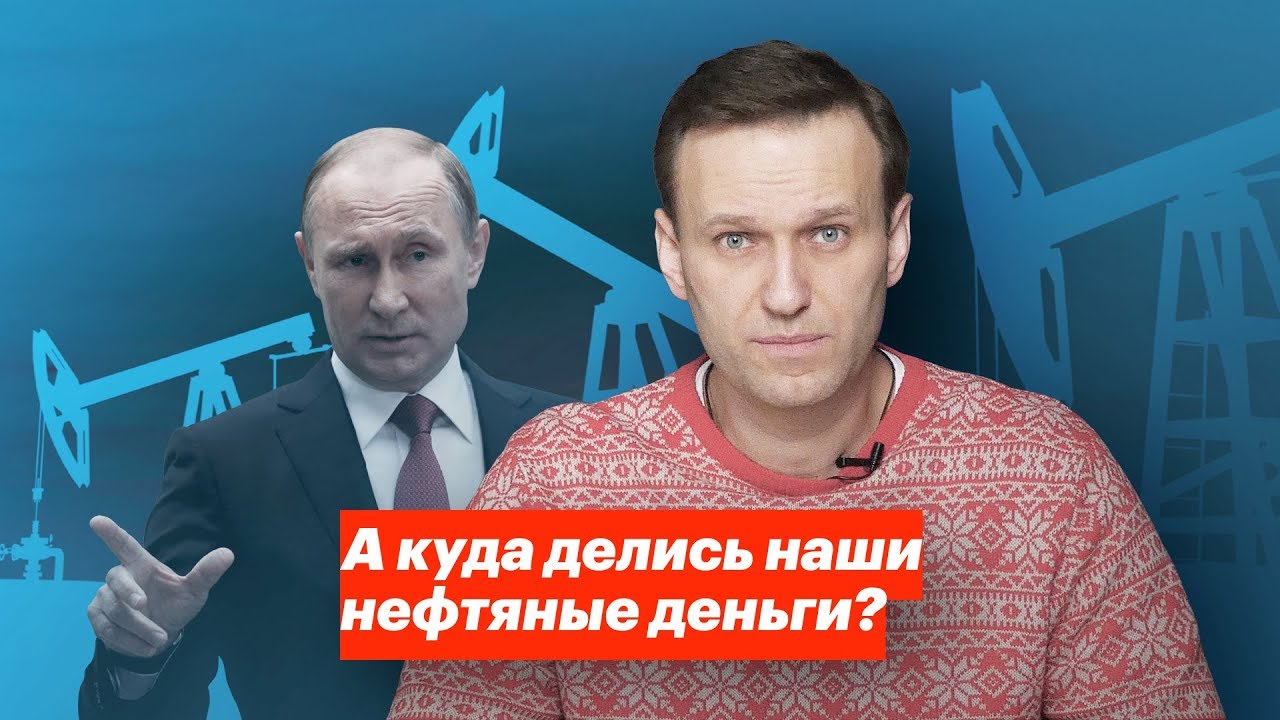
Our country's Reserve Fund, where we had been putting our oil money, ceased to exist on January 1, 2018.
At first, we were told that it had become so small that it was merged with the National Wealth Fund.
And on January 10, Finance Ministry statistics were published showing that it had not just “become so small,” but had in fact run out altogether.
This is the biggest event of 2018 so far, and an excellent reason for every Russian citizen to ask themselves: where did my oil money actually go?
Sovereign wealth funds in other countries are doing just fine. Norway, the very country we originally took as our model, has increased the size of its oil reserve fund. And us?
It seemed important to me to answer that question, so Vladimir Milov and I dug into the numbers—and that’s what my first video of the year is about.
And by the way, take note: Putin loyalists are currently following a talking-points memo on the Reserve Fund:
a) It didn’t run out; it was merged into the National Wealth Fund
b) There’s a lot of money in the National Wealth Fund
So in the video, we also break down the National Wealth Fund. Broadly speaking, it has two parts:
- the liquid portion. In other words, actual money in accounts. It can be used right now. 2.3 trillion rubles.
- the invested portion. 1.45 trillion rubles. And it has been “invested” so wonderfully that recovering most of those “investments” already looks unlikely. That money is gone for good—into the hands of Putin’s relatives and friends.
But the liquid portion—the actual money—is where things get interesting. The National Wealth Fund exists, after all, because it is explicitly written that it is meant to become “part of a sustainable mechanism for providing pensions to citizens of the Russian Federation over the long term.”
And of course you’re curious what the word “long term” actually means. For how many years, decades, or centuries would the National Wealth Fund last if pensions were paid from it?
It’s simple math: take the 2.3 trillion rubles in the National Wealth Fund’s “liquid portion” and divide it by the amount spent each year on pension payments to Russian citizens.
The result is... well, watch the video.
And one more important thing: since the election commissions dislike our leaflets calling for a voter strike so much, we decided to upset them even more.
Let’s bring back the old days and revive the DMP project. From now on, each video description will include files with a leaflet layout. It’s easy to print on a home or office printer.
So on Friday, Ruslan and I sat down and threw together three versions for you to choose from. The real champions will put up all three—and thirty-three copies of each:
It’s even easier to put one up in your apartment building entrance, at school, at a university, at work—anywhere. Don’t be lazy; make sure you do it. They may be able to shut us out of the media, but with this kind of guerrilla-style campaigning, we can reach even more people.
And people trust this kind of campaigning more than the zombie box (a slang term for state TV). Take part in the strike. Print them out, spread them around.