Even before Volkov and Pivovarov were arrested, the four of us were sitting together over coffee: Yashin, Pivovarov, Volkov, and me. We were discussing the election and the prospects of those who called themselves the “democratic opposition.” Or the liberal opposition, if you prefer. Yavlinsky, Sobchak, Titov.
There was just under a month left until voting day.
Our estimates differed, so we decided to make a bet. Each of us gave our forecast. We wrote it all down on a napkin—here it is:
Yesterday, Volkov was released from a special detention center in Moscow, and in St. Petersburg, Pivovarov was released. So now we can settle the bet.
Alexei Navalny: Yavlinsky — 2.2% Sobchak — 2.4% Titov — 1.5%
Andrei Pivovarov: Yavlinsky — 1.5% Sobchak — 1.2% Titov — 1.1%
Ilya Yashin: Yavlinsky — 1.5% Sobchak — 2% Titov — 1%
Leonid Volkov: Yavlinsky — 2% Sobchak — 1% Titov — 1.5%
Actual result: Yavlinsky — 1.05% Sobchak — 1.68% Titov — 0.76%
3.49% combined. (A complete horror show.)
The total deviation from the actual results looks like this:
Navalny: 2.61
Volkov: 2.37
Pivovarov: 1.27
Yashin: 1.01
First place goes to Yashin, second to Pivovarov, then Volkov, and I got thoroughly crushed. I thought far too highly of the liberal candidates. Well, if a forecast of 2.2–2.4 percent can even be called thinking highly of them.
Now I’m sitting here trying to understand why. However lazy, cowardly, and useless these three candidates may have been, it still takes some doing to end up with just 3.49% between them. Less than Khakamada alone got in 2004. She received 3.84% back then. (Incidentally, Yabloko was calling for an election boycott at the time.)
The most ridiculous and absurd presidential candidate of all time—Malyshkin, Zhirinovsky’s bodyguard—once got 2.02%.
My main mistake was assuming that the situation for the democrats was unique: for the first time in many years, they weren’t being savaged on television. Criticism was focused on Grudinin, while Yavlinsky, Sobchak, and Titov all got fairly favorable coverage—or neutral coverage at worst. Sobchak, in particular, was praised nonstop; those hellish talk shows even changed their format just to have her alone in the studio, without the usual aggressive, screaming audience.
That’s why I gave all of them significantly higher numbers than they actually got. I assumed Yavlinsky would mobilize the liberal electorate with some sharp statements. Sobchak, I thought, would appeal to provincial voters through her fame and whatever celebrities she might bring in at the last minute. And Titov, I figured, would rally some oligarchs/businessmen and scrape together one and a half percent from fools hypnotized by the opinions of “successful people from the Forbes list.”
These were the most obvious, surface-level assumptions. Surely, I thought, they couldn’t do literally nothing. They had campaign headquarters, they had budgets. Sure, the crooks in those headquarters would steal all the money, but even so, there was a bare minimum—and it seemed impossible not to achieve it.
Turns out, it is possible. Yavlinsky put out campaign videos with completely abstract messaging. The only idea in the final days of the campaign was: we must get 10%.
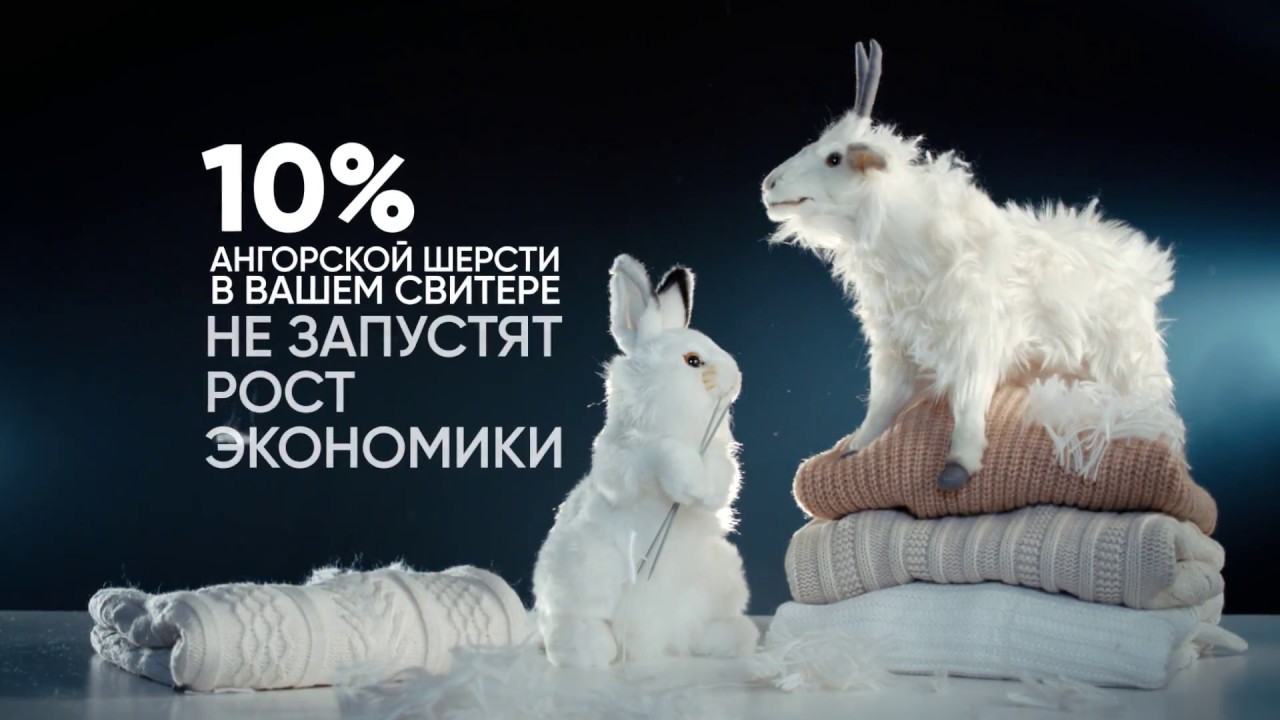
But people who know politics perfectly well understand that neither Yavlinsky nor Yabloko has EVER won 10% in its entire history. And people who don’t know politics simply had no idea what that was even supposed to mean.
The “final gimmick” of the Yabloko campaign was an utterly insane scam involving the distribution of 30 million newspapers over the last three weeks. Or 80 million. In other words, some enormous quantity of waste paper in the final days of the campaign, when every mailbox in the country is already stuffed with that kind of junk. I watched in amazement as people who consider themselves very smart managed to make complete idiots of themselves.
- We handed out 10 million newspapers.
- We handed out 20 million newspapers. Hooray, victory is near.
In other words, the campaign’s goal became the number of newspapers handed out. The paper itself said that Yavlinsky could have saved the USSR. At Avtozavodskaya metro station, every trash can had a fat bundle of these newspapers in it—apparently counted toward the triumphant distribution statistics.
Sobchak’s campaign, of course, was the biggest failure of all. It was obvious that Malashenko had simply stepped aside. The campaign was being run by someone else (interestingly, even the newspaper Vedomosti, with its strong politics desk, couldn’t figure out who that was).
Their main campaign events were organized by the Presidential Administration and Sobyanin (permission to unveil a memorial plaque, the “apology phone call”). Plus, of course, the water-splashing incident at the debate.
None of the more or less well-known people around Sobchak publicly endorsed her. The only one I can recall is Ulitskaya, but that wasn’t the kind of celebrity they needed. No fellow corporate-event hosts, no musicians, no socialites, no athletes. Apparently they were too embarrassed to take part in something like this. Even at the climactic campaign concert, the only act performing was the band Surganova and Orchestra.
As I understand it, they pinned a lot of hope on Dmitry Gudkov’s astonishing move: all along he had been campaigning hard for Yavlinsky—just listen to how passionately he was doing it—and then three days before the vote he announced he was backing Sobchak and appeared at her concert. Maybe that really did take some votes away from Yavlinsky and give them to Sobchak, but clearly only a tiny amount. Even people critical of Grigory Alexeyevich wouldn’t have liked that.
As for Titov, all you can really say is the absurd line, “What about Titov?” Idiotic political consultants came up with an idiotic gimmick and were delighted that people were laughing at it online. Look, they said, Titov’s name recognition is going up!
I was hoping there would be some original follow-up to the ad. “Here’s what Titov is about!” But they didn’t have enough creativity even for that.
So what’s the conclusion from all this?
This: I need to stop doing what I’ve just done—wasting so many words on these “politicians.”
3.49% combined. Even in Moscow, all of them lost to Zhirinovsky. That has literally never happened before. And yet in discussions of the “election” results and what comes next, they take up about 40 percent of the conversation, second only to Putin. Wherever you go, people inevitably ask you first about Sobchak, then about Yavlinsky.
Political analysts keep churning out columns. Assessing their prospects.
People endlessly discuss possible alliances, joint action, and the “unification of the opposition.”
Three point four nine percent combined, my friends. That has no future in 2018, or 2021, or 2024, or the year 2666. There may be some administrative resource there (party registration, essentially), but it is worth absolutely nothing without the resource that matters: people’s support.
What we should be discussing is not the unification of the opposition, but its creation.
First in ideological terms, and then organizationally as well. In 2018, we cannot treat something from 1996 as the opposition. Once again we have Yabloko and SPS (the Union of Right Forces, a now-defunct liberal party). No thanks—this is uninteresting, unviable, and incomprehensible to the modern voter.
The task of a democratically minded, opposition-leaning voter is to help create an opposition—not to convince themselves that something dead from birth needs to be revived.
We should be talking about fighting for 60 percent, not for 10, or five and a half, or three-point-four-nine.