We conducted another sociological survey. It seems very important to me, and I want everyone to pay attention to its results. That’s why I even recorded a special video about it.
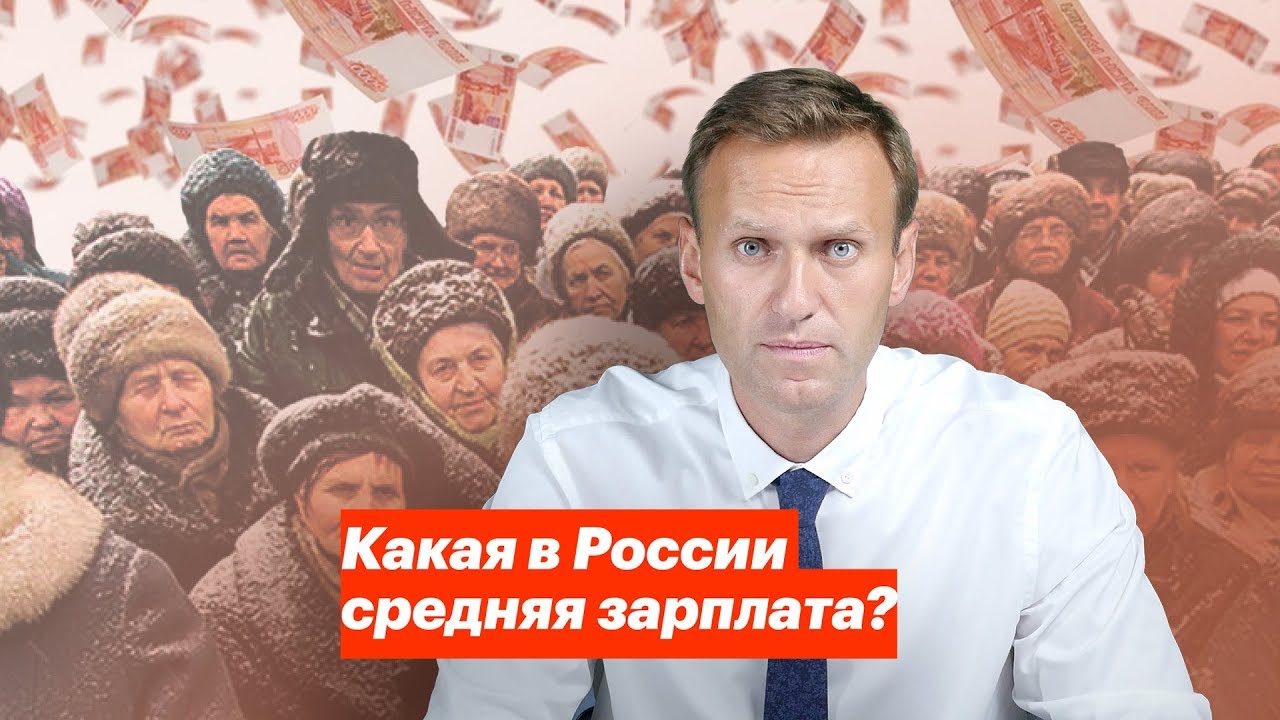
This study is about wages. What are wages in Russia really like, according to the people who actually earn them?
There are two basic premises:
The official Rosstat figure for the average monthly wage—45,840 rubles per month—seems... um, to put it mildly... unrealistic.
The ACF (Anti-Corruption Foundation) has the best polling operation in the country (just look at how accurate our forecast was for the presidential and State Duma “elections”). Many thanks to the volunteers who help us with it.
So it should be possible to find out something meaningful and important.
We found out. It brought tears to our eyes.
First, look through the slides with the results, and then read the conclusions. They matter. These are things everyone should understand if they are trying to assess Russia’s prospects for development under Putin’s regime.
Just keep Putin’s average wage figure in mind while you look at the slides: 45,840 rubles per month.
Conclusions:
— the data obtained in the survey completely refute the official statistics both on the level of wages and on wage trends; for example, among respondents there were twice as many people whose wages had fallen recently as those whose wages had risen, while for the overwhelming majority of those surveyed, wages have remained unchanged
— the real average wage in the country is about 15,000 rubles (and that is a nightmare); hard as it is to believe, our data confirm this in three independent ways: a) first, answers to the direct question “what is your wage?” show a pronounced peak in the 10,000–15,000 and 16,000–20,000 ruble ranges b) second, answers to the question of what the average wage in the country is also peak at those same values, and exactly the same number of respondents consider their own wage above average as below average, which indicates that our respondents’ idea of the average wage is quite consistent with reality c) third, we carried out another clever check: we overlaid answers to the question “is your wage higher than the one you consider average?” with answers to the question “what do you consider average?” and got a cross-tabulation showing that among people who believe the average wage in the country is more than 20,000 rubles, the overwhelming majority themselves earn less
— in this important survey, we included a record number of internal cross-checks so that we could be 100% confident in the data; for example, in addition to the direct question about wages, we asked respondents how their own wage compared with those of people they know, and once again landed exactly in the middle of the range (16% of respondents believe their acquaintances earn more on average, and 16% believe they earn less on average)
— finally, we calibrated our data by adding questions about the recent presidential election (and saw figures for the real turnout and the real vote for Putin — naturally, exactly matching Shpilkin’s models, with roughly 10 million stuffed votes for Putin removed)
— for mathematical precision, we should note that our study shows the MEDIAN wage in the country (not the average) is about 15,000–16,000 rubles per month (exactly the same number of respondents earn more and less than this amount—that is the mathematical definition of the median).
- hypothetically, it could be that both our survey is correct and Rosstat is not lying with its 45,000-ruble average wage: that picture (an average wage of 45,000 and a median of 15,000) emerges if for every 10 workers earning 15,000 rubles, there is one official earning 300,000; that would indeed produce exactly that result (average 45,000, median 15,000). Well, that too could be an explanation, but in that case the state is not telling us something about the existence of millions of regional officials in the country with enormous salaries
— and even the previous hypothetical point does not change the reality: the overwhelming majority of the country’s citizens live below the poverty line, with unimaginably low incomes
All of this is very bad, and there is no hope that this government can improve the situation.
And raising the retirement age will deal a colossal blow to those of us who most definitely have nothing to do with the lucky few earning 300,000 rubles a month.
So on September 9, be sure to come to the rally against raising the retirement age. Sign up here for the group for your city to get information about the time and place.
Help with sharing the video is welcome.