Oh, United Russia and its brazen deputies. They’re always giving us more work to do.
After their Volgograd deputy Gasan Nabiev told the whole country that only “drunks and freeloaders” live on a pension of 8,000 rubles a month (about $125 at the time), I was furious, like everyone else. But then I decided it would be worth finding a good pensioner. A hardworking one. The kind United Russia would approve of. To find out how he lives and tell all of you about it.
For an experiment like this, I thought, we need to find a pensioner who worked in the same place as the scandal-ridden Gasan Nabiev — and he works at Gazprom — and who is also close to the authorities.
And I found one.
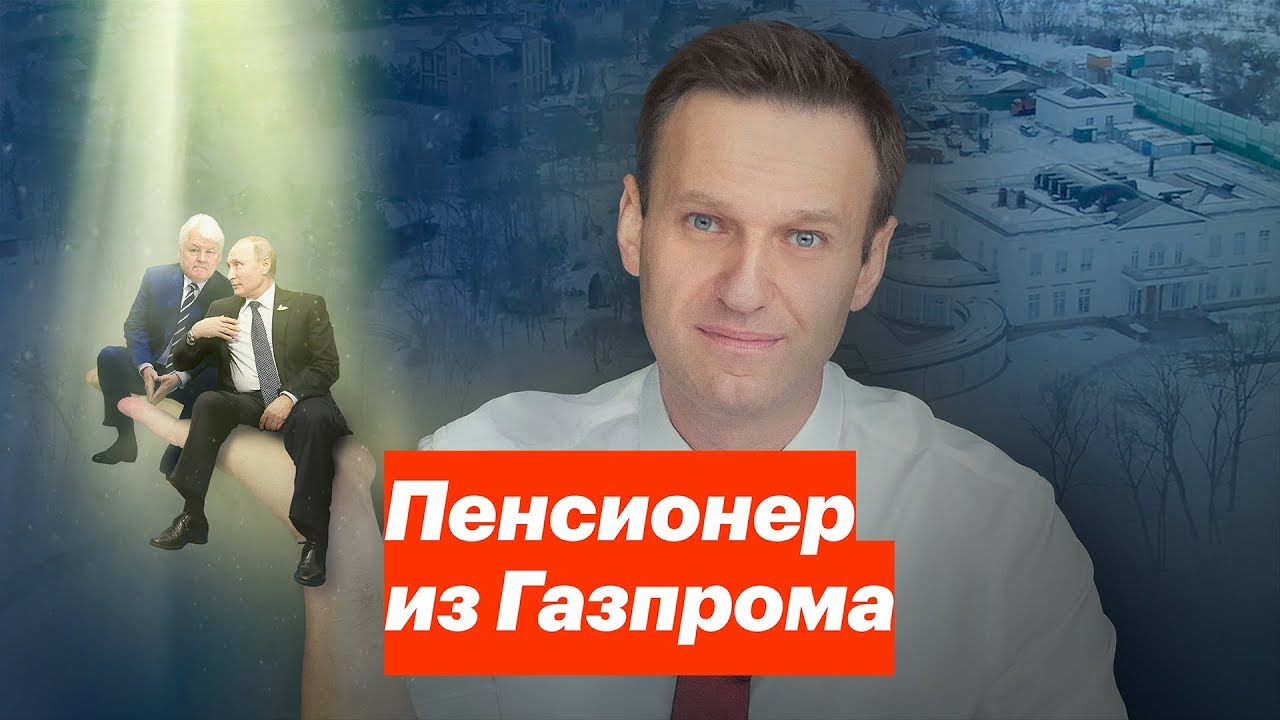
A few weeks ago, I read a news report saying that 66-year-old Gazprom deputy chairman Valery Golubev was retiring after 16 years at Gazprom. And unlike many other “retired” state officials, he wasn’t becoming a senator, an adviser, or an assistant. He really did seem to be stepping away from public life.
And I became intensely curious. What does a Gazprom top manager’s pension actually look like?
I mean literally — what does it look like? I know what a teacher’s pension looks like. It’s 12,000 rubles a month after 40 years of work — about $190 at the time. In Moscow it’s much more luxurious: 19,000 rubles a month, including supplements, or roughly $300. I can also imagine the pension of a factory worker from the Urals: 11,000 rubles a month, around $170. You can look around you and see for yourself how your parents, grandparents, and elderly relatives live, and on what income. We all know this perfectly well.
But what does the pension of a “successful” Putin-era manager look like? A man who spent his whole life in state service and, by the rules of Putin’s system, has earned a dignified old age.
We started digging and found a lot of interesting things.
But before we look at all that, we need to get to know this top manager a little better. Valery Aleksandrovich Golubev is not a particularly public figure, so let’s quickly run through his biography.
Valery Aleksandrovich Golubev doesn’t know a damn thing about gas, oil, energy, extraction, or drilling.
But he did serve in the Leningrad branch of the KGB (the Soviet security service). And then in the secretariat of the St. Petersburg mayor’s office. Sounds like a familiar story, doesn’t it?
That resemblance is no coincidence. Putin and Golubev really did know each other from their KGB service, and later they worked together in Anatoly Sobchak’s mayor’s office. And their shared history goes beyond just having worked in the same places.
When Putin was in charge of foreign relations at City Hall, Golubev was head of the Vasileostrovsky District. And according to numerous media reports, it was Golubev who arranged free housing in his district for the minor official Putin.
Exceptionally luxurious housing by the standards of that time — and, frankly, by today’s standards too. We’re talking about a 140-square-meter apartment (about 1,500 square feet) in a building on 2nd Line of Vasilyevsky Island. Golubev himself moved into the same building, in the same entrance, one floor below. So they served together, worked together, and lived together.
Then their paths diverged briefly: Putin moved to Moscow, while Golubev stayed behind and held a series of not especially important posts in St. Petersburg — he was a member of the city legislature and head of the city’s tourism committee. In 2002, he was delegated to the Federation Council (Russia’s upper house of parliament) and moved to Moscow.
And now for my favorite part.
How does a former KGB officer and some former tourism committee chief end up as deputy chairman of the country’s biggest and most important state company — our so-called national treasure, Gazprom? Like this.
Golubev happened to be at some meeting with Putin. As Putin was leaving, he spotted him in the back rows, recognized him, and asked: “Valera, what are you doing here? What are you up to?”
Within a month of that meeting, in early 2003, Golubev left the Federation Council — to which he had JUST been elected — was appointed CEO of a Gazprom subsidiary, joined Gazprom’s management board, and then became deputy chairman. He remained in that role until 2019.
Here is Golubev’s biography from Gazprom’s official website. I haven’t omitted or embellished anything. KGB >> mayor’s office >> Gazprom.
And people say there’s no career mobility in Russia!
So, we’ve established the basics. We have a model Putin-era pensioner. He’s from Gazprom. He’s close to power.
And now we want to see what a dignified old age looks like for this hardworking man. One who is not a “drunk or a freeloader”.
A dacha is hugely important for any pensioner, so that’s where we’ll begin. We simply searched online. Fortunately, the country’s main news agency — in its “economy” section, no less — informs us that the Yamal-Europe gas pipeline caused the porcini mushrooms to disappear from Golubev’s dacha.
The subject is covered in considerable detail. There’s even an extended quote from ~~Mikhail Prishvin~~ Golubev:
Besides the porcini mushrooms and champagne corks, the article gives a fairly precise location for the dacha — near Torzhok, in the village of Bibikovo. Naturally, we sent our special correspondent there, hoping to film yet another palace.
Here’s what we found.
And that, basically, was it. A fiasco. A leaning house in the village of Bibikovo. Snow up to your waist, not a single person around, ruined houses and fences. No gas, and probably no electricity either.
For a brief second, a heretical thought crosses our minds: “Could it be that we’ve finally found an honest Putin associate who didn’t steal billions?”
I was almost ready to back down and apologize, but then I thought: what if this isn’t our pensioner’s only dacha? After all, Russia has other nice places besides the wonderful village of Bibikovo.
Yes, my friends. It turns out pensioner Golubev neglected to mention one modest little country house in his interview. Apparently, no porcini grow there. But we’ll show it to you anyway.
Now we move to a place more familiar to readers of my blog: Rublyovka (the ultra-elite residential area west of Moscow).
This is Golubev’s real dacha.
Lovely, isn’t it? A house with two above-ground floors plus an attic, and an entire underground level as well. In the photo above, you can see a stylish curved gallery for strolling over to the bathhouse complex. And in the background are gates like something out of a fortress. With little towers. Through them, state manager Golubev makes his ceremonial entrance from Rublyovo-Uspenskoye Highway.
The house is 3,800 square meters (about 40,900 square feet). The plot is 5 hectares (50,000 square meters, or about 12.4 acres). It’s so large that it’s hard to capture in a single shot, but we tried.
In the photo above, we’ve highlighted Golubev’s personal car tunnel with a little yellow circle. The entrance to his underground lair. So he can go straight from the car into the house without accidentally stepping on a porcini mushroom.
There’s plenty more of interest on the property. In the photo below, you can see a 420-square-meter garage (about 4,500 square feet) — obviously for the staff, since the owner’s parking is under the house. On the left is a greenhouse. There’s a tennis court. In front of it, a snow-covered pit — that’s an outdoor swimming pool. In the foreground is a guest house.
On the right side of the frame, you can see a river running through Golubev’s property, completely cut off from public access. That’s illegal. He stole it. Just like, incidentally, his dissertation.
All of this — the land and the buildings, with a total value of more than 3 billion rubles (roughly $47 million at the time) — belongs to Vyacheslav Valeryevich Golubev, the 23-year-old son of Gazprom’s deputy chairman. He bought and built it when he was 19.
We began examining our pensioner’s lifestyle by doubting that the wooden house near Torzhok was all he had. And we were right to doubt it. But I want to tell you: it doesn’t stop with a 3-billion-ruble house on Rublyovka.
We also found the following assets belonging to the Golubev family:
A 200-square-meter apartment (about 2,150 square feet) in the very same building as Gazprom chief Miller. In Moscow’s Presnya district, right behind the Government House.
A 260-square-meter apartment (about 2,800 square feet) in Khamovniki, transferred into the name of his daughter Olga Golubeva.
A plot of land in southwest Moscow measuring almost 1.5 hectares (15,000 square meters, or about 3.7 acres).
And then there’s the St. Petersburg jewel. Probably the most closed-off and elite residential building in Russia, where almost the entire Ozero cooperative (a dacha cooperative tied to Putin’s inner circle — Kovalchuk, Shamalov, Fursenko) moved in, along with fellow travelers like Timchenko and Rotenberg.
There are no random people in this building on Kamenny Island in St. Petersburg, and there cannot be. Valery Golubev’s wife, Tatyana, owns a four-story apartment there measuring 460 square meters (about 4,950 square feet). It’s worth 360 million rubles — roughly $5.6 million at the time.
Not a bad retirement life, you have to admit. Which raises the obvious question: where did he get the money for all this? Even after 15 years at Gazprom, Golubev could not possibly have earned anything close to that amount. We tried to estimate his annual income. It’s a rough estimate, since Gazprom publishes only the total compensation for the entire management board — around ten people. But it gives you the general scale. In 2003, the “average” board member was making around 35 million rubles a year. By 2010, it was already 64 million. By 2017, around 220 million a year.
In short, we calculated on the generous side, including all sorts of additional compensation, and came up with the conclusion that over his entire Gazprom career, Golubev could have earned 2 to 2.5 billion rubles in total.
That’s an enormous sum, but it still wouldn’t be enough even for the mega-construction project and 5 hectares of land on Rublyovka. So how was everything else bought?
You don’t have to look far for an explanation. Back in 2011, Vedomosti published a short investigation into Golubev’s wife. She was a former physics teacher, but as soon as her husband got a job at Gazprom, she suddenly straightened her shoulders and discovered a passion for business. She then became a supplier of large-diameter pipes to Gazprom contractors — and made excellent money from it.
We, meanwhile, managed to identify another enterprising member of this family who had not previously been known about. His name is Yevgeny Yuryevich Kytin.
He appears in the transactions involving the purchase of those same 5 hectares on Rublyovka that we’ve just seen. And long ago, he was also officially registered at the same apartment as Golubev and his wife.
We will venture to ASSUME that he is Golubev’s wife’s son from her first marriage — in other words, the Gazprom deputy chairman’s stepson. And he works at Gazprom too! As deputy director of Gazprom Komplektatsiya, the company responsible for centralized procurement for all of Gazprom.
And in 2004, when he was 27, he became a shareholder in REP Holding, the largest manufacturer and supplier of various turbines and gas-compressor units for Gazprom. Later, all shares in the company were bought out by Gazprombank.
So that, it turns out, is the formula for a prosperous retirement.
That’s enough. It’s you, you drunks and freeloaders, who are supposed to work. But for these real hard workers, Putin brings everything: 500-square-meter apartments, a 3,000-square-meter house, hectares of elite land where every porcini mushroom looks like a champagne cork.
And this simple formula is shocking in how universal it is. Just look for yourself. Chemezov, the head of Rostec — served together, appointed by Putin, wife gets contracts, 5-billion-ruble apartment. Sechin — worked together, appointed by Putin, apartments, yachts, houses. Miller — same story: worked with Putin at City Hall, then Gazprom, then apartments, villas, planes. The Rotenbergs — did judo with Putin, grabbed a chunk of Gazprom, became one of the richest families in the world. Another pensioner, Yakunin — served together, then Russian Railways, contracts for the children, homes in London, retirement in Germany. I could go on for a VERY long time.
And every time you hear or think, “Well, he’s the head of Gazprom/Rosneft/Rostec — obviously these are major figures, managers, rich people,” don’t. It’s not obvious at all. These are random, incompetent people who at some point just happened to be on the same stairwell as Putin, or on neighboring dacha plots. That’s it. Their achievements end there, and after that comes what you can already see perfectly well yourselves: state companies looted clean, failed performance targets, imaginary successes, forecasts that never come true. Shameful wages and working conditions so bad that workers are driven to suicide right there at the factories, literally because they have no money. But at least for the people responsible for all this, dreams did come true.
My story is not just a story — it’s a call to action. There will be elections again in September. They will take place in 20 regions, including Volgograd Region, where that same Nabiev is currently a deputy.
You and I must — absolutely must — inflict maximum damage on United Russia. That is exactly why “Smart Voting” was created. Go there and register right now.