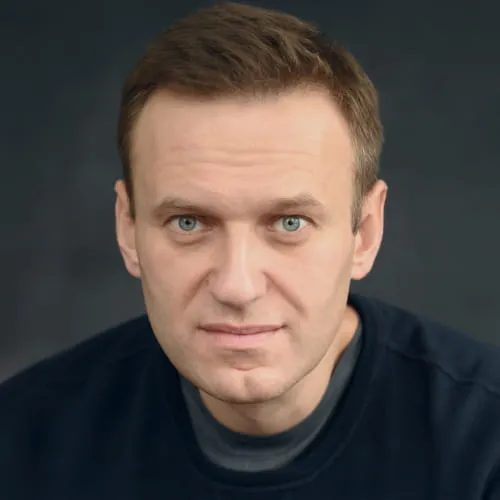
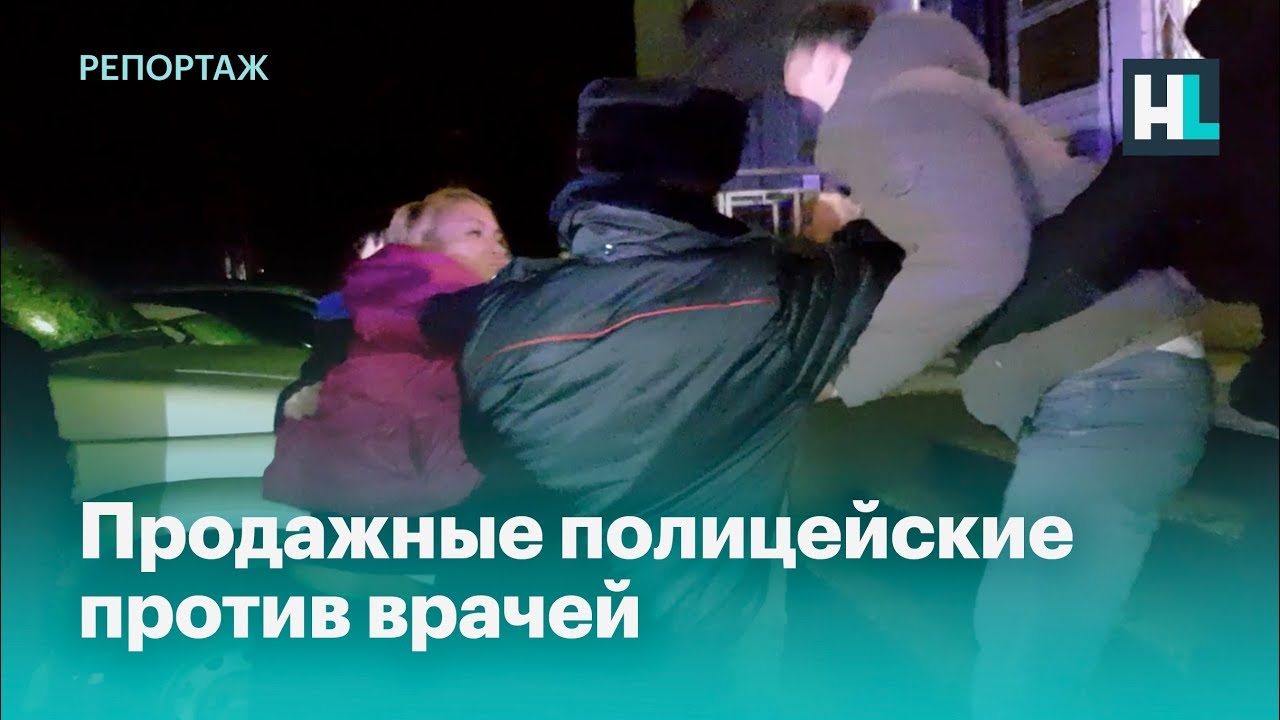
I watch this video showing the beating of medical workers from the Doctors’ Alliance trade union, and I’m overcome with bitterness.
All over the world right now, the central hero and object of admiration is the doctor or nurse heading in for a shift.
The front pages of newspapers and magazines are devoted to these people working in small hospitals somewhere.
Here, the glossy, press-friendly photo ops come only from the hospital in Kommunarka (a Moscow settlement known for its COVID hospital)—the only one in the whole country where such pictures can be taken, because in the overwhelming majority of the others, the reality would be grim.
And for now, the true photographic symbol of Russia-style coronavirus response should be the image of Anastasia Vasilyeva behind bars in a police station. She was delivering masks, respirators, and gloves bought with money raised by ordinary people to a hospital that had none of these supplies.
Her crime was apparently so grave, and the authorities were so enraged by this initiative from an independent trade union, that the deputy head of the regional police department personally went out to detain them, and Vasilyeva herself was kept overnight at the station. This despite the legal rule that women with underage children cannot be held overnight or subjected to administrative arrest—a rule observed even in Moscow, notorious for official lawlessness.
In general, medical unions around the world—whether in rich countries or poor ones—are behaving in much the same way right now.
They are criticizing the authorities for failing to prepare the healthcare system for emergencies like this.
Everyone is furiously denouncing the shortage of personal protective equipment (PPE), explaining for the millionth time that an infected doctor is the most dangerous thing that can happen during an epidemic.
They are raising hell over the lack of enough ventilators.
They are threatening strikes and demanding additional compensation.
This is completely normal and is passionately supported by society as a whole, which is effectively shouting: go on, hit harder, we’re with you. It is obvious to everyone that in the current situation, a union’s fight for better working conditions benefits everyone and increases the common good.
Here, union activists are openly beaten and intimidated, and a special Kremlin PR team has been assigned to discredit them. And all this is happening amid—let’s be honest—the fairly indifferent attitude of the broader public.
In my previous program, I promised to publish an Emergency Situations Ministry document. In it, the regions report their problems and questions related to the epidemic. Here it is.
You read it and realize: yes, we need alarmism and unions shouting in outrage, because otherwise the state will not lift a finger. And the scale of the problems is such that catastrophe is looming on the horizon.
Tomsk Region: there are no ventilators, and the promised delivery is in 180 days. So why are we shipping ours to the United States and Serbia?
An entire republic reports that its pharmacies have just 247 masks left.
Even wealthy regions like Bashkortostan have no testing consumables.
And in Astrakhan Region, they do not even have test tubes.
All of these problems are entirely solvable. The National Wealth Fund has plenty of money. Around the world, PPE production has been ramped up dramatically, and we would be able to buy it. But as you can see for yourselves, they are not buying it. No substantial funds have been allocated for this so far. There is no nationwide program to produce domestic PPE.
It looks absurd and incomprehensible, but if you think about it, the rational motive behind the authorities’ actions is obvious. They do not want to solve the problem, because then they would have to admit the problem exists. They would have to say that 20 years of “stability and prosperity” have led to hospitals in Astrakhan Region having no test tubes.
If the “Alliance” is bringing PPE worth a mere 300,000 rubles to a hospital in Novgorod, what does that mean? That this huge oil-producing country could not come up with that paltry 300,000 rubles, but it could buy the regional governor, Nikitin, a big black car costing several million rubles?
The Alliance’s trip is transformed from a socially useful act into a radically oppositional one. Which means they have to be intercepted on the highway, detained, and beaten.
Right now, talking about problems is not panic—it is a public good.
Right now, staying silent about problems is not “working calmly”—it is making things worse.
In countries with far more advanced healthcare systems, there are open and heated debates about what is happening. Here, the situation is so bad that it is time for the whole country to talk about nothing else.
In my presidential platform, I said that healthcare spending must be increased from 3.1 trillion rubles to 6.2 trillion rubles. Until that happens, we will remain both poor and sick. And it will happen only when we start loudly demanding what we want.