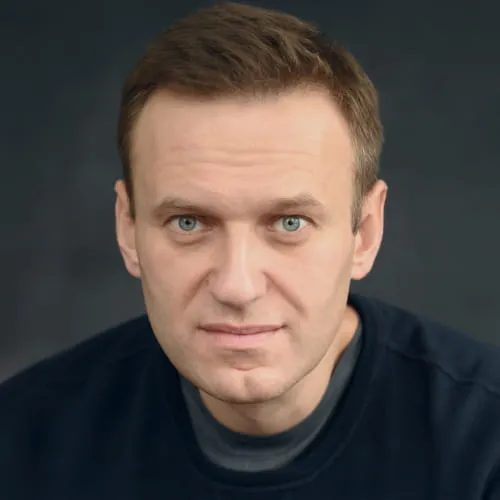
I know who wanted to kill me. I know where they live. I know where they work. I know their real names. I know their fake names. I have their photographs.
Please read this post to the end. Or watch the video. I will really need your help spreading it, because this is the story of a secret FSB hit squad that includes doctors and chemists—how they tried to kill me several times, and once almost killed my wife. They definitely won’t tell you about this on TV. Especially given that this group takes its orders from Russia’s president, Vladimir Putin. And by the way, I’ll tell you why he decided to have me killed.
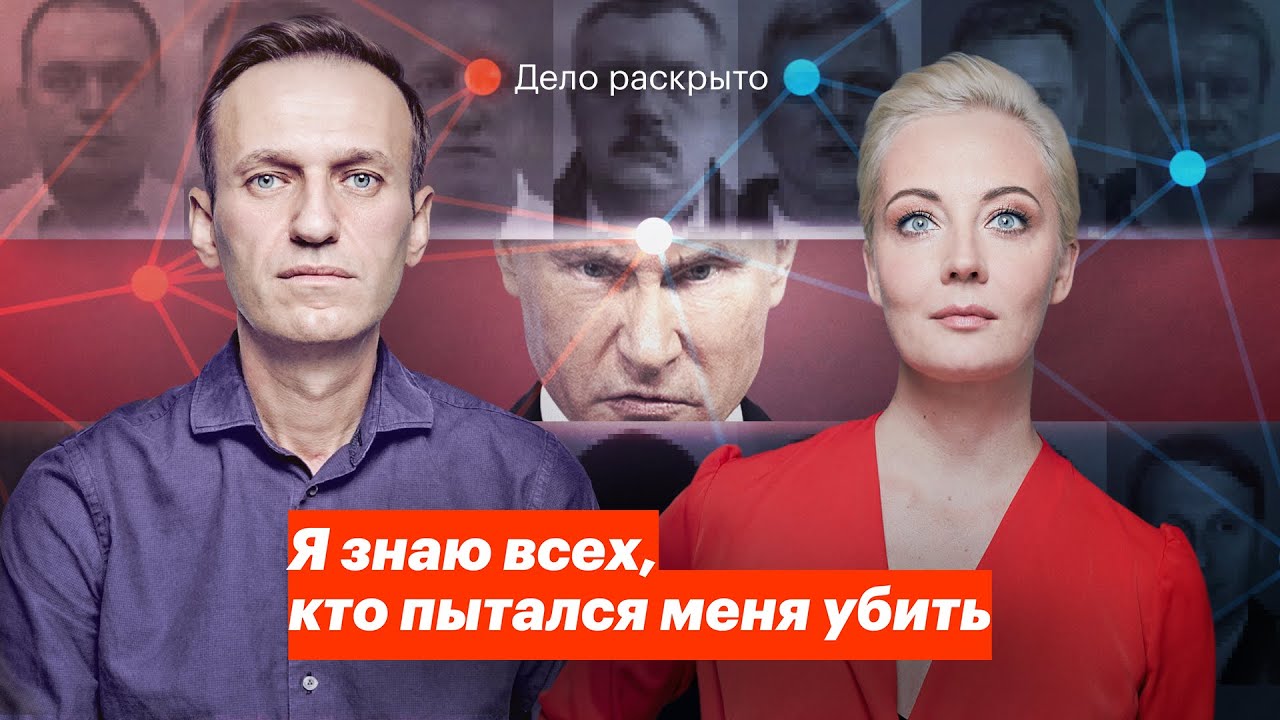
First of all: this is not our investigation. Or rather, we joined in at the final stage, while the bulk of the work was done by the investigative group Bellingcat together with The Insider, specifically by their lead and extremely talented investigator, Christo Grozev from Bulgaria.
So my first big thank-you goes to Bellingcat, and my second... to Irina Yarovaya and the United Russia party. Because it is thanks to the so-called “Yarovaya package” that corrupt law enforcement officers freely trade in the data from our mobile phones. And airline travel data too, by the way.
Some time ago, Christo Grozev got in touch with me and said, “You know, I think we’ve found the people who tried to kill you.” I might have thought he was crazy, except that it was Bellingcat who uncovered the famous Salisbury poisoning case. You remember—the one where TV showed those two ridiculous guys talking about the Salisbury cathedral spire.
So I took it seriously, and a month ago our investigations department carefully studied and verified all of Bellingcat’s work, and then joined the effort ourselves. At the same time as this video, materials from *Der Spiegel*, *The Insider*, and a report by CNN are also being published. These outlets also followed the investigation closely and checked everything independently. So it is not only the ACF (Anti-Corruption Foundation) but also three respected independent media organizations that vouch for the accuracy of every fact presented in this investigation.
I want this to be not only fascinating for you, but also very clear—how exactly this investigation was carried out. So now I’m going to reconstruct, together with you, everything that was done. It’s very much like a Hollywood thriller. Except it happened in real life.
So. You and I are detectives. We want to solve a mysterious attempted murder. But we can’t go to the crime scene. We can’t interrogate anyone. We have no access to physical evidence. All we have is our brains, a laptop, the internet, and—crucially—corrupt Putin-era police officers selling citizens’ personal data.
And two indisputable facts, for now:
A man lost consciousness on a plane while flying from Tomsk to Moscow. Laboratories in three countries, along with the Organisation for the Prohibition of Chemical Weapons, confirmed that this man was poisoned with a military-grade chemical agent from the Novichok group.
How did it happen? What did he eat or drink? Was something put on his clothes? We don’t know.
So we start with the most basic version. Navalny was poisoned with Novichok in Tomsk. Which means that, most likely, some people traveled to Siberia after him, committed the crime, and left.
To test this version, we reconstruct my route at the time. On August 14, I flew from Moscow to Novosibirsk; four of my colleagues were already there, having flown out a day earlier. After two and a half days of filming, on August 17 we drove to Tomsk. From there, on August 20, I was supposed to fly back to Moscow.
The probability that someone just HAPPENED to be traveling along exactly the same route on exactly the same days is very low. And this is where we turn, for the first time, to the black market for data to get the information we need. It isn’t especially secret—just passenger lists. Jealous husbands and wives often try to check who their spouses were seated next to on flights, so this kind of information is bought and sold all the time.
Among the passengers on several Moscow–Novosibirsk flights on August 13 and 14, we look for those who planned to return to Moscow on the 20th or 21st—but from Tomsk. There are several such passengers. Me, for example. Six more ACF staff members who were with me on that trip. And three more fellow travelers whom, to my surprise, I do not recognize at all.
Who are they? Secret members of our film crew that I somehow don’t know about? The first is one Vladimir Alexandrovich Panyaev. The name means nothing to us, so we need to check it out.
We find Vladimir Alexandrovich’s phone number and enter it into a well-known Telegram bot to see how he appears in other people’s contact lists.
And there he is listed—ta-da!—as “FSB Vladimir Alexandrovich Panyaev.” We run Panyaev through old databases available online and establish some pieces of his biography: he worked as a paramedic in a military unit. He is currently registered at 1 Lubyanka. What an interesting address. We check his previous registered address, and now we really can’t believe our eyes: 175 Lyublinskaya Street.
Do you know who else is registered at that address? Me.
So Vladimir from the FSB, who moved into the entrance next to mine, for some reason traveled to Siberia on the same route and on the same dates as I did. A coincidence?
With our two other fellow travelers, things get much worse. One is called Alexei Andreevich Frolov, and the other Ivan Vasilievich Spiridonov. And in all the databases available to us—old, new, any at all—we find no-thing about them. No cars, no driver’s licenses, no property. And yet these three—Panyaev, Frolov, and Spiridonov—fly on the same flight to Novosibirsk and book the same return flight to Moscow, from Tomsk, for August 21. Then all three cancel that booking and return their tickets. It seems something went wrong for them in Tomsk.
Trying to learn at least something about these mysterious people, we request data on their movements—another service that is very easy to buy online—to see whether they had flown anywhere else recently. And we find that in 2020, Panyaev left Moscow only twice: once to go with us to Siberia, and before that, on July 2, to Kaliningrad.
Frolov flew to Kaliningrad on the same flight with him. And what a coincidence: on July 3, I also flew to Kaliningrad with my wife Yulia. So what does that make these people now—not just our secret staff members, but secret members of my family?
So, we have a group of three mysterious travelers who fly wherever I fly, and one of them is an FSB doctor or paramedic.
At the same time, they are not a surveillance team. They don’t follow me around step by step. They don’t tail me. They just show up in the same places. An intriguing beginning, isn’t it?
And here I need to tell you about two strange episodes from my life. I hadn’t spoken about them before because I didn’t want people to think I was crazy. A couple of years ago—I don’t remember exactly when—I boarded a plane in Moscow and flew on one of my regional trips. About an hour after takeoff, I broke out in a cold sweat and felt very, very ill. So ill that I thought I was about to die. Since I was drenched, I barely made it to the bathroom, where I splashed cold water on my face. I sat there for 15 minutes, and then it all passed. I went back to my seat and told only my press secretary Kira, who was sitting next to me, and later my wife. Because how do you even tell a story like that? It sounds insane. “I felt like I was dying, but nothing actually hurt, and then 15 minutes later it was over?” People’s natural response would be: go get your head checked, you’re obviously not well.
But of course I remembered that incident. That is exactly why, as I’ve said many times in various interviews, when I began to feel ill on the plane from Tomsk, I went to splash cold water on my face. And only later, from numerous interviews with chemists explaining how Novichok works, did I learn that this can happen very easily. The dosage is crucial. If the dose of Novichok is too high, you die instantly. If it is too low, you may feel nothing at all, or suffer only a brief attack. Like the one I had.
On July 6, my wife and I were in the village of Yantarny near Kaliningrad. In the morning we went for a walk and stayed out for a long time. Then we went back into our room, and after that headed to a beach café for lunch. On the way there, Yulia started feeling unwell. And she got worse and worse, so quickly that by the time we reached the café and ordered food, she realized it was hard even to sit upright. I asked, “What hurts? Your heart? Your stomach? Should I call an ambulance?” But Yulia herself didn’t understand and couldn’t explain it. She kept saying, “Nothing hurts.” She decided to go back to the room, and as I later learned, she barely made it there, even though the hotel was very close. An hour later, Yulia suddenly felt better and fell asleep. The next day she felt perfectly fine, as if nothing had happened.
It is only now, after going through it myself, that I understand how awful it can feel and how impossible it is to explain what is happening. But back then I thought: well, some kind of nonsense. Just the body malfunctioning.
We decided not to tell anyone about these incidents for the time being, and instead use the information for the investigation, which of course we had also begun. And later we told Bellingcat.
But that was a digression. At this stage of our investigation, we know nothing about any previous attempts to kill me. There is just a strange group of three people traveling after me. Clearly this is not random, but we cannot make sense of it. We’ve hit a dead end.
So for the moment we leave the trio alone and start working the case from the other side—from Novichok. As chemists write, it may be the most toxic substance ever invented by humanity. It cannot be produced independently without the involvement of serious state laboratories. So we need to ask: who in Russia could obtain or develop this chemical weapon? And might there be links between those people and our FSB paramedic Vladimir?
Chemical weapons are banned. Having survived Novichok poisoning, I understand perfectly why. It is a horrific way to kill people. It has no beneficial use. In 1997, Russia joined the international Convention on the Prohibition of the Development, Production, Stockpiling and Use of Chemical Weapons and on Their Destruction. Let me stress again: developing new chemical weapons is out of the question—it is unthinkable—and all existing stockpiles were also supposed to be destroyed. The destruction was carried out in four stages. Seven plants were built for the purpose. At first, all of this was funded by the United States. The main person responsible for eliminating chemical weapons in Russia was Sergei Kiriyenko—he served as chairman of the State Commission for Chemical Disarmament. The irony is that he recently came under European sanctions in connection with my poisoning.
In September 2017, Russia announced the complete destruction of its chemical weapons.
This is important to understand. You cannot steal old Soviet Novichok from a warehouse or a laboratory. According to official data, it was completely destroyed, and not a single milligram of the substance exists anymore.
It can only be produced again from scratch. Which is also prohibited. But if someone really wants to, it can be done. Especially if that someone is the president of the country.
Chemical weapons in Russia not only continued to exist—they were further developed, refined, and improved.
Recently, Bellingcat and several of its partners published a major and important investigation. They uncovered how the supposedly “abolished” scientific institutes involved in chemical weapons continued operating. I won’t retell it in detail—you can read it yourselves—but the essence is this.
In Soviet times, the main scientific institute where chemical weapons were developed—including organophosphorus nerve agents—was located in the town of Shikhany in Saratov Region. The first Novichok was developed there. This has been described in detail many times by Novichok’s creators, Vladimir Uglev and Vil Mirzayanov, themselves.
After Russia joined the Chemical Weapons Convention, Shikhany gradually lost its importance and eventually ceased to be an independent institution, becoming a branch of a Moscow institute of organic chemistry.
But the scientists from Shikhany did not disappear. They simply moved to other workplaces. Bellingcat found out where. Around eight ended up at the Signal Scientific Center in Moscow. It is at Signal that specialists in cholinesterase inhibitors—the category Novichok belongs to—work. Twelve former Shikhany scientists turned up at the 27th Scientific Institute of the Ministry of Defense in Moscow, and about ten more in St. Petersburg, at the GRU’s Military Medicine Testing Institute. It was through the director of that Testing Institute, Sergei Chepur, that journalists uncovered the entire underground scheme.
Novichok first entered the public spotlight because of the Skripal poisoning. Thanks to Chepur’s phone records and geolocation data, we now know that he played an active role in preparing that special operation. In the months before the attack, he was constantly in contact with Signal director Zhirov and other senior staff. At the same time, he was communicating with GRU officers and personally with Alexander Mishkin—the failed poisoner and admirer of Salisbury’s cathedral spire. Chepur even traveled to Moscow for a meeting at GRU headquarters a few days before the attack, where he met with GRU chiefs and Mishkin. That same day, he was also speaking with researchers from Signal.
So we have an established fact. When the GRU carried out that assassination attempt, Signal was involved in every phase of preparing the operation. It is the main place where specialists in organophosphorus compounds work. They develop Novichok, improve it, and know everything about it. They advised the GRU on how to use it, because that is very difficult and dangerous. Let me remind you: the Skripals, the intended targets, survived, but an innocent woman died, and as many as 47 people suffered various forms of exposure. So it is logical to assume that if someone decided to use Novichok to kill me, they would certainly be in contact with people from Signal.
And here we come to the central part of Bellingcat’s investigation. They obtained the phone records of Signal director Zhirov and looked at whom he spoke with in the days before and after my poisoning. And this opened up a whole new astonishing world of state killers—this time from the FSB.
Among the people Zhirov was in contact with in the summer of 2020 were several numbers belonging to FSB employees. Some were simply labeled “FSB” in contact lists, some were registered to FSB military unit addresses, some parked their cars at Lubyanka. But the FSB today is a gigantic organization, with thousands of employees across hundreds of departments. How do you identify the people who matter to us? In Zhirov’s case, that turned out to be easy. Most of the FSB officers calling him worked in the same place—the Criminalistics Institute of the FSB’s Special Technology Center. On one day, Zhirov received calls from the director of that institute, General Vasilyev, and from the director of the entire Special Technology Center, General Bogdanov. And from several other employees of the FSB Criminalistics Institute, including one Stanislav Makshakov, who is very easy to Google. He is a scientist; here is one of his patents, and the application was filed by his employer, military unit 61469. It was located in none other than Shikhany.
How interesting. Another Shikhany man turns up at the FSB Criminalistics Institute. We take a closer look at the institute and almost despair: it seems like a false lead. What do they actually do there?
One of the first links shows staff from this institute analyzing YouTube videos by student Yegor Zhukov for extremism. And naturally, they find it. These are the same people who found mephedrone, phenylpentane, and cocaine on the hair of journalist Ivan Golunov.
In fact, the institute—known in Soviet times simply as the KGB Research Institute of the USSR—is the main place where forensic examinations of all kinds are carried out for the FSB. Ballistics, fingerprinting, explosives, handwriting analysis, linguistics—they do all of it here. They have taken part in investigating virtually every high-profile case you can remember—from the apartment bombings in Moscow to the investigation into the sinking of the submarine Kursk. And when they are not investigating terrorist attacks, they occupy themselves with no less important matters—for example, investigating the death of Christ. I am not joking.
It is strange that in the end they did not open an extremism case against Jesus. After all, everything he did was basically a classic attempt to overthrow the existing order.
So then—do you think such formidable experts could be involved in an attempt to kill me with Novichok? Absolutely.
Makshakov, the scientist from Shikhany, seemed like the most promising figure in this story, so Bellingcat’s journalists obtained his phone contacts as well. Let’s map out from the beginning who is talking to whom.
Zhirov’s main FSB contacts from Signal are Bogdanov, director of the Special Technology Center and at the same time deputy head of the FSB’s scientific and technical service; then General Vasilyev, head of the FSB Criminalistics Institute; and Makshakov from Shikhany.
Makshakov, in turn, is in closest contact with a group of about 10 people. I’ll tell you about some of them:
Alexei Alexandrovich Alexandrov — worked in emergency medical services, then joined the FSB
Ivan Vladimirovich Osipov — appears in contact lists as “Ivan doctor”
Alexei Leonidovich Krivoshchekov — previously worked for the Ministry of Defense, parks at 1 Lubyanka
Oleg Borisovich Tayakin — served in an FSB military unit, then became a surgeon
Konstantin Borisovich Kudryavtsev — a chemist from the military unit in Shikhany
Mikhail Mikhailovich Shvets — registered in Balashikha at the address of the FSB Special Purpose Center
Vladimir Alexandrovich Panyaev — also from a military unit, appears as a “paramedic”
Whoa, whoa, whoa. Who? Panyaev?
And that is how the puzzle comes together. This is the very same Panyaev who flew with me to Novosibirsk, Tomsk, and Kaliningrad. Together with all the others I have named, he is part of a special secret unit for killing people with chemical weapons. To be completely precise, this is specifically “my” team—that is, the people whose job in the FSB is, let me remind you, to kill me. As you can see, the chain from the producers of Novichok to the people who were near me at the moments of poisoning turned out to be very short.
If you have been listening carefully and keeping track from the start of the video, you are probably thinking: what about Frolov and Spiridonov, the two men you told us about who also flew with you?
They do not exist. Those are cover identities for real people on our list. Look. We cracked the simple logic behind this code.
FROLOV ALEXEI ANDREEVICH, date of birth 16.06.1980 SPIRIDONOV IVAN VASILIEVICH, date of birth 21.08.1975
The first name stays the same. From the patronymic, only the first letter is kept. The day of birth stays the same. The month too. The year is changed, but only slightly—so it is easy to remember. And the surnames: for cover, they use the maiden names of the wives or girlfriends of the real FSB officers. Again, to make them easy to remember. Frolova is the maiden name of medic Alexandrov’s girlfriend. Spiridonova is the surname of the wife of another FSB officer and doctor, Osipov.
Okay. What do we have? A group of people from the FSB who are constantly called by FSB chemist Makshakov. They are constantly in touch with one another, and they also travel together very often: on the same flights, buying tickets under the same booking, in different combinations—but always together.
There is already enough evidence. We know the players. We understand how the organization is structured. We can see that FSB doctors, receiving Novichok from a secret institute and using official cover passports, traveled with me twice. And in two places, poisonings occurred.
But the mind still refuses to believe it. Seriously—did someone really give an order to kill me or my wife and deploy an entire FSB directorate for it? We understand that our country is run by criminals, but surely not to that extent!
Could it still be a coincidence? One in a million, but still a coincidence?
We need more evidence.
We take a leaked airline travel database. We take the list of all the people we believe are connected to the FSB poisoning team. Eight names: six real ones and two invented identities with cover documents.
The moment of truth has arrived: we analyze where they flew together, in any combination. At the top of the list are the places we have already discussed—Tomsk, Novosibirsk, and Kaliningrad. But then, visually, you can see there are soooo many joint trips in 2017. Really a lot. And now the most important part: we add the list of my flights for the same period. And compare them.
September 18. Our acquaintance Panyaev, together with medic Alexandrov under his real name, returns from Omsk to Moscow. I flew out of Omsk at 5:50 a.m.; they left right after me.
On June 9, I fly from Moscow to Perm. Panyaev and Alexandrov, under the alias “Frolov,” are already there waiting for me. They flew to Perm a day earlier, on the 8th.
Here I am flying to Penza. And my marmot is with me (a joking reference to a famous Russian song lyric meaning a constant companion). “Spiridonov,” who was with us in Tomsk—he is actually Dr. Osipov—together with another FSB man, Krivoshchekov, is also in Penza. They flew out a few hours before I did.
The next day I open a campaign office in Ulyanovsk, and we stay there overnight until the 21st. As it turns out, in the company of FSB poisoners. They were in Ulyanovsk too and flew back to Moscow from there.
If these coincidences already seem surprising or even shocking to you, just wait—this is only the beginning.
On March 3, 2017, I flew from Moscow to Samara. Like the most devoted fangirls, FSB officers Krivoshchekov and Alexandrov (“Frolov”) set off there by train a day earlier, on March 2. I went by plane, they went by train. That same day I boarded a train from Samara to Ufa. And they boarded a plane on the same route. On March 4, both we and they were in Ufa. I opened a campaign office; they... I don’t know what they were doing. On the 5th, I flew from Ufa to Kazan, and our FSB men FLEW ON THE SAME FLIGHT AS ME. In Kazan, after my event, I boarded a train to Nizhny Novgorod. March 5. Krivoshchekov and Alexandrov-“Frolov” flew that very same day on exactly the same route and met me in Nizhny. On March 6, both I and my poisoners returned to Moscow by train, a few hours apart.
Four days. Four cities. They followed me literally step by step, afraid to miss even the smallest stop. I used to joke that probably no one except me and Laskovy Mai (a hugely popular late-Soviet pop group known for relentless touring) traveled so much and so intensively around the country. I was wrong. The FSB killers traveled just as much.
Here is the full list for 2017. These are all the trips on which employees of the FSB’s “poisoning department” were there with me. Novokuznetsk, Arkhangelsk, Kirov, Vladivostok, Chelyabinsk, Novosibirsk—everywhere. Fifteen cities, 30 routes. They were everywhere. In total: 36 matches.
And once again the question arises: maybe this is just surveillance? Maybe we just happened to stumble onto some political department of the FSB. Maybe they simply travel around watching to see whether I accidentally do something extremist in Penza.
Absolutely not. First, these people are not ordinary anti-extremism officers with video cameras—they have either medical or chemical training and specialization. Second, what surveillance team would leave a day earlier and fly back a day earlier every single time than the person they are supposedly following? Third, during that same period I VERY often made one-day trips to various cities—flying out from Moscow in the morning and returning in the evening. They did not go on a single one of those short trips without an overnight stay. They were interested only in places where I stayed in a hotel.
And here is another puzzle that an outside observer might struggle over for a very long time. On April 27, Panyaev and Alexandrov-“Frolov” go to Astrakhan. But I am not there. It is the only joint trip by these FSB men that year that does not coincide with my presence at their destination. So what is it? Did the guys become such close friends that they decided to go fishing together? Here is the answer.
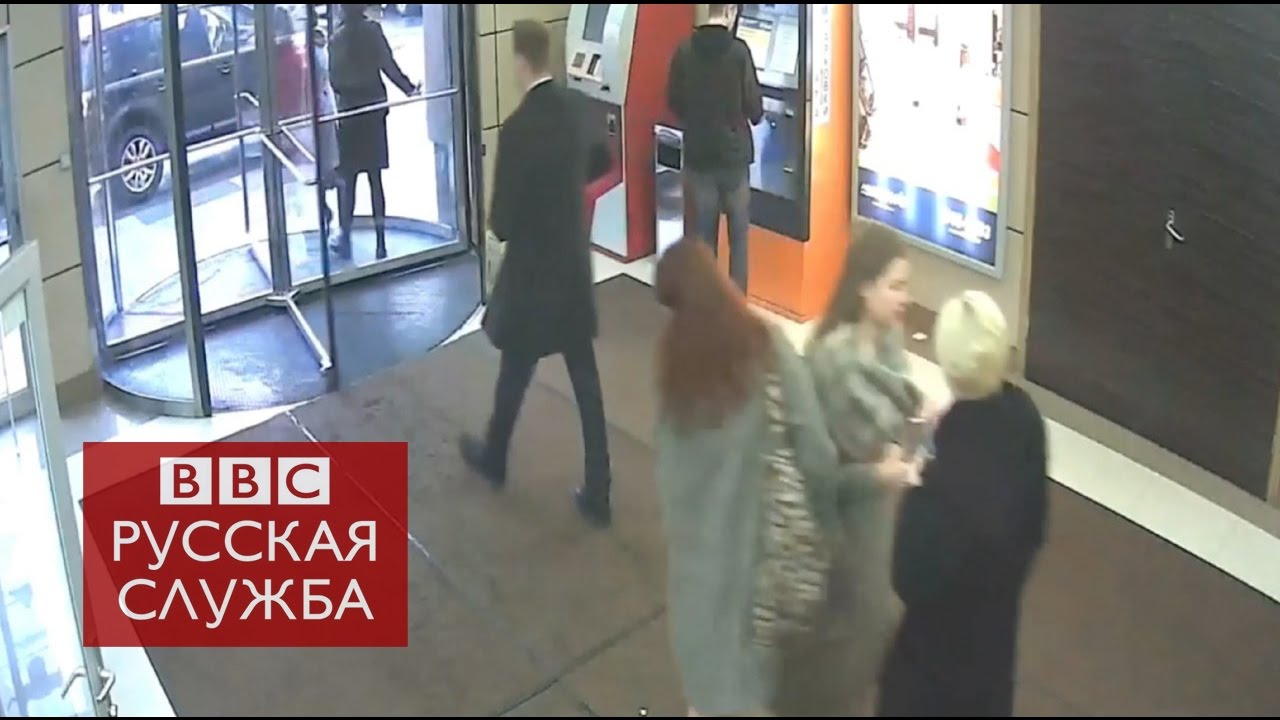
On April 27 in Moscow, someone splashed me with brilliant green antiseptic mixed with some kind of acid, and I almost lost an eye.
You remember that the FSB poisoners always fly out a day or half a day in advance, right? On April 28, I WAS SUPPOSED to fly to Astrakhan, but because of my eye the trip had to be canceled. Here is the ticket I had bought:
The hapless FSB men were already there and waited for me in vain. They were probably bored and watched my Thursday livestream, which looked rather unusual.
So this is now an indisputable fact. We are dealing with a state operation. These are not FSB officers working on behalf of some oligarch or official offended by one of my investigations. An entire FSB department, under the leadership of senior commanders, conducted a two-year operation in the course of which they repeatedly tried to kill me and members of my family, obtaining chemical weapons from a secret state laboratory. An operation of this scale and duration could of course have been organized by no one other than FSB chief Bortnikov, and he would never have dared do it without Putin’s order.
Look in a dictionary and read the definition of “state terrorism.” This is exactly that. The unlawful killing of citizens without trial or investigation. I said before that the attempt on my life was carried out on Putin’s orders. And now, with all the facts in hand, I state: on President Putin’s orders, FSB officers organized a terrorist act.
And of course, as you watch this, you are asking yourself: why? It is obvious that Putin does not like me, but something pushed him toward such radical action. In earlier interviews I said it was because of the “Smart Voting” strategy. All Kremlin insiders say openly that Putin personally fears it very much. But now it is clear that the team of killers started traveling after me before I came up with “Smart Voting”.
So I sat there thinking and racking my brain. It turned out to be fairly easy to figure out. I travel a lot around the country. And in late 2016 and 2017, I was constantly going to Kirov for the second trial in the Kirovles case. From the killers’ tickets, we can see that at first they were not traveling with me, and then one fine day—bam!—it started. They were with me on every trip.
Which means that between the trip without them and the trip with them, something happened after which Putin said: kill him. I went to my YouTube channel and found the one important video from that period that could explain everything.
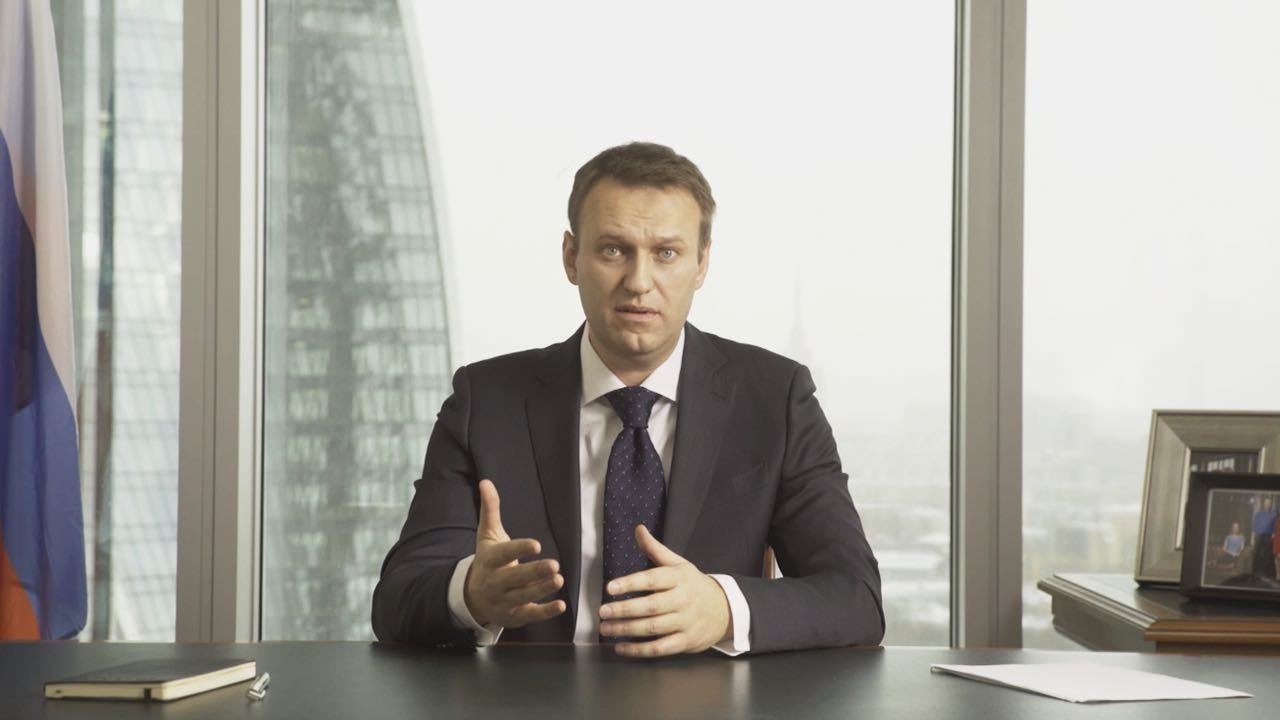
By the rules of the detective genre, at some point the investigator connects all the dots and reconstructs the crime with astonishing precision. I am going to do the same now. You now know how this investigation was carried out and where the data came from. So do not doubt this: when I say someone “went,” “flew,” or “called,” it is confirmed by tickets, passenger lists, and mobile phone billing and geolocation data.
Mid-December 2016. I announce that I am running in the election. Putin decides that for this I should be killed, and assigns the task to the FSB. Not to shoot me, not to throw me out a window, not to run me over with a truck. To poison me. With a military-grade chemical weapon. The name “Novichok” would not have meant anything to any of us back then; this was a year and a half before the Salisbury operation.
On my first trip in 2017, members of a specially assembled murder team travel with me, made up primarily of FSB officers with medical and chemical qualifications. At first they travel under their own names; by March they already have cover passports. A group of at least two people, in different combinations, accompanies me throughout 2017. At least 30 trips together. Why? We do not know exactly. Most likely, they were simply preparing the operation and then waiting for the order. But at least once during that time they tried to poison me. It happened on a plane—that was the incident I mentioned when I suddenly felt very ill, but only briefly. They got the dosage wrong. The second specific murder attempt clearly took place this summer in Kaliningrad Region.
July 2, 2020. I am in Moscow, suspecting nothing, but the tickets have already been bought and the hotel booked. The FSB poisoning department is buzzing with activity. Calls are being made at the highest level. Makshakov, the chief chemical weapons specialist from the FSB Criminalistics Institute, first speaks with his boss, Major General Bogdanov—the director of the entire Criminalistics Institute. Immediately afterward, he speaks with Colonel General Kirill Vasilyev. Later he calls Alexandrov, Panyaev, and Shvets one by one, and they immediately buy tickets to Kaliningrad and leave on July 2 and 3. Yulia and I arrive in Kaliningrad on July 3 at 11:40 a.m.
On July 5, Panyaev, Shvets, and Alexandrov return to Moscow. On July 6, Yulia falls ill. Either they intended to kill her, or she touched some object or food that had been meant for me. That same day, the phones in Moscow are ringing off the hook. Makshakov speaks with Zhirov, head of Signal. Zhirov, in turn, receives calls one after another from FSB generals Bogdanov and Vasilyev. At the same time, Makshakov repeatedly calls the three would-be operatives from Kaliningrad. Bogdanov, the highest-ranking boss of them all, director of the FSB Special Technology Center, personally travels to Kaliningrad and spends several days at the local FSB office. It is easy enough to guess what is happening: a debrief is underway. They are trying to figure out why I stayed alive. They уточняют у “Signal” what was wrong with the dosage. They draw conclusions and prepare for a new operation later that summer.
August 12. On this day, for the first time, all of us who would soon be traveling to Siberia to film investigations gathered in the ACF office, and for several hours we wrote scripts for videos right in my office, discussing out loud where and when we were going, where we would stay, where we would film, and so on. Undoubtedly an important day for ACF—but even more important for the FSB. Everyone is in a frenzy. Makshakov calls Generals Vasilyev and Bogdanov one after the other, and then starts calling Alexandrov and Osipov. Osipov calls Panyaev. All of them are also in touch with their colleague Oleg Tayakin, a graduate of the 27th Institute of the Ministry of Defense and a chemical weapons specialist.
Tayakin is the chief coordinator of the attempt on my life. Over the next several days he will spend the nights in the FSB Criminalistics Institute building, remain in constant contact with those traveling around Siberia with us and looking for something to smear with Novichok, and immediately report upward—to Makshakov, and then further up the chain. This pattern will repeat every time. He is the key figure in this operation, the link connecting everyone to everyone else. That same day, Alexandrov, Osipov, and Panyaev buy tickets to Novosibirsk. In the evening, at 9:30 p.m., they call the FSB duty officer at Sheremetyevo Airport. The operation to kill me has officially begun.
August 13, 9:05 a.m. Alexandrov, Osipov, and Panyaev fly from Moscow to Novosibirsk. Makshakov is in phone contact with them. These three are definitely part of the team that directly tried to kill me: they brought the Novichok, chose the place, applied it—whatever else they may have done. Was anyone else with them? Possibly, but under false documents. Coordinator Tayakin remains in Moscow. Intensive surveillance of our team begins.
Here is a frame from one of REN TV’s broadcasts. It was shot that day, August 13:
Maria Pevchikh, head of our investigations department, is standing outside her home with a suitcase waiting for a taxi to the airport. For some reason she was being followed from early morning, and then this operational footage ended up in the hands of propagandists. At the same time, coordinator Tayakin leaves the FSB institute building on Akademika Vargi Street and heads to Domodedovo Airport—apparently to make sure personally that she boarded the plane. At 8:55 a.m. he contacts the FSB duty officer at the airport, obviously to get inside. And immediately after her plane takes off, he leaves the airport and drives away.
August 14. Before the trip to Novosibirsk, the FSB poisoners switched off their real phones and used temporary ones. According to protocol, they were apparently supposed to leave their real phones at home altogether so they could not be tracked, but they did not. Killer-doctor Alexandrov turned on his real phone in Novosibirsk only once. And that was enough to determine where he was. At 3:30 p.m. local time, his phone was here—and this is where the Park Inn hotel is located, where I would arrive a few hours later.
August 15–17. Coordinator Tayakin spends the nights at FSB Research Institute No. 2. At night he is actively messaging someone through encrypted apps. This is visible from the detailed phone billing and geolocation data. Every morning he calls his boss Makshakov, and Makshakov calls the generals. Several times Makshakov speaks with an expert in organophosphate poisons, a scientist from Shikhany.
August 18–19. We moved from Novosibirsk to Tomsk. The poisoners followed us. For the next couple of days, we do not know exactly where they are, but we can see constant communication between the team “on the ground” in Tomsk and coordinator Tayakin. And he continues reporting up the chain.
August 19, evening. It is 11 p.m. in Tomsk. I have returned after swimming at the famous Kaftanchikovo and am sitting with colleagues in the hotel restaurant. I do not eat; I order one cocktail, but it tastes so bad that I take only a couple of sips and leave it on the table. At midnight I go to bed.
Immediately after this, at 12:08 a.m., coordinator Tayakin receives a call from team member and FSB officer Alexei Krivoshchekov. For the next 40 minutes, Tayakin is intensely messaging someone through an app while simultaneously speaking with Makshakov. At 12:44 a.m., the calls stop. Most likely, the active phase of the operation is over—by that point I have already been poisoned, and all that remains is to wait for the result.
Apparently relaxing, at 12:48 a.m. Tomsk time Alexandrov makes the same mistake he made in Novosibirsk. He turns on his real phone for literally a second—one byte of outgoing traffic. And that is enough to determine his location: he is in Tomsk, a five-minute drive from the Xander Hotel, where we are all staying.
August 20. I wake up. Get dressed. Take a sip of water from a bottle, leave the room, and at 6 a.m. meet my press secretary Kira and my assistant Ilya. A couple of minutes later we get into a taxi. At 6:05, Krivoshchekov calls Tayakin in Moscow. Apparently he is somewhere nearby, physically sees us, and reports: Navalny is alive and heading to the airport.
What happened next is well known. Two and a half hours later, I fall ill on the plane, lose consciousness, slip into a coma, and am taken to Omsk. I am suspended between life and death, and the FSB men anxiously watch events unfold. A day later, I am still alive, which means the operation has failed. Another one begins—covering their tracks.
August 21. The first thing the group has to do is make every possible effort to ensure that Novichok is not detected anywhere. Makshakov starts calling specialist experts—anyone who might help conceal the traces of the operation. Among his consultants is scientist Vasily Kalashnikov, who specializes in detecting metabolites (residues) of toxic substances in blood. Then come calls to Oleg Demidov, another former Shikhany scientist who specializes in organophosphates, the class to which Novichok belongs. And then a very important call to the Institute for Problems of Chemical and Energetic Technologies in the city of Biysk. And can you guess what the scientists at this institute specialize in? Removing traces of chemical contamination.
Now guess where our trio of killers is at this moment. Alexandrov, Osipov, and Panyaev cancel their tickets from Tomsk to Moscow and immediately head to Gorno-Altaysk. We know this because our old and very useful friend Alexandrov once again turned on his phone and revealed his location. Operation coordinator Tayakin also rushes to the airport at 2:30 in the morning and flies to Gorno-Altaysk. Why Gorno-Altaysk? Because it is the nearest city with an airport to Biysk. And the Gorno-Altaysk FSB office makes a perfect meeting place.
At the very least, Tayakin’s phone spent the whole day within this radius—the same area where the FSB office building is located.
It is easy to assume that, together with specialists from the Biysk institute, this team of killers is discussing how to cover up the traces of the failed operation.
It is not hard to understand why they suddenly sprang into action if you reconstruct the political situation. I am lying in a coma. Everyone is writing that I was poisoned. Putin says to Bortnikov: “How the hell did you screw this up? Do everything possible to make sure no ‘Novichok’ is found.” Bortnikov repeats the same thing to Vasilyev and Bogdanov—the heads of the FSB Special Technology Center—and they send their bungling subordinates to people who know how to get rid of traces of Novichok.
At the same time, more traditional methods of covering up the crime are also underway. At the Xander Hotel, security camera footage is seized, and my clothes disappear in an unknown direction. Quite possibly they were taken by one of the group’s members—Kudryavtsev, who flew to Omsk on August 25. Doctors in Omsk receive instructions and begin lying that there was no poisoning, PR people are brought in, and the story is floated that I had been drinking moonshine the day before and using drugs in general. I am forbidden to be transferred to a hospital in Germany, and they wait either for me to die or for all traces of Novichok to disappear from my body. What happened next, you all know better than I do.
Novichok was nevertheless detected in my blood—first by German scientists, then by Swedish and French ones. Then the international chemical weapons watchdog conducted an investigation and issued an official report whose conclusion was that Navalny had been poisoned with a substance from the Novichok group.
At this point it is worth discussing the question everyone asks: what kind of helpless FSB is this? Where did they find such idiots? They followed me around for three and a half years, poisoned me at least three times, and I am still alive. And what kind of fool decided to use Novichok at all, if it is so difficult to deploy?
But if you think about it, the plan was not bad. See for yourself. They tried to kill me twice, and I did not even understand what was happening. And even if I had understood, no one would have believed me anyway. The story itself—“oh, I almost died, but didn’t die”—sounds crazy. It was important for them to calculate the dosage. So it is better to use too little than too much. If you overdo it, the person dies on the spot, and it becomes obvious: this food was poisoned. Or this object. It becomes easier to get to the truth. But in all our poisoning cases, we do not understand exactly how it was done. Yes, I came into contact with Novichok, and then grabbed a bottle on which traces remained, so we know it all happened in the hotel—but still, exactly how remains unclear. If you shoot someone or run them over with a car, that is a conventional crime and it is clear how to investigate it. Here is the body, here are the bullets, here are the traces. But poisoning offers a fantastic opportunity not to conduct any investigation at all and instead do the Kremlin’s favorite thing. Just lie.
There was no Novichok, it was diabetes. No, wait: first it was diabetes, and then they sprinkled him with Novichok on the medical plane. Then Putin says that I poisoned myself. Then they say my colleagues poisoned me. The latest version is that the Germans poisoned me.
You can put forward any version you like and say absolutely anything.
- Why did you poison that man? - Us? We didn’t poison anyone. You poisoned him yourselves.
And then try proving otherwise.
Still, broadly speaking, it is true: the operation was a failure, and I am very glad of it. There is no need to be surprised. Under Putin’s 20 years of rule, everything has degraded. And if Rogozin is in charge of space and Chubais of nanotechnology, why would you think the FSB is organized any differently? Why would you think Novichok would work better than the space robot Fedor? And that is exactly what happened: Putin asked the bunglers at the secret institute, “How long until Novichok dissolves in the body?” They scratched their heads and said, “Well, in two days.” But it did not dissolve. Because everything in the country is falling apart, and officials think only about what they can steal. The system is degrading as a whole, at every level. And if, for example, our healthcare system is now in such a state that people die in hospital corridors, then the same thing is happening in the sphere of secret operations.
I want to say a few words to FSB officers and law enforcement officers in general. Aren’t you ashamed yourselves to work for this system? You can see perfectly well that you have simply turned into servants for thieves and traitors. For 20 years, Putin has systematically turned both the FSB and the Interior Ministry into structures whose main task is to help him and his friends steal. And that is the only national project that has been carried out brilliantly. The richest country with enormous resources has become impoverished. Millions of pensioners weep as they compare their pensions with prices in the shops. Meanwhile, all of Putin’s daughters are billionaires, his friends, neighbors, and former colleagues are billionaires. The most expensive yachts belong to our oligarchs. And you are supposed to protect all of this—and kill those who are unhappy about it.
Do not take part in this national betrayal. Those who support Putin and his system are not patriots but traitors. They have betrayed the people of Russia.
This attempted murder has been solved. And now you understand perfectly well that it will never be officially solved. Otherwise they would have to imprison half the FSB leadership. And Putin, who gave them the order.
That is exactly why—just watch—they are squealing at every level, from United Russia and Lavrov to the television propagandists. They understand they have been exposed. But all of that was nothing compared with what comes next. At this very moment, the whole gang is watching this video and realizing that they have been caught committing a terrorist act. With names and surnames. With ranks and positions. The thought that they have been caught red-handed will make them squeal a million times louder. You are going to see hysteria on an unimaginable scale. State TV hosts will practically explode on air. They will open a criminal case against me because they failed to kill me.
Do you remember who used to head the FSB (Russia’s Federal Security Service)? Whose main creation is it? Who still personally runs it by hand, in manual mode?

The FSB in its current form is his main creation, and now it has become absolutely clear to everyone that he uses it to murder political opponents. And Putin, of course, will be stamping his feet louder than anyone. Because this is his personal plan and his personal failure. His resentment toward me and the ACF (Anti-Corruption Foundation) will be very strong.
I can count only on you. Even if there is no investigation, I want the whole country to know what these people are doing. How they are using the state system. What they have turned the security services into. No one should have any illusions left.
One last and most important thing. If you know anything at all about this operation to poison me with Novichok, if you recognize these people, have encountered them, worked or studied with them, or simply seen them somewhere, write to us. Either through our Telegram bot. Or, if you want to remain completely anonymous, through Black Box. It is a special website through which you can send us a message, and even we ourselves will not be able to see who sent it. Any information will be useful to us; you can help bring this crime fully to light.
A reminder that the State Duma elections will be held in September. We all want there to be as few thieving United Russia deputies there as possible. To make that happen, you need to take part in Smart Voting. Sign up right now and support us.