
I said this whole poisoning story was wilder than a Hollywood movie, and you still have no idea just how much wilder.
In a classic detective story, there is always a scene where the killer confesses. We have one too. It’s simply unbelievable. But let’s take it step by step.
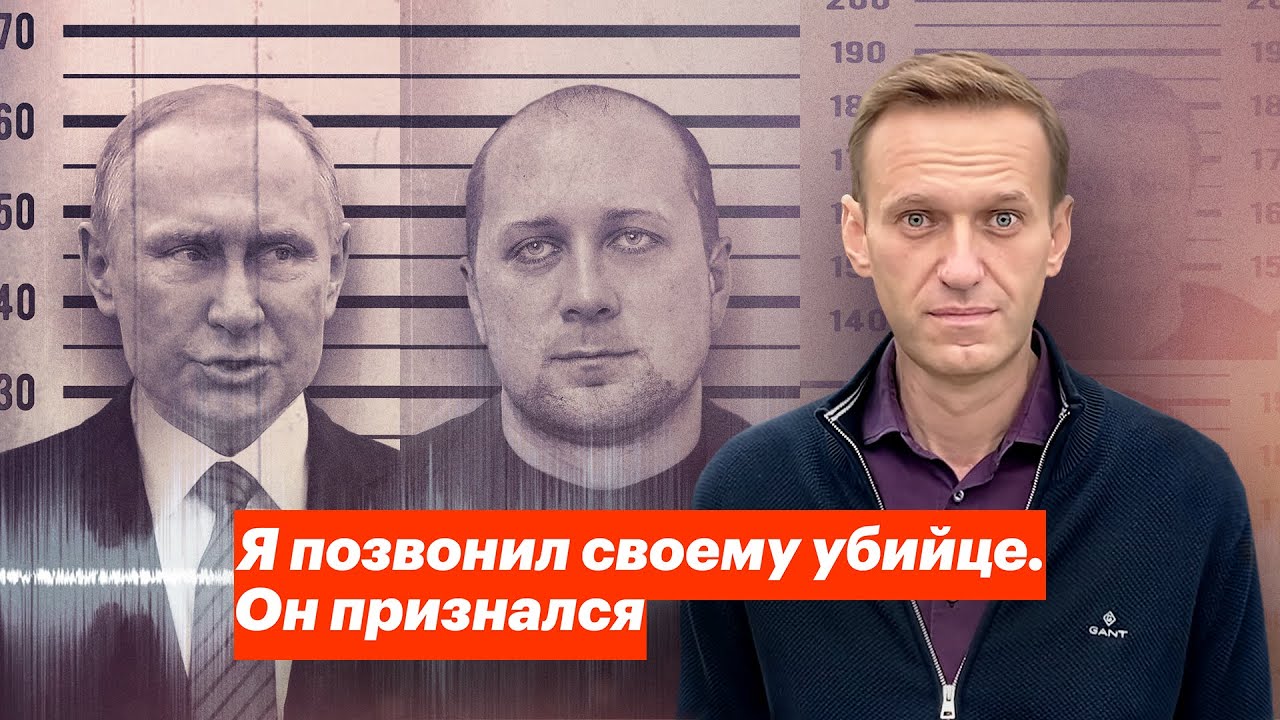
Exactly one week ago, we released an investigation. It became a global sensation, with 17 million views already on my YouTube channel alone.
The evidence we presented was so compelling that even the man who ordered the crime—President Putin—could not deny it and effectively confirmed that the “magnificent eight” who had been following me for nearly four years were FSB officers.
But of course Putin could not go on national television and say: yes, I ordered the FSB to kill my political opponent. So he started spouting nonsense again—that there was no investigation at all, that all of this was “legalized CIA information,” that the FSB officers were merely keeping an eye on me, and that the main proof there was no poisoning is that I am alive. Because if they had wanted to poison me, they obviously would have.
Immediately after Putin, his spokesman Dmitry Peskov confirmed and elaborated on those remarks.
Later, Peskov put it even more clearly, telling journalists that the FSB was “keeping an eye” on me because this is standard practice for people who “maintain contacts with the intelligence services of other states” and who also “make statements calling for a violent change of power.”
So, after thinking it over for a few days, the Kremlin and Putin gave us their answer:
First: the CIA is behind everything. Second: yes, FSB officers were involved, but they were just watching me. Third: if they had wanted to kill me, they would have. Since I survived, they didn’t try to kill me.
The CIA argument is so ridiculous that it was immediately debunked by journalists, including pro-Kremlin ones. They published detailed reports showing that no CIA was remotely necessary to obtain the information used in the Bellingcat investigation. It really is sold to anyone who wants it. Amusingly, Kremlin media have even lamented that because of me, the price of “background checks” has now gone up.
Incidentally, at that same press conference, Putin also called the investigation into his billionaire son-in-law the work of the CIA.
The second part of Putin’s denial does not stand up to scrutiny either. If they were following me because I am supposedly an extremist, then why were doctors and chemists involved in the surveillance? Why did they fly on different planes from me? Why did they arrive and depart at different times, on different flights, sometimes a day apart? It is a complete lie and not even worth discussing.
That leaves the main argument: if they had wanted to poison me, they would have. And no one can tell us about that except the killers themselves.
Well, that is exactly what they told us. Or rather, one of them did.
Last Monday, we were preparing to publish our materials at 3:00 p.m. Moscow time. Simultaneously: us, Bellingcat, The Insider, CNN, El Pais, and Spiegel. Obviously, within five minutes the team of killers and their bosses would realize they had been exposed and go to ground. They would change their phone numbers and so on. We could not rule out the possibility that these eight men, having failed in their mission, would simply be killed themselves. Or hidden away. Or hidden first and then killed.
So at 6:00 a.m. Moscow time, we set up an operations center and divided up the tasks among ourselves, so that at 7:00 a.m. we could all act at once and catch the villains off guard.
At 7:00 a.m., Lyubov Sobol knocked on the door of one of the killers, but he never opened it. At the same time, outside one of the FSB headquarters where the killers work, Shtab channel reporter Dmitry Nizovtsev was waiting for them; 20 minutes later, he was detained by police after a call from the FSB.
At 7:00 a.m., CNN correspondent Clarissa Ward went to see Oleg Tayakin, the coordinator of the killer group, and those spectacular few seconds were seen by the whole world.
And at exactly 7:00 a.m., I started calling my killers.
Bellingcat had their phone numbers and a list of the numbers they themselves called. Analysis of that data showed that, to conceal the content of their conversations, they used a special number—something like an FSB switchboard number. We took a very simple program, the kind phone pranksters use to hide the number they are calling from, and substituted the number we needed.
The calculation was simple. A call comes in at 7:00 a.m. You see a familiar official number, pick up, and start talking.
Almost everyone I called picked up, and almost everyone hung up quickly. But then we got very lucky.
Konstantin Borisovich Kudryavtsev, a military chemist from the FSB’s Institute of Criminalistics, who had previously worked at the Defense Ministry’s Research Center for Biological Safety and at the Military Academy of Radiation, Chemical, and Biological Defense.
He spoke with me for 45 minutes, believing that I was an aide to Patrushev, the secretary of Russia’s Security Council and former FSB director.
At the start of the conversation, we knew only three things about Kudryavtsev: that he was part of the secret killer squad, that he was a chemist, and that on August 25 he had flown to Omsk. So I assumed he had collected my clothes from the hospital.
By the end of the conversation, Konstantin had kindly explained many details to us.
I am saying this now in an entirely official capacity, and I will submit all the relevant complaints and statements. We know that he is an FSB officer. You are about to hear his voice. Any forensic voice analysis will confirm that it is him. And his words are enough to arrest not only the killers, but also those who helped them cover up the traces of the crime.
When President Putin said at his press conference, “Well, if they had wanted to poison him, they would have,”—a phrase now repeated by every propagandist—I was clapping with joy. Because FSB officer Kudryavtsev answered that question for all of us. And besides, you are now going to find out why Putin spends so much time thinking about my underwear.
The full audio of the conversation is available on the Navalny LIVE channel. And if you do not want to listen, there will be a transcript of our call at the end of this post.
So there it is. We still do not know everything, of course, but we now know a great deal. And apparently I have become the first person in history whose underwear was discussed at a meeting of Russia’s Security Council—or wherever it is that Putin plans his most important operations.
As you can see, everything I said in the previous video about the complete degradation of the law enforcement system is confirmed. Just imagine it. Evidence from an attempted murder is being stored by the police. FSB officers come, take that evidence, remove the traces of the crime from it, and then return it. Then they come back a second time and do the same thing again. Just to be sure. This is not a state—it is a gang. Look how many people are involved already: from doctors and police officers to the local FSB. And at the first order, they commit a serious crime by falsifying evidence.
Because this operation is not about saving the skin of some Kudryavtsev or Tayakin. They are saving Putin. He came up with all of this.
Together, we have backed them into a corner. There is now more than enough evidence. But I cannot present it in court—I can only present it to the citizens of Russia. Last time I asked for your help, and you helped a great deal by spreading the information. I am asking again now. He lies in his live appearances, using every newspaper and every television channel in the country to spread those lies. The only answer we have is to keep telling the truth. Take part in that. Let the whole country ask Putin: why is there no investigation?
And finally, I want once again to say a huge thank you to the pilots who landed the plane quickly and to the medics who gave me first aid. Friends, you will probably watch this video. It is now absolutely clear that Putin and the FSB wanted to kill me, and I survived thanks to you—good people doing your duty. Thank you.
There are more good people than villains. Pilots and doctors like these are Russia’s pride—not Tayakins, Putins, and Kudryavtsevs. And sooner or later, good will defeat evil.
Transcript of the call:
Kudryavtsev: Yes, Artyom, hello. Navalny: Konstantin? Kudryavtsev: Hello. Navalny: Hello, Konstantin Borisovich? Kudryavtsev: Yes, yes, yes. Navalny: Good morning. My name is Maksim Sergeyevich Ustinov, aide to Nikolai Platonovich Patrushev. Vladimir Mikhailovich Bogdanov gave me your number. Sorry for the early call, but I need 10 minutes of your time—really urgently. Hello? Kudryavtsev: Yes, yes, I’m listening. Navalny: The leadership is once again... there’s a new round of discussions. They’ll probably ask you to prepare a report later, but right now I’m drafting a briefing for Nikolai Platonovich. This will be discussed at the highest level at the Security Council. I need one paragraph—just a brief understanding from team members: what went wrong for us? Why was there a complete failure with Navalny in Tomsk? Please tell me your opinion, I’ll write it down, and later you can include it in the report. Kudryavtsev: There was a failure in Omsk?.. Navalny: No, in Tomsk. I mean in Tomsk. Kudryavtsev: In Tomsk?.. Navalny: Yes. Kudryavtsev: What happened in Tomsk? Navalny: Konstantin Borisovich? Kudryavtsev: Yes, yes, yes. Navalny: Did you hear what I said? I’m calling on Patrushev’s instructions. Kudryavtsev: No, I understand that perfectly well, I’m just trying to remember—what happened in Tomsk? Navalny: Well, why did you go to Omsk on the 25th? Kudryavtsev: To Omsk or to Tomsk? Navalny: You went to Omsk on the 25th; the operation was in Tomsk. And now I’m putting together a short... a short version of the report about what happened there. Later Vladimir Mikhailovich will ask you to write a longer version. I understand this is yet another time, but the leadership wants me to prepare the documents for the Security Council right now. So you would really help me and avoid delaying Nikolai Platonovich. Kudryavtsev: I’d gladly help, but I’m at home right now with coronavirus, in quarantine. Navalny: Well, that’s why I’m calling you... Kudryavtsev: Let me just... What about Makshakov? If you get in touch with Makshakov? Navalny: I’ll call Makshakov too, of course. I mean, right now... It’s a simple procedure. I’m going to call Alexandrov, Makshakov, Tayakin, and ask each of them for a two-paragraph explanation, because in the end I need to produce a two-page report. You understand who I’m writing a two-page report for. I don’t want to throw names around here, but I wouldn’t be calling you at 7 in the morning, and I wouldn’t have called Bogdanov at 7 in the morning, if it weren’t urgent. So right here I’ve simply got: “Kudryavtsev: thinks such-and-such.” Why did nothing work for us, and what needs to... Why did it go badly, and what needs to be done for it to go well? Kudryavtsev: Mm... Navalny: I’m writing. Kudryavtsev: I’d write it, but I’m telling you, I’m at home in quarantine. Navalny: Then just tell me. Kudryavtsev: I’m under a nondisclosure obligation. If you talk to Makshakov, he can explain the situation... Navalny: I’ll talk to him. Kudryavtsev: I can get in touch with him too, explain it to him. Navalny: Konstantin. I’ll talk to Makshakov. Just hear me out, please. I’ll talk to Makshakov. Right now... and of course later you’ll prepare written documents addressed to Bogdanov. Right now I just need... I’m calling everyone, including your colleagues. I just need one paragraph of text in your own words. In your opinion... what was the main problem behind the failure of the operation in Tomsk? I’m writing it down. Kudryavtsev: Well, I don’t have the full information right now. Navalny: Naturally. You... to the extent that you do have information. Hello? I’m writing. Let me help you. Let’s approach it another way... Roughly speaking, on a scale of one to ten, how would you rate Alexandrov’s work? I understand he’s your colleague, but still. Kudryavtsev: Alexandrov’s? Navalny: Yes. Kudryavtsev: The work was good, yes. I rate it highly. Navalny: How would you rate Tayakin’s leadership qualities? His coordination of the team. Kudryavtsev: But Tayakin wasn’t there. Osipov was there. Navalny: I know Tayakin wasn’t there and Osipov was, but Tayakin still took part in the operation, right? Kudryavtsev: Honestly, I don’t have that information, I can’t say anything. Navalny: All right, then how would you rate Osipov on a scale of one to ten? Hold on, I’m writing this down. Kudryavtsev: Good, yes-yes. I rate him highly. Navalny: Good. Then the logical question, you’ll agree. I have to explain this to Patrushev now, basically. If you say you rate both Alexandrov and Osipov highly, why did nothing work? Kudryavtsev: Well, I’ve asked myself that question more than once, actually. It seems that, well, given the situation... The information I have—and I don’t have all the information... Navalny: I understand. Kudryavtsev: You understand, right? I have the information that I have directly. Or that is passed on to me. Navalny: That is exactly why the briefing is being prepared. (inaudible) Yes, yes, yes. Kudryavtsev: Huh? Navalny: Yes, yes, yes. I interrupted you. I’m just saying that this is exactly why we’re doing the briefing—so that everyone can look at it from their own vantage point. So right now I’m only interested in your opinion. Kudryavtsev: Well, I rate the work highly. At least, well, the work was done, basically, well, as it was... everything... the issue was worked through. That’s what I think. More than once. Navalny: That’s exactly the point. It was worked through more than once. Kudryavtsev: Are you calling from Troyanov, right? Navalny: What? Kudryavtsev: Are you calling from Artyom Troyanov? It’s just that Artyom Troyanov’s phone number came up on my screen. Navalny: Well, of course, I’m calling through... through the general system. Bogdanov asked me to call, so that’s how I’m calling, just so you don’t worry. Fine. The obvious question, the answer to which has to be in my memo: if you rate both Osipov’s and Alexandrov’s work highly, why was it a failure? What needs to be done in the future so that none of this happens? Kudryavtsev: Whew... Well, in our work, as you understand, there are always a lot of issues and nuances, and we always try to take everything into account as much as possible so there are no miscalculations and so on. You understand, right? Navalny: I understand. What is the main thing—that is, here... Kudryavtsev: The issue was surely worked through thoroughly. That’s what I think. Well, that’s my opinion. At least if you take, well, what had been done earlier, yes, but there are always nuances. In every job, basically, there are some nuances, right? The whole situation turned out, on the one hand, well... how to put it correctly, damn it... Navalny: Well? Kudryavtsev: Well, I also thought what might have... Well, they landed him there... You understand, right? He was flying, they landed him, all of that. The situation developed in such a way that... not in our favor. That’s what I think. If it had been a little longer, then accordingly... things might have gone differently. Navalny: A little longer what, Konstantin Borisovich? Kudryavtsev: Flying. Navalny: If he had been flying a little longer? Kudryavtsev: Well, possibly, yes. If he had been flying a little longer, for example, and they hadn’t landed him so abruptly, as if they knew, maybe it all would have gone differently. That is, the оперативная work, the ambulance medics there on the runway and so on. And then, accordingly... hello? Navalny: Yes, yes, yes. The plane was landed after 40 minutes; in principle that should have been taken into account when planning the operation. You can’t say the plane was landed instantly. Was the dose miscalculated, the probabilities—why? Kudryavtsev: Well, I can’t say why. Everything was calculated, as I understand it, with a margin. Navalny: All right. Let’s take the question that... In front of me... I’m speaking frankly with you. Please understand me too. There is leadership, and you know how leadership behaves... Kudryavtsev: Yes, yes, yes. Navalny: Come on, faster, now, for the fifteenth time, write to everyone. So I’m writing. Here I have the question written down. What is the problem? There was Kaliningrad, then there was Tomsk. Why were the problems in Kaliningrad not taken into account so that everything would go normally in Tomsk? Kudryavtsev: As for Kaliningrad, I know absolutely nothing. I have no information. Navalny: All right. Kudryavtsev: The only thing I know is that there were... not about Kaliningrad, about Tomsk I know that there were, that there was, basically, yes. In Kaliningrad I don’t know what the situation was there. So I have no information. Navalny: All right, please tell me. Specifically the mechanics. How was the substance used? Do you think the right choice was made? Kudryavtsev: Yes... Yes, I think so. Navalny: If I were to describe this briefly in the briefing... how... how should I describe it correctly? How was it done, how can I explain it briefly? Kudryavtsev: Well, that should be explained over an operational line, not over... Navalny: No, well, naturally... You understand who I’m writing the briefing for. Kudryavtsev: Yes, yes, yes. Navalny: Not even over an operational line. I need to explain it briefly to a person who doesn’t understand much and in general doesn’t want to get into the details. How do I explain briefly how it was done? Just so I formulate it correctly. Kudryavtsev: How was what done? Navalny: How was the substance applied? Kudryavtsev: Well, I’m saying, that’s better over an operational line. As you understand, I worked afterward. Navalny: Yes, I know. Kudryavtsev: I wasn’t in the actual... at least, what we looked at afterward, basically... we carried out our measures, these... well, yes, the fact that there may have been traces. How do I put it? Navalny: Just say it as it is. Kudryavtsev: Where it was applied... Well, basically, yes... They did the job, yes. Right. Accordingly... There may also have been some chance of detection afterward. Navalny: Well, look. Again. We’re having a frank conversation. You understand why I’m writing all this. The bottle, the scandal, television—they found it, detected it. Accordingly, the leadership says: explain it to us. Why was it detected, why was it on the bottle? And I need to explain it to them briefly. Kudryavtsev: There was nothing on the bottle. Navalny: All right. Kudryavtsev: At least, that’s what I think. Navalny: Then where was it? How did it get onto the bottle then? Or was there nothing? Did they just make it up? Kudryavtsev: No, there wasn’t anything on the bottle, it seems. At least from the information I know. Navalny: Well? Kudryavtsev: Maybe some information wasn’t passed on to me. As you understand... more specific detailed questions. Stanislav Valentinovich is fully in the loop with us, one hundred percent. He definitely has that information. Navalny: That’s why Bogdanov gave me your phone number, so I would call you. Because the task the leadership gave me is to gather everyone’s opinion. Here, it’s less a question of drawing organizational conclusions and more a question of how to act properly in the future. And so that the leadership—the top boss—clearly understands what happened. So once again, I apologize for springing this on you in the morning, but they’re pounding their fists on the table and saying: give me two pages so he understands everything. So what should I write in those two pages? Kudryavtsev: You called me first, right? Sorry. Navalny: What? Kudryavtsev: I mean, you called me first? You haven’t called anyone else yet? Navalny: I started with you. I have a list, I’m going to call everyone now. But really, I don’t need you to tell me everything for everyone. Just tell me your own view. Would you have done it differently? If you had planned the operation, how should this thing have been done differently? Kudryavtsev: Well, for that you’d have to sit down and think specifically. Depending on the situation, the circumstances. On the possible methods. Oh, not methods, places, yes. There are a lot of nuances here, I’m telling you. And every nuance, every little detail has to be taken into account. I think, well, in my opinion, it was planned and... well, everything was planned correctly. It couldn’t have been any other way. If it had been planned incorrectly, nothing would have been done. That’s what I think. Navalny: Konstantin. Yes? Kudryavtsev: I’m saying, the very fact, basically, yes. The method was, it seems to me, chosen correctly, but there are still always some nuances. Navalny: So once again. What method was chosen? Kudryavtsev: Huh? Navalny: What method was chosen? Kudryavtsev: Don’t you know? Navalny: Well, I know some things and don’t know others, but I have to ask you. I’ve got it written here: talk and ask some questions. So I’m asking. Kudryavtsev: Well, I can’t tell you over this phone. Navalny: Well, that’s why I’m calling, because I need an urgent memo. Kudryavtsev: I... Stanislav Valentinovich will tell you how it all happened. I can’t say it over a phone like this. Over a line like this. Navalny: All right. Kudryavtsev: So... only because of that... otherwise I would. Navalny: You saw that I’m calling you through the switchboard? You can tell me. I cleared this conversation with Bogdanov. Kudryavtsev: No one called me about anything. Neither Bogdanov called yesterday, nor Makshakov... Navalny: Well, because only this morning... Kudryavtsev: Ah, really only just now? Navalny: Of course. They woke me up at 5 a.m. and said: go. I’ve been running around all morning frantically looking for phone numbers. So if you... I... If you want, I can call back later over an operational line. But you’d save me a lot of time if you just told me now. Because I still have to call... I’ve got a list of thirteen people. Kudryavtsev: Wow... Yes... Could you tell me your name, so I can write it down? Navalny: Maksim Sergeyevich Ustinov. Aide to Nikolai Platonovich Patrushev. Kudryavtsev: Uh-huh. Navalny: Right. I still have questions. First of all, where are the belongings? What happened to the belongings? Kudryavtsev: What happened to the belongings? Navalny: Well, where are Navalny’s belongings? Kudryavtsev: They were, well... The last time I saw them was in Omsk itself. They were left there. We went there, worked there. Navalny: Yes, you flew there on the 25th, to Omsk, right? Kudryavtsev: I’d have to remember. Probably, roughly yes. I have it written down at work. Navalny: So what exactly happened to them, to those belongings? Kudryavtsev: Ah, their final location? Navalny: Yes. Kudryavtsev: Well, I have no idea about their final location. But I can tell you this: when we arrived, they gave them to us... the local guys from Omsk brought them, right. From that police... what’s it called? Navalny: Transport police. Uh-huh. Kudryavtsev: Yes, yes. They handed us a box. Navalny: Uh-huh. Kudryavtsev: We worked on the box, accordingly. And then returned everything to the local guys. And the local boss... actually, I have his phone number, I can give it to you if needed. Navalny: Yes, please. I’ll write it down. Kudryavtsev: He took that box... I told him to return it. Most likely he gave it back to those guys from the transport police. Navalny: Right, please give me the boss’s phone number. Kudryavtsev: Hold on, okay? Navalny: Yes, of course. Kudryavtsev: Right. Hello? Navalny: Yes, yes, yes. Kudryavtsev: One second. Hello? Navalny: Yes, I’m writing. Kudryavtsev: 8962. Navalny: 962. Kudryavtsev: 059. Navalny: 059. Kudryavtsev: 2595. Navalny: 2595. And his name is?.. Kudryavtsev: Mikhail... I didn’t write down his patronymic. Navalny: Mikhail Pavlovich... Kudryavtsev: Yes, he’s the head of BT. If you can ask around, check... Navalny: I’ll find out, no problem. Kudryavtsev: He’ll tell you where it is. Navalny: Let’s talk more about the belongings. Was there something on them? The box. So was something found there? What exactly was done with it? Kudryavtsev: Well, we went there twice. Navalny: Uh-huh. Kudryavtsev: The first time it was a bag. An ordinary one. Navalny: Uh-huh. Kudryavtsev: A bag with seals and everything... It was all torn up. There were clothes in it. They were kind of wet. There were clothes, accordingly, what was there... a suit, those underpants, socks, a mask. A T-shirt, accordingly, yes. Navalny: Right, and what procedure did you carry out? What did you do with it? So I can report it. Kudryavtsev: We processed it. Navalny: Processed it according to that Biysk method, right? Kudryavtsev: Biysk? Navalny: Well, correct me if I’m wrong... Kudryavtsev: No, I don’t know the Biysk method. Navalny: All right, then what?.. Kudryavtsev: Or maybe I do know it, but I don’t understand what you mean right now... Navalny: Then explain what exactly you did. Kudryavtsev: Well, we washed them, treated them with solutions. So they wouldn’t... well, there... how do I put it. We treated them. So there would be no traces, nothing like that. Navalny: Did you process all the clothes? Kudryavtsev: No, not all at first. At first, the main items. The suit, the underpants. All that. (inaudible) When they brought the box, we already... almost... well, the last time we processed everything, everything. Navalny: Is there any chance that at the hospital Navalny’s wife or someone else cut off a piece of clothing and it ended up... Kudryavtsev: No. No. Navalny: No such possibility? Kudryavtsev: None. Everything was intact and preserved. There were no traces whatsoever of anything cut off, and so on. Navalny: In your opinion, how did the Germans end up detecting all this? Kudryavtsev: Well, they brought in the Bundeswehr, military chemists worked there. Navalny: Is there any chance that something remained directly on his body... Kudryavtsev: I don’t know, maybe there are some detection methods... Navalny: On what part of his body could there have been traces that they found? Kudryavtsev: Body? Navalny: On his body, on his body—where could they have found it? Kudryavtsev: They didn’t find anything on the body anywhere. Well, that’s my opinion. Navalny: Well, all right, look... Kudryavtsev: They didn’t examine the body; they most likely worked with blood. Navalny: Well, we don’t know how they worked. I just have to study everything... Kudryavtsev: That’s only my assumption. As for the body, I think... Surely they washed him, cleaned him, right there in our hospital. Navalny: So who... whom in the Omsk hospital can I talk to in order to find out whether the body was washed? Kudryavtsev: No, I don’t have that information, but Mikhail, the one... Navalny: The one Pavlovich? Kudryavtsev: The head of PT... Ah, you already got the number, right? Uh-huh. He has all the information. What they did there and how. Navalny: Sorry, this is a naive question. But based on what I’ve written down, they’ll ask me this. The clothes were washed because there could have been traces on them. So there could also have been traces on the body. But you say there couldn’t have been traces on the body. Why? Kudryavtsev: Well, it seems to me it just absorbs quickly. Doesn’t leave traces. Makshakov can explain that in more detail. I don’t have all the information. I don’t even know what they did there. I mean, you understand, right? Navalny: Well, I understand. Kudryavtsev: I don’t have the information. Navalny: Konstantin Borisovich... Kudryavtsev: They told me, I came, did it, and left. Everything else... all the rest of the information about who went there, who did it—I don’t have that information. Navalny: I’ll talk to all of them myself. I repeat, I need your specific view, because the leadership said to gather information from everyone and build an overall picture. So let’s summarize once again everything we have. In your opinion, this... subject... survived because the plane was landed too early, correct? That’s the main reason? Kudryavtsev: Well, I think so, yes. Only because of that. If it had been just a little longer, then maybe everything would have ended differently. You see, a coincidence of circumstances... That’s exactly the kind of bad factor that can happen in our work. Navalny: I see. By coincidence of circumstances, we mean circumstance number one: the plane was landed; circumstance number two is what? Kudryavtsev: Well, it’s that, what’s it called... the ambulance arrived and so on. They carried out those initial measures they usually do... Well, the medics assess the condition. They injected some kind of antidote, accordingly. Presumably—presumably that’s what it was, yes. Or although... well, the symptoms are similar. Navalny: Right. Kudryavtsev: They acted directly according to instructions, the medics. So the fact that the ambulance responded, yes. Navalny: Uh-huh. Kudryavtsev: That’s also a factor, basically. They took him away. Then, accordingly, the fact that they took him to that hospital. There, accordingly, they also carried out some measures depending on the symptoms and all that. Probably something like that. It seems to me that played a role. Navalny: Right, once again. The plan. I don’t understand, and judging by the questions the leadership has put to me, they don’t understand either. Was the plan for him to die in the hotel or on the plane? Kudryavtsev: I have no information about that. Navalny: So the planning was based on where all this would happen? Kudryavtsev: If I knew, I’d say. I don’t want to lie. Navalny: No need to lie. Kudryavtsev: Well, I’m saying it as it is. I don’t have information about how it was supposed to happen. I wasn’t given that information. I can only assume that maybe it was all supposed to happen there. Navalny: Then assume. That’s exactly why I’m calling. What is your assumption? Kudryavtsev: My assumption? Navalny: Yes. Kudryavtsev: Well, these are only my assumptions. I didn’t know... didn’t know the whole plan for carrying it out. You understand, right? Navalny: I understand completely. Kudryavtsev: I’m given the information I need to know. They didn’t tell me anything more. I... making things up is bad, I think. Navalny: Correct. Making things up is bad, but the task I’ve been given—sorry for repeating myself like a parrot—is this: talk to everyone and let them each form their own... well, each person who is inside it... In our work, as you quite rightly say, everything depends on chance, on strange things. So each person’s opinion... Kudryavtsev: That’s true, that’s true. Navalny: So each person’s opinion about what was right and what was wrong is very important. And your opinion is very important. So there. Your overall view of the whole picture. Well, you understand, the consequences of all this will echo for us for quite a long time. Kudryavtsev: Yes, I understand that perfectly well. I read about it and watch television too. I read the internet. Navalny: Of course. Kudryavtsev: I don’t think they counted on all this, basically. Well, it seems to me. Well, not just seems—I’m sure that... everything went wrong. Navalny: Let’s put it this way: they definitely didn’t count on this. So I need to understand. Kudryavtsev: (inaudible). Well, I think it was supposed, in all likelihood, to happen within some fairly short time. That is, maybe even... Or maybe it was calculated on the fact that he would be flying. Because, as you understand, the flight time there is about three hours. That’s a big... If they hadn’t landed it, maybe the effect would have been different. And the result would have been different. I think the plane played a decisive role. Well, not decisive... But one of the factors. The fact that they landed it and carried out the initial measures. Right. Navalny: How much time passed from the moment of poisoning until he blacked out? Kudryavtsev: I don’t have that information. I don’t know the timing of when everything was done. That is, when they carried it out, yes. I don’t know, I don’t have that information. Navalny: Okay... Kudryavtsev: Makshakov will definitely say. Well, the guys maybe. Well, not maybe—they will. Navalny: Right, of course. Yes. So, among the questions I have, there’s another strange one. You traveled with Navalny for how long? And you went to Kirov in 2017, right? How do you personally assess him as a person? Kudryavtsev: Whom? Him? Navalny: Yes, Navalny. Whom... Kudryavtsev: Well... what do you mean, how do I assess him as a person? Navalny: Well, that’s why I said it was a strange question. Kudryavtsev: Careful, very... let’s say... afraid of everything. Well, on the one hand, yes. But on the other hand, he goes everywhere and so on, yes. Changes numbers periodically, yes. Very cautious in that sense. So he probably, maybe, maybe he had some instinct, felt that they were... Well, he doesn’t hide the fact that he was being followed and so on. You understand, right? Hello... Navalny: Yes, yes, yes, I’m listening. I’m just... I’m writing it down. Kudryavtsev: He said more than once on his blog that surveillance was following him around, on his heels, yes. So he’s very cautious, careful in that respect. Never makes unnecessary moves. That’s my opinion, basically, yes. Careful. Careful, cautious. Navalny: Right, is there any chance that he saw any of the group members’ faces? And would recognize them by face? Kudryavtsev: Oh, that’s unlikely. They’re always very strict about that. Navalny: I have information that... Kudryavtsev: Clothing, changes of clothing. Navalny: So I have information that once members of the group flew with him on the same flight. Did that happen? Kudryavtsev: Oh, unfortunately I don’t have that information... well, basically, I don’t know, (inaudible) nobody told me anything. Usually they always deliberately take different flights. Even if the group is flying... from several, say, teams, one flies on one flight, another flies on another. They always try to do it that way. I don’t know, I have no information on that. Navalny: So you don’t know that? Kudryavtsev: I don’t know, honestly. Navalny: On a scale of one to ten, what is the probability that he or members of his group, his team, could have photographed someone, recorded someone? That someone could accidentally have been caught on camera? Kudryavtsev: Well, considering today’s... there are cameras everywhere, but still, when they work, (inaudible) they cover and so on. You understand, right? Navalny: Uh-huh. Kudryavtsev: As for everything else, we work only when the operational officers give us the go-ahead. That is, they explain the situation to us, and then we say whether we go or not. So the possibility of filming anyone and so on is always eliminated. You understand, right? Navalny: I understand. Kudryavtsev: Maximum secrecy is the first priority. So that nobody films anything, nobody sees anything unnecessary, and so on. That is always ruled out. Navalny: How do you personally assess the work of the operational officers? Kudryavtsev: The ones who took part? Navalny: Yes. Kudryavtsev: Well, the ones I worked with, I rate highly. Navalny: Let me write down a surname and phone number. Kudryavtsev: Whose? Navalny: Well, your contacts... the people with whom this can be discussed. I don’t think I’m likely to contact them, but if the leadership says so, I want to be able to do it quickly. Kudryavtsev: Right, well, I don’t remember all the guys. I didn’t travel that often. Navalny: Who are the main ones? Kudryavtsev: Well, I can tell you about Mikhail, that one. Navalny: Right, I’m writing. Mikhail... ah, the Pavlovich one? Right, got it. Kudryavtsev: Yes, I don’t even remember the others, it was a long time ago. Navalny: Uh-huh. Kudryavtsev: 2017 wasn’t yesterday or six months ago. I don’t even save contacts, you know, for things like that. I kept this one because we’ve been in touch with him more than once. Then we went a second time too. We contacted him quickly, оперативно, and did everything. Navalny: Right, how many operations involving Navalny did we have in total? Kudryavtsev: No complaints about the guys, basically, everything was always organized well, support, carrying out the measures. There were no complaints, basically. Navalny: So there is operational... Kudryavtsev: On that question, I don’t remember how many there were... I remember I was in Kirov, that’s it, Kirov. Beyond that I don’t remember. Navalny: You were in Kirov... So we have operational information, maybe in connection with that... and all this is connected with the fact that they’re preparing some publications. And maybe that’s why I was asked to contact everyone. And supposedly he suspects there were other attempts. What... which... what could this be about? What might Navalny himself know about himself, how many times... If he himself says: they tried to poison me this many times. What might he say, do you think? Kudryavtsev: What might he think about that? Navalny: Yes. Kudryavtsev: Well, I don’t know. Honestly, I’m not aware of any other attempts or anything like that. I heard he had said something, yes. That there had been other attempts. But I don’t even know what that refers to. Maybe there was something, but it didn’t go through me. Navalny: Right, okay. You’ve been very helpful. Let me run through my notes once again. Right, the plane—we have an answer to that question. The medics’ help—we have that. You rate your colleagues’ work highly. Correct me as we go if I say something wrong. Chance... Right, Panyayev. How do you rate Panyayev’s work? Kudryavtsev: Who is that? Navalny: Well, he worked on site. Vladimir Alexandrovich Panyayev. Hello? Kudryavtsev: Yes, yes, yes... Panyayev... Navalny: You don’t know him? Kudryavtsev: No, I don’t know him, never even crossed paths. Navalny: Okay, fine. Kudryavtsev: Maybe the guys crossed paths with him... Navalny: Fine. Then I’ll discuss it with Stanislav Valentinovich. So the clothing was processed, and everything is fine with it? Kudryavtsev: Well, yes, the last time we handed it over, everything was... nice and clean. Navalny: There won’t be any surprises for us with the clothing? Kudryavtsev: Well, that’s why we went several times. Navalny: Several times to process the clothing. Let’s go over it once more. I have data that you did this on August 25, and the second time? Kudryavtsev: We went a bit later, maybe two weeks later, or a week later. Navalny: A week after August 25? You don’t remember exactly? Kudryavtsev: No, unfortunately I don’t remember. Makshakov will say. Navalny: Okay. Who else went with you? Kudryavtsev: With me? Navalny: Yes. Kudryavtsev: Vasily Kalashnikov. Navalny: Ka-lash-ni-kov... Kudryavtsev: But his surname probably wasn’t mentioned, right? Navalny: No, I don’t have him on the list, strange... Kudryavtsev: Then the leadership must have decided that it doesn’t have... (inaudible) Navalny: Right, okay, yes... Fine, I’ll clarify that with Bogdanov. Fine, so you think nothing could have remained on the body? Kudryavtsev: Well, I think not. Navalny: The main... Kudryavtsev: Well, that’s what I think, at least. Navalny: Naturally. Kudryavtsev: I’m not aware, basically, of what they did, what exactly. You understand what I’m saying? Navalny: I do. Kudryavtsev: I don’t know what was there. And as for the properties and so on, the penetration, I don’t know that either. I think that if it was done, then it’s unlikely anything could have remained there. That’s my opinion, and I’m giving the information directly... how to put it... well, as I assume it. I don’t have that information. At least (inaudible). Navalny: All right, tell me: which item of clothing... Which item of clothing was the main focus? In theory, which item of clothing was the riskiest? Kudryavtsev: Well, the underpants. Navalny: The underpants. Kudryavtsev: (inaudible) Navalny: What? Kudryavtsev: Risky in what sense? Navalny: Well, where the maximum concentration could have been. Kudryavtsev: Well, the underpants. Navalny: In what part of the underpants... Was it the inner seam, the outer seam, adjacent to what? Because I have a whole block of questions about this. I’ll discuss it with Makshakov, but I need your information too. Kudryavtsev: Well, we worked on the inner parts. At least, that’s where the processing was. Navalny: So imagine the underpants, right? And in what place is the most... Kudryavtsev: (inaudible) It’s where the groin area is. Navalny: In the groin area of the underpants? Kudryavtsev: Well, the fly, so to speak... There are seams there, along the seams... Navalny: Right, wait, this is important, one second. Who passed on the information that the fly area of the underpants had to be processed? Kudryavtsev: I assume. They said to work on the underpants, on the inner part. Navalny: Who said it? Makshakov? Kudryavtsev: Yes. Navalny: “Inner”... Hold on, I’m writing... “inner seams of the underpants”... Okay, so the underpants were gray? What color were they, do you remember? Kudryavtsev: Well, they were blue. Navalny: Blue... Kudryavtsev: Makshakov—this information is better from him... Navalny: Are they intact? I mean, could they theoretically be returned to him? We won’t do that, but are they intact and everything is fine? Kudryavtsev: Yes, everything is clean, yes. Navalny: Visually, it won’t be noticeable on them... they haven’t faded, there are no stains, nothing? Kudryavtsev: No, no, nothing. They’re in good condition, clean. Navalny: But on the trousers... Kudryavtsev: The trousers—the same area, the inner part, where the underpants are. Maybe there was something there too. We washed that too, basically. Navalny: Uh-huh. Kudryavtsev: Well, that’s only an assumption, because there is contact after all... Navalny: Sorry, I didn’t catch what there is after all? Kudryavtsev: Well, there is some contact with the trousers there, so maybe there was something there too. The trousers were also processed. They’re clean too, everything is fine with them. Navalny: Okay. Was that actually a mistake, or was the contact method of delivery the right one? Kudryavtsev: Well, that’s not for me to decide... Navalny: What’s your opinion? Kudryavtsev: The leadership decided so, which means it was probably right. A good method. Navalny: Well, since he stayed alive, it wasn’t that good. You too, please understand me correctly... Kudryavtsev: Again, I’m saying, the circumstances developed in such a way that the situation went this way. So, how to say... Navalny: All right. Kudryavtsev: They chose it, so accordingly they... The method is good, yes. I agree. There is contact. The contact will be good, accordingly. Penetration will be good. If they chose it, then accordingly they considered it correct. Depending on the situation, on experience, probably. Navalny: Okay, fine... So I asked you that, I asked you that. Do you want to add anything else? What else do you consider important or significant that I should mention in the report? Kudryavtsev: No, probably not, I think there’s already a lot of information. Navalny: Okay. Fine. Kudryavtsev: At least, that’s what’s in my head right now... And who are you going to call now, if it’s not a secret? Navalny: It’s no secret, but I’d be very grateful if you didn’t warn anyone. Because I need their opinion. You understand, I don’t need you coordinating among yourselves. In that sense I’m telling you honestly and openly that... Kudryavtsev: It’s not about coordinating, it’s just that I’m the first one this has come to. Unfortunately, nobody called me, neither Bogdanov nor Makshakov. Honestly, I’m stunned by all these questions, you understand, (inaudible) by this whole situation... Navalny: Konstantin Borisovich. Everyone is stunned. Imagine how stunned I am—I know nothing about any of this at all, and they called me at 5 a.m. and said: go find out. So I’m calling you and asking stupid questions. Because I know very little about this. But that’s the job: they called, so it has to be done. Fine. Then I’ll call your colleagues now, and it would be great if for some time you didn’t share details with them, so that their account would be a bit more... Kudryavtsev: Well, I won’t share details, but I’ll at least call Makshakov now, he’s aware of all this in general... Navalny: Of course he’s aware. I called Makshakov earlier this morning. In fact... I spoke with Bogdanov and Makshakov this morning. Everything is fine. Kudryavtsev: And Bogdanov gave you my surname? His surname? Well, the guys’, accordingly? Navalny: Well, naturally... Kudryavtsev: Let me take your phone number so I can contact you. Navalny: Sure. Write it down. 916. Kudryavtsev: Uh-huh. Navalny: 912-24-87. Kudryavtsev: 24-87? Navalny: Yes. Maksim Sergeyevich. Kudryavtsev: Yes, I wrote it down, uh-huh. Navalny: Fine. If I need any more clarifications, I’ll probably call again within the next couple of hours, so stay reachable, okay? Kudryavtsev: I’m always reachable, day and night, it’s already a habit. Navalny: Right, I can imagine... Kudryavtsev: I carry the phone everywhere, to the toilet and the bathroom, because... Navalny: Yes, yes, exactly... Still, there’s one thing I don’t understand. Did they apply it to the underpants? Or to the underpants and the trousers? Because I have conflicting information and I can’t make sense of it. Kudryavtsev: Makshakov will say for sure. Navalny: No, well, they’ll tell me, but I want you to tell me. Kudryavtsev: No, I don’t know where it was applied. I’m saying: we worked specifically on these... On the underpants, trousers, the inner parts there, checking whether there were stains, whether there were no stains, and so on. There were no visible stains on the underpants, basically. At least visually. On the trousers too—they were fleece trousers, thick ones, you can’t see anything on them at all. Especially since both were dark blue. So we looked where we were told to look. Visually, nothing could be seen. Navalny: Okay. Understood. Fine. That’s all, Konstantin Borisovich, thank you very much, we’ll stay in touch, and I’ll contact you again if needed. Kudryavtsev: Maksim Sergeyevich? Navalny: Yes? Kudryavtsev: Hello? Navalny: Yes, yes, yes. Kudryavtsev: Ah, sorry, one question... is it okay that we spoke over a regular phone? Navalny: Ah, we didn’t discuss anything especially sensitive. This is more of an emergency situation, I think it’s nothing serious. I cleared it with Bogdanov that I’d be calling you over this line. Kudryavtsev: Ah, you cleared it, yes? Navalny: Yes, yes. Fine. Agreed. Good. Kudryavtsev: Then we’ll stay in touch. Navalny: Good luck, bye.