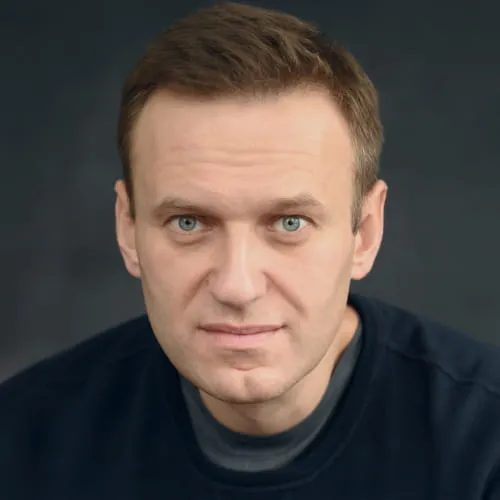
Hello everyone. This is Maria Pevchikh. I’m about to tell you a very, very unpleasant truth about Russian elections.
Now imagine this situation. You go into a store to buy something. A pirozhok, for example (a small filled pastry). You’ve got honestly earned money in your pocket, you’re ready to spend it, you want a snack. But the counter is empty. There’s just one single, VERY expensive pirozhok there—and not with meat or cabbage, the way you’d like, but with rotten fish or liver. It’s stale and moldy. It smells awful. You refuse, say no thanks, never mind, I’ve changed my mind. But they take your money anyway, force this thing you don’t want into your hands, and say, “Eat.” What is it you don’t like? Eat, they tell you!
That’s more or less how party-list elections work too. In a week and a half, on September 17, 18, or 19, when you go to vote, you’ll be given two ballots. One will have the names of candidates—specific people from specific parties. The second will be a party-list ballot. That one is for voting for parties. You, dear readers, know perfectly well that you should vote for any major party except United Russia. But United Russia has spent twenty years brutalizing the entire electoral system precisely so that these party lists would guarantee it safe seats. Deputies who will end up in the State Duma no matter what. Not because voters like them, but because Putin, Volodin, Kiriyenko, and other thieving old men have decided they know better than we do how we should live. And the higher someone is on one of these lists, the more valuable and useful that United Russia loyalist is to them. First or second place on the list, and that person is basically guaranteed a seat in the State Duma. Regardless of whether they’re a good politician, whether they’re popular in the region, whether anyone even knows who they are. None of that matters. Just like with the rotten pirozhok. They’ll simply hand you this deputy—one you never asked for—and say: that’s it. Now pay their salary for five years—about 500,000 rubles a month (roughly $6,800 at the time)—plus a driver, assistants, flights, business trips, and... don’t forget to chip in for their official apartment. And then, when the deputy retires, be so kind as to keep paying them an extra 50,000 rubles a month (about $680 at the time) on top of their regular pension. A bonus for their service.
And you can say all you want: I don’t wa-a-ant to, I wo-o-on’t, I don’t care about your elections. I’m not into politics. But United Russia will tell you: no! Putin said pay—so you pay.
Needless to say, under this party-list system United Russia foists outright garbage on us. Their own party people—people who would never get elected any other way. But sometimes the garbage is so spectacular that it deserves a post of its own. Still, don’t worry: all is not lost. Yes, United Russia has learned how to stick us with this kind of outrage, but we can hit back too—and very effectively. More on that at the end. For now, here is the remarkable story of one of the vilest female deputies, who will very soon end up in the State Duma and, I’m sure, will go down in its history alongside the familiar faces of thieves and traitors.
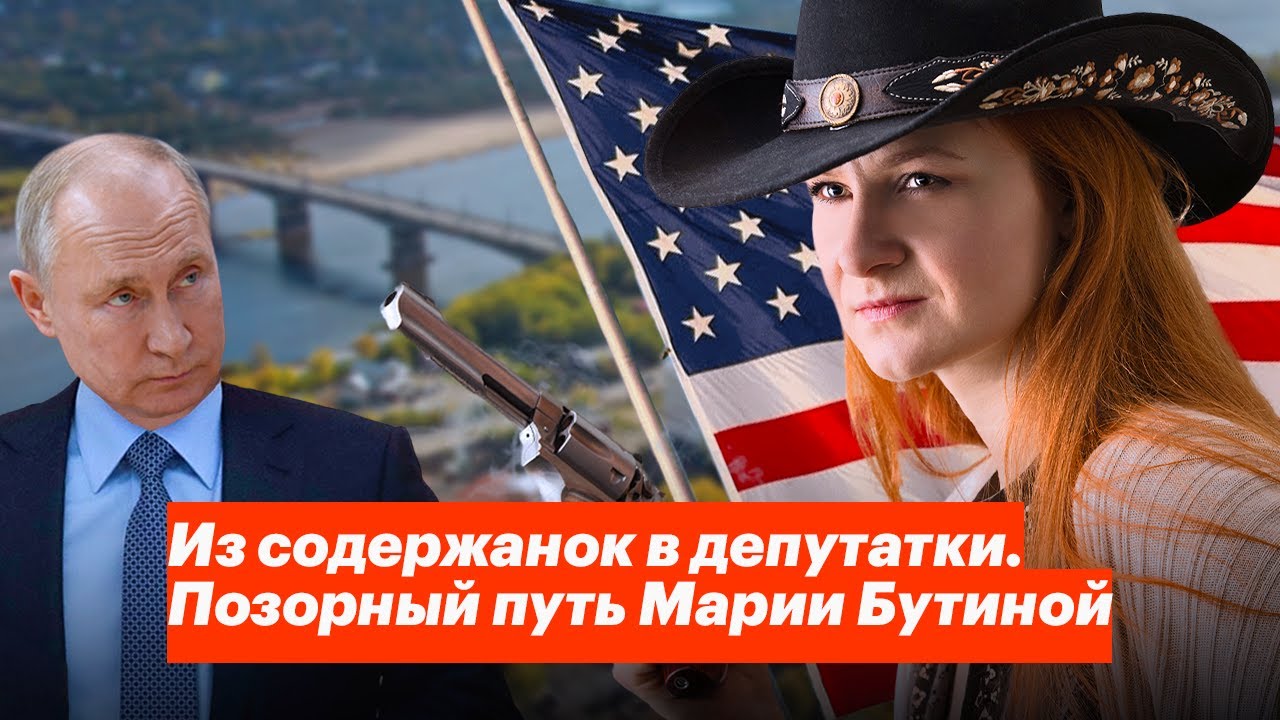
Maria Butina. A woman who is about to move from the category of kept women of elderly American men into the category of our kept woman. She is second on United Russia’s regional party list for Kirov Region, and given that the governor is in first place—and he’ll decline the mandate—Maria is certain to get into the State Duma.
What has she done to deserve such honors? Was it for her absurd adventures in the United States, where it was never quite clear what she was doing—spying, exporting, politics? Maybe for a year and a half in an American prison? I doubt it. The Russian side cared so little about what was happening to her there that they didn’t even pay for her lawyers and couldn’t shorten her sentence by a single day.
From prison, Butina was literally begging anyone at all to send her a little money—whatever they could—because she quite literally had nothing to live on.

Maybe Maria is being handed a parliamentary seat for her diligent work at RT and her endless stories about how EVERYTHING in America is terrible? Warmer, but no.
Maria was rewarded for something else. For the fact that this spring, hiding behind a human-rights credential, she barged into the penal colony where Navalny was on hunger strike and did the most shameful thing of her life there. She lied, screamed, and threw hysterics on camera trying to prove that Navalny wasn’t sick, wasn’t starving, that this wasn’t a prison at all but practically a health resort.
With a crazed look on her face, she shouted at Navalny about cleaning rules.

She argued that people in the village of Kosikha in Altai Krai live WORSE than in a penal colony. What a thing to be proud of.

And of course she sang the praises of the penal colony in Pokrov, Vladimir Region. Where everything is supposedly so wonderful. Unlike America.
She didn’t say a word about the torture, the abuse, or the refusal to provide qualified medical care to Navalny, who had only recently survived poisoning with a chemical weapon. Incidentally, she was there on the very days when doctors were being denied access to Navalny. But she was allowed in. Along with an entire camera crew. All of it was edited into a big TV segment titled “The Capricious Patient,” so the whole country could see how brilliantly she had “exposed” Navalny.
Back in April, I watched that report over and over and kept thinking: why? What are you doing, you fool—not just to Navalny or to the viewers of this lying piece, but to your own life? You yourself were in prison. In an American prison, yes, but still in prison. You know that when everyone abandoned you, Navalny defended you. You’re only 32, after all—you have most of your life to live after Putin. Why humiliate yourself like this. Why destroy your reputation and your conscience? And then it all became clear. Butina was angling for a seat in the State Duma. And for a warm, lucrative position close to power, Maria Butina has always been willing to do a lot.
I’m sure the people of Kirov Region have every right—and would be very interested—to know who will actually be representing their interests in the State Duma. What kind of person she is and where she came from. I’m going to tell you her remarkable story and the things you won’t read in an election brochure or campaign platform. And I won’t need anonymous sources or biographical notes to do it. Everything you need to know about Maria Butina can be found in several documents from an American court and in Maria’s own testimony before the U.S. Senate. Every fact below comes directly from those documents.
Butina was born in 1988 in Barnaul. She went to school and university there, and then, as people do, headed off to conquer Moscow. She wanted to sell furniture—but that went nowhere. She wanted to work in social media advertising—but that went nowhere too. In general, her Moscow career just wasn’t taking off.
At the same time, Maria pursued her main passion: guns. Defending Russians’ right to own, keep, and use firearms.
That passion, by the way, hasn’t gone anywhere. Quite recently, during the election campaign itself, Maria called for a traffic police officer in Novosibirsk to be acquitted and even rewarded after he accidentally shot dead a 19-year-old during an arrest.
The gun issue is what led to the first and most important political connection of her life—with Alexander Porfiryevich Torshin.
At the time, he was a senator, a member of the Federation Council. On Twitter, Torshin is known as a crazy, apparently heavy-drinking old man, but in the past he was linked to Russian organized crime groups and even to the famous “Spanish case”—the investigation into Russian mafia money laundering in Spain.
Maria got a job as Torshin’s assistant.
“So what, guns are guns,” you might say. In Russia, it’s about as irrelevant a topic as you can imagine, and politically it barely matters at all. True enough. But that’s in Russia. In the United States, it’s exactly the opposite. The National Rifle Association (NRA) is a major political force in America, a powerful and highly influential organization that includes some of the best-known and most prominent Republican politicians.
And with the help of this organization, to which Torshin and Butina had access, the two of them decided to shape the fate of the world. To engage in international diplomacy and build a clandestine informal back channel between Russia, the U.S. Republican Party, and Donald Trump. It doesn’t take much imagination to guess that international diplomacy conducted by a half-crazy senator and a twenty-something girl from Barnaul did not end in success. More precisely, it ended in one of the biggest and most humiliating diplomatic scandals around—and in 18 months in an American prison for Butina.
So let’s get more specific about what our future deputy from Kirov Region was actually doing. How exactly she was building diplomatic ties between two great powers. First of all, she and Torshin traveled to shooting conferences in the U.S. and brought NRA leadership to Moscow.
They organized meetings with Lavrov and Rogozin. I don’t know whether it ever came together, but Patrushev and Peskov were in the plans too.
Maria also came up with projects called “The Second Pozner” (apparently a reference to Vladimir Pozner, a well-known Russian TV host), all supposedly aimed at building unofficial ties of some kind. She was also planning to make a nature TV show... featuring Putin. She never made it, of course, but she did get $20,000 for the attempt.
She also promised to arrange a meeting between Putin and the head of the NRA, because she was supposedly that influential. In short, if you sum it up, whenever she came to America she was simply peddling imaginary ties to Putin. Trying to somehow insert herself into American politics and become an informal diplomat there. Her activity boiled down to endless, countless appearances at American dinners and conservative social events. Meeting someone important there. Then going to the next event where she could meet someone else important.
And here we come to a subject that may seem personal at first glance, but in fact absolutely isn’t. How did Maria Butina manage to penetrate all these American political circles? She had a special person for that. Someone who introduced her to everyone, literally took her by the hand. And that person was her boyfriend, Paul Erickson.
Their love story seems so romantic at first glance. Erickson came to Moscow with the NRA, and there he met Maria, who had organized the visit. Twenty-five-year-old Butina immediately fell for 52-year-old Erickson, and the two began an affair.
Under the pretext of various work trips, he got her U.S. visas, wrote letters for her, translated for her into English, and introduced her to all his Republican acquaintances. To be closer to her beloved, Maria enrolled at an American university; he paid her tuition, did her homework for her, and supported her completely. As it later turned out, he had money because he was involved in fraudulent schemes, for which he too was later convicted.
But wait. It wasn’t all so fairy-tale-like in reality. The materials in Butina’s case show that the relationship with Erickson weighed on her; she complained about it, signed up for Tinder, and at the same time saw other men—by an amazing coincidence, also older but very influential Republicans. For example, at a conference she met the American businessman Patrick Byrne.
Her boyfriend Erickson wrote an email on her behalf asking for a personal meeting. The meeting happened, and Butina started sleeping with 53-year-old Byrne too. And he began supporting our Maria as well—paying for her studies in America.
Maria clearly made quite an impression on this eccentric businessman. In the materials of a special Senate committee, you can find an email from Maria’s boyfriend Erickson saying that Byrne offered her a million dollars to bear his child.
He publicly spoke about his relationship with Butina himself and, because of the reputational damage, stepped down as head of his own company. Then he turned Maria over to the FBI, after which she was arrested. Maria herself later said in an interview that Byrne was not only an FBI informant, but had also tried to poison her in order to interrogate her while she was under the influence of some substance.

If you think this story can’t possibly take a more astonishing turn—it can! Open Maria’s financial disclosure, which she filed ahead of this election. There you’ll see that she declared a mind-boggling income for last year: 65 million rubles (roughly $885,000 at the time).
The sources are NTV, her work at RT—where she earns much less, around 2 million rubles—several banks, which are obviously just interest on deposits, and... Patrick Byrne!
The very same FBI informant who, according to Butina, tried to poison her. The man who handed Maria over to the FBI is still supporting her right now. An American citizen is showering a candidate for the State Duma with money—tens of millions of rubles. And somehow *you’re* still the “foreign agent.”
If anyone still has questions, or still believes that it just so happened that a senator’s best gal pal moved to America and, out of the goodness of her heart, started chasing after Donald Trump’s family, building connections, and falling in love with rich older American men—let her explain it to you herself.

Now that’s devotion to the motherland, now that’s self-sacrifice. In short, Maria was sentenced in America to 18 months for all this “relationship-building.” Because the whole time she was in the States, she was carefully and meticulously sending reports to her handler Torshin, running out to the bathroom during conferences to call him, while he carried those reports to the Foreign Ministry, gave her new assignments and instructions, and she sent more reports back. But to the American side she pretended to be just an ordinary international student. She concealed the real purpose of her stay in the U.S.
And then came the American prison. A perfect gift for Russian propaganda and a lifelong source of income for Butina herself. Dear God, how she suffered there. You can find hours of interviews online where Butina talks about the HORRORS, the TORTURE, the ABUSE. Unthinkable things that, of course, would never happen in a Russian penal colony.
In her book, you can read 550 very poorly written pages about her suffering. The suffering of knitting classes, and a whole bunch of other classes; the suffering of meetings with an Orthodox priest who came to see her regularly. The suffering of access to a gym twice a week, the ability to shower, and regular use of the phone.
When Maria returned to Russia, her life improved dramatically. Just a year earlier she had been begging people to send her whatever money they could because she didn’t have a penny, and by December 2020 she had already bought herself a small apartment in the very center of Moscow, directly across from the Foreign Ministry—without a mortgage.
Judging by old listings, a place like that cost around 13–14 million rubles (roughly $175,000–$190,000 at the time).
Butina got herself a job at the propaganda dump that is RT. She went back onto the payroll of her former lover—or would-be poisoner—Patrick Byrne, and then, as you know, came the famous trip to Pokrov and the door into big politics. Kirov Region, which was handed over for her to prey on. Maria is barely campaigning at all; she just drives around the region, takes photos, and writes little notes about a place she has absolutely no connection to.
I watched several of her recent interviews, and nowhere does she merely fail to explain her political views—she doesn’t even mention that she’s running for the State Duma. Everywhere it’s just more about how terrible America is, plus the usual prison yarns. She doesn’t ask people to vote for her. She doesn’t talk about her views or try to make herself likable. She doesn’t need to be likable or ask anyone for anything—her seat in the State Duma has already been secured. Putin and United Russia decided that this woman suits them: a woman who, in her entire life, became famous only for being able, on the orders of a crazy senator, to charm rich and influential American men old enough to be her father. To persuade them to introduce her to the right people and support her financially. I’m sure her work in the State Duma will differ very little in spirit from that.
But there is good news too. Even though that scoundrel Butina is guaranteed a seat in the State Duma, there is still a way to get revenge on United Russia. Dear readers from Kirov Region, we REALLY need you right now. Help us. Here’s how.
Kirov Region is divided into two electoral districts—Kirov and Kirovo-Chepetsk. That means two people will go to the State Duma from your region in single-member races, not from party lists. And in both places, the United Russia candidate can be beaten—not just some random United Russia candidate, but a very big one. It would be a real pleasure.
Running in the Kirovo-Chepetsk district is incumbent deputy Oleg Valenchuk.
There’s a lot that could be said about Oleg Valenchuk—he’s held onto his mandate for 14 years now. He’s also a singer:

Valenchuk is also known as a local oligarch. Back in the early 2000s, he even merited a feature in the American business newspaper The Wall Street Journal. The article described how, in the “wild ’90s” (the chaotic post-Soviet 1990s), Valenchuk and his old Komsomol comrades used their government connections to seize state property, which became the foundation of his empire.
“Wait,” you’ll say. “How can he be an oligarch? We’ve heard deputies aren’t allowed to run businesses.” If you open Valenchuk’s financial disclosure, you’ll see only a 74-square-meter apartment and a modest garden plot. An income of 5.7 million rubles—a standard amount for a deputy. He doesn’t even own a car. Not much like an oligarch at all.
Now let’s look more closely: what else is missing from the disclosure? Or rather, who? His wife, of course. Even though he does have one, we’re sure of it: they are raising children together, living together, and flying off on vacations together. The United Russia deputy’s secret wife is named Tatyana Petrovna Mikryukova.
And the main business assets are registered in her name. For example, together with an old friend of Valenchuk’s, she owns a building on Chapaev Street in Kirov, which houses the Dom Obuvi shopping center. She owns the four-star Tsentralnaya Hotel, a restaurant, the Time shopping center, and much more.
Valenchuk is also a media magnate. A stake in the Kirov newspaper Novy Variant is registered in his wife’s name. This outlet receives state contracts from the city council, the mayor’s office, the regional government, and the regional legislative assembly. And what was the budget paying the newspaper of a United Russia deputy for? For the “preparation and publication of informational materials with an anti-corruption focus.”
But his main achievement—the one I simply have to share with you—is something else. Oleg Valenchuk is the father of “the most handsome deputy.”
A couple of years ago, this young man—Valenchuk’s son, and also a deputy—became famous thanks to a meme about eyebrows and manicured nails.
He even later sued, claiming his good name had been defamed. How could anyone possibly defame it?
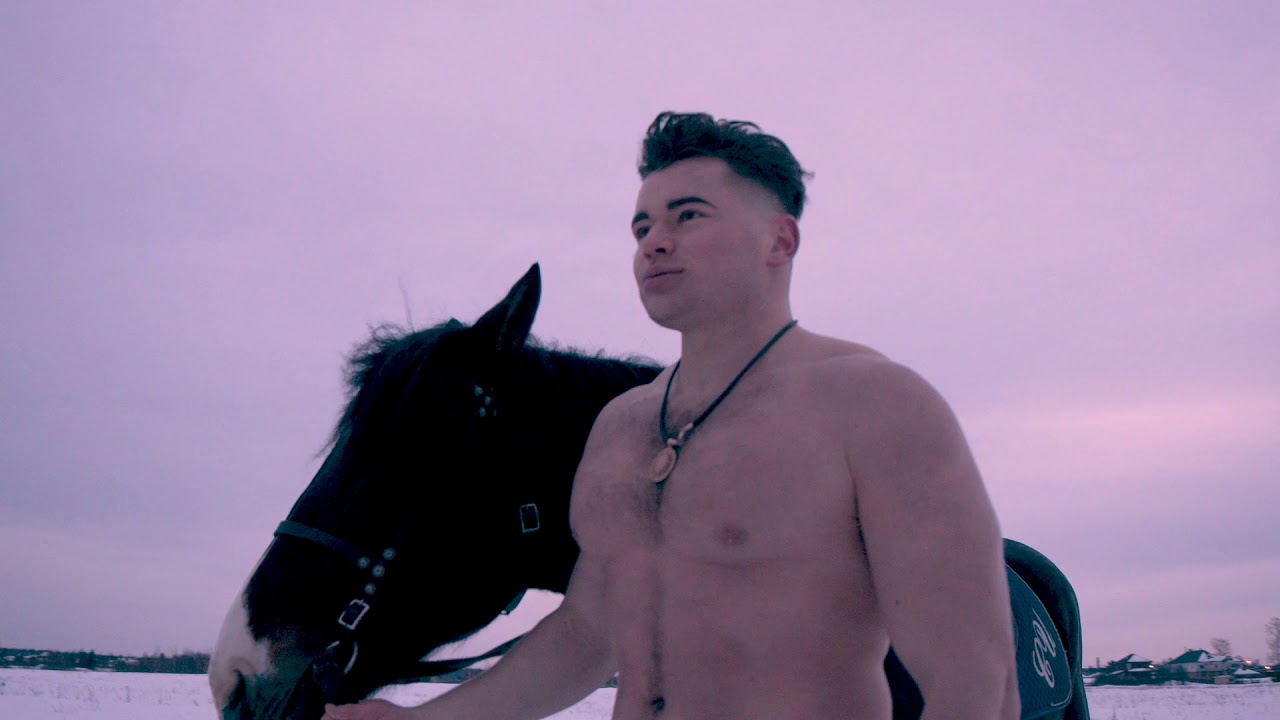
To avoid unwanted attention, the younger Valenchuk drives a car with tinted windows, for which he has been fined. A local TV company even caught the license plate of the “most handsome deputy’s” car on camera—but the car is nowhere to be found in his disclosure.
Apparently, following his father’s example, he prefers to register things in other people’s names. Though not in a wife’s name—in his assistant Yakov Orlov’s.
Judging by the photos, a contender for the title of the most handsome deputy’s assistant.
Beating the father of the most handsome deputy is easier than it seems. In the last election, he got only 40 percent.
In other words, if all the same voters simply stop scattering their votes the way they did in 2016 and instead vote for one single opponent of Valenchuk, that’s it—goodbye, Valenchuk. And with the help of Smart Voting, that’s exactly what we should do.
And we should do the same to the second Kirov deputy. His name is Rakhim Azimov.
He has already stayed silent through an entire term in the State Duma—not a single speech—and now he wants another term of silence. Azimov has a house on Rublyovka (an elite Moscow suburb), 1,367 square meters, and an apartment on Kutuzovsky Prospekt measuring 227 square meters. His children aren’t deputies yet, but the potential is there—photos in a Rolls-Royce, Dubai trips, and Morgenshtern (a popular Russian rapper) performing at their birthday party.

Azimov is also very fond of United Russia and Putin. He served as one of Putin’s official campaign representatives and even, for some reason, asked Putin to sign his passport.
Don’t want these people to become deputies? In Kirov Region, despite the fraud, United Russia is doing so badly that it really can be stopped. To do that, you’ll need Smart Voting. A few days before the election, the website and the app will show the name of the candidate who has a chance of beating both Valenchuk and Azimov in their districts.
And there will be exactly the same recommendations all across the country—use them! You can download the app right now from the AppStore and Google Play. It’s called “Navalny.”
Finding the Smart Voting candidate there is very simple—just enter your city and street, and you’ll get the strongest opponent to the United Russia candidate.
And make sure to send this video to everyone you know in Kirov Region. I’m sure they’ll be very interested to learn who represents them in the State Duma. And even more interested in trying to kick these freeloaders as far away as possible.
Take part in Smart Voting.
Freedom for Alexei Navalny.