
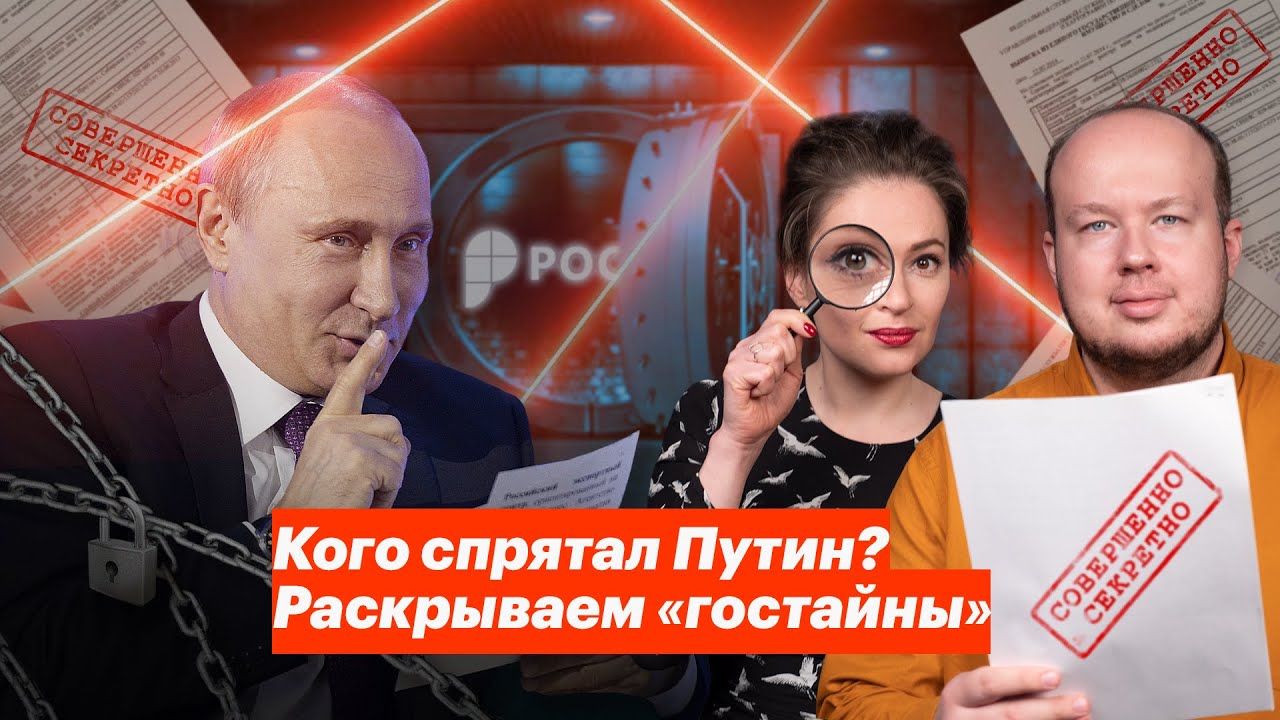
Let’s think about what Vladimir Putin’s ideal Russia looks like. It is total silence. A sterile atmosphere where millions of poor, frightened people work for pennies, never raise their eyes, listen to propaganda, take no interest in anything, and above all—stay silent. It is a huge, intimidating personal army that serves him, not the law. It protects him from everyone who disagrees. These are prosecutors, investigators, judges who carry out his every wish—ruining lives, abusing people, torturing them—so that others will know better. Darkness, silence, and calm. So that no one ever gets in the way of his stealing.
For many years now, our job has been to break into Putin’s ideal world and tear it apart. To turn on the lights, run around, and shout: “Help, we’re being robbed—stop the thief!”
It is precisely for this work that we were branded extremists. Put in the same category as international terrorists from ISIS, al-Qaeda, and Aum Shinrikyo. They blow people up, kill by the thousands, and cut off heads on camera. We, on camera, show officials’ palaces and yachts. We show how they take bribes. But in Putin’s eyes, we are the same.
Anti-corruption investigations are what infuriate Putin more than anything else. They strike at the weakest point in his system: stealing is allowed, but talking about it is not.
Let’s quickly go over how corruption is investigated. The most important thing to understand is this: it is impossible to steal without leaving a trace. There are always signs somewhere—official documents, entries in registries, traces in financial statements, leaked contracts, invoices, shipping documents, building plans. Somewhere there will be photographs or video, and somewhere there will be real people with their own stories.
And the investigator’s job is to find what matters in this enormous mass of information. A surname, the name of an offshore company, a date—we collect it all, analyze it, verify it, and then tell you about yet another official with a billion-ruble house and an oligarch mother-in-law.
And it is a never-ending struggle—they hide this information from us, and we find it. They hide it again, and we look another way and still find it.
By now, it seems that literally everything has been classified. Public procurement by the Ministry of Defense, the FSB, and the FSO (Federal Protective Service)? Secret. Want to know how much they spend outfitting Putin’s tenth residence with spa facilities? You can’t—it’s a state secret. Did you know, for example, that senior officials in the FSB and the Defense Ministry do not have to publish income declarations at all? Everyone else does—but not them. The director of a Youth Theater in the town of Nyagan is required to report his income, but some deputy of Shoigu’s is not.
And this is where the main battle is unfolding.
Rosreestr is the unified database containing information on real estate owners. This registry records every piece of real estate in Russia—land, houses, apartments, garages, and outdoor gazebos. The entire country is divided into 60 million plots, and information is recorded for each one—the owner, tenant, area, purchase date, and so on. It is one of the most important state registries: without it, you cannot buy or sell an apartment, inherit property, get a mortgage, or prove that your apartment actually belongs to you.
In short, it is a good registry. A useful one. Especially because the palaces and penthouses bought with stolen money by Putin’s officials are recorded there too.
You can pretend all you like to be a people’s governor, a servant of the people, a modest and agreeable hard worker. But then Rosreestr turns up a record for your elderly mother-in-law, and it turns out that at age 70 she bought herself an apartment on Arbat for 120 million rubles. And suddenly that aura of being “close to the people” evaporates very quickly.
And if something in Russia works well, is useful, makes the state more transparent, and citizens better informed, then what does Putin want to do with it? Exactly. Destroy it. And that is precisely what has been happening over the past few years. It is impossible to shut down the cadastral registration system completely—but it can be broken.
It all began in 2016, when instead of Artyom and Igor Chaika—the sons of then Prosecutor General Yury Chaika—this appeared:
A code. Why? On what grounds? Why do we not have the right to know that this 2,000-square-meter house on Rublyovka belongs to the pampered son of the country’s chief guardian of law and order?
The code turned out not to be hard to crack, so they came up with a new trick—instead of officials’ first and last names, they started writing “private individual,” and then even “Russian Federation.”
Now, don’t get us wrong—there are probably situations where it makes sense to classify the home address of some intelligence officer being hunted by every spy agency in the world. But that is a theoretical situation. In reality… just look at this record. The Russian Federation is transferring a huge 1,500-square-meter house in Moscow under a prenuptial agreement.
Absurd? Who could the Russian Federation possibly have a prenuptial agreement with? Surely some kind of mistake? Not at all… It was simply Igor Sechin, the head of the state oil company Rosneft, divorcing his wife, transferring property to her under a prenuptial agreement, and then having that record classified.
Putin’s old apartment in St. Petersburg shows how the crooks at Rosreestr simply break state databases. They swap out names. They invent pseudonyms for people. The apartment on 2nd Line of Vasilyevsky Island in St. Petersburg used to be owned by Putin, his wife, and their two daughters. But if you request the record now, instead of Vladimir Vladimirovich Putin, it lists one Igor Petrovich Sergeyev-Gradsky. And the entire family of Igor Petrovich.
And here is the record for the country estate outside Moscow belonging to Nikolai Gorbenko, a deputy to Mayor Sobyanin. He too has been classified.
Gorbenko came into public service from the publishing business, and for Rosreestr he chose a creative pseudonym with a meaning: his property is now registered not to him, but to a certain Ivan Fyodorov—the namesake of the founder of printing in Russia.
As you can see, all these methods are useful, but not enough. We find them anyway. And that brings us to the latest scheme now being carried out with the state real estate registry. Look closely at this map. Do you see anything suspicious?
Or this one. Notice anything? All the plots are outlined, you can click on them and view the information—but this one, you cannot.
The plots and houses themselves have not gone anywhere, and no one demolished them, but the information about them has been erased. All the neighboring properties are registered and recorded, but in place of these—nothing. You can see it with your own eyes: there is a huge house standing there. But on paper, it is just an empty field.
This method is certainly the most sophisticated. You cannot request a record for something that officially does not exist. We are sure that when our crooks came up with this, they were rubbing their hands with delight. Now, surely, no one would ever expose them. But we are sorry to disappoint them. The famous incompetence and clumsiness of Putin’s officials has helped us once again.
We found a way to detect deleted records. By comparing lists of existing real estate properties in Russia from different dates, we identified several hundred deleted plots and, using old archived records we had accumulated over ten years of work, restored the names of those being so carefully hidden from us. By having themselves deleted from Rosreestr, they did themselves a disservice: they wanted to disappear, but instead, like foolish little fish, they simply jumped out of the water straight into our net. And today we will tell you who they are—the most classified people in the country. The people for whom maps were redrawn and the state’s most important cadastral institution was broken. The most secret and the most important people in the country.
Let’s start with something unexpected. In this video, a CNN journalist shows up at the home of one of the FSB officers involved in poisoning Navalny—Oleg Tayakin.
At the time, we found and confirmed his address thanks to Rosreestr. Today we would not be able to do that—the records for his apartment have been completely deleted. That real estate property simply does not exist.
Next is the leader of the poisoning team—General Vladimir Bogdanov, head of the FSB’s Special Technology Center. His apartment and plot of land outside Moscow have been deleted from Rosreestr.
As for the other poisoners, their names were simply replaced with “Russian Federation.” Alexandrov, Kudryavtsev, Makshakov, and Vasilyev no longer appear in Rosreestr. Panyayev’s parents were also removed from Rosreestr. All because their murderer son is registered as living in their apartment.
Let’s move on to things happening in our state real estate registry that are completely inexplicable. Remember Nurgaliyev, the former interior minister? He has not been a minister for almost 10 years, yet his 174-square-meter apartment in central Moscow is classified.
The son of the current interior minister, Kolokoltsev, is 38 years old. He is a billionaire. Here is the little country place he bought for himself five years ago: a hectare of land on Rublyovka. It is worth more than a billion rubles. All records for this property, and all the other property owned by the current minister’s son, have been deleted.
In 2011, FSB deputy chief Vyacheslav Ushakov was forced out; he became notorious for spending $1 million on his birthday celebration. Ten years later, his daughter’s 250-square-meter apartment, with a market value of 120 million rubles, has been classified—this property has been deleted.
Or take, for example, the daughter of Mikhail Shekin, head of the FSB’s administrative support service. Her name is Anastasia Zadorina. She is a well-known socialite, but of course she makes her money from state contracts: it is her company that has the exclusive contract to make uniforms for Olympic athletes.
At age 21, she bought a 200-square-meter apartment in the very center of Moscow. And that information is considered a state secret.
The same convenient service of classifying daughters’ real estate was also extended to the daughter of Bortnikov’s deputy, FSB State Secretary Kupryazhkin.
And to her neighbor in the building, the daughter of Fetisov, head of the FSB’s scientific and technical service.
And to the daughter of the head of the FSB counterintelligence service. Very convenient—the enemy will not find out, and no one will ask where she got a 1,000-square-meter mansion.
Next: Viktor Alexeyevich Zubkov. Putin’s colleague from the St. Petersburg mayor’s office. A former deputy prime minister. For the past 10 years he has worked at Gazprom as chairman of the board of directors. No fewer than two houses belonging to him have been classified, one of them on Rublyovka. Why? Unknown.
An adviser to the chairman of Gazprombank’s management board, and former head of the Interior Ministry’s economic security department, dismissed in scandal in 2011. His wife’s 230-square-meter apartment in this splendid residential complex has been deleted.
Apparently, the wife of an adviser to the head of a state bank is one of the prime targets of devious Western intelligence services.
It seems that all foreign intelligence agencies are also hunting the 82-year-old mother of Moscow prosecutor Denis Popov. Otherwise, why would Rosreestr erase the information about her dacha on Rublyovka?
Here are a few more examples of the most protected people in Russia—the people for whom registries are rewritten. Zarina Doguzova, head of the Federal Agency for Tourism. Her apartment on Sadovnicheskaya Embankment, in an elite building for Moscow officials, has been deleted from Rosreestr.
Olga Yegorova, former head of the Moscow City Court—the person who personally destroyed, corrupted, and imposed manual control over all Moscow courts. Classified. Presumably as a reward for her work.
Our old friends, the children of former Prosecutor General Chaika, who has been out of office for a year and a half now, have also been deleted from Rosreestr.
All of this is done under the pretense of protecting our shared state interests—the interests of Russia. But if that is the case, why classify the luxury real estate of the family of Kazakhstan’s President Tokayev?
Here is the record for his son’s 200-square-meter apartment in Khamovniki. We have had it in our files for a long time; today you can no longer obtain it. The property has been deleted.
The same goes for another 170-square-meter apartment belonging to the former wife of Kazakhstan’s president. Also classified.
Formally, the only possible explanation for this would be that President Tokayev is a career officer of the Russian special services.
We do not, of course, rule that out, but let’s be honest—it is quite obvious that the service of having yourself removed from Rosreestr is now available to an unlimited number of officials, their relatives, friends, and associates. There is no state interest in classifying the property of the glamorous daughter of an FSB facilities chief, or an elderly prosecutor’s mother, or the son of a neighboring country’s president. This is simply a new service for Putin’s elite. Immunity from investigation. A badge of honor for the country’s most important and most well-connected corrupt officials.
And the classification of the group of FSB officers who were following Navalny is the best possible proof that we were absolutely right. That in Russia there exists an FSB unit engaged in political executions and extrajudicial killings. That under the cover of a criminalistics institute, it is secretly developing chemical weapons for targeted assassinations. There is no other possible reason to erase all data on these FSB chemists and doctors.
Subscribe to our YouTube channel.
Freedom for Alexei Navalny.