This is New York, and it is from here that our Western partners are making their plans to destroy our country.
We are sure they will fail: the commander-in-chief is on guard, and Putin has his team around him. He is not alone. An elite group, trusted representatives, the fiercest patriots—they bear the burden of explaining how the world ought to be arranged, that everything is fine in Russia under Putin. And that here, democracy is the worst thing humanity has ever invented.
What is more, even among Putin’s trusted representatives—this “elite special unit”—there are superhumans who are not afraid to venture into the most terrifying places. These people are modest; they would never talk about themselves. But we will tell you about one member of this “special unit.”
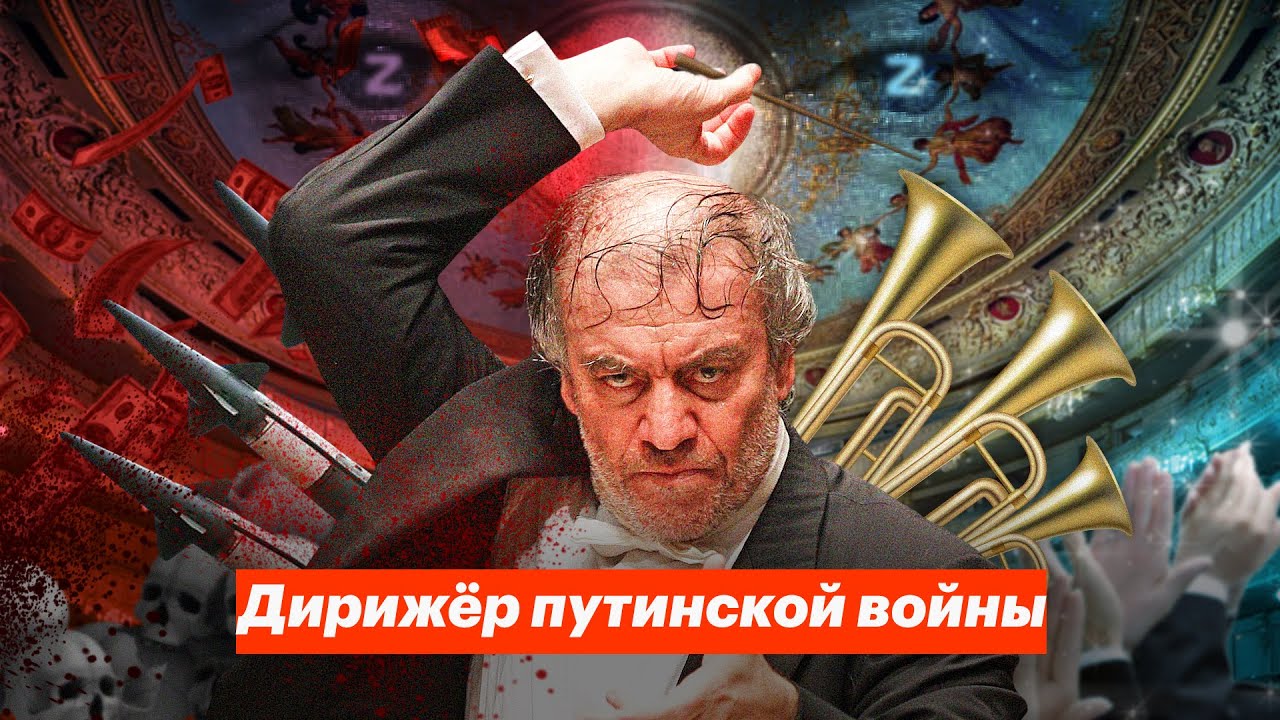
Valery Gergiev is an exceptionally talented conductor, famous around the world, and one of Putin’s most active supporters. He is Vladimir Putin’s ambassador in the world of culture.
Gergiev is very active: he signs every open letter, he takes part in every propaganda spectacle along the lines of, “Let’s stage a concert on the ruins of Palmyra.”
He is on the front line. In fact, Gergiev has even crossed the front line and infiltrated the enemy’s rear. In an upscale part of New York, not far from Central Park, Gergiev bought himself a 165-square-meter apartment for $2.5 million in 2004.
Fine, he bought an apartment—but the point is that he has been hiding it for 15 years. He does not want to boast about how heavy this burden is for him: being one of Putin’s trusted representatives while also owning an apartment in New York.
Finding Gergiev’s apartment turned out to be very easy. The record of its purchase is in New York’s public real estate registry.
This skyscraper here—here, on the 56th floor—is where Gergiev’s apartment is located: 165 square meters, three bedrooms, three bathrooms, and a huge living room with a panoramic view of New York.
The location is no accident. The building is in Lincoln Center, and from here it is about a three-minute walk to the Metropolitan Opera, where Gergiev performs regularly.
Now, jokes aside, why did Valery Gergiev do this? The maestro is talented, but he is also a liar and a hypocrite. He earns enough to afford this apartment—so you would think he could simply declare it. But no: he hides it and lies because he wants to remain one of Putin’s trusted representatives and is willing to take part in disgusting propaganda spectacles.
Because if this apartment had appeared in his disclosure, then every time Putin and Gergiev tried once again to feed us nonsense about the “terrible West,” everyone would be outraged and say: dear Mr. Gergiev, stop lying to us—you own an apartment in New York. What fairy tales are you trying to tell us?
That is why he lies to us through his disclosure forms. And Putin helps him lie. By law, Gergiev should be dismissed immediately from his post at the Mariinsky. But that will not happen. He, Putin, and the presidential administration will come up with some lie to explain that everything is fine and no law was broken. Because this is the rule of hypocrites and liars. They may be talentless officials, they may be gifted musicians, but the essence does not change—this is always the rule of hypocrites, liars, and crooks.
The fact that the apartment clearly exists—we can see it in New York’s official real estate registry—while Gergiev’s disclosures say nothing about it is truly outrageous.
There are no complicated schemes here, no nominees, no distant relatives holding property on his behalf. Here, the official personally owns an apartment in central New York and has been lying for years, claiming that no such apartment exists.
To verify the authenticity of the American record and confirm beyond doubt that the apartment really belongs to our Gergiev, and not to some namesake, we used the most reliable method. We took the signature from the apartment purchase documents and compared it with Valery Gergiev’s own signature, kindly provided to us by the maestro himself.
As is easy to see, this autograph left by Gergiev, along with others we found online, leaves no doubt. In 2004, it was Valery Gergiev himself who personally bought the apartment in New York, and he has concealed it ever since.
Our brief (but useful) meeting with the maestro took place in Milan, at the legendary La Scala theater. The premiere of The Queen of Spades was being staged there, and we attended it. The premiere took place on February 23 of this year.
There were many spectators and admirers, and Gergiev received a magnificent welcome.
We could not have imagined it then, nor believed it, but at the very moment when the orchestra under the maestro’s baton was playing its final chords, amid the thunderous ovations and applause of La Scala’s delighted audience, Putin was beginning to bomb Ukraine.
A few hours later, before dawn, he declared war on Ukraine. And that was Gergiev’s last concert in Europe.
The story of Gergiev’s New York apartment began two and a half years ago, but at the time it was incomplete. Navalny’s words that Gergiev was a liar and a hypocrite, that for bribes and outrageous fees he laundered the reputation of his patron—a criminal—might have seemed exaggerated, or not important or significant enough.
So he has spent decades glorifying Putin—so what? There are dozens like him. But time has put everything in its proper place. Today, Putin—the man whose trusted representative Gergiev serves—is destroying a neighboring country. Today, Putin is killing thousands of Russian soldiers and not even retrieving their bodies.
And our maestro is no longer the face of great Russian culture, but the face of a deranged dictator and the face of the horrific war Putin started.
When we began this investigation, we could not have imagined how astonishing a story we would uncover. We found that for years Gergiev has cynically been stealing from the charitable foundation that bears his own name; that he spends money allocated by the state and state-owned companies to support the Mariinsky and young talents on himself, on luxury real estate, and on a lavish lifestyle.
Before we set off on a fascinating tour of Valery Gergiev’s holdings in Russia and abroad, we should get to know today’s protagonist a little better.
Gergiev spent his childhood in North Ossetia, where he graduated from music college. In the early 1970s he moved to Leningrad (now St. Petersburg), finished the conservatory, and began working as an assistant conductor at the Kirov Theater, as the Mariinsky was then called.
By 1988, Gergiev had become principal conductor. An undeniably gifted musician, he had already won prestigious international competitions in the Soviet Union, and once the borders opened, Gergiev became world-famous. In the early 1990s he was already performing at the Bavarian State Opera, the Metropolitan Opera in New York, and the Royal Opera House in Covent Garden. In 1995 he took over the Rotterdam Philharmonic Orchestra, and by 2008 he was leading the London Symphony Orchestra. In 2015 he became chief conductor of the Munich Philharmonic.
It is an insanely successful career. Gergiev brought the Mariinsky, which he had led since 1996, back to world-class status, placing it alongside the Metropolitan Opera, La Scala, the Vienna State Opera, and the best theaters in the world. Valery Abisalovich could certainly have remained simply a great Russian conductor, a source of national pride, but there turned out to be things he loves more than music—money, power, and Putin.
Gergiev first met Putin in St. Petersburg in the early 1990s.
That was also where he met and became friends with Alexei Kudrin and German Gref.
Gergiev is friends with state banker Andrei Kostin; oligarchs Usmanov, Timchenko, and Yevtushenkov give him money. Gergiev is literally the court musician of all those who have been looting the country for decades.
What is the point? It is very simple. Valery Gergiev is a kind of shadow foreign minister. A special person, very famous and popular, entrusted with the task of becoming the face of Russia abroad.
It is literally a trick, a substitution, a scam. Through his productions, his orchestra, and the Mariinsky name, he is meant to shift attention away from the fact that Putin is robbing and destroying Russia—and neighboring countries; away from the fact that he kills his own citizens with chemical weapons—and toward the idea that... things are “not so clear-cut.” Do not look at Putin, look at me! I will play Tchaikovsky, Shostakovich, Stravinsky for you—just do not look at Putin’s crimes. In other words, Gergiev is as if placing his signature, his visa stamp, on it. You love me, the maestro, and I love Putin.
Let us look at specific examples. In August 2008, immediately after Russian troops invaded Georgia, Gergiev performed in devastated Tskhinvali.
Gergiev gave a concert in Palmyra timed to Russia’s war in Syria. Putin was right there too—albeit by video link.
Gergiev received a medal for the liberation of Palmyra and decorations from Putin’s own hands.
Gergiev carried the Olympic flag at the opening ceremony of the Olympic Games together with Valentina Tereshkova.
Gergiev performed at a special concert on Red Square as part of the FIFA World Cup—and Putin showed up there too.
Gergiev gives a concert at Zaryadye—and Putin comes there too.
And of course there are those election videos: want Russia to be respected? Vote for Putin!
Okay, we get it: where the maestro is, Putin is too. But perhaps Gergiev is being manipulated? Perhaps he, a creative and supposedly apolitical person, was simply deceived or taken hostage?
Not at all. Gergiev knows his role and his mission in laundering Putin’s reputation abroad perfectly well and with complete clarity. At a state award ceremony in 2016, Gergiev said: “We want to help Sergey Lavrov, whom I am friends with as well. As a kind of collective ambassador of Russia, by appearing in difficult places, to do something so that understanding of the Russian leadership’s actions, especially the president’s, becomes deeper, more direct, and more sincere; so that people understand what Russia is today.”
Here is another excellent example. In Rotterdam in 2014, Gergiev organized a charity concert dedicated—note this—to the victims of Malaysia Airlines Flight MH17, shot down over Donbas. The maestro made a heartfelt statement: “My heart, thoughts, and condolences are with those who mourn the loss of family and friends. Having worked in Rotterdam for 25 years, I feel a deep closeness to the Dutch people and share their immeasurable pain over this tragedy.” How wonderful, right? His patron, Putin, and his army shot that plane down, killing 300 innocent people, and then Gergiev publicly mourned it in a country that lost 192 citizens. Astonishing hypocrisy.
At the level of specific statements, Gergiev consciously builds a bridge between great Russian culture—which is, of course, of interest to the whole world—and Putin. For example, he thanked Putin for allowing Prokofiev’s birthday to be celebrated. Thank you, Vladimir Vladimirovich, for Prokofiev. Without you, he would have been forgotten.
Or this. This interview came after Crimea: “Vladimir Putin has a clear and deeply penetrating logic when he speaks about Crimea and the situation in Ukraine.” Especially timely words now. “The president can explain everything, can convince anyone of anything. Russia is lucky to have a strong leader!”
In fact, it is not Russia that got lucky, but Gergiev himself. Right now, the maestro is performing his main concert. He has not said a word about the war. He did not condemn it, did not speak out, did not answer his admirers or employers—he silently and obediently supported the war.
And he was generously rewarded. At the end of March, at a meeting with Putin, Gergiev was offered the chance to recreate the directorate of the Imperial Theaters, uniting the management of the Mariinsky and the Bolshoi.
That is the nature of their calculated, mutually beneficial relationship. Gergiev gives Putin his face and his reputation; Putin gives Gergiev money and the opportunity to steal.
We will talk a little later about Gergiev’s financial schemes involving money raised for charity, but for now let us look at what the life of the regime’s chief cultural representative really looked like when he was not performing concerts for Putin.
Naturally, we did not mention La Scala for no reason.
Italy, as we discovered by chance, can rightfully be considered the maestro’s main true home. It is here, across the country, that we found a huge amount of real estate belonging to Gergiev, much of it for many years already.
It is rare for an investigation to surprise us, seasoned as we are. But in Gergiev’s case, we stumbled upon an absolutely astonishing story that would have been hard to believe if not for the official documents. After all, we are talking about a Russian state official. First, we discovered an utterly inexplicable collection of the maestro’s personal real estate in eight Italian cities scattered across the country.
It is rather strange and unusual real estate, and we will show it to you. Studying it and its history, we uncovered the true jewel of the maestro’s collection. But first things first.
Our first stop is Italy’s capital, Rome. Just half an hour’s drive from central Rome, and we are in the exclusive gated community of Olgiata Country Club. It is a club-style residential enclave with its own huge golf course, two equestrian centers with indoor arenas and obstacle courses, tennis courts, an Olympic-size swimming pool, and restaurants.
And here there is this villa.
Inside there are 18 rooms, and outside there is a wonderful swimming pool. It belongs personally to Valery Gergiev, who has owned it since 2016.
A wonderful place, certainly—but Gergiev does not declare the villa:
And this is perhaps the most normal thing we will show you today. We move on, 300 kilometers (about 186 miles) south, and find ourselves near Naples and Sorrento—in the small town of Massa Lubrense:
Here the musician owns an entire cape. The beauty is incredible. Sea, cliffs, greenery—what more is needed for simple Italian happiness?
By the way, Gergiev owns not only the cape itself, but also a piece of land.
The total area of his holdings here is 56,000 square meters. At first glance the place seems empty and lifeless, but in fact there are several houses here, and the views from them are simply stunning.
As strange as 5.5 hectares (about 13.6 acres) of a Neapolitan cape may sound, the oddness of our tour is only going to increase. The next stop is the resort city of Rimini on the Adriatic coast.
Here Gergiev owns many of the most unexpected properties. Here are just some of them: half a hectare (about 1.2 acres) of agricultural land and a small plot with several structures on it.
A little farther on, some vacant lot belonging to Gergiev.
And this object that looks like a racetrack behind it—believe it or not—also belongs to our maestro. As does the parking lot just behind it. Do you have a lot of questions? So do we.
On the city’s waterfront, the maestro even owns an amusement park, though it is not operating at the moment. But in summer, judging by the photos, locals seem to have a good time here.
Also in the Rimini area, we found premises owned by Valery Gergiev that house a bar. It is currently closed.
Another Gergiev-owned building houses a restaurant with the creative name United Tastes of Hamerica's.
And this baseball field also belongs to our maestro. It is fully operational, well maintained, and ready for play. Two large fields across the road also belong to Gergiev.
Right next to Rimini Airport, Gergiev owns a five-hectare (about 12.4-acre) plot of land. It is used as a campground for vehicles.
Altogether, in Rimini and its surroundings, we found dozens of plots and structures belonging to our protagonist, with a total area of 288,000 square meters—nearly 30 hectares (about 74 acres).
But that is not all. We are heading to Milan.
The first thing we want to show you is this field in Milan.
Until recently there was a dump here, but Gergiev was forced to clean it up. The maestro’s dump—remarkable.
Right behind the former dump is Gergiev’s 8.5-hectare field (about 21 acres). The maestro really does own a lot of fields here.
By the way, the abandoned little house on the right is also his. So is the neighboring one that is not abandoned; it has 22 rooms.
Farther on, there are another 63 hectares (about 156 acres) of plots belonging to our main character.
Gergiev also owns a very creepy abandoned 320-square-meter house in the Milan area. The place is genuinely unsettling—we do not recommend it.
Unlike this place, for example. This is part of a nine-hectare park (about 22 acres), and it also belongs to the maestro. He leases all of it to the city.
In total, in Milan we found more than 800,000 square meters of Gergiev’s personal land.
You are probably trying to understand why Gergiev needs all this. What does the maestro have to do with a Milan dump or the restaurant United Tastes of Hamerica's? It all looks very strange, and to make sense of it, we need to study the history of all these properties carefully—their previous owner, who is the same in every case. Or rather, the same woman.
A very wealthy and fairly well-known lady. Her name was Yoko Nagae, and her story is worthy of a work of fiction.
She was a Japanese harpist. In Europe in the 1970s, she met the Italian Count Renzo Ceschino. He was much older than she was, and after just seven years of marriage, in 1984, he died, leaving the widowed Yoko Nagae to inherit a fortune of about $190 million.
And for the next 30 years, she spent that money exclusively on supporting music. Valery Gergiev was her chief favorite and protégé.
She donated money for the construction of the new Mariinsky, bought instruments for musicians, and attended festivals and tours.
In 2015, the countess passed away. She asked for her ashes to be scattered over Lake Baikal; Gergiev, together with another of Putin’s trusted representatives, pianist Denis Matsuev, did exactly that. In her will, Yoko Nagae requested that her late husband’s comital estate be transferred to Valery Gergiev.
According to the registry, the will was written on the very day of Yoko’s death.
If all these farmlands, amusement parks, campgrounds, abandoned houses, and baseball fields can be seen as rather absurd assets that happened to fall into Gergiev’s lap—assets he nevertheless has not sold for six years—then our next property, the house where Countess Ceschino herself once lived, is true luxury.
Gergiev’s special interest in this city could have been guessed earlier. Just look: in a 2019 news item, Valery Gergiev announces a charity concert to raise $1 million to restore a flooded city. Not the city of Tulun in Irkutsk Region, and not even villages in Krasnodar Region. Gergiev was raising money to restore Venice—a city that most certainly holds a special place in the maestro’s heart.
Everything most interesting in our investigation is located in Venice. Everything you have seen so far is registered directly in Gergiev’s name, but he also has a company in Italy. Much more expensive property is registered to it.
Thus, on the Grand Canal, Gergiev’s company Commercio Edilizio S.R.L. owns the luxurious Palazzo Barbarigo. Essentially, it is an urban palace. The entire façade of the building is dedicated to Venice, and the mosaic is made of Murano glass.
The maestro is currently renovating this building, evidently into some kind of personal residence where he will live and enjoy the beautiful Venetian views.
To the left of Barbarigo there is another palace, built in the 15th century, and part of it also belongs to Valery Gergiev’s company.
But that is not all. Before you is Venice’s most legendary place—St. Mark’s Square.
Right here is the restaurant Quadri.
And it is located in premises owned by Valery Gergiev. It is a very old restaurant, operating since 1775. Unlike the other places we have already shown you, this one is a gold mine. It is the city’s main tourist hotspot; there are always crowds here. The premises can always be rented out for a café, a restaurant, a shop—anything at all—and generate excellent income for the rest of one’s life. That is exactly what Valery Gergiev is doing.
But let us return to the most luxurious and most important building in our Venetian story. Palazzo Barbarigo surprised us not only with its elaborate appearance and mosaic façade. This property probably holds the main secret of Putin’s maestro. Let us look at the documents. As we said, the building belongs not directly to Gergiev but to one of his companies. The company publishes detailed annual reports—for example, here is the information on the company’s owner: 100 percent of the shares belong to Valery Gergiev.
There is his personal Italian tax code, and directly beneath it the field "cittadinanza"—which means citizenship. And the name of the country of which Gergiev is a citizen looks nothing like the word Russia. He is a citizen of a country listed as "Paesi Bassi"—the Italian name for the Netherlands.
His foreign citizenship has never been officially disclosed, yet Gergiev really could have obtained it. Not only did he lead the Rotterdam Philharmonic Orchestra, he even received the Order of the Netherlands Lion from the queen.
From the same document, incidentally, we learned that this same Gergiev company also owned seven more houses in Milan, which were recently sold for a total of €47 million.
The two palazzi are worth at least another €20 million. Add to that all the endless agricultural land and waterfront plots in resort towns. Gergiev’s Italian assets alone can be valued at more than €100 million.
All this time we have been discussing Valery Gergiev’s foreign assets—real estate he carefully conceals. If in the past he filed false disclosures, omitting the New York apartment, then since 2017 he has not reported his assets at all. And that is completely illegal—other theater directors’ disclosures are published every year. But if Gergiev honestly listed all his foreign real estate, the Italian portion alone would take up dozens of pages.
Each of us has the right to know how and on what means the head of a state theater and a presidential representative lives, and now we will tell you. Valery Gergiev personally owns three apartments in St. Petersburg, all in the same building on Voskresenskaya Embankment. Their total area is 670 square meters, and their value is about 140 million rubles.
Gergiev also has an apartment in Moscow: on Tverskaya Street, worth 130 million rubles.
Gergiev also has his own concert hall in the settlement of Repino.
And a dacha there as well.
Originally, the plot in Repino was leased to the maestro by the city. But then, miraculously, both the land and the building itself ended up in Gergiev’s personal ownership.
And the hall is owned not by the theater, but by Gergiev personally. It is used strictly in line with the maestro’s profile: private parties are held there for guests of the St. Petersburg International Economic Forum—Kudrin, Nicolas Sarkozy. Concerts are also performed there personally for Putin.
But if that were all—Russian apartments and dachas registered personally to the maestro—we probably would not even have paid much attention. The real estate is extremely expensive, yes, but Gergiev is also a successful, world-famous conductor. At the very beginning of this piece, we told you: Gergiev’s loyalty has been bought. It is a deal: he loves Putin in exchange for money and the opportunity to steal. And now we will prove it.
The Valery Gergiev Charitable Foundation.
Just look at the foundation’s stated goals: strengthening and developing the social and cultural sphere, supporting young performers, promoting classical music, organizing charitable events and concerts, and assisting professional education. What noble aims!
This foundation receives money from oligarchs personally, from their companies, and from state-owned corporations—VTB Bank, Russian Railways, Rosseti, Sberbank. The Moscow city government pays into Gergiev’s foundation. Even well-known international brands support it—Mastercard, Nestlé, PwC. And how could they not support it? Such a useful, noble cause.
We studied the bank transfers of the Valery Gergiev Charitable Foundation and established that this foundation serves as the maestro’s personal wallet, from which he shamelessly takes unlimited amounts of money to fund his luxurious lifestyle.
It was from this foundation’s accounts—not from Gergiev’s salary—that the maestro’s dacha in Repino and his VIP concert hall were paid for. In other words, they were built with donors’ money, but the property ended up belonging personally to Gergiev.
Two years ago, Gergiev’s charitable foundation bought three neighboring apartments in the elite St. Petersburg residential complex Art View House.
The building is very luxurious—it stands right on the water, has only 24 apartments, and a two-level underground parking garage. The foundation owns three apartments there with a total area of 335 square meters, worth 260 million rubles.
Gergiev’s foundation has also made its mark on the Moscow real estate market. In a building on Maly Kakovinsky Lane near Arbat, the Valery Gergiev Foundation bought no fewer than four apartments.
Their total area is 644 square meters, and the price is 708 million rubles. There are also four parking spaces, each worth 3.5 million rubles. Altogether, the apartments alone in Moscow and St. Petersburg owned by Gergiev’s foundation are worth nearly 1 billion rubles.
There is also a plot of land on Rublyovka—because what charitable foundation could do without one? It is 73 sotkas (0.73 hectares, or about 1.8 acres) in Nikolina Gora, purchased in 2013. It is worth about 230 million rubles.
Besides buying up apartments, the foundation pays for Gergiev’s personal needs. The things we found there were astonishing. Valery Gergiev has a bank card issued by the foundation in his own name. And that is how we learned that donors literally feed the maestro. Why pay for food yourself when you can pay with money from state-owned companies?
Using his card, Gergiev paid a bill of 375,000 rubles at a Munich beer hall.
He spent $2,500 from the foundation on a meal at a New York restaurant.
Another €2,500 went to a doctor in Baden-Baden.
Gergiev made 12 payments at the restaurant “Nasha Dacha” (“Our Dacha”) totaling more than half a million rubles.
Here is one payment for cognac, whiskey, vodka, champagne, and wines totaling 1.5 million rubles.
Here is a business jet flight for 2.5 million rubles—isn’t that charity at its finest?
Gergiev uses the charitable foundation as his personal wallet so brazenly and shamelessly that he even pays for renovations and utility bills in his Moscow apartment from it.
The man doesn’t use his own money at all! Here’s our favorite payment record. The Valery Gergiev Charitable Foundation paid 339,000 rubles (about 339 thousand rubles) for services provided by sole proprietor Gonzalez Gonzalez Alexei Manuelovich.
Those services consisted of supplying cigar tubes and putting on an aficionado show. It’s a kind of cigar-themed show where people are taught how to roll cigars and are offered tastings.
And that’s not all. In addition to paying for Gergiev’s expensive развлечения, the charitable foundation—which, let us remind you, is supposed to support young performers—simply transfers money directly to Gergiev himself. From 2018 to 2020 alone, more than 300 million rubles were sent from the foundation to the Maestro’s personal account.
Whose money is all this? Mostly that of state-owned companies. VTB donated 1.5 billion rubles.
188 million rubles came from Sberbank.
Gazprombank transferred 70 million rubles.
And 400 million rubles—surprise, surprise—came from the Moscow city government.
Another 430 million rubles came from the oligarch Usmanov.
Then there’s Surgutneftegas, Rosneft, Renova, Severstal, Gazprombank, and UMMC.
The total amount donated to the Gergiev Foundation over the past four years is more than 4 billion rubles.
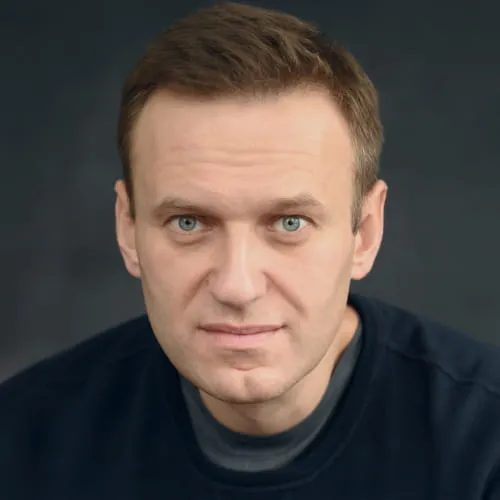
It’s impossible not to recall that just a few weeks ago, Alexei Navalny was sentenced to nine years in a maximum-security penal colony. Alexei Navalny was accused of raising money for a nonprofit organization, the Anti-Corruption Foundation, while allegedly spending it on his personal needs.
There was not a single piece of evidence that Navalny received even a kopeck from the ACF (Anti-Corruption Foundation). Navalny did not spend ACF money on renovations to his home, did not charter private jets, did not buy up luxury real estate, and did not even hire Gonzalez Gonzalez to stage cigar shows.
Navalny used that money to fight corruption. And he got nine years. Do you see the bitter irony? The case fabricated against Navalny was built around a narrative that more or less describes what one of Putin’s trusted representatives actually does every day.
Valery Gergiev may well be the most brilliant musician on earth, but unfortunately that does not change the fact that he is a fraudster and a thief; that alongside his talent go deception and financial schemes involving billions of rubles. Public money.
There it is: that very bargain with Putin. Performative devotion, reputation laundering, the justification of a criminal—and all of it, quite simply, for money.
We filmed our trip to Italy a few days before the war began. At that time, people were only just talking about the possibility of a Russian attack on Ukraine, about troops massing at the border. We wanted to tell you the story of the hypocrite Gergiev, who in those very days was giving concert after concert in Europe, praising Putin and the Putin regime, while not tying his own life to Russia at all.
But now Valery Gergiev, having neither condemned nor said a single word about the war, stands in the same row as war criminals. To the accompaniment of Gergiev’s orchestra, missiles explode, Ukrainian cities are massacred, civilians are shot, and every living thing is burned.
Gergiev’s talent is now in the service of war, death, and destruction. To his music, Russia is being destroyed, thrown back by decades, impoverished; dissenters are jailed and killed, and everyone who dares to speak is silenced.
We have no doubt that Valery Abisalovich will watch or read this investigation. Nor do we doubt that many other devotees of Putin’s war will do the same. So let them look at this footage too. You—trusted representatives, court artists, propagandists, and Instagram troops—you cultural figures hanging Putin’s swastikas on the facades of your theaters, you bear responsibility for this.
We demand that Valery Gergiev and all of Putin’s trusted representatives who, to this day, have not renounced their mad patron, be placed on the sanctions lists of every country in the world. As of now, Gergiev is not on any of them.
So that there is not a single decent country where Putin’s associates can open a bank account or buy an apartment; so that not a single theater, not a single stage anywhere in the world, will let these people anywhere near it—however talented they may be, they are deeply corrupt and for sale.
Putin has erased your achievements. Wiped them out. Your talent is worth nothing if, under his banners, the future is being destroyed. We demand that Gergiev be stripped of all his honors—let them tear off all those Orders of the Star of Italy, the Legion of Honor, France’s Order of Arts and Letters, and the endless medals from other states.
No intermediary is needed between Russian culture and the world if that intermediary is a fraudster, a corrupt figure, and a coward. Russian culture abroad does not need a special representative—especially if that representative is also the face of Putin and of war.
Freedom for Alexei Navalny!