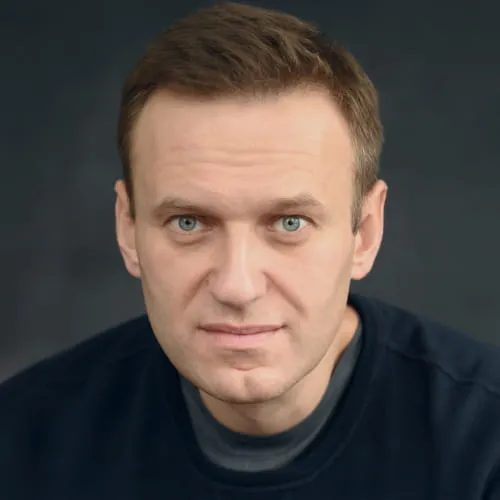
2011, Yekaterinburg. A local deputy publishes a high-profile investigation: the daughter of Urals governor Misharin and the glamorous wife of the commander of the military district, an army general, are secretly running a business together. Their joint company somehow obtained hundreds of thousands of hectares of forest in Sverdlovsk Region, on terms no one could explain, where they set up a sawmill. They were also planning to build a small plywood factory there.
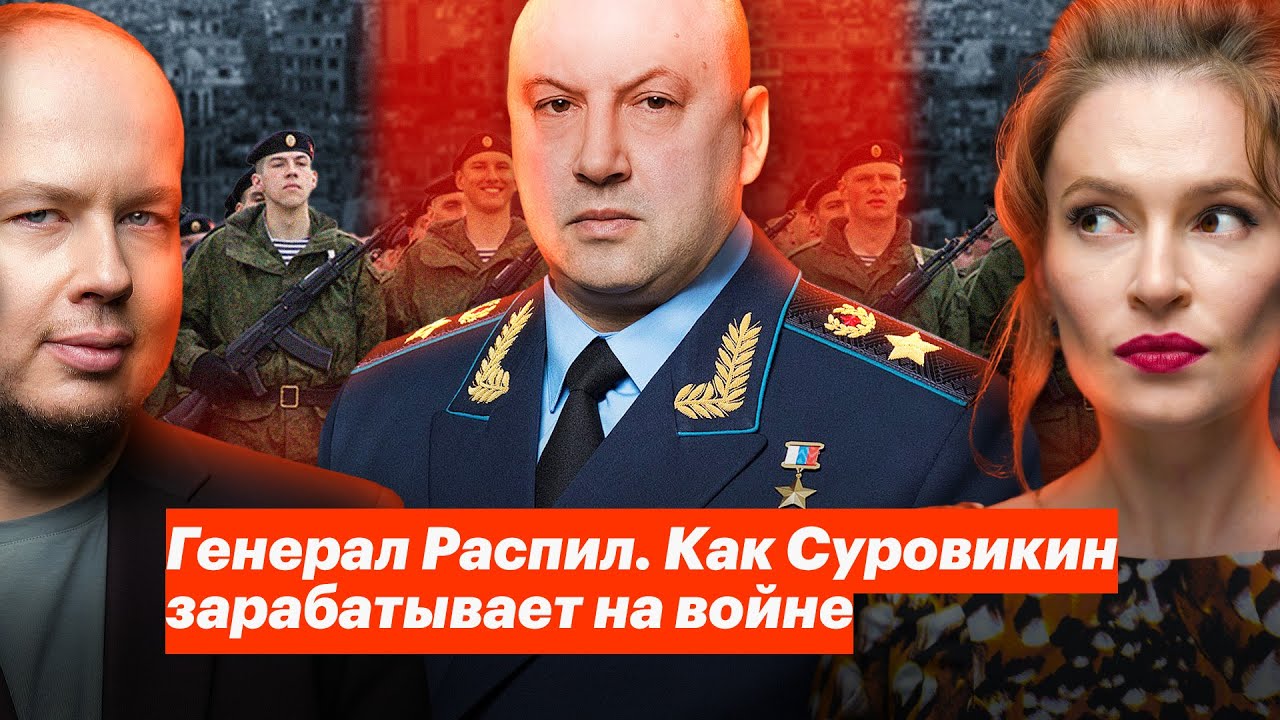
But the catch was that the governor’s daughter had only just graduated from university, while the project involved investments worth hundreds of millions of rubles, and the general’s wife had never been known as a businesswoman. Meanwhile, the company was showered with every kind of benefit and state support.
The city erupts in scandal. Yes, it sounds almost funny now, but at the time every local media outlet was covering it, national newspapers picked up the story, Vedomosti ran its own investigation, and both Moskovsky Komsomolets and Kommersant wrote about the case. There were lawsuits, showdowns, and the general’s wife launched an unprecedented PR campaign against the deputy. Then came death threats, and the deputy had to live with security for six months. That was the scale of the scandal—and it was all over a sawmill.
That city deputy who conducted the investigation was someone you know very well: Leonid Volkov.
And the glamorous general’s wife was Anna Borisovna Surovikina.
The wife of General Sergei Surovikin, whom Putin recently appointed to command the war in Ukraine. The very same man whose brutality is legendary and whom the media call nothing but “General Armageddon,” the “Syrian Butcher,” or the “Butcher of Aleppo”—he was also the one in command of the military operation in Syria.
Surovikin’s wife became the central figure in that sawmill scandal. She took the hit directly herself—apparently to shield the governor and his daughter. Several well-known black PR operatives (specialists in smear campaigns) came to Yekaterinburg and launched an unprecedented campaign: planted news items, flattering interviews with her, specially made websites, paid bloggers.
But never mind the media and bloggers. Volkov, for example, was summoned for police questioning—the case was supposed to be investigated, to determine whether a crime had been committed. And what happened instead? Volkov was filmed during the interrogation with a hidden camera, and then the entire recording was posted online.
There was a court case too. The company Argus SFC—the sawmill—and Surovikin’s wife personally sued Leonid, demanding retractions. Volkov ended up paying Surovikina 5,000 rubles in moral damages.
Then came the threats. Through mutual acquaintances, Volkov was told that Surovikin was going to kill him for offending his wife. Volkov spent six months under protection. If you look into the biography of this “Butcher,” this “Armageddon,” or whatever else he is called, it becomes clear those fears were not unfounded.
Mindless, gratuitous cruelty, blind obedience to orders, and a complete lack of any understanding of the value of human life, morality, law, or honor. An absolute thug and a war criminal who, in the very first day of his command in the war against Ukraine, demonstratively destroyed peaceful cities, bombing central streets, squares, and parks.
The first mention of Surovikin in the media dates back to 1991. He was 25 years old and commanding a motorized rifle battalion. During the coup attempt, his column of armored personnel carriers encountered protesters’ barricades in the tunnel under Novy Arbat in Moscow. The column began forcing its way through the barricades; three civilians from Moscow were shot or crushed by the vehicles. Surovikin spent seven months in pretrial detention, but was later released.
Chechnya, 2004. There Surovikin commanded the 42nd Guards Motor Rifle Division and publicly complained that more people needed to be killed.
In the early 2000s, a colonel—his deputy—shot himself in Surovikin’s office immediately after a heated conversation with him. Around the same time, another subordinate accused him of beating him for political reasons.
Much later, in Syria, under Surovikin’s command—by then he was commander-in-chief of all Russian Aerospace Forces—the Russian military indiscriminately bombed civilian targets: hospitals, schools, markets, residential neighborhoods. In just one episode, in Idlib, international organizations accuse Surovikin of responsibility for the deaths of 1,500 civilians killed in indiscriminate bombardments.
But let’s return to the Yekaterinburg story of that ill-fated sawmill. It ended just as abruptly as it began.
By the end of 2011, General Surovikin had been transferred from Yekaterinburg to Moscow, Governor Misharin was involved in a terrible car crash and never really returned to politics, and deputy Volkov was never again allowed to run in elections. Soon he was working as Alexei Navalny’s campaign chief in the Moscow mayoral race. In short, all the main characters left the scene, but the sawmill remained.
Will a sawmill or a plywood factory make you a billionaire? Hardly. Surovikina’s business, that same Argus SFC, still exists. The owners have changed, ten years have passed, the structure has changed, but it is still operating.
They still lease those 270,000 hectares in the north of Sverdlovsk Region, and own another 1,000 hectares, along with various buildings, power lines, and structures in the settlement of Vostochny, about 400 km (250 miles) from Yekaterinburg.
But Surovikin’s Argus cannot be called profitable. In 2020, they sold only 82 million rubles’ worth of lumber. For many years in a row, right up until last year, the company was operating at a loss. But that is not really the point. The sawmill is not what this is actually about.
It was clear back in 2011, and it is clear now: Argus is not really about timber, logs, or lumber. Wood processing is a front for something else our protagonists are doing. It provides convenient legal and financial infrastructure to hide something, conceal it, formalize it. And if anyone asks questions—sorry, we’re running a business here, we earned everything honestly, just look at our plywood factory.
The main question is what exactly they are trying to hide. Today, we are going to find out. We studied the bank statements of the general’s wife’s company—thousands of transactions over the past several years—and discovered that our “General Armageddon” is making money not from selling timber at all, but from the war he commands.
Syria: since 2011, it has been engulfed in a civil war that has turned into an unending full-scale international conflict.
In 2015, Syrian President Bashar al-Assad asked Putin for help: formally to fight ISIS, but above all to save Assad’s own regime—one of Putin’s last openly loyal allies. Russia sent several thousand troops there along with a huge amount of military equipment. Unofficially, mercenaries from the Wagner Group were there as well.
From the beginning of 2017, the Russian military contingent there was commanded by General Surovikin. Here he is greeting Putin at the Khmeimim air base.
December 2017. Putin and Shoigu are attentively listening to the not especially eloquent general’s report on endless victories, liberated cities, and Russian air sorties. We have no doubt that Putin was genuinely very pleased with Surovikin’s success in Syria. He even personally awarded him the Hero of Russia star.
And this was not about geopolitical victories or about preserving Assad’s regime. Participation in the Syrian campaign was, first and foremost, a huge, luxurious opportunity to make money—for Putin and his friends.
One of the main beneficiaries of the Russian military presence in Syria is Gennady Timchenko. Putin’s closest friend and financial backer, the man who paid for the construction of the palace in Gelendzhik, a villa in Biarritz for Putin’s daughter, and much else besides.
Timchenko began grabbing up everything in Syria that could generate profit at a frantic pace: he got contracts to build a pumping station for irrigating farmland, and he built gas processing plants, pipelines, and so on.
Then, in early 2017, Bashar al-Assad ratified a contract granting Timchenko’s Stroytransgaz the right to extract and export phosphates from two Syrian deposits near Palmyra.
The deal was structured so that 70% of the profits would go to Stroytransgaz’s subsidiary, STG Logistics, and 30% to the Syrian government. But there was a problem: at the time the contract was signed, the mining area was still largely under ISIS control, and the Syrian authorities did not control it.
Under Surovikin’s attentive leadership, the mines were liberated by June 2017. Timchenko’s company immediately began restoration work there and preparations for extracting raw materials. Surovikin personally reported the liberation of the mines to Putin when he arrived in Syria.
Let’s keep going. Look at the map: Palmyra is here:
And nearby are the deposits being developed by STG Logistics: al-Sharqiyah and Khneifis.
The phosphates extracted there are transported by truck and rail either to a fertilizer plant near Homs—which is also a Stroytransgaz asset—or to the port of Tartus. Back in Soviet times, the port hosted a naval logistics facility; now it is a Russian military base with Russian troops and ships.
But the port itself is operated, once again, by Timchenko’s Stroytransgaz. They even built a new berth there for loading phosphates.
From there, the cargo is shipped on special vessels that switch off their transponders so they cannot be tracked, heading toward Cyprus or Turkey, where the transponders are switched back on. The goods are then apparently re-documented so they no longer appear to come from Syria, and the phosphates are sent on to Europe—thus circumventing sanctions imposed both on Assad’s Syrian regime and on Gennady Timchenko. You can read more about this scheme in a major investigation published this summer by the OCCRP journalism consortium.
Every part of this logistics chain is extremely vulnerable. The conflict and fighting in Syria continue, the situation remains military in nature, and every link in the chain requires extensive security—constant armed escort. That is handled by the Syrian army, Syrian private military companies, the Wagner Group, and, evidently, the Russian military, which controls the port and is inseparably linked to Wagner.
This combination of forces and these measures are vital to Timchenko’s business. Otherwise, his STG Logistics would not be able to operate and make money—the phosphates simply would not make it to the port, or would not be allowed to leave it.
Does STG Logistics do anything besides extracting Syrian phosphates? Yes. For example, it owns the fertilizer plant in Homs that we already mentioned. News reports also say that STG Logistics is building a five-star luxury hotel—also in Syria, of course.
That is why we are extremely surprised that this essentially Syrian company is somehow paying huge sums of money to our familiar sawmill in Sverdlovsk Region, Argus. What does Syria have to do with the settlement of Vostochny? What connects phosphate traders and a Ural wood-processing business? Nothing except Surovikin. Surovikin in Syria, and Surovikin at the Argus sawmill.
In 2020–2021, over the course of six months, STG Logistics issued loans to Surovikin’s sawmill totaling 104 million rubles.
The money was, of course, never repaid to the Syrian phosphate traders, and there were no interest payments either. To give you a sense of scale: for that entire year, Argus sold only 82 million rubles’ worth of timber. That was all—they earned nothing else. And yet another 104 million just trickled into their account as a “loan.” There are plenty of other unexplained payments in Argus’s bank records as well.
Why some Ural company paid them 700,000 rubles—that much is clear. The company works in forestry, so they were paying for timber.
But why the wife of a top executive at Stroytransgaz would issue Argus a 25 million ruble loan—we simply cannot explain. It looks very much like a bribe. But why carry cash to a general in a suitcase and take that risk?
That is exactly what Argus was created for—a front behind which deals like this can be carried out. So, as commander of the force, you bombed whatever needed bombing, cleared the deposits in Syria, secured access to the mines, provided army protection? Excellent. Here you go, Surovikin—your tip.
Let’s take a brief detour. Listen to this heartfelt song about Surovikin, titled “Division Commander.” Pay attention to the line: “A deadly battle is raging in Chechnya, not in Barvikha” (an elite suburb outside Moscow). The song was obviously recorded a long time ago—Surovikin was commander of the 42nd Motor Rifle Division in Chechnya in 2005.
The same song has an interesting passage about a dream: “And sometimes he dreams: a solemn moment, the Russian president has gathered heroes in the Kremlin. And suddenly he angrily hisses to his entourage through clenched teeth: ‘Where among all these well-fed men is the division commander from Khankala?’”
As if the Kremlin is full of pampered bureaucrats, while Surovikin, the real hero, was not invited.
Time has put everything in its place, and in a rather bizarre way. Here is Surovikin in the Kremlin after all.
Here is Surovikin at the Rublyovka restaurant “Podmoskovnye Vechera” (in Moscow’s ultra-elite suburb), celebrating New Year 2022:
And in the same restaurant, next to the general—not soldiers or Chechen war veterans. Instead, the most corrupt, the richest, and the most shameless of Putin’s parasites: Margarita Simonyan:
Tigran Keosayan together with Peskov’s wife, Tatyana Navka:
Peskov, naturally, is there too: a magician pulls his watch out of a box. If only the guy knew he was holding the value of his apartment in his hands.
And here is Surovikin with his wife standing next to another Kremlin crook—Mikhail Babich:
And not in Chechnya at all, but in that fateful Barvikha (just like in the song, only the other way around), in the elite ParkVille development, Sergei Surovikin’s well-known wife bought a house in 2016.
Two plots of land with a total area of 3,700 square meters and a very nice brick house measuring 685 square meters must have cost around 200 million rubles. An enormous sum, considering that in the five years before the purchase, the Surovikins had officially earned 36 million rubles.
They bought a very impressive house. The plans show a swimming pool, a gym, a 40-square-meter master bedroom, and a two-car garage.
And on the second floor there is a separate area for servants: a servants’ room with beds, a servants’ kitchen, and a servants’ toilet.
Last year, the Surovikins sold this house. Apparently it no longer seemed luxurious enough for the family of a Russian military commander. But what they bought instead is now something we are no longer supposed to know. Everything has been classified. Any mention of the Surovikins has been erased.
Here is one of their apartments. It used to say: Anna Borisovna Surovikina:
Now it says: Russian Federation:
Now the property has been removed from Rosreestr (Russia’s state property registry) altogether. It no longer exists.
And it is the same with all their real estate. Anna Surovikina’s 288-square-meter townhouse? It used to appear in the general’s declaration:
And now it simply does not exist:
The same goes for their 1,500-square-meter plot: it existed, and now it has been deleted.
A 180-square-meter basement-level premises in a residential building on Leninsky Prospekt—until recently, that too was still visible:
And now—deleted:
Even the parking space has been deleted:
And Surovikin no longer publishes his declarations at all. So how can anyone now find out how much he received from selling the house on Rublyovka? They cannot. What did he buy instead? How much does his wife really earn?
But that is not all. This is something we are seeing for the first time. Anna Surovikina has her own beauty salon in Moscow—or rather, a Swiss rejuvenation center. And until recently, the registry still showed both Anna Surovikina herself and her 85 percent stake.
Now, when you request an extract from the tax registry, instead of Surovikina’s name it says: “Access to information is restricted.”
So this too is now a state-protected secret. We no longer have the right to know who is providing rejuvenation treatments and laser hair removal—it is a state secret.
But even despite all this extreme secrecy, we can see that the general’s family has lost none of its business ambitions. Like any self-respecting patriot, Surovikin has a Mercedes and a personal driver. By tracing parking payments for the Mercedes in Moscow, we identified Surovikin’s chauffeur: his name is Yevgeny Semyonov.
Place of work: military unit No. 83466, the motor pool of the General Staff.
And in November of last year, Semyonov went from being a driver to being a businessman. Do you know what line of business he chose? Wood processing. This man from Ryazan Region opened a company called “Natural Wood,” and it is registered in Yekaterinburg at the same address as Argus.
In short, General Surovikin has acquired the habits and polish of a true Putin-era crook from Rublyovka—now he registers businesses not only in relatives’ names, but in his own driver’s as well.
General Armageddon? A great commander before whom the world trembles? The hope and face of the Russian army? Seriously—is this the face of the Russian army? We see no one here except bandits and thieves, for some reason dressed up in military uniform.
When a draft notice comes for you, your husband, your son, your father, or your brother—and it will come—look at it and see the faces of corrupt generals. Greedy men and bribe-takers ordering you to report to the military enlistment office. No, not to defend your country, but to defend their Rublyovka mansions and Mercedes cars. They will be in Kremlin halls, drunk on their own importance, pinning medals and decorations on themselves, while you will be taking out loans to buy boots, thermal underwear, and body armor for the mobilized. And then receiving death notices.
“For some, war is misery; for others, it is a dear mother” (a Russian saying meaning some profit from others’ suffering)—Surovikin is the walking embodiment of that proverb. They make money from war.
We have shown you country houses that appeared from nowhere, houses and apartments, palaces for mistresses and illegitimate children. Today we showed you the payments themselves—the money, the cash—that Surovikin earned from the war in Syria. Not from some business in the 1990s, as they always claim, but directly from a specific war in Syria.
He helped Putin and Putin’s oligarch Timchenko—and got his cut. Do you think Ukraine will be any different? This is Putin’s Russia. This is the “world’s second army,” and these are its finest representatives.
The “Russian world” (the Kremlin’s nationalist concept of Russian civilizational unity), militias, secret chemical laboratories, combat mosquitoes, fighting Nazis, fascists, and now even Satanists in Ukraine—none of this exists. These are fictions sold to you and your loved ones by dollar millionaires on television, on behalf of other dollar millionaires just like them, only in uniform.
Do not believe the propaganda. Do not accept draft notices. Do everything possible to stop this war—and with it, the Putin regime. As soon as possible. Freedom for Alexei Navalny!