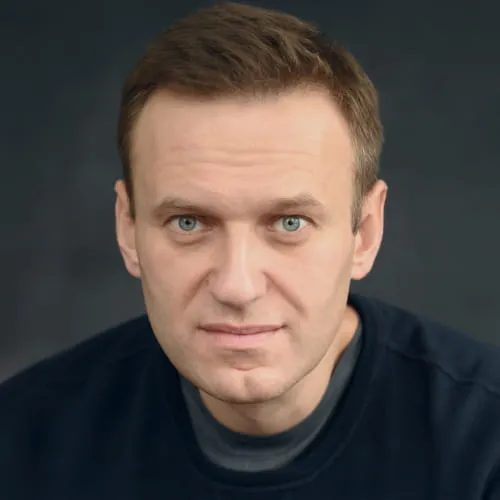
Prigozhin. Mutiny. Rostov seized.
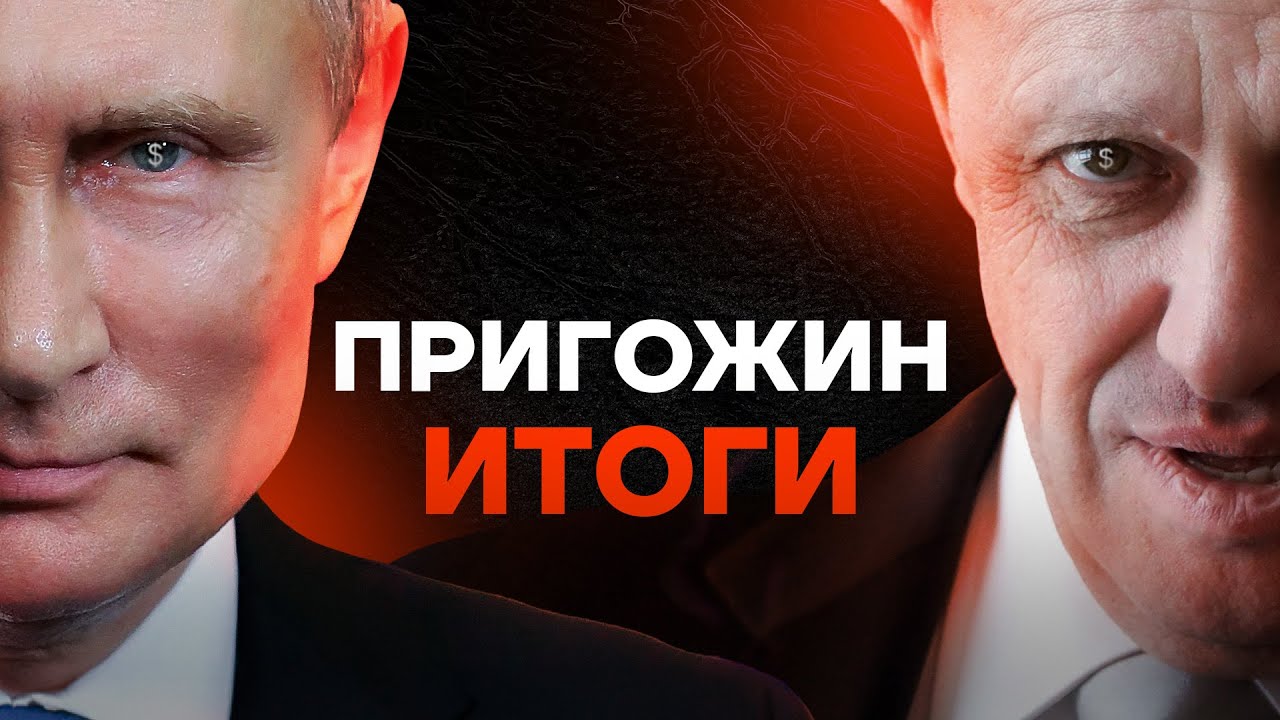
A column of tanks heading for Moscow, shooting down military planes and helicopters along the way.
What was that, how could this happen? Where were the police, the army, the National Guard? Armed gangsters and convicts are seizing cities—is this the stability Putin has been selling for decades?
Many are now debating and arguing: is Yevgeny Prigozhin a mutineer, an angry patriot, or a gangster gone rogue who decided to seize power?
No, Prigozhin is flesh of the Putin regime’s flesh. A personal project and invention of Putin. A manifestation of what Putin has turned the country into over twenty years: a gangster-security-service regime, where power rests not on institutions but on violence, lawlessness, and vans stuffed with cash and weapons.
Why Prigozhin in particular? Because he and Putin are the same. Petty criminals from St. Petersburg who got their hands on power and money, ready to sacrifice absolutely everything to keep them. Lies, violence, contempt for human life, a total absence of moral principles or limits. Prigozhin and Putin are practically mirror images of each other. For almost two decades, their alliance worked brilliantly—until it began destroying itself.
Today we will try to draw a bold line under the story of Yevgeny Prigozhin. We’ll recall where he came from, how much he made and from what, and how he briefly became one of the country’s most influential and well-connected figures before acquiring the status of mutineer and traitor.
Let’s begin with a frank confession. At the end of June, after the mutiny, Vladimir Putin said that in a single year the state had spent 276 billion rubles on the Wagner PMC. Yes, without batting an eye, Putin admitted to lies and crimes.
Not long ago, Putin said no PMCs existed at all. Then he said they did exist, but had nothing to do with the state.
Then he mumbled something else and lied, as usual. And now… now Putin is personally signing pardons for rapists and drug dealers sent from prison to fight. And he also admits it: the Wagner PMC is financed with our money. From the state budget. Murderers are paid with your taxes. The horrific, medieval torture of people in Syria, the execution of Russian journalists in Africa, and even a public sledgehammer killing—you paid for all of that too.
According to Putin, in just one year the state paid the PMC 86 billion rubles in salaries. Another 110 billion was spent on insurance payouts—apparently death benefits. That is roughly equal to five annual budgets of Voronezh and more than all state spending on culture in 2023.
Another 80 billion, Putin says, was earned by Prigozhin’s structures from supplying food to the army. All these sums are certainly shocking, but they have nothing to do with reality. Prigozhin made far more.
Putin himself and all the gangsters and crooks around him long ago found their perfect way of making billions.
There is no need to invent anything, no need to build a sophisticated business or invest—you just latch onto the state budget and parasitize it. The state budget is a guaranteed endless stream of money. Prigozhin made money the same way. Nothing ingenious about it: just government procurement.
School meals. For more than 10 years, Prigozhin’s companies have supplied food to Moscow schools and kindergartens. Prigozhin fed 95% of the city’s schoolchildren. By 2021, the total value of these contracts had already reached 185 billion rubles. In 2022, Prigozhin’s companies earned another 91.5 billion from school meals.
Moscow and Moscow-region hospitals. Patients there are fed by Prigozhin too. Novaya Gazeta counted more than 30 billion rubles in such contracts. Prigozhin also had a hand in catering for the Emergency Situations Ministry. Another 3.3 billion.
Army catering. Of course, Prigozhin made excellent money from the military—on food and support services. By 2018, Prigozhin had earned 200 billion rubles. How much he made after that is a big secret, because military procurement was classified. At least that much again, and given the war, most likely more.
Military construction. Yevgeny Prigozhin is not only a caterer but also a builder. He receives contracts to construct military housing compounds and bases. For example, in the Rostov region he built the Kuzminsky military compound for nearly 1,000 people.
In 2016, Prigozhin built a military compound for the Defense Ministry in Valuyki, a town in Belgorod region near the Ukrainian border. Thanks to his warm relations with the Defense Ministry, Prigozhin also received ownership of a military unit site in the Moscow suburbs—in Shchyolkovo.
Prigozhin also landed landmark construction projects of a more peaceful kind, though no less profitable: for 22 billion rubles he was tasked with restoring the Kremlin museum right on Red Square, where work is currently underway.
For 36 billion rubles, Prigozhin is supposed to build a judicial quarter in St. Petersburg. He even received a contract related to the reconstruction of the famous Ordzhonikidze sanatorium in Sochi.
And without any tender—simply on the basis of a secret order from Vladimir Putin.
And then, of course, the Wagner PMC. A small, very well-equipped army considered private, but in reality just a secret Defense Ministry unit for all sorts of shady business. All of this is completely illegal—mercenarism is a criminal offense in Russia. Hence the GAZelle vans full of cash in boxes and the gold bars: budget financing, Putin-style.
Since all payments are made entirely off the books, it is impossible to know the exact size of this master contract. State propagandists ordered to go after Prigozhin say that more than 850 billion rubles was spent on the PMC. And that does not include their business abroad: the Financial Times wrote that Prigozhin-linked companies had already earned at least 22 billion from extracting hydrocarbons and gold in Syria and Sudan.
From this public information alone, the total comes to nearly 2 trillion rubles. An unimaginable sum—and in reality it is most likely still an underestimate.
It is practically impossible to answer the question of how much Prigozhin really earned. We see only the more or less official part—what they deigned to disclose through public procurement, or what journalists managed to dig up. In reality, this is just the tip of the iceberg: we are talking about trillions of rubles.
During the search of Prigozhin’s St. Petersburg office, investigators found not only boxes of money and fake passports.
They also found six hundred (600!) official company seals belonging to different firms that in fact belong to Prigozhin. Six hundred legal entities, six hundred different companies that are formally unrelated, but in reality all of them make up Prigozhin’s business empire.
Let’s look at how this works through specific examples. We find a St. Petersburg company with the original name “Technology.” The company supplies food to Russian military units in the occupied territories of Ukraine.
In just the last year and a half, the company received 847 million rubles from Voentorg for organizing catering at Defense Ministry sanatoriums. It is very interesting to see who got this contract of special state importance.
But instead of some well-known businessman, we see that the owner of this company is one Arsen Ali-Muratovich Bedrayev from St. Petersburg.
Before becoming a major businessman, Bedrayev worked as a security guard… at Prigozhin’s company. He earned a modest salary of just 60,000 rubles a month.
Here is another example. On the main website of Prigozhin’s company Concord, we find a photo of a woman who manages one of Prigozhin’s restaurants.
Her name is not given, but from the photo we establish that she is Nadezhda Nazarova, who later took the surname Tikhonova after marriage.
We check how Nadezhda appears in phone contact databases: “Nadya Defense Ministry,” “Prigozhin’s assistant,” “VIP manager.”
We then look at where Tikhonova officially works: a company called Culinary LLC, with annual revenue of 262 million rubles.
Culinary organizes banquets for the Defense Ministry. For example, in August last year it provided catering for foreign delegations.
This company had not previously been mentioned as linked to Prigozhin. And there are not dozens of such firms—there are hundreds. They win a state contract, pocket the money, shut the company down, open a new one the next day, and repeat the cycle endlessly. Pure fraud. If someone gets caught, so what—formally, Prigozhin has nothing to do with it.
The Defense Ministry, Putin, the government, the prosecutor’s office, the anti-monopoly service, the courts—they all knew about these fraudulent schemes and cartel arrangements all these years. They were impossible to miss.
Hundreds of complaints, journalistic investigations, reports, and inspections—and nothing. Until very recently, until the moment Prigozhin declared he was going to Moscow to hang Shoigu and Gerasimov (and perhaps Putin too), trillions of rubles kept piling up in the accounts and vans of Putin’s chef. Why? Because it was part of the deal. Let’s unpack that.
Every mafioso has a special trusted person entrusted with the most delicate assignments. And in Putin’s essentially mafia-style system, it works the same way. The man entrusted with doing what those in power very much wanted done, but could not officially do, was Yevgeny Prigozhin.
It all began with a troll factory. The term did not even exist yet, but in 2009 Prigozhin’s future media empire began with a few people being given computers and desks in an office on the outskirts of St. Petersburg.
Then they started paying—about ten rubles per comment.
For a social media post. A post praising Putin or attacking the opposition, the West, or Ukraine—whatever the client ordered, that is what they wrote. Gradually, the bot farm turned into a huge propaganda media holding specializing in fake stories and manipulation of public opinion. The holding included several dozen websites (the best known being RIA FAN), endlessly reposting and copying each other’s news, inflating views and comments.
In this way, Prigozhin’s trolls managed to destroy the main news aggregator of the Russian-language internet—Yandex News. Those five news lines every search engine user sees.
It was constantly filled with insane fakes like “Navalny supporters use drugs before rallies” or “Yulia Navalnaya has obtained German citizenship.”
But if only it had been limited to words and fabricated articles. Putin’s order to “crush the opposition” very quickly took a genuinely gangster turn. Prigozhin’s employees traveled around the country and dealt with bloggers who wrote anything negative about Putin.
In 2016, a Prigozhin employee ambushed the husband of our colleague Lyubov Sobol outside their apartment building. As soon as he approached the entrance, he was injected in the leg with an unknown substance, lost consciousness, and was hospitalized.
The Prigozhin thug who did this himself died under mysterious circumstances a year later, but his colleague told Novaya Gazeta that the operation had been ordered by Prigozhin, who was unhappy with Sobol’s investigations into his state contracts.
The Anti-Corruption Foundation and Navalny were always Prigozhin’s main targets. As recently revealed by a major leak of internal documents from Prigozhin’s structures, he paid 11 million rubles for an operation called “Sobol Hunt.”
Several people were hired who for many months followed Lyubov Sobol and her family around the clock and filmed everything she did. Every minute, every day.
Navalny was followed in exactly the same way. Prigozhin personally even took the trouble to stage a supposed business meeting with Navalny, arranging a photo op for himself outside the hotel where Alexei was staying.
The climax of our story with Prigozhin was… the closure of the ACF. The actual shutdown of our foundation, caused specifically by Prigozhin. He sued us over an investigation into how his companies caused a mass poisoning of schoolchildren. He demanded 88 million rubles in damages, which of course we did not pay. The foundation had to be shut down and re-established. Poisoning children, it turned out, was allowed—but talking about it was not.
And that is only the story of how Prigozhin’s structures attacked us. He carried out similar operations against Novaya Gazeta, Dmitry Bykov, opposition bloggers in the regions, competitors, and simply anyone who said something bad about Putin.
Every such operation was carried out with the full protection and assistance of law enforcement, the courts, and the security services. “Crushing the opposition” turned out to be a profitable business, allowing Prigozhin to become one of the richest men in the country.
You may be surprised, but 20 years ago Yevgeny Prigozhin wrote and published a children’s fairy tale himself. It is called Indraguzik.
The main character—who is, in fact, named Indraguzik—appears to have been modeled on Prigozhin himself. He is a brave rescuer who helps free a king in distress from an evil spell.
He saves the country of Indraguzia and heroically prepares to go on his way, but the grateful people of Indraguzia cannot let him go—they fear they will be lost without him. The book was published as a kind of co-authorship project: Prigozhin himself and his two children, Pavel and Polina. They were 6 and 12 years old at the time.
Now the little Indraguziks have grown up, found their footing, and received half the kingdom as a gift. This is what Prigozhin’s daughter Polina looks like now.
By the age of 30, Polina had already acquired this historic mansion in St. Petersburg—the dacha of Prince Oldenburg. It is now set to be restored and turned into a luxury hotel.
Her sister Veronika became the owner of the four-star Red Stars hotel in St. Petersburg at just 17.
Veronika spends her father’s money on endless parties and vacations in Dubai. She is clearly having a good time.
And the chief Indraguzik is Pavel Prigozhin, 25, who lives in St. Petersburg.
According to his father, he is bravely fighting in the ranks of the Wagner PMC. Serving in war zones.
There is, however, no evidence of that—but there are plenty of videos of his patriotic vacation in Karelia during the war.

Here are Pavel Prigozhin and his younger sister Veronika.
Look how heroically they arranged the letters “S,” “V,” and “O” in mayonnaise on instant noodles.
In short, they are having a wonderful time—walking around, partying, singing songs.
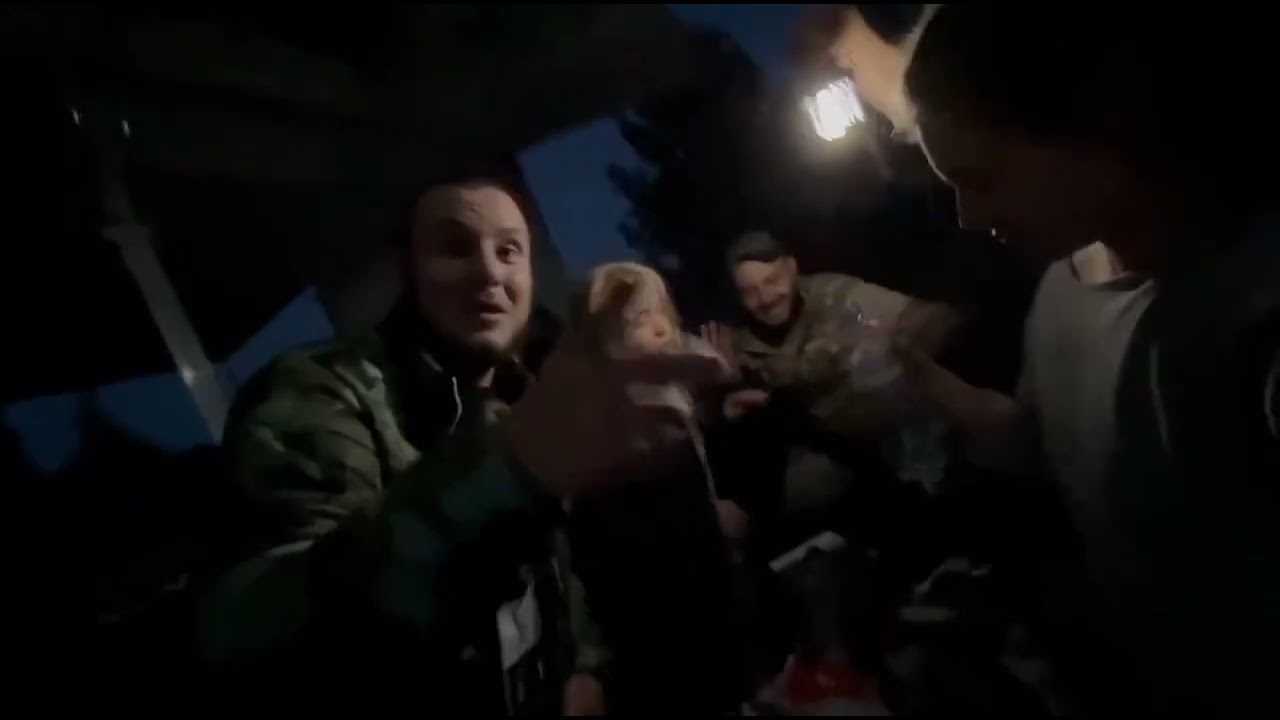
Prigozhin’s son can call himself an oligarch without irony—several years ago, the family business began to be transferred into his name. Pavel unexpectedly became a major St. Petersburg property developer. His companies sell luxury apartments in this residential complex.
In just one year, revenue came to nearly 900 million rubles, while assets are valued at 3 billion rubles.
And this is the huge Sinop business center on Sinopskaya Embankment in St. Petersburg. Together with the land, it is worth no less than 2 billion rubles.
It belongs to Pavel and his mother, Lyubov Prigozhina.
The premises here are leased out, for example, to Gazprom Neft structures.
It is a profitable business, bringing the younger Prigozhin another 300 million rubles a year.
Pavel also secured himself a house in the elite St. Petersburg settlement “Northern Versailles.” Here too are cottages belonging to Yevgeny Prigozhin himself, his wife, and his daughter Polina—six houses in total worth more than 1 billion rubles.
From childhood, Pavel Prigozhin has behaved exactly as an heir to Putin’s elite should: here he is flying somewhere on his father’s private jet (and licking a sneaker).
Posing on the family yacht, ST VITAMIN, worth €5 million.
A few years ago, Pavel Prigozhin got married. In our favorite footage from Karelia, you can also spot his wife, Ekaterina Inkina.
Here she is taking a selfie with her husband and friends in the background.
This turned out to be a truly dynastic marriage, because the bride’s parents are also in the restaurant business in St. Petersburg. Prigozhin’s in-laws make money in exactly the same way—by organizing banquets.
For example, for a Gazprom enterprise.
And for the company of the family of Andrei Turchak, head of the General Council of United Russia.
And it is precisely along this family connection that we can travel straight from the trenches of Bakhmut—or perhaps Mogilev by now—to places that are far more pleasant and safe.
Let’s move to Italy, to the resort town of Forte dei Marmi. This place can quite accurately be called the most Russian-speaking town in Italy: Russian is heard everywhere here, and almost every restaurant has a Russian-language menu.
According to journalists, villas here have been bought by Abramovich, Deripaska, singer Allegrova, and we found a villa here belonging to Deputy Prime Minister Alexander Khloponin. The list of residents could go on forever: of the town’s 7,000 houses, 2,500 belong to Russians.
And this is a villa called “Arina.”
Six years ago, Prigozhin’s in-laws went to Forte dei Marmi and bought this two-story estate with an area of nearly 400 square meters.
It comes with a 0.16-hectare plot and a large swimming pool.
Altogether it is worth about €3.5 million, or more than 300 million rubles.
Prigozhin is perhaps the most sinister figure in this war. He has been placed on every possible sanctions list. So has his son Pavel.
But Inkhin, the in-law who helps Prigozhin in business, has not—at least not yet. He can calmly fly here to Italy and swim in his own pool while others bathe in blood.
Yes, formally the sanctions exist. But whether they will actually work is already unclear. Just now, a whole set of fake passports was found in Prigozhin’s office—with his photo, but other people’s names.
Do his family members and associates have the same kind of documents? Almost certainly. Can foreign assets be registered under them? No problem. The European Union even officially lifted sanctions on Prigozhin’s mother.
Prigozhin’s daughters barely left Europe even after the start of the military conflict with Ukraine. They are involved in equestrian sports and constantly take part in competitions—Portugal, Spain, the Netherlands, Belgium, France, Slovakia, Austria, and of course Italy.
Polina Prigozhina even had her own business in Germany:
And she listed her place of residence as Hanover, Germany.
Even if Prigozhin loses his state contracts tomorrow, all the wealth he accumulated over years of serving Putin will remain. Business centers, mansions, planes, foreign assets, and everything he transferred into the names of his children and associates. And of course the GAZelle vans full of cash—they were officially returned to Prigozhin. Please, go ahead and use them. No problem at all.
Here are just some of the charges under which Yevgeny Prigozhin could be prosecuted: 1) Recruiting, training, and financing mercenaries — Criminal Code Article 359, up to 18 years; 2) Establishing a criminal organization — Criminal Code Article 210, up to 20 years; 3) Manipulating state procurement, large-scale fraud — Criminal Code Article 159, up to 10 years; 4) Illegal possession and trafficking of weapons — Criminal Code Article 222, up to 12 years; 5) Passport forgery — Criminal Code Article 327, Part 2, up to three years for each document; 6) Murder by an organized group — Criminal Code Article 105, Part 2, Clause “g,” up to life imprisonment; 7) Armed mutiny — Criminal Code Article 279, punishable by 12 to 20 years in prison.
The problem is not that there are no laws. The problem is that for some people—in this case, Prigozhin—they do not apply. By subordinating every branch of power, from the police and prosecutors to the courts, Putin created not stability but total lawlessness and arbitrariness.
What “wild ’90s”? The truly wild years turned out to be the 2020s, when Prigozhin—simultaneously an oligarch, a quasi-official, and a gangster—possesses his own private army, along with the right to kill and steal. And to remain unpunished.
Unpunished? More than that—Putin practically thanks him, showering Wagner fighters with gratitude: thank you so much, dear bandits, for killing only 15 people and seizing only two major cities.
Putin thought he was outplaying everyone, but the only thing he has truly achieved is the destruction of Russia. The systematic destruction, ruin, and enslavement of the country by gangster-security-service elites.
Prigozhin is neither an alternative nor an ally. Prigozhin is the Putin regime. Its inseparable part, Putin’s invention and personal toy, which may now have been thrown away—but which will be replaced by new gangsters and new thugs ready to do anything for money and for the preservation of Putin’s dictatorship.
We must all fight not for one gangster to replace another, but for this lawless outrage in Russia to end. We must fight for the criminal regime of the aging dictator to collapse. And judging by what we have seen lately, that prospect is not so distant.
Freedom for Navalny. Freedom for political prisoners. Freedom for Russia.