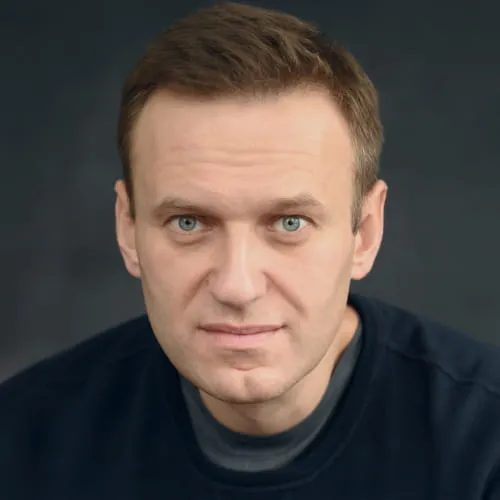
Today, Alexei Navalny will be sentenced. The prosecutor has requested 20 years in a special-regime penal colony. It is a monstrous, Stalin-era sentence for anyone, but we understand that Alexei is being tried as Russia’s leading opposition politician.
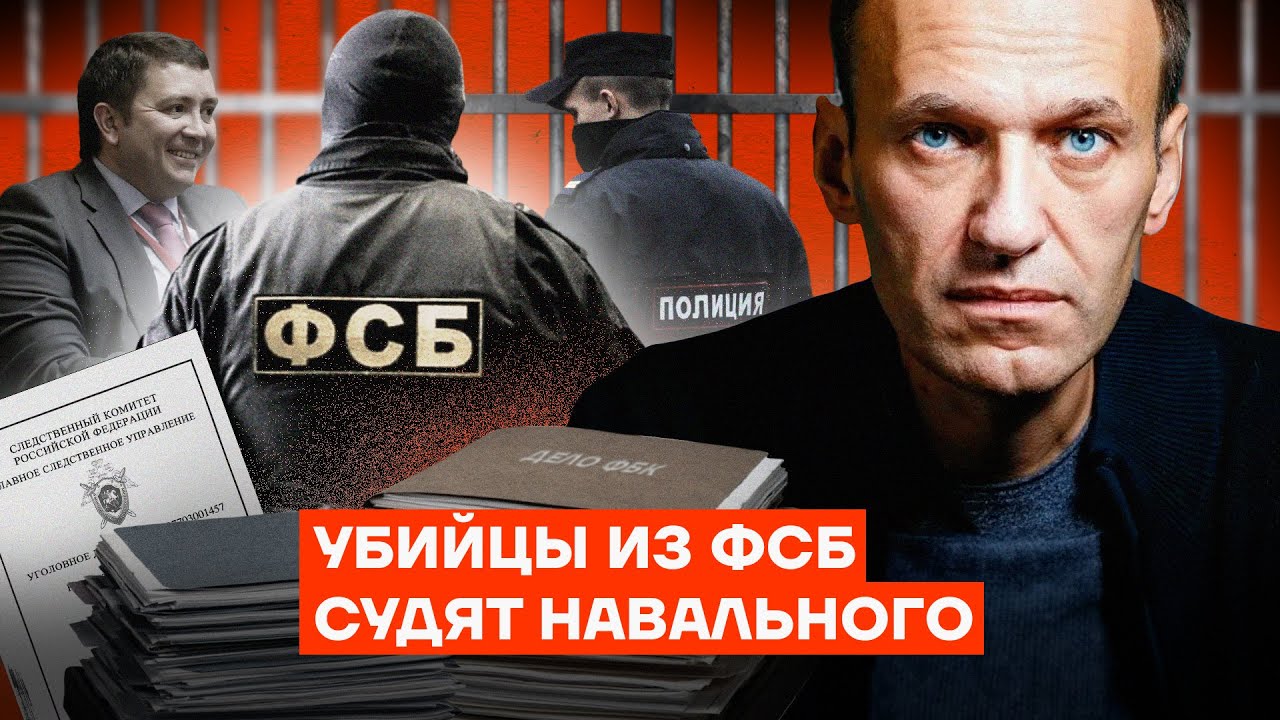
Everything happening to Alexei Navalny is a crime. The person who ordered this crime is obvious. He sits in the Kremlin. This crime was committed by a large group, and it includes not only investigators, prosecutors, and judges, but also the people who directly tried to kill Alexei: the FSB (Russia’s Federal Security Service). And now we will prove it to you.
But first, let’s talk about the case itself—and what Navalny was actually being “tried” for. This trial, which will end with a verdict today, can be called the most secretive of all. The hearing was once again held at the penal colony, inside the prison, in an assembly hall. Neither spectators nor journalists were allowed in. Even Alexei’s parents were barred. The lawyers were forbidden from saying anything at all about what was happening there.
And whereas last time this secrecy was justified by the coronavirus outbreak, this time they simply wrote that supporters would portray the trial negatively and stage provocations, for example.
An aura of mystery is being created, as if this were such a serious trial that everything about it had to be totally classified. Even Navalny himself—the DEFENDANT—was not properly allowed to review the case file, which, just so you know, runs to 196 volumes. Everything is made to look as though the case materials contain our team’s top-secret extremist plans.
But that is, of course, a lie. Even though they tried to classify the case, we obtained all the materials anyway. And we will tell you what these supposed secrets actually are. Before it became a case against Navalny, it was a case against all, as they put it, “leaders and participants of the extremist community”: against Lilia Chanysheva and other coordinators, against Ivan Zhdanov, Leonid Volkov, and other ACF members. And while this case was under investigation, we collected all the materials that investigators later submitted to court against Navalny.
And here comes the immediate disappointment: all 196 volumes are empty filler. There is nothing meaningful in them at all. They did not even try to pretend they were putting together a real criminal case. Most of the paperwork does not even relate directly to Navalny—there are huge numbers of documents about Ivan Zhdanov and Leonid Volkov.
Navalny’s “extremism” is supposedly substantiated there by, for example, a photo of Leonid’s daughter from Instagram, or by the profound analytical conclusion that Volkov likes Barajas Airport—the main international airport of Madrid, Spain.
In fact, the main thing in the case materials is an endless series of inspection reports on internet resources—in other words, just web pages. There are enormous numbers of them. When we say the case file contains a lot of screenshots, you have no idea just how many there are. For example, one volume consists almost entirely of photos of pages from the online magazine *The Hill* that merely mention Alexei Navalny.
Sometimes these are inspection reports on our investigations or simply Alexei’s blog, but there are also completely random screenshots of some incomprehensible nonsense.
Here, for example, the investigator simply attached a page of his bookmarks—you can see “boiled omelet” and “patterns for plus-size clothing.”
The case materials contain countless photographs. For example, photos of our offices and footage from our rallies. But not only ours: sometimes “extremism” is supposedly proven with the help of a snowman rally.
For some reason, investigators also photographed witnesses.
There are photos from searches as well. For example, our colleague Daniil Kholodny, for whom prosecutors are now seeking a 10-year prison sentence, was forced to pose with an issue of *Time* about Alexei Navalny.
It gets worse. There is a photo of a ribbon with a red clip. Or a photo of 40 U.S. dollars seized from someone.
There is also a photo of a disc. Or a photo of the investigator himself sitting at a computer and examining our websites.
Yes, of course, photos of blank sheets no longer surprise anyone. We have seen them before in our cases. But here the investigators outdid themselves. The file contains photos of notebooks with empty pages—here is one of them, for example.
Sometimes the investigators care so little that they dump the same pages into the file several times over. They could have made it 400 volumes—why stop at 196? Especially when the case consists of screenshots from YouTube and Telegram channels. And, by the way, the investigators also throw in screenshots of their own channels.
And that is the entire case—there is nothing else of substance in its materials. This despite the fact that it was under the personal supervision of Alexander Bastrykin, head of the Investigative Committee. The finest minds were at work.
It would be funny, if not for the fact that on the basis of this pile of papers, the country’s leading opposition politician is being sent away for a monstrous length of time.
But stuffing the file with piles of paper is not enough. A judge still has to use that pile of paper to hand down a sentence against Navalny. To tell this part of the story, we need to go back to 2015—not just anywhere, but to the State Kremlin Palace, to a concert marking Security Service Worker’s Day. Putin himself attends the concert.
The audience, of course, is barely filmed at all—the hall is filled with some of the most secretive people in Russia. Only well-known officials are shown. But we know for certain that an otherwise unknown FSB officer, Denis Olegovich Khvorov, was present in that hall. His wife kindly helps us identify him through Instagram. Here they are together in the lobby of the Kremlin Palace at the concert.
Denis Khvorov is not just an FSB employee. He is an operative in the 2nd Department for the Protection of the Constitutional Order. That is how he is listed in his colleagues’ phone books. It was this very department that organized Navalny’s poisoning in 2021.
But why are we mentioning him?
Last year, we told you how, during court hearings involving Alexei Navalny, a judge received calls from a Presidential Administration official. One might have assumed they had learned their lesson—that they would not get caught again and would stop contacting judges directly by phone. We thought so too.
They have not changed at all. And they keep doing exactly the same thing.
From the moment the case was sent to court, an officer from the FSB’s 2nd Department began calling the judge. The judge who will soon sentence Alexei is named Andrei Alexandrovich Suvorov.
And on June 16, his phone rang. Yes, that’s right—it was that same FSB officer, Denis Khvorov.
June 16 was a Friday, exactly one business day before the trial began. The court proceedings started on Monday and were immediately closed to the public. Then the trial went on for three days, and the judge and the FSB officer spoke on the very first free day. On the 22nd, we see numerous calls.
At some point, apparently, it occurred to them that they might be doing something wrong. The calls suddenly stop, and they no longer speak by phone. But there is no doubt that they continue communicating. On June 29, a text message arrives from Khvorov saying he is available.
We do not know what was said in the conversations between the judge and the FSB officer. Whether they discussed details of the trial, or whether the FSB officer simply threatened the judge that if he made the wrong decision, something would happen to him. For example, the judge who told Navalny she regretted replacing his suspended sentence with a real prison term suddenly died six months after the verdict.
But there is no doubt that the calls from FSB officer Khvorov were directly connected to Navalny’s trial.
And this is not even just about the fairness of this particular trial, but about the judicial system as a whole. How many times have you heard the expression “telephone justice” (informal pressure on courts through phone calls from officials)? It is impossible to imagine intelligence officers calling a judge in any civilized country—this is, in itself, an unthinkable crime.
But they are not just fabricating a complete garbage case, where 196 volumes are worth little more than scrap paper. We now have direct proof that the people who already tried to kill Navalny continue to directly influence what is happening to him now.
No matter how many years they give him, we understand that Alexei Navalny will remain in prison as long as Putin remains in power. And that means that through joint, deliberate effort, we must shorten that term. We must do everything in our power to bring Putin’s dictatorship to an end.
Alexei Navalny’s life is under threat every day. Public attention and publicity are the only protection we can offer him. And without you, we will not succeed. Tell your friends and relatives about Navalny’s case. Forward them this post, show them our video, show them the previous one, show them our investigations. Tell them that right now, in prison, they are trying to destroy a man who dared to challenge Putin’s regime. For many years, Alexei Navalny fought for us and for our rights. Now it is our turn to fight for him.
Freedom for Alexei Navalny.