
Well then, elections were held across the country, and there is no doubt that they were a dress rehearsal for the presidential election coming in six months.
There is also no doubt that this voting day showed us the electoral reality as our remade Putin sees it: a failed commander-in-chief, but a very real dictator.
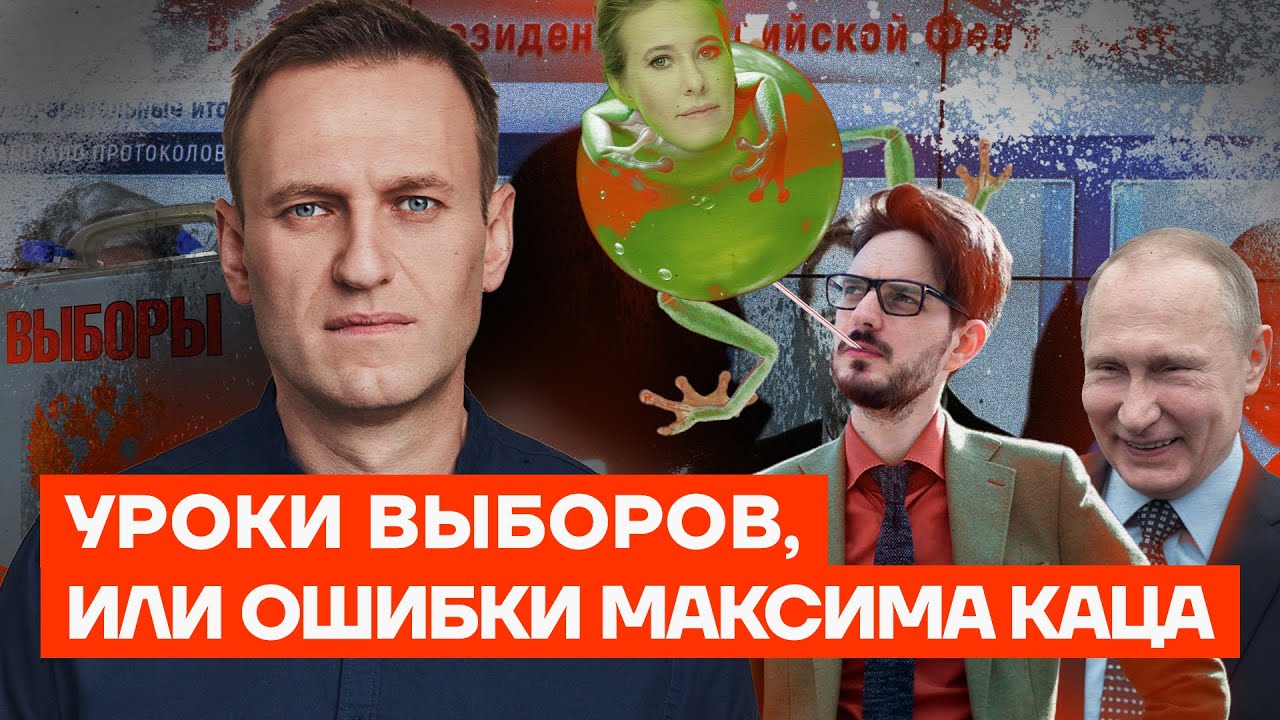
I want to say a few words about that reality and the lessons we should draw from this voting day. The defining feature of these elections was, of course, fraud on an unprecedented scale, but this time it was accompanied by an almost total absence of monitoring.
United Russia and Putin have always stolen votes. The question was whether we would catch them red-handed or not. Now, thanks to electronic voting, they cannot be caught at all. We are simply shown the result on a screen. It is hard to imagine a more brazen and open form of cheating.
Putin should, without question, award the highest possible decoration to Alexei Alexeyevich Venediktov — the chief architect of electronic voting.
Who could have imagined that the most shameless tool of election rigging — one that makes the tricks of Churov and Pamfilova look like child’s play — would be created together with Moscow City Hall not by some sinister FSB officer, not by a political technologist from the presidential administration, but by the editor-in-chief of the country’s largest and most beloved opposition radio station.
And note, by the way, that ordinary polling stations have now essentially been turned into places for housing electronic voting terminals.
Even so, those who went out to vote did absolutely the right thing. My recent forecast has been confirmed: on September 10 there were elections — and there were “elections.”
The fierce contest in the Khakassia gubernatorial race led to the United Russia candidate, realizing he was losing, literally fleeing the ballot on the eve of the vote. The fight against the United Russia candidate in Omsk Region was also interesting and important. We saw unfair but competitive elections to the city council of the country’s fourth-largest city — Yekaterinburg. In Yakutia, Krasnoyarsk, and Veliky Novgorod, politicians disliked by the authorities managed to win seats in local legislatures.
But for the most part, these campaigns went by in such a way that voters barely noticed them. The best example is Moscow. The third most important election in the country. They fabricated turnout figures as if the entire city had rushed to the polls. And yet the most striking moment of the campaign was that, a couple of days before voting, one of the candidates placed an interview with himself in every outlet always ready to make a little money from paid propaganda (one, two, three, four).
So the main lesson to draw from this experience is this: the word “elections” now always requires clarification. When you hear the word “elections,” ask what kind.
Yekaterinburg and Moscow were like night and day. To discuss them as if they were one and the same is to reason from a false premise.
Now to the practical lessons the opposition needs to draw.
As you know, I cannot vote. Convicted prisoners do not vote. But I studied the results carefully and asked for printouts of everything written and said about these elections by those who want to influence them. And here is what I have to say.
What is the opposition in electoral terms? I am talking about the opposition independent of the Kremlin — that is, the non-systemic opposition.
Roughly speaking, there are three camps.
The first camp is the camp of an unequivocal boycott of elections at every level. For many years, the most visible and consistent voice here has been Garry Kasparov. His view of next year’s presidential election is clear: this is not an election. Boycott.
The second camp is: “vote everywhere if it looks like an election.” This used to be the turf of election-monitoring movements, but now the most prominent voice in this camp is Maxim Katz.
His strategy for the presidential election is to try to repeat what we did in the 2012 presidential election: vote for anyone against Putin. Before that, in 2011, “vote for any party except United Russia” worked very well. We simply replaced “United Russia” with Putin, hoping it would work just as well.
It did not work then.
The only consequence was that we piled votes onto the oligarch Prokhorov, who was posing as an opposition candidate. He won 8% nationwide (and 20% in Moscow), declaring that he had entered politics “seriously and for the long haul” — and then crawled so deep under a log that nobody now knows his position on anything, from the war to the Yo-mobile (a failed Russian hybrid car project).
But that was in 2012. Eleven years later, we live in a different country, and no one is claiming that this tactic cannot be the optimal one now.
And then there is the third camp: the Anti-Corruption Foundation (ACF). No one will dispute that over these 11 years we have taken the most active part in most significant elections. We nominated candidates. We filed documents to register a party nine times.
And then we invented “Smart Voting” so that we could take part in elections without candidates and without a party.
Even so, we believe one should participate only in those elections where we can fight Putin’s regime and inflict damage on it. Where elections are merely playacting for the authorities, one should not participate. Each campaign requires a separate decision. Accordingly, our position on the 2024 presidential election is that the decision must be made once the full picture is clear: the candidates, the campaigning, and the observers.
Until recently there was also a fourth camp: “Go to the election and spoil your ballot (or take it with you).” But now it is barely visible.
I have laid out this whole landscape in such detail so that you can find your bearings in the hellish mess that the argument over election strategy will soon become. It is inevitable. It always happens, and there is nothing wrong with that.
Camp 2 obviously ought to argue with camp 1. But since Garry could not care less about their arguments and his position is ironclad, camp 2 will get bored arguing with camp 1 and will want to pick a fight with camp 3 instead, by attributing camp 1’s position to it. Camp 3 — that is, us — will say: “Get off our backs, we are busy working, and there is nothing to discuss yet.” But if there is nothing to discuss, then what are they supposed to write about on Twitter and talk about on YouTube?
In short, this is normal political life — just understand that this is the alignment.
Now to the most interesting part: the practical lessons for the opposition, and where Katz is wrong.
Among the many opinions about the elections that I received was a transcript of his video “Who Are You Voting For?”.
It is an important video — it is an election-season video. And Maxim, as we remember, is the voice of camp 2. In it, he spends one-third of a page (I only have the text) urging people to vote, and then five pages arguing with Leonid Volkov.
But in that argument he makes five enormous mistakes, and I would like everyone in Russia who thinks about elections and political struggle to understand them and try to avoid them.
That is not how you get people to the polls.
Maxim Katz is the loud voice of camp 2: “Let’s run to every election.” He likes to emphasize how many viewers and views he has on YouTube. He never forgets to remind everyone of the enormous combined audience reach he and his longtime business partner Ilya Varlamov have.
That is all very nice. Camp 2 is burning with impatience: we are going to fight Putin at the ballot box. Oh, how we are going to fight Putin in elections! Just give us an election already, and we will fight Putin there.
But then the elections arrived.
And ACF is standing there alone, looking around like John Travolta in the famous meme. We see zero activity from camp 2. The most important elections, the most important regions, the dress rehearsal for the presidential election — and simply zero activity of any kind.
Leonid Volkov writes to Maxim: “But Maxim, even your closest ally is running in the Yekaterinburg election — maybe you could support him? Maybe support Smart Voting?”
To which Maxim replies that, apparently, YouTube works in such a way that you should only urge people to vote right on the eve of voting.
That was news to me personally; I had always used YouTube differently. And in the end he releases this single video, in which the call to vote takes up 2 minutes and 40 seconds.
All right, so fighting Putin through this election did not work out. But surely we will fight in Omsk, where a very repulsive and very corrupt, but fairly weak Putin loyalist is running for governor.
And as we remember, our traveler Varlamov once ran for mayor of Omsk, with Katz as his campaign manager. So surely Varlamov is about to give this Khotsenko a real fight! After all, Varlamov has so many views. What a battle against Putin this will be! But what do we see? We see nothing. Travel blogger Varlamov was not interested in the election in the city he once wanted to lead. He spent his time curling his hair instead of fighting Putin.
In the end, it was Pevchikh who fought Khotsenko, by releasing an excellent investigation about him. And Shepelin, who is from Omsk, did as well.
In the end, Khotsenko turned out to be one of only two United Russia governors — the other was in Magadan — whose result declined compared with the authorities’ candidate in the previous election. There is no doubt that if Katz, Varlamov, and all of camp number 2 had really gone after him, it would have been a decent fight against Putin. But it did not happen.
Let us note this clearly: that is not how you get people to the polls. Reach and views are of no use whatsoever if they are not used to call people to polling stations. This mistake is easy to fix. You simply have to urge people to vote properly.
You should vote not with your feet and hands, but with your head. In his video, Maxim Katz twice calls Smart Voting a brilliant strategy (once, twice). Well then, we are pleased that recognition has finally come, even if four years late. In these elections — as I said in advance — we planned to use Smart Voting selectively.
Yekaterinburg was our main target, but we kept quiet about it. Everything was coming together perfectly. Volkov — and here I have to take my hat off to him; he once again proved that he is one of the best political strategists in the country — made an important decision. He not only announced the list, but also departed from Smart Voting’s basic principle of recommending only names, not parties. This time, Smart Voting officially urged people to vote for Yabloko on the party list and provided a list of the strongest district candidates from different parties.
So I do not know whether to laugh or cry here, but in his campaign video, Katz twice calls Smart Voting brilliant, while at the same time urging people to vote not for Smart Voting’s candidates, but exclusively for Yabloko candidates.
He proposes supporting Smart Voting only in districts where there are no Yabloko candidates. And for some reason he calls Smart Voting “Volkov’s list.”
That is a complete failure.
This failure looks especially awful given that before that, Volkov had spent a long time patiently explaining to Katz that he did not understand a damn thing about the Yekaterinburg election. He does not know the people, he does not know the districts, he does not understand the alignments. And we spent the whole summer monitoring this campaign. We were not chatting about how we were going to defeat Putin in elections; we were working to take several seats away from Putin in the city council of Russia’s fourth-largest city.
But that is not all. It was a double failure, because this had already happened before. In 2020, Maxim Katz cursed Smart Voting because we did not endorse all of his candidates, only 20 out of 35. And that year we were monitoring 66 campaigns in 39 regions and endorsing 1,171 candidates.
After the election, it turned out that we had been right: Katz’s candidates were terrible. Not one of them finished higher than third place.
And what do we see from the results of this election in Yekaterinburg? Yabloko won 9.5%, its best result since 1993. Smart Voting once again produced a highly accurate candidate list. Volkov was right and Katz was wrong, and those not chosen by Smart Voting were simply weak candidates. None of them finished higher than fourth place. Smart Voting added an average of 6% to candidates’ totals, and in 10 districts the candidates came in second.
What were we missing? Turnout. If another 6–7% of voters had come to the polls, we would have taken those 10 seats away from Putin.
Smart Voting is highly effective. That is why the authorities have declared it extremist. Every public page and media outlet in Yekaterinburg that we approached refused to publish our list or even link to it. And you cannot really blame them for that, because such a link could lead to criminal charges. Many people are afraid even to watch “ACF extremist videos,” let alone share them.
My own ability to call people to the polls is almost nonexistent. To be honest, I only learned about all of this — the results, Khotsenko in Omsk, Smart Voting’s support for Yabloko, the dispute between Volkov and Katz — a week after the election.
As Katz tirelessly points out, quite correctly, YouTube voiceovers of my letters get fewer views than videos from Zhivoy Gvozd (an independent Russian media outlet).
All the more so, then. If you recognize the brilliance of Smart Voting, why still urge people to vote differently? Why wade into something you understand nothing about and give advice on matters you do not understand?
Instead of making a thousand promises to fight Putin through elections, he should have listened to Volkov and recorded a couple of clear videos: support Smart Voting in Yekaterinburg. And he should have persuaded his friend Varlamov to do the same. Then Putin would have taken a major blow in the Urals.
Let us note this too: you should vote not with your hands and feet — by simply showing up and dropping a ballot in the box — but with your head. Forget the idea that you can just come and vote along party lines. Or for the person with the least unpleasant face on the poster. You have to think and calculate the candidates’ chances. That is difficult work, and we invented Smart Voting to do it for you. Use Smart Voting; everyone acknowledges its brilliance.
Candidates matter.
This is the third delusion of many people, including Katz. They think the candidate may not matter in an election. As proof, they cite that same voting in Moscow in 2019. The claim is: Navalny made a list of people, and voters supported them, electing among others some completely pointless guy who was put on the ballot because of his surname.
This is simply a fundamental mistake. I do not make any lists. Nor does Volkov. We do not decide who goes on the Smart Voting list. Back then in Moscow, voters elected Stupin, Shuvalova, Besedina, Timonov, and the others not because ACF liked them. They were simply the best candidates. We carefully studied the pre-election landscape in every district and saw that these candidates were the strongest. And we pointed to them.
Smart Voting is not Navalny’s list; it is simply a signpost. We assess candidates’ chances objectively and point to the strongest one. The level of trust in this system is high. That is why it sometimes leads to absurdly funny successes, like electing a lookalike candidate and defeating the United Russia nominee.
But that was possible only because in the other districts there were strong candidates, and people went out to vote for them.
The same was true in Yekaterinburg this time. It was not we who dragged Yabloko over the 5% threshold that it usually crashes into. We saw that the conditions were there: a protest-minded city, an active campaign, decent candidates. And our signpost showed: let us vote here, because there is a chance to get at least one decent deputy elected.
But without candidates, none of this is possible. That is why Smart Voting would not have worked in the 2018 presidential election either. No amount of force or persuasion can get voters to support Sobchak or Yavlinsky.
Voters understand perfectly well, even without us, that this would not be smart voting but stupid voting.
To sum up: candidates matter. In the end, everything rests on them, and Smart Voting is only a signpost. You can look for an electoral strategy even without having candidates at all, but that is a completely different story and should be discussed separately.
Elections are hard work. And now I will talk about the biggest and most dangerous mistake made by Katz and his supporters.
For me, the most outrageous thing in his videos — this one and the others — is the promised ease of victory. What is there to it? You just have to show up and vote! And tomorrow there will be no Putin.
Even his main metaphor is very telling. None of this matters. We will find a candidate, stick a straw in him, and blow him up like a frog.
With methods like that and that kind of attitude, you can bring your YouTube viewers to the polls. But that is less than 2% of the electorate, and half of them are abroad anyway. That is exactly why in 2018 Katz had not one but two frogs, and still only managed to inflate them to one and a half percent.
And in 2020, during the voting on tree stumps and out of car trunks (a reference to improvised pandemic-era voting methods), millions of voters and Putin’s imminent flight were announced with the same swagger.
It all ended in the expected fizzles not only because the idea was stupid, but because no one actually lifted a finger to carry it out. There were only videos and tweets.
And since Maxim Katz built his entire campaign video around the example of the 2019 Moscow election, when we crushed United Russia, I will now let Maxim — and everyone else — in on a secret about who created that victory.
It was not me with some genius technology or special contribution. I do very little; for a long time now, my role in ACF has boiled down to three things: coming up with ideas, sitting in prison, and lying in a coma. Do you know why there was success then? Because we nearly killed ourselves putting that campaign together.
If you are looking for who secured that victory, look to Pevchikh, who, with her investigations team on the verge of a nervous breakdown, was churning out one investigation a day. Not just a video, but a real, very good investigation. Otherwise, there was no way to get people to the polls.
Look to Volkov, who spent sleepless nights finding the best candidate in all 45 districts while simultaneously fending off those who were attacking and discrediting Smart Voting back then (one, two, three). We remember them all very well.
We won then because Sobol had to be carried out of the election commission office together with the sofa she was sitting on.

She refused to leave in protest against candidates being barred from the ballot, and then went on hunger strike, paying with her health in order to draw people’s attention to that injustice and bring them to the polls for other candidates.
That victory was made by tens of thousands of people who took to the streets, protested against candidates being barred, and did not leave despite police beatings.
Several real, living people were thrown into a real, horrific prison for no reason at all, and that too was part of the price paid for success.
Yes, Maxim: honest election campaigns against dictators and their servants are always tied to protests. There are no elections without those who organize, call for, and take part in protests — who do not chicken out, do not cheat, but fight honestly.
That is why the frogs do not inflate, no matter how hard you blow through the straw.
Let me just remind you how many candidates and ACF staff were arrested back then: Ilya Yashin for 50 days, Vladimir Milov for 30, Ivan Zhdanov for 23, Oleg Stepanov also for 23, Dmitry Gudkov for 40 days, Konstantin Yankauskas for 26, Alexander Solovyov for 28, Yulia Galyamina for 35 days, Boris Zolotarevsky for 30, Vladimir Burmistrov for three, and myself for 30 days.
It was they, and many other arrested but unafraid protesters, who achieved success in that election. We must understand and remember that elections are hard work, not YouTube videos, paid interviews, and blowing up frogs through a straw. It was precisely this frivolous attitude and laziness that led the Russian democratic movement from the enormous support it enjoyed in the late 1980s to a marginal ghetto in the 2000s.
A successful political campaign is always hard work — on the ground and online.
Campaign offices, leaflets, street stands, analytics, print shops, advertising, volunteers, travel, banners — we did all of that as part of Smart Voting in 2019, 2020, and 2021. We did it, and there were results. But if you do not do those things (or have no ability to do them), then talk about “running a campaign” is simply false and hypocritical. YouTube videos for people who already watch you are not a campaign, and they will produce no result.
And finally, the fifth point. Maxim is very wrong in proposing his solution to these problems. He sees the most important thing as creating some kind of public coalition.
I am terribly glad that Katz met with Khodorkovsky and Lev Ponomaryov. That is a major political achievement.
Indeed, because these very same people definitely did not create a coalition just six months ago. They definitely did not loudly sign the Berlin Declaration. They definitely did not celebrate the long-awaited unification of the opposition. So now we urgently need to create yet another coalition with the same lineup, so that for another six months they can do exactly nothing. Literally nothing, since they did not even hold their second meeting. And then they will have to announce the coalition’s split, just as happened with the Berlin one.
And then create another coalition again, hoping everyone around is an idiot with no memory.
More coalitions for the god of coalitions.
So I will save Maxim Katz some time for his planned discussion with ACF. Let me put it as clearly as possible: to hell with your coalitions. This is imitation activity. A fake. Instead of working, people set up a presidium so they can sit in it looking important. You are creating your second coalition in six months, and yet you cannot even promote the election in Yekaterinburg. Do you need a coalition for that? We do not.
We are not going to take part in imitation activity. We have neither the time nor the desire for it.
We understand our plan for the presidential election: polling, focus groups, research, analysis of the data produced by the campaign machine Volkov is working on (what a fool — he could be sitting in a coalition instead of working).
Once the full picture is clear regarding the candidates, campaigning, monitoring, and our own capabilities, we will decide on a strategy of action.
For that, we do not need meetings in Paris and coffee breaks with pastries in the company of idlers.
Those, it seems to me, are the lessons to be drawn from the elections that have just taken place.
We all know that Putin is our enemy — an enemy of Russia and of the Russian people.
The only way to defeat this enemy is through work: campaigning, investigations, election campaigns, protest actions, and mutual solidarity.
What our enemy is definitely not afraid of is coalition meetings, chatter, and inflated frogs. Let us get to work.
The English translation is here.