"Debates for the Opposition Coordination Council (Semifinal)"
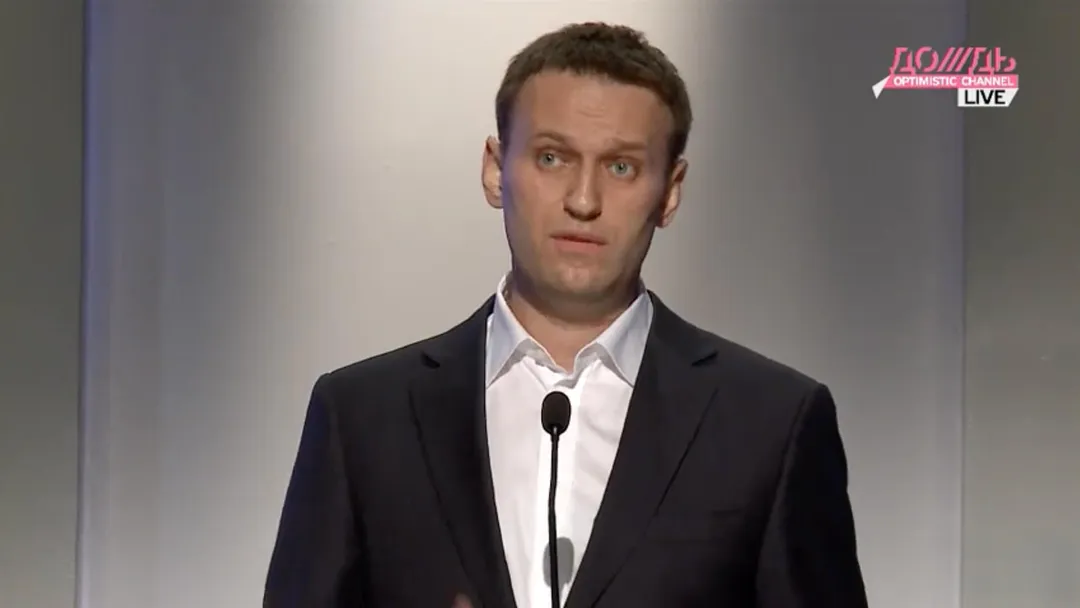
Good evening, we continue
the semifinal debates on Dozhd (TV Rain). I hope
you are voting on the websites cvk2022.ru and k22
.org, and also write on Twitter. Unfortunately, I
can't see it, but
if you are doing it using the hashtag #KS_elections,
then the other viewers can see your
impressions and read your messages. And
today with us is Boris Nemtsov, one of the
leaders of the democratic opposition, a member
of the bureau of the Solidarnost (Solidarity) united
democratic movement, the public democratic
movement, and Oleg Kashin, a journalist, as well as
joining us by phone, Gennady Gudkov,
a Russian politician and former deputy of the
State Duma.
Hello, can you hear us? Good evening.
Good evening. Thank you all for being
with us today.
And the first general question will put you
before a difficult choice. This is an even more
hypothetical, abstract situation.
So,
for prosperity—or not even prosperity, but rather
for a normal life
for Russia,
there are, let's say, three key properties, and you
will have to make this
choice: natural resources—oil,
gas—part of
its territory,
we are not asking which part exactly, no—just
so that Russia would become smaller,
or Russia would be without natural
resources,
or without civil liberties. We do not mean
those that we do not have today, but, say,
the most basic ones: freedom of
enterprise, religion,
movement, and so on. To give up one of these
features: natural resources,
part of the territory, or a temporary renunciation of
civil liberties. And the first to answer the
question will be Gennady
Gudkov.
Well,
natural resources are not only our blessing, but also our
curse, because you dig into the ground, strike
a fountain of oil, and this opportunity
to always plug any hole with oil, gas,
and natural resources has played a bad trick on us
over the course of
many years. This is not only happening today,
it happened before as well, and therefore
natural resources have played a cruel
trick on us—we have become too complacent.
And today we see how a rich country,
a very rich country, the richest in the world, cannot
eliminate poverty, cannot
eliminate—basically cannot do anything,
and lags a century behind in terms of
economic development. This despite the fact that
despite the fact that
that is all.
Time is up. Next to answer will be
Boris
Nemtsov. Well, giving up civil liberties is
a catastrophe under no
circumstances. No such thing as temporary—here, temporary
means for life. We know that. Second, giving up
resources—
I headed a government department when oil was at
$10 a barrel, and I can tell you that for us
this was, I don't know, something the Lord sent us—this
burden of oil and gas—and we do not know what to do
with it. Theft, Gazprom, Transneft,
Yukos, and so on, the loans-for-shares auctions—it is all
connected with this disgrace, with our
resources. The sooner they run out,
the sooner we will live in a free,
democratic,
successful, technologically advanced country in which
human potential will truly
be in demand. Nemtsov, of course, is not ready
even to give up empty, even desert
territory.
There is, after all, the well-known story of how Vladimir
Vladimirovich praised you for not handing
over
the islands to the Japanese. Luzhkov praised me, yes—who
didn't praise Boris Nemtsov, really, who didn't.
And answering this question will be
Oleg Kashin. Well, not in order to
seem original, but rather on the basis of
reason, I would give up territory. More than that,
most likely I would give up Moscow, because
first, I do not feel sorry for it, and second, it
could easily be retaken later. But if
we give up gas, we will regret it and
suffer. So yes, actually,
you can surrender Moscow and save Russia.
A famous Kutuzov-style slogan. Thank you.
The pragmatic Oleg Kashin believes that
it is better to keep the gas, and the territory we can later
reconquer ourselves. That concludes the general
questions for our candidates, and now we move on to
individual ones. Let me remind you once again, and more importantly
remind the viewers, that I am not the one inventing the questions.
In that sense, you are lucky. They are chosen only by
lot.
Tell us, Mr. Gudkov: in 2004 you
voted to abolish the election of
governors. Why did you do that, and is this not
one of the roots of
Russia's current troubles?
Who is this question for?
For you. Yes, that is complete nonsense. I do not know where you
got that from. I was the last island
of resistance in the State
Duma. I voted against abolishing
single-mandate districts, against abolishing governors' elections. More
than that, in 2004 I
alone—almost alone—had
serious problems with the authorities, which
ended almost with the fact that I did not
they started finishing me off in
the campaign because I spoke out harshly
against
the elections. It was hysteria, and naturally this
caused irritation, since it was clear
that the events in Beslan (the 2004 school siege in North Ossetia) were merely
a pretext for pushing a new
doctrine. So, frankly speaking, I
really don’t know where you’re getting all this from
I understand, your answer is absolutely clear
the only thing is
I’d like to quote Gennady
Gudkov, in an interview with Interfax in 2004, uh
it would have been much more honest to write into
the law that all regional legislative assembly members are required to resign their
powers and go through the foolish procedure of reappointment
right
now. This is simply as a kind of
background note. Irony. And now this is already
the real answer to the question. It was
irony. Next question for Boris
Nemtsov: Berezovsky, Linets, Prokhorov,
Khodorkovsky, Chubais
Kiriyenko — understand that...
all these people are wealthy. All right,
no, I really don’t know anything about Kiriyenko
about Berezovsky and Khodorkovsky, now
people are saying different things already. All these people are in
good relations with you
A question from Twitter: Can
political allies be friends without
the risk, if not of corruption, then of
let’s name a few more surnames. One moment. Let’s
name the main one
Fine. Berezovsky wanted to head
Gazprom; I didn’t let him do it
it’s surprising that you don’t know that. I
know it perfectly well, but I also know that you
became friends afterward. Second, second, second—
Berezovsky wanted to buy, together with Gusinsky,
Svyazinvest. I said everything would be
done fairly. They got nowhere
next, Berezovsky supported Putin in the
presidential election; I was against that kind of
brazen support. It ended badly, by the way,
for Boris Abramovich. Next, Berezovsky
was in court with Fridman. I testified
as a witness for Fridman in London
in court. Any questions? The previous question
is still the same: Can there be
political allies who are friends, or
rivals, without the risk not only of corruption
but
of cronyism. I understand the question; it’s a
roundabout one. Put simply, you asked:
Nemtsov, are you corrupt or not? No,
that’s not what I’m asking at all. Nemtsov, how
will you resist it?
You know, I’ve been offered
money many times, and in large amounts. If
I had given in even once—and everyone needs money
yes, I think I wouldn’t be here in these debates
taking part in some coronation council. Instead,
Vladimir Vladimirovich would with great
pleasure, under the guidance of a Czech
spy, send me where I belong. Yes,
I generally think that everyone wants to make money
but you have to think about freedom and reputation
every second, especially when
you’re in power. You still haven’t answered the
question: Can political allies
be friends without the risk of corruption? Boris
thinks they can. A question for Oleg
Kashin
Oleg, there should be a disclaimer here
you know, a conflict of interest: the co-owner
of TV Rain (Dozhd), Alexander Vinokurov, and
so on. We do have a disclaimer: we
have family ties with
Oleg Kashin, and I know a lot about him, so
therefore—but people are asking
on social media: Oleg, you are an extraordinarily vain
person
there are entire social phenomena called
“Kashin’s jacket,” “Kashin’s blazer”
38,000 people know whether today
Kashin pinched his crotch when he sat down on a...
and so on. The point is not whether there is a lot of you or
not; the point is whether this is appropriate
behavior for a human rights advocate who
is supposed to be modest, or for a politician
who is supposed, first and foremost, to be not about
himself either
Is it normal to behave this way for
a person who wants to represent
other people’s interests? 45 seconds. In the previous
round of the debate I spoke about the destroyed
system of ethical coordinates, so
I consider it my duty to rebuild it from scratch
of course, at some stage this may
entail costs, but literally
today I underwent a
polygraph test, and on every point it showed that
I am an honest person. So, gentlemen,
whether I pinched my crotch or not
well, that’s probably better than reading all sorts of
nasty things that also appear in
social media. I do not consider myself, well,
the most odious symbol of these
social networks and the vainest
person. What’s more, a person who
openly admits his vanity is much
more appealing to me, for example, than those who
pretend to be Chulpan Khamatova (a well-known Russian actress and charity activist), while
in reality turning out, as the saying goes,
to be something else entirely
Tolstoy. Thank you, Oleg, the answer is absolutely
clear: honest vanity is better
Now you may begin by asking your questions to Gennady
Gudkov. Boris will ask the first one
Nemtsov, you are our comrade and ally. I’m glad that
you are with
us. It really is hard for a comrade
and ally to ask any
but when, on Putin’s orders and with the
execution carried out by Volodin, you were stripped of your mandate
yes, for some reason you sent a “chain letter”
to deputies from United Russia, and moreover...
telling the deputies that they were normal,
decent people, that they would surely understand that
this must not be done, that it was a disgrace, and so on.
Did you really not understand that they were
part of this rotten, utterly miserable
system, and no matter how good they might be individually,
as people,
then why did you do it?
Well, still, three letters did hit
the mark: Stanislav Govorukhin, Alexander Shtein,
and Boris Reznik did not vote—they went
against their faction. And the elites need to be split,
and for them it was a moment of truth.
I understood perfectly well that my “letters of happiness”
or rather, my appeal not to take part in
the political
reprisal, and
what happened—splitting them—works in favor of
the protest movement, it works in favor of future
transformations, it works in favor of
future political reforms. And if today they
wavered—wavered, and still
voted—that does not mean that next time
there cannot be
a transformation in part of that elite which
needs to abandon those rules that
have been imposed on them, of course. And they themselves
find it repulsive—they themselves do it
simply
with enormous disgust. Nevertheless, for now
they are still doing it. Thank you, thank you. And your
next question—Oleg to Gennady. Yes, I
would like to ask you perhaps a
philosophical question: how far
are you prepared to go in your, well, I don’t know,
struggle? What are you prepared to sacrifice?
At worst, they’ll jail you, they’ll jail Dima, right?
So what would have to happen for you to
say: that’s it, enough, I’m no longer
taking part in this? I’m just curious, because
I probably forgot to ask you in
the interview. Here you are...
I don’t know, maybe...
As they say, for me as a person it’s already too late
to leave the game, because the losses
that there have been for me personally, for my
family, for my relatives and loved ones, are very
substantial, very great. As the saying goes, once you’ve lost
your head, you don’t cry over your hair, so I
am, of course, ready to drink the cup to the dregs.
All the same, if we have set out on this path,
we must follow it through to victory, because
this will be a victory not only for us, and not
even primarily for us—it will be a victory for Russia, it
will be a victory for our people, because we
want to make Russia finally
become a normal country, so that
it no longer bears this cross that
we have carried for centuries—this absolute
autocracy, which still exists today in the same form.
If we can cope with this too, we
can cope with anything. So, in general, the answer is:
I don’t know.
Thank you, thank you, Gennady.
And please don’t go away—ask your
question to Boris right away.
Nemtsov. Well, I’m grateful to Boris for
his kind words, and as for a question, I don’t
really have any fundamental questions for him.
I’ll probably just ask the question
that is important for defining the opposition’s
program.
They say...
about the problems of today’s Russia: what is it that we must
fix first and foremost in order for
the country truly to become
worthy of our people, in order for it
truly to be the kind of country
we can be proud of? What is the main thing,
the very essence? Well, I believe that
Russia’s main problem is an immoral,
lying, cynical, and thieving
government.
[music]
We are engaged in something very dangerous and very
noble. Because in essence, we are
electing to an organization—a coronation
council—that is a ticket to a prison bunk,
not access to the budget, not access to
property—a ticket to a prison bunk. Nevertheless,
wonderful people, my comrades, including
Gennady, are taking part in this.
That means that we do, after all, want to set the
country on an honest path. That is very noble.
Unfortunately, the authorities turned out to be far
worse than their own people. And the sooner we
deal with them, the better it will be for
our country. Thank you, Boris Yefimovich.
Thank you, and please answer the
next question. Oleg Kashin, yes, please.
Boris, you were a television hero of my
childhood, and as a child I heard many times
on television that you were one of the possible
successors to Boris Yeltsin. Try, in
40 seconds, to convince me that if you
had really become Yeltsin’s successor through the same
shameful procedure by which Putin did, then
you would not have become like Putin, that you would not
have ended up with your own “Ozero” cooperatives (a reference to Putin’s close-knit dacha cooperative),
and so on. I myself don’t see an answer to
this question—not in 40 seconds, not even in five more. I
see. You know, I was a governor for six years.
And when I became governor,
Nizhny Novgorod Region was somewhere around
55th place in terms of
socioeconomic development. And
when I moved to work in the government,
it had entered the top ten leading regions
of the country. Second, in the wild 1990s,
Nizhny Novgorod Region was one of the few places
where there were no contract killings.
Third, I was never subjected
to criminal prosecution on charges of
corruption or theft—not once. Although Putin
still wants that to be the case. Besides, it wasn’t
me—journalists called Nizhny Region
“the land of unafraid journalists”; that’s not my
phrase—that’s what people said.
In this way, through my work, I proved that, in
general, I am fully capable of pursuing exactly such a
humane, democratic course and
giving people the opportunity to
fulfill themselves.
I expected the answer that I would not have become
a successor under Putin’s scheme because
it is distasteful to me, but I won’t
put words in Boris’s mouth—his time has passed.
Instead, I did not become
the successor. Of course, Russia was unlucky in that regard,
but maybe I was lucky. Well,
please ask Oleg Kashin something
for 30
seconds.
As for the opposition’s plans and goals, here is what
needs to be done so that the media
first, are truly independent and
actually begin leading the people rather than responding
to the demand of the day, so to speak. That is what
must be done first and foremost. No, I, for one,
actually believe that nothing needs to be
done at all—the market will put everything in
its proper
place.
A company has no right to own, and
of course the Presidential Administration
should be abolished altogether as a structure
of state power—an absolutely
unlawful one—and this vicious
practice of meetings and phone calls should be eliminated. And
since personnel also decide everything, I would
simply send them out by bus, plane,
and train, everyone without exception, for a year or two
to study at least in Estonia, ideally in
America. Yes, because unfortunately
Russia, in terms of development—specifically in
the self-awareness of a free press—has also
fallen behind even its former neighbors.
So if state policy is needed
in this area, it should only be of this kind:
encouraging, yes. Not in order to
correct Oleg, but simply so that our
viewers understand this clearly:
the ban on foreigners working in the field of
media is absolutely public knowledge; these are
legislative acts that were adopted
several years ago already. Boris,
your question to Oleg Kashin. Oleg, on November 6, 20—
when you were brutally beaten near my
home—it was near our homes, the media—
homes; I still rent an apartment there.
That is a very important clarification. By now,
the whole world knows about it, I think.
And to this day the thugs have not
been found, although Medvedev, there in the Holy Land,
promised you they would be found, but as usual he did not fulfill
his promise. You had
a version that Yakimenko did it.
At one time, you were in close contact with him,
you were even a member of his
team, so to speak. And then you realized he was a scoundrel, and
can you tell me—when exactly
did this revelation come to you? I was never
a member of his team, and I spoke
with him maybe four times in my life over 12 years
of knowing him. And I remember the date of my revelation
perfectly clearly: it was March 2008,
when the Nashi activists (members of the pro-Kremlin youth movement Nashi) attacked a journalist
for the first time. It was my friend Yulia
Taratuta. Boris Nemtsov remembers—he was working
then at *Kommersant*, which they also
attacked. From that moment on, my attitude toward them was no longer
positive; my previously neutral attitude
toward them turned negative, and
essentially from then on, from then on, through a
snowball effect, by the summer of 2010
I really was, without false
modesty, one of the three main
enemies of that movement. I know this, among other things,
from certain insider information
connected with that movement that I
have. And I can also say that today’s
polygraph showed that I genuinely do not
doubt this version. One of the three
main enemies—and the second enemy was Kashin’s
jacket, and the third enemy was Kashin’s
blazer. I thank you, dear
viewers, for continuing to watch
us. Vote on the website cvk202.org
and cvk22.ru. In this round, with us were
Gennady Gudkov, Boris Nemtsov, and Oleg
Kashin.
Thank you. Bout four.
[music]
[music]
Good evening. The final round, the final
semifinal round of the debates on
TV Rain (Dozhd). With this, the semifinal
comes to an end. Next week we
meet in the final, where each evening
there will be only one group of five candidates. Four
days, 20 people, and only one person from
each group of five will be declared
the winner. And today we have a trio,
the last trio of the day. With us
is Arkady Babchenko, war correspondent,
civil activist, co-organizer
of the movement For Honest Power. Good evening.
Alexei Navalny, lawyer and public
figure. Hello, Alexei. And Ilya Yashin,
one of the leaders of the Solidarnost movement.
Thank you, thank you, dear viewers.
Let me remind you that you need to post
on Twitter with the hashtag #выборыКС so that
your comments and impressions
appear on our screen right now here
live on TV Rain. And
only verified, registered users may vote
for the participants—registered and
verified users of the system
available on the website cvk
202.22.
Registered users will be able
to take part in the elections
on October 20 and 21.
simply by showing up, but it is better if they
complete the second part of the verification process first.
They will be able to vote online, and already
now, if they are registered, they
can support one of the candidates
from the previous groups of three, or the candidate who
is standing before you now in today's
debates. Only one from this group of three
will advance to the final, which will take place
next week.
The rules are very simple. I ask one question
to all participants, after which social media users
have prepared their own
individual questions for each of the
participants, after which the participants will ask
each other
questions. What is the greatest, most important
achievement of the last 20 years, without separating
the Yeltsin era from what followed, treating it as one
over the past 20
years, seems most important to you?
Freedom
of enterprise. Freedom of ideology
and the freedoms associated with it,
freedom of religion, political freedom, and
so on, as well as freedom of movement, including
the right
to emigrate. Arkady Babchenko answers:
You know, when the form is created first, and
then people go looking for some meaning to fit it, something
to fill it with—its content—well, all of this
leads to questions like this about
a spherical horse in a vacuum (a Russian expression for an abstract, unrealistic scenario), and
to this wonderful session of stand-
up comedy that we had here.
Thank you for lifting our spirits. The most
important thing that has happened over the last 20 years,
the main event, I consider to be the usurpation of power. I
consider it a forceful seizure of power by this
guy who came in and said, 'Guys,
I'm going to be your tsar for life, because
it's already clear that we are not going to have
any elections.' I don't understand what
achievements we can even talk about now, when we
are living under
an occupying power. That is definitely
the most important thing that has happened to us, and
it is something we absolutely must fight. And do you
really not see the difference between
these twenty years with open
borders, for example, and Soviet rule, when
people
were imprisoned for their beliefs, and everyone else
could not leave? I just want
to clarify—right now, half of what I
asked was a very precise question for
a politician, yes: what achievement of the last
20 years do you consider
important? Maybe, maybe you don't
seem to agree—you have a different opinion, Ilya.
You know, Demyan, in some ways you remind me of Putin.
Putin also keeps offering us
this choice between freedom and
stability all the time, or a pension—yes, you'll
receive it, but then we'll take away your civil
rights—or freedom
of movement—well then we'll take away freedom
of enterprise too, according to your
version. So, you know, I don't like playing
these kinds of games with Putin, and I won't
play them with you either. All the
achievements you listed have
great value for us, and they are
inviolable. It is very important that
the democratic opposition, in the broad
sense, representing the full spectrum
of ideologies, stand firm on preserving these
values, these achievements. Right now
they are under threat, and we must
make every effort to ensure that these
values take root in our country
and endure for many years to come. I can only
agree with you. Though I just want
to say that there are countries today
that live better than Russia and have given up
one of these freedoms—for example,
China exists, and there are countries
with restricted movement. So these
freedoms can be considered separately, and
let's hear an opinion on this from
Alexei Navalny. Our greatest
achievement is the people who once
won these rights and freedoms,
and, most importantly, the people
who are not now prepared
to give them up. As my colleagues say,
people who are not ready to say, 'Let's have
a little bit of elections, and a little bit of
fakery. Let's have anti-
corruption efforts, but also let someone
steal a billion from Gazprom.' In other words, people
who are not willing to divide rights and
freedoms—human and civil rights, the basic
fundamental guarantees given to us by the right to life and by
the Constitution—people who are not willing
to split them into primary and secondary. That
is our main achievement. And do you
think such people exist, and that there are already many of them?
There are many of them. They are with us. They are in this studio.
They are all around us. I will be glad, on that
note, to conclude the first general question
for all candidates and move on to
individual questions from Twitter.
Many of them, in fact—this is a
typological question. It comes up often.
Many candidates for the Coordinating Council
emphasize that everyone should stick to
their own profession, that we should
do what we understand, and
leave the rest to professionals. The question
for Arkady Babchenko is as follows:
if civic protest in
Russia turns into something like a civil
war, or, let's say, an armed
confrontation, will you, as a war
correspondent, take one side, or will you
stick to your profession?
If the confrontation in Russia enters
the phase of civil war, I will set aside
my profession for a while and take up
pick up a weapon and go fight for the freedom and
independence of my homeland. And only after that
will I think about my profession, about the sides, and about
covering this conflict. This is my
country. I am ready to fight for it, for the sake of
the freedom of my children. I understand. And, Alexei,
a question for
you, a very specific one—particularly
because your views are generally well known to everyone
and really it is not worth
spending time on that. And this question is, well,
more or less personal, and I do not even know, um,
so to speak.
Whether you want to answer it:
if the threat of your imprisonment in the
Kirovles case becomes real and
becomes a serious threat, what will you choose
in order not to go to prison, given that
you can do more while free:
admit guilt and continue your public
activity, leave the country and
continue your public activity, or
temporarily stop engaging in
public
activity? In the last four years there has not been
a single week when someone
did not tell me, “You’ll be jailed soon.” Every
new investigation brought
comments: “You’ll be jailed soon.” This
Kirovles case has been going on for two years already, and
for two years insiders have been coming to me
saying, “You’ll be jailed soon.” So I know
what I am doing. I believe in what I
am doing. My family supports me,
the people I work with support me.
I value that support immensely. Alongside me
there are hundreds of people working on
the RosPil project, and thousands of people work with us
altogether. I will never trade
the support and trust of these people for anything
else. I have been doing what I do, and
I will keep doing it no matter what. And
you will not admit your guilt? There was one—
You cannot admit to something that does not exist. The case is
absolutely, completely fabricated. They
can, with the help of their wonderful
Czech agent Bastrykin (a sarcastic reference to Alexander Bastrykin, head of Russia’s Investigative Committee), invent
any number of fabricated cases. What
is happening now over May 6 (the Bolotnaya Square protest case), we
can see them cooking up a case literally out of
thin air. That has stopped no one, and it will not
stop me. Understood? Understood. Thank you, Le—
No, no, you answered about the million
in the first round, thanks to which, in fact,
you made it to the second. I think that means
you owe me
—no, the question is this:
social media users
believe that you are still associated
with various kinds of youth
political wings. It is clear that the phrase
“Youth Yabloko” (the youth wing of the Yabloko liberal party) is mainly, so to speak,
to blame for this, but they also speak of
so to speak, a certain
boyishness in your actions, some kind of
performative activism. Is there serious
substantive political work, so to speak, in Ilya Yashin?
You know, I partly accept this criticism.
Indeed, in my actions
there is often a certain boyish
streak, and so far I cannot fully get a handle on it
100 percent. Although I understand this problem
and I am working on it. But when we
hung, for example, the “Putin, Leave” banner in
January, I told myself once again that
this would be the last such flashy, provocative
action. But you know, I am striving
to engage in some
substantive work. For example, I was
a co-author of a Ministry of Internal Affairs reform project
—an alternative police reform project, um,
to the one Medvedev proposed. For those
of our viewers who do not know, whose co-author
was Vladimir Milov. We wrote it together with
Vladimir Milov. At that time we worked closely together with him
and were friends; there is absolutely
no secret here. We wrote what I think was
a very clear text that
won approval both from
serving law enforcement officers
and professional circles, as well as from
veterans. Well, listen, soon we will
write a reform program on how
to reform the pension system. I
have something to offer there to my supporters,
to people who sympathize with me. Thank you.
Thank you. Your 45 seconds are up, and now you
move on to the most interesting part—to the
questions that you have for each
other. And the first to answer will be Arkady, while
Alexei Anatolyevich will ask the question.
Thank you. I read
your blog with great pleasure and value you highly as a publicist.
But one of your posts alone, well, stirred in me
rather contradictory emotions and
curiosity. When you spoke about the “compass”
that all the candidates filled out, you
wrote that none of this
discussion of tax reforms is needed at all; I am not
interested in any of it. And the candidates’ task is
exclusively not to deal with local
elections and rallies, but to radically
resist
the regime. I understand that point of view.
Please tell me, name
three things that you will do
in the Coordination Council from the standpoint of
your specific radical
resistance to the regime. When we come to the
Coordination Council—three of my... specifically what
will you organize?
So, I think I am going to the Coordination Council in order
to use my head there. I believe
that one head is good, but 45 heads are much
better. I believe that the Coordination Council should
be that platform
whose main goal, of course, is the replacement
of this regime. But the real, real goal
What we need to be doing right now is
developing methods, methods
and strategies
and methods and strategies for advancing
this protest action of ours
I will be proposing my own
strategies, I will be proposing some
of my own options for developing these strategies
we'll see, we'll work, we will
cooperate — that is how I see my role in this
Thank you, thank you. Ilya, Arkady, well, you are
a man with a military background; behind you are
two Chechen wars, and you know not by
hearsay what
the Caucasus is, and it seems to me that it is precisely
you, more than anyone else, who probably understands
what we should do about the Caucasus. We have
different points of view: some say that
we need to keep feeding the Caucasus (i.e. subsidizing it), some say that
we should not feed the Caucasus, some say
that it should be separated altogether. So you, as
someone who knows what the Caucasus is,
what would you propose doing with it?
As for the Caucasus, back in 2000, in those
years, we had an absolutely
remarkable moment when it was possible
to resolve this Caucasus problem, it was possible
to end this war. Well, I obviously can't fit it into 45
seconds, of course, but that moment
was missed. Now 12 years have passed, and now
this problem has grown to such an extent
that it has surfaced all the way on the opposite
end of the country, in the case of the Primorsky Partisans (a Russian insurgent group from Primorye). I
believe that Russia should be
a federal republic, and all issues
should be decided by referendum
Let's hold a referendum. If the Caucasus
believes it wants to separate,
fine — let it separate. If Russia
believes the Caucasus should be separated, then let's
separate the Caucasus. If the views do not coincide,
then let's decide how this should be carried out,
what kind of referendum it should be. I believe
that all of this should be conducted
through a referendum; everything should be according to the will of the people.
Thank you, Arkady Babchenko, for "the will of the people."
And answering your questions, and the questions
from today's colleagues and interlocutors, will be
Alexei Navalny.
Well, again, I came here not
to fight for power or to oppose
Alexei or Ilya. I came here
to fight the power that we
currently have, and since I am not a voter for either
Ilya or Alexei, I do not, in principle,
consider it very important for
myself to clarify their views on this or that
issue. I think all the more so because
they will represent you in the Coordinating Council, so in
principle I have no questions. How — how
if that's the format, then however you like. I
can ask either one question from
the political compass, or let my
time go — decide that yourselves, you have almost
run out of time for the question. All right,
Alexei, what do you
think: should the Russian army be
exclusively professional? I am deeply
convinced that the Russian army should be
exclusively professional. There is
a huge number of studies that
say that Russia can afford it — it is
wealthy enough to have
a professional army. Moreover, modern
studies show that switching to
a professional army would give us
additional GDP growth of around one and a half
percent. And I want to draw your attention to the fact that
the current conscription-based army is
in effect, first of all, a tax on the poor,
and second, also a tax on poor people
from the regions: the probability of being drafted from Moscow
or from St. Petersburg is six times lower than
the probability of being drafted from some other region.
The probability of a child from a poor
family being drafted is 3% higher compared with a child from another
family. We have clear calculations
showing that when a young man
is drafted into the army, his family's income
falls by 15%. Enough tormenting ourselves — we
must switch to a professional army.
Alexei, finish your thought. You probably either
made a mistake, or I misunderstood, so
did you mean a wealthy family?
Absolutely. That's all — I just wanted to make sure.
Ilya, your question. Alexei, you are my friend,
but truth is dearer. A good opening: a man with
presidential ambitions — that's no secret — and
importantly, many people really do
many people perceive you precisely in
that capacity, as a potential
presidential candidate from the united
opposition. But as it seems to me,
a person who aspires to the highest
office in the state cannot
avoid answering the most
fundamental questions. I, with interest, like
many others, looked through your
political compass, and what puzzled
me was that on some important questions
you did not answer — you evaded
answering. Well, for example,
in your political compass, you did not
take a position on whether Russia should have
a titular nation. Well, let's settle it
right now: should Russia have
a titular nation, yes or no? On some
questions in the political compass I did not
answer precisely because the question is too
complex; it cannot be answered
with a simple yes or no. That's life, Ilya; such are
the practical realities. As for Russians
as the titular nation, I believe that Russians
are, first of all, in fact the titular
nation: they make up more than 80%; by UN standards, that is
a monoethnic
country. Second, the Russian language is enshrined in
the Constitution. No further
We do not need to single out certain citizens in
the Constitution; what we need is
to ensure equal rights for citizens
for both Russians who are being, and have been, driven out
of Chechnya and Dagestan, as well as
for other citizens living in
the territory of other republics. Equality—
that is what should concern us.
Real problems—equality is
a real issue, and inequality is too, whereas
mere rhetorical wording
of unclear purpose is not what we need right now. With
relief, I can say that I am
satisfied with the answer. Great.
Arkady, we are now moving on to questions for
Ilya, and here is your question.
First, Ilya, do you think it is necessary
to move government institutions out of
Moscow? Yes, I think this is an important task.
In fact, I believe it is necessary to create
a new city that would become the capital
of our country—a small, compact
city, perhaps in the Moscow region
or in one of the neighboring regions,
or perhaps even somewhere around
the Urals or Siberia—simply a new compact
city where all
administrative institutions would be concentrated. This would
greatly relieve the burden on Moscow. And most importantly,
it would lead to the kind of
decentralization that our country so badly needs.
One of our country's key problems is
this extreme centralization:
all the money is in Moscow, all the power is in Moscow.
The regions exist like some kind of
rightless provinces. Of course, this must be
fought, because in the end it
could lead to the country's collapse, when
the problems of Vladivostok have to be resolved in
Moscow, where people have very little
understanding of Vladivostok. This does not lead to
the strengthening of the country; it leads to its disintegration.
Self-government and the development of the regions—
absolutely. I agree. Thank you.
Alexei, Ilya, I have known you for many years, I know
you as a principled person and
an effective, energetic politician.
I say this with absolutely no irony whatsoever.
Because I worked with you for many years and
value you highly. So, as someone
so energetic, tell me please: after
a year, what benchmark would you set for yourself so that
after a year you could say, yes, I worked effectively
on the Coordinating Council, I did everything
I wanted to do?
I want that in a year the opposition—
the united opposition—
through the Coordinating Council, will have
a clear, substantive alternative
that we can present to society,
so that no one can ever again say to us:
these people can only speak out against things;
they cannot propose anything in favor of anything. Over
the course of this year, we must formulate
a clear political reform plan. Over
this year, we must formulate
a clear judicial reform plan. We
must formulate a plan for
education reform and explain
to people what we want, how we want
to rebuild Russia. We must shape
the image of the future Russia that we
are actually offering to people. And I am ready
to work on some of these reforms.
I am ready to work, in particular,
on political reform. I am ready to continue
working on reform of the law enforcement
system. I think I am ready there
to take part in work on the judicial
system as well. Well, this is in fact important—
truly substantive work.
Thank you, thank you, Ilya, including for
such a
wonderful note, the final note of our
debate today: what should happen to the
Coordinating Council in a year, and
what no one should be able to say to us in a year. We
asked various questions today; all
week we questioned the candidates, and these answers
are valuable not only because perhaps as a result
of them we will know how to vote, but
also because from these answers we will learn
something about the character, political views,
temperament, and immediate plans of those
candidates for whom you can
vote in the upcoming elections
to the Coordinating Council of the Russian
opposition on October 20–21, or even right now
in order to help one of them make it to the
final. The debates on Dozhd (TV Rain) — next time we
will see you on Wednesday; on Monday
and Tuesday the debates will be hosted by Yury Sobkin. My
name is Demyan Kudryavtsev. Goodbye.
Thank you.
[applause]
That's all.
Well done.
[applause]