The Kirovles Case. Court Video Recording. Hearing 4
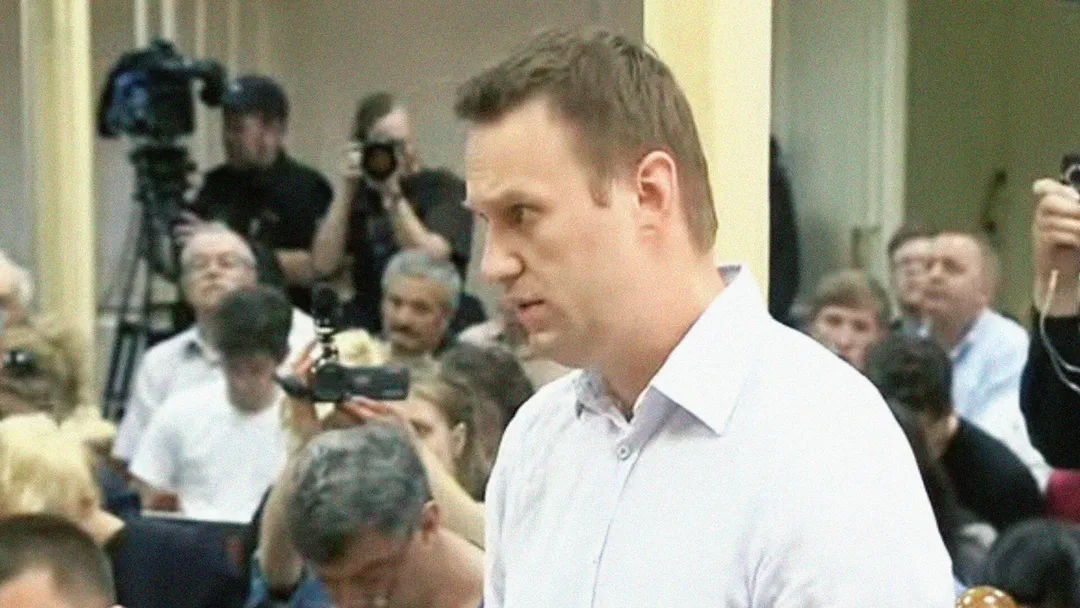
Please rise.
Please.
Judge: The hearing is declared open.
The Leninsky District Court continues
the consideration of the criminal case against
Navalny and Ofitserov.
Please identify yourselves for the record.
So, all parties are present.
With the exception of the representative of the
injured party, who was summoned to the hearing
for 9 o’clock, the following arrived:
witnesses Kiselyov, Shcherchkov,
Osapov. Witness
Koritnyuk was brought in under compulsion.
The court invites
witness Shcherchkov into the courtroom. Please.
Bailiff, please escort witness Shcherchkov
in.
I think that now, of course, it seems...
Now,
>> Your Honor, before the questioning of witnesses,
we have a motion.
>> Please, go ahead.
>> Well, I will read it into the record in written form.
On the night of May 8 to May 9, 2013,
the public holiday Victory Day (marking the Soviet Union’s victory in World War II) was being observed.
The office used by a lawyer of the Moscow
Bar Association, Interregional, by Navalny,
as well as by attorneys Mikhailova and Kobzev,
who are defending Navalny in the criminal
proceedings currently taking place in the
Leninsky District Court of the city of Kirov, was
subjected to an unlawful and arbitrary
search by officials of the city police department
of Kirov. The entry
of law enforcement officers into
the lawyers’ office, rented for the duration
of the hearings in this
criminal case, took place at night
under a completely fabricated pretext
and supposedly for an inspection of the scene in
connection with a report allegedly received from some
resident claiming that in these premises
leaflets of an extremist
nature were being printed.
Having established that no unlawful acts were taking place in the office,
that no unlawful acts were being committed,
the police officers, under various
pretexts, inspected all rooms,
including the lawyers’ room, where
documents and legal case files
related to this criminal case were kept. A full
live video broadcast of all events
was carried on various resources on
the internet. From the video broadcast
it became known that the officers
of law enforcement, without witnesses to the search
or other public representatives,
remained for a long time behind a closed door
in the defense lawyers’ office
and had unrestricted access to
the lawyers’ confidential materials in
this criminal case. It is entirely
obvious that this situation, in which
law enforcement officers
of the city of Kirov, on fabricated
grounds, burst into premises
used by Alexei Navalny and his
lawyers to prepare for court
hearings in this criminal case,
testifies to attempts by
law enforcement officials
to carry out acts of intimidation against
the lawyers, to exert pressure on
the lawyers, and also to obtain
unhindered unlawful
access to legally protected attorney-client
privilege and confidential information,
related to the defense’s position in
this criminal case. Undoubtedly,
the above-described situation that has arisen in
connection with the consideration of this criminal
case in the Leninsky District Court of the city
of Kirov requires an immediate response from
the presiding judge in order
to ensure the rights of the participants in these
proceedings. We believe that
these actions by the police flagrantly
violate attorney-client privilege and
obstruct the exercise of
Navalny’s full defense by himself and
his lawyers, which undoubtedly has led
to a violation in this case of the provisions of
Article 6 § 3 of the European Convention on the Protection
of Human Rights and Fundamental Freedoms. Moreover,
these actions by the police
were allegedly carried out in search of certain
extremist materials, specifically
in the office of opposition figure Navalny.
This circumstance most clearly
demonstrates the existence of political
motivation in the actions of the authorities
against Alexei Navalny. It is obvious that
the authorities of the Russian Federation regard any
opposition public activity
as extremism, which
confirms a violation by the authorities of
the Russian Federation of the provisions of Article
18 of the European Convention on
Human Rights and Fundamental Freedoms.
In view of the above, on the basis of Part
4 of Article 20 of the
Criminal Procedure Code, we ask the court
to issue a special ruling with respect to
the Ministry of Internal Affairs directorate for the city of Kirov in connection with the manifestly
unlawful actions falling under
Articles 285 and 286 of the Criminal Code
of the Russian Federation. I ask that this motion
be attached to the case file.
Defense counsel. Attorney Kobzev
supports the motion.
>> Attorney Kobzev.
>> I support it.
>> Defendant Navalny.
>> Your Honor, I support it. I would also like to
add on my own behalf that I live in another
city. This trial is a lengthy proceeding
and
requires me to travel here constantly. We have
a large volume of materials in the criminal
case. In order to exercise all available means
of our lawful defense, we regularly
file motions and take other
actions provided for by law.
It is obvious that for this I need
some kind of organizational base; I need
an office where all of this is printed. It is entirely
obvious that this office contains
confidential materials belonging to me and my
lawyers, which are protected by,
among other things, the law on legal
practice, and they are also subject to
attorney-client privilege. Therefore, I
would simply like to add that I have
an entirely obvious need
to rent such premises and to
use such premises. I use it
in accordance with the manner in which
the law provides. All of this
has been legally formalized. And when, on the night
of May 9, ten officers somehow enter the place
from the Main Directorate for
the city of Kirov of the Ministry of Internal
Affairs of the Russian Federation, I can explain it
in no other way except as
pressure on me, on my defense, and
the desire of certain persons, as yet unidentified,
yes, and still unknown to me, simply
to find out
our defense strategy, our defense plans, and
to violate the regime of attorney-client
privilege with respect to documents that
belong to me and, possibly, to the defendant
officer. Thank you.
>> Attorney Davydova, please.
>> Yes, I fully support the motion.
>> Understood. Defendant Officer?
>> Yes, I support it, Your Honor.
>> The prosecutor's position on the motion?
>> Your Honor, we object to the issuance of a
special ruling. We believe that
this does not relate to the subject matter of
these proceedings, and it is unclear how
this violates the rights of either
the lawyers or their clients. Your
view? Your Honor, frankly, for
us this is a first. We heard that
there had been some kind of entry,
some searches, but as I understood
from Attorney Mikhailov's statement, the reason
for conducting the searches was a report
alleging the presence of, well, extremist
materials in the office. Therefore, I believe
that this has nothing to do with
the subject matter of the present court case. Um,
as for seeking a special
ruling addressed to law enforcement
agencies, the defense may pursue that
by filing a complaint about the actions
of law enforcement officers under
Article 125 procedure. That is, no one is depriving them of
that right. Having heard the parties' views,
the court rules to deny
the motion for the issuance of a
special ruling addressed to
law enforcement officers.
No materials confirming
that a search was conducted have been presented to the court.
The court was not aware of this,
therefore there are insufficient grounds for
issuing a special ruling
at this time.
The court now proceeds to the examination
of witness Cherchkov. Please step
up to the stand,
and identify yourself.
Good afternoon. Shcherchkov Sergey
Vladimirovich.
>> When and where were you born?
>> February 5, 1969.
Where were you born? In Gorodok.
>> What is your ethnicity?
>> Russian.
>> Are you a citizen of Russia?
>> Yes.
>> Your education?
>> Higher education.
>> Marital status?
>> Married.
>> Where do you work, and in what position?
>> First Deputy Chairman
of the Government of Kirov Region.
>> What is your registered address?
Where do you live?
>> Temporarily registered at the address: city of
Kirov, Karla Liebknechta Street, building 69,
block 4.
>> I do have permanent registration.
Permanent registration: city of Perm,
Kuibysheva Street, building 95A, apartment 25.
You have been summoned to court to be examined as a
witness. I explain to you that, in
accordance with Article 56 of the
Criminal Procedure Code, you
are obliged to tell the truth and are obliged
to appear when summoned by the court. I also
explain that you have the right to refuse
to testify against yourself,
your spouse, and other close
relatives. If you agree to testify,
you are warned that your testimony may
be used as evidence in
the case, including
in the event of your subsequent
refusal to maintain that testimony. You also have the right
to appear for questioning in the presence of your
lawyer, the right to make motions,
to file complaints regarding the actions,
inaction, and decisions of the court concerning
your examination, and to request
the application of security measures if
necessary.
In addition, I explain to you that if
you do not have grounds
for a justified refusal to give
testimony, criminal liability may arise.
liability for refusing to testify
under Article 308 of the Criminal
Code of the Russian Federation, and for giving
knowingly false testimony under Article 307
of the Criminal Code of the Russian Federation.
Your rights and responsibilities have been explained to you. Understood?
>> Yes,
>> understood. Please provide the court
with your signed acknowledgment through the secretary.
Do you have any grounds to refuse
to testify?
>> No.
>> Then please answer the prosecutor's questions.
>> Sergei Vladimirovich, please explain,
whether you are acquainted with the defendants
Navalny and Ofitserov? Yes, I am.
>> Um, what kind of relationship do you currently
have with them? Friendly,
business, or some other kind? Do you feel
any hostility toward them?
>> Well, we have not seen each other for a very long time, so
there is no hostility
between us. When Alexei Navalny was working
here, we had a good relationship
>> with Ofitserov, it was strictly professional.
>> I see. Please explain your place
of work and the position you held
during the period from April to October
2009, and what fell within your
direct responsibilities. From April
to October 2009, I held the position
of Deputy Chairman of the Government
of Kirov Region. My duties
included oversight of five executive
government bodies. These were the Department
of Roads, Transport and Communications,
the Department of Forestry,
at that time the Directorate for Ecology and
Natural Resources, the Directorate for the Protection and
Conservation of Wildlife, and the Directorate
for the Development of Physical Culture and Sports, plus, um,
relations with the municipal
entity of the city of Kirov.
>> Are you familiar with the state enterprise
Kirovles?
>> Yes, certainly.
>> Who was its founder in 2009?
As far as I remember, in 2009 its
founder was the Department
of State Property of Kirov
Region.
>> What was the nature of
Kirovles's activities?
>> Kirovles carried out
state contracts for the performance of
forestry work on
non-leased areas of the forest fund
of Kirov Region.
>> Besides that, what else was the enterprise
engaged in, specifically the sale of timber
products? Well, that was not within my remit,
but I knew that, certainly,
it was involved in sales.
>> Please explain, as far as you know,
Sergei Vladimirovich, what was
the financial condition of the enterprise in
2009?
>> The financial condition in 2009, at least
at the time when I began taking a serious interest in it,
which was sometime around the middle of the year,
was difficult.
>> Did you, um, personally visit
the state enterprise Kirovles? If so, with whom, and
>> I visited the head office, uh, which
is located in Kirov, with Alexei Navalny.
I visited the branch in the settlement of Luza, in Luzsky
District, and later visited
a number of other branches there.
What connection did Navalny have to
Kirovles? Why was he traveling with you there?
As far as I had been informed at that time,
the governor had instructed him to deal with
the matter of
Kirovles.
Did Navalny hold any position in
the regional government?
>> He was an unpaid adviser,
serving on a voluntary basis,
an adviser to the governor.
>> Who was the director of Kirovles in 2009
?
In 2009, at least in the middle
of the year,
the director of the state enterprise Kirovles was Opalev
Vyacheslav Nikolaevich.
>> What was the relationship between Opalev and
Navalny, as far as you know?
>> As far as I could observe, at first their
relationship
was, let's say, fairly good. Later
it deteriorated.
>> What caused it to deteriorate? Well, the exact
reason is unknown to me.
I see.
Could, um, Navalny control
the activities of Kirovles?
Was he interested in this
enterprise at all? Did he propose any ideas,
um, that is, any principles for its
development?
>> He was not a public official, so
he could not control the work of Kirovles
.
But because he had
an instruction from the governor to deal with
Kirovles, he did express his ideas regarding
the enterprise's operations and development
.
>> And what was the main idea? Perhaps
there were several.
Well, one of the ideas was to carry out
a comprehensive audit, um,
by one of the world's largest auditing firms.
To finally understand what was happening with
Kirovles.
There was also the idea of organizing a timber exchange
in Kirov Region and establishing the sale
of timber products, because in 2009
for all enterprises in the forestry sector, in
general, product sales were the main
problem because of the global crisis.
>> Did Navalny, in connection with
his position as an adviser
to the regional governor, take part in any
operational meetings or working
groups that were devoted to
the activities of Kogukerovsk? Alexei
Navalny was, pursuant to an order by the governor,
a member of the working group on
assessing the effectiveness of Korbka.
>> Did he have the right to an advisory
vote in those working groups?
He was a member of the group.
>> Sergei Vladimirovich, please explain,
um
in more detail, um, whether you knew Ofitserov
and when you met him, when
you first saw him at all?
I do not know the exact date, but
Alexei Navalny introduced me to him,
describing him as a person
who possessed,
so to speak, expertise in the sale of
forest products, and who was
the director of the Vyatka Timber Company.
>> I see. Did Ofitserov take part in
the working groups that were held
by the regional government?
Well, in that particular working
group I do not recall, but once or twice
he took part in working meetings. Was he
a member of the working group, or did he
just participate?
>> He was not a member of the working group.
>> He participated by invitation.
>> Well, as I recall. That is, Alexei
invited him.
>> You mentioned a timber company in your testimony.
When did you first learn about
that enterprise?
Opol told me about it, saying that
the government had recommended that he
work with the Vyatka Timber Company on
the sale of
timber products.
No specific names were
mentioned, so he said that if
someone asked for something,
send them to him.
You stated that Navalny was also
the initiator of an audit
inspection. In fact, the audit
of Kirovles was conducted in 2009.
>> That inspection was not carried out
at the demand or request of Alexei
Navalny.
The audit itself
was commissioned by the Department of State
Property
of enterprises, um. I may be mistaken about
the exact name, I think.
>> Uh-huh. Sergei Vladimirovich, did you review the findings of this
audit, and were the results of this
inspection discussed at all
within the government of Rus (Russia), at
any meetings?
>> Yes, I was familiar with the results of this
inspection. That audit report
was discussed
at a meeting with the governor.
>> Well, what were the main conclusions?
As far as you remember, from that inspection?
The main conclusions were fairly debatable.
In particular, one of the main conclusions
um, was that Kogurovles was
the only enterprise in the territory of
the Kirov Region capable of
performing, uh, the full range of
forestry-related work, which,
strictly speaking, did not
correspond to reality, because
we had
a fairly substantial sector, so to speak, and
many enterprises could carry out
forestry work, having
sufficient equipment, sufficient
competence,
and enough
staff.
>> Were any,
that is, assumptions or specific
conclusions expressed regarding the activities of Kogobkirov
Les, and one second, please, excuse me.
Please continue.
>> Please ask the question.
>> Were any conclusions stated in the
audit report, that is,
regarding the contractual
relations between the Vyatka Timber Company
and Raflis?
>> I do not recall any such conclusions.
All right, and my last question
will be this.
Did Navalny, as an adviser to the governor,
have his own office in the
regional government administration building?
>> He did not have his own office
as such. There was what was called the advisers'
office. So all the advisers who were there
were based there.
>> And where was it located? In the
government building? It was located in the building of the
Government of the Kirov Region, building number
one.
Do you remember the address, something like
561
building.
>> Sergei Vladimirovich, please explain,
please, after all, regarding
the relationship between Navalny and Opolev,
what can you say?
Were there any complaints on the part of
Navalny toward Popolev? How were they expressed?
Yes, there were complaints, because
Navalny repeatedly suggested to Opolev and
to conduct an audit as well, and insisted that
Oplev should seriously address
cutting its own costs. Well,
the costs of Kirovles, but there Oparya
for some reason did not do that.
>> How did Navalny generally assess
Opolev’s performance as head of
the company?
Again, at different stages there
were different views, yes. At first, in the beginning,
as I recall, Alexei, generally speaking,
had a fairly good
>> attitude toward him and spoke quite positively
about his work.
Later on, though, his assessment
of Opol’s performance changed, in
particular
including as a result of the audit.
>> How did it change?
>> In a negative direction.
>> Negatively. Did he specifically
suggest that you do anything about him?
Well, there were no specific proposals
of that kind.
>> Did he suggest removing him from his post?
>> Not to me, no.
>> Did he say it,
>> removing someone from office was not within my
authority.
>> Did he talk about it at all?
>> Well, more likely he did.
>> Your Honor, for the prosecution. No, all
questions
>> the defense may ask a question,
please. May I begin?
>> Sergei Vladimirovich, could you say
a few more words about the financial
condition of Kirovles at the
beginning of 2009, that is, at the start,
when the new governor
took office. What was its condition?
Was it difficult,
satisfactory? What was the scale
of the debt, as far as you remember, these
figures?
The situation is that at the beginning of 2009
I was not holding the relevant
position. So it would be better, if you do not
mind, if I speak about the financial
condition by the middle of the year, when I
actually, by the middle of 201-, for which
you can say, well, actually,
as far as I remember, the audit
report stated losses by the
middle of the year of around
200 million rubles.
And what caused those losses?
>> Well, there were quite a few reasons and contributing factors
for that. They were not analyzed by the
working group. Uh, still, the main
reason was
the global financial crisis and the lack
of demand for timber products.
That was the first main reason. The second
main reason was the lease agreements
for forest fund plots that
Kirovles entered into in 2008—
lease agreements
for forest fund plots with a total
allowable logging volume of 2 million cubic meters at 180 rubles per cubic meter,
which, in effect, created for it
a financial obligation in the amount of
around 360 million rubles per year. In
conditions where there was no market for timber products,
for Kirovles this was, of course,
unacceptable. And,
>> well, to finish my thought, in addition,
there were, of course, very high costs for
the administrative and management staff.
>> You have now mentioned twice
the lack of sales. Can you
confirm or deny the information
that at meetings attended by
the governor, including the first
introductory meeting, when
the governor had just arrived, Opolev
repeatedly made requests
and expressed wishes, including
to the governor, to help establish sales
for the company’s products, since Kirovles’s
warehouses were overstocked and there were huge remaining
inventories of products?
>> Yes, that did happen. And, as far as I know,
the governor appealed to many
enterprises located, including those
outside the Kirov Region,
asking that
they, so to speak, buy the products
of enterprises from the Kirov Region, including
Kirovles. So one could say
that the governor—
and this request was addressed to all
members of the governor’s new team—
were engaged in promoting
sales for the region’s largest
enterprise and were trying to do everything possible
to ensure that Kirovles sold as much
product as possible.
Well, I would not use the word “lobby” here,
but it is true that there was an instruction from
the governor to help all
enterprises, not only Kirovles, but
all enterprises in the Kirov Region that
came asking for help with
sales. Well, that request definitely existed.
And please tell me, do you not
remember the figures, or at least the rough scale of the figures,
regarding
the accounts receivable at that time,
for Kirovles, and the value of the remaining
inventory in the warehouse
in the warehouses?
>> The sales figures,
the amounts for the inventory—those were on the order of,
certainly, at that time,
tens, and perhaps even more than a hundred
million rubles.
So that was also one of the reasons
for, essentially, the severe financial
situation of Kirovles — namely,
the existence of such enormous accounts
receivable, connected with the fact that
counterparties either paid late or did not
pay at all for the supplied
timber products.
Well, as for the remaining stock in the warehouses, unfortunately,
I did not understand.
You said that counterparties were not
paying, right? And the accounts
receivable — was it tens or hundreds
of millions of rubles. Witness Zmeyev told us
— he was the one handling accounts
receivable — testified in these proceedings
that there were no less than 180 million rubles
in accounts receivable. So are you
saying that this was some kind of
widespread phenomenon, where counterparties did not
pay Kirovles?
At that time, it was a widespread phenomenon,
and I think not only for Kirovles,
but for many enterprises in the timber industry
complex in the Kirov Region.
>> Do you know what is happening with
Kirovles now? What condition
is it in?
>> It is in bankruptcy proceedings.
>> It is bankrupt.
And was one of the reasons for
the bankruptcy the fact that these accounts
receivable were, to a large extent, never
collected and had to be written off as
bad debt, so the money never really returned to
Kirovles? I do not have that information.
So
the bankruptcy petition was filed by
the Kirov Region Department of Forestry,
to which Kirovles had not been paying
rent for forest plots that
had been leased.
>> Now, regarding the lease issue. Please tell me,
please, could
this rent
have been written off by anyone at all? I mean,
the unpaid rent. What level of decision
would have had to be made
in order to forgive Kirovles these debts? And
was it even possible to forgive them at all?
Well, under the legislation in force at the time,
and the applicable rules,
if you incurred a debt, of course, it could not be
forgiven. That is, if we leased
forest plots, then you were required
to pay that rent without fail.
>> And please tell me,
>> only a change in federal legislation
could affect that, and moreover
>> that is, it is clearly stated in
the legislation, and nothing could be
forgiven. And please tell me, did you
or perhaps the leadership
of the forestry department, or Opalev himself,
could someone have been mistaken on
this point and believed that someone, by their own
decision, could simply forgive debts and
arrears on rent?
>> A great many people were mistaken about that,
including Opalev, including
the directors of Kirovles branches; that is,
very many people believed that it was possible
to forgive the rent.
Was this issue discussed
at meetings, and were any
explanations given to them on this subject?
>> Well, the issue was not discussed much, because
what was there to discuss? Essentially,
when such a question was asked, I
gave everyone a clear answer: you cannot
forgive rent payments.
>> And did you tell Opalev on this subject that
rent payments could not be forgiven because
it was legally impossible? I do not recall
such a specific conversation in which I
said that to Opalev. That is,
this was said to a very wide circle of people,
because, well, I do not know, every
other person was talking about it, including other
forest users, who were saying
that, well, at least then let us
tie the rent not to
the estimated allowable cutting volume,
but to the actual volume
of harvesting, which, essentially, was also
impossible. I see. I will explain why I am
questioning you in such detail. Because
witness Opalev testified at the hearing
that I had promised him to reduce or
forgive the rent payments and stop
certain actions in that regard. So the question is:
were there any meetings or
informal conversations, and are you aware of
any information under which I
could have, or someone else could have,
promised him to stop some
actions in order to forgive the rent payments?
At least as far as your actions are concerned,
I know of nothing of the sort.
>> Did anyone at all, perhaps at meetings
with my presence or in my
absence, give Opalev any
assurances on this issue and say, do it,
act in some way, and we will forgive
your rent payments? In my presence,
that never happened.
And please tell me, was my status
in the Kirov Region, at that time, known to you?
Of course. Did you have
any, I do not know, mixed
feelings about my status and my
authority?
>> Mixed feelings? What does that mean?
>> Well, mixed feelings. For example, did you
think that I was
a civil servant or not
a civil servant?
>> No, I clearly understood that you were an adviser to
you were not serving on a voluntary, unpaid basis
as a civil servant, that is, on this
I have mixed feelings about that. Were there
any doubts about the fact that
I did not have the right, for example, to give
instructions to civil servants
who work in the administration or
somewhere else?
>> To issue an official instruction, of course, you
could not.
>> And please tell me, at the
meetings that took place and in which
I took part, was it
explained by the governor or by you
what my status was? That is, did you introduce me
in some way, or was I just
a person with unclear authority in the
capacity of the governor’s friend?
Was it clear to everyone who this
person sitting on these commissions was?
>> Well, you were introduced as an adviser
to the governor, among others.
>> So everyone understood that I was an adviser
to the governor on a voluntary, unpaid basis.
>> Well, I don’t know whether everyone understood that, but
I certainly did.
>> I can’t speak for anyone else.
I’ll explain why I’m asking. It’s just that
the witness Opolev testified that he believed
that I had certain powers
that would allow me, among other things, to
waive rent and remove from them
debts, or impose
debts, and so on. So, regarding that,
on that point
>> The question is withdrawn; witness Opolev
does not say that exact phrase.
>> All right. Please tell me, how often
were meetings on forestry issues held?
You organized them? How often?
on forestry issues. That is,
there was, of course, every week on
Monday, first of all,
an operational meeting, and then as
needed
quite frequently.
>> Well then, at these weekly operational
meetings, do you confirm the information
that I was present weekly
almost every time on matters of
forestry?
>> I don’t remember. That is, at our
meetings, people were present
generally speaking.
>> And please tell me, were there any
operational meetings
at which I gave instructions to Popolev
to ship products to OOO VLK or to
any other companies?
>> Well, I do not recall any such facts. The witness
Opolev testified—Your Honor, this is
the exact wording—that at operational
meetings, if this is in the record, I
asked a specific question in the
presence of, among others, Cherchkov:
Navalny gave instructions to increase
shipments of products to OOO VLK. Do you
remember that or not?
>> Please tell me, in general,
was it even possible, in the format of these
meetings—who exactly attended them,
what was the approximate composition?
Present were
the head of the Forestry Department,
the head of
the Kirovles Center institution,
that is, at different times these were different people.
the head of Kirovles, and my assistant,
who dealt with forestry matters. Well,
at meetings of that kind, in that format,
with that group of participants, was there ever any discussion of
the issue, and were instructions ever given to Opolev
regarding
sales policy toward particular
suppliers, or pricing policy in
terms of selling to specific sole proprietors more cheaply or
more expensively?
>> Issues concerning the sale of timber products in no way
relate to forestry matters,
so such issues were not raised at those
meetings. Issues concerning the sale
of timber products were discussed only
in formats such as
the working group on assessing the
effectiveness of
Kirovles.
>> And please tell me, I understand, they were not
raised. Within that group, perhaps
the one on assessing effectiveness, were there
any episodes when I gave any
instructions regarding specific
suppliers—to ship to them, to ship more cheaply
and so on?
>> I do not remember any such cases. Did anyone else, perhaps,
give instructions to sell
more cheaply, more expensively, or with regard to
specific companies?
There were no such facts.
>> And please tell me,
which office did you mention? The office—the office
of the governor’s advisers. On which
floor was it located?
>> I mentioned not the office of an adviser
to the governor, but the office of the governor’s advisers.
It was on the third floor. Please tell me,
did I ever have
an office on the fifth floor, temporary,
permanent, or any other kind? Do you
remember anything like that?
>> I do not remember you having an office on the
fifth floor.
>> And which officials did? If you
recall, who had offices on the
fifth floor of the first administration building
of the regional government? The four deputy governors.
The governor himself, his aide,
and his secretary.
I never
>> that is, meeting rooms
and the room where government meetings are held
of the government. Plus there is an office
that is currently unoccupied, but in which
the governor's adviser used to sit
Akatelyev,
>> Please tell us, witness Opolev
testified verbatim that in his office
on the fifth floor I instructed him, ordered him
to ship products to VLK.
Could that have happened in some
office on the fifth floor that
belonged to me as an adviser
to the governor? I repeat once again, you did not have one.
.
>> I did not have an office on that floor. And
please tell us,
>> In that case, I do not remember.
Please tell us, how would
my relations with Sobolev be
characterized
during the stage of the audit
and everything else—as
friendly, hostile,
or tense?
>> I would characterize them as tense.
>> As tense. Please tell us, were you
present at the meeting
organized by the governor of Kirov Oblast
following this audit
that you mentioned?
>> Yes, I was present.
>> Do you confirm the information that
at that meeting I demanded
that Opolev be removed from his position?
>> Well, honestly, I don't remember.
>> But following that meeting, he was removed
from his position.
He was removed from his position, but I do not
remember whether it was as a result of that
meeting.
That's all, I have no further questions for now.
>> Counsel for the officers, do you have any questions?
>> I have no questions.
>> Please, counsel, two questions.
And please tell us, in your
testimony you stated that an
audit had been conducted at
the organization Vyatkales Audit, and
you noted that you had reviewed
the audit results, and that the main conclusions
of that audit were disputed. And
in particular, you indicated that
according to the audit results it was
stated that the enterprise had deviations
in the scope of work. What other findings did you
identify in that audit?
There were several. That is, some of them
were indisputable, but in particular there was a conclusion
that the issue needed to be resolved
of leaving overmature aspen standing
unharvested, which, frankly, I did not
understand how an auditing company could
first, make such a conclusion,
>> and second, well, that is certainly
outside the competence even of the government
of Kirov Oblast; that is
exclusively a federal matter.
And the issue itself, the resolution of that issue,
is quite controversial even among scientists
themselves.
>> So it turns out, it is not left that way,
>> so it turns out that the auditors, the team
of auditors that carried out this
audit, somewhat overstepped
and went beyond the limits of their authority
and their expertise. Yes.
>> Well, yes, I suppose you could say that.
>> And I have one more question. Um, you
said that Kogoles had
high administrative costs.
>> And what does that mean? In what sense?
>> Well, there was a fairly large
administrative staff. Right now I
don't remember the exact number,
but I think it was more than a hundred people.
Although each branch could essentially
operate as a separate enterprise
without such an administrative superstructure.
And did you ever discuss with Opolev
issues concerning reorganization?
>> We did discuss it, but directly with
the members of the working group, that is, including
in Opolev's presence, that yes, it was necessary
to carry out reorganization.
>> So you believed that
this enterprise needed reorganization? Yes, at
that time I did.
>> And how did Opolev feel about that?
Well, he regarded it
more or less supportively; he understood that
things could not continue the way
the enterprise was operating at that time.
>> Please tell us, did Opolev take
any measures to bring
the enterprise out of the deplorable
condition it was in in 2009?
In particular, do you know whether
Opolev took measures to recover
accounts receivable from counterparties,
or to search for new markets for the sale of
the products? Perhaps?
>> Well, as far as I know, he did that work; that is,
again, it was not entirely within my
competence once the working group
started working, but he did take
some steps.
>> Specifically what? Well, specifically? That is,
he reported that
they had tried to recover from this one, from that one,
they had tried to collect from debtors there. That is,
the register of debtors included dozens of
enterprises.
Here it worked, there it did not. These
ones paid, those did not. Well, you cannot say that
he did nothing there; that would also be
incorrect.
>> Please tell us, do you know anything
known regarding the fact that in 2009
there was a significant drop in prices
for forest products?
Well, as for a significant drop in prices,
probably there
a significant drop in prices compared to
what?
>> Well, compared to 2008 prices.
>> Well, certainly, compared to 2008 there
was a decrease.
That is, it is difficult to judge there, there
whether it was significant or insignificant
again, in the machine's understanding
of what is significant and what is not, but I
think it was at least 10 percent,
of course,
excellent questions
>> May I, Your Honor, ask a few more
questions.
>> In your testimony, you stated that
you once told Opolev that if there were
any questions, if people approached him
some people citing
the government, he should send them all to me.
>> Correct. So, did anyone ultimately come to you afterward
?
I don't think so, no.
>> Officer,
>> No.
>> That is, were there any people who
after that conversation, or perhaps
did Opolev ever return to that conversation?
Did Opolev ever say that he was being
pressured?
>> He never came back to it again.
>> And did he have the opportunity to speak with
you, well, one-on-one, outside my
presence?
>> He had that opportunity.
>> And he had the opportunity to turn to
you if he understood that he was under
some kind of unlawful
pressure.
Without question, he had such an opportunity.
He did.
>> He never did.
>> No.
>> Please tell us, as I understand it, you quite
often visit, as I understand it,
various districts of Kirov Region,
>> visiting districts by name. Do you have
the opportunity to meet periodically with
the directors of the forestry enterprises and
interact with them directly without the presence of
Opolev, me at that time, and so
on?
Over the last two years, there has been no need
for that. Well, a forestry enterprise director can,
for example, make an appointment to see you.
>> Certainly.
>> Has that ever happened?
>> Well, Natalia Kritnik did,
>> When any forestry enterprise directors
spoke with you in a situation where they
understood that there was no pressure from
me, Oplev, or any other
people, did they ever come to you with
complaints that they were being forced
to sell products more cheaply,
or for free? I met with directors
with several, so to speak, more active
directors,
uh, but the issues raised concerned the future
activities
of KOGUP Kirovles, changes in the format
of its work, that is, product sales.
I did not have conversations with forestry enterprise directors
about that.
>> Has anyone ever complained to you that
the company VLK was causing damage to
Kirovles?
Mm.
On that subject, I was once complained to by
Arzamassov, but
strictly speaking, Kiro- I mean
the forestry enterprise directors who
>> The forestry enterprise directors? No.
>> And please tell us,
regarding the issue of causing damage to
KOGUP Kirovles.
Which entity, I don't know, within
the government? And within this system of
interactions can make a decision that
damage has been caused to the enterprise Kirovles
?
>> I think the founder, its property department,
could. Are you aware of
any formal acts, calculations,
expert examinations, or assessments
by the Department of State Property that
resulted in
a finding of damage caused
by OOO VLK?
>> I know nothing about any such calculations or expert examinations.
Please tell us,
are you aware of any facts regarding
the fact that
I
received money, gifts,
funds, or anything at all from
the Vyatka Timber Company.
>> I am not aware of any such facts. Did I
ever ask you, or in your presence ask
anyone, that Kirovles should
in some way establish a special
separate, particular arrangement
with VLK?
>> Not in my presence.
>> That's all, no further questions. Thank you.
>> Counsel Mikhailov has a question.
>> Counsel Kobel. Counsel,
please
I ask that you keep it simpler.
In your testimony just now, you stated that you
wanted to conduct an independent audit
and thereby reduce expenses for the
administrative apparatus of Kirovles.
For a number of reasons, Opol did not do this. Can you
he did not want to say for what reasons.
>> Well, regarding, regarding, regarding conducting an audit.
Essentially, it was characterized as
a fairly expensive undertaking, and he
did not have the money for it.
The second issue
was to reduce expenses for the administrative
staff.
>> Well, once again, I cannot say what Opol
did. That is, he was trying in some way
to propose a new staffing
schedule to the founder there, and so on.
That is, I know that he
was, so to speak, trying to work within that logic,
but most likely he lacked
the necessary expertise.
And please tell me as well,
whether the owner's approval is required
for a transaction by the humanitarian
enterprise for the sale of the produced sheet
products?
The charter—if I remember correctly—
provides that up to a certain transaction amount
the general director may conclude transactions; beyond that he may not.
That is, well, I do not remember the specific charter
or up to what amount.
>> Your Honor, may I still ask one more—
I have not seen Sergey Vladimirovich for so long—
please finish. Sergey
Vladimirovich, do you know anything about
the criminal case that was opened
against Opolev
on the grounds of abuse of official
powers?
>> No, nothing.
>> And
are you aware that the deputy
chairman of the government, Pereskov,
filed a request to initiate
criminal proceedings against Opolev? This
criminal case was opened on the grounds of
abuse of official powers
and the transfer of 54 million rubles (about 54 million RUB) to
a company where Popolev's son worked.
Do you know anything about that? No, I do not.
>> You do not know about the fact that such a case was opened or
closed? Not about the fact that it was opened, nor
that it was closed. The only thing
I remember is that some kind of statement
regarding Opolev's activities was indeed
prepared by the government administration, but
that is all that
>> And in your view, for what reasons,
why did Opoli Fdogi cease to be
the director of Kerplyas?
In the end, first of all, he submitted
a resignation letter of his own accord.
>> May we release the witness? Yes, Your Honor.
>> Defense.
>> Thank you, you are excused.
>> Witness Kiselyov is called.
Thank you.
Please step up to the stand,
and identify yourself.
Kiselyov...,
>> When and where were you born?
>> In 1969... please state the month
of birth. February 12, 1969.
>> Nationality?
>> Russian.
>> Russian citizenship?
>> Yes.
>> Your education?
>> What?
>> Your education?
>> Incomplete higher education.
>> Marital status?
>> Married, two children.
>> Where do you work, and in what position?
>> At the moment, I am a founder
of an LLC
Reskom.
>> That's all.
>> So what is your role in that company?
>> I am just a founder.
>> Where do you live, and where are you registered?
I live in the settlement of Svecha; my registered address is there as well.
Please state it.
>> Uh...
Village of Glushki, 6.
>> You have been summoned to court for questioning as
a witness. I explain to you
that you are obliged to tell the truth and have the right
to refuse to testify against yourself,
your spouse, and other close
relatives. If you agree to testify,
you are warned that your testimony may
be used as
evidence in the case, including
in the event of your subsequent
refusal to maintain that testimony.
You also have the right to file motions and submit
complaints regarding the actions, inaction, and decisions
of the court concerning your questioning, and you have the right
to appear for questioning in the presence of your
lawyer, and to request protective measures
if necessary, and I warn you of criminal
liability
in the event of an unjustified
refusal to testify and for knowingly giving false
testimony under Articles 307 and 308
of the Criminal Code of the Russian Federation.
Do you understand your rights and responsibilities?
>> Yes.
>> Please provide your acknowledgment; come forward
and sign here.
Do you have any grounds to refuse
to testify?
>> No.
>> Please answer the prosecutor's question.
>> Igor Viktorovich,
>> Please explain. Are you acquainted with the convicted Navalny
and Ofitserov?
Personally, I am not acquainted with him
and
I do not know him.
>> I see. You do not bear them any ill will?
>> No.
>> Very well. Please tell the court,
what position you held and where from
April to October 2009. What fell
within your duties? Who was
your direct supervisor?
>> In 2009, I was the director of
the Kotelnich forestry enterprise, a branch of Kagub
Kirovles.
My supervisor was Opole Vyacheslav
Nikolaevich, and I reported directly to him.
>> Please explain what powers
the enterprise you headed in 2009
was vested with, that is, the Kotelnich
forestry enterprise. Did it have, was it
entitled to independently sell
its products, set prices, terms
of transportation, product range, and so
on? I may be mistaken, but at that
time, at that time
>> At that time, at that time, at that time, we all
reported to Vyacheslav
Nikolaevich, and basically carried out
the contracts that were sent down from, from
management.
Our contracts
at that time, in any case, if there were any,
they only took effect after they
went through a certain approval process in
management.
How was the price for
the timber products being sold determined? Was
approval required for this
directly from Kirovles, or was this
something the director could decide independently?
>> No, approval from
management was mandatory.
>> Please explain in more detail,
how prices were set.
Well, I could not sell timber products,
so to speak, without agreeing the price with that same
Vyacheslav Nikolaevich or with management,
with the commercial department there, because
we were subordinate to them.
That is all I can say; the minimum
there was some kind of market, after all, and
so from that market there followed
further on, the minimum price for
timber products.
>> I cannot say, as of that time,
sorry for the vagueness.
>> At that time I
simply do not remember the prices.
>> No, who set it? Not what it
was, but who set it.
>> And who set it? In any case, it was
management. That is, there was like
some kind of fixed schedule.
>> I see. Are you familiar with the company
Vyatskaya Timber Company?
Well, that, that company existed during the
period when we, when, when I
worked there.
>> I understand.
Did the Kotelnich forestry enterprise and the Vyatskaya Timber
Company have any
contractual relations, or did it perform
some other role?
>> I think that we had contractual relations
with management at that time. I even
cannot really remember, but as far as I
understand, there were contractual relations,
that is, management still sent down, not
not directly Vyacheslav Nikolaevich,
probably, but contracts under which I
was supposed to work.
>> I see. As far as you remember, what were
the terms of those contracts? What
was specified there: the price, the terms
of transportation—were these defined in those
contracts?
>> I do not remember.
>> I see. Did you supply any timber products
to VLK, or to
VLK's consignees?
>> I cannot say, but there must probably be
some
financial documents. Right now I cannot
say whether it was supplied or not,
I cannot tell. One would need to look at
the contracts and the documents.
>> I understand. And can you explain anything
about the delivery terms?
>> About the delivery terms.
>> Well, traditionally, how did your counterparties
pick up the timber? The counterparties
picked it up. Some used their own transport,
some used railcars, some used other means. That is,
that was the usual practice, so to speak.
>> Well, did the enterprise have its own transport
to deliver it? No, no. No.
>> If the products were shipped
by rail to the station,
how was the product delivered, at whose
expense?
We had our own siding to the station, so
to the station we delivered it
ourselves. I see. Yourselves—but you did not have
your own motor transport, so you hired
some transport?
>> Well, there were probably some kind of
hiring contracts.
>> Who paid for transportation from the logging site
to the station?
When did you learn about the company VLK,
and were any meetings held in connection with this? At
Kagubkerafles, were there any meetings?
>> Again, I may not be objective here,
if I am just trying to remember. A company simply
appeared that
started working with management
at that level. That is, no one
introduced me to it or went into details
about what kind of company it was or what it
did.
And the director of the company VLK
was not introduced to you either.
>> I only knew that it was this kind of
person, like an official, but I never
saw.
Your Honor, we would like to make a motion
on the grounds that all questions from the prosecution
have been exhausted. As to most of the
questions that are of material
importance to this case, the witness
is unfortunately unable to give
answers because he does not remember,
although, despite this, during questioning as
a witness at the pretrial investigation,
when asked these questions, he gave
clear and consistent answers, and therefore
we move to have his testimony
given during the pretrial
investigation read into the record.
They are located in volume one of case file two on
pages 13
through 15.
Case file one.
Your position?
>> I do not object to the reading.
>> I have the defense's position regarding the reading
of the witness interview record taken during
the pretrial investigation.
>> Well, Your Honor, the defense is, as usual, opposed,
because, first, the premature
reading of the witness's testimony violates
the defense's right to present its case
independently and effectively. That is the first point.
Second, the defense maintains its position that
the law still does not permit
the reading of a witness's testimony before
the completion of his examination, and therefore the defense
asks to be given the opportunity to question
the witness. We can then return to
discussion of this issue later, in the event
the court does not agree with the position
that has been stated. I would also like to note that
I do not observe any material contradictions in
his testimony.
Having referred
to his statements contained in
the case materials cited by
the prosecution, I do not see much
specificity there either. Here too the witness
states that he needs to look at
documents and contracts. In other words, I
do not see any contradictions at all. Moreover,
I believe that the defense can
be given the opportunity to question the witness.
At this point,
can the prosecution specify
more precisely which parts and what
contradictions there are?
>> In particular, at this hearing the witness
was unable to explain
how the contractual relations
between the forestry enterprise he headed and the Vyatka Timber Company were structured.
That is, regarding the terms of
transportation, despite the fact that during
the pretrial investigation he
clearly stated that transportation
was carried out at the forestry enterprise's expense.
Accordingly, this business relationship
was disadvantageous to the enterprise.
But, essentially, that is the only issue
at stake. So in that respect we
can read it out, but the point is that there is no
single specific passage from the examination; this
follows from the testimony as a whole.
>> Understood. The defendant Ofitserov's position?
Your Honor, I object because, well,
counsel has already said everything. Moreover, I
carefully read the testimony, and
the discrepancy I heard
the prosecutor refer to, namely that witness Kiselyov
said they delivered it themselves, but
he has already answered that question. He
said that was how deliveries were made for all the other
clients as well.
>> There was no such question and no such answer.
I support the defense's objection and
draw the court's attention to the fact that the prosecution
is once again resorting to what, in my
view, is an unlawful tactic of
effectively putting pressure on
witnesses and obstructing
the effective examination of the witness by
the defense. We would first like to
question him as well, and after that, if
the prosecution insists, then let us read
his prior testimony, but there is no need now
to remind him of the statements he gave,
possibly under pressure from
investigators and operational officers.
Not counsel.
>> Yes. I also support the view that
reading the testimony before the defense examination
is absolutely unlawful and
violates the right to a defense in this
trial.
Counsel Kurts's position: I believe that
the motion should be granted
despite counsel's objections.
>> The court grants the prosecution's motion;
in view of the contradictions,
the witness's testimony given during
the pretrial investigation is read into the record.
The court does not find any violation of the right to a defense,
since the defense is in every case
given
the opportunity to ask additional questions
and clarify those circumstances that are
of interest to the defense.
>> The interview record dated the twenty-fifth is being read out
from case file pages
13
The interview was conducted in the city of Kirov
by an investigator for especially important cases of the department
for especially important cases of the Investigative
Directorate of the Investigative Committee
of the Russian Federation for Kirov
Region, Colonel of Justice Nosov.
Interviewed: Igor Viktorovich Kiselyov, born
on December 13, [year unclear in transcript].
The interview was conducted from 11
10 a.m. to 12:15
p.m., with Articles 307 and 308 explained.
of the Criminal Code for refusing to give
testimony, [and for] giving contradictory testimony
the witness has been warned; signatures are present
the interrogation, beginning from the first page, regarding
the merits of the case, I can state the following:
At the beginning of 2009, I was appointed to the
position of acting
director of the Technichesky forestry enterprise
a branch of Kirovles. Before that, I worked
as director of the Syuchinsky forestry enterprise. My
official duties included
managing and ensuring execution of orders
and directives of the director of Kirovles. At that
time, the general director of Kirovles
was Opalev.
Regarding transportation
of timber products. As to who the witness was,
what position he held, who appointed him
and to whom he reported, he has already
testified,
which does not contradict what I
understood from your statement. Indeed,
please read out the testimony only in the part
where there are contradictions.
>> All right, let's move on.
So,
as to transportation itself. I did not have
any motor transport, so all
timber products were picked up on site. In the spring
of 2009, there was a meeting of the directors
of the forestry enterprises. At that meeting, Opalev
announced that all sales
of timber products from that point on would
be carried out through the Vyatka Timber Company
(VLC). Also present at that meeting
was Ofitserov, Pyotr Yuryevich,
whom Opalev introduced as the director
of the Vyatka Timber Company. Under what
circumstances the contract was signed
between the Vyatka Timber Company and
Kirovles? I know nothing about that.
As far as I remember, at that time
the Kotelnich forestry enterprise had
made deliveries of timber products to
the Vyatka Timber Company. There were
deliveries of edged lumber. At what
price the lumber was delivered to
VLC? I do not remember now. The deliveries
of lumber to the Vyatka Timber
Company were on an FCA railcar basis.
That is, all expenses connected with delivering
the lumber from section A
of the forest allotment at Obedini-Zhikha to
the railway siding, including loading,
were borne by the Kotelnich forestry enterprise,
although before that the same lumber
had been picked up on site. At what minimum
price were deliveries made to the
Vyatka company? I do not remember now in
what volume deliveries were made
to the Vyatka Timber Company; I do not remember.
As far as I remember, the timber products were sent
through Volka to Volga in
the Nizhny Novgorod Region.
I believe that the people at the Vyatka Timber Company
were unprofessional in how they approached
commercial matters.
>> Your Honor, those are evaluative judgments; the
questions concerned transportation only. And
as for the level of professionalism
of the employees of VLC, first, the witness
was not asked that question in this court
hearing. And since it was not asked,
what is the point of reading all this out?
>> Understood. Yes, indeed, on this
issue
the witness did not answer and did not give testimony
on it.
>> And then, regarding the deliveries, further,
for deliveries to the Vyatka Company, there only
came dispatch instructions specifying volumes and deadlines
for delivery. And
>> the Vyatka Timber Company did not, at the time,
pay for the delivered
products.
At the time of my dismissal from the Iskotenichesky
forestry enterprise, the Vyatka company still owed a debt.
>> Your Honor, again, this has nothing to do with the issue of delivery.
It is entirely unrelated.
>> How is it unrelated?
>> Because you asked only about
transportation and delivery. That's all,
thank you.
Read out in the part
>> One thing was requested, and the motion concerned
only that part.
>> Please, have a seat. Counsel is being given
a warning by the court to the prosecution side.
Indeed, please explain.
Ask the questions that interest you, and when
you receive a contradictory answer, then
you may file a motion. If you did not ask
the question, then accordingly, as to
which no answer was received,
accordingly, reading out that testimony
is inappropriate.
And I remind the defense side as well on this
point. You have just raised an objection regarding
evaluative statements. However, in your own
questions, too, you constantly, uh, ask
witnesses to give assessments. You are putting
>> them to one or another set of facts. No objections
have been raised, but I simply want to note that
all assumptions
cannot be evaluated by the court and cannot
be accepted as
evidence.
Please, are there any further questions?
>> Yes. Igor Viktorovich, please explain,
please, you are hearing now
the record that I read out; do you agree
with the testimony that you gave
to the investigator?
>> Yes.
Please explain,
regarding, then, the delivered
timber products—was payment made on time
by the timber company
the company for this product.
>> I can't say, because the payments
did not go through my enterprise,
>> Then through whom?
>> Well, probably through the administration.
>> I see. So you could not control that
money.
>> That's all, Your Honor, no questions for the
witness.
>> Counsel for the defense. You may ask questions,
please.
Yes. Pyotr Officer. Igor, let me clarify
the question now. So you could not know for certain
whether VLK was delaying or not delaying
payment, because the payment
was handled with the central office,
>> right?
>> And we transferred it to the central office.
>> Well, probably, I can't say here.
Igor Iktorovich, a question.
Please explain, what is
a franco-wagon?
A franco-wagon is a railcar,
a railcar loaded with a certain
product and standing at the station.
>> Well, that's a technical term, correct?
>> Well, probably.
>> So a franco-wagon means goods
loaded into a railcar and ready for shipment.
>> Well, that's more or less what I said.
>> Right. So shipment by franco-wagon
was that VLK's prerogative, or was it
a standard type of shipment for the Kotelnich forestry enterprise?
I can't say.
>> So apart from VK, you did not ship any
franco-wagon consignments to anyone?
>> I can't say; we'd need
to pull some documents. Right now I
can't say.
>> Can you say approximately how many
railcars? No,
>> you don't remember for that year?
>> No.
>> All right.
And another question. Besides VLK, did the
Kotelnich forestry enterprise have other clients?
>> Well, of course it did.
>> Were there many of them?
>> Well, again, that's hard to say. You could
pull all the contracts and look at
that.
>> Well, just the general range, not exactly.
>> I can't say. You don't remember? Well, more
than two at least.
>> Well, probably, yes. No, I can't say.
Again, I'm speaking entirely subjectively,
because, well, how can I say
how many clients I had at that time,
five years ago? Well, it's impossible to say.
>> All right. And you said that the
Kotelnich forestry enterprise had its own
dead-end siding.
>> It was not our siding. It belonged
to the administration.
>> Uh-huh. But you operated it, correct?
>> Yes.
>> And just tell me, why does a forestry enterprise need
a siding? In general, what is it for?
>> To load a railcar.
That is, to ship
timber products by rail to a consignee; also
it can be used as a storage area, as a
transshipment site of some kind. That is,
there are many ways to use it.
>> And how did you use it?
>> That's how we used it.
>> In different ways.
>> In different ways.
>> All right. And one more question.
You said that in your
testimony, Opolev said, gave
an instruction to begin carrying out
sales of products through VLK.
Ah, yes. And just now you said that you
had clients other than VLK. And
can you say why you shipped
to other clients besides VLK?
>> That I shipped to other clients?
>> Well, you yourself said that you had other
clients.
>> But that was before VLK.
>> But you don't remember exactly?
>> No, I don't.
>> So you don't remember whether you shipped
to other clients or not?
>> No, for that period I do not remember exactly
where we were shipping.
>> Check the documents.
>> All right. And now a question. If
another company, another customer
ordered this franco-wagon shipment,
then you would also load timber for them into a railcar,
correct?
>> Probably, yes.
>> And would you bring it from the sawmill site and
ship it in a railcar?
>> Well, at that time, as I said, at that
time we were not shipping that many
railcars; there was the 2008 crisis,
and so in some cases it was
economically more advantageous to ship directly from
the sawing site. So right now I cannot
say how many railcars we sent
to parties other than VLK. Basically,
most of our work was from
the site
of sawing or logging, so to speak,
that sort of thing.
>> Uh-huh. All right. You said that in 2008
the crisis began; how did it affect
product sales?
>> It was the same everywhere, just like everywhere else: it
came to a standstill.
>> So at the beginning of 2009, in your
words, your products were at a standstill? Well,
there were simply difficulties
in selling products, as everywhere. And in
a situation where the products,
>> It's not for me to judge, it's not for me to judge,
whether it was right or not,
let's just say he was my
immediate superior, and therefore
all questions should be directed to him. I was just carrying out orders.
>> I haven't asked my question yet. I was thinking,
of asking a different question. Igor Viktorovich,
here's the question. In a situation where the product
has stopped moving, what's better: for it to sit there
or to sell it?
>> I'm not an expert.
>> So, in other words, you can't really say because you're not an expert.
That's what I'm saying: I'm not an expert.
I was just carrying out orders.
>> But you were managing the outcome,
>> right? Calling it mere execution
is a bit much.
>> Uh-huh. Then I have no further questions. Thank you.
>> May I, please?
>> Please, go ahead.
>> Igor Viktorovich, could you clarify,
please, about this "franco-wagon" term.
Am I correct in understanding that the management office
enters into a contract with someone? And if in
that contract the delivery terms specify
franco-wagon, a franco-wagon price, then that
client of the management office wants to buy the timber already
loaded in the railcar, at the railcar price. Correct?
>> And that client doesn't care at all which
forestry enterprise supplies it.
>> He wants to receive his timber in the railcar, yes,
>> and as for who brings it from where,
or how it is delivered, that doesn't concern him.
You were simply setting the railcar price.
>> All right. Thank you. And please tell me,
from what you've said, I understood that
there was nothing particularly memorable to you about VLK
at all.
>> Well, it doesn't stand out in any way from
the line of other clients. Correct?
>> I can't really say that right now,
I just don't remember how much it
stood out. I simply can't say.
>> Well, if you don't remember, then apparently,
it wasn't noteworthy.
>> After so much time, I simply can't.
>> No. All right. Please tell me, if
someone had instructed you to give
timber to VLK for free, would you have remembered
that?
Give timber away for free? That's
a paradoxical thing.
>> So you would have remembered it,
>> did anyone ever give you
instructions to ship this timber free of charge
or almost free, at a price two times
below market, and so on?
>> I never gave such testimony. As for whether there were
any situations that stayed with you, any
situations in which this timber
was shipped at a price significantly
below market, such that it really
stuck in your memory somehow?
>> No, the thing is, everything came down from
the management office, so
the commercial relations between VLK and,
let's say, Kirovles, I can't
really comment on. I didn't even know the pricing policy.
>> Well, timber wasn't shipped to anyone free of charge.
>> Free of charge, we... If you had received
some instructions from, uh, as you said,
paradoxically, from head office,
that concerned, well, possibly,
some unlawful actions, what would you
have done?
>> I would have been outraged.
>> You would have been outraged? What would you have done?
Would you have complained somewhere?
>> Well, probably yes. I would have complai-
>> But nevertheless, there were no facts that
required you to go somewhere
to complain or report it to
the authorities, and so on. Was there anything
like that?
>> No.
>> You never complained to anyone?
>> Well, I didn't go around complaining to anyone.
There were simply orders, and I
carried them out.
Okay. All right. Thank you very much.
>> Are you finished with your questions?
>> No.
>> Counsel for the lawyer—lawyer Kobel.
May we release the witness for the
prosecution, if you permit? Igor,
a clarifying question regarding your answers to the
defense and the prosecution. You keep referring
to the management office. What do you mean by that?
>> The management office is,
well, what was it called? The office,
that was in Kirov. That's what
all the directors called it: "going to the
management office."
>> What was the official name of that office?
>> Which one? The branch. Kogobrovlebrovle
That's all? No further questions.
>> May we let him go?
>> Yes. No objection.
>> Defense counsel's position?
We object—no, we do not object.
>> Thank you. You are free to go.
>> Courtroom.
Let's question Retnyuk first. Clerk,
please call Koretnyuk.
Who?
>> Koretnyuk.
>> Koretnyuk...
Please step up to the stand,
and identify yourself to the court.
>> Natalia Alexandrovna Koretnyuk.
>> When and where were you born?
>> September 2, 1955, in the city of
Arkhangelsk.
>> Nationality?
>> Russian.
>> You are a Russian citizen.
>> Your education?
>> Marital status?
>> Married.
>> Where do you work, and in what position?
>> Retired.
>> What is your residential address? Where
are you registered?
>> 57 Svoboda Street, apartment 3. Podosinovets.
>> In which district of the region?
>> What?
>> Which district of the region?
>> Podosinovets, Kirov.
>> Podosinovsky District, Kirov Region.
You have been summoned to court for questioning as
a witness. I explain to you that
you are required to tell the truth. I also explain
that you have the right not to testify against
yourself, your spouse,
or other close relatives. If
you agree to testify, you
are warned that your testimony
may be used as
evidence in the case, including
if you later refuse to
maintain that testimony. You also have the right to file
motions and complaints regarding the actions
or inaction of the court in connection with
your questioning, and to appear for questioning
with your lawyer.
Uh, and I also warn you of criminal
liability for refusing to give
testimony under Article 308 of the Criminal
Code of the Russian Federation, and for giving
knowingly false testimony under Article 307
of the Criminal Code of the Russian Federation.
Have your rights and responsibilities been explained to you?
Do you understand?
>> Yes, I understand. Please provide the court with
your signed acknowledgment. Sign the form.
Hello.
>> Tell us, do you have any grounds for
refusing to testify?
>> No.
>> Then please answer the prosecutor's questions.
Natalya, please explain whether you are acquainted
with the defendant Navalny and
Ofitserov?
>> I saw them twice.
>> What is your current relationship with
them? Do you maintain any relationship
with them at all? Do you bear them any ill will?
>> No.
>> Natalya Aleksandrovna, please explain
your place of work and the position that
you held in 2009.
>> Director of the district forestry enterprise.
Natalya Aleksandrovna, please
speak into this direction so that both the parties
and the defense can hear you.
>> Please explain who was your
immediate supervisor?
>> Okulov Vyacheslav Nikolayevich.
>> So, Natalya Aleksandrovna,
did the enterprise you headed in 2009
have the right independently
to conclude contracts for the sale of
timber products, set prices,
determine transportation terms,
the product range, and so on?
>> Yes.
>> Who set the minimum prices for
the timber products being sold? By Kirovles management.
Kirovles management.
>> Yes, by Kirovles management.
>> Mm-hmm. And how exactly did
the approval of those prices take place? Please
explain in more detail.
>> Every month we were given an approved
price list approved by the head of the administration or the head
of the sales department, or the deputy director—
minimum prices for timber products,
a price list with minimum prices. We did not
have the right to conclude contracts below those
prices.
>> Thank you. Are you familiar with the company
Vyatka Forest Company?
>> Yes.
>> In 2009, did the Podosinovsky forestry enterprise
make deliveries to the said
company?
>> The thing is, we did not work under direct contracts;
Kirovles concluded the contracts directly.
In that case, we simply carried out
shipments and followed the instructions of
Kirovles—that is, we were given
shipping specifications. In particular, we
shipped pulpwood logs; that is what we shipped.
During that same period, during
its dealings with VLK, did the Podosinovsky
forestry enterprise have other counterparties?
>> I don't remember.
There may have been, but I don't remember.
>> As far as you remember, at that time
was the price for the timber products supplied
to VLK lower or higher than the prices at which the enterprise sold to others?
to other buyers?
>> The thing is, those prices were
not really comparable. We shipped,
for example, only
pulpwood there. Before that we had shipped to
Volga, while here the contracts were for
Solikamsk. The prices and
conditions there were completely different, so
you can't really say they were lower or higher.
>> It was a different buyer and different delivery
terms.
>> I see. Then let me put the question a bit differently.
Were these business relations beneficial
to the Podosinovsky enterprise? I shipped only
five railcars, so whether it was beneficial or not
I cannot say, because I did not have
a settlement account; the money did not come
to me. I did not even have that
information.
I did not even see those documents.
>> As far as you know, who was the director
of that company?
>> Ofitserov.
>> Ofitserov. Did you know him as the director
Did you submit them?
>> Yes. We were told so at the meeting. Yes.
>> The meeting—where was it held?
>> In Kirov.
>> And when can you say that was?
>> Oh, what? No, of course not. Well, in 2009,
but when exactly
>> In 2009—assume it was in the spring
it could have been.
>> I don't remember, I can't say.
>> All right.
>> Were the instructions to ship timber products to
VLK given orally or in
writing?
>> I believe we had an order. Although I may
be mistaken now. But as for the fact
that there was an order and we were made to ship here,
that is certain. We were gathered together,
and told—well, that's what I remember.
>> So, Natalia Alexandrovna, one more
question from me. Please explain,
whether you were aware that in
relation to Kogobkera... in 2009 there was
an audit conducted?
>> I believe I was aware of it. At that
time, I knew about it.
>> Did any of the auditors speak with you
about the activities of Kirovles?
As far as you remember,
>> I think someone did speak with me, but
I no longer remember the details now, so much
time has passed.
A female auditor spoke with me. That's
something I do remember.
>> Your Honor, the prosecution has no further
questions for the witness.
Do you have any questions? The defense
may proceed. Hello.
>> Hello,
>> Natalia Alexandrovna. I also have a question for this witness.
And you—
do you remember roughly, approximately
what volume of timber your
enterprise harvested?
>> I don't remember.
>> And how many people worked at your enterprise?
>> Well, at that time, around 100.
>> Around 100 people. You said that
you sent five railcars of
pulpwood to VLK.
>> Yes. And can you say,
or recall, whether that was a large part
of the timber harvested?
>> No, of course not.
>> So five railcars of pulpwood was
much less, right, than what you
harvested?
>> No, it was a small part.
>> It was a small part of the total volume,
>> correct?
>> All right. Another question: how would you characterize
the market conditions in 2009, well,
during the period from
April to June 2009?
Well, there were certain difficulties in
the supply of timber materials,
because, well, basically in our case
our forestry enterprise had its own specifics, so for
us there were none, but for the other forestry enterprises
there were.
>> And what was specific about your forestry enterprise?
>> We had Apatite in our district,
so all hardwood pulpwood was taken,
there was very strong demand. Then
there was also a plywood plant nearby in
Syktyvkar, close to us, and not far away
was Koryazhma, and we had a contract with
Volga. So, specifically for
our enterprise, there were no sales problems.
None at all in our forestry enterprise; in other
forestry enterprises, as far as I know, there were.
>> Mm-hmm. One more question. As for the terms of
delivery, transportation, and shipment,
were shipments to VLK in any way different from those to other
customers, or was this standard
practice?
>> I can't say anything about that
because I did not see the documents.
.
Did you also ship to other clients in
railcars?
>> Well yes, of course, in railcars. The same way.
>> So you received from them
>> specifications were sent to us, and we loaded in
accordance with the specifications. I did not see the waybills.
>> Mm-hmm.
And as for payment, did you also receive money
only from the Kirov forestry administration
of Kirovles? Yes. They did not transfer money directly
and were not supposed to.
>> And were not supposed to, yes, and did not transfer it. And
I don't even know the settlement details.
>> Mm-hmm.
>> I was not informed.
>> So you said that for your
forestry enterprise there were no sales problems. But
as for the other forestry enterprises, do you think there
were?
>> Well, based on the conversations I heard, yes,
there were. They complained that they had nowhere to sell it.
In particular, there was nowhere to sell hardwood pulpwood
at that time.
>> Well, there were never any particular problems with pulpwood.
.
>> Mm-hmm.
>> There were also no problems, generally speaking, with edged lumber.
>> And did you ship edged lumber?
>> I had a specification, but it was
impossible for me to load it, because
we had an overhead crane there, and under the
technical requirements that had been
set, it was impossible to
load it, so we did not ship it. Now,
this may sound odd,
but let me just clarify. So, you
shipped only five railcars of pulpwood.
>> Well, as I remember it,
>> yes. And zero railcars of debarked
timber.
>> Yes, yes, yes.
>> Mm-hmm.
>> Well, I may still be mistaken about something
after all. So many years have passed.
This is how I remember it,
>> that the balance for Ilova and debarked
lumber was that way. But all the documents exist.
>> Mm-hmm. Well, once again, the delivery terms
for shipments to VLK were in no way
different from the standpoint of technical
execution from the larger destinations. No, well,
for Solikamsk, I think, if I
remember correctly, there were some
specific conditions for Solikamsk.
>> All right, Alexander, thank you.
May I ask, Natalia Alexandrovna, you
just said that you saw me twice.
Could you please say under what
circumstances you interacted with me,
spoke with me?
>> No, we did not speak. You
were simply present once at a
meeting, and the second time we were gathered by
the board of directors at the government of
the Kirov Region, and you were also
present there.
>> Please tell me, did I, or
anyone on my behalf, ever approach you
anywhere with any
requests or anything like that? No, no.
>> And please tell me, in general, in
the sales volume of your forestry enterprise
what share did VLK account for?
Was it half?
>> Well,
>> how significant was it — a major client or
a minor one? If we take it on a
monthly basis, we loaded around twenty
railcars
>> per month.
>> Per month, yes.
>> And to VLK, over the entire period, five railcars,
>> right? Well, we loaded about 15 to 20 railcars per month
approximately.
>> So would it be correct to say that over the entire
period you shipped to VLK roughly
20% of what you shipped on average in a month
?
>> Roughly, yes.
>> So it was generally insignificant,
>> well, maybe 30%, something like that, but not
more.
>> So over the year that comes to
>> literally about 2–5%.
>> Yes.
And am I right in understanding that you
mentioned Volga and Solikamsk. By Volga, you mean
the Nizhny Novgorod mill, and by Solikamsk
you mean the Perm mill. And
the delivery terms and different pricing may
be connected with the fact that Nizhny Novgorod
is in one place and Solikamsk is in another
and Nizhny Novgorod is closer. I don't know
whether it's appropriate for me to say this in court, but
well,
>> The judge says everything appropriate here.
>> Well, when we shipped to Volga, they
adjusted the prices; they rejected some of the goods. We already
knew for certain that in each railcar, 6–7 cubic meters
would be rejected as defective. And the price was practically
reduced because of that.
>> So am I right in understanding that
shipments to Volga and Solikamsk could
differ for certain objective
reasons, because the delivery terms were different,
there were different complications,
>> different acceptance conditions, but for Volga
prices were traditionally higher than for
Solikamsk, but they adjusted them
through the volume. In the end, the price
came out to be about the same, but in this
case I do not have the information, because
I have not seen the documents.
>> Please tell me, did you ever load timber for someone
for free? Ever? Yes.
How could that be?
>> Has anyone ever
instructed you to ship to someone free of charge
to any person?
>> No, do you mean without prepayment
or what do you mean by free of charge?
>> I mean literally, gratuitously,
without compensation? No,
>> of course not. Well, what about with the understanding that you
would ship it, and you still would not
be paid. Did someone wink and
say, "Go ahead and ship it, Natalia
Alexandrovna, there will be no money"?
>> No, that is not a serious question. No,
of course not.
>> That's not a serious question. That's what they are building this on.
Well, no,
>> nothing like that happened. No one gave you instructions
of that kind. And did anyone
ever instruct you to ship to
some VLK company, perhaps
at below-market prices?
>> I was not setting the prices, excuse me,
please; we received a specification
to load five railcars. I shipped them. At
what price they were shipped there, we did not know.
>> So, in other words, you did not see any
unusual terms or anything
out of the ordinary? Our higher management gave us
an order, and we carried it out.
That was essentially all.
>> Natalia Alexandrovna, let me ask you
this question. You recently gave an interview
in which you called this case political.
And why
>> that's my personal opinion.
>> Well, why is that your personal opinion?
>> Well, if you permit me, I would rather not
talk about that.
>> Well, unfortunately, until the judge has disallowed it
my question, you must. Sorry,
>> you do not have to answer.
>> All right. And in that same interview, you said,
that you met with the directors of the forestry enterprises,
laughed, and decided that this case was
a politically motivated order. And why do you think
that the territorial gatherings also
viewed it that way?
>> Well, that is not exactly how it was. I said that
it was not that we gathered and laughed, but that we
spoke with the directors of the forestry operations, and
many of them expressed the opinion
that this was politically motivated. Why?
Because at that time there were many intermediary
companies, and it was
perfectly normal to work
under commission agreements, taking
a commission fee—say, 5% was
the average commission, if I remember correctly,
for delivery. And in fact, Volga
directly, and Salkams as well directly,
never entered into contracts at all. They
would gather several clients—for example, a company
would take on 10 to 15
customers, conclude commission agreements with them,
and that was standard practice.
>> So, am I understanding correctly? That this
was absolutely standard practice, when
traders were involved, and the largest
pulp-and-paper mills, your
main and only consumers
of your timber stock, had no other way
of working except through intermediaries.
>> Of course, they do not work any other way. And
the opening of a case over the work of one
of the intermediaries—do you consider that a politically
motivated order?
>> Well, Your Honor. I ask that the question be withdrawn.
>> Yes, I very much ask that. As it were,
>> All right. No further questions. Thank you.
>> No.
>> Does counsel have a question?
>> No questions.
>> Counsel Mikhailo?
>> No questions.
>> Counsel Kubki?
>> No.
>> Counsel Kuberli, may we release the witness
to step down? Perhaps,
>> is there one more additional question from the court?
Please tell us, Natalia Aleksan-
in your view, how beneficial
was the cooperation between the Podosinovsky forestry enterprise
and OOV VLK?
>> The thing is, I cannot come to
any definite conclusion. I do not
have the necessary information. Several times I
contacted Perkhles. I asked them at least
to give me a reconciliation statement. They did not even
provide that. I had no
information. I still do not have it now. So I
cannot say anything; I have long been retired, and
all the more so, I do not know now. Well,
do you remember whether the price for OOV
VLK matched the market price, or was it higher or lower?
She answered that she had not seen
the prices and shipped timber products according to
the specifications. As I recall, that
was the witness's answer. We truly were not told the price;
that information was withheld from us—I do not
know whether it was deliberately concealed or not, but in
any case, we did not have it.
>> All right. Natalia Alexandrovna, do you
remember the testimony you gave during the investigation?
?
>> Well, of course I remember.
>> Do you remember it well?
>> Well, no, perhaps not exactly anymore; after all,
a lot of time has passed. Here I have
in connection with substantial
contradictions in the testimony of witness
Koritnyuk Natalia Alexandrovna, specifically in
the part concerning the assessment of, uh, the interaction
with OOV VLK, I move to read out the testimony on
page 64 of volume
22.
>> Your Honor, I support the motion stated by my
colleague for the defense.
>> Your Honor, in court today the witness
gave far more detailed
testimony than the one
that was given at the stage of
the preliminary investigation. In addition,
I would also like to note that what
the respected
representative of the prosecution is asking to have read out is nothing
other than a value judgment. And as for
what value judgments are,
we have already discussed that today in
the court hearing. It is the witness's subjective
opinion at that stage of
the preliminary investigation in 2011.
At that time it was one thing; now it is another.
Moreover, I would point out that now,
at this moment, the witness is giving more
detailed testimony. She explains
her position; she states why she
is giving this or that testimony. Therefore, I
do not consider it appropriate to read out, in
this part, her prior witness testimony.
I do not support the motion.
>> Your Honor, the witness gave more
comprehensive answers than she gave during
the preliminary investigation. Moreover,
she repeatedly stated that she
did not see the prices, and therefore cannot give an assessment
based on something she did not see.
She cannot do that. And the respected prosecutor
wants precisely to read that out, and therefore I
object.
>> Understood,
>> I support the defense's objection.
>> Yes, we support the objection
as stated.
The court, having heard the parties and the prosecution's position,
permits the reading out of the testimony of the injured party /
witness given during the preliminary
investigation. The witness, while giving testimony at
the investigation, explained the reasoning behind his answer.
Why was it disadvantageous? There was a discrepancy.
SVLK.
twenty-second, almost
>> What would you like to say?
>> I just wanted, uh, well, to ask
if possible, that the prosecutors
refer specifically to the part where there is
a discrepancy, and not read out the entire text again.
Indeed, it should be read out only in the part concerning
the contradictions be read out.
>> Well, Your Honor, let me remind you that our
request was specifically to read out page 164
of the entire interrogation, if it was hard to hear.
>> The prosecution requested, in connection with
the contradictions, that the testimony be read out,
therefore I ask that only the portions containing
the contradictions be read out.
>> So, page 61 of the case file
through 66 is the examination of witness
Koritnyuk Natalia Alexandrovna, dated 17
June 2011, who was questioned as a
witness.
Also, on page 264
there is the following testimony.
Investigator's question: Were the deliveries beneficial for
the forestry enterprise and KOGUP Kirovles (a regional state enterprise) under deliveries by LLC
Vyatka Timber Company under contract No.
1/29 dated April 15, 2009? Answer
of the witness.
In my opinion, for the Podosinovsky
forestry enterprise and KOGUP Kirovles, deliveries by LLC VLK
were disadvantageous. The timber products, namely
sawn timber and spruce pulpwood,
which were in high demand, could
have been sold at average market prices,
however, they were sold at reduced prices, that is,
below market rates. In addition, the
aforementioned contract lacked
a clause on advance payment for
the timber products, which also indicates
that the supplier's interests were not
protected, although under the existing custom of
business practice with counterparties, terms
requiring advance payment for goods
are mandatory. And the second question:
Did the price of the products supplied by
LLC VLK correspond to the average market price? Was it
higher or lower? If it was
lower, for what reasons? Answer
of the witness: The price of the products supplied by LLC VLK
did not correspond to
the average market price. It was lower. For what
reason the price was below the market average, I
do not know. I cannot explain.
That's all.
You may proceed.
>> Please tell us, Natalia
Alexandrovna, do you confirm this part of
your testimony?
>> I confirm it completely. I see no contradiction with
this testimony whatsoever.
Why?
>> In your opinion?
>> Because it says there about the prices of KOGUP Kirovles.
Yes. When I gave that testimony,
I was guided
by the views and conversations I had with all
the directors, because my forestry enterprise supplied only a very
small amount of products. The other
forestry enterprises, as far as I know,
supplied much larger volumes. And when I
spoke with them, they all said the same
thing. That is what I repeated.
Now that some time has passed, and I, so to speak,
am now answering only for myself. Here in
this court, I answer for myself, for my
specific forestry enterprise. And the questions are specifically
specifically to you regarding this
testimony. Do you confirm it? I confirm it
as it relates to Kirovles, but not
as it relates to the Podosinovsky forestry enterprise. I did not see the prices.
I did not see them.
>> Specifically, I did not see them myself.
>> There is a contradiction. Thank you.
>> I have a question.
>> Please tell me, am I correct,
dear witness, that in the portion of the
testimony that was read out, you were speaking not about
the situation specifically at the Podosinovsky
forestry enterprise, but about the situation at other
forestry enterprises within Kirovles, which
you knew about from the words
of the directors of those forestry enterprises. That is, as for
the Podosinovsky enterprise, what was
just quoted by the prosecutor,
has nothing to do with it. I cannot
know, because I did not see the prices and do not
know the specifics of the Podosinovsky forestry enterprise. I simply
do not have that information. I saw neither
the prices nor the contracts, so how could I make
any determination?
>> Please tell us, witness, what
you have just said in court regarding
the fact that you did not see the prices,
regarding the fact that you did not see the reconciliation statement,
regarding the fact that you cannot
say whether it was beneficial or
disadvantageous for the forestry enterprise — are you
telling the truth now?
Should this testimony of yours be trusted?
What?
>> Should it be trusted?
>> Thank you. I have a question.
>> May we release the witness? Yes, the defense has no objection.
from the defense side.
We object, object
>> Do you
>> have no objection.
>> Thank you, you may go.
>> Goodbye.
>> Whom did you ask to have called in? Osapov.
>> Please call witness Osapov.
2538
1042 467
Hello.
>> Hello. Please step up to the stand,
and stand there.
>> Is there a remote control for the air conditioner?
Please introduce yourself.
>> Asa Politsii Sezovich.
>> When and where were you born?
>> Uh
>> When and where were you born?
>> I was born in '50.
>> Please state the day and month.
>> ... of March.
>> Where were you born?
In the Republic of Tatarstan.
>> Your ethnicity?
Are you a Russian citizen?
>> Russian.
>> What is your education?
>> Secondary...
>> What is your marital status?
>> Where do you work, and in what position?
>> Right now I work as a site supervisor.
>> For now.
>> What is your residential address? Where are you
officially registered?
>> Registere...
in Kirov Region, Polyansky District,
village of Nich Antonin, 13 Gorodskaya Street.
>> Do you live there,
>> yes?
>> You have been summoned for questioning as a
witness. I explain to you that you are
obliged to tell the truth,
uh, and have the right not to testify against
yourself, your spouse,
or other close relatives. If you
agree to testify, I warn you that your
testimony may
be used as
evidence in the case, including
in the event of your subsequent refusal to
maintain that testimony. You have the right to give
testimony in your native language or in a language
you speak, and the right to
use the assistance of an interpreter,
the right to file motions and submit
complaints regarding actions, inaction, and decisions
of the court. You have the right to appear for questioning
in the presence of your counsel and to petition
for security measures if there is
a need. I also explain that
criminal liability may arise
for refusing to give
testimony and for knowingly false testimony under
Articles 308 and 307 of the Criminal Code
of the Russian Federation. Are your rights and
responsibilities clear to you?
>> Please hand over the acknowledgment here
for signature.
All right, ma'am.
>> I ask for silence in the courtroom. I can't hear either
the witness or the parties. Especially now that
the air conditioner is on.
Do you have any grounds to refuse
to testify?
>> No.
>> Answer the prosecutor's question.
>> Alexei Semyonovich, please explain,
whether you know the defendants Navalny and
Ofitserov?
>> No. Well, I've heard of them. No, no,
>> I see. Do you bear them any ill will?
>> No. Please explain your place of
work and the position you held from
April to October 2009.
>> I worked as director
of the Polyansky enterprise.
>> Who was your immediate
supervisor?
>> Oplevich,
the general director.
>> I see.
>> Please explain whether the enterprise you headed
in 2009 had the right
to enter into contracts independently,
determine prices for its products,
delivery terms, product range, and so
on.
>> Yes. Well,
>> Louder, please.
>> We could operate independently.
>> I see. Who were the main
counterparties during that period for
the Sapolyansky forestry enterprise, as far as you
remember?
To whom did you sell the most products? Well, mostly
it was, I think, to the Kasovsky
house-building plant.
Who set the price for the products being sold?
The minimum price
was agreed with the general
director, with
>> with the general director, as a matter of course.
>> Let's be specific, please.
Are you familiar with the company Vyatka Timber
Company?
>> I've heard of it.
In 2009, did your enterprise, through
the Vyatka Timber Company, ship
timber products to anyone?
I don't remember now. I worked with... it seems
that
we worked with the Minutsk Timber Company.
And where did you first hear about the Vyatka Timber Company
for the first time?
Which Vyatka Timber Company? Where and
from whom did you first hear of it? How did you learn
that such a company existed?
>> From Oplev, the general director, I suppose.
>> Where and when?
>> I think it was in Kirov, at a meeting.
Was the director of the Vyatka Timber Company
introduced to you at that meeting?
>> I don't remember; I don't think I saw him.
What was the practice for shipping
timber products
to counterparties of the Vyatka forestry enterprise in 2009?
That is, did the enterprise's products
get picked up by the buyers themselves, or did the forestry enterprise
deliver them?
>> Yes, they picked them up themselves.
We had no idea.
You explained that the main
counterparty was Domostroitel.
So, from what period of time did you
work with it?
I don't remember.
>> Throughout the entire period, did you make
deliveries of products to
Domostroitel directly or through
some third-party organization?
At that time we concluded the contracts ourselves, well, released the goods,
and sold them directly ourselves.
>> I see. Are you aware of the order
of the general director of Kagutkirovles, Opolev,
No. 76, issued in 2009, which
prohibited independently selling
products by the forestry enterprise and
required products to be sold
through the company.
I don't remember now.
>> So, please clarify, Alexei
Semyonovich, was it in fact the case that in
2009 you supplied products directly to Domostroitel
?
>> I think so, yes.
All right, then in that connection
one more question. Is it true that Vyatskaya
Forest Company in 2009 did not have contact with the enterprise,
and did not ship timber products through it
to any other
counterparties, other companies?
>> Well, I concluded the contract myself,
personally.
>> I see.
As far as you know, did the directors of other
forestry enterprises
interact with Vyatskaya Forest
Company?
>> I can't say.
>> So you also cannot state your opinion on
the relationship with Vyatskaya Forest Company and
cannot really say anything specific
either.
Your Honor,
following the answers to the questions posed by the
prosecution, uh, we have
a motion to read out the testimony in the part
again on page 241 of the case file, that is volume
twenty-five, regarding the interaction,
that is, with LLC Domostroitel. There is a
contradiction there.
The witness explained that
the contracts were direct. However, in
the testimony I referred to, he stated that
these contracts were
through Kirovles
under a contract with PVLK.
>> Do you support the motion?
>> Yes, I do support it.
>> Defense, your position on the motion?
>> As usual, we object, Your Honor, because
this is in fact, excuse me for what may
be an inelegant expression. It's simply
some kind of
inexcusable stupidity. Time and again,
the prosecution keeps reminding its witnesses
of what they once said
during the preliminary investigation. That's
first. Second. Usually, when the
prosecution prepares for trial, before
making this kind of
motion, the prosecution at least
asks the witness: "Sir, were you
questioned during the preliminary investigation? Did you
give testimony, and did you do so voluntarily?
Did you remember things well, how were you
feeling?"
Besides that, what the prosecution is now asking
to have read out—I am now looking
at this line in the record,
and the question that is formulated here
regarding these
deliveries to counterparties was not asked
at this hearing. Is it really so hard
to formulate it and ask it, or at least
to read what is written in the record and
ask it in the same wording? I
categorically object. At this stage I do not
see any contradiction and ask that we be
given the opportunity to examine the witness in
the interests of the defense.
>> Your position? And I support
the
>> I support the defense's objection and would
like to draw the court's attention to the fact that,
for example, the prosecution asked
the witness where he had heard
and whether there had been any meeting regarding
Vyatskaya Forest Company. The witness
said that there had been a meeting, although in his
written testimony he states that
there were no meetings on that subject.
Yet for some reason the prosecution does not see these
contradictions and does not want this part
to be read out. Therefore I
support, as I have already said,
the objection and once again want
to point out that the prosecution
is putting pressure on the witness and
manipulating his testimony, not allowing us
the opportunity to examine him effectively and
to use that as a tool of the defense.
We'll see.
>> support it.
Thank you very much.
>> Sibili, tell us, did you give testimony during
the preliminary investigation?
>> I don't remember anymore. That's all.
You don't remember whether you gave testimony?
>> I did.
>> The court, having considered the prosecution's motion,
permits the witness's testimony
given during the preliminary investigation
to be read out in view of the existing contradictions.
The records are being read out, namely
25
case file page
>> Grovich, please.
>> Case file pages 238 to 242 are the interrogation record
of the witness
Sapov. He was questioned by investigator
of the investigative department for Krasnye Polyany
of the Investigative Directorate of the Investigative
Committee of the Russian Federation for
Kirov Region, Dyagelev, on June 20, 2011
during the period from 9:42 to 10:50
warned of liability under Articles 307 and 308
the witness's signature is present, and it is to be read out in
the part concerning contradictions, here on page 241
So, to the investigator's question: What sales
and deliveries were made by the forestry enterprise in the
second and third quarters of 2009? On
the basis of which contracts, and to which
buyers were the sales
and deliveries made? What was the range
of products, and at what prices were the
sales and deliveries made? The witness explained:
More than 50 contracts were also concluded
with local companies. In the second
quarter of 2009, the open joint-stock
company Domostroitel,
located in the urban-type settlement of Krasnaya Polyana
of Vyatskiye Polyany District, concluded a contract
with the Vyatka Forest Company. That company concluded
a contract
>> Your Honor, let's
read it out in full and not take it out of
context.
How exactly are you here
>> More than 50 contracts were concluded with
local companies?
>> Let's proceed one at a time.
>> The prices were agreed with the general
director. This particular sentence
the party skipped, and no motion that
something would be read out of
context was made.
>> No, Your Honor, but if the defense side
insists, we can, of course, present
for inspection the witness interrogation record
that is contained in the materials of the criminal
case, rather than the copies that the
defense has and is reading out.
>> Does the prosecution really believe
that the defense has some different
copies? Then the record must be read out
in full. Have I understood you correctly?
>> In full or not in full, the point is simply that the prosecution
moved to read it out in the part concerning
contradictions. The question was read out
with some free interpretation by the party.
So let us read out the question
as it was actually put, and the answer as given.
>> Well, the defense's objection is not entirely clear at the moment.
>> Are you reading it out verbatim?
>> Verbatim. It is being read out. Read out
verbatim.
Not to repeat the testimony for the defense side
.
>> What sales and deliveries were
made by the forestry enterprise in the second and third
quarters of 2009, on the basis of which
contracts, their number and date of conclusion, and to which
buyers were the sales
and deliveries made, what was the range
of products, and at what prices were the
sales and deliveries made. Witness's answer: there were
also more than 50 contracts concluded with
local companies. In the second quarter
of 2009, Open Joint-Stock Company
Domostroitel, located in the urban-type settlement of
Krasnaya Polyana, Vyatskiye Polyany
District, concluded a contract with Vyatka Forest
Company. That company concluded a contract with KOGUP
Kirovles. The contract number is unknown.
Vyatka Forest Company concluded a contract
for the release of our products. Payment
was made by Vyatka Forest Company,
which in turn transferred the money
to us for the timber. At the same time, it retained
a certain percentage. Sawlogs were
sold for 1,500 rubles per cubic meter
in a volume of 250 cubic meters. Small-diameter timber for 240
rubles per cubic meter in a volume of 45 cubic meters. Firewood
for 40 rubles per cubic meter. All my actions
were carried out on Opolev's instructions. In June
2009, from our forestry enterprise there were
deliveries made to LLC
Domostroitel.
Alexei Semyonovich, do you confirm these read-out
statements in this part
— did you give such testimony?
>> Well, if it was written down that way
>> Back then you remembered the circumstances better,
when
>> Well of course, it's 2013 now, back then it was
2011
— years have already passed.
I see. In connection with the testimony that has been read out,
please explain,
as far as you now remember,
uh, was cooperation
for the forestry enterprise you headed, with the Vyatka
Forest Company
beneficial at that time?
>> No, it was not beneficial.
>> And why was that?
>> Well, there were a lot of price discrepancies there.
And in which direction were the discrepancies?
Higher or lower? Lower.
>> Lower.
>> Well, then one last question regarding the read-out
testimony. Could the
enterprise, independently and without the participation of
Vyatka Forest Company, sell
products to Domostroitel?
In
>> At first, yes, they did?
>> Is that all, Your Honor? No further questions for the witness
from the prosecution.
Well then, the examination begins,
>> defense, please?
>> Yes, I will begin, if I may.
Please tell me, during the first
half of 2009, what volume of timber
How much forest product was harvested by your forestry enterprise?
>> Well, I don't remember now.
>> All right, please tell me approximately what
volume of forest products in the first
half of 2009, overall, was
shipped by your forestry enterprise?
You said that you had more than
fifty contracts, right?
>> Yes. About what volume of products was
shipped, approximately?
>> Well, around 20,000 cubic meters.
>> About 20,000 cubic meters were shipped. And under
the contract with VLK, yes—what volume of forest
products was shipped?
>> Well, it was a small volume there.
>> Well, how small?
It seems it was 250 cubic meters. 250 cubic meters.
So, that means the total volume.
>> One second, I'll just write that down.
Excuse me. Say that
please tell me, and
did Vyatka Timber Company settle payment for
the timber products directly, and
transfer the money to the settlement account
of the forestry enterprise, or did the money initially
go to the settlement account of KOGUP
Kirovles, and from there were then transferred to
the settlement account of the forestry enterprise?
>> So, am I understanding correctly that
you learned how much money you received for
the products sold only
after Bukroplets transferred a certain amount to your
settlement account
of money?
>> As for how money was transferred to our settlement account,
I didn't know.
>> And how were your settlements handled with KOGUP
Kirovles?
>> Well, they transferred money to us for salaries, KOGUP
for salaries, into the account.
>> Then please tell me, how could you
possibly have any
opinion about the general price levels
if, strictly speaking, you did not even handle those
settlements yourself?
Well, the thing is, as I already said,
I worked independently with other
organizations. There was a difference there,
a difference between what we supplied to
the house-building company and to other organizations, well,
it was a small amount.
>> So it follows that if
settlements were made through KOGUP, and KOGUP then
transferred your salary, then explain to me how
you could have formed an opinion
about the price level of these timber products?
At this point I just don't remember how.
>> Maybe you simply did not have that
information? Maybe Luka simply had the data?
Did he?
>> Of course, I didn't know how much was coming in there,
I didn't have that information. Well, that's what I'm trying
to hear from you. And please tell me,
in 2009, as regards prices for
products, was it different from 2008?
Am I
understanding correctly? No, no, not from—
>> 2009 was not a crisis year for the timber
industry.
>> Well, it was a crisis year. No, it seems it did not
differ. The prices were still basically the same.
>> Well, if it was a crisis year, then presumably
sales could have fallen in a crisis year,
and perhaps prices still changed
in connection with that.
>> Well, possibly, yes, prices changed.
>> Mm-hmm.
And please tell me, how long had you generally
been working as director?
>> Since 2007.
>> Please tell me, are you familiar with the practice
where timber products are bought by an intermediary
intermediary
for subsequent resale?
>> In my case, that did not happen.
>> All right, one second.
That's all, the prices and calculations by percentage.
>> Aleksei Semyonovich, let me clarify the lawyer's question.
So, you do not work with intermediaries at all?
Do you?
>> No, we do not.
>> In the company's records there isn't a single one. No,
>> no. All right. Next question. In your
testimony, you said that you had heard
about an order
to work only through ZLK?
Had you heard that?
>> Well, I did not see the order itself.
Mm.
>> Mm-hmm.
Right. And one more question. Tell me,
please: you said that you had
50,
well, buyers besides VLK. Does that
mean that you did not comply with
that order?
>> You could say that, yes.
>> Well, that's the question. And you said
that you chose not to comply with that order
because it was disadvantageous for you, that you, well,
did not follow it.
He confirms his testimony.
Well, 450 companies also
>> Yes, it was, well, not выгодно (not profitable). We had
a timber company working with us.
>> What I mean is, if an order came to you,
you simply, if it was not of interest to you,
did not work under it.
>> I do not work under it. I work
>> independently. And when it was of interest, you worked?
Worked?
>> When the work was of interest. That's all, thank you.
>> Sergey Semyonovich, may I clarify,
please, once again. You said just now
that in total during that period you shipped
20,000 cubic meters of products, and 250
to VLK. Am I correct in understanding that this is
just a little over 1%? Yes.
>> Am I correct in understanding that, among
your fifty clients, this was one of the least
significant? Correct.
>> [inaudible].
>> Please tell us, did the enterprise pay for it, or did you
supply it with products
free of charge?
>> The enterprise settled its accounts, but as for the timber industry enterprise,
I do not know how many enterprises there were. This
did you receive instructions to ship either at a much
lower price or free of charge.
>> No, there were no such instructions.
>> From Toplivo (possibly a company name), from someone else.
>> No, no, not...
>> Please tell us, did your forestry enterprise have
any debtors?
>> There were no debtors.
>> But here we have...
>> witness Zmeyev stated. Do you know Zmeyev?
He worked at Kirovles.
>> Yes, I know him. He stated that the enterprise had
accounts receivable of 180 million rubles.
So that means some enterprises owed money to
Kirovles. Did any of those fifty
clients owe for this, or did everyone pay
promptly? Everyone
paid promptly. And did VLK
pay or not?
>> I think so, yes.
>> Well, I had no information about that.
>> Not directly there, through some kind of... [inaudible].
>> So, in other words, you received no instructions,
no one told you
to ship anything free of charge. And in fact you do not
know any details of these
relations. When they did not...
Out of this whole range of clients, well, yes, uh,
clients, and VLK was 1%—did these
relations with VLK stand out in any
way from relations with
the other clients?
>> No, they did not. Thank you.
>> Does attorney Mikhailov have a question? Does
attorney Kopyl have one? Attorney Kopylny
may simply ask another one. Go ahead.
>> The defense will make a motion to disclose
testimony in the part that is contradictory.
>> No, that is not allowed, do not proceed.
>> Any other questions?
>> No questions.
>> May we release the witness? Please wait.
>> We may release the witness. The parties... why...
we may.
>> Thank you, you are free to go.
The court now calls into the courtroom
witness Glazyrin.
No.
It seems so.
24,
>> Please step up to the stand,
state your name. Din Dygn Vladimir
Vitalyevich,
>> When and where were you born?
>> Settlement of Ngorsk, August 5, 1958.
>> Are you ethnically Russian?
>> Russian.
>> Russian citizenship?
>> Russia.
>> Your education?
>> Higher education.
>> Marital status?
>> Married.
>> Where do you work, and in what position?
>> Currently unemployed.
>> What is your registered address?
Where do you live?
>> Settlement of Nakorsk, village of Cherlakhi, 37,
Kirov Region.
You have been summoned to court to be questioned as
a witness. I explain to you that
you are obliged to tell the truth and have the right not
to testify against yourself,
your spouse, or other close
relatives. If you agree to testify,
I warn you that your testimony
may be used as evidence
in the case, including
if you later
withdraw that testimony. You have the right
to file motions and complaints regarding
actions, inaction, and decisions of the court,
and to appear for questioning in the presence of your
counsel. I also explain to you that
in the event of refusal to testify or
knowingly giving false testimony, you may incur
criminal liability under
Articles 308 and 307 of the Criminal Code
of the Russian Federation. Do you understand your rights and
responsibility?
>> Yes, I understand.
>> Please sign a statement confirming
that everything has been explained to you.
Please step back to the stand.
Do you have any grounds to refuse
to testify? No. Answer the prosecutor's
question.
>> Please explain, are you acquainted with
the defendants Navalny and Ofitserov?
>> Only from television, no.
>> No. Any hostility toward them? No.
>> Very well. Please state your place of
work and the position you held
from April to October 2009.
>> Director of the Ngorsk forestry branch
of Kirovles.
>> Who was your immediate
supervisor?
>> Popov Vyacheslav Nikolayevich.
>> Did the enterprise you headed have the right
in 2009 to independently sell
the harvested timber products, determine
prices, transportation terms,
product assortment, and so on?
In principle, yes, independently, but
there were also contracts directly concluded
with other enterprises, under which
we were obliged to supply
products.
>> Who concluded the contracts with the other
enterprises?
>> The contracts were concluded directly
by the parent organization—which one?
>> Like Kirovolets.
>> Thank you.
Please explain, um, how
the minimum price for
the timber products sold was set?
>> Well, Leskhoz set it
independently, or was it done
by the direct parent enterprise
of the trust?
>> The parent enterprises.
>> Are you familiar with an enterprise called
the limited liability company
Vyatka Timber Company
LLC, VLK?
>> Well, they mentioned it at one point regarding
this matter.
At what meeting was the contract discussed?
>> At what meeting, when was it
held, and what exactly was said? More
can you explain in more detail?
>> Well, it was sometime in 2009,
I think.
>> Well, at the general meeting they said that
it had to be concluded.
>> And where was the meeting held?
>> In Kirs. Transportny Proyezd 4.
>> What enterprise was that?
>> Who at that enterprise, at that
meeting, was present?
[unclear]
>> Someone from management was there,
the general director was there.
>> And were there representatives of the enterprise
Vyatka Timber Company?
>> I can't say that exactly.
>> All right.
Did the enterprise you headed subsequently cooperate with
Vyatka Timber Company
after the need for this
cooperation had been explained at that
meeting?
We shipped veneer logs to the plywood
mill and also shipped
pulpwood and other timber to the station, from where they
were then sent on. Well, I mean,
dispatched.
I don't know.
>> All right. And how did you find out
the volume and terms of delivery?
>> Were you sent a contract with the timber
company? Or were these instructions given to you
verbally?
>> Our logging site was small. The cut was
small,
there wasn't much harvesting, and
we really didn't have that much pulpwood
either. And where were we supposed to put it? There was
nowhere else to send it. So we sent
it straight to the station.
>> I see. The same with veneer logs. As for
veneer logs, whatever amount there was, we
shipped it, but not very much.
So, you still haven't answered my question,
whether you simply shipped it voluntarily.
On what basis were your
relations with VLK built?
>> We didn't have relations with VLK; our
relations were built
directly with KOGUP Kirovles.
>> So KOGUP Kirovles gave us
instructions on deliveries. Deliveries. Well, where else were we
supposed to put the products themselves, the same
veneer logs?
>> Well, a direct question to you.
Did Kirovles give you direct instructions
to deliver to that address? Yes. Yes. If there
was a contract concluded directly.
>> How was the
transportation of the timber products carried out?
>> Sometimes we hired transport, and sometimes
the mill would come itself
to the station.
>> I see. When products were delivered to VLK,
when they were supplied
through VLK, rather. Was it the same then as well?
>> Who bore the transportation costs?
>> Transportation costs. If the
plywood mill came to us, then they
covered the transportation costs themselves. As for
plywood logs, they usually picked them up themselves,
because we didn't have our own
transport. And as for pulpwood,
that was included, it all went into the
shipping price.
>> Into the shipping price through VLK.
>> Yes, through VLK. So
>> please explain,
then,
what was your attitude, um, toward Vyatka
Timber Company?
Was it beneficial for your enterprise
to cooperate with this company?
You see, how can I make that assessment?
How can I make that assessment
directly, if we had
management above us? If we were told where
to ship, then that's where we shipped it.
>> All right. Previously, with those enterprises
to which you shipped products through
Vyatka Timber Company, did you work
with them directly?
>> We did.
>> Then what role did the timber company play
between you and the direct
recipients of the timber?
In that case, we can say only
one thing: we were subordinates. If we were
told to do something, then we did it. Understood. So, in
your opinion, what was the role of Vyatka Timber
Company?
>> I can't give any assessment today.
Maybe at that time it was
the right thing, maybe not. How can I
judge it?
>> All right. Were you aware of the prices at which
the timber products were supplied?
>> Yes, the prices were known.
Did they change after
the timber products began to be supplied through
the Vyazka timber company?
>> Not with respect to the plywood plant. As for
pulpwood, I can't say for sure. It seems
they did change.
>> Changed in what way? Did they go up, go down,
or do you not remember?
>> I don't remember.
>> If the prices for the plywood plant did not
change, then the Lyaskaya timber
company must have been making some percentage on
that. To your knowledge, how much?
I'm at a loss right now, simply because
I don't even know what percentage that would be.
>> I see. Could you have sold the timber products
directly at those same prices
to the plywood plant?
>> Well, in principle, we could have.
>> I see. To your knowledge, what was
the attitude of the other forestry enterprise directors
toward cooperation with the Vyazka timber
company? Did they express any
complaints to the director, Mr. Polukaras?
Your Honor, the question is vague and abstract.
What do you mean, to anyone?
>> The question is straightforward, and the witness can
answer it, please.
The directors sometimes
spoke directly with Slava
Nikolaevich, saying that
>> I only ask that you then specify
the surnames of those directors.
>> What?
>> Just give the directors' surnames. We
were standing there; maybe there were five or six of them
there. Right now I don't even remember
whom we spoke with about this issue.
So
on this matter I can't say
exactly who it was; maybe five or six people were standing there.
And these issues were discussed, yes, that the matter
may have been unprofitable.
Do you remember any of those five or six?
>> No.
>> Were you present during the conversation
when Oplev voiced complaints about
this cooperation?
No.
>> At any meetings, did Opolev tell
you that cooperation with the Askosnaya
company was necessary because it was being demanded
by someone in the regional government
administration?
>> That I do not remember.
Your Honor, the prosecution has no further
questions.
>> Do you have any questions? The defense may ask
questions.
Ah, good afternoon. Please tell me,
when you were working, well, in 2005,
besides KVK, were there many other
customers to whom you shipped goods?
>> Many. And when you shipped, well,
how exactly did you ship them—
railcar, truck, what were
the shipping options?
>> We shipped by truck.
>> By truck, directly within
our district.
>> Uh-huh.
>> Using our own contractor. And when
you loaded onto trucks,
who bore the transportation costs each time—
the customer or you?
>> They were always built directly into
the cost of the product. Well, when
we delivered using our own transport, they
were included in the product price. When
they used their own transport, then there was
a set price that had been
established.
>> One more question: when you shipped to
VLK, did you also include everything in the price
there as well?
As I already said, directly for
veneer logs, they were taken away by
the plywood plant using its own transport. They had
all of that built in. But if
they were taken directly to
the
station as pulpwood, they were included in
the price. Thus, when we say
that the forestry enterprise bore zero expenses, that is not entirely
accurate—rather, not accurate at all, because
if they were built into the price, then the price...
>> So, would it be correct if I put it this way:
the forestry enterprise did not bear transportation costs—
would that be correct to say, since they
were included in the price?
Well, how should I put it,
if you put it that way, then logically it
does follow.
>> Uh-huh. All right. Thank you. I have no
questions.
May I,
>> please, go ahead.
>> Please tell me, in 2009,
in the first half of 2009, if you
remember, what was the total volume of
your timber products supplied?
>> I don't remember; to be honest, I simply don't remember.
Please tell me, perhaps you
remember it in percentage terms
relative to the total volume? The volume
of timber products that you supplied to
BLK—how much was that? A lot, a little,
significant, insignificant?
>> Not much, relatively speaking. Not much.
>> Please speak louder.
>> I'm saying, it was not much, yes,
of the products.
>> To BLK, not much. Yes.
>> Yes.
And now please explain to me,
And you said that the instruction to make the delivery
came to you from Kobukerafles,
>> right?
>> And what did that procedure look like? Please,
tell me,
what was it? Some kind of specification?
>> A specification from the commercial department.
>> A specification from the commercial department. What
did it contain?
Well, it stated how much product we were supposed
to deliver directly
to particular enterprises.
>> So this was a document that
specified how much product, what kind of
product, and to whom it had to be delivered.
Correct?
>> Yes.
>> And please tell me, afterward,
the price for the delivered timber products—or rather,
the payment for the delivered
timber products—am I correct in understanding
that the company made payment
to Kogubkiraples, and Kogubkeraples then
settled directly? Yes, yes.
Yes. It settled with the forestry enterprise directly.
>> And please tell me, did the forestry enterprise receive
the value of those shipped
timber products, or was it simply
a sum of money to cover employees' wages,
the forestry director's salary,
overhead expenses, and so on?
>> We received the money afterward
>> for the resources that had been sold.
>> So that was already from Kagupo,
>> yes, from Kagupo. Please tell me,
were you able to track the timing, uh,
the payment schedules, and whether payment was made in full? Could you
monitor that in this way?
>> In practice, VLK settled with us in full
>> for our products.
>> Just wonderful.
Please tell me, you said that
you could sell your products
to other counterparties?
>> We did sell them.
>> You did sell them? That's all, no more
questions.
Vladimir Vitalyevich,
>> please tell us, once again,
about the arrangement.
If some enterprise wishing
to buy products—for example, veneer logs—
came to Kagub Kirovles, to the head
enterprise—Kirovles, after all, controlled
the largest amount of allowable
timber resources, correct? Logically, if
a company came, it would go to the office of
Kirovles, so to speak, and say: "We want to buy
veneer logs from you." What happens
next?
>> Then contracts are concluded.
>> Contracts are concluded. You are sent
a letter: ship the veneer logs.
>> Yes, yes.
>> And in that case, Olev or the commercial department,
they themselves choose which forestry unit
to send that paperwork to.
>> Well, yes.
>> So in that sense, the contract with VLK
was the only possible
legal arrangement. If they approached
not the forestry enterprise, but concluded a contract with
the head office, there was no other way
to do it. Correct? They
concluded a contract with them, and it was
forwarded to you.
>> Yes, if they concluded a contract, it had
to be performed.
>> And you performed it. And naturally, there was no other way
to do it
otherwise. Yes. Yes. Yes.
>> All right.
>> Because there were no other contracts.
>> There were no other contracts, but at the same time you
did conclude contracts with whomever you wanted, with
other companies.
>> That was for other products.
>> For other products. Please tell me,
you used the phrase that
VLK settled with you in full.
>> Yes.
Please clarify: did the Vyatka Forestry Company
actually buy the products, or
steal them?
>> We ask that the question be withdrawn.
>> Ask your question in ordinary terms. Was the transaction
gratuitous?
>> Thank you very much, Your Honor, for the
guidance. And tell me, did you have any
>> Prosecutor, do you like the word 'theft'? And
please tell me,
>> did you ever record a situation
where there were any free deliveries,
gratuitous shipments to VLK or other
companies? That is, shipped without payment, and that was it?
>> That never happened. We had nothing like that.
>> And elsewhere, was there anything like that? Well, as for
>> others, you definitely had nothing like that.
>> Contract, delivery, payment.
>> Yes,
>> the standard arrangement.
>> Yes, yes, yes. If someone had approached you with
a request, an instruction,
possibly citing the regional leadership
or someone else, telling you to ship
it free of charge, what would you have done?
>> That never happened. We had nothing like that. I don't
know.
>> So, in principle, that situation
is impossible to imagine. If someone came to you
and said: "Vladimir Vitalyevich,
please ship
10 cubic meters of timber free of charge." Would you have
done it?
>> No.
>> And you did not do that with respect to VLK either?
>> No.
>> Thank you.
>> Right. Attorney Mikhailov simply...
>> Attorney Kobz...
>> No.
>> Attorney Kobelev, Mr. Ofitserov, may we...
let [them] go?
>> Yes, Your Honor, I have [something] from the defense side.
>> We object, objections.
>> No objection.
>> Thank you, you're free to go.
>> Goodbye.
>> Goodbye.
Who is the witness?
>> At...
The witnesses, what...
Several.
>> A recess is declared in the court session.
More witnesses have arrived; we will now establish
their identities, and after that we will continue. A 10-
minute recess. Bulato...
Who?
>> Excuse me.
>> Bulatov.
It's falling apart like this.
Tell me, which volume?
>> Please step up to the stand.
>> Please introduce yourself.
Fdrevich.
When and where were you born?
>> June 27, 1954.
[In] Derevensky District.
Nationality?
>> Citizen of Russia?
>> Yes.
>> Your education?
>> Russian.
>> Marital status?
>> Where do you work, and in what position?
Head of protocol.
>> Head of what protocol?
>> What is your registered address?
Where do you live?
Perevoro...
>> You have been summoned to court for questioning
as a witness. I explain to you
that you are obligated to tell the truth. I also
inform you that you have the right not to give
testimony against yourself,
your spouse, or other close
relatives. If you agree to testify, I explain that your
testimony may be used
as evidence in the case,
including
in the event of your subsequent
refusal to maintain that testimony. You also
have the right to file motions and submit complaints
regarding the actions, inaction, and decisions of the court; you
have the right to appear for questioning in the presence
of your counsel; you have the right to petition for
the application of security measures if
necessary. I also explain that in the event of
an unjustified refusal to testify
or the giving of knowingly false testimony, there may
be criminal liability under
Articles 308 and 307 of the Criminal Code
of the Russian Federation. Are your rights and
responsibilities clear to you?
>> Yes, clear. Please sign to confirm
that you understand your rights and responsibilities.
Do you have any grounds to refuse
to testify
in this criminal case? Please answer the prosecutor's question.
the prosecutor.
>> Pyotr Fyodorovich,
>> Yes.
>> Please explain, are you acquainted
with the defendants Navalny and Ofitserov?
>> Do you bear them any ill will?
No.
>> Please explain where and in what
position you worked in 2009. Where
did you work?
I was the director of...
...the Kirov forestry enterprise.
>> Who was your immediate
supervisor?
Please speak louder.
>> Please explain: in 2009, was the forestry enterprise you headed
entitled to independently
sell timber products and
set the price, terms
of delivery, assortment, and so on?
>> Well, all delivery-related issues were coordinated
with the administration.
The administration.
>> Do I understand you correctly that the
enterprise did not have independent
contracts?
>> No.
>> How was the price formed for
the timber products being sold?
>> Well, as I recall now,
the average prices across
the administration—those were the prices at which, as
they say, everything was sold. Did
the Libyazhsky forestry enterprise itself take part in
setting the prices?
>> Well, yes, it did, but we coordinated them with
the administration.
>> So it did take part, but after coordination
they were not finalized independently.
>> Thank you. Please explain whether you are familiar
with the company Vyatka Timber Company?
>> Well, familiar—in what sense? There was,
as I understand it, an instruction, like an order.
So, we sent a couple of truckloads there
of timber, and that was the extent of our dealings with the company.
We stopped after that. Why? Because
when we received the payment invoices, there was
a fifty-percent
payment—meaning only 50 percent.
After that, we refused
to work with that firm any further.
>> Fifty percent payment of the total
amount that was supposed to be paid?
>> Well, that is, we shipped 22 cubic meters,
then the invoice arrives, and as I recall it was
at 1,100
—I don't remember exactly. In any case, we received 50% of...
that amount, that is, 550 rubles.
Well, after that, we saw that
it was not in our interest.
to back out of that arrangement. And after that we no longer
had any dealings with that company.
So for you, it was unprofitable.
>> Well, naturally, we also
>> I see, no further
>> Who determined the volumes of deliveries through VLK,
that is, the quantities and types of products
that needed to be shipped? Well,
we were given plans there for
veneer logs, poles, and sawlogs.
Who communicated those plans?
The commercial department.
>> Of which enterprise?
>> Well, Kirovles.
>> Kirovles.
Are you aware that between Kagubke
Kirovles and VLK, a contract was concluded
for the supply of timber products?
>> Yes, a contract was concluded.
Did you familiarize yourself with that contract?
Right now, I can't say for sure.
>> Well, was it sent to you?
>> Well, it probably was, yes. I also don't
remember.
>> Uh,
the timber products through the Vyatka Forestry Company
were supplied to which enterprise?
As far as I remember, to a plywood plant,
that is, to the Vyatskiye Polyany plant, I mean
to that plywood plant.
>> And you don't remember the exact name?
>> I don't remember. Something like the Krasny... plywood plant
maybe, perhaps Krasny Anchor. What is the
name?
>> No, the plywood plant. Where that company in
Solyatina used to be?
>> I don't know.
>> I don't either
that's not it. I mean farther along there, through
how do I put it,
there is another plywood plant there, not that one,
but the one in Naryazhny.
>> Uh-huh. I see. Had the forestry enterprise previously
worked directly with this enterprise
before?
>> No.
>> Yes.
>> In what volumes and at what price were
the timber products supplied
through the Vyatka company? How much do you
remember now? As far as I remember,
I'd say two truckloads, 44 cubic meters, probably, and
that was all.
>> And at what price? What was paid for this product?
>> 1,100, I think, no more than that. That's
how I remember it.
>> Were these prices different from the prices for
the same products sold
to other enterprises?
>> No. That is, the price at which we
sold it, I mean, that price
was no different; it was in line with all
other prices.
As far as you know, uh, did the directors
of other forestry enterprises interact with the Vyatka
Forestry Company? What was their
attitude toward the cooperation?
>> I can't say.
>> Please tell us, Pyotr Fyodorovich,
what, after all, were the prices for all types of
timber products in the second and third
quarters of 2009? Can you recall?
Oh.
A specific type and a specific price.
>> Well, I remember the price for sawlogs,
>> but I can't say anything more.
>> All right. Second question. Specifically, what
quantities and at what prices did the
forestry enterprise supply to VLK
in timber products?
Can you say exactly?
>> I told you that we supplied veneer logs,
as far as I remember.
>> Only veneer logs.
>> Only veneer logs.
In what volume?
>> Around 40-odd cubic meters. I remember,
we sent about two trucks. Two
trucks with trailers. Two units with
trailers.
>> All right.
>> Beyond that, we did not do any other business with this company.
>> And the third question in this connection:
>> do you remember whether the price was lower
than the average market price or higher for VVK
for this timber product? No, you see,
you understand, before that I worked with a
plywood plant as well, again, but only
not this one, the one farther away there; the price was 1,100
and we shipped at that price.
The price was at the general level, I mean, at that time
it was in line with the regional level, as
the average price across the region was, and that is how it
remained.
>> Using what funds, uh, and in what way
were the timber products delivered to the final
recipient?
>> We hired transport and shipped it.
>> Who hired the transport? We hired it, and the expense
for
>> who reimbursed the transportation costs
>> or
>> they were reimbursed by the organization itself.
>> So the forestry enterprise bore the transportation
costs. Yes. Yes. How else could it be? We had no
transport of our own.
>> I see. These transportation terms,
did they correspond to the established
practice, that is, with other
counterparties with whom the
forestry enterprise did business?
>> Naturally, yes.
>> So to other counterparties
>> the products were supplied in the same way,
>> Yes.
Besides the Novyasky Ski Combine, were there also
any other counterparties of the Vyatka
company to whom deliveries were made?
>> Oh, I’ll say,
>> I don’t know; as soon as I saw it in the payment records,
we stopped all of it immediately, because
it wasn’t profitable for us, and we wouldn’t survive
otherwise.
>> During the preliminary investigation, were you
questioned in this criminal
case?
>> No,
>> I was not questioned.
>> Or do you not remember? No.
>> I see. Then the next question, counsel.
>> Your Honor, in connection with
material contradictions in the testimony
of Bulatov, witness Bulatov, namely regarding
the prices of timber products, uh,
that existed during the period
of the second and third quarters of 2009, as well as
the assortment, prices, and volume
of the timber products supplied, and also
the counterparties for VLK. We ask
that his testimony be read into the record.
Volume 22, pages of the case file
147 and 148, specifically in the parts concerning
>> Do you support this?
>> Yes, I do.
Defense side, on this issue?
Please, counsel for the defendants.
>> Well, that means I object, as I usually do, because
this is improper.
As defense counsel, I...
>> Your Honor,
I, of course, object. I believe
and continue to believe that it is impermissible
to read out a witness’s testimony
before the completion of his examination. Moreover,
I did not hear any clear
basis for the motion as to
exactly which contradictions
the prosecution intends to use to confront
the testimony. I would like to hear something
more specific.
>> Me... for the seventh... Navalny (likely Alexei Navalny, Russian opposition politician).
>> I object to the examination by the defense
counsel.
>> I fully support that. I have
defense counsel’s position.
>> I support defense counsel’s position.
>> The state prosecution has indicated which
specific contradictions exist in
the witness’s testimony given during
the preliminary investigation and in court. In
today’s court session, the witness
stated that he had given no testimony at all
or does not remember doing so. Therefore, the court
grants the motion of the
state prosecution and reads into the record the testimony
of the witness given during the preliminary
investigation. Before that,
>> Volume 22, pages 145 to 149.
The court presents the witness with the record
of the interview. Please come here.
In volume 20... pages 145 to 149 there is
the record of the questioning of witness... indicated...
Pyotr
...dorovich, please tell us: this record of your
questioning, where is your signature?
>> I can’t hear.
>> The witness clarified that yes, this is his
interview record.
>> Let’s not read out now
the entire statement. Please read only the parts
that contain the contradictions.
So, on the case-file pages
of volume 22,
pages 145
and 149, there is the record of the questioning
of witness Pyotr Fyodorovich Butov, dated 15
June 2011, from 3:25 p.m. to 4:35 p.m.
Investigator of the Zhunsky Interdistrict
Investigative Department of the Investigative
Committee, Shipits, requested that this testimony be read out
in the part concerning
page 147 of the case file
and 148
for the second and third quarters of 2009.
The main types of products sold
were as follows. Their prices were
as follows: edged timber of various kinds
ranged from 3,800 to 3,900 rubles per cubic meter.
Lower-grade boards, depending on
quality and dimensions, ranged
from 2,100 to 2,900 rubles per
cubic meter. Edged boards, depending
on length and thickness, were sold for
1,400 to 4,000 rubles. The cost
of birch plywood raw material was
about 1,000 to 1,100 rubles.
Plywood logs of first and second grade were
1,300 to 1,400 rubles per cubic meter.
Third grade was 500 rubles. The cost of sawn
material depended on whether it met standards or was
substandard, as well as on dimensions, and amounted to
up to 4,000 rubles per cubic meter.
During the second and third quarters
of 2009, the price of timber products sold
independently by us was set
by us and was also independently approved
by Opalev, head of KOGUP Kirovles (a state-owned forestry enterprise). As for
the contract between buyer Rofles
and the Vyatka Forest Company, No. 1/29,
dated April 15, 2009, I can explain that
the circumstances of the conclusion of the contract are
unknown to me. I only know that this
contract was indeed concluded, and its
copy was sent by fax to Lebyazhye
leskhoz, a branch of Kirovles.
However, at present I do not remember the terms of this contract,
and therefore
cannot explain whether they were beneficial for
buyer Rofles or not. At the same time, the price
of the timber products supplied to
the Vyatka Forest Company did not
correspond to the average market price.
It was below the average market price, and also
lower than the prices for products sold independently
as well. For this reason,
it was unprofitable for the forestry enterprise to supply products to
Vyatka Forest Company LLC.
After all, there were other
counterparties that purchased
timber products at approved
prices consistent with average market rates.
For example, the Lemshki forestry branch of KOGUP
Kirovles, acting as the consignor
under Contract No. 1 of 2009,
supplied to the consignee
Zao Krasny Oktyabr and Krasny Yakor — pardon me —
timber products, the buyer of which
was the Vyatka Forest
Company. Specifically, according to invoice
No. 14/214 dated June 18, 2009,
birch veneer logs were supplied
in the amount of 10.72
cubic meters at a price of 881 rubles 36 kopecks per cubic meter,
while the average market price for this material
during the same period was 1,040 rubles per
cubic meter.
Birch sawlogs with a diameter of 16 cm (about 6.3 inches) or more
in the amount of 0.78 cubic meters at a price of 478
rubles 81 kopecks, while the average market
price for this material during the same
period was 565 rubles per cubic meter. Industrial firewood
in the amount of 0.75
cubic meters at a price of 161 rubles, for a total of
11,732 rubles. Also, the Lubyarsky
forestry branch,
acting as the consignor under
the above-mentioned contract, supplied
to the consignee, Krasny Yakor,
timber products, the buyer of which
was Vyatka Forest Company. Specifically,
according to invoice No. 14/218 dated 21
June 2009, birch veneer logs in
the amount of 10.800
cubic meters at a price of 881 rubles 36 kopecks.
Birch sawlogs with a diameter of 16 cm (about 6.3 inches)
in the amount of 0.92 cubic meters at a price of 48 rubles 82
kopecks. Long-cut firewood in the amount of 0.12
cubic meters at a price of 161 rubles. Total amount
11,025 rubles 80 kopecks. There were no other deliveries
to Vyatka Forest Company from his side
at all.
At the same time, I can explain that in fact, under both
invoice No. 14/214 and
invoice No. 14/218, birch veneer
logs were shipped in volumes that were
twice as large as those actually
accepted for settlement, as indicated in the invoices and
specifications. That is, each time
approximately 22 cubic meters
of birch veneer logs were delivered. However,
I cannot documentarily confirm this fact
in any way, given that for settlement
smaller volumes of
timber products were accepted than were actually
delivered. Also taking into account the fact that
the purchase price for timber products was
below the average market price, I considered the terms
of delivery and payment under this contract
knowingly disadvantageous and
bringing no benefit or profit,
and for that reason I refused any further
deliveries of timber products to the
Vyatka Forest Company.
Pyotr Fyodorovich, have you heard your testimony being read out?
Do you confirm it?
>> Yes.
>> In full or in part?
>> In full.
>> When you gave that testimony,
you presumably remembered
the circumstances better than you do now. Quite some time
has passed, after all. Thank you. Any questions
No?
>> You have no questions. The defense
may examine the witness. Please,
counsel for the defendants. Yes. Good afternoon.
Good afternoon. I have a counter-question. How
was payment made for the delivered
timber products — did they pay you directly,
or did the money go through KOGUP Les?
KOGUP Kirovles. And the money was paid by
KOGUP Kirovles. You could not have known
how much VLK was paying RS for your products, could you?
>> No, why not? The invoice came to us. How much
to us? That is, how much was paid to us?
>> No, no, but you did not know — we were paying
the group.
>> We were comparing all that anyway.
>> Well, look, say I paid the group
100 rubles, and transferred 50 rubles to you. You
would not know how much I kept as the state enterprise's share.
>> Why not? We can see our own documents.
>> Your own, yes, but not theirs.
>> Not whose?
>> The central accounting records. Did you have access
to the central accounting department?
>> Yes, let him answer.
>> I think they did. That's accounting. No.
Did you have access, or do you just think you did?
>> We did, we did. You would too, if you worked
there.
>> Once again, what
>> Or if you had worked there, I mean, since such a
deception took place. What can you do?
>> Let me repeat the question once more. Are you
absolutely sure that you could easily
monitor all incoming funds to the account
of the enterprise?
>> Absolutely, absolutely.
The payment orders come in, and we check them,
>> Which payment orders?
>> The date, which truck arrived, how much
was accepted, what payment was made. So
>> Payment to whom? To your account or to KOGUP's?
>> To KOGUP's account. It would come from KOGUP. Well,
that account still reflected, so to speak,
our cubic volume, our quantity. The whole thing was visible,
so to speak. Fyodorovich, yes. I
may sound somewhat naive.
Please explain this to me. The thing is,
So when I was signing those waybills, right? then...
they were sent out without any invoice number being specified,
they were sent out with just the total amount. So how could you
how could you determine which amount was for which
timber shipment?
>> No, well, it says Lebyazhsky leskhoz (a state forestry enterprise) there.
>> No, it was not specified.
>> Well, I don't remember right now. Well...
>> I do remember. And we sent two...
...for a total of 200,000 rubles. But under which
waybills, under which invoices, I don't know.
>> Defendant officer, you are already giving testimony
and are in fact starting to argue
with the witness. Please ask him
a question, and listen to the answer.
Let me repeat the question, then.
>> It's not going anywhere.
>> Wait your turn.
>> When you were shipping, did you have other
clients, besides...
...at that time?
>> Yes, yes,
>> yes. And were there many of them?
>> No, we had two clients. We were told
to work with one company, and
the second client was that plywood mill there.
So, that is, if you...
>> As soon as this situation happened with this
well, this misunderstanding, we started working with
the plywood mill.
>> And how much did you ship in the first
half of the year, do you remember roughly?
>> Well, quite a lot, I can't say exactly how much,
but I think, not to lie, around 500
or so.
>> 500 to 600 cubic meters.
You shipped 44 cubic meters.
>> Yes, 44 cubic meters.
>> So that means VLK was a major
client
for you, or not?
As for the money, they let us down right away
financially. Fifty percent on the money. So what kind of
further business could there be
with that partner? How should I put it?
>> That's not the question the defendant asked you. Here—
besides VLK, during that same period were you
working with anyone else?
>> Yes. With the plywood mill, I'm saying, "We
were working
>> during that same period of time."
>> During that same period of time.
>> And there everything was going at a normal price.
No problems at all. And one more question.
When you were shipping to the plywood mill, and
how was the transportation cost
determined? Who bore the transportation
costs for delivery to the plywood
mill?
The forestry enterprise bore the transportation costs,
because we hired a private
contractor, and he hauled it for us, so to
speak.
>> Pavel Fyodorovich, did the leskhoz (state forestry enterprise) bear those costs
free of charge, or did it include them in the price?
>> Well, it was simply paid separately.
So, that means the mill paid you
separately,
>> right?
>> Under a separate invoice.
>> Under a separate invoice, yes.
>> And when you were shipping to VLK, was that included in the
price, or was it also paid under a separate invoice?
>> It was paid under a separate invoice.
>> So VLK reimbursed your transportation
costs?
>> No.
>> Then how?
>> No, nobody reimbursed us for that. It just
meant that the price would be
lower than it should have been.
>> So did you issue separate invoices for transportation costs,
or were they included in the price afterward, when...
>> Afterward, afterward. After it had been delivered,
the private carrier would come to us, and he
would present us with a bill, and we paid him for
the transportation costs.
One second. And those transportation costs—were they
included in the price of your raw timber?
I mean, when you were shipping it, was it 100 rubles, or
120, if standing timber was taken at 100 rubles there?
>> No, no, no, no, no, they were not included.
>> Not included.
>> You didn't include them. I don't think so.
>> Do you think so, or were they not included? If you
don't remember, just say so. I don't remember. Damn,
it's hard to go back now. But I think they were not
included.
So you paid all of them yourselves?
>> Yes.
>> Mm-hmm.
>> Seems so, yes.
>> I have no further questions. Go ahead.
>> Pyotr Fyodorovich, please tell us, you
just said in one part of your testimony
22 cubic meters, then you said 44 cubic meters. 44, yes,
in total.
>> Well, I remember two trucks, two KamAZ trucks with
trailers were sent. 44.
>> Am I understanding correctly?
>> A KamAZ carries 20. Based on what you
are saying now, and based on the
testimony that was read out by the
prosecution, the total volume
of your cooperation with VLK, uh, in
monetary terms, was 11,025
rubles 85 kopecks. Or rather 80 kopecks, sorry.
>> Well, possibly. How could I remember now?
>> Well, as for your testimony, which
the prosecutor...
>> By my count, take 22 cubic meters multiplied by 1,100
rubles, or whatever the amount there was supposed to be—
22,000. That's right.
And those statements that
the prosecution has just read out—do you
agree with them? It says here, I'm reading:
totaling 11,025 rubles.
>> As I remember it, because of
what happened, we were estimating that since we had shipped
20 at 1,000 rubles each, there should have been 22,000 rubles in
principle. That was the amount of money there should have been then, according to the invoices.
What we received, that is, the payment, was 11,000.
Right. Please clarify this important
point, after all. So, were you paid for 22
or did Kerofles pay 20 for 20, for 44
cubic meters in full, while to you it seems they transferred
only 50%, or was it sold to them at a price two times
below market?
>> How could I possibly know?
>> So, you do not know?
>> How would I know? I looked at the invoices. Since there was
a 50% payment, that means that was it, we
stopped the work.
>> Well, this is an important point. Let us
try to sort it out together.
>> Kogubkerov Les kept half of the money for itself
and transferred the other half to you, or was the price...?
You yourself said, “I saw all the invoices.”
The price was two times lower.
>> Well, Kogub Kirov should not have, as they say,
well, how should I put it, had the right
to shortchange us or whatever. To set a lower, lower price.
He did not have, did not have that right.
We always worked on
>> well, honestly. No, that never happened,
that all the invoices that went through
them, however much we shipped there, I am saying, 500 cubic meters
or so, all the money went through them,
and every last kopeck came through.
>> So the price was two times below
market, then. You, with this company...?
Yes, I am still explaining. I am say-
>> That contradicts the testimony that
was just read out.
>> How can that be? I am telling you, with
that company I shipped around 500 cubic meters at
1,000 rubles, damn it, and we received all the money down to
the last kopeck. To this Vyatka company I shipped
two timber trucks, that is, two vehicles.
>> Let us stick with 50% here.
>> Once again. Are you sure that you
sold the product at a price two times below
market?
>> I am sure.
>> Confidently.
>> Yes, I am sure. And you do not, do not have the sense
that Bubkerov Les simply
transferred 50% of those, uh, rubles to you? No.
No. Rubles. I believe that is not the issue here.
>> Please tell us, why is it that
your testimony now and your
written testimony differ so much?
You did not even remember that you had been
questioned.
>> Well, I do remember that I shipped it. Where is the
truck? There, there.
>> No. Well, you did not even remember that
you had been questioned. And now it is two trucks there,
at market price.
>> Today they accepted the year as 2013, not 2011.
>> Did investigators or operatives
put pressure on you?
>> No.
>> Did they tell you what to say? What testimony
to give?
>> No. No. No. No.
>> Please tell us, in your
testimony that was read out, it was
stated that you generally did not have the right to sell large volumes
independently, uh,
and had to sell only through
is that correct?
That is, you could enter into some small contracts,
but some large contracts
you had no right to conclude.
>> Large ones, no; small ones, yes.
We supplied firewood to local residents; we could not
conclude that with the public wholesale.
>> Am I correct in understanding that some
large contract—what was considered a large contract?
>> Volume.
>> Volume of what kind of product?
>> Volume of product, I mean—
>> Well, what volume of
product would make a contract
a large one?
>> Well, as they say, for us
the allocation was small. There, in
principle,
it was only veneer raw material, so to speak.
Because of
the allocation, I am saying, it was somewhere around 500–600 cubic meters
per year, probably. That was the kind of volume
we had for veneer stock. That is it.
>> All right. And what about cooperation with VLK,
was that a large volume or
a small one?
>> I have already explained to you that we shipped two
trucks there, and that was all.
>> That is a small volume. I am just
trying to understand,
>> of course, a small volume, but still the volume...
>> Forty-four there, and how much, I think,
it was possible
to say. And even there it was divided up somehow.
>> Pyotr Fyodorovich, please explain once again. When you
spoke here, you said that
you sold at the average market price,
the same as everywhere else across the region,
to an enterprise I had not worked with before.
After that, the prosecution
read out your testimony, where you
say that you sold at a price of,
for example, 800 rubles when the market price was
1,000 rubles. That comes to 200 rubles
less. And now you are saying that
you sold at 50% less. Which version should we believe?
>> Your Honor, I ask that the question be disallowed as argumentative
and in light of the motion to read out the testimony.
The witness confirmed what he stated during
the preliminary investigation. All right,
>> one second,
>> wait. I have not yet responded to the
objection.
the prosecutor and did not respond to the statement.
of Navalny, so you're stepping in a bit too early.
Please remain seated,
answer the question. So what, after all, explains
the contradictions? Indeed, at the beginning
of the court hearing, you said that
you were selling at average market prices, that is,
you were shipping the products at average market
prices to VLK. After the prosecution read out
your testimony, in which you
said that the price was 50% lower. So
what explains these contradictions?
Well, if I received the documents, it was shipped
at that price, and I received payment at that
price, that's how it turned out.
Sh.: And who was I supposed to prove it to? I explained it right away.
First of all, the issue is not that someone
failed to pay you something. At what price did you
sell all of this?
>> Payment is a separate matter. Price is
separate.
>> Did you determine it somehow?
>> Oh, wait, he still hasn't answered my
question. So what, after all, explains
the contradictions? At first you said that
you were selling at the average market price. Now,
>> Well, as usual, we sold to everyone at
1,100 rubles.
>> Yes. At the beginning of the court hea-
>> There they classify the accepted timber as first grade,
second grade, and firewood. For example,
22 cubic meters were shipped. Of that, only
some was first grade, some second grade. There,
the price is different.
>> Perhaps you misunderstood. Perhaps
we misunderstood you when you
first answered our question, but at
least you said that
shipments to VLK were made at
average market prices.
>> Maybe I misspoke.
>> Well, look. What I mean about the price is,
the one that had been established at that
time, the one at which we always shipped: 1,100
rubles. He says:
>> "Do you mean that you shipped it, that is,
you expected that you were shipping it at
the average market price, but in fact
less came in?" Yes. Well, well, possibly,
that's so. Yes. Well,
>> I understand. Please. Yes, I'd like to clarify
then. If there was a price, there was a contract,
you supplied under it, you saw that contract
price, and it wasn't two times
lower.
>> And then it turned out, when you
received the money, that the amount was
half as much. So it turns out that you were simply
underpaid. So,
>> Well, it turns out we were underpaid, if that's
the way to put it. Well, maybe so.
>> Was it VLK that underpaid, or Kagub
Kirovles?
>> Well, the money we had under the
contract...
>> The money went through Kavu; all our money
went into a single account in Kaub. Pyotr Fyodorovich,
>> please answer this clearly,
if possible. The price in the contract
that you entered into—was it a market price, as
you said, or was it not a market price when you
concluded the contract?
>> Let's start with whether you concluded
a supply contract with VLK.
>> We did not conclude one directly—what do you mean
by
>> By way of invoices, by way of delivery notes, there was a contract.
When you were making the delivery,
you saw the price and regarded it as
a market price. Now,
how to put it correctly—as of
that period, the price that we had
established, I mean: "That was the price we
put on the invoice."
>> Correct? And then it turned out that
>> it turned out that we were supposed to receive
that amount, but received half as much.
How did that become clear?
Well, the payment order came in.
>> A payment order from whom? Through Kirovles, to us
it came against our invoice. That is,
we issue invoices from them, and under
our invoice there, it means,
the timber company received that much,
that much came into our account. Well,
that is, the account details are there,
and it became apparent right away, as I recall,
if I said it correctly.
>> Do I understand you correctly that
Kogubkirovles, the head office, informed
you that you received, that you received
an amount that you considered to be two times
smaller. Correct? Yes.
>> And whose words are you relying on when you say that—what
people? Who gave you those documents?
The accounting department brought me the invoices.
>> The accounting department.
>> The accounting staff brought me
the documents. Here, take a look.
>> Your accounting department's, or Kirovles's?
>> Our accounting department's.
>> And where did they get the documents?
>> What do you mean where? They are the accounting department of
the management office...
>> All right. After you received
half as much—what then? That is, if someone
failed to pay you, that creates an accounts receivable.
So VLK owed you
11,000 rubles. In that connection, who filed suit
in court? VLK owed you... the agreement
was concluded with the management office, so the management office owed
the money. Then also...
>> Then let's understand this. Was there
one contract or two? Did you also have a separate contract with the management office
under which
the management office transferred money to you?
>> Naturally, all the... all the contracts
all went through the management office.
>> So, then, we see the arrangement as follows.
In other words, you ship
the goods, and the price on the waybill appears to you
to be the market price, correct? Then payment for these
goods is made to the management office. And
the management office transfers some portion of that money to you.
Correct.
>> Correct.
>> How much money they received, and how much
they transferred, you do not really know; you only know
how much was transferred to you. Correct?
>> But of course we keep track of our own money as well.
You have to understand, we account for every kopeck.
Well,
>> you count the money you received,
correct? By you...
>> ...money was improperly received from this company
improperly received, that is, from
Kirovles, that is, what can be said? Yes. And
>> Let's finish and make this clear.
Was the price in the contract below market, or
did they pay half as much? If
they paid half as much, then
that means there was an accounts receivable. And VLK
indeed has an outstanding
receivable there of about 500,000 rubles.
What I am trying to understand is where these
11,000 rubles went—where did they disappear to? Were they not
fully paid, were they stolen, or were they simply
withheld? What can I say, for or
against? I am saying once again, the settlements were with the
management office. So whether the management office
kept it or you underpaid me—how
could I know that?
>> So, then, they could have remained with
the management office. And you are not sure about that,
is that right? Perhaps—how could I possibly
remember now? I would have to check the documents. I
am explaining once again: the documents came in, 50% was
paid. That was it; the matter was closed.
>> Counsel, please—you wanted
to ask a question. The question is withdrawn as part of cross-
examination for clarification.
>> I see. Please proceed. Counsel Davydov.
>> You have no questions?
>> Counsel Mikola? Counsel Kozyv?
Counsel Kobel? May we release
the witness?
>> There is one more clarifying question.
>> Please. Uh, please tell us,
when you were being questioned by the investigator, uh,
did you use any financial
documents—were you asked
to look at invoices, bills, delivery notes?
>> I think I probably had the documents with me,
I probably brought them, since they were all...
>> So the information was taken from those documents?
>> Of course, from those documents—where else from?
But the record does not state that
the witness was shown any
documents?
>> We asked the question. The witness answered
the question. In the testimony that was read out, if
you listened carefully, there is a reference there to
specific documents.
>> Well, there is no indication in the record that
the investigator showed the witness the amount
Ask the court; the court will take that into account.
>> I understand that these invoices and the other
documents were not attached to the record,
correct?
>> No. The witness has just been asked this question:
"Did you bring them—in other words, on what basis did you
give that testimony?" The witness
answers that yes, I probably brought
the documents with me. What else
do you want? What exactly are you objecting to? I do not
understand. Objection noted.
>> May I ask a question? One more.
>> It's just repetitive, that's all.
>> Yes, Your Honor, we are done. No further questions for
>> Please proceed.
>> Pyotr Fyodorovich, please tell us,
you said: I discovered that only
half the money had come in; either the other half remained with
the management office, or
it was not paid—unknown—and so I decided
to stop cooperating. Correct?
>> Correct.
>> And you stopped without any problems. Well,
you simply stopped shipping, and that was that.
>> You stopped shipping. Because
you stopped shipping, did anyone there
threaten you or try to force you?
>> No, no one threatened me. I did not see
the money. If the money had been there, we would have kept working.
>> So, in other words, you did not want to continue, and you stopped.
>> We stopped, yes.
>> After you stopped, did Opalev call you in
because of that and say, "Pyotr
Fyodorovich, you've stopped, you know, I will
fire you"?
>> No, he did not. We, we...
>> Was there a situation where he said:
"Pyotr Fyodorovich, you've stopped; adviser Navalny will come
here and fire all of us
all."
No, I mean, because you
stopped, were there any threats?
>> No, threats? What threats could there be?
What are you talking about?
>> So there could not have been any threats. There was
that kind of freedom. You saw
the average market price, entered into the contract,
then you saw that the payment was lower, terminated the contract,
and after that there were no threats, no
complaints, nothing. I...
>> Were there any meetings where you were
told that someone from the government was instructing you
to continue and sell another 11,000 rubles' worth
of timber, or anything
like that? After all, we do keep track, at least a little,
of what is going where. All right,
thank you very much. You're welcome.
>> Does the defense have any further questions?
May the witness be excused?
>> Yes. No objection.
>> Defense, may the witness be excused?
>> We object. Yes.
>> The objection has been noted. Thank you for
your cooperation. The witness is invited into the courtroom.
Witness Buzmakov is invited in.
Where is that?
Twenty-fifth.
Twenty-fifth. What
do you mean? 186
189
266 209 25
>> Please step up to the stand.
Please introduce yourself to the court.
>> Anatoly Ivanovich Uzhmakov,
>> When and where were you born?
>> September 3, 1955.
Where were you born?
Filyator na
>> What is your nationality/ethnicity?
>> Russian.
>> Are you a citizen of Russia?
>> Yes.
>> Your education?
>> Higher education.
>> Marital status?
>> Married.
>> Where do you work, and as what?
>> Retired.
>> What is your residential address? Where
are you registered?
>> Kumeny, Gagarin Street, 55-16.
>> You have been summoned to court to be questioned as
a witness. I explain to you that
you are required to tell the truth.
I also inform you that you have the right not to give
testimony against yourself,
your spouse, or other close
relatives. If you agree to testify,
I warn you that your testimony
may be used as
evidence in the case, including
even if you later
withdraw that testimony. You have the right
to file motions and complaints regarding
the actions, inaction, and decisions of the court,
to be questioned in the presence of your
counsel, and to request protective
measures if necessary.
And I explain to you that in the event of
an unjustified refusal to testify
or knowingly giving false testimony, you may incur
criminal liability under
Articles 308 and 307 of the Criminal Code
of the Russian Federation. Have your rights
and responsibilities been explained to you? Understood?
>> I see.
>> Please sign the acknowledgment.
Please tell the court whether you have any grounds
to refuse to testify?
>> No.
>> Please answer the prosecutor's
question.
>> Anatoly Ivanovich, are you acquainted with
the defendants Navalny and Ofitserov?
No, I do not know them personally.
>> Do you currently have any hostility
toward them?
>> No.
>> All right. Please explain what
position you held and where in 2009.
I was the director of the Koyonsky forestry enterprise.
Was the forestry enterprise an independent entity
or a branch?
>> A branch of Kirovles.
>> I see. Who was your
direct supervisor?
>> Opalev Vyacheslav Nikolaevich.
>> In 2009, was the enterprise you headed authorized
to independently conclude
contracts for the supply and sale of
timber products, set prices,
transport terms, determine
the assortment, and so on?
>> No, there was some kind of order, as I recall,
>> we did not handle that independently.
>> And how did you ship the products?
There was a general contract, and under that contract
the products were shipped.
>> A general contract with whom?
>> I don't know.
>> I see. How were the minimum prices
for the timber products being sold
determined? Was there an order
from someone at Kirovles setting the prices?
>> Please explain whether you are familiar with
the company Vyatka Timber Company
and where you first heard about it.
>> I once shipped products through that company
products
to a furniture factory. That's all.
>> And when was that?
>> The volume was small. Only two truckloads in total.
And which furniture factory do you mean?
>> The one in Kirov.
>> The Kirov one. KMDC. The Kirov one. The whole
combine.
>> I see.
>> Uh, for what reason were you shipping products
through VLK to KMDC? That is, was there some kind of
contract or order from
>> I think there was a contract.
>> Between whom?
>> I don't remember exactly. A contract.
>> Whose? With whom? A contract
of whom? Kirovles?
>> With whom?
>> I don't know. Someone had one, generally speaking. No,
no.
Remember
>> In what volume, please repeat once more,
was it supplied?
>> Two truckloads.
>> Two truckloads.
>> A KamAZ truck and a Fiskars truck.
>> Later there were problems with the deliveries.
>> Why?
>> The price did not suit me.
>> It was too high.
>> Too low.
What was the basis for that conclusion?
What led you to make it?
>> Well, because I had contracts before
that
for the agricultural enterprise.
It worked out better with this.
>> With whom were the contracts?
>> I don't remember anymore—with others.
>> With other companies.
>> Well then, please explain: before the moment when you
began working with VLK at
the Kirov Furniture Combine directly,
was supplying timber resources
>> occasionally, right?
>> Were the prices higher or lower?
>> Well, they were higher.
How were the terms—um—regarding supply volume, price,
delivery, and assortment through the timber
company communicated to you before that?
In what way were they conveyed?
>> I think they sent us draft contracts.
That's all, Your Honor. In essence, the witness
has answered our questions. No further questions.
Do you have any questions?
>> The defense may proceed.
>> Your Honor, allow me
to ask the witness whether he is acquainted
with you, because Kumyony is
a small town, you live in Kumyony
and served there as a judge. And we would like
to know whether this is important for
assessing the witness.
>> Please ask the witness about that.
>> Please tell us, are you acquainted with the judge
from before?
Gave him.
>> I know that he works at the court.
>> Have you ever discussed this case with him
?
>> No,
>> we have not discussed it. All right, thank you very much.
>> And please tell us, Anatoly
Ivanovich,
the price was lower, yes, below market,
as you said. But why? Why then
make the deliveries at all?
>> I didn't. I sent one truckload, and that was it,
I didn't do any more after that.
>> Well, the situation is this: you were told
the price, you looked at it, and said the price
didn't suit you.
So why make the first delivery?
>> Well, after all, we live in a
state. We
>> are subordinate to someone, as I understand it.
>> Yes.
>> Well, that's why.
>> I see. And why did you stop obeying
after the first time?
>> I didn't like it. Yes.
>> And why did you make the first delivery?
>> I'll say it again: we were subordinate to someone.
>> You were subordinate to him, and then you stopped
obeying.
>> Yes.
And in connection with that, what
consequences were there for you?
>> Because Vyacheslav Nikolaevich wasn't
a fool either; he understood that the prices there were lower,
so
>> the matter was not discussed any further.
>> So why didn't you just, from the very beginning,
refuse to supply?
>> Because I looked and saw the prices were lower. After that
they sent no more.
>> It's just this point that's unclear to me. Up to
a certain moment you obeyed, and from
some point on you stopped obeying.
>> No, well, I made it clear that the lower price did not
suit me. We explained to Kirovles that the price
didn't suit us, and we terminated it. And they
themselves—well, it wasn't that they simply stopped performing.
And from the very beginning, didn't Kirovles understand
that the price was lower?
>> I don't know.
>> And why was the price lower? Lower by how much?
>> I don't remember now.
>> And you delivered—you said 50 cubic meters,
right, to that recipient?
>> Well, actually less. It was one KamAZ truck
load, however much that was.
>> And how much product altogether did you deliver
in 2009?
>> I don't know.
>> Well, the approximate amount.
>> I don't know. I mean, 50 cubic meters is a lot,
but look, it's already 2013,
and you're asking me about 2009.
>> Are we talking about something on the order of 10,000 cubic meters, or could it
have been 60 cubic meters? In other words, did VLK take
half your output, 10% of it, 1%,
just a little?
>> A little,
>> well, approximately that volume.
>> I said: one KamAZ and one Fiskars truck. That's all.
>> And in total, how many KamAZ truckloads did you deliver in
2009?
>> I didn't count.
>> Well, approximately?
>> In 2000.
>> So you don't remember at all?
>> Of course not.
And if we were to look at all your
documents for 2009 and all the shipments,
could one say that VLK was buying at the
lowest price?
>> Well, take a look.
>> Well, I'm asking you—so you don't remember?
>> No, of course not. It was 2009, and besides,
today I live a completely different life
altogether. It doesn't interest me.
>> We all live a different life now than we did in
2009.
>> Please ask your question. I ask
those in the gallery to remain calm. So,
>> I simply wanted to understand: was the price there
the very lowest? Was there no price at all lower than that
anywhere? That is, was it really, truly...
the lowest price. And no one else had yet
been sold at a lower price during that same period.
>> No,
>> they were not.
And once again, after you
found the cooperation unprofitable, we
terminated it. No sanctions were imposed on you,
no threats or anything like that, there was nothing,
>> there was nothing.
>> You acted independently, however you wanted,
that is what you did. And yet, despite the fact that there was
this so-called Order No. 76, which
apparently prohibited shipments not through
the head office but directly, you did not
comply with it, unlike other representatives
of the sector.
>> I did not understand the essence of the question.
>> Look, had you heard of the existence
of the so-called Order No. 76,
which prohibited directors
of forestry enterprises from selling products directly,
bypassing the parent enterprise?
Did you comply with that order?
>> Well, as for that very period, witness—
witness, you did not answer.
Was there such an order or not?
>> I do not remember. It was not during the general period, as
there was no timber at the time, so those
truckloads I sent. Basically, there was nothing else
to ship.
>> And for the most part, the other contracts, did you
conclude them directly?
>> No. What had been concluded—there
were also regular contracts there, apart from that,
>> but were they between your forestry enterprise and
the customer, or
>> with the customer, and there were also, of course, contracts with
Volga.
>> Those were regular contracts as well.
>> By “regular,” you mean—guys, I mean
>> I mean
>> there were regular contracts with VLK. Then why
were there no shipments under those
contracts?
>> I had nothing to ship.
>> So there was simply nothing?
>> Yes, I had nothing to ship.
>> Then look, this is an important point.
So, with VLK you had some contracts
whose price was completely
acceptable to you, but there was simply no product.
One of those contracts did not
suit you in terms of price. You delivered two truckloads for
approximately what amount?
>> I do not remember.
>> Just the general price range.
>> Do I need to repeat myself? I do not remember.
>> Well, around 50 rubles or more.
What product exactly?
>> Your Honor, well, that is speculative. So
>> I ask that the question be withdrawn as calling for speculation.
>> All right. I will just clarify, since we need to understand
the answer. Let us, for now, assume
50,000. Yes.
>> You do not remember. All right, you do not remember. I just
want to understand. So, there were contracts
whose price suited you, and there was
a contract whose price did not suit you.
You made one delivery, terminated
the business relationship, and that was that.
>> After that, I did not review the contracts. I did not
look into it. Whatever they gave me,
they gave me.
>> Well, the contract specifications.
All right. And please tell me the following
thing.
So, that price did not suit you, but at
the price that, that was set out in the
contract, settlement with you
was completed, the money was paid,
>> correct?
>> And did you have any counterparties
who, in 2009, during the crisis,
did not pay, whose debts
someone was carrying?
Any other companies?
>> We basically did not have any.
>> Well, VLK did settle that debt.
>> So can it be said that under that
contract, at that price, all
payments were completed?
with the Kumminsky forestry enterprise. Yes,
>> all the money was paid. That is,
>> one cannot say that there was
a gratuitous supply of products
>> free of charge.
>> Not as far as our forestry enterprise is concerned.
>> But we are talking about your forestry enterprise.
Please tell me one more thing:
were any requests made to you by
Opolev or any other officer in
my presence to supply products free of charge
without payment?
>> Nothing like that happened.
>> Are you sure?
>> Well,
>> I, I do not remember any such case. Well, do you not
remember, or was there no such case? Were there any
situations in which you were asked
to supply products free of charge?
You generally understood that the products would be
stolen, but you had to do it
because there were instructions
of some kind—were there any such cases,
>> there were no such instructions.
>> And there were no such instructions.
>> Thank you.
>> Questions from the defendant’s counsel, please. I
have
>> counsel before me has a brief question.
Please tell us—or rather, clarify,
please, that timber product which
was supplied by you to VLK—what
kind of timber product was it, what grade
It was sawlog timber, I do not remember exactly. Yes,
it was sawlog timber.
>> And do you remember the price at least
>> I do not remember.
>> Please tell us, at the stage of
the preliminary investigation, did you
provide any documents
to the investigation?
What case was I summoned for? For the case of
Opolev. That was all.
>> And what was there in the Opolev case?
>> There were waybills there, sent to the MDF plant.
>> Only the waybills,
>> right?
>> And no other documents survived?
>> No, we didn't have any.
>> There weren't any,
>> yes.
And please tell me,
as for the payments for the delivery,
did VMK settle directly with your forestry enterprise, or
were the funds transferred to you at some point?
>> I beg your pardon, who?
>> Mm-hmm.
>> Who?
>> Please tell us, do you remember the price
of the timber products that
you supplied then?
>> No.
Do you remember the price for similar
timber products that you supplied to
other counterparties?
>> I don't remember anymore.
>> Please tell us, was 2009
a crisis year in terms of timber sales,
the marketing of timber products?
>> No.
And other representatives of the director...
in 2009...
>> Well, generally speaking, mine always sold
very well.
>> And did you have many buyers?
>> Around four or five?
>> Please tell us, did you make
sales of products for cash payment?
>> No.
>> No.
Then I'd like to clarify, if I may.
You say there were no cash
settlements. How did you accept money into
the cash desk? Through a cash register. Well,
people would come and want to buy
timber from you. How did you take the money?
>> Well, if the volumes were small, then
we sold firewood to local residents.
>> Your enterprise was not a legal entity. You didn't
have a settlement account?
>> What do you mean we didn't? How could we not have a settlement
account? We did.
>> There was a settlement account in Kirov...
central. Yes, but you were not a legal entity, and
you could accept money into the cash desk.
>> Well, small transac...
>> or simply accept payment against an invoice
through the cash desk. There were cash
registers.
>> So you did accept cash after all.
>> Those were small volumes. It was firewood for
local residents, and some other things for residents.
>> But I just asked you,
whether you accepted cash, whether you carried out
cash transactions?
>> I repeat once again, these were small
volumes. This may relate to firewood.
Yes, we accepted cash for firewood. Anything
else? Those were small volumes.
Does defense counsel Mikhailov have any questions?
>> No.
>> Defense counsel Kobzev...
>> No.
>> Does the defense have any further questions? May we
release the witness then?
>> The defense
>> objects.
>> Counsel?
>> Yes.
>> No objection.
>> Thank you, you are free to go.
The court session is adjourned until 1
15 p.m.; by that time the other witnesses will arrive.
Other witnesses.
>> Maybe 45 minutes?
...
You have...
>> Please be seated.
The court session continues. The following witnesses have appeared:
Kozlov, Beloglazovnenko, Znetsov
and Koluchenko. The court calls
witness Kozlov.
Yes.
Please introduce yourself.
Please. Znyov Ruslan Dmitrievich.
>> When and where were you born?
>> 22
October
197[year unclear] birth year.
>> Where were you born?
>> The village of Kolyanur, Sovetsky District, [region unclear].
>> And your nationality/ethnicity?
Russian citizen.
>> Your education?
>> Marital status?
>> Where do you work, and in what position?
I currently work as the head of
the logging section at the forestry enterprise.
...
...
>> At what address do you live, and where are you
registered?
I live and am registered at the address:
the village of Kurich, 2nd Sovetskaya Street,
apartment
building 2.
>> The court explains to you that you have appeared, that you were
summoned in order to give
testimony in a criminal case. I explain
that you have the right not to testify
against yourself, your spouse,
or other close relatives. If
you agree to testify, you are
warned that your testimony may
be used as
as evidence in the case, including in
the event that you subsequently refuse to confirm
this testimony. You also have the right to file
motions and submit complaints regarding the actions
or inaction and decisions of the court, and to appear for
questioning with a lawyer, and to request the application of
security measures if necessary, and
I explain to you that in the event of refusal to
testify, or if you knowingly give false
testimony, you may incur criminal
liability under Articles 308 and 307
of the Criminal Code of the Russian Federation
Are your rights and responsibilities clear to you?
>> Yes, they are clear.
Please tell us, do you have any grounds for
refusing to testify?
>> No.
>> Please answer the prosecutor's question. Ruslan
Viktorovich, please explain,
whether you know the defendants Ofitserov and
Navalny?
>> Well, I know Navalny, since I
have seen him. I have seen Ofitserov.
>> At present, what kind of relationship do you have with Ofitserov
and do you feel any hostility at all toward
the defendants?
>> No.
>> All right. Please explain,
where you worked and what position you held in 2009
?
I held the position of director of the
forestry enterprise, a branch of the state enterprise.
>> Who was your immediate
supervisor?
My immediate supervisor was
the general director
Vyacheslav Nikolaevich Popov.
>> The general director of Kirovles
Kirovles.
>> All right, please explain. In 2009,
did the forestry enterprise you headed have the right
to independently sell, that is,
market forest products at prices and
on terms, and in the assortment
that the enterprise itself determined
?
>> It had the right to do so, subject to approval by the depart-
with management's approval.
>> Management—whose exactly?
>> Vyacheslav Nikolaevich's.
>> I see. How was the price
for the products being sold determined?
Depending on the market.
>> I see. And who set the minimum price
in general? Did such a price
exist?
>> Well, prices were generally agreed upon. If
there were any options for, well, for
sale, they were coordinated with management
and then carried out.
The price was worked out accordingly.
>> I see. You said that you know
Ofitserov. Where and when, and under what
circumstances, did you first see him?
We had a meeting—I don't remember on what
date—the directors were invited. And
it was announced then that
there was a company called
VLC, and Ofitserov was, well, introduced
to us there. But personally, I did not speak with him.
>> Well, who introduced Ofitserov?
Either the commercial director,
Yevgeny Nikolaevich Makaveyev, or Popov,
Vyacheslav Nikolaevich—I don't remember exactly
now.
>> I see. What did they explain about the role of the Vyatka
Timber Company in the operations
of Kirovles? That is, what were they supposed to do?
They did not explain anything in particular, they simply
said that there was such an organization
that was ready to purchase from us
sawn timber and sawlogs—well, the full
range.
We would be able to work with it.
>> I see. Please explain, Alexander
Viktorovich, in 2009 did the forestry enterprise you headed
ship any
products to the Vyatka Timber
Company?
>> We shipped one railcar of
sawn timber
of spruce
to Sorichi.
>> What can you tell us in more detail about this shipment?
That is, where
was the timber harvested, and how
was it delivered to the destination station?
Where did it come from? The timber
was harvested
in the Shizhensky District, in the village of Sredneyevkino.
It was sawn there as well, and from there the
sawn timber was transported and loaded. And a contract was concluded
for the loading of the timber with
individual entrepreneur Pavel Anatolyevich Vishnevsky.
Uh,
and it was shipped.
>> And where was the loading station? The station
for loading was Orichi,
>> So from Sredneikino to Orichi,
>> Yes. 100 km (62 miles).
>> I see. And at whose expense and by whose
efforts was it delivered? That is, whose resources were used?
>> Did I understand you correctly that the timber
was processed?
>> The timber was processed in Sredneyevkino.
We sawed it and transported it
>> using our own resources. Using our own resources.
>> We processed it ourselves.
Did the forestry enterprise have any sawmill
shops that were capable of producing
that kind of assortment?
>> We did, but in Sredneyevkino we also
did the sawing. We had equipment there, as far as I remember,
we sawed it there.
Were there any other shipments to
VLC?
>> No, there were no more.
>> And for what reason did you ship the products to
to the address of the Vyatka Timber Company? Was that
a clear instruction, or was there some kind of
contract in place? So,
Sergei Nikolaevich Makaveev called me,
saying that the shipment had to be made, but there was a loading schedule
already drawn up, and as I said about
this, it was not profitable for us, that
it was simply inconvenient to haul it from another district
at the prices we were selling at, we could have had it taken from us
right on site.
That is, well, he said that
it had to be done because
the contract was falling through
and a railcar had to be loaded.
>> I see.
Please clarify: if it had not been for
management's instructions, would you have had
the option not to ship, that is,
the products to the address of the Vyatka Timber
Company? In other words, there would have been no reason
to ship, since they were taking it from us at about the same
price; the price was roughly the market price, there
more or less, they would have picked it up from us on site, whereas
in that case we simply would not have had to incur
expenses for loading and hauling
and we also had to pay the freight tariff there.
I see. And overall, how would you assess
your cooperation with the Vyatka Timber
Company? Did you lose profit?
>> Approximately how much?
>> I can't say right now; I'd have to calculate it
later. Did anyone from the management of
Kirovles contact you regarding supplies
to that address?
>> No.
Did you express your opinion about the unprofitability of this,
so to speak, business relationship?
>> It's hard to say. Well, I did say, yes, that
for the forestry unit (leskhoz, a state forestry enterprise) it was unprofitable. I don't
know whether overall it was profitable or unprofitable for the enterprise
as a whole—that is not for me
to decide.
And since we were branches, that is,
the enterprise was, as it were, Kirovles
and separate in this respect, so on the basis of one
leskhoz branch it is hard to draw any broader conclusions.
I'm not prepared
but for us it was unprofitable.
>> All right, Ruslan Viktorovich, please try to recall in more detail
in more detail regarding
the sawing of the timber—using whose
resources and by which enterprise it
was carried out.
Did you enter into any contracts with any
outside enterprise for them to
perform the sawing, or not?
>> I don't remember exactly right now.
It is possible that we finished sawing
part of some of the timber. That was at the same
place with Alla Anatolyevna Shnetsko, since they
have a sawmill here on the premises and they
ship from here.
I don't remember right now. That is, I don't
remember; it's possible.
>> That's all, Your Honor, we have no questions for the witness.
The defense may ask
questions. Please go ahead. Good afternoon.
...Viktorovich, a question: when you were
given the instruction to ship to
that address, you said that you did not have
the sawing equipment, a sawmill,
We had problems, but I think we
did saw part of it ourselves; that is, we could not
saw the entire volume because we did not
have the capacity to do so.
>> So, did Kirovles know that
you did not have a sawmill, or were they aware of
that?
>> Why wouldn't they know? I don't know—we did have
sawmills, but one of them was
mothballed, as I recall.
>> The medium-capacity one was not operating; we had
several.
>> Uh-huh. ...Viktorovich, and who exactly gave you
the instruction regarding this shipment—
the VLK company, or Makaveev, the deputy for
production?
And did VLK have anything to do with the fact that it was necessary
to use such a peculiar shipment scheme?
>> Unlikely. Unlikely, yes, because, well,
>> how, how could they not...
>> Did you communicate with VLK's management?
>> No.
>> So, not with me?
>> Then one more question. You said that
you delivered it by transport,
and all these expenses for
these unusual transactions came to about
300,000 rubles (about the amount stated). What were those expenses
for?
>> For loading and delivery.
>> Uh-huh.
>> And rail transport.
And probably sawing as well.
Uh-huh. Part of it.
>> Uh-huh. One question: besides VLK, did you have
other shipments that year? I mean, in
2009,
>> Yes. Well, private buyers often came by,
they would come,
and pick up shipments.
>> And who were these private buyers? Describe them—were they some kind of
companies?
>> Uh-huh.
>> Well, perhaps someone from Kirov, I don't remember exactly, but there were also local
people from the local
district.
Did you know exactly who they were? That is, did you
know the subsequent fate of
your timber—what they made from it,
whether they made some products from it or burned it, I don't
know—or did you not know what those
businesspeople were doing? Of course I didn't
know. So do you allow for the possibility that it was among
them?
>> If they didn't pay, well, we were paid in advance
for the timber itself. That is,
>> that was what mattered.
>> Do you think it’s possible that there were
ordinary middlemen among them?
Spons.
>> So, in other words,
>> I see.
One question. When they arrived, did they
always load it themselves, or did you load it
for them?
>> Well, they hired local people, so to
speak.
>> Uh-huh.
>> So you didn’t do the loading?
>> No. They hired people there and paid them
to load it.
>> Uh-huh. That’s all. One more question. Do you remember
approximately what production volume you, uh,
well, what volume of timber you sold in 2009? I don’t
remember. And do you not even remember the rough
order of magnitude?
>> And these, uh, how many cubic meters was it? So
basically about half of one railcar, right?
Around 70 cubic meters, right?
>> Around that, yes,
>> well, somewhere between 70 and 80 depending on
the destination.
>> I honestly didn’t understand.
>> Well, another question. Those 80 cubic meters—how much
was that as a share of your production
volume?
>> If I don’t remember the total volumes, how
can I say?
>> Well, maybe you don’t remember whether it was
half, I don’t know, we’d have to look at the
records. Well, did you ship more than two
railcars over the
>> We didn’t really work in railcars at all anymore. Well,
they were buying the total volume already.
I see. All right. One more question. When, uh,
you worked with—well, uh—when you were working as a forestry enterprise,
did you receive money directly from VLK or
through Keroles’s settlement account?
>> As far as I remember, the money came into
the settlement account first.
>> So after that they were transferred onward,
>> right?
>> Uh-huh. Redistributed.
>> And did you personally interact in any way
with VLK?
>> No. Not in any way.
Accordingly, neither advice nor
instructions came from them. Why?
That’s all.
>> And one more question. Did you have other
clients besides VLG? Well, there were quite a few.
>> Yes, I just mean—about how many were there? I’m
not ready to say,
>> I just don’t remember.
>> All right. And had you heard about the order,
Order No. 76, which required
all forestry enterprise directors to work only
through VLK?
>> I don’t remember the order number, but there was
talk like that, yes, that we needed to work through
VLK, but later, uh, in any case,
every single sale was coordinated
with management, and then
a decision was made. Well, that is,
considering that you shipped to VLK for only one
year and then worked with other
companies, you weren’t complying with that order,
were you?
>> Well, as for written confirmation, we simply
of course don’t have any proof that, uh,
but we definitely coordinated it that way.
>> So, in other words, after that there were no
consequences for you once you no longer
dealt with VK—no consequences for you
at all? No one said:
“Tsk-tsk, that’s bad,” or anything like that?
Nothing of the sort?
>> No, they didn’t say anything,
>> they didn’t. That’s all, thank you.
Vyacheslav Viktorovich, please tell me,
please,
>> Yes, excuse me. You just said, and your written testimony also states,
that there is an indication in your written testimony
that the price was market-based, that the price
was acceptable to you?
>> The price was acceptable, yes. That is, for us
at that kind of price, roughly speaking,
the price suited you, basically. You
sold it; we’ll talk separately now
about this: you sold at a market price, VLK
bought at a market price, so they did not
buy it more cheaply. The problem was that
the parent enterprise specifically forced
you to sell that volume, correct? Even though
they probably should have sourced it from
somewhere else. That’s what you say in your
written testimony as well,
that Makaveyev probably should have
ordered it elsewhere.
Correct?
>> I understand you. The only thing is, when the assignment
was given, I simply didn’t take into account that we
paid the railway charges.
>> Well, look, what we get here is
a paradoxical arrangement. VLK did not buy
at a lower price,
you did not sell at a lower price, and yet
someone still suffered losses. How? So
who is responsible for those losses? We paid
a railway tariff of around 60,000
per railcar. That’s really the main
problem, because if that had been
the customer’s railway tariff, then
of course the situation would have been different. You
saw in the delivery terms that the delivery terms
—I was not familiar with the delivery terms.
>> So, in other words, Kirovles should have
regulated that, correct?
>> Naturally, yes. That is, they gave us
instructions to ship a railcar,
uh, and after that, once we shipped it, any further
questions regarding where the railcar went, to whom
it went,
>> So it cannot be said that VLK
bought from you at below-market price.
in the price. The internal costs arose within
the cost of your goods due to poorly
organized logistics, as losses.
Correct.
Well, look, the sale price per railcar
was the same as when we sold from the site.
Further questions regarding shipment,
or rather, railway tariffs.
If the price was—rather, we paid as
many others did, accordingly, we
incurred them, I believe. That is, in any
case, even if we loaded it free of charge,
we still paid the railway
tariff.
Ruslan Nikovich, and when did you receive
money from Grupfles? I mean, how did you receive it?
Did you receive it for the volume of shipped products, or
were funds allocated to you for your expenses
for wages, spare parts, and so on? No, we
shipped the products, and then after about
three or four months, I think,
I don’t remember exactly right now, I’d have to check
they settled in full
>> One question. The money came directly into our account
somehow.
>> Yes. My question is this: when the money
came in, did you know that this was money,
for example, compensation for the railway
tariff?
>> So money would simply come in, and
you didn’t know whether it had come as money
for the tariff or whether it was for other expenses
in that amount, right? Let me clarify once again, this is
just that the court, as it were,
needs a lot of clarification. And one more point,
if VLK compensated the railway
charge—you paid 60,000 rubles for
a railcar, it compensated Grupfles, and
Grupfles simply did not transfer it onward. And could you
have found that out, or could you, say,
have been unaware of it?
>> So you could have been unaware of that.
So in fact, if for this
shipment VLK compensated
the railway tariff, then it turns out
the shipment was at market level, the delivery terms
were normal, yes. The only
problem was that they forced you
to ship from the wrong forestry enterprise.
Here, if the tariff was
compensated,
then the price was roughly the same, there
was only a very slight difference. That is,
I checked, basically,
the market value. Uh-huh.
>> of the material
so we incurred costs for loading,
all at once
and
>> for delivery as well.
>> So this problem was not VLK’s,
it was a management problem at Grupfles—they
could have sent timber to your forestry unit
from somewhere else, from Luza.
>> So that would have meant even greater expenses,
right?
I didn’t understand.
>> That is, if they had simply chosen
another forestry enterprise, then these expenses
for delivery to another, different
well, district would not have arisen.
>> Possibly, yes, maybe they would have started
transferring it that way too.
>> Well, that is, this is, this really is
a logistics problem.
May I ask a question on this topic? You
said something interesting, namely that
Makaveev called and said: "The contract
is on the line, it’s falling through, so send
a railcar, because otherwise the contract
won’t be fulfilled." And why do you think that happened?
What do you think? That is, I don’t know. And
am I right in understanding that they simply
had a contract under which they were obliged
to deliver a railcar of timber by a certain time
regardless of where it came from, and since there was no railcar
of timber available, they began frantically
searching through all the forestry enterprises and eventually found it
at yours. That is possible. So,
>> any more questions
>> do you have another question?
?
>> Your counsel has an additional question,
Ruslan Viktorovich, were you asked for anything?
>> Yes, please.
>> Please tell us, did you provide the investigator with
any documents? Invoices,
billing statements, perhaps,
I don’t remember right now
>> contracts, agreements,
I think not.
invoices from the transport organization, for example, for
contracts for the provision of services
>> documents confirming
if we submitted them
>> the cost of sawing and transporting your
timber products—we may have submitted them in
approximate form, I can’t say for sure
I did not submit them
well, the contracts we had were in duplicate
some of the contracts were with various
organizations
we may have had them, possibly
>> Your Honor, the defense moves
to show the witness, for review, from
volume 22, page 18 of the case file, invoice
dated June 29, 2009, for the supply
of timber products to VLK
from
the Orichevsky forestry enterprise. Volume 22, page
18.
Next
volume 22
page 20, invoice No. 31.
And the limited liability company
Dorozhnik, and this is for transportation
volume 22, page 21. Invoice No.
34. Limited liability company
liability company Dorozhnik Tay
transportation.
And also
One moment, invoice No. 30, sheet
23 of Volume 22 of the case file.
And from the limited liability company
Vyatka Sibles. This is
the costs of sawing timber products.
And accordingly, on sheet 24 of the case file, the same
thing.
And after that, the defense
wants to ask the witness a question regarding this
document.
Please stop.
>> I support
I support
>> support
>> you support it.
The prosecution would like to clarify
how the invoices ended up
in the case file; they were attached to the interview record
of the questioning
of the witness.
These documents are from the Orochevsky, Orichevsky
forestry enterprise. Accordingly, they could only have been
submitted by the witness alone,
who is the director of this
forestry enterprise, the Kavubki branch.
Well, don't deny it. Are there such documents or not? We do not
deny it. There are such documents, of course, we
believe that it should be al-
read out from the interview record, where he
>> the witness tells me, then, that
he is submitting the specified documents,
to the record. That would simply be logical
just to show it, since they are practically denying that this was
submitted.
>> No, I am not prepared to say whether I submitted
those documents, but I know for certain that they
were in the accounting department of Perapressa.
Perhaps those documents are not there.
>> Well, in any case, I have a question.
>> Well, I understand. The prosecution nevertheless
agrees to present them?
>> Yes, we agree on the matter of
reading out the interview record, where the witness
states that the specified documents are being submitted.
That means we are taking it out of context.
Simply
>> the law provides for a procedure
for making a counter-motion.
>> No need to argue; the court is hearing the parties' views.
Please,
State Prosecutor Bogdanov, your opinion.
>> I support my colleague. It is necessary
to establish the source
>> Secretary, at the defense's request, I am presenting
to the witness not the record, but in
Volume 22, sheets 18, 21, 22
23, 24, and we will now ask the witness about
the origin of these documents and materials.
You may come up to
You are being shown case sheet 17
sheet 21, 22
23, 24
>> Are these documents from your organization
Do you confirm that the documents originated from your
Orichevsky forestry enterprise?
>> Well, it is certified,
>> a certified response.
>> Does anything specific from these documents
need to be read out?
>> Yes.
>> Well, what exactly? Your Honor, I ask
that Volume 22, sheet 18, be read out
invoice No. 23/260 dated June 29
2009, according to which
the consignor is the Richsky
forestry enterprise, the Kobukerov Les branch,
the consignee is the limited liability
company Vyatka Timber Company
and the invoice is for the supply
of sawn timber in the amount of 325,686
rubles 70 kopecks, dated June 29, accordingly,
2009.
The dates
match. The delivery was made on June 29.
VMK content counsel actually
read it out in full indeed twen-
ty-nine invoice 23/260
dated June 29, 2000.
>> You loaded it, yes?
>> And please tell us, how can you
explain this? You just said that in
connection with this delivery, your forestry enterprise
incurred additional costs for
transportation and sawing of this
material.
And how can you explain the fact that in
case file
22
on sheet 20
invoice No. 31 dated July 31, 2009,
according to which,
according to which the limited liability company
Dorozhnik carried out
transportation of timber material
in the amount of 45,000 rubles.
But that was on July 31, 2009. So,
they issued it later; that should be taken into account.
>> All right. Go on.
Then in Volume 22, sheet... invoice No. 34 dated
August 19, 2009, according to which,
at that period the limited liability
company Dorozhnik
also charged you, and you were to pay,
rather, yes,
it issued an invoice for payment of
transportation expenses as well, on August 19, while
the delivery had been made on June 29,
so it is possible they were recorded later in
the records
two different invoices for the same service,
for different amounts: 45,000 rubles and
18,000 rubles, for the same delivery dated
the same date—is that possible?
>> All right. So how do you explain that
having supplied timber products
On June 29, 2009, as indicated in
volume 22, on page 18 of the case file
having entered July 29, 2009. But here
according to the invoice, and in the invoice
from Sibles,
uh
it is dated for the sawing of this
timber product of yours. This invoice
is dated June 30, 2009. What?
>> The twenty-ninth.
>> The thirtieth.
>> On page eighteen you put
>> 23, then 22, or did I make it 236?
>> Well, look, you have an invoice
for the delivery of timber products to VLK dated
June 29, 2009.
At the same time, you are saying that,
accordingly, in order to deliver
these timber products, you had to
saw them first, correct?
In connection with that, you incurred additional expenses
for a certain amount of money, but
according to the documents, it turns out that these
additional sawing expenses
for the timber products came later than the delivery
of those timber products.
>> And accordingly, page 24 is also dated the 30th, and
2009.
>> Yes, they were issued later, toward the end of the month
>> we simply set it aside and calculated it. Everything here is somehow
unclear.
Yes, it is unclear to me.
They simply could not, in one day,
issue everything to me.
>> It’s just that what it comes to is, you have
it turns out that the invoices were issued only after
the delivery had already taken place.
Very strange.
>> Well then, please tell me, a question about
pricing. In your testimony
it is stated that you coordinated the prices, and you
said here that you coordinated them with
Kirovles, based on some
cost basis; an economist determined
what everything cost there. You added all that up,
sent it there, and based on
that, the price was formed. In this situation
everything happened the other way around. First there was
the price, then there were incidental
expenses, which you incurred there on an emergency
basis, without coordinating with anyone,
and the final price is already
completely different.
How could that even have happened? That is,
if there is a production cost for the goods,
it is calculated somehow, isn’t it?
I told you again: they called, I received a call
from management, and they said: "It has to be done,
and accordingly, at that time no one was
calculating any additional costs there."
They figured it would be unprofitable,
because the loading price was approximately
a different amount. That is, we had
additional expenses for transportation, for
sawing, for loading, but they said
it had to be done.
>> All right, so did you perceive this kind of action
at the time as a kind of arbitrariness
on the part of Kirovles management? I didn’t like it.
Well, you didn’t like it. But
did you tell them that?
>> I told them to buy it somewhere else then,
but they said it had to be done.
But again, look, it turns out to be
a paradoxical situation. VLK received no
benefit from this at all. They
still bought it at the same
market price. But here, meanwhile, you
ended up with a whole lot of unplanned
expenses. No, I’m not prepared to say.
Overall, for the enterprise it may have been
unprofitable for the enterprise,
>> I’m not prepared to say that. Maybe.
Please tell me, were there
any instances of gratuitous
or free deliveries? I am not aware of any.
Specifically, did your forestry enterprise
supply to LK or to anyone else
for free? No. At a knowingly
reduced price, so that when you looked at
the price list in the contract, you understood that this
price was lower?
>> I never saw the contract at all. I learned the price
only after it had already been shipped, so
I went by what was written in the invoice.
Was there ever a situation in which you
supplied products under such circumstances? No.
>> Knowing or suspecting that it was
free or almost free or
at a knowingly low price? Was there such a thing, were there
such situations?
>> No. Thank you. A question
>> Counsel, do you have any questions for the witness?
>> One moment. Perhaps he may ask
questions first
questions.
>> For defense counsel Mikhailov, defense counsel Kobzev
defense counsel Kobelev
>> Still, let’s clarify these
documents.
You
how did they come into the hands of the investigative authorities?
I am not prepared to say.
>> They bear your seal.
>> They are certified there with a seal and
sent
by a lawyer, by legal counsel. There may have been
a request
possibly there was a request
>> from the investigative authorities.
The amount indicated in these
documents, specifically in the June 29, 2009
invoice: consignor
Orichevsky Leskhoz, a branch of KOGUP Kirovles (a regional state-owned forestry enterprise)
consignee: limited liability company
Vyatka Timber Company.
The amount, uh, 325,686
rubles and 70 kopecks. Do you confirm it?
>> Next, the following was also read out from the case file
invoice no. 20 dated July 31, 2009
The seller is a limited liability company,
Dorozhnik LLC,
the consignor is, uh, Dorozhnik
the consignee is Orechesky Leskhoz (a state forestry enterprise).
Description of goods/services: transportation
of timber materials in the amount of 45,000 rubles. This
amount is also confirmed by you?
>> On page 21 of the case file. Invoice dated August 19
2009, limited liability company
Dorozhnik LLC.
The consignor is listed as Dorozhnik
the consignee is Rechesky Leskhoz (a state forestry enterprise).
So, the service is delivery of materials
for 18,000 rubles.
Do you confirm this amount?
>> I do.
>> Why are there two invoices for one
shipment?
>> Possibly, it was issued later, afterward,
>> that is, it was added. Well, in other words, there was
first one amount, then they added another
18 to 45, or something like that. What was the total
cost of delivery then? The documents are signed
as outgoing documents; I’m not prepared to say,
it was 4 years ago
and that one, and, and that one
and that invoice, and these, they
indeed did not replace one another
I mean, maybe at first
one was mistakenly issued for 45,000 rubles, and
later one for 18,000 rubles. Or
did the total amount actually come to, uh,
more.
Well, I mean, are these amounts added together or not?
>> What?
>> Well, I don’t understand. You said there was
only one shipment
but two invoices for different
amounts were submitted. I’m trying to clarify, after all
>> with different dates
>> and with different dates, still this is
>> these invoices are for one shipment to
the address of VLK
>> you’re talking about Dorozhnik now,
>> right?
>> It is one and the same,
>> it is one and the same shipment. Then why
are there two invoices?
I’m not prepared to say right now why.
Next, on page 23 of the case file, invoice dated
June 30, 2009, the cargo is indicated as
limited liability company
Vyatka Les LLC.
The consignee is Orelzhsky Leskhoz (a state forestry enterprise).
Sawing of round timber in the amount of
244,400
rubles. Is this amount confirmed
and on page 24, an invoice dated June 30
2009. Also, limited liability company
Vyatka Sibs LLC.
Loading of a half-wagon with sawn timber.
Amount: 23,889
rubles.
This amount is also correct.
And have I correctly understood from these
documents that the shipment
was actually made on June 30
2009? So,
>> we need to look at the documents to see when the railcar
was dispatched
and handed over
>> these
>> an invoice may be issued there
>> a day or two later.
>> And do you
>> not have it?
>> Where?
>> I don’t know.
And who does know?
>> The contract should be with you, in the case file,
there is probably a contract for loading and for
handing over the railcar. That was handled by the commercial
department for materials.
>> Well,
have I understood you correctly? The invoice dates,
the dates on which invoices are drawn up, may not
coincide with the date the work was actually performed
or the services were actually rendered. Correct?
>> Yes.
No further questions.
>> Coincide
>> they may coincide. You wrote one day,
that it is possible.
>> Are there any more questions for the prosecution witness
from the prosecution?
>> The defense has a question.
>> No. If possible, one last question.
When Makaveev called you and asked
urgently,
to arrange this shipment, this railcar,
and, as you said, he explained it
by saying that otherwise the contract would fall through, there would be
penalties. Were there any other
reasons?
>> About the penalties.
>> About the penalties. Guys, he said:
"The contract is on the line, yes, if we don’t perform."
>> Did he mention any other motives besides
the need to fulfill the contract? Could
there have been some pressure, that someone was forcing it,
that there was an instruction from the regional government
or an official? There was nothing like that.
There was no such motive.
>> Thank you,
no further questions.
>> May the witness be excused?
>> Defense side.
>> Thank you. You are free to go. Yes.
You may go. The court session
calls witness Beloglazov.
Beloblaz.
>> Ah, that’s all.
And in what
>> to the stand? Please stand up.
>> Please identify yourself here. Alexeivich,
>> when and where were you born?
>> January 30, seventy-four.
Andreevo settlement, Ravovsky District
of Kirov Region.
>> What is your nationality?
>> Russian.
>> Citizen of Russia?
>> Yes. What is your education?
>> Higher.
>> Marital status: married.
>> Where do you work, and in what position?
>> Director of the regional forestry unit, Lisovs.
>> What is your home address?
>> Gorodza, 1 Mayakovsky Street
>> I am registered there.
>> You have been summoned to court for questioning as
a witness. I explain to you that
in accordance with Article 56
of the Criminal Procedure Code
you have the right not to testify against
yourself, your spouse, and other
close relatives. If you agree
to testify, you are warned that
your testimony may be used as
evidence in the case, even
if you later refuse to confirm
that testimony. You also have the right to file
motions and complaints regarding the actions
or inaction and decisions of the court concerning
your questioning, and you have the right to appear for
questioning in the presence of your counsel,
and to request the application of
security measures if such are required. And
I warn you of criminal
liability for an unjustified refusal
to testify and for knowingly
false testimony under Articles 308 and 307
of the Criminal Code of the Russian Federation.
Have your rights and responsibilities been explained to you?
Do you understand?
>> Yes.
>> Please provide the court with a signed acknowledgment that
everything has been explained to you and is clear.
Do you have any grounds
to refuse to testify? No.
>> Please answer the prosecutor's
question.
>> Alexeivich, please explain,
>> are you acquainted with the defendant Navalny and
Ofitserov?
Yes, I have met them.
>> What is your relationship with him at present?
at present?
>> None.
>> You do not feel any hostility toward him?
>> No.
In 2009, where did you work, and what
position did you hold? Director of the Luzsky
timber enterprise, a branch of Kirovles.
>> Who was your immediate
supervisor?
>> The general director of Kirovles.
>> Was the enterprise you headed entitled
to independently sell the timber products produced by the Luzsky forestry enterprise
at whatever price
and on whatever terms, as well as in whatever
assortment it determined itself?
>> By agreement?
That is, prices were agreed upon
and set accordingly.
>> Were the prices agreed as non-market prices, some kind of
minimum prices being established
and each contract separately
approved?
>> So minimum prices were established?
>> Yes, there were minimum prices,
if I am not mistaken, and there was also a procedure for
approval.
>> Are you familiar with the company Vyatskaya Timber
Company?
Yes, I am.
>> When and where did you first hear about it?
>> Well, if memory serves, at one of the
meetings at the state unitary enterprise, when
they introduced
the head of Vyatskaya Timber Company
and announced that we would be working with them.
>> Who was the head of Vyatskaya Timber
Company?
>> I was introduced to Ofitserov.
>> Who else was present at that meeting
besides Ofitserov and the person who
introduced him?
I cannot recall right now.
>> The forestry directors were there
>> The forestry directors were present, in
a group.
>> Uh, in what capacity did they present
the timber company—that is, what role was it
supposed to play in the contractual
relations with Kirovles?
>> As an organization through which it was planned
in the near future to sell
the products.
>> Did the forestry enterprise you headed in 2009
sell timber products through Vyatskaya Timber Company
?
>> As far as I remember, yes, it did.
>> How was the shipment of
timber products carried out?
>> According to the sales plans.
There were approved plans. The approved
Please explain in more detail about the plans. The plans
were approved by whom?
Either the commercial department—I do not remember
exactly now—or the general director, that is,
>> well, with Kirovles, yes, yes,
>> Kirovles.
Was the timber shipped
by rail or
by road transport?
>> Well, again, I may be mistaken after such a
long time, but by rail.
>> Did you have your own rail spur there or what? No,
there was a service agreement.
>> To the railway station, to the place
of shipment, so to speak, from the logging site. How
were the timber products delivered?
>> By transport.
>> In this case, who bore the costs for
transporting the timber?
The Skhodsky club.
>> Skhodsky.
Who paid those expenses?
Why were they not included in the cost
of the product?
And probably the last question was:
"Are you aware of Order No. 76 of the Director General
of GGUBrofles, dated, well, May
2009, according to which all sales by
the KOGUP branch were to
market the harvested timber products
directly through the main
enterprise, that is, through...
>> I don't remember the number off the top of my head right now
or the exact contents of that order. Did you
comply with it?
>> Yes.
>> Your Honor, the witness should not answer that question
the question is...
>> And please tell me, the forestry enterprise was one of the few places
I traveled to. Do you
confirm that you met with me there
in the town of Luza? That was in
the office of the head of the district, Kurilov,
I think that was his surname.
>> And then, as I recall, we went out together to
one of the sites.
>> Yes, we did.
>> But please tell me, there was also
an opportunity there, when we went out,
to a place that could only be reached by
some kind of tractor. And there were plenty of
opportunities to talk informally,
to have a more candid conversation and
so on. Did you hear me, uh,
Opolev, or anyone else discussing issues
of timber supplies from your enterprise
with any particular counterparty,
granting preferences to any counterparty
or anything like that?
>> No, not as far as I remember.
>> So all of that concerned exclusively
work-related matters, correct? Am I right in
understanding that the Luza forestry enterprise
was, at least at that time,
the holder of the largest allowable
annual cut among them?
>> Well, one of the largest.
>> That's how I remember it, though I won't insist on it. Also,
>> well, at least your district is a forested one
and there is a lot of forest there. It is one of the key
districts for Kirovles.
>> Uh-huh. And would you confirm that
when all those meetings were held,
devoted
to the development of the Luza forestry enterprise and, more broadly,
the timber industry in Luza,
in both formal and informal
settings, neither I nor anyone else
discussed VLK or any
other companies with you there?
>> No, that did not happen.
>> And please tell me, in your written
statement you indicated that the cooperation
was beneficial and everything was carried out at
market prices. Yes, is that right? Uh, well,
that is also in the written statement.
>> Your Honor, I ask that this question be withdrawn.
We have not read the statement into the record.
>> Please rephrase.
>> Please tell me, this cooperation
that was carried out with your forestry company
was it conducted
at market prices, and did it bring you
income?
Well, the sale of products
did indeed work. Then rephrase it
once again. This cooperation with VLK, did it
stand out in some way from
cooperation with other companies? That is,
well, perhaps for some
reason you sold to them at a price
significantly below market, while to everyone
else a little higher, or
something like that. Did it in any way
fall outside the general pattern?
>> Well, I can't now recall the details,
that is, the prices and so on.
Quite a long time has passed. But
I did not note anything particularly significant.
>> And in general, was VLK's share of sales, compared
to all other sales, large?
Was it a significant, important client
>> at that time?
Significant.
>> Significant, but you do not recall
any prices being below market, or
anyone asking you to set prices
below market, or to provide some kind of
special privileges or
terms?
There was a wide range of products there.
So because of that, I wouldn't even
venture to say now. That is, there may have been
higher and lower prices.
Ah, all right. But nevertheless, for all
the products that were supplied,
was payment made for all of them,
in money?
As far as I am aware, yes.
There were no gratuitous deliveries
or sales.
>> No.
>> Please tell me, from your
branch
>> were there any major
thefts of timber products?
>> Well, I mean something like taking and stealing
10 cubic meters of timber, 100 cubic meters of timber
or something like that? No, there was not.
>> Were there any instances of shipments, well,
completely free of charge?
Did anyone force you to ship
anything free of charge?
One more question: do you remember
the general procedure for shipments from your forestry enterprise?
the previous year and the ratio of shipments to the timber company
>> I don't remember.
All right, then another question. When did you
ship to VLK, by what means of transport
did you ship it?
>> By railcars.
>> By railcars. And besides VLK, who else bought
by railcar?
>> Yes, they did.
>> And one more question: when the price was, well,
>> well, per railcar, yes, free-on-railcar, did the price already
include the transportation costs
for the railcar and loading?
Usually.
>> There were different options; it depended on the terms
of the contract. Uh-huh. So, that is,
it was normal for that to be included
in the price,
>> right? So it wasn't separated out because of
market practice.
No, that's all, thank you.
>> Counsel Davydov, any questions?
>> No.
>> Counsel Mikhailov?
>> No.
>> Attorney Kubelev?
>> No.
>> Counsel Kubelev? No. May we
release the witness?
>> The defense has no objection.
Thank you, you are excused.
The court calls into the courtroom
witness Litvinenko.
Please step up to the stand.
State your name.
Gennady Viktorovich Vnnemka.
>> When were you born?
>> 1952.
>> Where were you born?
>> Arga village, Amur Region (in Russia's Far East).
>> Which district?
>> Seryshevsky District.
>> What is your nationality/ethnicity?
>> Russian.
>> Russian citizenship?
>> Yes.
>> Your education?
>> Higher education.
>> Marital status?
>> Well, a wife, children—they're grown up.
>> Where do you work, and in what capacity?
>> Well, now I have my own small business.
>> You are a sole proprietor? Well,
a cooperative
I represent a cooperative.
>> What is your residential address? Where
are you registered?
>> Yurya, 76 Kalinina Street.
>> Apartment
>> apartment 8.
>> You have been summoned to court to be examined as a
witness. I explain to you that, in
accordance with Article 56
of the Criminal Procedure Code, you
are obliged to tell the truth. You may
refuse to testify
against yourself, your spouse, and
other close relatives. If you
agree to testify, I explain to you
that your testimony may be used
as evidence in the case,
including in the event of your
subsequent refusal to maintain that testimony.
You also have the right to file motions and
complaints regarding actions, failures to act, and decisions
of the court concerning your examination, to request
the presence of a lawyer during questioning,
and to request the application of security measures
if necessary. I also
explain that in the event of an unjustified
refusal to testify
or knowingly giving false testimony, you may incur
criminal liability under
Articles 308 and 307 of the Criminal Code
of the Russian Federation. Are your rights and
responsibilities clear to you?
>> Yes, they are clear.
>> Please sign to acknowledge that.
Do you have any grounds to refuse
to testify?
No. Please answer the prosecutor's questions.
Please explain whether you are acquainted with
the defendants Navalny and Ofitserov.
>> No. Only from television.
>> Do you bear them any ill will?
>> Please explain: in 2009, where did you work and what
position did you hold during
that period? I was the director
of the Yuryansky forestry enterprise.
>> Was that an independent enterprise
or was it a branch?
>> A branch, it was a branch
>> uh, the Yuryansky forestry enterprise. The Yuryansky forestry unit, a branch
of Kirovles.
>> Who was your immediate
supervisor?
>> Opalev, Vyacheslav Nikolaevich.
>> Were you authorized, as head of
the Yuryansky forestry enterprise,
to independently sell
the harvested timber products?
>> Yes, I was.
>> How was the minimum price
for the products being released
determined?
The prices were approved by management, and we
were instructed to carry out sales as
set by Kirovles.
>> Yes, yes. By management, by Kirovles.
>> I see. Are you familiar with the company
Vyatka Forest Company?
>> I had only heard of it in passing.
>> I see. Where did you hear about it? And the first
time?
At a meeting related to this matter.
I only learned about it when
an instruction came to sell
the products.
>> And when was that?
>> Around that time,
>> well, somewhere
sometime in May, probably, or in April
of 2009, roughly.
>> Who did the order come from?
>> From the management of Gogrovles.
>> Did someone specific call, or was there some kind of
document?
>> Well, from the commercial department, the commercial
department there, the commercial director there.
Well, so to speak, there was someone responsible for it,
so to speak,
>> As far as you know, was it only your
forestry enterprise that cooperated with the Vyatka Forest Company,
or did other directors of forestry enterprises
also make deliveries?
>> No, not only the Yelnya one cooperated,
many enterprises did.
>> What was the general opinion among the directors about
cooperating with the company? Was it
negative or positive?
>> Well, it was mostly negative, of course. Everyone
thought the price for the products was too low.
Understood. I am showing you the order
of the general director of KOGUP Rafles, dated May 2009,
which prohibited forestry enterprise directors from independently
selling products on their own
and instead required that all
products be sold only through
the Vyatka Forest Company.
>> Well, there was such an instruction, but I did not see the order itself,
so to speak. But the instruction was
to ship products only using
the specified details that had been provided.
for that organization.
>> Were the instructions of KOGUP Kirovles management
mandatory for you?
>> A boss is a boss, of course.
>> So did you comply with that order
or not?
>> I complied; there is no question about that.
>> That's all on your side; we have no...
>> Defense, your turn. You may question
the witness.
>> Viktorovich, one question. How many people do you have
working there
altogether?
>> Well, around 90, probably about 90 people.
>> 90 people.
>> Uh-huh.
>> And a second question: besides VLK, did you have
other, well, clients you supplied?
>> Yes.
>> Were there many of them?
>> Well, not many, but the products did not
sit unsold.
>> Well, I could probably name two to ten. Well, mostly
they would come by truck
and pick it up themselves directly from the warehouse,
>> there were others too, I do not remember now, but there were
other contracts as well, so to speak.
>> Ah, so, look, did VLK
account for a large share of your
sales volume or not?
>> I do not remember. The thing is that during that period
logging was very difficult.
>> Uh-huh. Because of financial
difficulties. So we had, well,
very little product,
>> very little. So
>> to say today, in percentage terms,
so to speak, how much exactly I cannot
say, so to speak. And,
>> Genrovich, what do you mean by logging was difficult?
Why?
>> Well, the financial situation was difficult.
There was the 2008 crisis.
>> Uh-huh.
>> Right. And product sales were going poorly.
>> Uh-huh. There were issues with sales,
so, well,
logging was also going poorly.
>> So in 2009, can it be said
that many enterprises had, and in that
number, your enterprise in particular had
problems with sales, so you did not
harvest products so that they would not
go to waste.
>> Well, not only with sales, including
sales, but also with timber harvesting.
Because timber harvesting requires
funds, and there simply were none.
>> Uh-huh. So, during that period you also
needed additional clients,
right, to have more outlets for sales?
>> Well, the more sales, the more funds
you have available.
>> Well, of course, the more sales,
the more clients, the higher the price,
obviously. We can sell at a higher price.
Uh-huh.
>> So you needed,
>> well, our products were not sitting around unsold, yes,
your honor.
>> Well, right,
>> Understood. All right. Uh, one question, uh,
regarding the prices at which you shipped to VLK,
where did they come from? And how much did they
differ from your other
prices?
Was it clearly noticeable that they were two or
three times cheaper?
Well, the difference was noticeable. The thing is,
that in 2008, let us say,
sales slowed down.
>> Uh-huh. Right.
And so that the products would not sit unsold, we
were forced to ship, in particular,
pulpwood, so to speak, at lower prices.
>> Uh-huh.
>> If it sat too long, then it would, so to speak,
go bad, so to speak.
>> So if you sold pulpwood to VLK,
it was so that it would not, in principle, be
thrown away, right?
>> Yes, of course. Especially with summer coming,
summer was approaching, and it had to be sold, so to speak.
itself.
>> So in this case, VK helped you out?
>> Well, I wouldn't say it helped us out. We also had
other places, so to speak, where it could be sent,
where we could ship it, so to speak,
>> well, the order came from above, so to speak,
so we shipped it there, that's that.
>> that was what was said.
>> And accordingly, when you were, uh, working, then
other clients came to you, and
they worked with you all summer,
>> Well, I don't remember right now. Well, they did come,
they were there,
>> well, in the summer up to 2009, they were,
>> Yes, there were, of course there were. Viktorovich,
I have a question regarding the orders. And
as I recall, well, there, as we
said, it stated that it was necessary
to handle shipments centrally only through
the central office, and the forestry enterprises were not
allowed to ship directly. And at the same time you
said that you had shipments to other
clients. So, based on some of your own in-
internal decisions, you decided not to
comply with that order. Am I understanding correctly?
Before the order, we shipped, so to speak,
before that order we shipped to our own,
so to speak, buyers, and then, when
the order came in, we were forced to ship
on the basis of that order.
>> Well, and you shipped several truckloads
of pulpwood logs. Was that all the timber
for the first half of the year?
>> Well, not much, I don't remember, I don't remember. Well, little
was harvested, so to speak.
>> So, five truckloads of pulpwood, right?
>> Well, not five truckloads there, I don't remember, we'd need
to pull the data with the бухгалтерия (accounting department). Well
well then, if you don't remember, I have no
questions about your forestry operation, I have none
further questions. Thank you.
>> Any further questions from the defense?
>> And please tell us, Gennady
Viktorovich,
>> you said that prices for timber products started
to fall, there were problems with sales, and so
on. But were there any situations
in which you or other directors
of the forestry enterprises appealed to Kopolev
with a request to help sell the products?
>> I don't remember.
>> You don't remember? Do you not recall some
quarterly meeting where
the directors, in essence, demanded that
Popolev help with selling the products?
>> No. I don't remember. Please tell me, and how did you personally
assess the fact of cooperation with
VLK?
Neutral, positive, or negative?
>> Yes, probably more neutral.
Neutral. All right. And,
>> Uh-huh.
Your Honor,
some
Your Honor, the defense moves
to read out part of the witness's prior testimony
one second, I'll say the date now.
Right, yes. Which is located in
volume 22 of the criminal case file, dated
June 16, 2011.
Case file page 108
just a second
110.
That is, in the part concerning
contradictions between the testimony given
during today's court hearing
regarding
the benefits of cooperation with Vyatka Timber Company
and whether such benefits existed or not, as
reflected in the testimony.
And regarding
the meeting and the directors' appeal,
>> at which, yes, there was an appeal by
the forestry enterprise directors to Kopolev with a request
to organize the sale of timber products.
And regarding the claim that allegedly the
forestry enterprise's products were not sitting unsold at all
because there was
simply excellent demand for them. As to
these contradictions, we ask
that the testimony located on
the case file pages be read out. I'll show them now.
>> 110
>> 110, yes,
practically at the end
of 109 and
>> 110, yes.
>> That's all,
>> Please sit down. Your position?
>> I support the motion
>> position.
>> I support it.
>> The prosecution's position. Well, we do not
object, we do not object.
The defense motion is granted
due to contradictions in the testimony.
>> If I may, please.
>> The witness testimony given during the
preliminary investigation is being read out.
So, volume 22, case file pages 108-110,
the record of the witness interview of Lemenko
Gennady Viktorovich dated June 16, 2011.
The interview was conducted by the deputy head
of the Belyanovsky Interdistrict
Investigative Department of the Investigative
Committee of the Russian Federation for
Kirov Region, Senior Lieutenant of Justice
A.V. Shaveynikov, on the premises of the
office located at the address: settlement of
Yurya, Zheleznodorozhnaya Street, building
case file page 110
As for prices for timber products,
I cannot explain anything about the supplied products,
I do not remember; regarding profit, I also cannot
explain anything. However, as the director of the
forestry enterprise, I supported cooperation with VLK because
in the absence of sales channels for
timber products
it would simply have rotted, and there were no other buyers.
There were practically none. As for exactly when, I do not remember.
I remember, in the assembly hall of Bekorov Les,
at the quarterly meeting of branch directors,
the latter asked the fuel company for help
in providing assistance and finding a market
for timber products. Opliv proposed
selling timber products through OOVLK.
All instructions,
>> and I did not receive any instructions from Toplivo VN regarding
cooperation with ULK, nor did I give any.
Your testimony.
Well, that is exactly what I said.
>> You were questioned.
>> There was an instruction. I started shipping to
VLA. Now, regarding the fact that you, uh,
supported, um, essentially
cooperation with VRLK, because otherwise
your products would simply
have rotted, and there were no other buyers.
Do you stand by that testimony?
>> It was just that there was not much of it, and there was not much product
to begin with.
>> Well, of course, there was not much of it, because
you did not have much money,
>> yes, that is why,
>> but even that small amount, VLK still
helped you sell.
>> There was an instruction, so we shipped it.
>> No, here in the testimony it says that you
were not acting on instructions. In the testimony
you gave on June 16, 2011, it says that
as the director of the forestry enterprise, it was beneficial for you
to cooperate with ONK, since otherwise
your timber products
would simply have rotted. This testimony
was given by you on June 16, 2011.
What I would like to hear is whether you
stand by that testimony, or whether, when
you were questioned in
2011, you gave
false testimony,
for which you could be held criminally
liable.
I want to hear the truth from you.
Not that someone told you something and
someone asked you for something.
>> Let the witness answer. There is indeed
a contradiction in your testimony.
Please explain it.
I do not know what to say.
Well, I probably forgot what testimony I gave
as a witness. I probably forgot what I said.
>> Well, most likely, you forgot.
>> Now,
>> I have one more clarifying question.
>> At the beginning of your testimony, you explained
that certain forestry enterprise directors were
dissatisfied with the cooperation.
I would like to hear their names.
I simply cannot name any surnames, but
there was such a sentiment that, so to speak,
the prices should have been higher, so to speak,
for the products, so to speak.
I did not understand.
>> Gennady Viktorovich, so is it correct
to say, based on the testimony that has been read out and what
you have said here, that you either
viewed it neutrally, as you said just now, or
positively, as you said earlier,
assessed the fact of cooperation with Veltor in that way?
It would be easier for me to say if there had been
a lot of product, but when there was
very little of it, yes,
then maybe I expressed myself poorly, so
to say that it was sitting around, but in
principle, there was nothing there to sit around,
of course,
because everything was shipped out. All right, thank you.
>> Any further questions, please, from counsel
Deva.
>> I have no further questions. I
>> Does defense counsel Mikhailov have a question?
>> No.
>> Defense counsel Kobz, do you have any questions? May we
release the witness?
>> Thank you. You may go.
The court calls witness Zentsov.
Please step up to the stand.
>> Please introduce yourself. Yes, here.
Alexander Nikolaevich Zentsov
>> Zentsov. Correct.
>> Alexander Nikolaevich Zentsov.
>> When and where were you born?
>> May 13, 1977. Inskres.
>> Nationality?
>> Russian.
>> Russian citizen.
>> Your education?
>> Marital status?
>> Where do you work, and in what position?
I am currently working as a foreman at a logging site.
>> What is your residential address? Where are you
registered?
Registered at
Pakhotnaya settlement, Mamusky District, on
Bolshaya Street, building 29.
I live at:
Sosnovka, Kremenskopolyansky District, Kirov
Street, apartment 10.
I explain to you that you have appeared in court
to be questioned as a witness.
I inform you that you have the right not to give
testimony against yourself,
your spouse, or other close
relatives. If you agree to testify,
you are warned that your testimony
may be used as evidence
in the case, including
in the event that you later
withdraw that testimony.
You may file motions and submit complaints
regarding actions, inaction, and court decisions related to
your questioning, appear for questioning
with a lawyer, and file motions for the application of
security measures if necessary, and I
warn you of criminal
liability for refusing to give testimony.
for knowingly giving false testimony
for refusing to testify under Article 308 of the
Criminal Code of the Russian Federation
Do you understand your rights and responsibilities?
>> Yes.
>> Understood. Please sign a statement confirming that
you understand all of this, right here. Then go over
to the court secretary and sign it.
Then return to the stand.
Do you have any grounds to refuse
to testify?
>> No.
>> No. Please answer the prosecutor's question.
>> Alexei Nikolaevich, please explain,
whether you are acquainted with the defendants
Navalny and Ofitserov?
>> On the left, on the left.
>> Well, so to speak, I know them from television—
they show them on TV.
>> I see.
>> They are well-known people.
>> Do you feel any hostility toward either of them?
>> No.
Please explain where you worked in 2009
and what position you held.
>> In 2009, I worked as the director
>> of the Malmyzh forestry enterprise branch.
>> Who was your immediate
supervisor?
>> Opus Chisto.
>> Please clarify. Was the forestry enterprise you headed
authorized to independently
sell the harvested
timber products at prices, on transportation terms,
and in the assortment
that the enterprise needed?
In principle,
there was a power of attorney
from the general director
allowing us to do this to some extent.
But in any case, all contracts and all
sales had to be approved by
management. Understood. Alexander
Nikolaevich, please explain how, in 2009,
prices were set for
the timber products being sold. Were there
minimum prices?
>> Yes, there were established minimum prices.
>> And how exactly was the minimum price
determined? Was it coordinated with someone
or set
independently by the enterprise?
The minimum prices were
handed down from above.
It was written there, yes, for
all types of products,
what the minimum price had to be.
I don't remember whether they were revised earlier or
later. That
I can't say for sure.
Well, not by you, obviously. Alexander Nikolaevich,
are you familiar with the company Vyatka
Timber Company
VLC?
>> Well, not the company itself, no. Yes.
>> I know of it.
>> Had you heard of it?
>> I had.
>> Where? When did you hear about it? Under what
circumstances?
I think it was in 2009 at a
meeting
with the group—
everyone gathered together, and everyone was introduced.
>> Let's be more specific. Everyone gathered
together—who exactly was that?
>> The directors of all the forestry enterprises.
>> All right. Who else was present at the meeting?
>> The management of Kirovles was there. There was
>> was.
And
Ofitserov was definitely there. Ofitserov, that is—
>> there was someone else too. Well, that was
>> well, from VLC
>> a representative of Vyatka,
>> right?
Well, maybe—I don't remember—maybe someone else
was there too.
>> What was explained about the role of the Vyatka Timber
Company, uh, in the relations between this
enterprise and Kirovles?
What role were they supposed to play?
Well, as a centralized organization
through which all
product sales would take place.
>> Was this idea later implemented, that is,
did sales go through VLC?
As far as our forestry enterprise was concerned, no.
>> And as far as you know, did the other directors
of the forestry enterprises cooperate
with that company or not? As far as I know, they did cooperate,
and then later stopped
cooperating.
What was the attitude of the forestry enterprise directors
toward cooperation with that company? Was it
positive, or the opposite?
I didn't hear anything positive.
>> Can you answer more specifically?
>> Among those I spoke with, the attitude was not
positive.
>> And what was that based on? What exactly
didn't satisfy them? The point was that the timber
was being shipped out. It turned out that
it was unprofitable.
Previously, for example, if they traded on their own without
a company acting as intermediary, it was
more profitable for the enterprise.
For example,
timber sold directly from the site would go for
a higher price than when it was loaded into railcars
through the company, because you had to
deliver it, transport it,
plus tariffs and everything else.
So the Vyatka Timber Company was a so-called
intermediary between the enterprise and the final
consignee. Your Honor, I ask that this question be struck,
because
the witness did not testify about the timber company.
it worked as it was.
>> The question was about what you know from
other forestry enterprise directors. I ask
that you answer only from whom you learned this
and answer the question. I won't put words in your mouth right now,
because the issue is who exactly told you.
>> Your Honor, in that case I ask
that these abstract questions be disallowed, because
this is hearsay evidence, because
the witness cannot say specifically from whom,
or what exactly became known to him. This is
just some kind of abstract
information. About nothing. Rumors.
>> Then let's go out into the street and conduct
a public opinion poll as well. As for the questions,
if they can receive a specific answer, then in
principle, I cannot disallow them.
>> There is no specific question here; to this
non-specific question there cannot be
a specific answer.
>> I do not think so. The witness can
answer specifically. If you do not remember
specifically which of the
directors told you, then say so.
Accordingly, that is how the court will treat
your testimony. If that is what was said, then say so.
>> Finished with the objections.
Any further questions?
>> No, Your Honor, from the association's side,
there are none.
>> The defense may ask questions.
Please, let's be more specific after all,
because this has been discussed so often.
When, under what
circumstances, and with which specific
forestry enterprise directors among those belonging
to Kirovles (a regional forestry enterprise), did you have a conversation
during which the forestry enterprise directors—who
exactly, and under what circumstances—
expressed any opinions about working
with the company OOO VLK?
>> I don't remember.
>> Very well.
Please tell us, which of the forestry enterprise directors
spoke of VMK as an intermediary with whom
it was not profitable to work?
>> When, under what circumstances? I do not
remember,
>> I don't remember. Very well. Please clarify yourself
once again: did you work with OOO "VLK"?
>> No, we did not work with OVLK.
>> Excellent.
Please tell us, what was the demand for
forest products in 2009?
As far as our output was concerned,
there was practically no demand.
>> Please say—for that year.
>> That is what interests me. Please tell us,
whether the fact that
there was practically no demand for
the timber products of your forestry enterprise—could that
have somehow affected the setting
of prices for those timber products?
>> Yes, probably it could have. Please tell us,
in a situation where there is no demand for
timber products, what is more advantageous:
to sell them at a lower
price, or
to let them simply rot in
storage and not sell them at all?
What do you mean by a lower price?
>> Excellent. No,
>> better to let it rot
>> I have no further questions.
>> Prosecutor, your question, please. And
>> Nikolayevich, one question. When you
spoke with the forestry enterprise directors
who, uh, expressed those views, did they show
any invoices, documents, or any kind of
evidence, or was it simply their
opinion, their impression?
>> No, nothing. I did not ask for any
documents or evidence.
>> Understood. That's all, thank you.
>> Next, please. Any question? No?
>> No questions.
>> May we release the witness? Your Honor,
any objections?
>> Defense, any objection?
>> No.
>> No objections then.
>> Thank you, you are free to go. The court now invites into the courtroom
witness Kolchin
7
Hello.
>> Hello. Please step up to the stand,
please.
>> Please state your name.
>> Nikolai Vasilievich Kolchin.
>> When and where were you born?
>> June 9, 1960, Tuzhinsky District,
Kirov Region,
>> Locality?
>> Mikhaylovskoye village.
>> Ethnicity?
>> Russian.
>> Russian citizenship?
>> Russian.
>> Higher education?
>> Higher education.
>> Marital status?
>> Married.
>> Where do you work, and in what position?
Head of the Tuzha section, OOO
Iransky Lesko.
>> What is your residential address? Where are you
registered?
>> 11 Pobeda Street, Tuzha; I am registered at that
same address. I live there as well.
>> I explain to you that you have been summoned to
court for questioning as a witness.
You have the right not to testify
against yourself or your close
relatives. Uh, but if you agree to testify,
I warn you that your testimony
may be used as
evidence in the case, including
even in the event of your subsequent
to refuse these statements. You have the right
to file motions and submit complaints regarding
actions, inaction, and court decisions concerning
your questioning,
you have the right to appear for questioning in the presence
of your defense counsel, and the right to petition for
the application of security measures if
necessary.
And I explain to you that in the event of
an unjustified refusal to give
testimony, or the giving of knowingly false
testimony, criminal
liability may arise under Articles 308 and 307
of the Criminal Code of the Russian Federation.
Do you understand your rights and the liability involved?
>> I see.
>> Please sign a receipt acknowledging that.
Yes, acting
with
>> Please step back to the stand.
Do you have any grounds to refuse
to testify?
>> No.
>> Please answer the prosecutor's question. Vasily.
Nikolai Vasilyevich, please explain,
are you acquainted with the defendants
Navalny and Ofitserov?
>> Not Navalny. I saw Ofitserov once.
>> I see. Do you currently feel any
hostility toward them?
>> Absolutely not.
>> Please explain where you worked in 2009 and
what position you held.
>> I worked as director of the Tuzha forestry enterprise
of KOGUP Kirovles. Who was your
immediate supervisor?
>> Vyacheslav Nikolaevich Opalev, the general
director. Nikolaievich, please explain. In 2009,
was it generally permitted
for the Tuzha forestry enterprise to independently
sell the timber products it produced
at the prices and on the
transport terms and in the
assortment that were advantageous
for the enterprise?
>> Well, that was essentially the task that had been set.
Each enterprise coordinated,
first of all, its deliveries directly with
the commercial
department. So, that is,
if it was profitable, then the enterprise
worked with those destinations, and each month
a sales plan and order were issued,
accordingly.
Right. But all of that was coordinated
in advance before delivery.
>> Understood. Please explain,
how was the minimum price
determined in all cases?
Well, the concept of a minimum price is
the price that was approved by KOGUP.
That is, I directly found
the buyer,
and then it was approved with Kirovles.
If the price was acceptable, then
that contract would be put into effect.
That was the minimum price.
>> Understood.
Those minimum prices were approved for us every month
within the group.
>> Please explain whether you are familiar with
the company Vyatka Timber Company,
abbreviated LLC VLK,
>> I had heard of it by then.
>> When did you first hear about or learn of this
company?
>> Well, in 2009.
>> In 2009. Please explain in more detail,
where and under what circumstances.
Well, probably in May, as I understand it,
a contract with
VLK had been concluded in April by KOGUP—not by our forestry enterprises, but by
KOGUP.
>> Mm-hmm.
>> We, the forestry enterprises, entered into contracts through
that approval process, so to speak.
That was when I first heard about this company,
around April or May 2009.
>> And how exactly did you hear about it? Was there
some kind of meeting, or
were the local offices simply asked for information
about contracts, or something else?
>> Yes, there was a small meeting at which
Ofitserov was present. That was when I
saw him, the only time.
>> How was Ofitserov introduced?
>> Well, he did not specifically introduce himself to us.
He simply said that there was an opportunity
to work through them, that there would be good connections
and so on. No one forced us
to work with them. That's how
I would put it.
That is, at that moment we could either
work with them or refuse. That was the situation.
>> I see. As far as you understood, what exactly was
the role of the Vyatka Timber Company
in its relations with KOGUP Kirovles?
Why was such a company
created? Why was it necessary to contract with them?
>> Well, 2009, as everyone knows,
was a crisis year, so supplies apparently
were difficult at that time; they were falling
catastrophically.
And this LLC VLK could apparently sell
under more favorable contracts. That is how
I understand it.
>> Understood. Please explain,
as far as you know,
whether VLK made any profit from
its cooperation in connection with
KOGUP Kirovles, and what that profit consisted of?
That is,
>> We do not know that.
>> I see.
>> We did not have access to the accounting records of either
KOGUP or VLK. That is, I could
only look at the figures within my own enterprise
and know all the numbers there, but not at KOGUP.
Even so, I can't say.
Did anyone from management tell you
what percentage of the profit
the Vyatka Timber Company receives?
>> Vyacheslav Nikolaevich Opodin said at a meeting
that it was 5%.
>> Was that amount, that percentage,
later increased, or did it stay the same?
>> Yes. Again, according to Vyacheslav Nikolaevich,
I heard that the percentage became 7%.
But that's only from what I was told.
>> I see. Did your company
work directly with the Vyatka
company?
>> Yes, in May 2009 we shipped
one railcar of saw logs, round timber.
I believe it was for a house-building company.
>> How was the shipment carried out?
I mean, was it by rail or
by road transport?
>> I can't say that for certain. You
>> said one railcar? So,
>> one railcar, probably from Kotelnich, yes.
from Kotelnich station.
>> Uh-huh.
>> We shipped it,
>> yes.
>> How was it delivered to Kotelnich
?
>> To Kotelnich by road. From
Kotelnich, then,
by rail.
I found it unprofitable and stopped working that way
after that. That's all.
>> And why was it still unprofitable?
>> Well, because the price itself seemed
profitable, but at the same time transportation
costs ate up all the profit.
>> Did the company have its own transport?
No, the transport was hired.
>> So you had to hire transport in order
to do that—
>> I shipped just that one railcar, and no more,
I didn't continue,
because at that time, yes, the price,
was over 1,900 rubles. That
was a normal price for that time. But
transport services, of course, made it
>> for some companies located
near Kirov, it was of course profitable
to work that way, but not for me, specifically.
>> Understood. The volumes
of timber products that had to be
supplied to the timber company—who informed you of them?
Before each month, a schedule was coordinated with
the commercial department—a delivery schedule
was set.
>> Uh-huh.
>> That is, we ourselves could agree
to ship or not.
The schedule was then approved by order,
and then an allocation would come in stating who,
was to ship what, where, and in what quantity. That was it,
and we got to work.
Other than the house-builders, were there any other
counterparties
to whom you supplied timber products through
the Vyatka Timber Company?
>> No.
>> And did you work directly with the house-builders
yourselves? No, that too. We mainly had
local entrepreneurs
at the district level, so to speak.
>> So for the most part the timber stayed
locally.
>> That's all, Your Honor. No further questions.
>> No questions.
>> What transfer were you just referring to? This
was
>> please be more specific.
>> It was 2009. The year 2009.
So during the period of your dealings with VLK,
you usually sold locally
your timber products.
>> Is that correct? Yes.
>> Defense, your question please.
>> Nikolai Vasilyevich,
>> Yes, I can hear you.
>> Please tell me, you said twice
first that no one
forced you to deal with VLK, and
then you said you could agree, or
you could refuse.
>> No, we could agree.
>> You could agree, or you could
decline. So it was a matter of
free choice. No one forced you, no one
compelled you. No one said anything like,
"you absolutely must ship to them."
>> Even if it wasn't very profitable, still
try to ship—were there any
such conversations?
>> No, no. No.
>> So it was voluntary.
>> Of course.
>> And this railcar that you
shipped—are you sure it was consigned to
VLK? Yes? That railcar?
>> Yes. The invoice was issued on May 30; I even
remember the exact date. Payment was made on July 5
by VLK.
Then why did you ship that
railcar? Although, generally speaking, you could have
>> Well, we tried it, didn't we?
>> Ah, so since, as you said,
there was a major problem with sales, you
decided to give it a try.
>> Am I right in understanding that, since you
said that for those companies
that are located closer to transport
hubs, this was an entirely profitable
arrangement, whereas you simply did not have
rail access. Am I also right in
understanding that an order from VLK or from another
company that had concluded a contract with
Kirovles, would go to Kirovles,
to management, of course, and then they would
choose who would make the shipment for them. If
if they had chosen not your forestry enterprise, but
a forestry enterprise located closer to the
railway, then it would have been
beneficial in every respect.
>> Well, how should I put it,
>> hypothetically speaking. No one was
actually obliging us to ship anything. We
made that choice ourselves.
And please tell me, you say that you chose
for yourselves and no one was forcing anyone, but from
what you are saying, it somehow appears that Opolev
had a negative attitude toward VLK, saying things like
5%, intermediaries, and so on. So
why did this cooperation continue then? But
it ended on August 17, as I understand it,
when the contract was terminated. So
it turns out that Opolev was not
insisting, was not forcing anyone, and even, in
general, spoke rather negatively about
the cooperation.
>> No. At first, no, everything seemed normal
enough. Five percent, then the percentages started
to go up. Then later there was a con-
>> when you say the percentages started to go up, did they actually
go up, or is that just what he said?
>> From what he said, of course.
>> And did anyone else provide any other
confirmation, documents, anything like that?
>> I cannot confirm that. As for my
enterprise, there was one delivery and one payment
and that was all. What happened there?
>> Payment was made, if it was paid 100%
in full, of course.
>> There were no discounts there, no
free-of-charge deliveries.
>> No, no.
>> All right, thank you very much. It was in July,
in fact, I think the exact date was July 5
when the payment was made. Thank you.
>> The invoice was issued on May 30.
>> Counsel has a question. A question
>> your defense counsel
>> Mikhail's defense counsel has a question. You have
defense counsel, defense counsel Obelev.
>> May the witness be excused?
>> We have no objection.
>> I have counsel.
>> No objection.
>> Thank you. You may go.
The other witnesses did not appear in court and were not
summoned. Accordingly, today
a recess is declared until 9 a.m.
tomorrow, that is, May 16, 2013.
For today, the judge at the hearing