The "Kirovles Case." Court Video Recording. Hearing 9
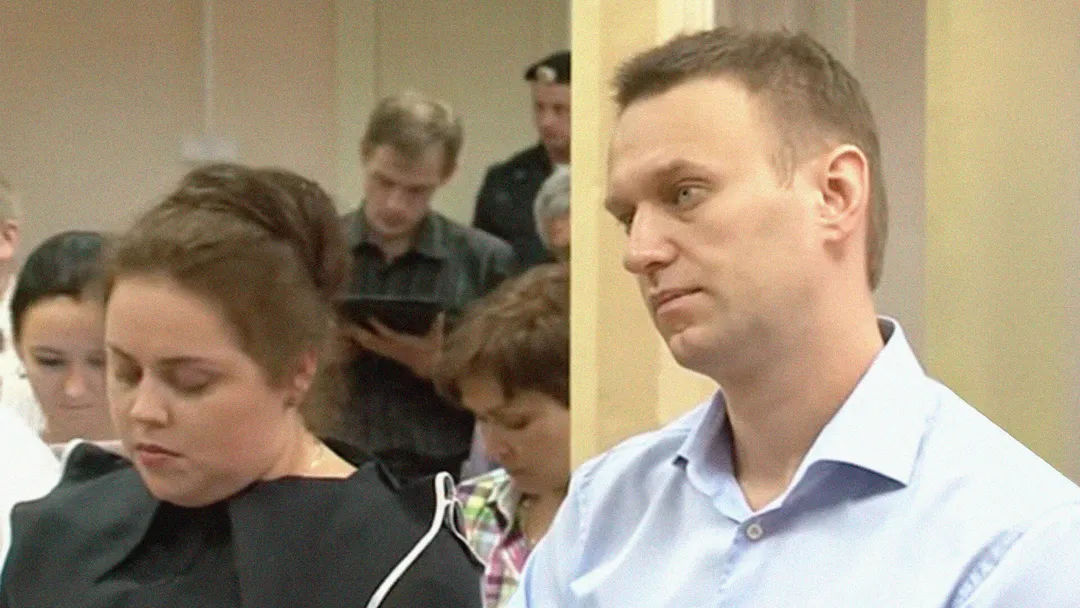
Thank you.
Please be seated.
The court session is open to the public.
The court continues hearing the case against
Navalny and Ofitserov. At the court session,
the parties have appeared; the composition of the court has not
changed.
So, at the previous court session
we concluded with the defense filing
a motion to have
the evidence declared inadmissible. At the present
court session, the position of
the prosecution on the filed
motion will be heard, after which the court will retire to the deliberation
room and make a decision. Please.
Your Honor, having studied the defense motion of
May 21, 2013, seeking to have
the evidence in the case declared inadmissible,
we believe it is not subject to
being granted for the following reasons.
The order on the submission of
the Results of Operational-Search
activities to the investigator, dated June 13, 2011,
and the report of the operative officer on
the execution of the investigator's instruction for
conducting operational-search measures
were prepared in accordance with the requirements
of Federal Law of August 12,
1995, No. 144-FZ, On Operational-Search Activities,
and in
accordance with paragraph 10 of the
Instruction on the Procedure for Submitting
the Results of Operational-Search
Activities to an inquiry officer, body of inquiry,
investigator, prosecutor, or court. Contrary to
the arguments set out in the defense motion,
the order on the submission of
the results of operational-search
activities dated June 13, 2011, and
the report of the operative officer of the FSB of Russia
for Kirov Region, Mashkovtsev,
were submitted on the basis of the relevant
instruction of the investigator of the Investigative
Directorate of the Investigative Committee for
Kirov Region, Sosnin. The said
documents contain all the necessary
details, including a registration
number and the date of issuance,
as well as information about the established
circumstances,
are signed by authorized officials
and constitute reports on
the results of operational-search
activities. Responses were received from
the mobile operators MTS, Kirov branch,
the Ural branch of MegaFon, as well
as the Kirov branch of Intel(?). Contrary to
the arguments stated in the motion, they also
comply with the form established by law
and were obtained pursuant to requests
sent by the investigator on the basis of the
decision of the Leninsky District Court of the city of
Kirov dated June 21, 2011. The attachments examined
at the court session to
the responses of the said communications operators,
in the form of CD discs, have
individual identifying features in the form of
specific numbers, are properly
packaged, supplied with explanatory
notes and the seals of the relevant
operators. The said information was reflected
in the record of their inspection
by the investigator dated August 2, 2011,
conducted in the presence of attesting witnesses. During
the inspection, it was established that
the integrity of the envelopes containing the CDs
containing information on the telephone
connections of subscribers Navalny
and Ofitserov, including those received
from VympelCom, had not been broken; the seals
were intact and showed no damage, that is,
they complied with the requirements of Part 3 of
Article 186.1
of the Criminal Procedure Code
of the Russian Federation. During the inspection and
upon its completion, no comments or statements from
the participating persons were made. Thus,
we believe that
it is necessary to deny
the defense motion of May 21, 2013
to have the evidence in the case
declared inadmissible, and to continue consideration of
the criminal case on the merits. I ask that the written
objection to the said motion be
added to the materials of the criminal case.
Pet
>> I fully support Prosecutor Bogdanov's position
and that of my colleague; our position
here is unified.
>> The court is retiring for deliberation to render a decision
on the motion filed. The decision will be
announced today at 9:25.
>> Ruling of May 29, 2013, city of
Kirov. The Leninsky District Court of the city of
Kirov, presided over by Judge Blinov,
with the participation of the state prosecutors,
the head of the department of state
prosecution and appeals of the Prosecutor's Office
of Kirov Region, Bogdanov, and prosecutor
of the department of state prosecution
and appeals of the Prosecutor's Office of Kirov Region,
Cheremesinov; defendant Navalny,
his defense counsel, attorneys Mikhailova and Kobzov;
defendant Ofitserov and his defense counsel,
attorneys Dani and Davydova; with secretary
Koshinov, examined in an open court session
the materials of the criminal case against
Alexei Navalny
Anatolyevich, accused of committing
an offense предусмотренное by Part 3 of
Article 33 and Part 4 of
Article 160 of the Criminal Code of the Russian Federation; Pyotr Yuriyevich Ofitserov,
accused of committing an offense
provided for by Part 5 of Article 33
and Part 4 of Article 160 of the Criminal Code of the Russian Federation;
has established that during the court session
defense counsel for the defendants, Mikhailova, Kobzov,
and Davydova filed a motion to have
inadmissible evidence
the order on the submission of the results
of operational-search activity to the investigator dated June 13, 2011
the report of the senior operative officer of the Economic Security Directorate of the Federal Security Service Directorate
for Kirov Region, Senior Lieutenant
Mashkovtsev, dated June 13, 2011, and the request for
the provision of information on subscriber
numbers belonging to Navalny, to the officer
of VOMTS, the reply from OJSC MTS, and the request for
the provision of information on subscriber
numbers belonging to Navalny
to the officer at the Kirov branch of MegaFon
the MegaFon reply, the request for the provision of
information on subscriber numbers,
belonging to Navalny, to the officer
the VimpelCom reply, the VimpelCom response, and the record
of the inspection of items and documents dated August 2,
2011, on the grounds that
the order on the submission of
the results of operational-search activity and the report of June 13, 2011
were obtained in violation of the federal
law on operational-search
activity and the instruction on the procedure for
submission
of the results of operational-search
activity. Accordingly, the evidence obtained
on the basis of these documents, and the other
evidence set out, are
inadmissible. In addition, the defense lawyers
point out that the responses of the mobile
operators do not contain all
the necessary data, or contain
contradictory information, which raises
doubts as to their reliability. The defendants
supported the motion filed.
The state prosecutors objected:
"They opposed granting the motions filed,
stating that there had been no violation
of the requirements of the law in the collection and
preservation of evidence. Having heard
the parties’ views and examined the materials
of the criminal case relating to the motion
filed, the court finds that the motion is not
subject to being granted."
The order on the submission of the results
of operational-search activity to the investigator dated June 13, 2011, and
the report of the authorized officer on the execution
of the investigator’s instruction to carry out operational-search measures
were drawn up in accordance with the requirements
of Federal Law No. 144-FZ of
August 12, 1995, on
operational-search activity, and paragraph
10 of the Instruction on the Procedure for
Submitting the Results of Operational-Search Activity
to an inquirer, an inquiry body, an investigator,
a prosecutor, or a court, approved by the joint order of
the Ministry of Internal Affairs of Russia, the FSB of Russia, the Federal Protective Service of Russia, the Federal Customs Service of Russia,
the Foreign Intelligence Service of Russia, the Federal Penitentiary Service of Russia, the Federal Drug Control Service of Russia,
and the Ministry of Defense of Russia, dated April 17,
2007, No.
368/15/164/481/32/184/97/
147. Contrary to the arguments of the defense,
the order on the submission of the results
of operational-search activity dated June 13, 2011, and the report
of the senior operative officer of the FSB of Russia for
Kirov Region, Mashkovtsev, dated June 13,
2011, were submitted on the basis of
the relevant instruction of the investigator
of the Investigative Committee for Kirov Region, Sosnin
The said documents contain the necessary
details, including the registration
number, the date of issuance, and information on
the established
circumstances, and, being signed
by authorized officials,
constitute reports on the results of
operational-search activity.
The requirements set out in the said federal
law and the instruction as to form and content
and the procedure for submitting the results of
operational-search activity to the investigator
were complied with. There are no obstacles to verifying
the reliability of the information set out in the said
materials. The responses
were received from the mobile operators
MTS, the Kirov branch of the Ural
branch of OJSC MegaFon, and the Kirov branch
of OJSC VimpelCom. Contrary to the arguments set out in the motion,
they also comply
with the requirements established by Part
3 of Article 186.1 of the Criminal Procedure Code of the Russian Federation and were
obtained pursuant to the investigator’s requests
made within his competence
and sent on the basis of the rulings of
the Leninsky District Court of the city of Kirov
dated June 21, 2011. The responses contain
the necessary information allowing
the submitted
information to be identified and contain no contradictions
The attachments to the responses of the said
mobile operators in the form of CD discs
have identifying features in
the form of specific numbers, were properly
packaged and supplied
with explanatory notes and seals
of the relevant operators, which was reflected
in the record of their inspection
by the investigator on August 2, 2011,
conducted with attesting witnesses in full
compliance with the requirements of Part 5
of Article 186.1 of the Criminal Procedure Code of the Russian Federation. During
the inspection, it was established that
the integrity of the envelopes containing the CD discs
with information on the telephone
connections of the subscribers had not been compromised.
The seals were undamaged, that is,
this complied with the requirements of Article 186
1 of the Criminal Procedure Code. During the inspection and upon its
completion, no comments or statements were made by
the participating persons. Thus,
the documents and evidence
which the defense seeks to have declared inadmissible
fully comply
with the requirements of current
legislation, contain the necessary
details, are duly certified,
and were issued by the proper procedural
officials. There are no grounds for granting
There is no motion. Based on the foregoing,
guided by Article 256 of the Criminal Procedure Code of the Russian Federation,
the court ruled to deny the motion
of defense attorneys Mikhailov and Kobzev
and Davydov to declare inadmissible
as evidence the ruling
on the submission of the results
to the investigator dated June 13, 2011
the report of an operative officer of the FSB Directorate for
the Kirov Region, Senior Lieutenant
Mashkovtsev, dated June 13, 2011; the request for
the provision of information on subscriber
numbers belonging to Navalny; the officer's
mobile communications unit response; the request for
the provision of information on subscriber
numbers belonging to Navalny; the officer's
request to the Kirov branch of MegaFon; the response
from MegaFon; the request for the provision of
information on subscriber numbers
belonging to Navalny; the officers' request to
VimpelCom; the response from VimpelCom; the record
of inspection of items and documents dated August 2
2011. The ruling has been
signed. Please be seated.
>> The consideration of the criminal case continues.
I report that at the court hearing
the previously unexamined
witness Knyazev has appeared.
Witness Baranov did not appear at the court hearing,
and the prosecution
um, stated that it would present
the necessary evidence of proper
notification of Razamassov
regarding the need to appear in court
or that he
has in fact absconded and is on
an international wanted list. Therefore, the court
proposes
to consider the issue of the further order
for the court's examination of the case materials,
please.
In connection with the appearance of the prosecution witness, we
propose changing the previously proposed
order of examining the evidence and
to question witness Knyazev at this hearing
and, of course, resolve the issue regarding the witnesses
Baranov and Raz...
>> Two what?
>> Your opinion?
>> The defense's opinion on changing the order of
the examination
of evidence, please. Defendant
Ofitserov, your opinion?
>> No objection.
>> No objection. Defense attorney Mikhailov?
>> No...
>> Defense attorney Davydov?
>> No objection.
>> Navalny?
>> No objection.
>> Defense attorney?
>> Defense attorney Kobelev: no objection.
The court grants the change in order and
invites witness
Knyazev into the courtroom. What?
Good afternoon.
>> Good afternoon. Please state your name.
>> Vladimir Matveyevich Knyazev.
>> When and where were you born?
>> June 30, 1968, in the town of Belaya Kholunitsa
in Kirov Region, Russia.
>> What is your nationality/ethnicity?
>> Russian. Citizenship
of Russia.
>> Russia.
>> Your education?
>> Higher education.
>> Marital status?
>> Married.
>> Where do you work, and in what position?
>> Uh, I work at UK Leskhoz as the head
of the Belaya Kholunitsa division.
>> At what address are you registered,
and where do you live?
>> Belaya Kholunitsa, Sovetskaya Street,
67.
>> And you are registered and reside there?
>> Yes.
>> You have been called to court to be questioned as
a witness. I am explaining to you your
civic duty and obligation to tell everything
you know about the case. At the same time,
I explain that you have the right to refuse
to testify against yourself,
your spouse, or other close
relatives. If you agree to testify,
I warn you that your testimony may
be used as evidence
in the case, including
in the event of your subsequent
retraction of that testimony. You also have the right
to testify in your native language or
a language you speak, to use the assistance
of an interpreter, to challenge
that interpreter, to make motions and
to file complaints about the actions,
inaction, or decisions of the court, to appear for
questioning with a lawyer, and to request
the application of security measures if
necessary. In addition, I explain to you the
liability предусмотренную
by the Criminal Code for unjustified
refusal to testify and for giving
knowingly false testimony.
Liability for this is provided for
by Articles 308 and 307 of the Russian
Federation. Are your rights and
liability clear to you?
>> Yes,
>> yes, clear. Please sign to acknowledge this.
Please approach the clerk.
>> Tell me, do you have any grounds
for refusing to testify?
>> No.
>> Please answer the prosecutor's questions first,
then the defense's.
>> Vladimir Matveyevich, please explain,
>> whether you know the defendants Ofitserov and
...va?
Well, the only thing is that I’ve heard of
them, but I don’t know them personally.
>> I see. Do you currently bear any
hostility toward them?
>> No.
>> Please explain where you worked in 2009
...?
>> In 2009, I worked
at the Belaya Kholunitsa timber enterprise branch of KOGUP
Kirovles.
>> Who was your immediate supervisor?
>> One moment. In what capacity did you work there
?
>> Director
Vyacheslav Nikolaevich Opolev.
Please explain. In 2009, was the managed
enterprise, the Belaya Kholunitsa branch,
vested with the right
to independently search for counterparties for
selling its forestry products, and was it granted
the authority to set prices for
the forestry products it sold
by product range?
The right to search for
counterparties was granted, but all contracts
were concluded subject to approval by the head
office in Kirov. Prices were approved
by Vyacheslav Nikolaevich Opolev.
How exactly was the approval of
prices carried out? Could you explain in more detail?
>> Were there minimum or
maximum prices?
>> Minimum prices did exist,
naturally, I mean, let’s say
they were approved as minimums,
>> that is, minimum prices were approved annually.
Those minimum prices, yes. But in any
case, when preparing
to conclude a contract, whatever the price may have been,
that is, regardless of what it was, it
still had to be approved at the
head office,
that is, in the commercial and economic
departments.
>> Are you familiar with the company Vyatka Forest
Company LLC?
>> Yes.
>> Where did you first hear about it?
>> Well, probably at the head office.
>> About the fact that contracts had been concluded with this
company. The head office of
KOGUP Kirovles.
>> Yes, KOGUP Kirovles.
>> When and under what circumstances did this
take place, as far as you remember,
and were any meetings held in connection with it?
Uh,
>> well, I can’t say specifically. That is,
there were some meetings, uh,
at which, perhaps, the name of this
company was mentioned.
That’s all. Well, I probably can’t say
anything more specific.
>> Mm-hmm. Did your enterprise directly
interact with that company?
Uh
>> Our enterprise did not interact with it.
Uh, as far as I remember, we had
only one single
delivery
of poles; that is, there was
an order to prepare this product
in a small volume. There, well, if memory serves,
about 30 cubic meters.
Who placed the order?
From KOGUP Kirovles.
>> So in any case, we received, as it were,
instructions from KOGUP Kirovles.
>> So am I correct in understanding that
KOGUP Kirovles and the Vyatka Forest Company
had some kind of contractual relationship?
>> Uh, I can’t confirm that, because I received
the instructions
from Vyacheslav Nikolaevich Opolev of
KOGUP Kirovles.
>> And specifically, what did Opolev determine regarding the shipment?
The assortment, volume, price,
or something else? The commercial department provided us
with a specification according to which
we had both the specification and the deadlines by
which the products had to be prepared.
We fulfilled it.
That’s all.
>> This type of specification—was it
provided in relation to some
specific enterprise, or was it
drawn up for some specific
period of time,
that is, for a month, for a week,
specifically with respect to that
counterparty? Uh, since we had
just this one single delivery of this
material, I can’t really go any further
in somehow
explaining it, so to speak. That is, we
specifically received it,
we were told that it had to be completed by
a certain deadline. Right now
I can’t say what it was anymore either. We
completed it, the shipment went out, and that was it.
for the delivered products. As far as you
know, did the forest company pay
Kirovles for it?
Well, apparently it did pay. As far as I can remember,
I have the impression that
payment was made. That is,
>> on time or late?
>> I can’t say anything about that.
>> Apart from your enterprise, were shipments to
VLC made by any other branches?
As far as I know,
>> I can’t say anything about that either.
>> You explained that poles were shipped
to VLC. Had the enterprise previously shipped this kind of
product to any
counterparties?
>> No.
The Ukholokholunitsky forestry enterprise had
the necessary production
capacity to manufacture
enough?
>> There was no need to add any
production capacity. That is, well, the actual
manufacturing process required additional
operations. That is, there was preparation, there was
sorting by diameter, and preparation there
it was necessary to debark
those logs. Right. But it did not require any
additional production facilities
of that kind.
>> I see. How was
the delivery of the poles to the final
recipient handled? Were they picked up?
>> I do not know how, so to speak, the loading
onto the Euro truck took place, and that is all.
That is, we issued the waybills from the town of
Belokhnits. Beloynits.
>> The transport belonged to which organization?
Who provided it?
>> As for the questions you were unable
to answer—what is the reason? Is it due to
the passage of time?
Well, probably because of how long ago the events were,
basically, so to speak, once we received
the instruction to ship, our
forestry enterprise fulfilled the requirements of KOGUP
Kirovles.
So, at that time, well,
we were probably given information
about which vehicle was being loaded, how
we were to ship it, and how to prepare the documents.
That is, we did all of that.
>> I see. Did the director of the Vyatka Forest
Company ever introduce himself to you
at any point?
>> No.
So you do not know who it was?
>> Well, I heard it was Ofitserov.
>> And in general, do you know anything about the circumstances of concluding
the contract with VLK?
>> No.
>> Have you been questioned in connection with this criminal
case?
Apparently not, because, well,
so to speak
>> No, or not
>> No.
>> Your Honor, given that the list
of essentially clarifying questions, including
those for the prosecution witness,
has been exhausted, there are a number
of contradictions between the testimony he gave
in this court hearing and
the testimony the witness
gave during the preliminary
investigation, specifically regarding
the circumstances of his acquaintance,
his initial acquaintance with the timber company,
that is, the circumstances of the meeting held
at KOGUP Kirovles, as well as
the circumstances of payment for
the timber products supplied.
Therefore, we move for the reading into the record
of his testimony from the preliminary
investigation stage. This is volume twenty-four,
pages 114–117 of the case file.
And, in addition, it is necessary to present
the interview record to the witness himself for review,
since he claims that
in the context of this case he was not
questioned.
114, 100, 117
in the part concerning the excerpts about the meeting and
the payments
the opinion of the state
the defense's objection has been stated further
proved.
>> Who will begin on your side?
Our position has not changed; it
remains the same. We consider
it inadmissible to read out the witness's testimony.
First, until
the questioning of the witness by both
parties has been completed, because the defense also
has a number of questions for the witness, a number
of questions for the witness. And, uh, until the questioning
has been carried out, the testimony cannot
be read out. Moreover, as for the
contradictions the prosecution
is referring to, I have the testimony of this
witness in front of me. I do not see any
major contradictions that could not
be resolved through his
questioning. So in that respect as well,
reading out the testimony is also
inappropriate.
The defendant Ofitserov's position: I think the
prosecution simply needs to ask more
questions, formulate them more precisely,
because there are no major
contradictions. I think the witnesses will answer
all the questions.
The defendant's position.
>> I support defense counsel
Davydova's objection, and I also have before me
the interview record. And I can see that just as
at the time of questioning the witness remembered little,
so too now; and what he does
remember is not at all in
contradiction with what he is saying
now. Overall, I do not object to
the reading out of his written testimony, but
I ask that this be done after our questioning.
Thank you.
Yes, I support that and believe that even before
the testimony is read out, if such a decision is made,
it is necessary to determine which testimony
will be read out. Especially if
the witness says that he did not give any
testimony. These circumstances must be
clarified.
Clearly, I support the defense
the defense.
>> The court has heard the parties.
The court has received a motion from the prosecution.
A motion to read out the witness's testimony
given during the preliminary investigation
due to significant
contradictions. Witness, you are being shown
the interview record on pages
114–117 of the case file. You have just stated that
you did give some testimony. Please
look and tell us whether these are your signatures
on the record. The signature is mine.
>> So were you questioned or not?
I was questioned once, but I don't know.
Right now I simply can't say
which case it was in. That is,
>> you don't remember which case it was, but this
record,
>> well, it does bear my signature.
>> Look at the other pages
>> as well
the signatures
>> are yours.
If I may, a question to the witness specifically about
the record?
>> About the record, please. Tell us,
please, witness, do you remember where
the FSB building is?
>> So, do you remember or not?
>> One moment. Which building?
>> On Lenin Street.
>> And in what city?
>> The city of Kirov.
>> Can you give an example, yes?
>> Well, only what I have just seen
in the record. It's from 2011.
To clarify the question: you were questioned once,
questioned,
>> yes,
>> and at the FSB office on Lenin Street,
correct?
>> Well, yes, if I'm not mistaken.
Well,
the prosecution will read it out.
Here in the record it says that
the witness was questioned
>> and on these issues as well, another
>> after the testimony given by the witness is read out,
during the preliminary investigation, there will be
questions. Volume twenty-four,
excuse me, case file pages 114
to 117, record of the questioning of witness Gennady
Vladimir Matveyevich, dated June 28, 2011,
questioned in the town of Belaya
Kholunitsa by an investigator of the Slobodskoy
Interdistrict Investigative Department
of the Investigative Directorate of the Investigative
Committee for Kirov Region, Captain of Justice
Kras... that is, was questioned in
office No. 309 during the period from
10:00 a.m. to 12:00 p.m.
...with significant...
contradictions
of the case file
116
Investigator's question:
Did the supplies from VLK generate income for the forestry enterprise?
If not, for what reasons? Answer
of the witness: The contract for the supply of poles, as well
as other products supplied by
Vyatka Timber Company, was supposed to
bring income to the Belokholunitsky
forestry enterprise. However, LLC "Vyatka Timber
Company" did not fully pay for the supplied
products. At present
I cannot state the exact amount of the debt
at this time, but I am ready to provide
a separate document on the amount of the debt,"
owed by LLC "Vyatka Timber
Company." Your Honor, the question from the other side
was whether the contract
with VLK and VLK's supplies brought any
profit to this forestry enterprise, which
the witness headed. The question was of a different
kind. So, perhaps you should speak one at a time
after all. And
>> if the prosecution is in fact
speaking of some contradictions, then
presumably, besides whether
VLK paid for the supplied products,
the questions should have been formulated
as they are set out in the record. And
it turns out that the prosecution
does not even bother to properly
formulate the question. Yet you
grant the motion to read out
this testimony. I ask you to take note of
the objection, please.
>> Your Honor, we object, because
it was asked, and among other things it was stated
in the motion to read it out, in connection with
a contradiction specifically regarding the amount
of the debt, because the witness, as we
heard from the testimony that was read out, explained
that for the supplied products there was
a debt owed by VK to the forestry enterprise, including
to the forestry enterprise. Whereas during
this questioning he explained that such
debt did not exist. I have heard the parties.
Indeed, such a question was asked
to the investigator, including as to whether
payment had been made by VLK, and
also whether there had been any delay, whether
payment had been made on time, whether there was
any debt; there are contradictions,
the testimony is to be read out.
>> Also page 117 of the case file, in the part concerning
the meeting that was held. The question was
from the investigator: were meetings held
of forestry enterprise directors regarding the work of LLC
Vyatka Timber Company? Witness's answer:
When one meeting was held, at it
I and the other forestry enterprise directors were
introduced to the director of LLC Vyatka Timber
Company, Ofitserov. It was also announced
that LLC VLK would be the new partner
of KOGUP (a regional state-owned enterprise), with which
contracts for the supply of products had already been concluded. Any
specific issues were not
discussed at the meeting.
>> Vladimir Nikolaevich, please explain.
>> One moment. There was another inconsistency. You
asked whether you were aware of
whether a contract had been concluded between the KSUE
and VLK. That was also addressed. Was testimony
given on that?
>> There is information on page
116 of the case file.
In 2009, the Belaya Kholunitsa forestry enterprise
supplied products to
Vyazka Timber Company. In particular, under
centralized supply contract
No. 1/29, concluded between KGUP
Kirovles and Vyazka Timber Company.
On August 5, 2009, there was a delivery of
poles. There were also two deliveries of
spruce-fir pulpwood
on June 26, 2009, and July 4,
2009. However, there are no supply contracts for this
product at the Belaya Kholunitsa forestry enterprise
on file. Under supply contract
1/2009, poles were supplied in the volume of
29.2
cubic meters for a total of 68,643
rubles and 50 kopecks. The assortment, price,
and delivery сроки were established by
KGUP Kirovles. The poles were manufactured in
the town of Belaya Kholunitsa. And the shipment of
the poles is not reflected.
Where were the poles manufactured, and how were they
delivered? If there is no inconsistency,
then what are we talking about?
>> Shall we read out the same thing five times,
to remind the witness?
>> The witness has answered. All right, we are finished
with that. Please ask questions regarding the
inconsistency.
>> Vladimir Alexeyevich, please explain,
please, based on your interview,
the place where it was conducted was the town of
Belaya Kholunitsa. And you were questioned by
an investigator, apparently an investigator
from the Investigative Committee,
is that correct?
Well, apparently yes, that is,
I suppose so.
>> Just a question from the defense. You answered that
the questioning took place in the FSB building in
the Kirov Region on Lenin Street. Well,
>> Are you perhaps confusing the circumstances and the interviews?
>> Well, that is why I initially
answered no, because what stayed in my memory
was one particular interview. Most likely,
that may have been in connection with some
other matter, well, the questioning was done differently,
so,
>> So, in other words, you confirm that
you were indeed questioned specifically
in Belaya Kholunitsa by an investigator of the
regional Investigative Committee,
>> correct?
>> Uh, based on the testimony that was read out, the
inconsistencies because of which it was
read out—you confirm that in
fact that is how it was. That is,
your answers to the investigator’s questions were
more truthful and accurate than your present answers in
this court hearing. I remind you, you were questioned
in 2011.
Well, basically, uh, what
I said today, I also
did not really see any difference from that
testimony; it was just a little more
detailed there, yes. That is, I remember
attending, for example, a meeting. I do not
remember—you asked whether the officer was
introduced to me personally, as it were,
that is, he was not introduced to me personally.
That is, at the meeting they may have
mentioned it.
That is entirely possible. Well, that was 4 years
ago.
>> As for the settlement with VLK,
>> As for the settlement with VLK, uh, regarding
the products delivered, there was
a debt; it did arise,
let us say, a current operating debt,
but I cannot say for certain now
whether it remained outstanding for the entire
period or whether it was settled.
Regarding the circumstances of concluding the contract
between Probov Rapres and, in particular, regarding
the interview, we clearly stated the number of this
contract: 01/29.
It is being shown to you.
>> Well then, apparently this contract
must have been available at the time.
>> That is, according to the plea agreement
thank you.
Does the prosecution have any questions, Your
Honor?
>> No, Your Honor. Does the party have any
further questions?
Please tell us, witness, whether the
price for the timber products that
your forestry enterprise supplied to LK, in particular
the price for those timber products,
was in line with the market average?
Uh,
>> Given that we had only one
one-time delivery of this product and,
let us say, in the preceding period and
in the subsequent periods we had no similar contracts
and no similar deliveries.
I cannot economically assess it now.
That is, at that time
there were no losses
from carrying out this particular
delivery, but as to how
it was, so to speak,
justified by the market, I cannot speak
to that now.
>> So you cannot say anything about the prices?
?
>> No.
Please tell us, witness, after all,
how many times were you questioned as a
witness specifically regarding those circumstances,
which you are now explaining to the court
and to the parties in these proceedings?
>> Well, it turns out there was only one.
>> Well, then please decide after all where this
where this only interview took place: in
your, uh, town of Belaya Kholunitsa or, after all,
in the city of Kirov on Lenin Street?
Well, after they showed me
the documents, it reminded me, basically, as it were,
yes, the conversation in, well, let's say, the questioning
took place in Belaya Kholunitsa.
And
>> Please tell us, after
your interview was conducted, were you given
the record to read?
>> Yes, I signed it.
>> Mm-hmm. Did you read the introductory part of the record,
where the place of the interview is indicated?
>> Well, I don't remember now.
Tell me, is it possible that you did not pay attention
to that part of the record and simply did not
read it?
>> The part about where the interview was conducted,
>> yes? The place, time,
date?
>> Well, I don't think so. Well, I mean, no,
naturally I paid attention to it.
>> Please tell us, can you recall
what volume of timber products was supplied
to VLK?
Well, as far as I remember,
I only remember one, this one
delivery of these poles
from our forestry enterprise,
I don't remember. That is, just now there was talk
about the delivery of pulpwood.
I can't really say that with
certainty, because I simply do not
remember the details,
And regarding this delivery you are
talking about, did your forestry enterprise bear
the transportation costs?
Again, I can't say for certain, but
I do not recall that. That is,
a truck would arrive for loading, so
we bore the costs of loading
that truck itself. As for transportation costs, I
can't say right now. That would require
checking the documents.
Your Honor, I have a motion in connection with
the witness's testimony.
>> Due to contradictions in the witness's testimony
given in the present court hearing
and during
the preliminary investigation, I ask
that the record of the witness interview in volume
24, pages 114-117, specifically on page
116 of the case file, and the part of the interview record
concerning transportation costs and
market prices for the supplied
timber products, be read into the record,
since, in my view, these parts contain
a material contradiction.
No objection.
I support defense counsel.
>> I support it.
>> Defense counsel's position.
>> I support it.
>> Defense counsel Pozdnyakov's position.
>> Defense counsel Khobil's position.
>> I support it.
>> The prosecution's position.
>> I leave it to the court's discretion.
Granted.
>> The defense's motion.
The record of the witness interview is being read out
from the preliminary investigation, on
page 116 of the case file.
Which paragraph?
>> I'll tell you in a moment.
Investigator's question: Did the price for the supply of
products to VMLK correspond to the average
market price? Witness's answer.
Go on.
One moment.
Ah, and the paragraph begins: 'Under supply contract
No. 129.'
Ah, poles were supplied in a volume of 29
m³. The last sentence of that
paragraph.
To the investigator's question whether the price of the supplied goods corresponded
— Your Honor, there are
two passages I ask to be read out here.
So, the first is the question
about the average market price, let's do that,
>> and the next one concerns transportation
costs. The paragraph begins: 'Under supply contract
No. 1/29.'
Thank you.
Record of the interview of witness Knyazev
Vladimir Matveyevich, volume 24, pages 114-117.
A portion of the testimony dated June 28, 2011, is being read out
from page 116 of the case file.
The poles were manufactured in the town of Belaya
Kholunitsa. The poles were also shipped
from the town of Belaya Kholunitsa. Delivery
was carried out either by transport belonging to LLC
Vyatka Timber Company or by transport of
Kogubkerovles. Information about this should
be contained in the waybills. The Belaya Kholunitsa
forestry enterprise did not bear the transportation costs.
Next, the investigator's question.
Did the price for the products supplied to
LLC VLK correspond to the average market price? Answer
of the witness: As for the supply of poles, I
cannot answer that question, because
I do not know the market value of this
product. As for the supply of pulpwood,
the price of the supplied products was not
lower than the minimum price for
timber products that had been approved
for 2009.
Please tell us, witness,
the testimony of yours that I have just read out,
your testimony,
in the part concerning the prices of timber products,
and in the part concerning transportation
costs,
they correspond to the facts.
Well, I think I’ve basically already answered this question,
more or less, by saying that the rates
for the poles, well, you essentially stated them, that is,
it’s practically the same thing.
>> No, in the testimony you gave during
the pre-trial investigation, you said that
this price corresponded to the minimum, that is,
it was not lower than—was lower than the average market, I
mean to clarify, the price was not lower than, uh,
the established minimum.
Well, as far as I understood, this was
said with regard to the loading balance,
not the poles, but specifically the balance,
>> Yes, I was probably proceeding
precisely from those prices that had been
set somehow.
>> Regarding transportation costs,
does your testimony correspond
to the facts? Uh, just as I said,
I don’t remember exactly now, but
the testimony, apparently, was then
based on the documents presented, that is,
they were on hand, accordingly, so,
they do correspond, well, in a sense
>> more precise information about the testimony.
>> No further questions.
Ah, good afternoon. Please tell me, what
are poles? Uh, please explain in more detail,
because the question arises, well, what
exactly poles are, more specifically, that is,
what kind of product is this? To install
cables. Uh,
we received a specification, and there,
there were
certain lengths, if memory serves me right,
I think they were 8–9
>> uh, and 11 meters—something like those lengths.
Right. Then also, necessarily, by the top-end
and butt-end parts, the required diameters
had to be sorted, that is,
so that they matched the specification, so to speak. And,
uh, this product had to be
debarked, that is, the bark had to be removed and
any protruding
bits cut off. And please tell me, do I understand correctly
that in fact
poles, yes, are almost no different
from sawlog blanks,
except for the length and the fact that the bark is not removed
there. But otherwise, basically, it’s the same
log
selected to specification.
Basically, yes. As I already said,
it was necessary here to carry out
several additional operations, that is,
for an ordinary log, corresponding sorting
additional
so
>> by diameters, by lengths, and to carry out
the work of removing the bark.
>> Mm-hmm. And when you supplied sawlogs, did you
never sort them to order?
>> By diameter? Well, apparently,
there were individual orders, but in general,
that’s how we tried to work. They took
all volumes from us. So, do I understand correctly
that poles actually differ
by two operations. The first operation is
uh,
>> sorting by length, and the second, as it were,
well, is bark removal,
>> right?
>> So that’s all
>> the main things, yes.
>> And was the bark removed with special tools, or just there
with an axe? Uh,
>> at that time it was done manually.
>> Well, with axes, yes. Yes, and, well,
they used chainsaws
with certain attachments in order
to make the work easier.
>> I see. And do you know where these
poles were shipped?
>> Well, was this a Russian order or
for abroad?
>> Uh, I think it was for export, but I don’t have exact
information.
>> Mm-hmm. All right. And a question about prices. Where did your
minimum prices come from?
The minimum prices were approved
by General Director Upol Vyacheslav
Nikolaevich, based on market prices
in the given region.
>> And where did they come from? That is, was there some kind of
algorithm? That is, did you
send calculated prices to Kagub, and if
they were minimum, they would either approve them for you
or not approve them, correct?
Not exactly like that. That is,
there was, so to speak, a minimum market
price.
>> And it was this same minimum price that we, so to speak,
agreed on. If we had any,
let’s say, deviations from the prices, then
we had to, let’s put it this way,
justify them, but only in those
cases. Were there ever cases when, so to speak,
you were told that this price, for this kind of
product, needed to be made lower, yes, because
of, uh—or on the contrary, that he would raise the price
for you
>> above your minimum?
>> No. Uh, as for a lower price,
>> that never happened.
>> So Kagub accepted your recommended price
or even raised it.
>> Yes.
>> Mm-hmm. All right. And one more question: you
said that what the prosecution read out showed
that the contract with Vyka was
beneficial for the forestry enterprise, but if all
the money for your products had gone to your
account, correct? Do you confirm
the testimony that was read out by the prosecution?
>> Well, I didn’t say it that specifically. I
was speaking specifically about this product,
the one that was supplied, which in these
the poles, that, uh, it was not
below cost, so it
was produced at a profit.
>> When they read it out, they believed that
these deliveries would have been profitable if
the money had come in.
>> Well, that is exactly what was meant, that
we operated, uh, profitably, uh,
the issue of payment remained, perhaps
there was some delay in payment. Well, I
mean that, well,
>> Well, that is, if the work had continued
then you would have received, well, a profit,
correct?
>> Theoretically, yes?
>> Mm-hmm. All right. Now a question. How
could you monitor the receipt of money from
VLK into KAGUP's account?
>> Personally, I could not. So in that way you could not
know for certain, yes, whether
money for your products was coming into
KAGUP's account.
>> Well, as of today, yes. That is,
>> But at that time could you know
At that time, all of our
reconciliations of settlements were carried out by the parent enterprise
with KAGUP, and our accounting department always
could.
>> Could you know for certain that the money for
your products had arrived in KAGUP's account? Not
that it came to you from KAGUP, but that VLK sent it
to KAGUP specifically for your poles and
then KAGUP sent it to you, or did you simply know all this
from KAGUP's accountant?
>> No, that was according to our accountant.
Belo
>> And where did he get the information?
>> He was already working with the parent enterprise.
>> Well, from KAGUP's accountant, because he
did not have access.
>> From the reconciliation statements
>> He did not have access to the systems,
correct?
>> Probably, yes?
So if I say that you could not know for certain
for which products
the money was coming in, and when, and in what
amount, as to KAGUP, then that
would be true,
>> yes?
>> Mm-hmm. That's all, thank you.
>> You're welcome,
>> Lazir Matveyevich, let us still
clarify,
>> who questioned you and when. Are you often
questioned by the FSB (Federal Security Service) or the Investigative
Committee?
>> No.
the regional FSB office, by FSB officers
of the FSB. Then it turned out that you were
questioned in the town of Belaya Kholunitsa. Well,
it is hard to confuse, right, the FSB in Kirov and
the police or the Investigative Committee in Belaya
Kholunitsa. How many times were you questioned?
Well,
from, from what follows from my testimony
today, that I
simply forgot the moment of the
questioning in Belaya Kholunitsa, it turns out that
there were two. That is, there was questioning in Kirov,
but, as I say, I attributed it to this
case, or rather, did not attribute it
at first I said, as it were, that no, I had not been
questioned, then
I decided that that questioning was connected with
your case.
So it turns out it was twice.
>> So you were questioned twice. Once
at the FSB in Kirov, once at the
Investigative Committee in Belaya Kholunitsa. You
simply forgot the second one. Please tell us,
at the FSB, were you asked about this
case?
As far as I am now trying
to somehow recall those past times,
most likely, probably, it
concerned a somewhat different case.
>> Was the name Navalny mentioned there?
>> Well, probably yes. The name Navalny
was mentioned.
>> Although I also cannot say that for certain now.
>> Please tell us, and the officers of the
FSB
>> No, no, I beg your pardon. No.
Not the name Navalny.
I am recalling there, well, something completely
different was at issue.
>> Vladimir Matveyevich, if the FSB officers
made you sign a non-disclosure undertaking or something, you
can tell the court about it, and it
will simply drop the question.
>> No, no, nothing like that happened.
>> So, to be clear, at the FSB you were not forced
to give testimony?
>> No.
And you were not pressured, not asked to give
testimony specifically about me.
>> No.
>> They did not ask you to keep secret the very fact of the
questioning?
>> No.
>> So this FSB questioning, as you now recall it,
was not related to this case
after all.
>> Yes.
>> All right. And please tell us, in response to the prosecution's
question you said that you had never
seen me. Do you confirm that
statement?
>> Yes.
>> Have you ever spoken with me
by phone?
No.
>> Were there any instances where perhaps someone
called you or came to see you,
claiming to be some representative of mine
or bringing some sort of message like that,
saying they were acting on my behalf?
>> No.
>> At that meeting you mentioned,
with the forestry enterprise directors, perhaps
that was where I met you, or
where I spoke, or where you saw me somewhere?
>> I don't remember that, I can't say.
>> Ah, all right. Please tell me,
after all, what is a centralized
contract? You mentioned it in response
to the prosecutor's question, and in your testimony
you said there are your own contracts,
and then there are certain centralized
contracts. What is a centralized
contract?
Well, basically, that referred
to those contracts that
were concluded by the commercial department of Kirovles
directly, and
it distributed the volumes among all branches.
>> So am I right in understanding that there was
a practice at Kirovles whereby
the central head office
of Kirovles, through its commercial department,
would conclude contracts with various
companies, and then simply send the specifications
out to the forestry enterprises, correct?
Well yes, probably like that.
>> So this was normal practice,
or was there something extraordinary about it?
>> No, it was normal.
>> This was standard practice, when
Kirovles would conclude a contract and
send the specifications out to the forestry enterprises.
All right. And you mentioned that, similarly,
as a centralized contract, as I understand it,
one of them was the contract with VLK.
Probably, apparently, yes.
And please clarify: you said,
in response to the prosecutor's question, that
the minimum price was determined as
the market price, which you
determine and which is then approved
by Kirovles's central office.
Correct?
>> We don't determine it ourselves; we base it on
the market price in the given region.
>> So you take the market price,
send it to the office, and say: "This is
our minimum price." They then
approve it for you. Correct?
Yes,
>> Did I correctly understand your statement that
you did not sell anything to VLK at a price
below the approved one, as meaning that
everything you sold, you sold at
the market price?
>> The contract was concluded by Kirovles.
The price was determined by Kirovles. I
mean pulpwood now as well—here, you are also
indicating that we sold the pulpwood
at a price higher than the approved
minimum price. That was just read out
a moment ago.
Yes, so that is, well, as you yourself just
said, you classified the contract with VLK
as exactly the same kind of ordinary centralized
contract.
>> Accordingly, we received the specification and
it is entirely possible that there were shipments of
that pulpwood.
>> And as for poles,
you had not supplied them before?
>> No.
>> Am I right in understanding that this was some kind of
new contract that came in? This was
a new product and an increase in sales
volume.
>> Well, for our forestry enterprise, it was
I don't know overall how it was for Kirovles
as a whole. I can't speak to that right now.
I don't even know the volumes that were
supplied for this type of
product. For us, given that this was,
let's say, a one-off shipment and
a minimal one, it did not really affect
anything. It did not have an impact, but nevertheless it was
not some old client; it was a new
product, new poles, new sales, even if
insignificant on the scale of the
forestry enterprise, correct?
>> Well, if you look at it from that angle,
yes.
>> Mm-hmm. And please tell me,
if someone were to
ask you to ship products at a price
below those minimum approved
prices, what would you do?
Someone meaning
>> Well, a customer came to you and said:
"Vladimir Matveyevich, please sell me
pulpwood at a price below
the approved minimum prices."
>> Well, I would refuse.
>> You would refuse?
>> I had no right to sell to them on those terms.
>> And you did not sell anything to anyone at prices
below the approved market prices, including
to VLK,
because otherwise that would have been a violation.
Yes, yes, that would have been a violation.
>> Please tell me, did you ever ship products
to anyone free of charge?
>> No.
>> And did anyone ever approach you with such
requests, asking you to ship products
free of charge?
>> No.
>> And did VLK ask you
to ship products free of charge?
>> No. And was there ever a situation in which
someone from the regional government,
from Kirovles, or anyone
else asked you to ship products
to anyone, specifically to VLK,
free of charge?
>> No,
>> that never happened. Yes.
>> And
And if, hypothetically, there had been a case
of products being shipped free of charge, and if
you had learned about it, what actions
would you have taken?
Well, I can't comment on that.
>> Well, I would have gone to the police or
reported it to head office.
>> Within the scope of work at the branch, so to speak,
that is, I supervised the branch's operations, but
did not interfere in the work, let's say,
of the parent company, Kirov Les.
Therefore,
>> Well, as far as your branch, your
area of responsibility is concerned, there were no free-of-charge
shipments. There were no shipments at a price below
market price, and there were no such requests
either. Am I understanding correctly? Thank you very much.
No further questions.
>> Counsel for Mikhailov.
>> No questions.
>> Counsel for Kobelev?
>> Counsel for Kobelev. A question: please tell us,
during the questioning about the FSB (Federal Security Service),
which you mentioned, was the surname
Olya mentioned?
Yes, probably yes.
>> Are you aware at all of any
criminal cases that were initiated against
your superiors?
Well, not in much detail, but I do know, so to speak,
that there is a criminal case, and I know
that he received a suspended sentence, so to speak.
>> And about other criminal cases?
>> No.
>> No further questions. May we
release the witness? Any objections?
>> From the defense?
>> No objections.
>> No objection.
>> No objection.
>> Thank you.
>> Thank you.
We sent a request to the Main
Investigative Directorate of the Investigative
Committee
of Russia, addressed to Major General of Justice
Alyshev, in which we asked him to report
on the results of operational-search
measures aimed at locating
the prosecution witness Arzamastsev in connection
with the need to question him at the court
hearing on May 28, 2013. Under outgoing
number 2011/4 460 713
12, a reply was received from the Main
Investigative Directorate from the authorized
procedural official, stating that
at present
Arzamastsev's whereabouts cannot
be established. There is no information
that Arzamastsev is being held in a pretrial detention center
or in medical institutions or morgues.
It is also reported that on March 7, 2013,
with respect to Arzamastsev, the Basmanny
District Court of Moscow, in absentia,
ordered a preventive measure in the form of detention
in custody, and that he was placed on
the international wanted list, and the documents are
attached directly
to the information provided. Therefore, I ask
that these materials be added to
the materials of the criminal case.
>> Do you support the motion?
>> Yes, Your Honor.
I have a defense objection regarding the inclusion
of the specified document in the case
materials of the criminal case. Your Honor,
may I speak?
>> All right, please do.
Counsel, you asked to look at the
documents, and you are copying them right away. I am not
copying them; I am just writing down what I
will now say in response to the motion
that has been made, Your Honor, so that you do not
accuse me of making unsupported
assertions.
There is a discrepancy.
Mm-hmm.
I'm listening,
if you're ready.
Your Honor, we object to the reading into the record of the testimony
of witness Arzamastsev.
>> For now, the issue raised was the inclusion of
the materials.
>> The defendant's position, please.
>> Well, I support the defense's position.
>> The defendant's position on
>> I do not object to their inclusion.
>> Counsel for Mikhailov, your position.
>> No objection.
>> I object to its admission.
The court grants the motion by the prosecution
and adds to the case materials
the information
submitted regarding the search for witness
Arzamastsev. In this connection, what
motions will the prosecution make? Your Honor,
given that at present
all possible measures aimed at locating him
by the authority that initiated the search,
have been taken, as confirmed by
the relevant information, which was also
presented at previous
court hearings, including on May 14.
Therefore, we move for the reading into the record
of the testimony given by witness Arzamastsev
at the pretrial investigation stage,
volume 26, pages 263-30...
Before ruling on this motion,
the court will read out the submitted documents. These are
first, the request
from the First Deputy Regional Prosecutor
Akatyev for information regarding
the search for Arzamastsev; second, the reply
to Deputy Regional Prosecutor Akatyev
to that request
from the Investigative Committee of the Russian
Federation, the Investigative Committee of Russia.
It is reported that,
that on December 17, 2012, the Main
Investigative Directorate of the Investigative
Committee of the Russian Federation
initiated a criminal case on the grounds of
an offense under Part 1
of Article 286 of the Criminal Code of the Russian Federation against the former
director of the Department of State
Property of Kirov Region
Arzamasov, on charges of abuse of official
powers in the privatization of a 25.5% stake in OJSC
Urzhum Distillery. On January 15
2013, the Main Investigative
Directorate of the Investigative Committee
of the Russian Federation initiated
a criminal case on the grounds of an offense
under Part 4 of Article 160
of the Criminal Code of the Russian Federation against Arzamasov and other
unidentified persons in connection with the theft
through embezzlement of 25.5%
of the shares in OJSC Urzhum Distillery
Plant. On January 16, 2013, the said
criminal cases were joined into one
proceeding. On January 29, 2013,
Arzamasov, due to the failure to establish his
whereabouts, was charged in absentia
with committing an offense
under Part 4 of Article 160 of the Criminal Code of the Russian Federation
On January 29, 2013, Arzamasov was placed on
the federal wanted list. On March 4, 2013,
Arzamasov, in connection with his departure beyond
the territory of the Russian Federation, was placed on
the international wanted list, which was assigned to the NCB
of Interpol. On March 7, 2013, the Basmanny
District Court of the city of Moscow
ordered, in absentia, in respect of Arzamasov, a measure
of restraint in the form of detention in custody.
At present, the whereabouts
of Arzamasov cannot
be established; there is no information about
Arzamasov being in a pretrial detention center, temporary holding facility, or
medical institutions or morgues.
In the course of operational-search
measures, information was obtained that
Arzamasov may be hiding in the territory
of the following states: Lithuania, Latvia,
Estonia, the Czech Republic, or Finland. And
attached to this response is a copy
of the order to search for the accused, a copy
of the order declaring the accused
on the international wanted list, and a copy
of the order imposing a measure
of restraint in the form of detention in custody. These documents
are also being read out
in relevant part from the orders.
From the order on the search for the accused dated January 29, 2013
it follows that the accused, Arzamasov
Konstantin Vyacheslavovich, was placed on
the wanted list,
which was assigned to the Main Directorate for Economic Security and Anti-Corruption of the Ministry of Internal Affairs of Russia.
Further, from the
order
declaring the accused on the international
wanted list dated March 4, 2013, it follows that
Arzamasov Konstantin Vyacheslavovich,
whose details are specified,
was declared
wanted internationally for the purpose of his extradition
the search is to be conducted in the territory of all member countries
with special attention to be given by
the law enforcement authorities of Lithuania,
Latvia, Estonia, the Czech Republic, and Finland.
Prepare and send to the NCB of Interpol
the materials necessary to organize
the search for Arzamasov
in these states.
And further, attached is the
order imposing a measure of restraint
in the form of detention in custody dated March 7
2013, by the Basmanny District Court
of the city of Moscow, which issued a ruling
according to which, in respect of Arzamasov
Konstantin Vyacheslavovich, born November 26, 1971,
a citizen of the city of
Krasnoyarsk, a measure of restraint was chosen in
the form
of detention in custody
These documents have been read out. The court heard
the opinion of the defense regarding the motion filed
Please state your position.
If the request is to read out the testimony
of the witness, we believe that
reading out the witness testimony
would substantially violate the defendants' right to
a defense, because the defendants are deprived
of the right to question the witness under the same
conditions in which he gave
testimony to the investigator. The defendants are deprived
of the right to ask the witness the questions that interest them.
And perhaps we would have agreed
to the reading out of this testimony in the event
that during the preliminary
investigation, between the defendants, in particular
my client Pyotr Ofitserov and
the witness Arzamasov, there had been conducted
a confrontation, since in their testimony,
there are
contradictions between their statements. The investigators did not
eliminate this gap. And now, by reading out
the testimony of witness Arzamasov and
thereby depriving my client Ofitserov, as well as
the defendant Navalny, of the opportunity
to ask the witness the questions that concern them.
The court would thereby violate the defendants' right
to a defense and place the defendants in conditions
unequal to those of the prosecution. Moreover,
among other things, Article 276 does indeed
provide for the reading out of witness
testimony, but it contains a strict
list of circumstances under which such
reading out is possible.
Such circumstances include, in
particular, the death of the victim
or witness, and also where the person holds
citizenship of another state and refuses to appear
for questioning at the court
hearing, a serious illness
preventing appearance in court, as well as
a natural disaster and other comparable circumstances.
circumstance, extraordinary
circumstances. I believe that the fact that
the prosecution was unable
to secure the appearance of witness Arzamastsev in
court does not constitute an extraordinary
circumstance equivalent to
a natural disaster. And this is not,
Your Honor, from the documents that
were presented today, it is in no
way apparent that there were
undertaken, as the prosecutor put it,
comprehensive measures to locate this
witness. From the documents that
were presented today, it appears that
yes, the witness has a certain
procedural status. Yes, he has been subjected to
custodial measures in absentia. Yes, he has been placed on
the federal and international wanted list, but from
the documents submitted it does not
appear what comprehensive
measures were taken. And since, in particular,
March, when the international search for him was announced,
to locate this
witness, to establish
his whereabouts and secure his appearance at the court
hearing in the criminal case against
Navalny and Ofitserov. Apart from the fact that
certain measures were taken,
related to the fact that a trip was made
to the city of Zheleznogorsk, to the city of
Krasnoyarsk, no other measures were taken.
As for the documents submitted earlier,
with respect to them
the defense also states that
this is a very meager set of
actions that merely simulated, uh,
activity connected with an attempt
to secure the witness's appearance in court. In
reality, no actions
related to establishing
the witness's whereabouts, related to
trying to have the witness
brought to the court hearing and questioned
were undertaken by the prosecution.
Moreover, from the submitted
documents, uh, it is clear to us from the documents
that the witness may be located
in a number of countries.
We have no documents indicating
that efforts to locate him and attempts to bring him
from those countries were made.
Further, we do not even have information
that the prosecution—and we have
two prosecutors—that either of them even
called this witness, established
the phone numbers he might
be using, identified the circle of people with whom
he might be in contact, and so on.
Therefore, I believe that the witness's
testimony cannot be read into the record because
this would violate the defendants' right to
a fair trial with respect to
examining the witness under the same
conditions as the investigator had. And
reading out the witness's testimony
contradicts the requirements of Article 276 of the Russian Code of Criminal Procedure.
Your Honor, I am also opposed, because
the actions that were presented in the
form of documents are, in my view,
purely formal in nature. Nor did
the prosecution take the necessary
measures to find and bring this
witness. Therefore, I object.
>> Your Honor, I support the opinion
of defense counsel Davydov. Indeed, in
the materials that you read out at
this hearing and the previous one, there is only
information that a trip was made
to the city of Zheleznogorsk. The case materials
do not even contain, for example, information from
the border service that would unequivocally
confirm that the witness
left the territory of the Russian Federation.
Surely the border service could at least, uh,
have been asked about this. That was not
done. The countries mentioned—
the Baltic states, Finland, and so on—
are small countries. Since our
expenses for this trial have in any
event already many times exceeded any
possible damage, I propose
contacting the Foreign Intelligence Service and
the Main Intelligence Directorate so that
they, in these small little
countries, also carry out work to
determine
the possibility, uh, that witness
Arzamassev may be there.
>> Yes, I support that as well.
I would like to add that from the order
placing him on the international wanted list, dated
March 4, it follows that the officials
were supposed to prepare and send to
Interpol the materials necessary for
search efforts in Interpol member states for
Arzamastsev. However, no
supporting materials showing that this was
done were provided to the court. Nor were
any materials provided from
those countries—from Lithuania, Latvia,
Estonia, the Czech Republic, and Finland—showing that they
received such documents from the Russian Federation,
that any actions were taken,
and, well, essentially,
the fate of those documents is unknown.
Accordingly, I think that
the motion, as always,
has been filed prematurely by the prosecution. There is no basis for it.
>> I support the position of Mikhailova,
Davydova, and our clients. In addition,
I would like to note that I consider it
at least at this moment
premature to read out his testimony,
since the proceedings have not yet
been completed; the process of presenting
the prosecution's evidence has not
been completed. We have already repeatedly
changed the order—sometimes documents, sometimes
witnesses, and so on. I’m saying this because
what if next week
or even tomorrow, so to speak,
Arzamasov is found, or appears
before the Investigative Committee with a confession, then we
will have that opportunity. And if we
read out his testimony now, and then he
shows up tomorrow, then it will turn out that
his testimony has already been read out. And even if we
question him, it will already be after it has been
read out. So at the very least, let’s
put this issue off until later.
>> No objection from Kobel’s defense.
>> We object to the reading out of the testimony.
The court has heard the parties’ views for the purpose of
ensuring compliance with
the defendants’ rights
and the need to maintain a balance of
private and public interests. In view of the fact that
the defendant/accused person
in another criminal case,
who is a witness in our case, has already
for a long time been on, among other things,
the international wanted list. However, there is no
information indicating that he is currently
in the Russian Federation, um, no.
The information submitted to the court is dated the 28th
of March—that is, as of yesterday, 28 May, that is,
as of yesterday. The court believes it is
necessary to grant the motion
of the prosecution and read out his
testimony, the testimony he gave during
the preliminary investigation. But as for
the situation where this witness
is located, if the defense
becomes aware of this, then presumably the defense
may invite him to court for
questioning as a witness on its side.
Therefore, volume/case file page twenty-
six is being read out. Case file pages 26–30
of the upper section overall
examined: pages 26–30, in which
the questioning of witness Zamastsev
was conducted on August 16, 2012, in the city of
Kirov, during the period from 18:25 to 19:50
sharp; he was questioned by an investigator for
particularly important cases of the Main Investigative
Directorate of the Investigative Committee
of the Russian Federation, Akhmetov.
His rights and obligations were explained; there are
corresponding signatures. At the request
to read it in the first person, on the substance
of the criminal case I can state the following:
On March 26, 2009, I began performing the duties of
director of the Department
of State Property of Kirov
Region. Before taking that position, I was engaged in
business activities in
the Krasnoyarsk Territory. I was invited to the city
of Kirov by the governor
of Kirov Region, Belykh, with whom I was
acquainted through party work in the Union of Right
Forces (a Russian political party).
I was confirmed in that position by
the Legislative Assembly of Kirov
Region in July 2009, and I worked in
that position until May 29, 2011,
during which time I held the above-mentioned
position. My official duties
included overall management of the department,
including oversight of the work of
state enterprises of Kirov
Region, which included KOGUP
Kirovles. The general director of KOGUP
Kirovles was Opalev. Most likely, I met
Opalev when I began
performing my official
duties and started getting acquainted with
the heads of the enterprises subordinate to me.
After starting work, I began
familiarizing myself with the enterprises of Kirov
Region. I also studied how
work was organized at KOGUP
Kirovles and what needed to be done for
the enterprise in terms of its further
development. As a result, I concluded
that KOGUP Kirovles was in a
state of bankruptcy, since it had
very large debts. In my opinion,
this situation at the enterprise was caused by
various reasons. For example,
the enterprise had a fairly large
forest leaseholding that it was unable to
process, while at the same time it had to pay
for the lease.
Unsatisfactory policy
in managing the enterprise
led to even greater debts at
Kirovles.
Opalev and I quite often discussed
various issues related to
the need to restructure the work of
the enterprise and search for possible ways
out of the difficult economic
situation in which
Kirovles found itself. I tried to convey to the leadership
of Kirov Region that the enterprise
needed to be reformed,
the workload redistributed, and attempts made to
reorganize its operations. I learned of the existence of
the limited liability company
Vyatka Timber Company (VLK) and its general
director, Ofitserov, after
an initiative audit was conducted of
KOGUP Kirovles. This audit was carried out
at my initiative and was prompted by
my need to understand the true
state of affairs at a fairly large
enterprise such as KOGUP Kirovles.
After the auditing company
reviewed the enterprise’s operations, under
Deputy Governor Shcherchkov,
a working meeting was held
to discuss its results. At that
meeting, representatives were present
of the working group that had been created by
order of the governor of Kirov
Region. This working group also included
Navalny was among them, and after hearing him out,
having listened to the results, began to question
his conclusions and tried to secure
a repeat audit by firms that
hold fairly strong positions in
the market and are part of the Big Four. Although,
in my opinion, the audit that had been conducted was
quite objective. While I was speaking
during the meeting, I became aware of
the existence of
VLK and Ofitserov. It emerged that between
Kogubkirovles and VLK there had been concluded
a contract that was disadvantageous to
Kogubki Rafles. After the meeting
I spoke about this contract
with Sopolev, and he explained to me that
Ofitserov had promised him to bring in new
contracts and expand the sales market
for timber products of Kakrov Les. And, believing
him, he signed this contract. As for whether
any pressure had been exerted on him
when signing this contract with VLK,
Oplev said nothing. After that, I ordered
an internal review, which
revealed that Opliv had committed
a number of shortcomings in organizing the work of
the enterprise, including the conclusion of
an unfavorable contract with VLK. Based on the results
of the review, Ople was subjected to
disciplinary action in the form of
a severe reprimand. At the same time, for the
duration of the review, he was suspended from
his position.
Investigators' question: Were any meetings held with
your participation at which
Smertin, Perminova, and the chief
accountant of Kogubki Rafles took part, where the issue
of Navalny's unlawful actions at
Kogubkera Rafles was discussed? Answer: I do not recall
such a meeting taking place.
Most likely, it was held in my
absence, when Smerten was my
deputy and was carrying out my duties.
I allow for the possibility that he may have reported
the results of the meeting to me. I may have instructed him
to go to the enterprise and
speak with its representatives.
Question from the investigators: What kind of
relationship developed between you and
Navalny during your work in Kirov Region?
Answer: There were no friendly relations of any kind
between us; they were
strictly professional. We had different
visions for the development of Kirov Region, including
the development of Kirovles. That is,
they were directly opposed, as
I stated above. The record
of the witness interview was signed; no
remarks were made during it or after its conclusion by
the witness.
The witness Baranov also failed to appear at the court hearing
.
On this issue, the prosecution stated:
>> Your Honor, given that witness
Baranov was also summoned repeatedly to
the court hearing starting from April 17
and up to the present, the court had
information that he had been properly
notified, and the court was also provided with
information that Baranov
is quite frequently away on business trips
and is absent from his place of residence.
In this connection, in order to avoid
violating the victim's right to a reasonable
time frame for the consideration of the criminal case, we also
move to have his testimony read into the record,
as given by him during the preliminary
investigation.
Volume seven, page 109.
>> Volume seven, case file pages 109-113.
For the defense, I would remind you that this
testimony is derivative of
the testimony of his deputy, who was
questioned again at the court hearing.
Volume what?
Seven, case file pages 109-100.
>> Your Honor, we are categorically opposed to
the reading out of the witness's testimony, and besides
that, we have not seen
any documents confirming, um, as
the prosecutors have just confidently asserted,
the proper notification of witness Baranov,
or repeated proper notification
of witness Baranov of the need to appear
at the court hearing. And on top of that, we
have not seen any information showing that Baranov was
on business trips, or any schedule of those work
trips.
Therefore, the claim that these documents are in
the court's possession is, for the defense,
a great mystery. And I want to note that
witness Baranov, unlike
witness Arzamastsev, is not wanted
either federally or
internationally. The place of residence
of witness Baranov is known to everyone. The information
about this is contained in the record of his
interview. The contact phone number of witness
Baranov is also known to everyone. The information
about this is contained in the record of his interview.
I believe there are no grounds whatsoever for
reading out this witness's testimony,
because there are
other means of securing this
witness's appearance in court, apart from
sending the witness, perhaps, uh,
summonses or telegrams. I believe
that a witness being on a business trip,
especially since we do not know whether he is actually
on a business trip, and we do not know
the dates of these trips, but
still, a witness being
on a business trip is not grounds for
reading out his witness testimony.
Of course, I understand that the state
prosecutor is showing
great concern for the interests of the victim
and for ensuring that, uh, the court
the proceedings would not be prolonged. But
let us also remember the rights
of the defendants, who, I would stress once again,
have the right to question
a witness, regardless of whether
his testimony is derivative of the testimony
of his deputy or not
such testimony. Therefore, let us question
the witness, ask him all the questions
that concern us, and do so
directly, in the courtroom hearing.
I believe that if the court
grants this motion,
if it is granted, once again,
with such a mocking wording, namely
"for the purpose of safeguarding the rights of the defendant and
private-public interests," then I
believe that this position of the court will
once again violate the defendants’ right and
their defense’s right to examine witnesses and, more broadly,
their right to a fair judicial
proceeding.
>> The opinion of defendant Ofitserov. Your
Honor, I believe that the prosecution
has the resources and ability to bring
witness Baranov to the courtroom. This is not
Arzamasov; he is not hiding all over
the world, but lives at his registered address.
Therefore, I think the prosecution
should make an effort and bring
the witness whom they themselves
called. Therefore I object to
the reading out of his testimony.
>> The opinion of defendant Navalny. I do not
[inaudible argument]
>> Defense counsel Mikhailov’s opinion.
>> Yes, I fully support that.
>> Defense counsel’s opinion. Kobzev.
I would also like to note that I find it somewhat
hard to understand the prosecution’s logic, when we
first changed the order of examination—for example,
Knyazev had not been questioned, so we changed
the order and began, uh, reviewing documents.
Then Knyazev appeared, and we questioned him,
that is, we waited for Knyazev until he
arrived. Why are we not prepared
to wait for Baranov? And why does this need
to be done right now—agreeing to have his
testimony read out? That is, I do have an answer to that question.
As for me, I am against it. Kobzev is against it as well.
>> The court denies the motion filed by the
defense. The reading out of the testimony
of witness Baranov
>> May the prosecution
proceed?
>> Prosecution side,
please continue.
>> Well, Your Honor, in view of the fact that our motion has been denied,
we do not insist on
calling witness Baranov; that is, we will not
make any further attempts
because, in our view, he does not have substantial
importance for resolving the issues
raised in this case, and we move
to proceed to the examination of the written
materials of the criminal case. I remind the court that
we stopped at volume twelve,
case file pages 133–134—this is the ruling
on submitting the results of operational-search activities (investigative surveillance measures). Next.
Therefore, closed. Open.
Let us continue examining the indicated materials.
>> In this connection, we have a motion.
The motion is in writing; I will
read it out.
To the federal judge of the Leninsky District
District Court of the city of Kirov, from
Navalny, Ofitserov, and attorneys Mikhailov
and Kobzev, Davydova. In accordance with
Article 75 of the Criminal Procedure
Code of the Russian Federation,
evidence obtained in violation of
the requirements of criminal procedure
law is inadmissible, lacks
legal force, and may not
be used to prove any of the
circumstances provided for in Article
73 of the Criminal Procedure Code.
Part 3 of Article 7 of the Code
provides that a violation of the provisions
of this Code by a court, prosecutor,
investigator, inquiry body, or
investigating officer in the course of criminal
proceedings entails
the recognition as inadmissible of evidence obtained in such a
manner. The prosecution has moved
for the examination at the court hearing of the following
materials of the criminal
case: a ruling on
submitting the results of operational-search activities
to the investigator, volume 12, case file pages 133–143.
A ruling on classifying information
constituting a state secret, volume
12, case file pages 135–136.
A ruling of the Kirov Regional Court
dated August 3, 2009, granting permission for
the interception of telephone
conversations, volume 12, case file page 137; a record
of the inspection and listening of the audio recording
of conversations between Navalny and Ofitserov, volume 12,
case file pages 168–206.
A record of the inspection of items dated October 17,
2012, volume 12, case file pages 207–209.
A ruling dated August 24, 2012, on
the appointment of a comprehensive phonoscopic
expert examination, volume 12, case file pages 210–211.
The phonoscopic expert report,
volume 13, case file pages 2–158.
A ruling dated November 28, 2012, on the
appointment of a comprehensive
psychological and linguistic forensic
expert examination, volume 13, case file pages 195–198.
The report of the comprehensive
psychological and linguistic forensic
expert examination, volume 13, case file pages 214 and 260.
We believe that all of the above-listed
materials are inadmissible
evidence obtained in
violation of the requirements
criminal procedure
legislation and therefore cannot be
announced and examined in court
hearing on the following grounds.
On August 3, 2009, by the presiding judge
of the Kirov Regional Court, Barmin, there was
issued a ruling granting permission
to conduct wiretapping of telephone
conversations involving Navalny
and Ofitserov; in Volume 12, Case File 137, this
ruling constitutes inadmissible
evidence, because in issuing it
the provisions of
criminal procedure
legislation were violated; this is confirmed
by the following. As follows from the text
of the court ruling, to the Kirov
Regional Court applied the head of the FSB
of Russia for the Kirov Region,
who submitted some kind of order for
the interception of telephone conversations,
conducted by Navalny and Ofitserov. During
the consideration of this order
the head of the FSB of Russia for the Kirov
Region, the court established that in the
FSB Directorate of Russia for the Kirov
Region there were operational review materials
regarding the head
of the project for the regional targeted program
for the development of the timber industry complex
of the Kirov Region for 2009–2015
Roman Borisovich Shipov, who
extorted from the director of Nepi and Lesprom, Moscow,
Burdin, money in the amount of
approximately
1.5 million rubles for approval,
of the program developed by the institute and
payment under the contract. On this fact, on June 23
2009, by the Investigative Directorate
of the FSB of Russia, a criminal case was opened against Shipov
criminal case No. 320-32
on the grounds of an offense
provided for by Part 3 of Article
30 and Part 4 of Article 159
of the Criminal Code of the Russian Federation.
Having noted in the ruling the fact of the existence
of an initiated criminal case, the court
ignored the provisions of
criminal procedure
legislation governing the procedure
for obtaining judicial authorization for
the interception of telephone conversations,
thereby violating the procedure for obtaining
judicial authorization to conduct
the interception of telephone conversations,
established by Articles 165–186
of the Criminal Procedure Code of the Russian Federation; in granting the moti-
the court was guided not by the provisions
of Articles 165–186 of the Criminal Procedure Code, but only by Articles
6 and 7 of the Law of the Russian Federation on operational-search
activity. Moreover, the fact established
by the court of the existence of a criminal case initiated against
Shipov, criminal case No.
320-32
indicated that in this
case a preliminary
investigation was being conducted, and therefore, under Article
165 of the Criminal Procedure Code, a motion for authorization to
the interception of telephone conversations,
conducted by Navalny and Ofitserov, should
have been submitted to the court, with the approval of
the head of the investigative body,
by the investigator in charge of
criminal case No. 320-32
and not by the head of the FSB Directorate of Russia for the Kirov
Region, who did not have the authority
to apply to the court to obtain
judicial authorization for carrying out
the interception of telephone conversations within
the framework of an initiated criminal case.
However, the court completely ignored
the lack of authority of the person
who initiated the obtaining of judicial
authorization for the interception of telephone
conversations.
We note in particular that, in accordance with
Articles 38 and 186 of the
Criminal Procedure Code, after
the initiation of a criminal case and its acceptance
for proceedings, it is specifically the investigator who
is authorized independently to direct
the course of the investigation, make decisions on
conducting investigative actions and,
if deemed necessary, to conduct
the interception of telephone conversations,
submits the corresponding motion,
which is then presented to the court. Part One
of Article 186 of the Criminal Procedure Code provides that where
there are sufficient grounds to believe
that telephone and other conversations
of a suspect, an accused person, and other persons
may contain information
relevant to the criminal case, their
monitoring and recording are permitted in
criminal proceedings on the
basis of a court decision
adopted in the manner established by
Article 165 of this Code. In turn,
Part One of Article 165
of the Criminal Procedure Code, in
conjunction with paragraph 11 of Part
Two of Article 29 of the Criminal Procedure Code, provides
that only an investigator, with the consent
of the head of the investigative body, has
the authority to petition the court
for the conduct of such an
investigative action as the monitoring and
recording of telephone conversations. In the
ruling of the Constitutional Court
of the Russian Federation dated January 24, 2008,
No. 104
on refusal to accept for consideration
the complaint of citizen Dmitry
Yuryevich Bukhrov concerning the violation of his
constitutional rights by Part Four
of Article 21 and Articles 84, 86, and 89
of the Criminal Procedure Code
of the Russian Federation, Articles 2 and 6
of the Federal Law on
operational-search activity
the following legal position is set out:
both criminal procedural actions
and operational-search measures
may be carried out only by specific
authorized persons where the specific
grounds and conditions established by law
are present. At the same time, the conduct, in connection with
the conduct of the preliminary
investigation in a criminal case, of
operational-search measures cannot
replace procedural actions for which
the carrying out of which
the criminal procedure law
establishes a special procedure. Nevertheless,
in violation of the above-mentioned
provisions of criminal procedure
legislation and the legal position of the
Constitutional Court of the Russian
Federation, and in breach of the established
procedure, the court considered the order of the
head of the FSB of Russia for Kirov
Region, who lacked the authority to
apply to the court seeking the issuance of
authorization for the interception of telephone
conversations involving Navalny
and Ofitserov, and issued an unlawful
order authorizing the carrying out of
telephone interception.
In addition, in authorizing the interception of
telephone conversations, the court completely
failed to examine the issues
regarding the lawfulness of bringing before
the court the request for the necessity of
intercepting the telephone conversations of
Navalny and Ofitserov. As is apparent from the
court order, the court was not
presented with, and accordingly did not examine,
the materials,
as well as the lawfulness and substantiation
of the order of the head of the regional FSB office
for Kirov Region on the interception of
telephone conversations involving
Navalny and Ofitserov. In addition,
in authorizing the carrying out of interception of
telephone conversations, the court in its
order gave no assessment whatsoever to the
fact that, in accordance with
Article 151 of the Russian Criminal Procedure Code,
the investigation of criminal cases concerning offences
provided for by Part 4 of Article
159 of the Criminal Code
of the Russian Federation is carried out
by investigators of the internal affairs bodies
of the Russian Federation, and not by investigators
of the Federal Security Service.
Thus, in authorizing the interception of
the telephone conversations of Navalny and
Ofitserov, the court completely abdicated its task
of assessing the lawfulness of the proceedings in
the criminal case within the framework of which
the head of the FSB for Kirov
Region submitted the order
for the interception of the telephone conversations of
Navalny and Ofitserov.
Moreover, the court order does not
contain specific data
confirming the need to intercept
the telephone conversations of Navalny and
Ofitserov. The order merely states:
According to operational information received regarding
the stated facts of unlawful
activity, namely that of Shipov,
information is possessed by the adviser to the
regional governor, Alexei Navalny,
Anatolyevich, and the director of LLC Vyatskaya Lesnaya
Kompaniya, Pyotr Yuryevich Ofitserov.
Considering that, for the documentation and
suppression of the stated unlawful
acts of Shipov, it is necessary to intercept the
telephone communications of Navalny and
Ofitserov, the FSB Directorate of the Russian Federation
for Kirov Region is to be authorized to carry out
the interception of telephone conversations
involving Navalny and Ofitserov, on the
telephones they use, for a period of 180
days.
At the same time, the court did not cite a single
specific circumstance
supporting the assertion that
Navalny and Ofitserov might possess
any information regarding
Shipov's activities. Moreover, Navalny and
Ofitserov were never participants in the
criminal proceedings in the
criminal case within the framework of which
authorization was granted for the
interception of their telephone conversations.
Thus, the judge's order does not
state what materials were
submitted in support of
the need to conduct interception of
the telephone conversations of Navalny and
Ofitserov. What factual information about
Navalny's and Ofitserov's awareness of
Shipov's activities was brought to the
court? Is it possible, on the basis of these
materials, to conclude that the
operational-search measure was lawfully
conducted?
Nevertheless, in the absence of the necessary
information objectively confirming
the need to conduct interception of
the telephone conversations of Navalny and
Ofitserov, the court authorized this
operational-search measure
not only without specifying the numbers of the
telephones to be intercepted, but also
by setting the maximum permissible period
for such interception at 180 days.
It is entirely obvious that all of the
foregoing demonstrates the unlawful nature of
the order adopted on 3
August 2009 by the Kirov Regional
Court granting authorization for the
interception of the telephone
conversations of Navalny and Ofitserov. This
the court ruling is inadmissible
as evidence, since it was issued not
only in violation of the provisions of
the Criminal Procedure Code
of the Russian Federation, but also in violation of
Article 23 of the Constitution and Article
8 of the European Convention for the Protection of
Human Rights and Fundamental Freedoms, and
therefore it cannot be read out at
the court hearing or used
as evidence in this
criminal case. We believe that all
information and materials subsequently obtained,
including rulings,
issued by the head of the FSB Directorate
for Kirov Region, Tryasov,
Volume 12, case file pp. 13–34
and Volume 12, case file pp. 135–136.
Records of the inspection of items and
listening to audio recordings. Volume 12
case file pp. 168–186
and Volume 12, case file pp. 207–209
cover letters forwarding
materials, Volume 13, case file p. 1; Volume 13
case file p. 213
ruling ordering comprehensive
pp. 210–211, Volume 13, case file pp. 195–198
report of the comprehensive forensic audio and
psychological-linguistic examinations
Volume 13, case file pp. 2–18,
Volume 13, case file pp. 214–260, which are based on
data obtained from the interception of
telephone conversations, authorization for
which was unlawfully granted
by the Kirov Regional Court on August 3, 2009,
also cannot be read out at
the court hearing, since they are
inadmissible and cannot be used
as evidence in this
criminal case.
In addition, there are other violations
committed by the investigation that make
it impossible to read out and use in
the evidentiary process the above-mentioned
materials submitted by the prosecution
for examination at the court
hearing.
Thus, according to the ruling of July 19,
2012, by the acting head of the FSB of Russia for
the Kirov Region, Colonel Tryasov,
Volume 12, case file pp. 133–1434,
the following were sent to the Main Investigative Directorate of the Investigative Committee of the Russian Federation:
the ruling granting authorization for
the operational-search measure of intercepting telephone
conversations No. 1309/45
dated August 3, 2009, as well as two
CD-R optical discs containing audio
files, which were obtained
allegedly during the course of
the interception of telephone conversations of
Navalny and Ofitserov. In violation of paragraph
17 of the Instruction on the procedure for
submitting the results of
operational-search activity
to an inquiry officer, body of inquiry, investigator,
prosecutor, or court, the ruling does not
specify the individual characteristics
or identifying features of the forwarded
optical discs. There is also no
information about the time and circumstances
in which the attached optical
CD-R discs were obtained, or the measures taken for their
preservation and integrity. Protection against
deformation,
protection against deformation, demagnetization,
fading, erasure, and other risks. Moreover,
the audio recordings were submitted by
the investigation in violation of the provisions of Part
7 of Article 5 of the Federal Law
On Operational-Search Activity,
which provides that
audio recordings and other materials
obtained as a result of intercepting
the telephone and other conversations of persons against whom
no criminal case had been initiated,
must be destroyed within 6
months from the termination of
the interception, and a corresponding
record must be drawn up. Given that
the first criminal case against
Navalny and Ofitserov was initiated
only on May 10, 2011, while authorization for
the interception of telephone conversations
had been issued by the court on August 3, 2009 for
180 days, that is, until January 30, 2010,
then by July 30, 2010 the obtained
audio recordings of the telephone conversations of
Navalny and Ofitserov should have been
destroyed.
Thus, the audio recordings transferred by the FSB for
the Kirov Region to the Main Investigative
Directorate of the Investigative Committee
of the Russian Federation should
have been destroyed in accordance with
the law back in 2010. They
cannot be used as evidence
in this criminal case.
Nevertheless, the unlawfully retained
audio recordings were transferred to the Main
Investigative Directorate of the
Investigative Committee of the Russian Federation. As
follows from the record of inspection and
listening to the audio recording of the conversations
between Navalny and Ofitserov dated August 8, 2012,
Volume 12, case file pp. 168–26,
investigator Platonov of the Main Investigative
Directorate of the Investigative Committee
conducted an inspection and
listening of audio recordings obtained
by officers of the FSB Directorate of Russia for
the Kirov Region in the course of carrying out
operational-search measures
for the interception of telephone conversations,
conducted on the basis of a certain
ruling of the Kirov Regional Court
dated August 4, 2009. The materials of
this criminal case do not contain
the ruling of the Kirov Regional Court
dated August 4, 2009, authorizing
the interception of telephone conversations
of Navalny and Ofitserov. Thus,
the investigators examined and
listened to audio recordings obtained without
judicial authorization. In addition, the
inspection and listening record dated August 8
2012 contains information about
audio recordings stored on compact discs,
in electronic folders titled
050829,
060829,
10829,
11829,
120829, 130829, 15082908290829
260829
0209 929 9 0129
021 10 2009
24129
040210.
At the same time, the order granting
access to the results of operational-search
activities dated July 19, 2012 contains no
information whatsoever indicating that these
electronic folders were present on the compact discs,
which also calls into question
the reliability of the audio recordings
examined and listened to by the investigator.
We particularly note that the case file
contains no confirmation whatsoever of the
proper storage of the audio recordings and
telephone conversations of Navalny and
Ofitserov before their first inspection on August 8,
2012, which gives rise to
well-founded doubts as to their authenticity
and makes any further
use of these audio recordings in this
case impossible.
Moreover, in the order on
the submission of the results of
operational-search activities dated
July 19, 2012, in the inspection and listening record
of the audio recording of the conversations
of Navalny and Ofitserov dated August 8, 2012,
and in the record of inspection of items dated October 17,
2012, differing
descriptions are given of the discs and their individual
features, which cast doubt on
the authenticity of the discs examined by the investigators
and the reliability of the information stored on them.
The case materials
contain no information indicating that
officials of the body
conducting operational-search
activities, as well as the investigation, took
all necessary steps
aimed at preserving the information
contained on the CD-R discs in
its original form, excluding
the possibility of any
alterations or deletions.
Given that the discs are merely
storage media onto which information was copied from another
device, the investigation did not
identify the device on which
the original information is stored.
The order on the submission of
the results of operational-search
measures. In all records of
investigative actions, as well as in the
expert opinion, differing
descriptions are given of the appearance, individual, and
identifying features of the optical
discs containing audio recordings of the telephone
conversations of Navalny and Ofitserov, which
also makes it impossible to present
and examine these materials in court.
The criminal case file contains
only selective fragments of audio recordings
submitted by the investigation
of conversations. The complete audio
files of the telephone conversation recordings are
absent from the criminal case file,
which places the defense in an unequal
position in relation to the prosecution
and gives rise to well-founded
doubts as to the admissibility of the submitted
fragments as evidence in
this criminal case. A full
transcript of the audio recordings of the telephone
conversations of Navalny and Ofitserov could
have contained information showing the non-involvement of
Navalny and Ofitserov in the act imputed to them.
At the pre-trial investigation stage,
Navalny's defense sent
a request to the FSB of the Russian Federation for Kirov Region
asking for a number of items of information,
including the full set of
audio files of the recorded telephone
conversations. However, to date,
the defense has received no response
to this request. In addition, a number
of audio recordings of telephone conversations
submitted by the investigation were
made after the expiry of the 180-day period
set by the Kirov Regional Court.
However, the required court order
granting permission to conduct
the interception of these telephone
conversations is absent. Moreover,
the origin of the discs
listed in the inspection record dated October 17,
2012, Volume 12, case file pages
207–210, is unknown.
According to the record, the investigators
of the investigative team of the Main
Investigative Directorate of the Investigative
Committee of the Russian Federation, Chernykh,
examined items obtained as a result of
the conduct of an
operational-search measure involving
the interception of telephone conversations. At the same time,
the record does not specify when,
by whom, or on what grounds these
operational-search measures were carried out.
The record further states that
an inspection was conducted of one envelope made of
white paper, sealed
with a paper tag bearing an explanatory
inscription reading as follows.
Materials: one optical disc in
the expert opinion dated 15 October 2012
No. 24665f
in criminal case No. 2011 71306811
with the results of operational-search measures, wiretapping of telephone conversations, and two
signatures.
As follows from the record, upon opening
this envelope, not one but
two CDR optical discs were found. However,
according to the cover letter regarding
the forwarding of the expert opinion dated 15
October 2012, Volume 13, page 1 of the case file, from
the expert institution to the Main
Investigative Directorate of the Investigative
Committee, the expert opinion was sent
with appendices and a table, as well
as three optical discs, packed
in three paper envelopes, sealed with
the experts' signatures. Thus, the
above-mentioned materials contain
conflicting information about the number of discs,
their packaging, which indicates
that they were improperly stored and also casts
doubt on the reliability of the
procedural actions described in
the record of inspection of items dated 17
October 2012, which the prosecution has submitted
for reading out and
examination at this court
hearing.
In addition, in the record of inspection
of items/documents dated 17 October 2012
the attesting witnesses who took part
in the inspection of the optical discs
containing audio recordings of telephone
conversations are listed as, first, Yankovich
Vitaly Vyacheslavovich, born 19.02.1992,
residing at the address
Moscow, Volochaevskaya Street, building
4/3, bldg.
4, and Tarasyan Kharen Gakivich
Gaykikovich, born 16 May 1992,
residing at the address
Moscow, Yunatov Street, building 22,
apartment 49. The defense has
information that the attesting witnesses listed
in the record of inspection of items/documents
dated 17 October 2012 do not reside at the addresses
specified in the record
because no such addresses exist in the city of
Moscow. Specifically, the defense maintains that building
No. 4/3
on Volochaevskaya Street in Moscow does not
exist, just as building No.
22 on Yunata Street in Moscow does not exist.
These circumstances are confirmed by
the address directory of the Unified
Information Space of the justices of the peace
of the city of Moscow, posted on
the official website of the Moscow City
Court. In particular, this circumstance
was established as follows. On
the official website of the Moscow City
Court, at the address mozgo.ruru, in the section
"Justices of the Peace of the City of Moscow"
at the address most.ru
there is the portal of the Unified
Information Space of the justices of the peace
of the city of Moscow, in the service module
for territorial jurisdiction.
In the jurisdiction module section, when
entering into the relevant field the address
Volochaevskaya Street, building 4/3, the system
returns the message "No data." Entering
the address Yunatov Street, building 22, the system also
displays the message "No data."
Attached are printouts from the website of the Moscow
City Court on ten pages. In
view of the fact that the record of inspection
of items/documents dated 17 October 2012
contains false information about the
places of residence of the attesting witnesses participating
in this investigative
action, the defense has doubts about
the reliability both of the record itself,
allegedly drawn up with the participation of these
attesting witnesses, and of the information contained in
this record, as well as the integrity and
preservation of the items that
were inspected with the participation of these attesting witnesses.
Based on the foregoing, in
accordance with Article 75 of the
Criminal Procedure Code, Part
2 of Article 50 of the Constitution,
and Article 248 of the Code, we request
first, to find that the following were obtained in
violation of the requirements of the
Criminal Procedure Code of the
Russian Federation and to exclude
their use in the evidentiary process:
the following documents submitted
by the prosecution for examination and
reading out at the court hearing.
Order on the provision of
the results of operational-search activity to the investigator, Volume 12
case file pages 133-134
order on declassification of information
constituting a state secret, Volume
12, case file pages 135-136
ruling of the Kirov Regional Court
dated 3 August 2009 granting authorization for
the interception of telephone
conversations, Volume 12, case file page 137
record of inspection and listening to
the audio recording of conversations involving Navalny
and Ofitserov, Volume 12, case file pages 168-206
record of inspection of items dated 17 October
2012, Volume 12, case file pages 207-209
order dated 24 August 2012 on
the appointment of a comprehensive phonoscopic
expert examination, Volume 12, case file pages 210-211
phonoscopic expert opinion
Volume 13, case file pages 2-158
order dated 28 November 2012 on
the appointment of a comprehensive
forensic psychological and linguistic
expert examination, Volume 13, sheets 195–198.
Conclusion of the comprehensive
forensic psychological and linguistic
expert examination. Volume 13, sheets 214–260.
Second.
Order the FSB Directorate of Russia for Kirov Region
to provide the following information.
When, during what period, was the
wiretapping of the telephone conversations
of Navalny and Ofitserov carried out? What grounds existed
for wiretapping the telephone conversations
of Navalny and Ofitserov? What
technical means were used
to record the telephone conversations
of Navalny and Ofitserov? On what media
is the original recording of the audio files
the telephone conversations of Navalny
and Ofitserov’s kept? What measures were taken
to preserve the audio files obtained
as a result of wiretapping the telephone
conversations of Navalny and Ofitserov?
Were copies made of the audio files
obtained as a result of wiretapping
the telephone conversations of Navalny and
Ofitserov? When, by whom, and on whose
instructions were the audio files transcribed?
obtained as a result of wiretapping
the telephone conversations of Navalny
and Ofitserov. Which audio files and other
materials were destroyed in compliance with
the requirements of Part 7 of Article 5
of the Federal Law on
Operational Search Activity? The judge
of which court was notified of the destruction
of the audio files and materials obtained in the course
of carrying out, in relation to Navalny
and Ofitserov, operational-search
measures? When were operational records files
opened in relation to Navalny and Ofitserov,
and also the dates
on which those operational records files were closed.
Third. Request from the FSB Directorate of Russia for
Kirov Region the operational records files
concerning Navalny and Ofitserov,
as well as all audio files of recordings
of telephone conversations obtained
in the course of carrying out, in relation to Navalny
and Ofitserov, operational-search
measures.
I ask that the motion and its attachments
be added to the case materials.
>> 28 minutes.
>> How many?
>> 28 minutes. I have to stand there
>> it’s hot
>> that word
>> this attachment, is it an extract from the website
correct?
>> this attachment is printed from the website of the Moscow
City Court, yes, so that there would be no
need to call; we have indicated there
how we opened
the addresses on that website, and how
we obtained these printouts.
The defense’s position on the motion submitted
to add documents to the case materials
and on the motion submitted
by the applicant.
>> I support the motion and ask that
the materials be added, and I would like to draw
the court’s attention to one important detail: that
the wiretapping of my telephone
conversations was conducted within the framework of the criminal
case against Shipov. In that criminal
case I was never interrogated, never
questioned, never involved even as a witness
in any capacity whatsoever. The case has already ended.
This Shipov was convicted, convicted. Never
not for a single second did I have anything
to do with his case. And therefore, as
stated in the motion, as is now
completely obvious, the FSB officers,
simply wanting to legalize the unlawfully
conducted wiretapping of telephone
conversations, dragged in, by the ears,
a criminal case, and within the framework of that
criminal case obtained a court order
authorizing the wiretap, although they did not
provide any evidence that
I had any connection to that case, which
was later confirmed during
the consideration of Shipov’s criminal case.
Please, go on. I support
the defense motion.
>> Your Honor, I also support
the defense motion. I ask that the motion itself
and the submitted document
be added to the materials of the criminal case
and
that this motion be granted.
>> Kobzev, please. I support
the defense.
>> the prosecution’s position
>> Your Honor, we do not object to
adding to the case materials
the motion and its attachments, but as to the arguments
set out in the motion, an assessment
of those arguments should be given only
directly after examining the
evidence on which the defense insisted
and which it asks to have declared inadmissible.
Your opinion?
>> I agree, Your Honor, since
the defense has objections both to the
form and the substance of the said
evidence, and therefore it is necessary to give
them an assessment after examination. Your Honor, I would
like to clarify on this point: what has been alleged
are precisely violations concerning the procedure
for obtaining this evidence,
which the prosecution
wishes to present. I believe that even if
some examination is possible, then only insofar
as, for example, it concerns
the ruling of the Kirov Regional
Court, it is entirely possible to see, uh,
by reading out two lines, one at the top, that
the authorization was granted within the framework of
of the initiated criminal case, and below
before it ruled, when the court relied on
the articles of the federal law on
operational-search activity, rather than
the Criminal Procedure Code. For
that, reading out the entire document is not
required.
>> That is what concerns the ruling. Although
you are forgetting that the court
>> likewise, the other materials can also
be read out in part.
>> Nothing prevents the court from doing so if
it considers it possible. Likewise,
it may examine them and satisfy itself that
the quotations have been presented by us correctly, just as
they appear in the materials of the criminal
case. For that, there is absolutely no need to read out all the records
in full, nor should that be done.
Your Honor, I would also like to raise
objections. First of all, I do not
understand this supposed connection
that the prosecution sees between
stating its position
regarding the motion we have filed
and the need for
examining these documents. Your
Honor, examination of these documents
is possible only if they are recognized as
admissible evidence—namely,
their examination. For the prosecution
to state its position, if of course it
has never seen these documents before, it can
state its position on
the motion. It is sufficient simply to review
these documents without examining them as evidence,
because only those
documentary items of evidence can be examined which
are ultimately recognized as admissible
evidence in the case. In addition,
I would like to refer to
the procedure for resolving this kind of
motion. Under Article 88, Part
4, under these provisions, the court has the right
to declare evidence inadmissible
upon a motion by the parties or
on its own initiative, in the manner
provided for by Articles 234 and 235
of the Criminal Procedure Code of the Russian Federation. As we all know—I mean
the participants in these proceedings—
Articles 234 and 235,
set out the procedure for declaring
evidence inadmissible.
And these provisions are set out in the chapter on
the conduct of the preliminary hearing. I
would remind the respected prosecution and
the respected court that at the stage of the
preliminary hearing, evidence
is not examined,
and to state a position on the motion filed,
it is, generally speaking, enough to
review the document that
the prosecution considers
to be evidence. Moreover,
Article 271, Parts 1 and 2,
also provides that the court
must consider the motion filed
and, after that motion has been filed,
motion
discuss the parties’ positions with them and
retire to the deliberation room and issue
a decision on the motion filed.
The law says nothing about
evidence having to be examined. And
as things stand now, the prosecution
is,
by saying that we must first
examine this evidence, trying
in this way, after all, to have this
evidence introduced.
And once introduced, this
evidence will, most likely,
ultimately make its way into the judgment. Later
the court will formally retire to the
deliberation room and issue
a formal ruling that everything
is fine, everything is admissible. Therefore,
Your Honor, let us not
examine the evidence. If
the prosecution needs
to be reminded of what exactly is contained in
a particular volume of the criminal case file, on
a particular page of the criminal case file, we
can review that evidence. In addition,
I would like to note that in
Khadats Mikhailova, the issue concerns
procedural matters. And in Khadasto
Mikhailova, in addition to procedural
matters, the issue is also that the attesting witnesses
who were present during the inspection of
the items are listed as attesting witnesses
who do not exist, since they allegedly reside
at non-existent addresses in Moscow. And,
strictly speaking, in this case
the prosecution should not now
be examining this evidence, but should stand up
and try somehow to rebut our
arguments, since in this case the burden of
rebuttal lies with them. Therefore,
Your Honor, I ask the court to decide
the defense motion without examining
the document as evidence.
The court
considers it necessary to determine whether
the defense has any further motions to have evidence declared inadmissible.
A list has been provided to you.
Can you file all of those motions now?
All of them? No, Your Honor, we
cannot file all of those motions,
because we want to hear your
ruling on the motion already filed,
because, because on that depends
whether the defense will, in fact, have
any further motions; in the event that
you grant our motion in full or in
part, there will be no
further motions.
The court has heard the parties’ positions
and notes:
that the defense is taking upon itself
a function not inherent to it in conducting
the trial. By filing
motions whenever it sees fit, it disrupts
the consideration of the criminal case
by the defense. In accordance with Article
271 of the Criminal Procedure Code
of the Russian Federation, during the preparatory
part of the court hearing, the parties were
invited to submit motions, including
motions to have evidence declared
inadmissible. At that time, the defense
did not make such a motion. Now,
by choosing at its own discretion when and
how to make such motions, it is effectively
depriving the prosecution of the opportunity to present
evidence. The court reminds the defense
that this motion, um,
may, in accordance with Article 271,
um, be resolved later if the court has already
previously denied this
motion. Nevertheless, the court
is considering your motions because
they are relevant to the criminal case.
However, the procedure
the court considers it necessary
to establish as follows.
The prosecution is currently
presenting evidence.
After that, the court, having heard— that is, not
the defense may earlier submit
a motion to declare evidence inadmissible,
but as for the examination of the written materials
of the case, since all the motions contain
references to this evidence, the court
will hear all motions seeking to have this
evidence declared inadmissible and will decide
them only after examining all of these
written materials.
>> Your Honor, I object to your actions.
>> Go ahead.
I believe that in this case you are
demonstrating one-sidedness in
the conduct of the trial and
are trying to restrict the rights of the defense. I
believe that, uh, the defense should have had
the opportunity to make all of its motions
to have evidence
declared inadmissible, including at the stage of
preliminary hearings. But I want
to remind the court that the court
denied us the holding of
preliminary hearings in this
criminal case, having already decided in advance
that all defense motions that should
have been made at the stage of the preliminary
hearing were of no interest to the court and were
not significant for the court. In addition,
the procedure that you
have proposed, Your Honor, contradicts
the Criminal Procedure Code. I want to remind the court that a motion to
have evidence declared inadmissible and
to exclude that evidence from
the body of evidence may
be made, including at the stage of
the presentation of evidence by the
prosecution. I want to remind the court
that the prosecution has repeatedly
changed the order of presenting
evidence. Moreover, as
the prosecution demonstrated to us today,
in particular with regard to
the questioning of witness Baranov, uh, first
we were going to question the witness, then we
were not going to question the witness. The
defense might well have made
these motions earlier if the order
of examining the evidence had been clear.
In addition, I consider
to be unlawful, unfounded, and
unfair the constraints within which you are
trying to place the defense. I
believe that we have the right
to make this motion, including
right now. We have the right to make this motion
in due course, as
the prosecution presents its
evidence. And the fact that the court
is now trying to impose on us the view
that we should now examine all
the evidence,
and only afterward, uh, closer to closing arguments,
the court will presumably deal with
the admissibility of that evidence— this
position of the court is
unlawful; it contradicts the Criminal Procedure Code,
therefore the defense will make
these motions, uh, to have
evidence declared inadmissible and to
exclude this evidence from
the body of evidence as
the evidence is presented by the
prosecution. That is all.
>> The court has already stated its position, and in that position
I have already said that yes,
the defense has the right to make such
motions. However, they will be decided
after the written materials of the
case have been examined.
>> A motion must be decided after it is
made, Your Honor.
>> Please read me the provision of law
that says that a mo-
motion must be decided
immediately. We are in the middle of—
>> Your Honor, Article 121 of the Criminal Proce-
dure Code clearly states that
it shall be decided immediately
>> Postponement is possible only
>> Article 121
>> 121, part one, yes
>> Postponement is possible only at the stage of
the preliminary investigation; in court it is
considered
We’ll see.
means—
>> These are just some strange rules
for this hearing.
The motion is subject to consideration and
resolution immediately after it is
made.
Second.
>> Understood. This rule applies to
the preliminary investigation.
We now proceed to the examination of
the written case materials submitted
by the prosecution. The motion will
be decided; the request to have them declared inadmissible
as evidence will be resolved
immediately after these
items of evidence have been examined. Your motion in part
consists of that.
Yes, understood.
>> It is not only about exclusion there,
>> not only exclusion, but also about
requesting materials.
>> Yes, I understood.
In fact, I have not yet ruled on your
motion at this time.
Now then, since you are currently asking
to have attached,
and to require the FSB of Russia
to provide information,
the merits of this motion of yours
must also be verified on the basis of
the evidence already contained in the case file,
and therefore this
motion will also be decided after
these written materials have been examined.
All right, prosecution, please proceed.
Yes,
Volume 12, page 1334 of the case file is being read out:
a ruling on the submission of
the results of operational-search
activities to the inquiry officer, the body of inquiry,
the investigator, the prosecutor, and the court. City of
Kirov, July 19, 2012. Acting
head of the FSB Directorate Tryasov
established that, within the framework of the inspection being conducted in
relation to Navalny, Alexei
Anatolyevich,
and Pyotr Yuryevich Ofitserov, adviser to the governor of Kirov
Region,
director of LLC Vyatka Timber Company,
data were obtained indicating the infliction of
property damage to KOGUP Kirovles (a regional state-owned enterprise)
as a result of carrying out an
operational-search measure,
namely the interception of telephone conversations,
conducted on the basis of authorization from
the Kirov Regional Court, No. 1309/45,
dated August 3, 2009. Data were obtained showing that
Navalny, by deception, persuaded
the general director of KOGUP Kirovles, Opalev,
to sign a contract disadvantageous to the enterprise
with his Vyatka Timber Company,
of which Ofitserov is the director. On April 15,
2009, Opalev signed
a contract knowingly disadvantageous to the enterprise,
Contract No. 01/29SO.
Under this contract, Vyatka Timber Company, pursuant to which
KOGUP Kirovles, during the period from
May through September 2009, supplied
timber products to consignees
at below-market prices, rather than KOGUP Kirovles doing so directly.
This caused damage on a large scale.
And taking the above into account,
guided by Article 11
of the Federal Law on Operational-Search Activity and paragraph
10 of the Instruction on the Procedure for
Submitting the Results of Operational-Search
Activity, I hereby order that the available
results of operational-search
activity be sent to the Main
Investigative Directorate of the Investigative
Committee of Russia, together with the following materials:
first, the ruling on declassifying information constituting
state secrets and their media;
second,
the ruling granting authorization for
the operational measure of telephone interception
on one page;
third, an optical disc containing
audio files in WAV format, obtained
during the operational-search
measure carried out in relation to Navalny and
Ofitserov, namely the interception of telephone
conversations on the basis of the above-mentioned
court authorization. Packed in a paper
envelope with the explanatory label
"Results of the operational measure: telephone interception." Sealed with a paper
strip bearing the impression of a wax
seal. Federal Security Service
Directorate for Kirov Region, for
package No. 1. Fourth, an optical disc
CD-R, also with audio files, two
files.
They were also obtained on the basis of
court authorization as a result of the operational-search
measure of telephone interception
in relation to Navalny
and Ofitserov. Likewise, this disc
is packed in a paper envelope with
the explanatory label "Results of the operational measure: telephone interception,"
sealed with a paper strip bearing the impression
of the wax seal of the FSB of Russia. Fifth,
a transcript of the audio recordings of the conversations,
obtained during the operational-search
measure of telephone interception
in relation to
Navalny and Ofitserov on the basis of
the ruling of the Kirov Regional Court,
on thirty pages, signed by Tryasov.
Pages 135–136 of this volume of the case file are
the ruling on declassifying information
constituting a state secret and their
media.
In that year, the acting head of the FSB Directorate of Russia
for Kirov Region, Colonel Tryasov,
ordered the declassification of the following
operational-service documents
relating to operational-search
activity for attachment to criminal case
No. 2011/713068
-11, initiated on May 10, 2011,
by its head of the Main Investigative
of the Shchukino Investigative Committee department
on suspicion of a crime
provided for by paragraph "b" of part three
of Article 165 with respect to Navalny
Ofitserov, namely a disc containing audio
files.
Second, also a disc with two audio
files. Third, a transcript
of the audio recordings and conversations obtained
during an operational-search
measure involving the interception of telephone
conversations. A total of thirty pages
signed by the three judges.
Next, volume twelve, page twelve,
I beg your pardon, the case file pages. Case file page
137,
uh, that is, the ruling granting
authorization to conduct interception of
telephone conversations, uh, Kirov,
August 3, 2009. On this page of the
case file there is a declassification stamp, bearing
the stamp of the Kirov Regional Court,
outgoing number 1309/45
in the upper right corner: secret
copy number one. The chairman of the
Kirov Regional Court, Barmin,
having reviewed the order of the head
>> August 3, 29—I said, the chairman
of the Kirov Regional Court, Barmin,
having reviewed the order of the head of the FSB Directorate
of Russia for the Kirov Region regarding
the interception of telephone conversations
being conducted by Navalny and Ofitserov, established that in the
FSB Directorate of Russia for the Kirov
Region there are operational inquiry materials
concerning the head
of the project for the regional targeted program
for the development of the timber industry
complex of the Kirov Region for 2009–2015,
Roman Borisovich Shipov, born on February 28,
1978,
who extorted from the director of Pisprom
in Moscow, Burdin, money in the amount
of about 1.5 million rubles for
approval of the program developed by the institute
and payment of contracts. On
this fact, on June 23, 2009,
the FSB investigative department, with respect to
Shipov, initiated criminal case
No. 320-32 on suspicion of a crime
provided for by part three of Article
30 and part four of Article 159
of the Criminal Code of the Russian Federation.
According to the operational data received, regarding
the stated facts of unlawful
activity, there is information implicating
the regional governor’s adviser, Navalny
Alexei Anatolyevich, uh, as well as Ofitserov
Pyotr Yuryevich. Materials have been obtained
that indicate the presence in the actions
of Shipov of elements of a crime
provided for by part four of Article
159 of the Criminal Code of the Russian Federation, belonging to the category
of serious offenses. Considering that, for
the documentation and suppression of the stated
unlawful acts of Shipov, it is necessary
to intercept the telephone conversations of Navalny
and Ofitserov, guided by Article 20
3 of the Constitution of the Russian
Federation, Articles 6 and 7 of the law on
the Russian Federation on
operational-search activity
ruled to authorize the FSB Directorate
of the Russian Federation for the Kirov
Region to conduct
for 180 days. There are no grounds preventing
the conduct
of these
interceptions. Chairman
of the Kirov Regional Court, Barmen.
A signature is present
6826.
>> So, volume
dash 206.
>> So, we are required to decide the issue
of holding this in open or closed,
of announcing this document in open
or closed court session.
In accordance with Article 241, part
four, the reading out of this document, as well
as the playback of the audio recording
is possible only with the consent
of the defendants in this situation.
Please state your views on this issue.
>> Uh, Your Honor, I still do not change
my position regarding the legality
of these audio recordings. Uh, however, I do not,
if it has come to this, I do not
object to their being read out and even
welcome their being presented specifically in
open court, since
these audio recordings, despite the large amount
of, unfortunately, obscene
language, fully, uh, support
my claim of innocence. I
would like to apologize in advance to those
present in the courtroom and to those who
are listening to the broadcast, for
various
strong expressions. Thank you,
>> Your Honor. I also join in
saying that, uh, I consider these
pieces of evidence unlawful, in
principle, but I am not against their
being read out at this court hearing.
I also apologize for the obscene
language.
>> Do the parties wish to speak on this
issue—the prosecution’s view? Well, uh,
since the defendants have expressed their wish
for the examination of the inspection report of the
interception of telephone conversations in
open court, since
we also stated that after
examining the inspection report and
listening to the intercepted telephone conversations
the physical evidence will be examined—
the CDs containing
audio recordings of the telephone
conversations themselves, then in principle we do not
object to holding it in an open
court hearing. The only thing I
asked of the people who are carrying out
the television broadcast, was to warn that
there will, well, be non-standard language,
which we discussed earlier, namely that
the broadcast must include
a 17+ information label in order to comply with
federal law.
>> We support that.
the defense counsel's position. Please.
>> I will state the general, general position, Your
Honor, despite the fact that our view
regarding the possibility of examining this
document in full has not
changed, uh, compared with what was stated
earlier, uh, well, the colleagues have come to
this,
>> we, generally speaking, do not object to
the examination of this document
>> in open
>> in open court. Yes.
>> Defense counsel Mikhailo,
>> I support the colleagues who spoke earlier.
And for my part, I would like to note
the contents of the federal law on
the state language. And I believe that
the representatives of the investigation will probably refrain
from violating this
provision of the law, which does not
allow procedural documents to
use non-standard language and
obscene expressions.
I support it; I consider it possible in open
session.
>> I support it. In connection with
defense counsel's statement, we would like to draw
attention to the fact that wherever there is
non-standard language, we will also
use the phrase "obscene word," that is,
we will replace it with that term
...
>> What will you do?
>> Say "obscene word," rather than the obscene
word itself.
>> You will, you will say
>> Yes, we will not
>> You will say the words "obscene word"?
>> No, we will use the term "obscene
word," that is, we will not say— that is,
the obscene word itself. Yes.
>> But then how are we supposed to examine it?
Is there any way?
>> But we proposed not to examine it.
>> We proposed not to examine it.
If our motion had been considered, there would not
have been these problems. We said so.
>> Yes.
>> Accordingly, the court makes the following ruling.
To read out in open court
the report on the inspection and listening to
the audio recording of Navalny's conversations
with Ofitserov. At the same time, uh, the prosecution
is not entitled to use obscene
expressions when reading it out. First. When
listening to the audio recording,
uh, the court considers it necessary, for the duration of
the playing of the audio recordings, since
they do indeed contain
non-standard language, that
the mass media
that are making
uh, a video recording of the court
proceedings,
must display an age-restriction notice for
access to this information.
We move on to the announcement. You have volume twelve.
Please.
Excuse me. Or will it be read out by
the representative of the prosecution? We simply did not
understand.
>> The prosecution said that after
the reading of the report and
listening to the audio recordings, they
also propose playing this audio recording,
to compare what is written in the report
with the audio recording. Including
in your motion there were phrases to the effect
that these audio recordings contain only excerpts.
They contain only excerpts.
This information should also be verified.
>> Your Honor, do you remember that we
agreed to let us go at 1:00 p.m.?
>> We are now moving on to— this issue was not
discussed.
>> Really?
>> Let's discuss it.
>> Let's discuss it. We have the Pervomaysky District Court
documents. Yes.
>> We did not discuss this issue.
Indeed, before the court hearing
defense counsel Kobelev informed me that
at 2:00 p.m. in the Pervomaysky District Court there is, uh, scheduled
a court hearing to consider
the complaint of Navalny and attorney Kobelev.
But in the court hearing we did not
discuss this issue.
>> Let's do that.
>> So, well, first of all. I would like to clarify
that right away.
>> Did you inform the Pervomaysky District Court
that this criminal case would be heard today?
And not only did I inform them,
I directly said, in the presence of
the press, to the judge that Judge Blinov would be
very unhappy with you, because we have
hearings scheduled at the same time. She said in
response, "I spoke by phone with
Judge Blinov, everything has been clarified, and we
reached an understanding." That's it.
>> A very interesting situation. You are really putting me
in a difficult position with your
statements. I do not know whether you are
telling the truth right now or not. There were
a large number of media outlets there, and there
was no video recording, but nevertheless
There were a large number of witnesses. Still,
>> we will not discuss these issues.
Indeed, lawyer Kobelev
showed a summons issued in Navalny's name to
the Pervomaisky District Court for 2:00 p.m.
today.
The court will take a recess in the hearing
at 1:00 p.m. Or at least,
after examining the inspection record and
listening to the audio recording; that will
probably take some time.
Then the audio recordings themselves
will be listened to after the recess.
Please.
>> Volume two, case file pages 168 through 206 are being read into the record
with omissions.
regarding the audio files that became
the basis for the subsequent conduct of
both acoustic and
psychological-linguistic expert examinations, namely
five files.
Record of inspection and listening. City of
Moscow, August 8, 2012, begun at 3:05 p.m.
and concluded at 5:30 p.m. Investigator
of the investigative team of the Main
Investigative Directorate of the Investigative
Committee, Platonov, in the presence of attesting witnesses
Anton Igorevich Dyakonov and Zheleznikov
Yury Nikolayevich
carried out, that is, in office
No. 630 of the Main Investigative
Directorate at the address: Moscow, Tekhnichesky
Lane, building 2, as part of the investigation of
criminal case No. 2011/713068
-1 11.
Uh, this investigative action, namely
the inspection and listening, was conducted
within the framework of operational-search
measures involving the interception of telephone
conversations, carried out on the basis of
an order of the Kirov Regional Court
No. 1309/45 of August 4, 2009, with respect to
Navalny and Ofitserov.
The rights of the persons present were explained to them.
Their signatures are present. In the course of
the inspection, no specialist took part.
The following technical means were used:
a personal computer and a device for reading
CD/DVD compact discs. Speakers
for playback of audio recordings.
The inspection established that the items being inspected are
uh, two white paper envelopes
of square shape with identical
explanatory inscriptions: "Results of
ORM PTP," the flaps of which are sealed with
one fragment each of white paper of square
shape. Over these paper fragments
and the adjacent surface of the packaging
there is one stamp impression each with
the explanatory inscription: Federal
Security Service of Russia, Directorate for
the Kirov Region, packet No. 1
made in blue ink. Access
to the contents of the packaging at the time
of the inspection is not possible;
no visible technical damage
to the packaging was found. After opening
the said envelopes, two
compact discs were discovered. The first compact disc
is in CDR format, which excludes repeated
recording or rewriting
of electronic data. The front side
of the compact disc is covered over its entire surface
with a substance of orange-silver
color, over which there are
handwritten inscriptions: declassified,
order No. 3/2532
dated July 18, 2012, No. 267 tis o
made in black ink. On
the inner ring of the inspected
compact disc, on both sides, there is
an engraved inscription: 80U
sr
39805, which when the viewing angle is changed
changes its color and the sharpness
of the outlines of the existing letter and number
symbols. Also on the inner surface
of the disc ring. On the transparent
part there is an engraved inscription
CDR1RCUP
401/18/09
10:45, made in black ink.
The second compact disc
is in CDR format, excluding repeated
recording
or rewriting of electronic data.
The front side of the compact disc
is also covered over its entire surface
with a white substance, over which
there are handwritten inscriptions: Declassified
by order No. 3/2532 of July 18
2012, reg. No. 309
S 08062010
made in blue ink. On
the reverse side of the inspected compact
disc, on the inner ring, there is
an engraved inscription: CDR80M33070724,
which, when the viewing angle changes,
changes its color and the sharpness of the outlines
of the existing letter and number symbols.
And далее, in point one, it states:
"The compact disc was placed into the reading
device for compact discs
of a personal computer, a laptop, uh,
HP6730B, serial number CNU8423U0.
After that, using
the pre-installed software
of the above-mentioned personal computer,
the multimedia player Windows
Media Player, listening was carried out
to the audio recordings present on the compact disc and
placed in electronic folders
bearing the following names. From page
172.
Uh, audio recording B752803.
So, in addition, for convenience
in reproducing the conversations present
the man whose voice is heard, first
designated as M1, and the second man as M2.
M1 indistinct. M2: Which page?
>> 172.
M2: Yes. Hello.
>> 170. 17. I repeat once again that we
are examining this inspection report, with extraction,
only in the part concerning the files available,
which subsequently became the basis for
conducting the phonoscopic and
psychological-linguistic examinations.
>> That is, those audio recordings that are relevant
to the case. What do they contain?
They contain audio recordings.
>> Audio recordings
we have the expert opinion, understood, to be read out in full
after all, for verification.
>> According to the expert examination conclusion,
it follows from it that what is stated here
in the charges already indicates that it is necessary
one moment—that what is in the protocol is what
was submitted to the expert. Right now, you,
dear prosecutor, are talking about some kind of
seizures. Let us, with
>> taking the court's opinion into account, examine in full the
files in their entirety.
Audio recording 6D FF32. M1: Yes, Lyokha (diminutive of Alexei). M2:
hello, Petya. M1: Yes. M2: Hello. Listen,
well, I left. M1: Yes. M, did they give you
a copy? M1: No, I'm waiting. Over there they
took it to the department for
photocopying.
They'll make a photocopy now and bring it. Then M2:
All right, then take a copy and work on it.
We'll talk again this evening. Tomorrow
we'll meet first thing in the morning, and M1: Okay, and
look through it together. Okay. M1: All right,
bye. Audio recording 8 C7F3
2031. Hello. M2 indistinct. Do you have
a minute? M1: Go ahead. M2: [obscenity].
I just needed to vent somehow. In the background
a phone ringing can be heard. M1: One second,
wait, one second, sorry, one second,
one second. M1, answering another
phone: Hello. Yes, yes, I'll come in now.
Turning to M2. Go ahead. M2: I'm reading these reports
and of course they're writing something
indistinctly. There they're using June prices,
for example, and early July. To compare them with
today's prices—of course that produces
a damn huge difference. M1: Well, just
write that in directly, only don't
repeat their mistake right away. Just write
where you got those prices from. M2: But I'm doing
market monitoring there, yes. Listen, one more
thing. They're calling again from KAGUP there,
trying to poach my clients
on the sly. M1: Uh-huh. M2: I'm thinking
this crap needs to stop. I mean, there are
several options. I could just
call and tear into them with profanity. M1:
No, that doesn't need to be done. Why
do that? Call KB
[indistinct]. Forbid your people from having any
contact with them at all. M2: Hello. M1: Hello,
can you hear me? Hello. Turn to 171.
Audio recording 923-2-A23. Continuation
of the conversation on the previous
audio recording. M2: Yes, hi. M1: Hello.
Petya. It got cut off there. I just want to
tell you that you don't need to call anyone there
and yell obscenities and so on. You
should just, well, reduce your
contact with them; in general, forbid
everyone there from dealing with them. Right, understood.
Right, understood. M1: They're going to keep doing it, and
you just don't rise to the provocation. M2:
Well, actually, I was really just
calling to talk, because somehow I was feeling
not myself. M1: Well,
of course. What's their goal right now?
To provoke you into some kind of
blowup, right, so that you go after them and
so on. You just need to ignore them
completely, damn it, that's all. M2: Got it. Did you
read it? M1: Read what? M2: This one, did you read
this one?
>> [indistinct]. M1: Of course I read it. M2: It's,
damn, a real piece of work, basically. It's not even
an assessment. They just sat down and talked with
that Georgievna, well, with Larisa
Gennadyevna or Georgievna, and
talked with Sopolev and wrote it down from their
words. M1: That's exactly the point. You just
need to choose directly by— I mean, we need it
for the purpose of
[obscenity], we have them, we have every
opportunity to refute it point by point,
backing everything up with documents,
so that we should— M2: for the whole report
do you want that, or only for your part? M1:
No, take your own part. Yes, your
own part, the one where, if you
see somewhere that you have grounds
to write something, then write it. Everything else
I'll indicate myself. M2: All right, understood. Okay then. I,
of course, will prepare all the reports. I can also,
of course, make copies of the invoices. Uh, but
why the hell is that needed? That's— M1: No, well, that
could be done as an extract from, I don't know,
whatever is there, the balance sheet or a bank statement. Or
something like that. M2: All right, all right.
M1: Uh-huh. That's it. M2: All right, bye for now.
172. Audio recording B752803.
M1 indistinct. M2: Yes. Hello. M1:
Hello. Petya. Listen. Sopolev's daughter doesn't work
for you anymore, does she? M2: Well, no,
I decided not to continue the contract
with her. M1: Oh, so you didn't renew
her contract? And when did she officially
leave your employment? M2: I don't remember,
I think it was sometime in mid-June or
early July. Why? M1: But she was officially
on the books with you, receiving a salary
with taxes and all that. Everything was official, and there was
a contract. Yes, everything was done officially.
Yes. M1: All right, okay. That's it, bye. M2,
you hear me? Want me to say a couple of words about it?
About the organization of the forestry department in
The Kaluga Region, just a minute. M1: In
which region? M2: In Kaluga Region. M1: Go on.
Tell me. M2: Basically, they had the same
mess there, like with the state unitary enterprise, only smaller. But
the scheme was the same. A new
governor, Artamonov, came in, who,
basically, pulled the region out of being subsidy-dependent
and turned it into a normal one. M1: Right, right. M2: So.
So, what did they do? They
completely shut down that whole damn thing.
Now
forestry work... Fires
are handled by two entities. The first
is EMERCOM (Russia's Ministry of Emergency Situations), the second—[inaudible].
Basically, all agricultural producers
are required, uh, to carry out all fire-prevention
uh, well, fire-prevention work in relation to
the boundary between fields and forest. And here too it's not fully stated. M1:
No, wait. So who pays EMERCOM?
M2: The federal budget. M1: Well, that's
fine. For fires. M2: Because it's a forest
fire. M1: For fires—the federal budget.
And that forestry enterprise—
who pays it? M2: The forestry
enterprise is also paid by the budget. For
allotments and forest clearing.
Next. [Inaudible] M1: No, but you see,
our problem is that we can't pay them.
[Inaudible] M2: Listen
to the rest. Hear me out first. M1: Go on,
go on, speak. M2: So, basically, what
Kagub considers there
to be fire-prevention activity—yes, that's
a federal law that requires
all agricultural producers to plow firebreaks around
their fields, to make so-called
mineral strips, that is, 5 meters (about 16 feet) from the forest
toward the field. So, basically, next
here's the trick. Then they created
a second part that deals with
speculation in timber. That is, roughly speaking,
all the forest, all timber under the authority of
the Department of Forestry—
apparently every year they
organize auctions in every district,
and, [inaudible], they sell timber at
an unrealistically high price—600 rubles. But
that money goes into the budget. M1: Well, M2: At the same time
the auction setup is of the following kind.
They lease out only as much timber as can actually be processed.
Only as much timber as can be processed.
So because the speculation
is handled by a regional organization, and
the money goes straight into the budget. M1: Well, that's exactly how it is
here too: speculation is handled by a regional
organization, and the money goes into the budget. M2: And
where does the money go? M1: No. Well, the money
goes—it is assumed that it goes into
the budget. But we have exactly the same scheme:
speculation is handled by a regional
organization. M2: But over there it's only about 40 people
doing that speculation, you understand,
sort of—M1: right—M2: a small
organization, [inaudible], whereas
here 3,000 people live off it, you see? That's the
difference. So the scheme under which
I'm now working—you remember, you and I
talked about it—I started
asking around, and it turned out the same
crap exists there too: a small organization
that handles forestry
work is funded from the budget.
And a second one, separately, specifically
deals not with processing, but only with
this speculation. M1: Resale,
M2: Yes, they basically sell this entire volume
to them. And that's it, otherwise it turns into
some kind of disaster: it earns this
damn money, you understand, but it's not
invested, nothing happens,
the money is just being burned through. M1: Uh-huh. Well
I see, yes. Listen, could you
put together something on this Kaluga Region [inaudible]? We
could use something here that we could read,
systematize it—I wanted to ask you
to do that. M2: But I'd need to, sort of, gather all
of it—right now you and I are just talking
about it over the phone. M1: We need
M2: I'd probably need to go there and talk
to someone there. M1: All right, okay. M2: In
a couple of weeks I should be able to do it. M1: Okay, I'll
call you back later. M2: All right then,
I'll wait. Audio recording 174 li sde
647021
Hello? M2: Hello, good that you called. M1: Did I
wake you up? I was calling you, so to
speak, to say that I told him everything there, he
was slightly pissed off. All right, I'll check the emails
then. M2: Yeah, well, basically I was
thinking about the option—M1: the state institution? M2: That's what
the more I think about it, the more I like it, with this
uh, I spoke to him. M1: And what did he say? M2: Well, he kind of
was, of course, stunned. So we'll think in that
direction. He'll answer by evening, or tomorrow
morning most likely. And moreover,
I, well, I basically explained to him that the options,
that there are really only two options. Either he
agrees, or, damn it, whatever it is they're inviting him
to, it simply won't happen in principle. M1:
Got it. Fine. All right then. M2: He
says—M1: Okay. All right, agreed. M2:
"All right, let me just... That Panda there with you,
you're not bringing him in?" M2:
What, what? Say that again. M2: You're not going anywhere now with
Panda? M1: No, I'm not. M2: All
right then, it's just that I'll call him
again then. M1: All right, okay then. M1:
bye. Audio recording 852D3.
M1: Yes. M2: Hello, Petya called. M1: Yes,
yes, he did call. Listen, I have a question.
Do you think you'll manage today
to discuss what we were talking about
this morning? M2: Well, I hope so. M1: Okay. Well,
that was really my only question.
M2: Well, I hope I'll manage it. There
we're going to those shooting exercises, so I
think I'll bring it up there.
182
M1. Because, well, as I see it right now,
I'm walking around thinking, and it turns out that no matter how
you look at it, this is the most convenient option. M2. Sorry, what?
Say that again. M1. I'm saying, right now I'm walking around,
thinking it over, turning it around in different ways, and it turns out
that this is the most convenient. 2. Well yes, yes,
probably, yes. Well, I hope that
we'll talk about it today. 1: Well, here
I think we just need to discuss not only
the general principle, right, but also
the timeline for implementation right away. M2. We can't
drag this out forever. M2. Well no, of course,
we'll immediately clarify the key
questions about timing there. M1. Well,
yes. 2, all right then, go ahead. 1, I'll
call you back. M2. Uh-huh. Bye. 1, bye.
Bye for now. Sheet 182 completed. The electronic folder
titled 150829 contains one
audio recording.
Also, the first voice is 71, the second is 72. Uh, so,
folder—uh, excuse me—file 4B234.
M1. Yes, I'm listening. M2. Pyotr Yuryevich,
M1. Yes. 2. Pyotr Petrovich called. 1. Yes, yes,
Pyotr Petrovich. M2. You called me yesterday
evening. I was just out of coverage here. 1.
Ah, I see. Pyotr Petrovich, look,
next week you may be invited
somewhere, right? So
don't be thrown off, basically. Just
state your vision for the company's development
as well, and everything will be fine.
M2. I can write it down. M1. No, no need to write anything
because for you all of this is supposed to be
a surprise. You don't know any of this, after all.
2. Ah, I see. M1. So, 2, they removed him. They
suspended him yesterday, yes. M1. Yes. M. And
who did they appoint as acting head? M1.
No one yet. M2. Doesn't it go by hierarchy there,
you know, right? M1. What? 2. But there, by
rank, by the hierarchy, there's the first
commercial director or deputy.
Someone will be acting for now, right? M1. I don't
know. We'll decide everything next week. M2.
Ah, I see. All right then, so you went
home, as I understand it, yes? Dmitry just
called. 1. Yes, yes, I was actually
calling you so that if
they invite you somewhere, you won't be surprised. 2.
Well, understood, yes, I got it. 1. Uh-huh. 2. All right,
that's all. Thank you, Petrovich, all the best.
M1. All right, bye. Sheet 183 completed.
The electronic folder titled 190829.
Two audio recordings.
Accordingly, for ease of playback,
playback
the recordings contain a conversation between a man and a woman,
as well as one between men.
The first male voice is labeled M1, the second
is heard as M2. The woman is labeled F.
Audio recording 6A8F 602. M1. Yes, I'm listening.
M2. Hi. Can you talk, can you talk?
1? Yes, I can. 2. So, did you go see
anyone? I don't know, Shichkov or
someone else. M1. No, I haven't
called anyone yet. 2. Well, look, basically, it was approved with
those people there—I discussed it with Belykh and
Shcherchkov. So basically,
a) he is removed from his position, b)
this Pyotr Petrovich is appointed, c)
a working group is created, with
a tentative lineup, meaning you, me,
Shchechkov, Elena Mikhailovna, Belosov from
the Forestry Department. M1. Uh-huh. 2. Maybe
someone else too. And then, accordingly,
the working group. In particular, you
propose to us the full scope of the working group's
activities—what exactly it studies there. 1. Uh-huh. 2.
Uh, what does it actually do? Separately,
we need to arrange for Kirovles
to commission a proper audit at its own expense,
right? 1. Uh-huh. M2. Some decent
Deloitte & Touche or some similar
company. M1. Uh-huh. M2. Right? And then, basically,
this working group would spend
some time dealing with all of this
and then present its proposals for
reforming the organization, and so on.
So, I mean, you had some kind of
preliminary work plan, right? Uh,
M1. Well yes, yes. M2. What you were
talking through with Elena Mikhailovna—so
today call or text
Cherchkov, go see him today,
show him this plan, right, ask what they've
signed there. Have they already signed off on the working group
or not? They were supposed to
sign it already—maybe they did yesterday.
M1. Uh-huh. M2. Then just
go to Kirovles, just bluntly, you know,
I don't know, throw that
commercial director out of the office, sit down in that
office and say this office is for the
working group's operations. M1. Uh-huh. M2.
Say that we're, like, now
Navalny will return and we'll be sitting
here all day and simply starting with
them we'll just work in a
very intensive mode. M1. Well, they need to be
pulled out, basically. M2. What? What? M1. They need to be
pulled out. We need to pull them out so that
they don't die. 2. Yes, yes, yes.
Pull them out. Right. M1. Got it. Well,
that's everything. 2. If there are any
unfinished points... M1. When will you be back? M2. I'll
be back. Well, I was planning on Sunday,
but if I need to move her car,
then I'll come over the weekend in
her car. M1. Ah, okay. So I'm
just staying here for the weekend, so
that's fine.
2. Well, excellent. M1. Then that's all. M2.
All right then, then, then, then—
if anything comes up, call. With this Pyotr
Petrovich, be a bit more proactive there. If
that asshole shows up there, just tell him
to fuck off. 1. Uh-huh. 2. If anything,
call me. One more request about that little house. I mean,
I already warned Tyshlik. Yes, he
He said he’d take care of everything. It’s just that over there...
...someone needed to make sure they were...
...that they’d done everything. But I only realized afterward. I didn’t...
...know that they were actually going to call him in over this on Monday...
...summon him. M2: 178, 185, sorry,
page. M2: Yes. M1: I didn’t tell him anything...
...about it. He had absolutely no...
...idea. 2: Ah, so he didn’t even know. M1:
He had absolutely no idea. Well, because...
...I hadn’t discussed any of this with him...
...at all. M2: No, wait. Didn’t you...
...call him and tell him that...
...they’d removed that guy? M1: “No, no,
no. I told him everything, basically he knew about everything...
...except for the little house.” M2: “No, well...
...the little house is beside the point. But about the fact that there was...
...an appointment and everything else there—M1,
of course, of course, he knew. 2: Well, then...
...great. The little house is just a...
...minor detail. You just need to do it, since...
...you already promised him. 1: Right, I got it. Yes,
of course. 2: Mm-hmm. M1: All right, then. 2: Mm-hmm.
That’s it—call if anything comes up. Bye. M1: Bye.
For now. 185, audio recording. S27B302.
Zh: Hello. Ml: Hi, Zh. Yes, Alexei, hi.
Listen, did my call go through there or...
...didn’t it? M: No, your call didn’t go through,
then you picked up, but nothing could be...
...heard. Zh: Ah, strange. That means something...
...weird was going on. Yes.
Yes. Listen, tell me—actually, I wanted...
...not even for that reason, I just wanted...
...to ask about your forest, what happened there...
...exactly. M: About what? Well...
...the forest, Petya, and so on. M: Ah, well...
...nothing much, I basically arranged for them to...
...include him in the working group. Well,
strictly speaking, this working group...
...was invented precisely so that he could...
...be part of it. And then, well, after that...
...the second question is whether Shchechkov will want...
...or won’t want him to become his...
...adviser. Well, and today he calls me...
...and says, “So, Nikita made...
...amendments: he wasn’t included in the working group...
...and you were included instead.” Although it was...
...already obvious that I was supposed to be...
...included. Advisers or...
...assistants can’t be appointed there. And...
...they included Arzamasov in it.
M: I said... 186... if...
Well, I wrote that I’m not going to take part in this damn...
...thing at all. I said,
I said, what is this...
...working group for? So that...
...we can keep fighting with her? Zh: Mm-hmm. M: Well...
...that’s what I wrote to Shichkov. And he was like, well...
...something like, Zh: we’ll sort it out. M: What, what?
Well, Shichkov wrote, probably, that we’d...
...sort it out. M: Nothing, that’s just how he is. Well, yes...
...all right, come on, we’ll sort everything out, everything will...
...work normally. So then I...
...accordingly... But then later, when...
...I really started pressing him, he...
...said, “Well, basically, talk to Belykh...”},{
...But I sent Belykh a...
...text, then another one. I said, “Who is going to...
...work? I wrote, who is going to...
[inaudible/unclear].
I said [unclear], “What kind of deception is this? What is...
...this working group for? Who is going to...
...work in it? Zh: Mm-hmm. M: What is it even...
...being created for, and who is going to sit in it...
...all day long there at Kirovles? He...
...writes back to me: “You.” I write to him: “What the...
...hell? Why is there always some kind of, uh, petty...
...deception going on?” He did reply to me. But...
...I also wrote him something else, a couple of...
...texts, swearing at him. And that was it. He...
...went silent. He’s been silent all day today, that’s all. But I...
...didn’t write anything more. Zh: I see. There at his place...
...there are people sitting there... what, what? Zh: Well, they...
...those cousins of his came to visit him...
...for some reason. They’re all sitting there. I...
...left—I just couldn’t take it anymore somehow. M:
What cousins? Whose cousins?
Zh: Well, he has some from St. Petersburg...
...he does. Ah, Zh: Well, whichever ones you might...
...possibly know, but I just somehow...
...find the whole crowd unbearable. I mean...
...they’re nice people, everything is very pleasant, but...
...I don’t know, maybe it’s because I arrived and...
...everyone was drunk. Maybe just in general...
...what can I tell you? I can’t really...
...explain it to you, but the whole thing is just...
...some kind of nightmare. They say that you’re...
...so overloaded. I said, probably...
...she’s sadly thinking about healthcare.
He says, “Yes, so what is it?” I say:
“Well, you’re creating problems for me, so I...
...later think, ‘No wonder I’m completely swamped.’ I...
...really did—Alexei came by today,
...came to your meeting, and I brought...
...I had prepared 10 documents, 10... [unclear]”
...the requests he had made. And yet...
...our meeting took about 5...
...minutes, because he said, “Yes, yes,
yes, just leave them, leave them, I’ll read them.” I...
...said, “Why, uh, not read them now—...
...let me explain.” “No, no, I’ll definitely...
...read them.” The main thing is, he asks for...
...requests, then he doesn’t read what you write in response to...
...those requests. Then the issue comes up again...
...and once again he says, “Why don’t...
...you write up another...
...request?” So either I’m responding wrong, or somehow...
...not the right way. Apparently I just don’t know how to work...
...with this governor, or maybe I just...
...don’t have... 187
page... the ability. Apparently...
...some people can somehow...
...draw him in, get him interested, but I can’t...
...because all my plans and...
...problems just don’t affect him at all and don’t...
...interest him in the slightest. Mm, yes...
...yes. No, damn it. The constant lying...
...has completely worn me out. And on top of that...
...Stashko keeps calling me all the time.
But I just don't pick up the phone, that's all. And...
Why aren't you answering? Just say that you...
won't be dealing with this, that you...
don't see any point in it for yourself.
No, but just tell Stashkov,
"Stashkov, why exactly should I be doing this?
Explain it to me, please." Well...
So tell him that. "And what am I supposed to do with
this hotel?" And what exactly are you supposed to be doing there?
Mm, well, like, negotiating with...
Lebed so that he would provide...
some hotels for them there for free or...
something like that. I mean, some kind of, uh...
some issue involving these small hotels...
small ones. No, but first of all, Lyosha...
I mean, this is completely absurd. I mean...
you should only be doing anything at all...
after it has been made absolutely clear...
what exactly is expected of you, meaning...
they tell you what they want from you and what...
you'll get in return. And they put it in...
writing. And Belykh signed it,
that's all. Otherwise, what's the point? What are you,
Lyosha? Some kind of errand boy?
Running around doing little...
tasks for nothing, just because?
I mean, it seems to me...
he ought to understand somehow...
that if he wants something from you, then he...
has to give you something in return. Well...
it's just that, because you yourself...
aren't really holding that line. Um, no...
you see, it's just that, damn...
it turns out like this: there was supposedly...
an agreement, there was an agreement...
everything was fine there, sort of, well, and I also had...
an agreement. He asked me,
he said, "You'll kind of help out there...
with Lebed." I said, fine, I'll help. I mean...
I sort of promised, right? Only he...
promised everything there, uh, and I promised, so I...
have to do it. Anyway, basically...
it's all terribly, incredibly irritating—this...
constant lying about little things. And why...
is he like that? I wonder why he did that.
I don't know. It seems to me, just...
I really don't know, I don't understand. I think...
maybe there was something there, and he also started telling me...
"We never agreed on that." I...
said, "But that was the whole point of the...
agreement, wasn't it?" I said, "No, what am I supposed to do—
follow you around and write everything down all the time?
Seriously, from now on I'll just write down...
everything." Zhenya: Well then, write it down, sure...
[inaudible]. Um, damn, I did make an arrangement...
with VolgaTelecom, right, that...
they would install three web cameras free of charge.
Zh: He's already written about it. M: Yes, and he...
did write it. "I have an agreement," and so on.
No, I don't even mind.
Please, for God's sake, let him write. That's what...
I'm making these arrangements for. But you see...
he tossed it to me in the morning, damn it, and by evening...
he's solemnly writing about it. Let, I don't know...
someone else go in place of his favorite...
deputies and arrange something. 188
uh, even if it's just something worth 3 rubles given for free.
And then I told him, there are three...
cameras. He says, "That seems a bit...
small-scale. What kind of project is that? Three...
cameras installed for free, damn it. Let them...
at least provide something, I don't know, half a camera...
here." Zhenya: Well yes, even...
half a camera. Exactly. Has anyone else put up...
even half a camera? No. Well, Lyosha, this is...
how is that? You know how. Well, I don't know. I mean...
honestly, I don't know. It just seems to me...
that this is some kind of...
problem that's making you hold back and not...
say everything. I don't know. I mean...
either maybe it is possible to negotiate with someone again...
if, that is, only if...
you get a role as an adviser, yes...
then you can do something there. He, at some, uh...
up to some point there, to carry out...
the labors of Hercules there, well, maybe...
even make arrangements with VolgaTelecom...
or with something else. And then, basically, spit...
on the rest of it. But in everything else, say...
a firm no. I mean, no, basically...
yes. Well, what's there that's inaudible? I mean...
you somehow further on [inaudible], the connection...
cuts out. 188 case file. The electronic...
folder titled 20 0829 contains two...
audio recordings.
First voice: M1. Second voice: male voice...
M2. Audio recording 680 ES23. M1: Hello. M2:
Hello, Lyosha. 1: Hey there, you old...
traitor. 2: Ah, so that's how it is, huh. 1: Well, what else...
am I supposed to call you? 2: You know...
that means we've got a young traitor among us.
That's how it is. M1: Well of course, I never...
betrayed you once, damn it, but you...
are constantly undermining me, uh, behind my back.
2: You're setting me up. M1: I'm setting you up?
Damn it. I'll kill you when...
I get there. 2: When will you arrive? Oh, I will come,
but I had planned to leave today, only I need...
to move Yulia's car, so I...
will probably head out in her car on Friday or...
Saturday. M2: And you still... Well, all right then,
then we'll see each other on Sunday. M1: All right.
So what's going on there, anyway? Uh, what's up? Is it urgent
or something? What's going on? M2: No, I'm just...
gathering people for Kerofles right now...
and you're not here. M1: Call Ofitserov.
189 M2: What? M1: I said, call Ofitserov.
M2: Ofitserov? Who's that? M1:
your damn adviser. M2: All right then,
okay, okay. We arranged...
to meet today. Talk later. M1 DV
189 audio recording BF 16EEE21,
hello. M2: Hello. M1: Yes. 2: Hey.
Can you talk? 1: Hey. I can. M2: I heard from...
Ofitserov. Uh, 1: Yes, I heard. 2: But...
I just thought you had called me on...
my phones—I left them at the office. So. But I...
met with that Sergey. 1: So what?
M2. So. Uh, we talked there, and
overall everything is fine. When you get here, we'll talk in more
detail. So, Petrovich has
really gotten active there, so
everything is going according to plan. M1: But is he, so to speak, moving in the
right direction with what he's doing?
M2: Yes, yes. So far everything is moving in the
right direction. That is,
basically, we can already do without
membership in the commissions. So, basically,
because of that, we can kind of
let that slide. We have three important
issues there. So, when you get here on
Monday—will you be here Sunday or
Monday? M1: I'll be there on Sunday. And
are you going to Moscow or not? M2:
"No, I'm staying here." Oh, you're staying? Yes.
I'm just sending Yulia ahead by car, and I'll
come too. I'll leave Sunday morning and
arrive Sunday evening. M2: More like at night,
I think. Obviously you
won't be up for talking. So,
we'll talk on Monday
then. I was just thinking, basically,
everything is under control, everything is
fine, so all in all we can move
forward. So there— M1: So, did they
discuss the issue of the
advisor or assistant? M2: No, they didn't.
It wasn't discussed. We talked about
this. The commission members, well, he
was kind of overwhelmed, and I just didn't
go
into it any further, because he was
saying there simply wasn't
an opportunity. M1: You're saying he was
overheated? M2: No, he was swamped. M1:
Swamped? M2: 190 or done. There
had just been some meeting that ended
a moment before. As for the commission, he
was explaining somewhere that there really
was no possibility. But I was immediately
surprised, because it basically meant a scandal.
And one participant in the scandal is going after—well,
in other words, joins a commission regarding another
participant in the scandal. M1: You know, I had
basically arranged for you to be on the
commission. They didn't include you on the
commission, so I really came down hard on everyone
there, actually. M2: Well, I understood that, but that's already
more of those
political
moments overall, so basically we can
set that aside; there, everything, all of that—
we have three major
issues. One issue is the
area. M1: Yes, yes, yes.
M2: That's the main issue. Without
it, everything else loses its meaning. And
second, the other two issues are
the advisor issue, so that the first issue
will be easier to handle,
and the issue of making sure Opolev does not
come back. That's all. M1: Well, okay,
all right then, I'll meet with you on Monday and
we'll discuss the details there.
M2: Yes, if we resolve these three issues, then
everything will be great. 1: All right,
good. 2: Okay. 1: Okay. 2: Say hi to Yulia.
M1: Okay. 190. Folder 260829
contains one audio recording, file 53524.
The first voice is labeled M1, the second voice
is 2. Hello? 2?
Hello, Pyotr Petrovich, so there is nothing there
specifically on Mutnisk, no, because
people have only just gone in now, well, into the
forest. M1: Just into the forest? M2: Just into the forest,
yes, they've gone in. 1: All right, and regarding
the plot, the plot with conifers, spruce? 2: We need
to go there, we need to go. There are plots there,
people are lined up waiting. We just need to go to the
site and sort it out—who needs what.
M1: Uh-huh. M2: There are plots. M1: Well,
I just don't want it to turn out that
I send people there for nothing. So, all right,
Petrovich, here's what I want to do now. I
want to come to you in an hour and a half
with the Germans. M2: Uh-huh. 1: Will you be there?
M2: Of course I will. How else? 1: All right then,
we'll discuss everything there. 2: Uh-huh.
All right. M1: Good. 19, first page of the case file.
Electronic folder titled 020929
contains three audio recordings.
Again, for ease of playback,
the participants in the conversation are marked: man with the letter M, woman with the letter
F, and the first speaker is man
M1, the second is 2. File 93BS
BC 3003
M: I'm listening. F: Alexei Anatolyevich,
hello. This is Sabina from Deloitte.
M: Oh, hello, Sabina. I'm sorry,
it really just slipped my mind. Now that
you've called, I remembered that
I forgot to call you back. Yes, yes,
sorry. F: I was simply asked to get in touch
with you. M: Yes, yes. F: About
the audit. Yes. M: Uh-huh. F: I wanted to find out
what things look like from your side. M: Well,
look, I explained this. A young man called me,
and as for me, I'm an advisor
to the governor of Kirov Region. In
Kirov Region there is one large
and rather dysfunctional enterprise called
Kirovles. Yes. What's going on at that
enterprise? No one really understands
what is happening there. The governor is
new, and everything there is fairly strange.
Accordingly, the task that was
set before me included
figuring it out. And naturally, it immediately
occurred to me to conduct a
full comprehensive audit there. Since
I had certain
contacts at Deloitte, I got in touch with D
Touche. Naturally, we have one question:
this is a state-funded enterprise, the money is public money,
so we want to understand
to what extent we can afford it and
then order this audit. Well, I don't know,
if that's the case, I just don't quite understand how it works.
Under the current legislation, as far as I know,
state-owned enterprises are required to hold a tender
for audit services. F: Yes,
of course. M: That's true, right? 192
F: Mm-hmm. M: Then we can announce
a tender, stating that we need
auditors from the top three. Something
along those lines. Mm-hmm. M: Well, yes,
that's basically all I'm prepared
to say. F: And how do we look at
the financial statements to understand what
this is? M: Uh, well, let's do it
this way. Write to me and tell me which
documents I should send you first
so that you can tell me how much
it will cost, because, well, I don't even
have a sense of the ballpark figures. Or you
could just give me a rough range. Well,
generally speaking, as a ballpark, yes,
it could be around $20,000,
dollars, yes. What does that come to? Uh, mm-hmm, well,
$20,000 is acceptable for us.
That is, if it costs,
say, around 1 million or 1.5 million
rubles, that's fine. If it costs 5
million rubles, well, the enterprise probably won't
be able to afford that. It's just, as you
understand, Kirov Oblast is poor, and
if we pay someone 5 million rubles for an audit,
that would look strange. F:
I see, I see. 20 million is, so to speak,
when everything is extremely, extremely simple. M:
You mean 20,000? F: Yes, I do
mean that. I said 20 million. M: Yes, 20 million.
F: Yes, yes. That's when everything is very, very
simple, and it's just the balance sheet, yes, to
understand how much higher it might
be. I think it will be higher.
I'm not sure by how much, but we need
to look at the balance sheet and the profit and loss statement
and losses. Uh,
uh, as I understand it, this is logging,
right? M: This is, after all, what kind of
work? F: Mm-hmm. M: Right, so you need
the balance sheet, right? Which one? Annual. F: Well,
perhaps, if there is the latest
half-year statement as of June 30, the latest
balance sheet, yes, and the profit and
loss statement, that's Form 2. M: The profit and loss
statement, yes, the profit and loss statement. In principle, attached to
the annual balance sheet, to the annual balance sheet,
there is an explanatory note attached. So,
perhaps the explanatory note, then,
to the latest annual balance sheet, so that
we can at least understand what is what. It contains
basic information about the enterprise's
operations. Then that explanatory
note. That will be enough. I
think: "M: All right, then I'll write down
your email address." F: "I have
such a complicated surname. Let me
send it to your phone by text message." Mm,
listen, go ahead. Let me
dictate my simple email address to you.
193 193 li dela F: Or let's use the simple one. Yes.
M: So you won't have to write it down. F:
All right. M: So, Navalny, letter by letter:
Nikolai. F: Uh-huh. M: Alexei. F: Uh-huh. M:
Victoria. F: Uh-huh. M: Alexei. F: Uh-huh. M:
Leonid. F: Mm-hmm. M: Nikolai. F: Mm-hmm.
M: And at the end— F: the letter Y. M: Navalny
is what you got. Well, Y, right? Mm-hmm. M: Navalny
is what you got, right? F: Yes. At mail.com
GML
MGML.
No, Gmail as one word. Gmail, gmail.
M.com g.rucom
atcom m Well, Google's mail service, gmail.com
gmail.com
M: Yes. F: Good, all right then, let's
I'll send you a text message. Do you have
it? M: Maybe right now, and I'll
check whether it goes through. F: Yes, I'm
writing it right now. Okay, sent. M: I'm checking
now. Did I spell Gmail correctly? M: G-m-a-i—yes,
all one word. M: Yes. There's nothing yet.
One second. There's still nothing, so
you must have typed something wrong, some
letter. Although, it seems, mm, no, maybe
yes, something didn't come through. Why don't you
send it, try by text message, and I'll
write to you then. All right, fine. I
we've agreed on everything. Then tomorrow I'll
try to send you all of this.
194 li delo? Uh, F: Yes. M: Then one request,
well, just let me know, give me a sense of
the price. Well, and I don't know, in any case
we still need to hold some kind of tender, right? Uh, conduct one,
correct? F: Yes. Mm-hmm. Yes. For unitary
enterprises, yes. M: All right. Well, we'll sort it out,
well, it would probably be wrong
to do the audit report and then also try to
fiddle around with this tender. Well, then,
we'll have to figure it out somehow. F: No,
no, no, of course. M: All right,
agreed. F: Good. M: All right then, I'll
be waiting for your text message. F: Yes. Mm,
thank you. F: Yes, thank you, goodbye.
194 li sdelas'. File 702. There is
I am transcribing.
>> M1: Good afternoon. M2: Hello. M1: Yes,
I'm listening. 2: Pyotr Yuryevich? 1: Yes, yes,
I'm listening. 2: Is that you? M1: Yes, yes, it's me. M2:
I didn't recognize you at first. So, look,
let's not finalize everything just yet.
We've just discussed it. So, you
put the truck in place for loading. But I ask
the following. Let's do the payment upon
shipment, according to the invoices. M1:
Upon shipment? 2: Mm-hmm. M1: Well, not
exactly. 2: Hello? M1: One second,
I'll step outside. 2: Okay. 1: Hello. Yes,
Pyotr Petrovich. 2: Yes, yes. M1: I'm outside
now, can you hear me? 2: So that we don't
dig ourselves even deeper into receivables.
Let's ship it now, and then you will
pay immediately. That is,
I’ll simply take everything from you. All the trucks,
that are available, I’ll pay for right away.
72, what, what?
there are no contracts involved. They say:
"If we keep the contract, then
we’ll keep working. If we don’t, then we won’t work
with anyone." 2: "No." Well,
I just called Gorodnya, she... 1, can you hear me?
M2: she clearly said that we would
work as... [inaudible]. M1: Hello, M2
hello. I just need to understand that we
need to issue you, so to speak, this
invoice upon shipment. You will need to
pay us the money. M1: but I’m not saying
that. How many trucks will you be able to
prepare? M2: Right now we have one
truck ready, and two more are still being worked on, but all of that
is currently on hold. M1: No, you just
keep doing everything, and I’ll pay. Upon
shipment, agreed? M2: Agreed.
M1: Yes. Only, look, as for
the Germans. M2? No, but regarding the price, I mean
basically, decide on the price.
We are still offering a price upon
shipment of 15.5 euros. M1: Pyotr Petrovich,
I can barely hear you. Where are you?
M2: I’ll call you back right now.
Oh, yes, let’s do that. Uh, 195, case
audio recording, file 70S34.
Continuation of the previous conversation. M2.
Hello. M1: Hello. 2: Mr. Petrovich, can you hear
me? No. 1,1: Yes, I can hear you now. 2.
So, let’s set the price for these
matters. As of today, if you
include all VAT, your price is 25.8. I
checked, right? So let’s do that. [inaudible]. M1
interrupts: 24. M2: What do you mean, not agreed? M1:
it’s already 24. Already 24, right? 2: Well, as for the price,
we just need to decide. Today 11
euros is not really an acceptable price.
Could it at least be 14, if your
price is 24? In the background of the recording, a man
not participating in the conversation says:
"Yes, yes, yes, 1, who’s there?" "Yes, yes,"
shouts:
"And who is that there?" "Yes, yes," M2 shouts. No,
he does not finish here. M1 interrupts.
Loshkin 2 is sitting in the department. Yes, 1: Understood.
14 euros per pole excluding VAT. M2: Yes. Yes. M1
speaks his thoughts aloud.
multiply by 45... 5.6. No, that’s an unrealistic
price. M2: But it’s just that, well, today there
is simply an urgent need for money. Then how much
can you offer? M1: Well, I can
raise the price, sort of. M2: Yes? M1: But there
at 11 euros the price is unrealistic. 2: Well,
how much, how much, tell me? M1: Well, I
can do 2,600.
Well, how much would that come to per pole then?
M1: Well, I don’t know, it comes out
higher there, but that’s not
fully stated... that it’s 2 there. I just need
to calculate how much that could
be. 1: 2,600. So that’s 2,600 from you. I
can take it there, like from the former
partner, at 2,700. That’s the maximum. I simply
can’t do more. 2: 27... 2. 2,700, right? M1
[unclear]. M2: he stepped away for some business.
2,700. So I’ll calculate everything now.
All right, 2,700 then. About how many do we have there
in terms of poles? Five and five
poles. 2,700. All right, then let’s settle
on this price for now. I’m not
finishing the thought. So, we need to send a truck there.
I’ll give instructions now regarding
the Kirov forestry enterprise. Shipment will begin today.
All right. You already have the specification.
M1: But that applies only to the next trucks.
That is, this truck is still going at the old
price. M2 laughs. Well then, Pyotr
Yuryevich, why is it at the old price?
1? Because you already issued the invoice for it
at that price. Pyotr Petrovich
2? Yes. M1: You simply owe us according to the
documents. 2: All right, then send the truck.
I’ll give the order now,
so they can start loading. M1: All right then. And to whom
should it be sent? 2: Send what? M1: Well,
in any case, give the order so that they
start loading there. Uh, without finishing,
so that they start making it too... [unfinished].
M2: The truck. Send the truck. 197, case
file? Uh, M1: Ah, all right, all right. M2.
Uh, go ahead. M1: Where should it be sent? M2: To
Kirovsky Leskho... so they can load up. 1
Mm-hmm. Good. 2: The customs declaration girl already
knows. 1: Well yes, all right,
agreed. Go ahead. 2: The invoice.
I’ll issue the invoice with an additional charge, or rather,
you will pay it. All right, fine. M1: Well,
as soon as shipment is made, we’ll pay immediately. 2: Yes,
as agreed. M1: All right then, 197, sheet
case file. Electronic folder 0110129
contains one audio recording, 5D 89503.
First speaker: 1, second speaker: M2.
M1: Yes, hi. 2: Hello, hi, you
called. 1: Yes, I called to find out what’s
new, how things are going. 2: Nothing much. And
just now they sent me the
terms of reference for the audit. M1: Uh-huh. M2: I
spoke with Cherchkov. He said: "We’ll do the audit.
Right now we’ll approve the
terms of reference there and hand them over." M1: Hold on,
just a second. 2: So everything seems
fine. He said that he had, like, spoken with
Vasya, and said that Vasya there
is clearly of interest. M1: Spoke with whom, with
whom? M2: Shchechkov spoke with
Vasya, said that Vasya is a decent
guy, but clearly wouldn’t manage as director. M1:
well, he could manage, yes, I think so too. 2: No,
he wouldn’t. He thinks he wouldn’t
be able to handle it. M1: No, no, no. In the
format that’s needed, he could handle it, M2,
but maybe in that format, yes, that is,
if we’re discussing the format that
you and I discussed, then he could handle it. If
to talk about the director as some kind of overarching figure
like Korolyov or someone of that scale, then of course no.
Right. Well, the real question here is
what exactly?
>> You know yourself what he’s going to do.
So I think any person who
would fit within the framework of this arrangement,
just won’t work for it, you understand? Well, in
my opinion, even if that were the case, I
still wouldn’t be a fit here either. 2. Uh-huh. M1. Right.
So that’s more or less how it is. 2. Well, okay. M1. Uh-huh.
M2. All right then. M1, let’s do that, if anything comes up,
let’s do it. I’m tied up until the evening, more or less.
1 Uh-huh, okay.
19. Electronic folder 0210129 contains
two audio recordings. In the following, uh, likewise
1 is the first speaker, 2 the second. Uh,
audio recording 82 EAB23.
M1: Hey. 2: Hello, hi. Yes. 1: So,
what’s going on there, what’s going on? 2: Well, what is it? Just now
I was sitting there with Gordeeva and Shchechkov, and we were also
discussing what to do. Well, there,
you understand, various candidates
are being considered. So, Gordeeva, for example,
says: "It would be ideal if it were
Ofitserov, because right now— M1: Who is that? Who
said that? M2: Gordeeva." And I think
that’s what she thinks. Well, basically, you understand,
things there are really in complete collapse right now. That is,
Opolev seems to have been removed, but
in practice he’s still sitting there doing something. And this Vasya
can’t do anything at all. The losses are
colossal, the connection cut off.
And on this page, audio recording
8329223.
Continuation of the previous conversation. M2,
yes. 1: The connection dropped. M2: Got it. So,
well, basically, over there it really is
a total collapse. Absolutely no one
is managing anything. 1: Well yes, they’ll
be dead by January already. M2:
there are gigantic losses there. Timber—
they no longer want to take it on lease.
They say they’ll work under contracts instead.
There is no justification whatsoever. None at all. That is,
the forestry enterprises are not obeying. Complete
[expletive]. 1 [unclear] M2. So basically, well,
they’re already saying, [expletive], let’s
bring Upolev back, because at least he
knows something. I say: "Well, [expletive],
you can’t bring Opolev back." Tyshlik is apparently
demanding that Opolev be brought back; otherwise
he doesn’t want it. So Tyshlik is also
digging in his heels and demanding that
Opolev be returned. M1: Uh-huh. M2: [expletive]. So,
basically, no one there knows
anything. That new guy who was
heading the department—some guy named Ravel or something.
Well, he too, accordingly, is there saying
[expletive], well, he says, I don’t
know, maybe bring Popolev back, because
at least he understands something.
So there, roughly speaking,
[inaudible]. M1 interrupts
uh, [expletive], he doesn’t understand, he
M2: I also, I also, accordingly, tell him
that he doesn’t understand a damn thing, but
they say: "All right then, who?"
Vasya apparently can’t handle it. By now, that’s the general
consensus there. They say: "Well then, let’s
go with Ofitserov." I say: "Yes, but Ofitserov
doesn’t really want to." They say:
"[Expletive], then what are we supposed to do?" M1: Uh,
well, look, I’ve been thinking about it. Maybe,
you know, if we sign a contract, but
you know, structure it there as,
roughly speaking, not as a general
director, right, and not as an anti-crisis
manager either. But specifically as
management for a transitional period,
roughly speaking, for organizing things,
for reorganization, that is, like, uh,
yes, so one of the main points there,
one of the key things, is a flexible schedule. So
I wouldn’t be tied to that
chair. And then we would spell out what
needs to be done, lay out the plans.
And I would simply become
the implementer of that plan. Only in that
kind of format, somewhere between a consultant, you know, and
a general director. So it would be like
having the powers of a general
director, but
without the general director’s responsibility. M2:
But they won’t agree to that, you understand?
What do they need? They have a state function there,
a contract, they have meetings in that
department, that is, they already have
civil service there, and with a flexible schedule
they naturally won’t agree. So that’s
how it is. They want to have
an official, essentially. M1: [expletive]. M2:
Yes. So, basically, that’s it.
M1: And what will happen—[inaudible]? 2: You understand?
Then, besides that, I’m afraid that right now
if we appoint you, all those people there propped up by
Opolev—the directors of the forestry enterprises—they
will start an open war against you, or
a covert one. 1: Well, yes. 2: Or some other
kind. And accordingly, there
some huge problems will start,
and they’ll dump all of them on you. 200 or
did. M1: Well, yes. And what about Vasya?
Why don’t they want Vasya, M2? Well, because
apparently he can’t handle it. Well, I don’t know, that’s
the opinion of both Shcherchkov and that Gordeeva.
Uh, and as I understand it, Arzamasov
also thinks he can’t handle it—that he’s decent, smart,
but he [expletive] can’t manage
all of that. He’s apparently not charismatic enough,
meaning he won’t cope with those people.
M1: Uh, yes, that’s true. Uh, well, in principle,
you know, one could, you know, come in there on
a trial period, so that, damn it, with the
condition that for those three months they don’t
touch me. Uh, well, you know, actually
it would be possible to come in for three months and see.
If there are any huge problems,
Well, to hell with it then, I refused.
You understand? So now we can
think about how to draw up a contract
of that kind, something along the lines of, well, [obscenity].
I agree, but on the condition that
there's a three-month probation period — meaning I spend three months
looking at them, and they spend three
months looking at me, and that's fine. M2.
Yeah, we need to think about it. Maybe I'm already thinking
in [obscene] terms. Of course, I don't really want to
pull some clever trick and at the same time put
you and that [obscene] idiot
Opolev in place so that he signs all the
[obscene] — uh, all the unpopular decisions
while you actually run everything. M1.
So what, M2? Or won't that work? 1: But
if the signature is his, then that's exactly how it'll be.
You know how we could do it? Here's
what we could do. Look, there,
roughly speaking, I come in as
executive director, M2, while 1
has Opolev as general director, right? 2: Uh-huh. M1,
let's say that's just a shitty
option. It's an absolutely shitty option, but
it exists. I come in as executive
director with Opolev as general director, I remove
Bastrigina, and accordingly I appoint
a finance director. M2GUM1 and
a commercial director. I don't know, Vasya,
or not Vasya. M21. So. And accordingly, I
would also make changes in production there.
We don't need Tyshlik. Here I am. And here and
here, you see, we need to clearly
spell out what the functions will be. That is,
we need to specify the functions
of the executive director, the functions
of the general director. And the general director should specifically
be more of a, well, a figurehead
general. Remember what we talked about
six months ago? M2: Yes, yes, yes. M1: Namely that
the general director has
representational functions. M2 OGU M1. You
remember, like the president in France? 2?
Yeah, I get it. 1: So really, right now
it doesn't matter anyway. We need to amend the charter. The charter
was redone, after all. 2: Uh-huh.
Done in 2011?
M1: Redo it — just rewrite the charter
rewrite this thing and, basically, for the
general director reduce the
number of powers — I mean, there,
roughly speaking, all sorts of
things, personnel paperwork, he can sign, damn it, but
the only question is how to make sure he
— you understand, [obscenity] — he won't
obey. So then the only thing left is
to squeeze everyone afterward and say, uh,
[obscenity] you all — meaning you can
be friends with Sopole as much as you like, but
I still won't give you any [obscene word] money
to anyone. M2: Uh, but maybe that actually is
an option. All right then, okay, let's
think about that, because I
just really, right now, kind of
understand that he still has some
influence. I'll be dealing with those
forestry enterprises, especially since things there really
are, uh, [obscenity] already — I'm telling you,
they're refusing state contracts.
Yes, they say it's because of the timber and the state contract. Besides,
the prosecutor's office brought
an order regarding that large lot,
so they won't have any timber. Well, that is,
uh, they won't have any [obscenity] either. 30 million
in payroll there — well, a complete
[obscenity], so they'll have to
be bankrupted anyway, apparently.
M1: 30 million? M2: Well, 30 million a month is their
payroll. M1: Well then they need to be
cut back at a rapid pace before
the New Year. M2: More or less. M1: They
need to lay off 1,000 people. Basically, by
sometime in October already. M2: Yeah,
all right.
2 OGU 2011, electronic folder titled
21109.
And one audio recording, uh, 899
D503.
Same thing. M1 is the first speaker, 2
is the second. M1: Hello. M2: Hello, hey. M1.
Hey. 2: I obviously couldn't make it to you
today. M1: What? M2: I'm already
on the train, couldn't come, already on
the train. M1: Ah, okay. M2: Everything's
a mess. Anyway, I've got two
pieces of news. 1: Uh-huh. M2: First, I'm
leaving. Second, I signed the payment schedule
through March 8. Well, third, I signed the penalty
notices. M1: Signed all of them? Yes. M2: Yes. For
536,000.
M1: Well, that's great. So basically everything
is done, it worked out. M2: What? M1: Everything,
everything we planned, we did it all. Yes.
M2: So it turns out that, yes, basically
I didn't manage to call you in time,
so we'd have to rush. Well, the accountant
[inaudible] to the office already something. About the report
[inaudible]. So, uh, that's how it is.
1: Well, excellent. Excellent then, okay, everything's
okay. Anything else new there? M1: No,
nothing. 2: Everything's fine. M1: But I
ran into Shichkov in the cafeteria.
He kind of asked me, said,
what's going on there and all that. But he said, "Well,
they say they make the offended carry water" (a Russian saying meaning people take advantage of those who sulk). But
I just kind of... and he says, "So,
is Petya going to come in or not?" But
I just mumbled something vague.
Neither yes nor no. 2: Uh-huh. All right, actually
we really don't need any of all that
at all. 1: Yeah, yeah, yeah. M2: Look,
here's what I wanted to say. There's an idea
like this, right. Look, KAGUP has problems right now.
Problems.
Basically, during the season they always have problems with
the weather. I mean, they can't
haul anything out. There's an idea. We could
buy tractor units built on tank chassis, on a tank
T-55.
They cost around 700,000 each. I
can sell them to the state unit for 700,000 apiece.
M1: Well, M2. So, this
tractor, I mean, it really is military equipment,
it breaks down half as often, well,
basically less often and lasts longer than,
than civilian machinery. Those others just stop and
that’s it. And it can haul timber out of any logging site
even through swamp. Uh, they put special
tracks on it, and it pulls 30 cubic meters there through
the swamps, almost underwater. Damn,
I saw it myself.
M1: Uh-huh. Yeah, it probably burns a lot of diesel
fuel. M2: Same as a Ural truck, which
hauls half the volume through mud. There’s
some kind of system to it. You load 30 cubic meters onto
it, onto the tractor, and haul it, not
to mention if you load 20 cubic meters there
or 15 cubic meters onto a Ural and haul it along the same
same road. Well, roughly speaking,
through mud, right. They sink up to the axle,
right down to the axle. And the Ural burns exactly
as much as the tank. So basically
the reason I’m saying this is, there
the setup is almost identical. And,
accordingly, if that state unit buys
10 of these tanks, then it’ll just be
a great deal. And you need 10, because then the question
comes to about 7 million, right? That is,
you need 7 million in investment. That’s much
better than
203 or doing, than
spending 1.5 million on an auditor, whereas for
7 million we buy seven tanks, 10
tanks, rather, and that’s it. Well, I
think that Kagub won’t be buying anything
any time soon for sure, if
we’re talking about its bankruptcy, you know?
Maybe some kind of Kagub-2 or something
M2: Do you think they’re going to bankrupt it? M1: Well,
I think so, yes. I mean, it’s kind of
unclear there, but I think yes. M2: Well,
because I spoke with Vasya,
and he says there’s supposedly a chance
to crawl out of it. M1: Well, if the legal
department allows them to use the timber
that under the contract wasn’t used
before New Year, then [inaudible] in
January-February, it would come to around
[inaudible] 7 million could be made in a year
from that. And as for the debt to Sberbank (Russia’s largest state bank), I think it should be possible
to come to terms on it. M1: Right, I see.
All right, we’ll find out. In short, we’ll think it over.
For now, we still need to deal
with this situation. Sort it out, and then let me
know. M2: What are you saying? Oh, I’m
saying that right now we’ll sort this situation
out.
M1: All right, okay. M2: All right then, that’s all. M1:
Take care, good luck. Mm, bye. M1: All the
best. M2: See you. 203 case file.
Thus ends
this compact disc. Upon completion of the
inspection and listening to the audio recordings
stored on the compact disc referred to in
paragraph one of this record,
the latter was removed from the CD-ROM drive.
After that, the compact disc referred to in
paragraph two was inserted into the reading
device for compact discs
of the personal computer specified
above, using the software
Windows Media Player.
The audio recordings present on
the compact disc, located
in the electronic folder named 0402,
and having the following identifying features,
were listened to: an audio recording titled 7FDF
603 and an audio recording titled 7715203.
Further examination and listening to
the specified audio recordings established
the content of the following conversation
between two men. It was also determined that
the first speaker is M1, the second speaker is
M2. 204 or made audio recording 7 FDF
60031. Hello. M2: Lyoshka, what did you want? M1: I
was just about to stop by. M2: No, no, I’m
not there. M1: You’re not there? Y-yes. M1: Right.
It’s just that a representative of the Interior Ministry
from the Volga Federal District
just came to see me. M2: Wow. M1: About
Kirovles. M2: Wow. M1: So, accordingly,
they’re conducting some kind of inquiry. Kirovles management
is giving statements saying that I
interfered in the company’s operations,
forced counterparties on them, and so on.
M2: All right, I’ll come by in half an hour, I’ll
stop in myself. And you know what else
is going on here? I just got a vaccination downstairs
myself. They’re looking for you now too, to give you a vaccination
as well. M1: Ah, oh, I’ll come by now. Yes,
I’ll do it. M2: Come by. All right. And I’ll see you in
half an hour. M1: Uh-huh. Thanks a lot. M2:
I’m heading out for half an hour; in half an hour I’ll be
at your place. M1: Okay, agreed.
All right, bye. M2: Uh-huh.
Also present on this sheet is
audio recording 771203.
M1: Hello. M2: Hello, hi. Can you
talk? M2: Hi, Petya. I can. M2:
What’s going on with us? Interesting. M1:
Some guy just called
literally 15 minutes ago and said, ‘I’m
from the Interior Ministry for the Volga Federal District. We’re conducting an inquiry regarding
Kirovles and I want to speak with you.’ M2:
That’s exactly why I’m calling you.
M1: So what? M2: He called me too
probably about 40 minutes ago. In one corner.
M2 case file 5, line 2: It makes sense that he
called you. Me, that’s understandable. I was his client,
after all. M1: Well then, all right. Are you in
Moscow now? M2: Yes, in Moscow. Uh, M1: I’m
going to Moscow today. Let’s
meet up somewhere there. I don’t know, maybe
around Kiyevsky Station. I’ll be heading back by
plane
on the way back. M2: All right, let’s do it tomorrow. When
Will you go? Back. Tomorrow. M1. Tomorrow.
I'm already flying back. M2. Uh-huh. M1. Let me...
I'll call you tomorrow from Moscow and...
we'll arrange it. K2. Yes. Well, look, basically...
then we're agreeing on a meeting. And I...
said that right now, like, well...
it's not me managing the company, but my brother. He...
says, "Ah, can I talk to him?"
5203
M1: "Hello, 2, hello, hey." Can you...
speak 2: "Hey...
2: So, what is it, how are things going with us there?
Interesting. Some guy just called M1...
literally 15 minutes ago and said...
that he's from the Ministry of Internal Affairs and the Federal District, we're conducting an inspection, how...
there will be... I want to speak with you. 2 I...
I was just about to call you about that.
M1. So what? M2. He called me...
probably about 40 minutes ago.
M2. Well, let's do it tomorrow, when you go...
back. Tomorrow 1 tomorrow I'm already...
back. M2 will. M1. Let me...
call you tomorrow. 2: Yes. Well, look, basically...
then we're setting up a meeting. I said that...
right now, like, I'm not the one managing the company...
it's my brother. He says, "Ah, can I...
talk to him?" I say, "Well, of course...
you can." So, well, 1 okay, 2 gave...
the phone number and said I called and said...
I'm telling the whole truth, whatever it is, that's it, 2...
and that's all. 1 the main thing, 2 then let's do it tomorrow, I'll...
wife, come on, 2ga
the text ended, signatures of the witnesses after...
the completion of listening to the above-mentioned...
audio recordings transferred onto compact...
discs with the indicated numbers, the latter...
packed into a paper envelope of ... color, the flap...
which is sealed with fastening tape, under...
which white sheets of paper are placed with...
certifying entries, stamp impressions in the form...
Investigative Committee of the Russian
Federation, Main Investigative
Directorate
Omsk
made in blue ink, as well as...
the signatures of the witnesses and the investigator after...
after that, there are signatures of the witnesses...
in addition, before the beginning and until the end...
of the inspection, no statements from the participating witnesses...
were received.
there are also the signatures of the witnesses.
there is, uh, a note stating that the record...
was personally read by the witnesses.
After that, again, there are signatures...
of the witnesses,
there is the signature of the investigator...
to provide information... huge...
...zani.
Can it be submitted to the court tomorrow?
>> they have a hearing, don't be late
>> and I need to print out one of the letters,
that Svetly sent me.
the beginning is a break
itself