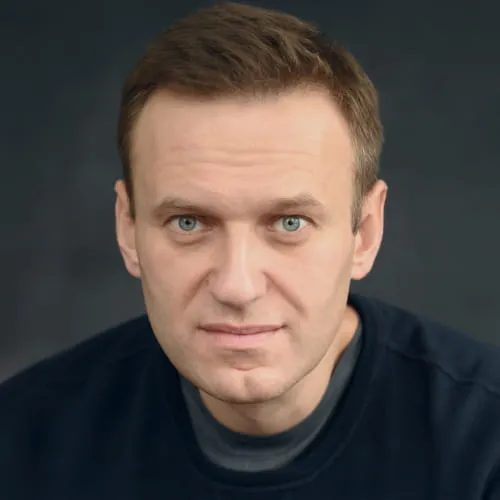
Yesterday, Vukan Vuchic and maxkatz came to our Foundation to present the expert report "Transport in Moscow."
(sorry for the questionable photo — it’s the best one out of the million pictures Katz took) This report, and the work behind it, is a truly remarkable phenomenon. Muscovites, fed up with the stupidity and uselessness of the city mayor’s office, which is incapable of taking a professional approach to the most important issues in the city’s development, are joining forces themselves, raising money (and not a small amount), hiring leading global experts, and having those experts produce studies on the reconstruction of Leninsky Prospekt and the "Northwestern Chord". Moscow’s budget is approaching 2 trillion rubles a year (roughly tens of billions of U.S. dollars), while the city’s residents are pooling together three million rubles to pay for expert work (here is the spending report). The very work that all those endless research and planning institutes under the General Plan, and the whole horde of court-connected Moscow designers, are supposed to be doing. They’re supposed to — but they don’t, and they completely lack the qualifications to do it, even though they consume plenty of money. Buslov writes about this very well, by the way — have a read. I’ve also run into Krestmein, the chief Moscow transport specialist mentioned in the post, back when I was working with grassroots initiative groups to fight the construction of an underground shopping center on Pushkin Square. Krestmein showed up at a public expert council meeting together with some Turkish investors and, in all seriousness, argued that an underground shopping center and parking garage would greatly improve the traffic situation on Pushka (Pushkin Square). It felt like the Turks were paying him cash right there in the hallway. Fortunately, even the nice old architect gentlemen — generally quite tolerant of Luzhkov-era schemes (referring to former Moscow mayor Yuri Luzhkov) — were outraged by such brazenness and spoke out against it. Then the financial crisis hit, and the project stalled. But the fact remains: the "urbanists" in Moscow City Hall will approve anything for a bribe — even a shopping center on the median strip of the MKAD (Moscow Ring Road) — and then claim it’s being done to fight traffic congestion. But back to Vuchic and the report. Please take a look if you’re interested in Moscow’s development issues. It offers a professional, well-grounded analysis of the nonsense the Moscow mayor’s office is proposing "to solve the traffic jam problem" on Leninsky Prospekt and in the city’s northwest. In particular, it describes the "bottlenecks" that will keep these grand plans from ever working. We see the same kinds of bottlenecks every day. I spend no less than an hour a day in one of them, at the intersection of Volgogradsky Prospekt and the Third Ring Road. And when they designed it, they also wrote on paper that everything looked good — but they didn’t do any real calculations. Because the main thing isn’t the calculations — it’s to slap together a bigger, more expensive interchange or tunnel so they can steal something like $300 million from the contracting work in one go. Vuchic turned out to be a really impressive guy; we had a very interesting conversation with him. He is dismayed — I’d even say bewildered — by the complete absence of professionals in urban planning and public transport development at City Hall: "How can this be? Moscow is such a big city, and nobody understands any of this." He was indignant that no one even calculates the extra mileage for cars and buses when new interchanges are built. In one place, a bus route becomes 4 km (about 2.5 miles) longer, and nobody pays any attention to it at all. To him, that’s a terrible emergency that needs to be addressed immediately, while Moscow officials say: wha? Four kilometers? Mmmmm... So what? * All in all, Vuchic is great, Katz and "City Projects" did an excellent job, and those who funded the study spent their money in a way that benefits all of us, so do read the report.