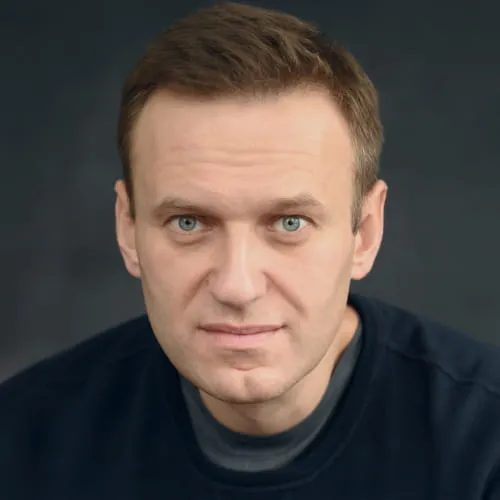
I spent last Saturday in close quarters, but in wonderful company. Among very close friends:
(the same photo, but in higher resolution) It’s a shame not everyone could make it, although on the other hand we probably would have had to rent a stadium. This is the core of the group of people that changed the political reality in Moscow and in the country in the last election. I want to say once again that even though my name is written on a lot of signs and my photos are everywhere, I understand very clearly that I am simply the same part of this movement as any other participant. And I like that very much, by the way. In this election, I did my share of hard but very interesting work, and I could see how I was contributing to a common cause. It is a great joy and pleasure to see your work produce results. An even greater joy is seeing how, through the joint efforts of thousands of people, millions came to understand that things can be different—not “the usual way,” with hopelessness, fake enthusiasm, and nauseating lies. The main organizational conclusion from the campaign is simple and clear: you have to work if you want results. We climbed down from the presidiums and went out to hand out leaflets in the metro. Instead of puffing up our cheeks at “round tables,” we go into courtyards, climb onto a platform and speak in front of thirty grandmothers. Instead of issuing yet another statement “On the inadmissibility of such-and-such,” we look for officials’ hidden apartments and publish newspapers about them and hand them out on the street. That’s what we talked about at the meeting on Saturday too: work. The work that has been done, and the work that still needs to be done. You can see the slides from the presentation I gave here. In short, the strategy is clear: effectively organize the activists we already have in order to carry out mass campaigning. No pensioner, even if they watch Channel One all day long, will support either Putin or United Russia if you spend three minutes telling them about the Ozero dacha cooperative (a well-known group tied to Putin’s inner circle), Yakunin’s fur-coat storage scandal, and the bills of ours that United Russia blocks in the State Duma. Moscow’s tasks are even clearer: elections to the Moscow City Duma are coming soon. It is the key body that passes the city budget and the laws by which the city lives. Right now it is 95% United Russia. And how much should it be in a fair system? That’s right: 25–30%. Even Sobyanin himself confirms this—he was too embarrassed to run for mayor under his own party’s banner. Right now, while Muscovites still have fresh memories of this mayoral campaign, it is critically important for us to explain to them just how real the prospect of routing United Russia in the next election is. Read this article by Alexei Zakharov, who worked in our campaign headquarters and, together with Anna Biryukova, organized the sociological research that left all the “professionals” looking foolish. He analyzes the profile of the “pro-Navalny” voter—very interesting and instructive.
It is clear that our electorate is much more balanced by age. In the age groups where we are already working effectively, the Putinists, Sobyanin supporters, and United Russia loyalists have no prospects left; their advantage exists only in the 66+ group, where turnout is typically high. But they have that advantage for only one reason: we did not work with pensioners before. If yesterday 13% of voters aged 66+ who came to the polls voted for us, then tomorrow we must raise that share to 25%—which is entirely realistic—and then we will see people getting punched right in the street for saying, “I’m a member of United Russia.” Here are a few more comments from Alexei Zakharov on the exit poll analysis he prepared for our headquarters: *- Turnout in this election depended heavily on age. It ranged from 17% among people aged 18 to 25 to 51% among people over 65. Sobyanin’s electorate: the median age of a Sobyanin voter was somewhere around 57–59. Navalny’s electorate: the median age was 41–43. However, Navalny’s electorate was balanced by age. Roughly the same number of people aged 18–25 and 66+ voted for us, because the low turnout of the former was offset by Sobyanin’s high support among the latter. Among Muscovites under 36, almost no one voted for Sobyanin. Combined with low turnout, this meant that no more than 5% of Muscovites under 36 voted for Sobyanin in this election. For Navalny, the comparable figure was around 14–15%. The main thing that inclines people to vote for Alexei is the feeling that change is necessary. Another very important factor is the sense that income distribution is unfair. Getting news from television is a strong negative factor; the internet is a positive factor. The TV and internet audiences overlap significantly. Those who fear illness, terrorist attacks, or losing their ability to work were, all else being equal, for Sobyanin and against Navalny. Age is not what matters; pensioner status is. Older people who still work vote completely differently.* My crude and unscientific conclusion is this: if we raise youth turnout to at least 30% and do a proper job, in terms of campaigning, with people who get their information only from television, then we will make the Party of Crooks and Thieves very, very unhappy.
All in all, I haven’t written anything new. These things are fairly obvious. That is precisely why we took note of the fact that the most responsible and active citizens had themselves started putting up posters in their neighborhoods explaining the election results:
We decided this was an excellent idea, and one that should be scaled up. So we made this. Go there, choose the district you need, and print out the generated notice. My leaflet for Maryino, where I live, will look like this:
My leaflet for Tagansky District, where I work, will look like this:
You can choose either a color or a black-and-white version. Before the election, many people doubted the effectiveness of such leaflets and this method of distribution. Now there is no doubt: we know that 36,000 people have registered on http://dom.navalny.ru/ alone. If we don’t get lazy, we can very easily put up at least 100,000 notices a day, which will be seen by a million Muscovites. After a week of work, the reach will be one and a half million people. Without any special effort. Think about how important it is to work with those one and a half million people, and what an excellent result can be achieved. Do it right now. And don’t forget to click one of these buttons at the top of the site:
And of course, let me remind you about the newspaper. One million copies on the same subject. During the campaign, we saw that every week of hard work brought an excellent reward in the form of changing public opinion.
We need to keep going.