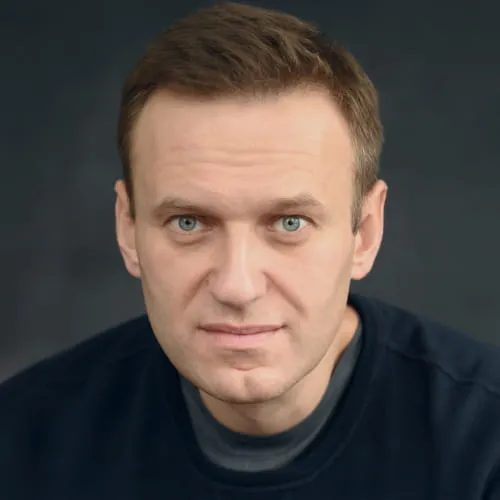
This is Oleg Plokhoi. He’s the country’s top man on corruption. Well, that is, on fighting it. He is the one heading the newly created "Directorate of the President of the Russian Federation for Countering Corruption".
http://news.kremlin.ru/media/events/files/41d4a76343316e1a3129.pdf There have been plenty of jokes about Oleg Anatolyevich’s last name. But to me, far more comical is the explanation for why he, of all people, was put in charge of the anti-corruption directorate: According to Sergei Ivanov, Oleg Plokhoi, who was appointed head of the directorate, "has been working in the main civil service and personnel directorate since the last century — since 1999, in fact. In recent years he has specialized precisely in countering corruption, checking declarations, and improving legislation, so the choice of /his candidacy/ was very straightforward." Yes, yes, we’ve certainly noticed the tremendous success the country has achieved in fighting corruption since 1999 — and especially in recent years. The Kremlin is packed with thieves from top to bottom. Though perhaps that is exactly what Ivanov means by “success.” In that case, appointing someone who helped bring about that success looks perfectly logical. Still, let’s give Oleg Anatolyevich Plokhoi a chance. Let’s look at the powers of his wonderful directorate: 2*) participation in preparing proposals for the President of the Russian Federation on candidates for state positions of the Russian Federation and positions in the federal civil service, appointment to and dismissal from which are carried out by the President of the Russian Federation or upon the President’s recommendation, insofar as this concerns candidates’ compliance with prohibitions and restrictions and the fulfillment of duties established for anti-corruption purposes; 9) taking measures to prevent corruption and other offenses in accordance with Presidential Decree No. 1065 of September 21, 2009, and other regulatory legal acts of the Russian Federation; 10) ensuring that employees of the Presidential Administration of the Russian Federation comply with restrictions and prohibitions, requirements for preventing or resolving conflicts of interest, and the duties imposed on them by Federal Law No. 273-FZ of December 25, 2008, “On Countering Corruption,” and other federal laws; 13) ensuring the implementation by employees of the Presidential Administration of the Russian Federation of their duty to notify the leadership of the Presidential Administration of the Russian Federation, the prosecutor’s office of the Russian Federation, investigative bodies of the Investigative Committee of the Russian Federation, and other federal state bodies about all instances in which any persons approach them in an attempt to induce them to commit corruption-related offenses; 16) carrying out, in the established manner, verification of: the accuracy and completeness of information on income, expenditures, property, and property-related liabilities submitted by persons holding positions for which such disclosure is mandatory, or by citizens applying for such positions; compliance by civil servants and persons holding positions specified in paragraph 1, part 1, article 71 of Federal Law No. 273-FZ of December 25, 2008, “On Countering Corruption,” with the prohibitions and restrictions established for them, as well as their fulfillment of duties in accordance with anti-corruption legislation; compliance by citizens who previously held federal civil service positions in the Presidential Administration of the Russian Federation with the restrictions established for them by Russian law when entering into employment contracts after leaving federal civil service;* http://kremlin.ru/news/19747 and so on, and so forth. This is just perfect for dealing with our wonderful officials who built lavish estates in the "Sosny" dacha cooperative. And by the way, do read about how this was discussed in the State Duma (the lower house of Russia’s parliament). The New Times once again caught Neverov lying and will demand a new investigation. We also have an excellent reason to appeal to Oleg Anatolyevich: today is International Anti-Corruption Day. On this day in 2003, the UN opened the Convention against Corruption for signature; Russia still has not ratified Article 20, which is what allows our officials to live comfortably at a standard of living dozens or even hundreds of times higher than their official incomes. And here Medvedev once again explains why it supposedly cannot be ratified, dragging in some kind of “objective opinion” that is nowhere to be found in this case. So then, on International Anti-Corruption Day, the newly created Directorate of the President of the Russian Federation for Countering Corruption will receive several detailed letters from the Anti-Corruption Foundation about specific facts of corruption (I love it when you can fit the word “corruption” into one sentence that many times). This will probably be the first appeal in the young agency’s history. We will ask it to investigate the facts of the fantastic, inexplicable, and clearly illegal enrichment of Mr. Prikhodko, Chief of Staff of the Government of the Russian Federation.
A man who has always had an annual income of 6 to 10 million rubles, yet somehow built himself an estate worth 34 years of that income. We will ask for an investigation into state official Volodin — deputy head of the presidential administration, who, although he once reported a strange income of 300 million rubles, owns an estate worth far more than that, and whose upkeep alone must exceed his annual income. Half of the land belonging to this estate was never declared. And then all the others I wrote about here, and who are listed on our special website. All the documents and evidence are there. Let them a) investigate, b) see that we are right, c) dismiss these corrupt officials from public service (throw them out of the Duma), d) launch criminal investigations into the corruption. Then we’ll find out whether the Anti-Corruption Directorate really does fight corruption, rather than covering it up by simply forwarding papers to other agencies and sending back boilerplate replies. We’ll judge it by its actions. We will publish the response in forty days (30 days for a reply, plus mailing time). And of course, I congratulate everyone — especially the staff of the Anti-Corruption Foundation — on International Anti-Corruption Day. I am sure the time will come when this day will not be as important for Russia as it is now.