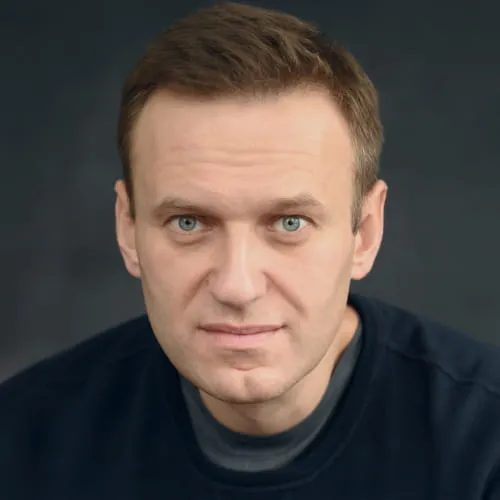
Let me show you my year through Instagram instead. Everyone writes long, weighty posts, but my year turned out to be so long and varied that if I summed it up in the traditional LiveJournal format, no one would make it to the end. And besides, no one has the time right now—there’s all the usual pre-New Year bustle. So I’ll go with a nontraditional format: my year on Instagram. This format has one obvious drawback: naturally, I took 99% of the photos myself, and naturally, there are no photos from some of the most important moments. Then again, maybe the absence of a photo says even more about the moment. My 2013 on Instagram: The first photo of the year turned out to be highly artistic. I took it from the window of my parents’ apartment on January 1. The beginning of the year is a rare time when you can actually relax and have some fun, so Yulia and I went out with friends to a few entertainment spots. This is mid-January—we’re at the “March Against the Scoundrels.” One feature of an Instagram chronicle: in most of the photos everyone is smiling happily, even though the reasons often aren’t cheerful at all. Early February. I ran into Baronova again in the hallway of the Investigative Committee. In general, the Investigative Committee was the place of the year. The only places I spent more time in over the past year were the ACF office and home. February. I took the kids to the circus. There are quite a lot of photos with the children—I tried to spend more time with my family, though of course it didn’t really work out. The secret newlyweds who set off a media bomb with their wedding. We saw them many times this year. They’re good people, and Vitorgan in particular is one of the most wonderful people I know. At the end of February, at a 7 a.m. meeting in Starlite, we mapped out the steps for creating the People’s Alliance party. Ashurkov and Volkov were, without question, my people of the year. In March, an idiot’s dream came true—I ended up in Parfyonov’s book, which I’d badly wanted. Thanks to the RosPil guys, of course. And it’s a great photo too, almost like “One does not simply…” March. Here I am at an Aeroflot corporate event held at the Kremlin Palace of Congresses. For a whole month afterward, all sorts of pro-Kremlin goons spread these photos around with captions like “Navalny goes to the Kremlin!” In 2013, my one-year term as an independent director of Aeroflot came to an end. On March 20, the Prosecutor General’s Office approved the indictment in the Kirovles case. The case was sent to court. And on April 17, that very “trial” began—the one that devoured a huge amount of time and energy this year. Another one of my people of the year: Judge Blinov. I spent a lot of time with him. And one more person of the year: the famous Opalev, whose false testimony the entire case was built on. I saw him once; to every question, in the same pose, he gave the same answer: I don’t remember. May 10. I caught a May beetle. The daily one-person picket with the “Putin Is a Thief” sign is one of the main symbols of the year for me. The sign itself, which we printed every day, and which the police confiscated every morning “for examination,” with paperwork to match. And the guys from Kirov and other cities who stood in that picket every day of the trial, regardless of the time or the weather. By the end, Kolya Lyaskin was so tanned he looked Indian. It was important support, and I’m deeply grateful to everyone. That was also when Kolya Lyaskin and Zhora Alburov came up with the famous “campaign cube” booth. Parties came to show support. People came to show support. In good weather, the area outside the courthouse basically turned into a hangout spot. The main support is always family. Yulia was in the courtroom every day of the trial. Only now, looking through Instagram, did I realize there isn’t a single photo of Ofitserov in it. So I’ll have to bend the rules a little and post not an Instagram photo, but a frame from the court livestream:
Pyotr and Lida, of course, also became my people of the year. Summer arrived. I keep traveling to court. Every time, during the two-minute nighttime stop in Kovrov, a support group is there to meet me; for me, they became one of the symbols of the year. One of my favorite posts of the year is about the guy from Kovrov. June 12 — the march in support of political prisoners. The occasion was sad, but the photo came out cheerful. Then the sudden mayoral election campaign began. The first photo on that subject also recalls another landmark event of the year: Sergei Guriev’s political emigration. He is now a “fugitive economist.” At first the election campaign is still make-believe. No one believes they’ll register me. We created a headquarters for turning a candidate into an actual candidate. We had to get through the municipal filter. Municipal deputies like these helped us gather signatures from other deputies. Volkov (sitting with his back to the camera) headed the campaign. Roma Rubanov showed up too (on the right, in a thinker’s pose); he would become the campaign’s number two, and later the director of ACF. On June 26, we found and rented our first campaign office. Lyalin Lane. Without waiting for registration, we began holding our first volunteer pickets. The goal was to show: this is serious. Even if you don’t register us, we’ll still run a mass campaign—only then it will be for a boycott. From that moment on, the campaign became completely real. Inspiring, but hard work for hundreds of people. The sentencing date is approaching, and Yulia is out shopping. The office on Lyalin Lane is packed with people around the clock. On July 17, I am officially handed the certificate of registration as a candidate for Mayor of Moscow. On July 18, Ofitserov and I are sentenced to four and five years respectively. They take away my Instagram in the courtroom with the words: “Alexei Anatolyevich, stretch both hands out in front of you.” Then came unpleasant, strange, astonishing, and finally uplifting events. Pretrial detention, release, the trip back to Moscow, and an incredible welcome. None of that is on Instagram, for obvious reasons—or simply because there was no time to think about a phone. The next photo is only from July 22, and it looks like this: In its own way, it too is a symbol of life defeating evil. At the end of July, I baptized my nephew Stepan. The election campaign takes up all my time. By August 3, on Ryazansky Prospekt, we were already holding our 500th campaign cube. Cars with campaign stickers can be seen all over Moscow. At the televised debates on the Moscow-24 channel, OMON riot police show up to provide security. At any given time on Lyalin Lane, there are several cars that have come to pick up stickers. All kinds of cars. The core team during the daily briefing, which took place on the playground next to the office. The most-liked photo on my Instagram, of course, doesn’t belong to me but to photographer Viktor Gorbachyov. One of the campaign photos. The campaign concert on Sakharov Avenue. Several thousand people in pouring rain and great music. I was seriously afraid the core of the electorate would come down with pneumonia after that. The only photo from election day. September 9, campaign headquarters. Everyone is dead on their feet after several sleepless nights. The headquarters descends into legal HELL. Sobyanin’s crooks stole 1.5% of the vote—and the runoff with it. We file hundreds of court complaints. A significant number of the campaign’s key volunteers move on to work at the Anti-Corruption Foundation. In this photo it doesn’t look like they’re fighting anyone, but trust me, they are. At the beginning of October, we launch the “People’s Deputy” initiative group to submit all our campaign promises to the Moscow City Duma as draft laws. The process is extremely labor-intensive, but we’re doing it, which terrifies the Moscow authorities. They sabotage the initiatives however they can. On October 11, we submit the full version of the campaign report. The photo, by the way, is the answer to the question, “Why don’t you publish the report for the Moscow Election Commission?” Hundreds of hours of painstaking work by many people. October 27 — a march in support of political prisoners. November 17 — yet another congress of the People’s Alliance. I am elected leader of the party. On November 18, I register with the penal inspection service. I am now a convicted person, banned from traveling abroad, and required to check in with the inspectorate twice a month. We walk in the park near our home. Every morning I stick up a flyer somewhere as part of our campaign. On December 19, the annual ACF strategy session. This is the final slide from the investigations department’s presentation. As you can see, they plan to stir things up, gather information on half the crooks out there, and bring down United Russia’s approval rating. The amnesty began. At a RosUznik event, I met Akimenkov, who got out after a year and a half in pretrial detention. I’m very happy for him, but it’s even more bitter for those who did not get out. Our thoughts were with them throughout 2013 and will remain with them until they are free. Konstantinov’s sentence was unexpectedly not delivered; instead, the case was sent back to the prosecutor’s office. Later we learned that Konstantinov had been tortured in the holding area that day. The newspaper Vedomosti named me “Politician of the Year,” both in the editors’ poll and in the readers’ poll. As an illustration, they used a photo of me from back when I wore a mustache and a hat. That’s where I’ll end, and I want to say this. I absolutely cannot stand all the stupid donkeys who talk about “the Navalny project.” But of course it wasn’t me who was named politician of the year—it was precisely the “Navalny project.” As you can see from this chronicle, I didn’t really do much at all—I just took pictures. Everything was done by the “Navalny project”: thousands of good, honest people around me who came together so that their country, and their children’s country, could become better. A person doesn’t stand in a picket and hand out leaflets for my sake—they do it for their own. Designers don’t draw diagrams of corruption schemes for ACF’s sake, and investigators don’t dig up those schemes for ACF’s sake. They do it for themselves. Traveling to another city and standing in the rain with a sign. Handing out newspapers in the metro. Hauling boxes in a warehouse full of campaign materials. Spending a full day digging up information about theft at some construction site. Flying a paraglider over officials’ dachas and photographing them. Some feeling inside these people makes them get up off the couch and work for the public good. That feeling is what became “Politician of the Year.” I want to thank everyone I had the chance to work with in 2013. Thank you to everyone who helped and sympathized. In the coming 2014, we’ll have even more work to do, and we’ll need each other again. Happy New Year!