Retrial of the “Kirovles Case.” Video recording of the court hearing. Session 1. Part 2
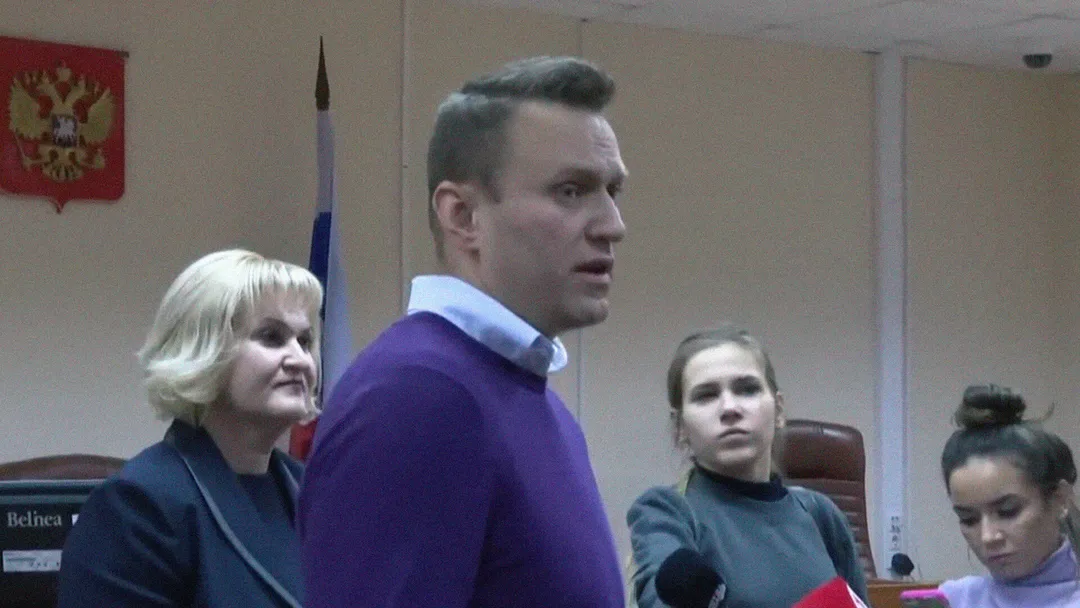
under Article 33 and Part 4 of Article 160 of the Criminal Code of the Russian Federation
of the Russian Federation, accusing Pyotr Yuryevich Kater of committing
the crime provided for in Part 5
of the Article
of Article 160 of the Criminal Code of the Russian Federation, Gena and his defense counsel established that
this was not presented by the prosecutor at all
on the following grounds
there are contradictions, and the description
lacks a description of the objective elements
of the crime, namely, it lacks
confirmation that the acts in question were committed for
appropriation for their own benefit
Green. In order to
explain, the indictment contains
an interpretation
that makes the alleged offense indistinguishable from ordinary
business activity
criminal liability that is politically
motivated; the defense believes
that it is impossible to consider the criminal case
in relation to it
separately from the criminal case concerning
which presupposes the need for their
consolidation into a single proceeding
the prosecution repeated the previously stated
motion, considering it unfounded
and supported the opinion of the other party
Having heard the parties, the court comes to the following
under Part 1 of Article 237 of the Criminal Procedure Code of the Russian Federation and
on the initiative of a party or on its own
initiative, the court may resolve
to return the criminal case to the prosecutor if there are obstacles
to its consideration by the court, if the indictment
or bill of indictment was drawn up
in violation of the requirements of the Criminal Procedure Code, such that
this excludes the possibility of delivering a judgment or issuing another decision on
the basis of that indictment
In criminal cases, the grounds set out below
in the defense's arguments
do not exclude consideration of the criminal case
as complying with the requirements of Article 220 of the
Russian Federation
namely, it sets out all the factual circumstances
of the act and other circumstances having
significance for this criminal case, including
a clear indication of
the relevant provision of the Russian Federation
that provides for liability for the given
crime, and a list of the evidence on which
Unfortunately, despite the grounds on which
the defense believes there is no possibility
to proceed
the evidence specifically relied on
by the prosecution indicates
the lawful nature of the acts, that is, that they were within the framework of
ordinary business activity
the political motivation of the criminal
prosecution of Navalny. In addition, here
given that Article 14 of the Criminal Procedure Code exists
the obligation to assess the arguments
presented by the parties lies with
the prosecution, and all amendments
to the indictment contain statements
of an alleged
allegedly misappropriated property
purchased from Kirovles, its value, and what
contradictions and indications are contained in the indictment
as to the amount of damage caused, in violation of
Clause 8, Part 1, Article 220, which
There was also
under Russian law, Chapter 40.1 of the Criminal Procedure Code
which provides for the possibility
of concluding a cooperation agreement
with suspects and
the subsequent separation of the criminal
case in relation to the given person
It is also not entirely clear whether the adoption of a judicial
decision by the European Court of Human Rights
also concerns the agreement
as an element of the European criminal justice system
and what effect the separated proceedings had
on the case relations, in essence, does not
exclude them
Given that the court has not established here
circumstances that would exclude
the possibility of the court delivering
a judgment or issuing another decision on the basis
of the prepared indictments
the motions of the defendants and defense counsel
to return the criminal case to the prosecutor
must be denied for the reasons set out above
guided by Articles 237, 256, and 271
the court rules to deny the said
motions of Navalny and Ofitserov
and their defense counsel, attorneys Nikolai Kobzov
and Davydova, to return the criminal case
to the prosecutor pursuant to Article 237 of the Criminal Procedure Code
please
[music]
Motion for recusal. On December 5, 2016,
Judge Tyurina of the Leninsky District Court of the city of
Kirov
denied Navalny and Ofitserov's motion to terminate
the present criminal case and the criminal
prosecution of the defendants for the purpose of enforcing
the judgment of the European Court of Human Rights dated
February 23, 2016. On that same day, the judge
also indicated to the defense
the possibility of filing a motion to return
the criminal case to the prosecutor. By these
actions, Judge Tyurina placed
the defense in circumstances in which it was necessary
to defend itself once again against the same
vague, contradictory, contrived
and politically motivated accusation
The charges were formulated as a result of
what, as shown not by a Russian court but by
an arbitrary and unforeseeable
interpretation of criminal law, namely accusations of
committing acts which, as the
European Court indicated, were indistinguishable from
ordinary commercial activity
The court's handling of these criminal cases
position
undermines the court's independence. Thus, even before
the start of the judicial examination, the court displayed
its interest in the outcome of this
case and demonstrated that the parties would not
equal
procedural opportunities will be provided, and the court will not
be fair. We believe that such a
position
indicates that the court had formed in advance
before the start of the judicial examination
an opinion about the defendants' guilt; the adoption
by the judge of an accusatory position, as
a consequence, deprives him of objectivity and
impartiality as a judge.
The defense believes that the demonstrated
lack of objectivity and impartiality
of Judge Nikitin directly follows, among other things,
from the fact that he is in official
subordination to Blinov, who previously
considered this criminal case
and who, during its earlier consideration,
clearly demonstrated a lack of objectivity and
impartiality, as well as an interest
in its outcome, having previously delivered in
this case a guilty verdict
and sentenced Navalny
to actual deprivation of liberty
and took them into custody in the courtroom. Judge
Blinov, whose verdict was later overturned by the Supreme Court
of the Russian Federation on
the basis of the judgment of the European Court
which found a violation
of the Convention for the Protection of Human Rights and
Fundamental Freedoms, that is, he is
in official subordination to Judge Blinov,
who, in order to restore his
reputation and personal authority,
more than anyone else is interested in a repeated
issuance in this case of a guilty
verdict.
The defense notes that since Blinov is
the deputy chair of the Leninsky
District Court of the city of Kirov, under
Part 4 of Article 35
of the Federal Constitutional Law on Courts
of General Jurisdiction in the Russian
Federation
and Part 2 of Article 6.2 of the Law
of the Russian Federation on the Status of Judges of the Russian
Federation, the deputy chair
of a district court, alongside exercising
the powers of a judge, also exercises powers
to organize the work of the court in
accordance with the distribution
of duties established by the chair
of the district court.
According to the instructions on court record-keeping
in a district court, the court's internal
rules, and other
acts that regulate in detail the work
of the Leninsky District Court of the city of Kirov,
the deputy chair of the court has
broad powers with respect to
the judges of the court; that is, by virtue of the position he holds,
Blinov can
directly as well as indirectly
influence the federal judge.
As the European Court indicated in paragraph 116
of its judgment, the national courts did not even
take care to observe the outward appearances
of propriety, and the transfer of the criminal
case for reconsideration to Judge Nikitin,
who is in official dependence
on the judge who issued the first unlawful verdict,
regardless of how that dependence is characterized,
is nothing other than cynical
mockery of justice. Thus,
thus, already now one may
state
or, to put it more vividly, as Vladimir Putin once said,
the sad fact—the sad fact that at
the present time, in the repeated
consideration of the case, there can be no talk of
the court observing even the outward appearances of propriety.
Part 1 of Article 120 of the Constitution
guarantees that judges are independent
and are subject only to the Constitution
of the Russian Federation and federal law.
Judicial independence includes
impartiality. Part 4 of Article 15
of the Constitution guarantees that the universally recognized
principles and norms of international law
and the international treaties of the Russian Federation are
an integral part of its legal system.
The principles of independence and impartiality of the court
and unhindered access to justice
are recognized by the international community as
fundamental. According to Article
10 of the Universal Declaration of Human Rights,
everyone, for the determination
of the validity of any criminal
charge against them, has the right, in full
equality, to have their case
heard publicly and with full observance of all
the requirements of fairness by an independent
and impartial tribunal.
Developing these provisions, the Convention for the Protection
of Human Rights and Fundamental Freedoms, paragraph
1 of Article 6, and the International Covenant on
Civil and Political Rights, Article
14, establish that everyone has
the right, when charged with a criminal
offense, to a fair and public
hearing within a reasonable time
by an independent and impartial
tribunal established by
law, with observance of the principles
of equality of all before the courts. However, in this
criminal case, all
the above requirements of Russian
and international legal instruments, as well as
the legal positions of the Constitutional Court
and the European Court of Human Rights, were
ignored by the judge. The position taken
by the judge of the Leninsky District Court of the city
of Kirov, Nikitin, indicates that
he is not free from outside influence,
is not independent, impartial,
or objective, and is incapable, when issuing
judicial decisions, of being guided
solely and exclusively by the law. On the basis
of the foregoing, guided by Part 1
Article 61, Article 62
Article 64 of the Criminal Code
we are filing a motion to recuse the federal judge
of the Leninsky District Court of the city of Kirov
from prison on December 5, signed by Navalny
Mikhail
[music]
I wanted to add that as soon as you walk in
to the wonderful building of the Leninsky Court and
look to the left, it immediately becomes clear
what the grounds for recusal are, because Judge Blinov
is directly listed there as the deputy
chairman of the court, and he is your
direct superior, and our
attitude toward this court is based, once again,
on a court ruling where this is not
a poetic or political statement
— it is stated directly in the court ruling
that the authorities did not even bother
to create even the appearance of a fair
trial
that is the main thing underlying our
attitude toward Blinov; in this connection, we
have submitted a criminal complaint
against Blinov; we consider him a criminal
and in five years, in ten years
under this regime or the next one
he will one hundred percent end up in the dock
as a defendant, and
even if he were transferred somewhere back to
a district court or somewhere else, in any case
since he is now your formal
direct superior, of course we
are filing this motion, and we believe this case cannot
be fair when, well, here we have
a person whom we believe should be in prison
— naturally, he will do everything
to conceal the traces of his criminal
acts, and since your
direct superior — that is the point
these are the grounds
What grounds have been set out
First of all, I would like to note that
the grounds
are governed by the criminal procedure legislation
of the Russian Federation, namely Part 2 of Article 61
of the Criminal Procedure Code; it states that
under the specified grounds, it may be considered that
someone may not participate in
criminal proceedings if he or she
is a victim, civil plaintiff,
civil defendant, or witness in
the given criminal case, or has participated in it
in the capacity of
an expert or specialist
a victim, civil plaintiff
civil defendant
or another participant in the proceedings
in this case, or if there are
other circumstances in these proceedings
also, in the event that
there are circumstances giving reason to believe that he
is personally, directly interested
in the outcome
the defense is forced to point this out because they
have allowed, in repeated proceedings,
consideration of the case
the circumstances indicating
as the defense has pointed out, a lack of
independence and impartiality, and
these are not baseless or unsubstantiated
claims; therefore
I have a notice from the Moscow District
Military Court
it is impossible to hold the hearing tomorrow
just a second
[music]
[music]
we will be in session every day from 9 to 6, and
he ran off somewhere — which speaks to the fact, to the fact
that what I am talking about is this:
the goal here is to hand down new verdicts as quickly as possible
and strip me of my electoral rights
tomorrow the trial will not
take place — he knows that perfectly well, because
lawyer Mikhailova must
be present in the Nemtsov case, where
there is a jury, and a higher court is involved. And besides,
those of you who have attended trials
of this kind know that even despite
their obvious political
and orchestrated nature, judges are always
interested in putting together, well,
a more or less convenient schedule, yes, when all
the lawyers can be present. Here we
simply see that everything is aimed at
not caring — we will hear the case every day, and
there is no doubt that they intend
to hand down a verdict again, practically this year
and this brief
opportunity that appeared thanks to my electoral
rights will be taken away from me
and you yourselves will
the lawyers
my lawyers, with whom I went through the entire
case, with whom I won at the ECHR (European Court of Human Rights), with whom
I won in the Supreme Court, will not be here
so what is the point of my appearing here
when they are not here
first of all, I myself have cases to deal with. Well, yes
fine, my own affairs — all right, I am the defendant. But
if, uh, my lawyers quite clearly have
a summons to the district court tomorrow, yes
I mean the District Military Court, where
the hearing in the Nemtsov case will take place — then what is the point
of staying here? The hearing will in any case
be adjourned tomorrow due to the absence
of the lawyers; that is obvious
I am absolutely certain
he knows that all of us have our own cases
the fact that today's court hearing was scheduled
only became known not long ago. We
again are not to blame for the fact that
the Leninsky District Court of the city of Kirov
cannot issue
a fair decision on the first try, accordingly
we ended up here entirely by chance
in fact, because on November 16 there was
The verdict was overturned; naturally, we have
scheduling conflicts, and any reasonable judge would have worked with us
and agreed on another date for the court
hearing, if they truly wanted to avoid conflicts in
this situation. It turned out this way
as it did; we were simply presented with it
as a fait accompli. They absolutely do not
care that I am occupied with another
trial, a very important one, related to
the murder of Boris Yefimovich Nemtsov (a prominent Russian opposition politician), in
which I am required to be present. I have
documents from that court confirming
that I must be there tomorrow, but this court
is not interested in that at all.
I just want to emphasize once again
that we are here not because we
wanted to be or because it is our fault. We are here because
it has been established by the Supreme Court that
this very Leninsky District Court
issued an unjust ruling. That is why we are
here, and there is certainly no kind of
urgency or need to rush. This case was
resolved three years ago; there are no
reasons why the judge should now
be pushing this process forward right now. Well,
except for what I have already mentioned.
Nevertheless, without my lawyers I will be
simply deprived of my right to a defense, so
of course I refuse to take part
in hearings without my defense counsel.
Thank you.
As for compensation, of course, regarding the money, I have
already been paid... no, we've already... your microphone was taken away.
The microphone was being taken away. Thank you very much. Yes, and
the ECHR (European Court of Human Rights) awarded me compensation;
that compensation has already been paid to me. Also,
the Leninsky Court still owes me 500,000 rubles
in fines that were upheld. Thank you.
You too.
[music]
[music]
[music]
I think these are standing instructions, so
who knows what role each person has there
on a human level in the process; a process is
a process.
There is no doubt that it has become
—you have seen how all of this happens—
that there is some kind of Kremlin game at work.
If there is a Kremlin game, then in any
case it means a worsening of the situation, both for me and
for anyone involved in politics.
To expect them to make life easier for us
despite the fact that I have already been told
a million times that we won this case, still
nevertheless.
[music]
[music]
[music]
[music]