Alexei Navalny’s meeting with voters in Moscow’s Lefortovo District
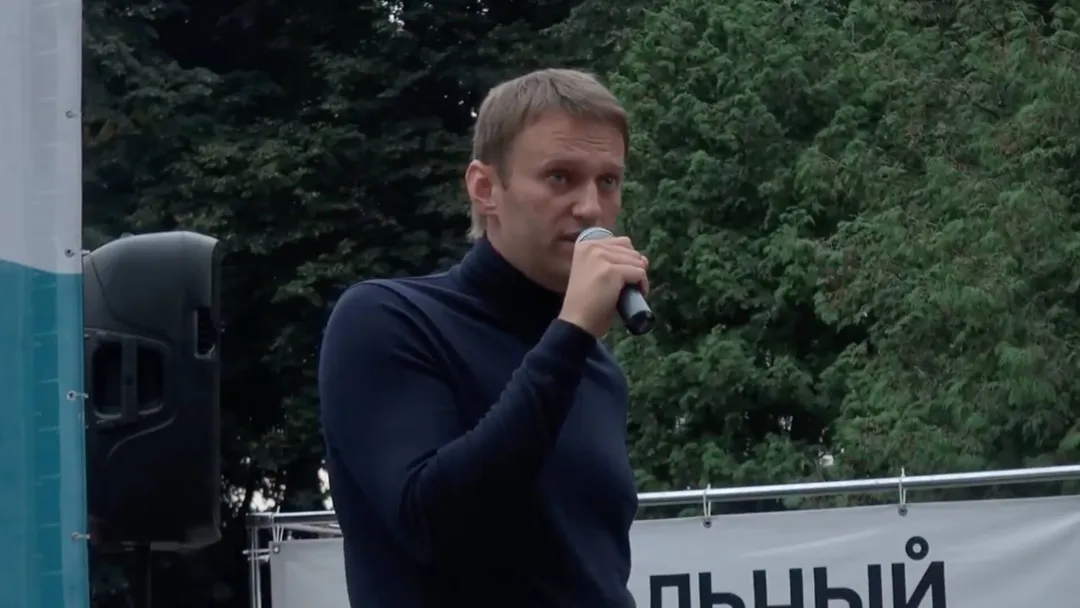
Hello. Thank you very much for
coming. Thank you very much for these, so far,
undeserved applause. I’m very
glad that you come to these meetings. And
for us, for our entire campaign team, this is very important
that these meetings are taking place, because
people are coming to them. And we have disproved
those predictions by cynics who
said: "What kind of strange
election campaign is this, one that
is built around meetings with voters?"
No one had ever done anything like that before.
And it all seemed like nonsense. Neither
do candidates go out to meetings, nor
do voters come to them. But we
were right when we planned all of this.
And I hold three such meetings every
weekday, and five meetings every
weekend, because this is the work
of a candidate. And if I am running now
in this election saying that I want
to be an open mayor, a mayor with an open
government, an accessible mayor, then I
must also be that kind of candidate
and I believe it is my job to go out and meet
people. I imagined for myself a kind of
ideal candidate, you know.
What would I want my candidate
to do? And I answered myself: "I want
my candidate to come near my
home," set up a stage there or simply
climb onto a chair and answer my
questions, so that I could look at him,
and decide whether to vote or not. And I
became that kind of candidate. I go around and answer
questions. Three times a day you can
find me in some district
of Moscow and ask pleasant, unpleasant,
any kind of questions. If there are no objections, I would
structure our meeting today like this:
first I’ll tell you a little about myself,
why I ended up here, and then I’ll
answer questions. Any objections
to that format?
Excellent, thank you very much. My name is
Alexei Navalny.
I am 37 years old. For the last 17 years I have lived in
the Maryino district of Moscow. Quite
not far from you. In a sense, I am your
neighbor, at least within the same
administrative district. I have
a completely standard, by
Moscow standards, family. I live with my wife
and two children. My daughter is 11 years old, and she
goes to a regular school. My son is 5 years old,
and he goes to a regular kindergarten. I come from
a military family. And throughout my childhood and
youth I moved from one military
town to another. And my
parents still live in the Moscow region,
in a military town.
By profession, I am a lawyer. I have two
higher education degrees. I graduated from the law
faculty of the Peoples' Friendship University and
the Financial Academy under the Government
of the Russian Federation.
If you have followed my work over
the last couple of years, more or less,
what do you know about me?
Against crooks and thieves.
Fighting corruption and embezzlement. Very often
the first response is: "You stole the whole
forest." We know about that. We watched
TV and we know everything. And indeed,
most often I am known as
a person who is constantly making
accusations against someone. There he is, unhappy with
Gazprom, unhappy with Rosneft,
running around and trying to prove that something
was stolen from him there, that he was somehow
wronged, robbed, and so on. And most often
they won’t let me through right now. Honestly, I
Do you want to go right up on stage?
No, I just want to shake your hand.
Oh, thank you very much. Let’s, let’s
finish now. Well, at least,
I’ll come over after
Thank you very much. It’s only 8:00
p.m. You’re in such a good mood. Let’s
wait a little. Quite a lot of
people have gathered here. I’m a veteran,
we have a large number of police here,
so right now you could leave here and end up detained for three days.
Yes, I,
so, as I was saying, most often what people hear about me is
that I’m a person who makes
accusations against someone. And one of the first
questions at meetings like this, the question
I want to begin my
remarks with, is the answer to this question:
"Listen, Navalny, do you really
seriously, truly
think that Gazprom
stole something from you, that you personally were wronged by someone,
that you’re running around outraged, but what are
you compared to Gazprom? Nothing can be
stolen from you. You’re just promoting yourself that way."
I don’t know. Do you think Gazprom stole something from you?
Well, then it will probably be easier for me
to explain. I make accusations against all these people.
I go around accusing them of corruption,
proving that corruption, because I
personally truly believe that something was stolen from
me, from me and from my children. This
is not some abstract matter. This is not
a struggle for a bright future or against
some abstract windmills.
Nothing of the sort. It is an entirely
concrete matter. What does Russia live on?
Oil and gas. Unfortunately, we have
turned into a raw-materials appendage.
We sell oil and gas and live off that money.
Over the last 15 years, we have sold oil and
gas abroad worth $3 trillion.
That is an enormous sum. A very large
sum. And for some reason I do not have any
inner sense of understanding as to why,
where it all went, I mean,
it was a huge sum, where was it invested? We can
compare it with the Soviet era.
The Soviet Union under Brezhnev also
received a large amount of
petrodollars. Whether they were spent wisely
or poorly is debatable, but we
know exactly where they
were spent. We can see it. We see here
residential neighborhoods that were built with
Brezhnev's petrodollars, and apartments in them were
given out for free. That's right.
Factories and plants were built with
Brezhnev's petrodol-
built. The military-industrial complex was built, science was
built. Academic science towns are scattered across the country
everywhere. Railways were laid out,
as were regular roads. The largest army in the world
was built. It was built.
All of that was Brezhnev's petrodollars. Over the
past 15 years, we received more money
than in Brezhnev's time. And there are probably
about 400 people standing here. So
I have a question for everyone. Can
anyone name even one major
industrial enterprise that was built in the
last 15 years?
Which one?
Mobile operators.
A mobile operator is a private business.
That's not state money. It was
indeed private business that built
the mobile operators. It's true, we
do have retail chains, and there are some
things that emerged that didn't exist
in Soviet times. But that's not
state money. I'm asking about something
built with state investment.
Respublika.
Gazprom was still built in Soviet
times. That's the Soviet Union. The legacy
of the Soviet Union.
Rostelecom.
Ah, Skolkovo.
Skolkovo?
Well, I suppose you could call it, with some stretching,
an industrial enterprise. People often mention
Rosnano to me. Even more often they mention
the Ozero dacha cooperative (an association linked to Putin's inner circle), or something else along
those lines. But the truth is that
we really have not built, over the
past 15 years, a single major
industrial enterprise. Not one,
we haven't even built a single oil refinery
— just a pipeline, that's all. That's what
we keep making bigger and bigger and bigger.
And I go to all these people and say:
"Guys, explain to me: where is my money, where is
my share of those $3 trillion?"
Just explain where you invested it. You're
not giving it to me in cash, that's
impossible. Explain what you built
with it — where is my healthcare, where is
my education, where is all of it? After all,
these are supposed to be the money of
me, my children, your money. And I
go, for example,
to Rosneft, and there's a woman sitting there,
the vice president for legal affairs,
at the state company Rosneft. What
do you think her official salary
might be?
250 million.
You're saying a billion. Are you joking?
No, Novaya Gazeta.
Yes, it's true. So the answer "a billion" is
not a joke. Her official salary is
880 million rubles a year in the state
company Rosneft. In Zelenograd,
when I said this to a woman in the front row,
an elderly woman nearly felt faint.
And that's just this vice president for
legal affairs. Today there were reports about Sechin,
that Sechin, who
heads Rosneft and who has spent his whole life
in government service, not having worked a single day
in the commercial sector except for
Rosneft itself, bought Rosneft shares worth
2 billion rubles. Just like that, perfectly normally,
he somehow just came up with 2 billion.
So when I go to these people,
knowing their enormous salaries, and ask them
these questions, they look at me and
say: "Listen, Navalny, why on earth do you think
anyone here owes you
anything? What makes you think that to you, people
like you — all of you — we owe any
explanations? We are statesmen here,
we've got it all made. We are not
going to answer to anyone."
That's our country. And at that moment I
realize that this is all very personal,
that they have absolutely stolen it all from me
and clearly have no intention of
giving anything back. So right at
the moment when they tell me that they
are not obliged to answer to me, I
understand that they stole personally from me, personally
from my wife, from my child. And I
actually think that every one of
you should understand that too,
that the same is true for you as well, absolutely, absolutely
right. This is real money. This is
not some abstract thing. These are
unfinished railways. These are
unbuilt clinics. These are the factories
we never got. This is a real
problem, one that concerns me very
deeply. And I am trying to solve it, by the
way, constructively. They keep
telling me: "All you do is criticize." I
constructively draft bills on
combating corruption in state companies. I
constructively propose various
amendments to them. I constructively come in,
and prove corruption. But they look at
me with blank incomprehension and do not want to
answer for anything. They only want to receive
their enormous salaries.
That is why I am here before you today
already as a candidate for Mayor of Moscow,
who wants to earn your support and
is counting very much on your support,
because I want to solve some
real problems that I
encounter, which, it seems to me,
you encounter as well, and which we
can solve, but they are not being solved. So
tell me, please: in Moscow, do we pay a lot
or a little for housing and utilities? A lot.
A lot. And when I receive
a utility bill for an apartment in a panel building for
9,500 rubles, I also get the feeling
that it is too much.
And that feeling really
troubles me, because as a shareholder
in, for example, Mosenergo, or as someone
who is suing Mosvodokanal, I
know how everything works there. I
know that Mosenergo makes a donation
of 300 million rubles to United Russia and builds it into
our tariff. Do you want to pay for that?
I do not. I know these inflated
investment programs, where they write that
supposedly they have built all sorts of
power plants, new wires, and new
pipes everywhere. But I know that none of this exists. It is
a complete sham. I know that right now we
are paying far too much. We are told
by Moscow City Hall: "You know, Muscovites, you
do not pay much for housing and utilities." But excuse me, we
currently pay for housing maintenance
25 rubles per square meter. In Kazan it is 18, in
Yaroslavl 15, in Astrakhan 12. And we are
told: "That is not enough, pay more." More for what?
We are told to pay even
more for water. Well, Mosvodokanal
made, for example, in 2011
a net profit of 3 billion rubles. It took that
profit God knows where and then said again:
"Let us raise the tariff, let them pay
more." I am not going to pay for
that. You all know our wonderful
prefect of the South-Eastern District. What is his
last name?
His son is officially
a shareholder and founder of a huge
number of management companies that
manage our apartment buildings. We pay him
this money. The only reason our
utility bills are so high is that the prefect's son
is providing us with housing and utility services. We all
know this. I want to become mayor in order
to finally conduct an audit of housing and utility
tariffs, an audit of management companies, so that
we can throw out everything we should not
be paying for: inflated investment programs,
hidden profits, various
donations, departmental vacation
resorts, cross-subsidization. Our
cold water tariff ranges from 8 to 50.
Why do some pay 8 and others 50? Why
are those who pay 50 subsidizing those who
pay 8? I want to change all of this,
and then we will all see, when I carry out
a tariff review and conduct an independent, conduct
an independent audit, analyze the tariff,
we will see that in Moscow it is possible not just
to avoid raising the tariff, but to lower it,
because so much is included in it
that we should not be paying for, that there is
plenty to cut out. I came here because
we live in the same district.
In my part of the South-Eastern District there is
a migration problem. In your part, is there
one too?
Yes.
There is a migration problem in Moscow.
I would very much like to solve it. It
concerns me deeply. And I hear
all sorts of fairy tales, you know. The
Moscow government officially tells me:
"We do not have that many migrants." Do
you know, by the way, what
our official quota is for the number of
migrants from the CIS countries in Moscow?
110,000 people.
Are there 110,000 migrants in Moscow, or
more?
More. Millions.
Nobody knows the real number here. From 1 to 3 million. And
they tell me stories that this
quota is what we officially admit. But I
know why migrants come here. I
am running for mayor because I understand perfectly well,
probably just like you do, that hundreds of
thousands and millions of migrants come here not
because there are jobs here, but
because it is easy to make money off them.
So that no one can say that I am
manipulating figures, juggling numbers, or
brought in planted people, tell me,
please, yourselves: how much does
a migrant janitor in your courtyard earn?
10, 8.
18.
Depends on how much area he cleans. 5,000.
You know, this is one of those remarkable
secrets known to all of Moscow. After all, we
can look at the official minimum
approved pay standard for a Moscow
janitor, from which it clearly follows that
there cannot be a janitor in Moscow with
a salary of less than 30,000 rubles. But all
the real, ordinary janitors we
speak to name completely different
amounts. We know perfectly well that they are brought here
to be kept in conditions like slaves,
because each of them is ready
to kick back from his salary 5,
10,000-15,000 rubles. They are housed in buildings slated for
demolition, in basements, in apartments
with 20 people to a unit, because it is easy
to make money off them, and people make hundreds of
millions of rubles every month from each
district administration. It is a river of money,
the management company, the district administration,
the prefecture, housing and utilities services. This is a well-established
chain for skimming off cash that
migrants pay. But you and I see
the other side of this river of money. We
see rising crime. That's right. We
understand that more than half of
all crimes are committed by newcomers.
A significant number of crimes
are committed by migrants.
You and I know that in Moscow schools
there are now classes where more than half
the children no longer speak Russian.
We know about this, don't we?
We do know about it. I want to become mayor
now, because this problem needs
to start being addressed now. Because in 10 years
my children, your children, and your grandchildren
will face things that
will be practically impossible to solve. When
hundreds of thousands of people appear in Moscow
who were born and raised here. We will never
send them back to Uzbekistan
or anywhere else. They have never
even seen Uzbekistan in their lives. And yet
they will not want to work as street cleaners,
for that matter. They
will technically be Muscovites, but their Russian
will be poor. They will barely finish school.
They will have no chance of getting into university,
and they will not be able to get into vocational college
either. How are they supposed to live
and survive?
They will not pay taxes. And so
on and so forth. This is a huge number
of antisocial people who are not
integrated into our way of life. We saw how
this happened in Paris a few years
ago. I do not want this to happen
in Moscow. That is why I am running for mayor now,
to start solving this problem, so that
we stop feeding each other nonsense. You know
what? We supposedly have only 110,000 migrants.
We have set a quota, they say. But that is a lie,
and we all know it. I want to become
a mayor who will not lie to everyone about
obvious things that everybody already knows. I
am running for mayor of Moscow because I really
love digging into numbers,
tracking all kinds of processes. And I know exactly
what the size of Moscow's budget is: 1.6
trillion rubles a year. Moscow's budget
is smaller only than the budgets of
New York and Shanghai. You and I live in
one of the richest cities in the world.
We rank third by budget. And
here is a question for everyone present. What
do you think: given that Moscow
ranks third in terms of budget size,
what place do we hold in the
quality-of-life ranking among the world's largest
cities?
Why is nobody saying third as well, or
something like that, I don't know, maybe second,
perhaps, I don't know. Well, at least
tenth. Why does everyone immediately shout
that we're near the bottom?
in the second hundred
The correct answer is 154.
In reality, in the ranking of the largest cities by
quality of life, we are in 154th
place. A slight disproportion there, right:
third by money, but by quality of life
154th.
That is something strange, because we
seem to have everything needed for a normal
life. We have a city, we have
infrastructure, we have a very large
budget, we have a highly educated
population, but somehow it just does not
work, in my view, because
we lack one very important thing. We
do not have faith in ourselves, because
somehow we have been convinced, or rather we convinced ourselves,
that nothing
can be changed. Yes, we live
rather mediocre lives, but that is just how life
turns out. After every rally, someone
comes up to me and says: "Listen,
Navalny, everything you said was absolutely right,
I support you, well done. But now
without the microphone and without the camera, tell me:
you do understand that nothing can
be changed. Nothing can be changed. That is
just how life works. Yes, we all know
that Russia ranks first in
oil and gas sales, and 69th in terms of living standards.
Yes, Moscow is
third by budget, and by quality
of life 154th. Yes, take any
construction project in Moscow, any major one.
The North-Western Chord, 70 billion rubles. And
all the builders tell us in one voice
that it costs twice as much as it
should. Newspapers write about it, it is
discussed in expert circles. We
all simply know that on the construction of
the North-Western Chord
alone, 30 billion rubles will be stolen,
which would be enough to build schools and
outpatient clinics across the entire South-Eastern
district. But we shrug our shoulders and say:
"What a terrible outrage, but apparently
nothing can be changed." About
this, about this prefect of ours whose
son owns management companies,
we have all known it for
many, many years. But somehow, well, why
get upset? That is just how life works. I
came here with one main idea:
this is not the natural order of life.
Life is not meant to work this way. This is an
unnatural and perverse
system.
And I do not believe that there is nothing we can
change. On the contrary, I believe that we can change
everything. I come to meetings like this,
despite the fact that many people so
smile ironically when I say
the phrase that this is the source of power. I
truly believe that the source
of power in Russia is the people. And the people
can change everything. They can elect anyone,
re-elect anyone, then
elect them again, and then throw them out of
their offices, because we can do all of that.
This corrupt,
inefficient, disgusting government,
does not rest on violence.
Well, there are six
OMON riot police officers here guarding us, maybe eight.
Are they forcing us to do anything? No,
they themselves completely agree with everything
I’m saying. And who is forcing us,
think about it, to hand over
30 billion rubles to some crooks for
the North-Western Chord highway? Who? No one
is forcing us. All of this exists simply
because we shrug our shoulders and
say: "Well, there’s no point in fighting. We
don’t decide anything." Up at the top, everything has already been
decided. The election results have already been
determined. It’s all useless. On
television, they’ll brainwash everyone.
Brainwashed pensioners will come and
vote. Nothing of the sort is true.
In order to elect the mayor of Moscow,
for me to win outright in the first round,
it takes half a million people. In a city where
15 million live. In Moscow there are half a million
people who know everything, understand everything,
each of whom could come out here
and say exactly the same things I’m
saying. Each of them can
read my platform and see that
it was written by the best experts,
see that it contains solutions to all
these problems, that other major cities
have solved these problems, that we have
the money needed to solve all these
problems. Those half a million people exist.
The question is how to get them to the polls.
I truly cannot reach them
through television. And if I have
been shown on TV over the last five years,
it has only been on programs about
how I supposedly stole the entire forest.
But fine, I don’t have television, I don’t have
billboards, but the main thing they cannot take from me is
the opportunity for meetings like this.
There are probably already 500 people standing here,
but to me this is not 500 people, it is no fewer than
50,000, because each of you has
friends, acquaintances, neighbors in your apartment building
and so on, and so on.
Research shows that
the persuasive power of each person is
remarkable. If you speak with
ten people, you are guaranteed to persuade
six of them. People need
advice. We ourselves must realize
just how much we Muscovites are
a huge campaigning machine. We must
understand how much power we truly
possess. We must understand
how many of us there are. We simply must believe
in ourselves that we can elect
anyone. If we like Navalny,
we’ll elect Navalny. If we stop liking
Navalny, we’ll throw Navalny out. This
government can be changed easily. But only if
we believe that we can
do it. Everyone can spend 15
minutes of their time a day, and the government
will change on the eighth. I came here
because I believe that through you I will
speak to those hundreds, thousands,
millions. I believe that on the eighth
we can bring our 155,000 and
win. And I believe that after the eighth
we can build an excellent city
for ourselves and for our children. Thank you
very much. I’m ready to answer questions.
[applause]
Thank you. Please.
On
About housing prices in Moscow. What do you?
I’ll repeat it for everyone afterward.
Housing prices make it impossible to buy a home.
Housing is impossible to buy. High
housing prices in Moscow.
Yes.
Insanely high, yes. Our average price now
is $6,000 per square meter. That is completely
out of line with living standards, with rental
levels, out of line with the quality of life
in the city. It’s absurd. At the same time, we
all know that the cost price of one square
meter is about $1,600 to $1,700. There is
a study showing that
30%
of the cost of any product in Moscow—in
Russia, actually, and especially in Moscow—
whether it’s a carton of milk, a kilogram of meat,
or a square meter of housing—is corruption. In
the housing sector, apparently, it’s even higher.
My task as mayor is simply, at long last,
to eliminate these endless
administrative barriers. My task as
mayor is to eliminate opacity. My
task as mayor is to eliminate the corruption
that has already become almost a myth
in the construction sector. It has
simply—rather, not a myth, but a legend.
A great many things can be done here. For example,
we have a draft law under which,
we have already even written it as
a bill, under which all
construction documentation must
be published on the day it is prepared. That is,
you and I together should be able to
go online, point to any
site, any plot of land, and see
everything, starting from pre-design
documentation and design documents, all the way to
working drawings and records
migrants who have the right to work there.
I am absolutely convinced that
basic measures to bring
transparency, basic measures to ensure that
land is allocated properly,
basic measures to ensure that
contractors handling utility connections are not
monopolies, but that there is real
competition there, will significantly
reduce the cost
of housing in Moscow. Right now it is abnormal, and
it is being kept at that level in an entirely artificial
way. It is being kept there because the mafia is holding
housing prices up. I am coming in order
to fight this mafia. I am convinced
that within 2 years, the price per square
meter in Moscow will
drop significantly.
Please,
if you want to change Russia, then you need
to start with Moscow. What does that mean?
It will be presidential.
Why did I write on my slogan:
"Change Russia, start with Moscow?"
We all understand that there is no such
magic position that you can be elected to as
mayor, and then tomorrow something
will happen across all of Russia. We understand that
many problems, including when we
talk about construction and
corruption, are tied to federal
issues, to the judicial system, to the
education system. In general, if
we are talking about raw-material sectors related to the export of
natural resources, that is all federal. But that is exactly why
we wrote it that way, because I know very well
the peculiarity of our country, which
is that any
political changes in Russia
will either happen or not happen depending on whether
Muscovites want them or not.
With all due respect to
the wonderful Russian cities
across the country, nothing will happen just because the mayor of
Yaroslavl, Vladivostok, or Ryazan is re-elected.
Nothing will change. Moscow is home to 15%
of the country's population. Moscow has an enormous
budget. All political change is made by
Muscovites. And if Moscow finally
elects a mayor who relies on
the citizens, serves the citizens, and the citizens
know that the mayor serves them, I am convinced that
this will simply lead to a radical
change. The federal government in the
form in which we know it, this
entire corrupt Putin gang,
will cease to exist, and without
any revolution at all. They will simply realize
that yes, here is the city, our main
city, where 15% of the population lives, and it
has voted differently; it wants change. After all,
it will be impossible to turn back, because
Muscovites came out and said: "No, they do not
like the Rotenbergs, they do not like
Timchenko, they do not like the way contracts are
being distributed. They do not like that
the metro is being built at twice the cost. They
do not like that all contracts for
construction and for supplying school
breakfasts and lunches have been taken over by one
company belonging to some friend of Putin's."
Muscovites came out and said: "No,
it is perfectly clear that this cannot
be done." And they will stop doing it, and the whole
country will begin to change. And change can
begin only with Moscow. Please,
Alexei Anatolyevich, let me tell you, we had
our representative here
say, Lyusiko Alexeyevich, many people know,
managed all the schools
A question
existed for a long time
a question of authority. Look, right now we are
loading
all schools into restructuring.
The merging of schools, right?
The merging of schools, hospitals, and so on.
There is a problem with school mergers.
There is a problem.
I can tell you that I feel it firsthand.
The school my
daughter attends is being merged with the neighboring school and
with a kindergarten. I spoke
in a district where a
school was being merged with a technical college. This is happening here,
and there is nothing funny about it. It is a nightmare. It is
a tragedy for parents. They are all
up in arms. There is a school that
is being merged with five or seven other schools and
several kindergartens. And the principal
of the school becomes the head of a kindergarten.
This is an absurd and inexplicable system. Well,
or rather, at city hall, if you talk to a
city official, they will tell you informally
exactly that. But, you know, Sobyanin in
Tyumen merged schools, and he is doing the same in Moscow.
Underlying all of this is
this nice-sounding idea that you take
one strong school, add two
weak schools to it, and you get one big
strong school. Well, does that work or not?
You take a Mercedes, you take two carts,
wrap it all together with tape, and you get
one big Mercedes. But we know that
that does not work. It is nonsense, and it will not
work. And all of this is being done under
the pretext that we are cutting
some costs,
but there is already
a huge amount of money in education now. By the way, who knows
what the salary of a school principal
in Moscow is?
Fifty thousand.
Fifty grand.
A school principal's salary ranges from 150,000 to 300,000 rubles
in Moscow. We allocate
colossal sums to education and
then start merging a school with
kindergartens just to save money
somewhere.
In our program, on this issue,
there is a very clear provision:
we say that mergers must be
stopped if they are not
agreed with parents, local
deputies, and the local community as a whole.
Schools and school mergers are
a typical local issue.
Tverskaya 13 (Moscow City Hall headquarters) should not be interfering here at all.
It should simply
allocate the money. We cannot allow—nor can
some mayor, whether Navalny or Sobyanin or
whoever else, sitting there at Tverskaya 13,
to think: "Why don't I merge the schools in
the Lefortovo district?"
Why is that necessary? If the residents of Lefortovo
and the parents in Lefortovo do not want
school mergers, then why merge them? We
are allocating enough money as it is.
If the budget were bursting at the seams,
that would be one thing. But there is plenty of money. I
am convinced that schools are a matter of local
concern. All decisions about schools should
be made by parents. The mayor's job is to allocate
the necessary amount of money. And the mayor's job is also
to make sure there is none of the shady dealing I
already mentioned, like what is happening now with
the supply of food to schools. You know,
they used to cook everywhere on site, but now
they bring in this airline-style food,
just packed in little boxes.
And all the food for all Moscow schools
was won by one company. By an amazing
coincidence, it is from St. Petersburg, and by another amazing
coincidence, it belongs to yet another friend of Vladimir
Putin. But surely you will agree that this is, let's say,
a highly competitive market. Plenty of
companies can provide decent school
meals, right? This is not exactly
synchrotrons. And yet everything
was handed to one company. My job as
mayor is to pass funding for schools and authority over them
down to the local level and make sure there is no
funny business in procurement. That is what I
should be doing as mayor. Please,
Please tell us,
what is your attitude toward—what do you think of Yegor
Gaidar? I know he is an authority for you.
As for Yegor Gaidar, well, I do not
know—I honestly came here
to talk about Moscow
problems. And I think that right now
first and foremost
Young man, look, you asked
a question, you asked a question, so please,
let me—let's show respect
for those gathered here, I am answering you. As for
Yegor Gaidar, Mikhail Gorbachev, Boris
Yeltsin, I don't know, Mahatma Gandhi—I can
tell you about them, if that is really
what interests you?
I think it is much more important now
to talk about Moscow's actual problems.
I heard mention of healthcare,
education, housing and utilities. Let me speak on those
topics, please.
What minimum—what do you see as the minimum
minimum pension
for Muscovites?
Pension for Muscovites
the minimum one.
The minimum pension for Muscovites. What
is the current minimum pension in Moscow?
5,500 rubles.
No, no, no, no. Look,
right now the so-called Moscow
pension supplement is 4,000-4,500
rubles. In order for the minimum pension
to reach the standard of 12,000 rubles. Our
program states this very clearly. We
know that 138 billion rubles are needed
to double the Moscow pension
supplement. And for the minimum social
standard to be 16,000 rubles.
We know where to get those 138 billion rubles.
They are in the Moscow budget. And if
I become mayor, I will halt
the adoption of the 2013 budget
until we double this
Moscow supplement. And honestly,
I find it ridiculous to hear
the current city administration say: "You
know, we do not have the money." Well, first of all,
the money is there if we simply look at
the budget. Second, I say to City Hall:
"Come on, you yourselves admit that out of
the 600 billion rubles that
are allocated, for example, to Moscow
public procurement, 150 billion are stolen every year.
That is 30,000 rubles per Muscovite. From
you, from you, from me. 30,000 rubles are stolen
per year just through procurement. I will explain
how to save that money.
At the Anti-Corruption Foundation (ACF), we have canceled
corrupt procurement contracts worth 59 billion rubles,
without having any official powers.
So I know exactly what
needs to be done at City Hall to save
those 150 billion rubles a year. I simply
know it precisely, down to the instructions,
the draft laws, the regulations—how to
do it step by step. We have been working on this for years,
so to finish answering
this question: at a minimum, double
the Moscow portion of the pension. In the Moscow
budget there is money for that, there is money
to increase support for large families,
there is money to give large families
the land plots they were promised long
ago. We have money
to insure access to medication
so that people with disabilities and pensioners
do not have to go around begging for substitute
drugs, but instead the insurance company
would pay for the medicine they actually
need. The Moscow budget can cover all of this.
allow ourselves. So I,
you know, forgive me for taking so long
to answer this question. It’s an important one. If
I were simply running here for mayor
of Kostroma, for example, you might say to me:
"Navalny,
we have lines at the
clinic, you know?"
We do. We want you to build us
a new clinic. And I would say to you,
dear residents of Kostroma, I’m not going to make
promises I can’t keep. There is no money in our
budget for a clinic, because
it costs 400 million rubles. But I’m running
for mayor of Moscow, so I’m telling you,
dear residents of Lefortovo,
there is a sea of money in Moscow’s budget for everything. If on
just one construction project, on that wretched
Northwestern Chord (a major Moscow highway project), 30 billion
rubles are being stolen, is there really no 500 million
rubles to build a clinic? Is there really no
money for medicines?
The Northwestern Chord, the Southern Rocade,
the Northeastern Chord, the reconstruction
of Leninsky Prospekt — they are openly siphoning
off tens of billions of rubles from all of that. There,
just basic anti-corruption measures,
basic measures to promote
competition and break up monopolies,
would free up billions. And those
billions we would direct toward solving
social problems, and we will do it
without fail.
They’ll steal under you too. There will be stealing under your administration too.
They’ll steal under me too.
Good question. There will be stealing under you too,
but let’s probably sharpen
your question even more. We could put it this way: "You
yourself will be stealing in two years,
right?"
Well, that’s a fair way to put the question. In
principle, all the others also promised
that they wouldn’t steal. Right? I
don’t think any
mayoral candidate has come here. Well, I think
of course none has come at all, but
if all the others had come, they wouldn’t have told me:
"You know, most likely,
to be honest, in two years we’ll be
stealing." Everyone says they won’t.
But
that probably won’t be enough for you
if I tell you, resident of Lefortovo,
I give you my word, I won’t steal,
that’s not enough.
That’s why in our program we have
included important measures — simply
the decentralization of power. I myself do not want
to become a corrupt mayor. I don’t want
my team to become corrupt either.
So from day one I will start building
a fence between myself and corruption. Right now
the mayor of Moscow can hand out billion-ruble contracts
left and right, just like that, as
they do now — to their Putin-linked friends,
the Rotenbergs. I will make a decision under which
not a single — please hear me out —
not a single construction project costing
more than 1 billion rubles will
be carried out without an international
expert review. I will make a decision under which
a significant amount of money and
authority will be transferred down here. I
will make a decision under which all
decisions of the Moscow government will be completely
transparent to you. Just try
an experiment right now. Try to find
the minutes of even one government meeting
where a decision was made about
some giant construction project, or
the annexation of New Moscow, or anything
else. You won’t find anything.
Hundreds of billions move back and forth. You won’t
find anything about how they voted, how
they decided, who lobbied, who proposed
one thing, who proposed another. None of that
exists. So I will create for myself a very
uncomfortable environment, in which you will
be able to see through my entire
government as if with an X-ray, in which my
powers will be limited, in which a large
share of authority on the ground will be in your
hands. That is the biggest
guarantee for me that my people will not
start stealing, because, well, maybe,
forgive the grand words, but my
main ambition, perhaps, is
that many years from now you
will remember: yes, I was at
that meeting in Lefortovo with that same
Navalny, who became the first mayor
who didn’t steal. Sooner or later there has
to appear a mayor
who will not steal. That is the kind of mayor I want
to become, and I will become one.
An honest, honest word alone
is not enough here, but I give you my honest word
as well. Please,
Pension: 12,000 rubles, please.
No, salary.
Salary.
All right, what’s the question?
Where is a salary like that?
At the Moscow Marketing Institute.
Well, it’s a federal institution. But I
agree that, you understand, living in
Moscow is a separate issue — it
The issue is that salaries are low
and it is expensive to live. It is expensive to live in Moscow.
Yes,
it is expensive to live in Moscow. I actually
really felt just how expensive it is to live in
Moscow after spending half a year living in
America. Everything there is twice as cheap. There,
food is twice as cheap, and
clothes are twice as cheap. There, gasoline at a
Lukoil gas station in the U.S. costs
less than gasoline at a Lukoil station
at a gas station in Russia, in Moscow. But once again we
come back to the fact that 30% of the price
of any product is corruption. Here, you
know, markets are being demolished all across Moscow. Here
they are also setting up these
weekend fairs. You know the ones, right?
Well, they’re not demolishing you, but weekend
fairs are being set up all over Moscow. When I
was preparing to speak here, I looked up
how much, do you think, a spot costs
in this part of Moscow for a vendor at a
weekend fair? We don’t have this fair here
fai
200 rubles in theory
200 rubles. In practice, they all write 2,000
rubles. The question is: who pays the 1,800-ruble difference?
We do. The high cost of living comes from
corruption, so first and foremost we need
to fight corruption. Maybe
I sound like a parrot repeating the same thing:
corruption, corruption, corruption. But I
am absolutely certain that corruption
breeds inefficiency. Corruption
drives up costs. Corruption
creates a low quality of life. But
the one good thing about corruption is that we
understand how to fight it. If
all these problems were connected to
some metaphysical flaw in the way our brains
are wired, that would be
a problem. I don’t know how to fix people’s
brains, but I know exactly how to fight
corruption. So the measures
aimed at this will
work. Next question, please.
The thing is, you talk a lot
about rubles, corruption, and so on, but there are
problems that go beyond that,
moral problems. So. Today you are speaking
in Kalinin Park.
Behind you stands a monument to Kalinin,
who was a criminal, though on a lesser scale than Stalin. My
attempt to come to an agreement with
the prefect was: let’s put it where all the others stand,
where they all stand. And what happened?
The question.
The question is: will you deal with the issue
of eliminating these remnants
of totalitarianism or not? The question of whether
I will work on eliminating
the remnants of totalitarianism, specifically
whether I would remove the Kalinin monument. Look,
I assume that here,
well, there are probably already more
than 500 people standing here. Some are in favor of
the Kalinin monument, some are against
the Kalinin monument, some are against
Kalinin as a historical figure, but
not against the monument itself. My job as mayor
is one thing only: to give you the power to decide for yourselves.
I’m not going to—there will be nothing like this:
you know, Navalny came here and
looked around and thought, “Oh yes, something
seems spiritually lacking about you,
residents of Lefortovo. Let me build you a circus
or a church, or something is wrong with you,
so let’s skip the clinic and instead
I’ll build three schools.” That is not my
job at all. When I become mayor, the question of
the Kalinin monument—you will not have to stand before the mayor or
the prefect over it. It is a matter
for your district head, who will be
elected. It’s your choice. If you convince
half the residents of the district that the monument
is not needed, it will not be here. And
no Navalny, no prefect,
no one else will interfere with
their own advice. What is this district
for, after all? Well, it exists for
you. You live here. This
park exists for you.
That’s all. My approach to this is very simple.
There is no need to try to solve every
problem from a single office. There is not
a single prosperous
city in the world without local
self-government. There are people, and they can
decide the pressing issues of their own lives themselves.
So, sorry, but as for Kalinin,
decide for yourselves. Next question.
Alexei, how do we beat the traffic jams? Or
will you be able to?
How do we beat traffic jams? This is very relevant
for your district. Your district here is
a typical example: it is surrounded on three sides
by railway lines. It is very hard to get out of here,
and very hard to get in as well.
What is the current Moscow mayor’s office offering us
in terms of solving traffic jams? It is allocating
huge amounts of money for these
mega-projects,
interchanges, and so on and so forth.
Truly unimaginable amounts
of money for these interchanges, which are being built
at twice the proper cost. Who can remind me
right now who the main road construction contractor in
Moscow is?
The Rotenbergs. Exactly. Those are the very
same guys who in Soviet times
were Putin’s judo partners,
and then somehow, quite miraculously,
became billionaires by
supplying large-diameter pipes to
Gazprom, and now they are building roads for us in
Moscow, interchanges at twice
the cost. Your case, your district, is a typical
example showing that this urban planning
policy is mistaken. What we need instead
is to eliminate bottlenecks and increase
connectivity between districts. I live not far from here
in Maryino, but getting in here
is practically impossible because of
the railways. We need underpasses beneath
the railway lines; we need a so-called
capillary network. And none of these
giant projects, tunnels, and everything
else will solve the problem.
What’s needed is to spend less money, but
into places where there is at least some kind of calculation behind it. Well,
just do it again: when you get back,
go online at home and run
a simple experiment. Try
to find even a single urban-planning justification
for any one of these massive construction projects, each
of which costs 70 billion rubles. There’s nothing,
nothing at all. The biggest decisions on
construction projects are made like this:
Rotenberg comes to Sobyanin and says:
"Listen, Sobyanin, your budget
looks a little too big. Let’s
cook something up. For 80 billion or so. And
that’s what happens. It sounds absurd, but
there’s a section of this
Fourth Ring right near you. Right?
Yes.
Do you remember that it was the most expensive
road in the world? Right? Back then everyone
laughed and compared it to the Large Hadron
Collider, saying it was even more expensive. They
built it, and now Sobyanin says
it was, excuse me, an urban-planning mistake.
Hold on, we poured a trillion rubles into it. And
who is going to answer for this urban-planning
mistake? Why are the very same people now,
the ones who made the decision to build
the most expensive road in
Moscow, still the ones planning
new construction projects for us? Let’s hold someone
criminally liable. Let’s
at least fire someone. Let’s at least
draw conclusions and stop dumping
billions into things without calculations. But it still
goes on. Absolutely.
Maybe it looks like this, you know:
Navalny is oversimplifying here. I am not
oversimplifying anything. There is not a single calculation.
Look at what’s happening with
the reconstruction of Leninsky Prospekt.
First they were proving to us that it was necessary,
then the local residents raised hell. They
say: "No, it’s not necessary anymore. We’ve
changed our minds."
That’s no way to do things. What’s more, I was given
absolutely brilliant confirmation of what I’m
saying by Sobyanin himself, who recently
gave an interview to the newspaper Vedomosti. And there
he was asked: "Sergei Semyonovich, what is
your greatest achievement in your time as
Mayor of Moscow?" He says: "My greatest
achievement as Mayor of Moscow
is that we launched the three most expensive
road projects in the world. And it was very
hard to launch them because we were doing it
under conditions where there was no
strategy, plan, or calculation."
I’m not joking. Just read that
interview. I want to become a mayor who
has strategy, planning, and calculations,
so that we calculate things first and only then
start pouring money into them. That’s what needs to be done.
And it can be done. There are
urban planners, there are urbanists, there are, after
all, international experts
who can come and do the calculations. This isn’t
some uniquely Moscow problem. Roads and interchanges
are built everywhere. And here we will build them at
a normal European price. And then we will have
a huge amount of money left.
We’ll have enough left over to build twice as
many roads, and there will still be money for
social projects. Next question.
Please.
Alexei, what will you do if you run into
resistance from the central authorities
over that same trillion rubles?
What will I do if I run into
resistance from the central authorities? Well,
I’ve already run into a bit of
resistance from the central authorities, as you
know. I will overcome the resistance of those
central authorities with
the help of the most powerful, invincible, yet
for me the only weapon there is: with the help of
you. If Moscow elects a mayor
who relies on the people, then nothing
can be done to him, and it will be impossible
to take the money away from here.
They won’t be able to do anything. If I
become mayor, it will be in only one way.
You know I have no
election commissions on my side, no media on my side, and so
on. If I become mayor, it will only be with
your help. But once I become mayor with
your help, they won’t be able to do anything
to me. They won’t be able to open a case, they won’t
be able to jail me. On the contrary, we ourselves, together
with you, will put them all behind bars. Please, something
from a slightly different area. Does your
program include reviving such areas of
culture and the arts in our capital? What
is happening in Moscow now,
for example, is the closure of music schools.
Out of more than 100 music schools in Moscow,
they plan to leave no more than ten. Free
municipal education for children will
disappear. That means
many parents will not be able to send their
children.
I understand the question. The closure of music schools.
The same thing is happening with clubs and extracurricular activities, and so
on. This is really just
a disguised shift of education onto
a paid basis. You know how
things are arranged in schools now: you can attend
two activities for free, but the third one
already costs money. And what is an
eleven-year-old child, after all? Mine, for
example, goes to one today, then tomorrow
to another, the day after tomorrow to a third,
signs up for five activities at once,
then drops them. That’s normal for
a child, right? So what
is happening now is simply
the gradual introduction of paid
education, which is completely unacceptable,
because, once again, Moscow has
the funds for all of this, and we will absolutely put a stop to these things.
We know how to handle all of this.
And this is not the kind of money
that should be saved, because who exactly
are we building this school for?
For our own children. This is not the kind of
place where you should cut costs. This is not the kind of
amount of spending where we would really
free something up and put it to serious use elsewhere.
This creates enormous social tension.
And closing the music school produces no economic effect
whatsoever.
That is why all of this needs to be
stopped. All of this needs to be properly
funded. The scale of the problem there is not such
that it would really prevent us from doing anything.
Please.
Alexei, please tell us, if you
become mayor now, but you have rather large ambitions,
and then you want
to become president. And what would you say
to people in three years who ask:
Today you want to become mayor, tomorrow
you will want to become president, and so
on. Well, let’s first elect me
mayor, and then we can think about
how to make sure I do not move from mayor
to president. I...
The whole question is: how long
do you intend to remain mayor, if you are...
I am entering this election in order to win it,
to become mayor and
to work for our city. But at the same time, I
am a political figure who
has set himself the main task of
changing life in this country for the better. I
will take part in those elections in which
one must participate in order
to change life in Moscow for the better.
Mayoral elections, Moscow City Duma elections,
presidential elections, if necessary. They are
actually still quite far off
for us. In any case, we need
to use every political
opportunity available to change
life. The post of mayor is the post of the third most important
person in the country. From that post, one can
change a great deal. And that is why I am running now
to change everything from that position.
There was a question here about dilapidated housing stock.
Yes.
Five-story apartment blocks, communal apartments.
Five-story apartment blocks, communal apartments. Five-story apartment blocks. As for
them, for me everything about five-story apartment blocks
is quite clear. When were they built? From
1962 to 1968.
That is when they were built.
What? Well, usually not. These are still not
the standard five-story buildings. Ordinary
standard five-story buildings of the demolition-designated series.
They were built from sixty-
two to sixty-eight. For how long
were they designed to last?
For 25 years. That is it, they have outlived their service life.
The city does not need them. Both
the demolition-designated ones and the so-called non-demolition series should be torn down,
because in fact they are very
expensive. If I were a mayor
who cannot see beyond the end of his nose, I would say:
"I will not demolish the five-story blocks,
I will save money." But if I am a mayor who
looks ten years ahead, I understand that
the five-story blocks need to be demolished. Utilities and housing services there are very
expensive, major repairs are very
expensive, and people are dissatisfied with everything.
It is an endless black hole that
devours the city budget. My position
is unequivocal. All five-story apartment blocks must be
demolished, and people must be rehoused within
the same municipal district where
they live, and there is both money and
space for this. Please, a question about... What do you
think about registration?
A question about out-of-town residents? What do I think about
out-of-town residents? Look, here we need
to distinguish between things. There are Russian citizens from other regions
who in fact
do not have problems with medical care, for example. They
can receive it here under their own insurance policy as well.
In practice, this does not always
work as it should, because an insurance policy means money.
You are simply bringing money into the clinic.
Another issue concerns migration.
So let me say a few words about
migration, because when we talk about
out-of-town residents, this is usually what we mean.
Moscow ranks first in the world
in the number of illegal migrants. Is that
a normal situation?
No,
It is not a normal situation. I have
three solutions to this problem, and I think they are
quite clear and straightforward. Before I
name these three solutions, I have a question for
everyone. Please, raise your hand,
those of you who have been to any European
country. Any one at all. Aha, thank you. And who has
slipped into or traveled to any European
country without a visa?
How would that even be possible?
It has happened, but apparently that was some kind of
secret spy story. At one of
my meetings, a man there raised his hand very
confidently. I said, "And how did you get into
Germany without a visa?" "Well, in the army,
I drove in on a tank."
Those are extraordinary cases, of course,
but you and I are, it seems, normal,
law-abiding people, not
bandits of any kind, and if we want to enter
Germany, France, or the United States, will they let us in
without a visa? They will not. So why then
can any citizen of Uzbekistan or
Tajikistan come here without
an international passport, even for any length
of time, and stay here for any
length of time? Is that normal?
That is not normal.
France as well
Like, like, what?
Algerians used to go to France back in the day.
Just as Algerians used to go to France back in the
day. Right.
But now it's a different time.
So they likewise...
All right then, please tell me, are you
ready to let citizens of Uzbekistan
and Tajikistan come here, the same way Algerians came to
France?
No.
Does this example of Algeria and
France convince you? No. It convinces me of exactly the
opposite, because I can see what
happened with Algeria and with France. With
France. I see how a huge
number of these migrants' children
rioted in France. If
you want to tell me that, you
know, these are former Soviet
countries, and that we should
strengthen unity with them—do we have a visa regime with Georgia?
We do. Do we have a visa regime with Turkmenistan?
We do. Did anyone die because of
that? In what way are Uzbekistan or
Tajikistan closer or dearer to us than Georgia and
Turkmenistan? In no way at all. So we need to start
by introducing a visa regime
with the countries of Central Asia and the South Caucasus.
This is the most important measure that we must
adopt at the federal level. Without it,
nothing will work. Measure number two
is disqualifying all contractors
who hire undocumented workers. Right now
it's profitable to hire them. A small
fine or a small bribe. I have
a bill under which
a company would be disqualified and would no longer have
any access to government
contracts—no major repairs, no
beautification projects, nothing at all. And
the third measure: within a year, we must ensure that
enterprises that
receive municipal funds do not have
the right to use those municipal funds to
hire foreigners. They have
more than enough resources to
hire Russian citizens, and even
Muscovites. There are
a great many myths on this subject. At the previous
meeting, a woman quite literally
repeated one of them. She came up and said: "Well,
you Muscovites, if all the Tajiks leave
Moscow, you do understand that you'll
be buried in filth."
Have you heard that one? Yes.
But is it true or not?
No.
No, of course not. Because before 2003
there were no migrants in Moscow. We
all remember that.
In most Russian cities there are no
migrants. In no city with
a population under 500,000 are there any migrants
at all. There are no migrants in Belarus. In
2008, when the crisis hit, migrants were leaving
Moscow and Russia
by the millions. We didn't even notice it
at all. It's all nonsense and myths. People come here
because, first, as we've already
said, people profit from their
near-slave labor, and second, in Uzbekistan and
Tajikistan there is simply poverty. There is no
education, no healthcare, there are no
jobs—there is nothing there. That is why they
will always come here, because
life there is simply bad, while here
it's decent. That is exactly why right now
50% of Tajikistan's GDP consists of
migrants' remittances sent back home.
Is that normal? No, it isn't, because they
of course have all sorts of difficulties. But
let's deal with our own problems
first. These three measures that I
would introduce will limit the number of
migrants and reduce the number of migrants
in Moscow by 70% over the next two years. I am
sure of it. Next question.
Decide among yourselves who—yes.
May I ask a question? One moment. The young woman
there, go ahead. In
New Moscow.
New Moscow. Excellent. New Moscow. Who
made the decision about creating
and annexing New Moscow to Moscow?
Medvedev.
Medvedev. For what purpose?
In order to move
the federal government bodies there. Correct.
Three months ago, Putin said that
we are not moving the federal government bodies
to New Moscow. Then Sobyanin
said, "We will move City Hall." Then he
said, "No, we will not move City Hall."
Then they said they would move
the municipal and state unitary enterprises. Now apparently not. Nevertheless,
they passed a law there under which in
New Moscow it is very easy to rezone and seize
land, and you can take land away from
whoever you want. There is one question: did anyone
do any calculations at all? What is
all this even for? New Moscow has
250,000 residents. The transport
infrastructure for New Moscow—just the transport
infrastructure alone—will cost $82 billion.
What is this for? I spoke
at a similar meeting in Troitsk, in New
Moscow. The residents of Troitsk are absolutely not
happy that they were annexed to
Moscow. They do not like it at all. This is
yet another strange, completely inexplicable
voluntarist decision. What's more, we have
a perfect example of how
one federal body was moved out of Moscow
quite recently. Which body was moved out of Moscow?
Which body was moved out of Moscow?
The Constitutional Court. Where was it moved to?
In St. Petersburg. In St. Petersburg, they renovated
a palace for the Constitutional Court. In
St. Petersburg, every judge of the Constitutional
Court was bought an apartment. Every judge
of the Constitutional Court was bought a dacha in
the city center, a very expensive one. And now
the Constitutional Court is holding a session in
Moscow, calling it an off-site session
of the Constitutional Court.
It would be funny if all of this didn’t
cost hundreds of millions of dollars. That’s why
I believe that New Moscow is
an absurd project with no
justification behind it at all; it simply isn’t
needed. And any decision to invest
even a single kopek here, well, apart from
some current funding,
any additional extraordinary sums
should be approved only after calculations. Let’s
do the math; after all, this is
a decision that will determine the development
of the city for decades. What’s the rush?
Let’s spend a year calculating it.
Then everyone who wants to criticize
the project can do so. We’ll see how much
public transportation will cost, who
will move there, and so on. And only then will we
spend money on it.
That’s the only way it can be. And I want
to become the kind of mayor who once again first
calculates and only then acts. Alexei, and what about
the idea of doing the opposite and holding
a referendum on this issue? As should have been
hold a referendum on this issue? But
in fact, under the law, in New Moscow they should
have held a referendum first. And
look, I want
to hold referendums in Moscow. This is
part of our program, because, once
again, there is not a single city
of this size that can function without
local self-government. Moscow has 15 million
people—that’s more than the average
country by population. And yet, you know that in
Moscow, not a single referendum has ever been held
at any level—not local, not
regional, not citywide.
We must use this mechanism,
because residents themselves should
decide. Look, there are plenty of contentious
issues, the kind that are generally very
hard to resolve. For example, the program for 200
churches in Moscow. There is a large
Orthodox community that wants
churches. There are people who say, "We
don’t need churches; give us clinics instead."
This is a very difficult issue even politically.
I believe it can be resolved
in only one way: by holding
a referendum. And the residents decide for themselves. The same
should have been done in New Moscow. It should
have been done in New Moscow. Now it has
been annexed; it is already legally part
of Moscow. If I become mayor, it is still
part of my city. But any decision about
additional investment there must
be made only after we have calculated
something. Please.
Louder, please. What is the status
of the criminal case, the so-called
Kirovles case?
What is the status of the criminal
case involving Kirovles? Well, you know, it was
in such a state that they
put me in prison.
And every time, when people
ask me about it, the first thing I say
to everyone is: "Thank you, my dear friends, for
getting me released." Because it was you
who got me out. The people who
were outraged, who took to the streets—they
made it happen that for the first time in all of modern
Russian history, the federal authorities
violated their own sacred and
untouchable right
to jail the innocent and not jail the guilty.
They did it because you forced them to,
I’m sure.
That’s right. That’s exactly how it worked. I
am sure that if I become mayor and do not
lose your support—and I will do everything
to make sure I do not lose your support—
I am sure that you will always
protect me from any criminal cases. And
the criminal cases that we do open,
real criminal cases, in which
through proper adversarial proceedings we
will imprison the people who ought to be
imprisoned—those criminal cases
will truly work, and we will,
at last, begin to fight
corruption. We will finally begin building
a normal city. We will finally begin
living in a city where the authorities work
for us and the money works for us. My friends,
I’ve been speaking to you for a whole hour,
and it’s time for me to head back to headquarters. Thank you
so much for coming. Thank you
very much. I would very much like to have your
support. I hope I managed to convince
some of you today. On the 8th, let’s come to
the polls and bring our friends and acquaintances. We
will bring in five million people. We
will definitely win. Hooray for Lefortovo!