Alexei Navalny’s meeting with voters in Moscow’s Novogireyevo district
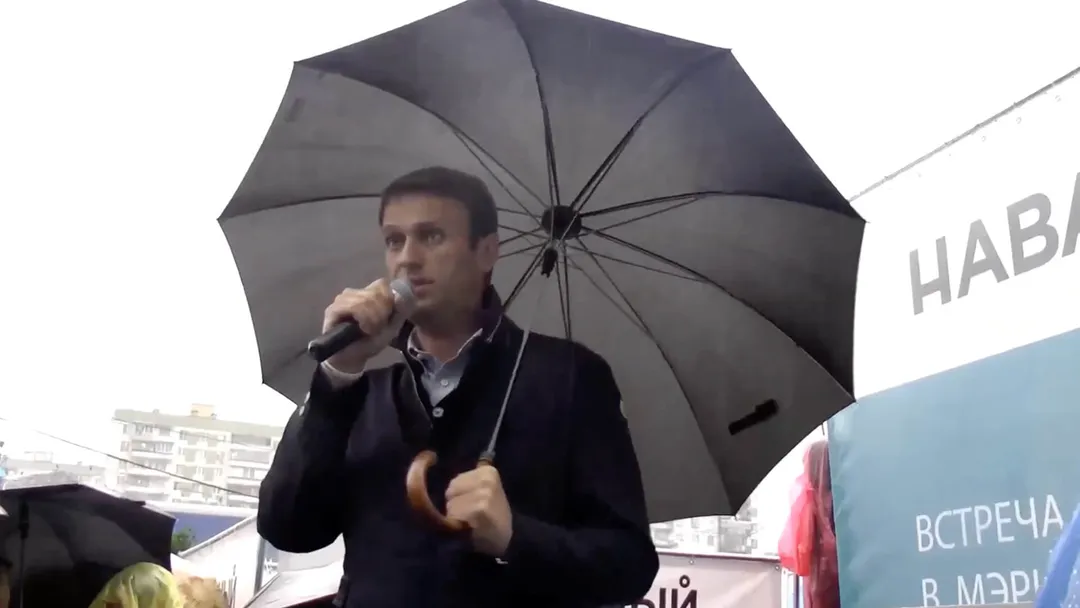
Hello.
Thank you very much. To be honest, when I was
walking here through the puddles just now, I was thinking to myself,
if I were a voter,
would I come to a meeting like this or not?
I really wondered about it. Thank you very much for coming.
This is very important to me. Our entire
election campaign is built around
meetings like this with voters, because
well, my team and I all
believe that this is the most genuine, the most
proper work for candidates:
to meet with voters.
I’m looking at you and thinking that I
really would not want tomorrow
to be blamed for an outbreak of
bronchitis or some other
illnesses. I’ll try not to speak for too long.
I’d just like to say very briefly,
very briefly, why I’m here,
tell you a little about myself, and then
move on to questions and answers. Does anyone have
any objections to that
format?
No.
Excellent. My name is Alexei Navalny.
I am 37 years old.
For the past 17 years I have lived in Moscow’s
Maryino district. I have a completely
standard, ordinary Moscow family,
a wife and two children. You can come
a little closer to me, probably. Yes, like that.
So, there comes
the first urge to jump back.
I have a completely standard
Moscow family: a wife and two children,
a son. My son is 5 years old; he goes to kindergarten.
My daughter—don’t climb on that thing. My daughter is 11
years old; she goes to school.
I come from a military family, and throughout my childhood and
youth I moved around military towns.
My parents still live in a military town outside Moscow.
By profession, I am a lawyer.
I have two university degrees. I graduated from
the Financial Academy under the
Government of the Russian Federation and the
law faculty of the Peoples’ Friendship University
of Russia.
Excuse me.
And by profession I’m a lawyer, as I already said,
I work as a practicing lawyer.
The Interregional Bar Association. Lawyers
have their own special legal form. That is,
lawyers work in bar
associations.
If you have followed my work
more or less over the past couple of years, what
do you know about me? Right.
Some people say everything, some say: "Well,
nothing." Most often, people hear about me as
someone who files lawsuits against
various corporations. And I begin all
my meetings by answering this question.
Why do I do this? Because, probably,
it will be easier for all of you to understand why I ultimately
ended up here. Yes, I sue all these
Gazproms, Rosnefts, and so on,
because they are corrupt. I
fight corruption in them. And for me,
fighting corruption in state corporations is
quite clearly, well, a way of defending my own
interests. After all, what does Russia live on?
What keeps Russia going?
The sale of oil and gas. Exactly. Over
15 years, we sold $3 trillion worth of oil and gas.
And I, as an ordinary
citizen of Russia, as a person
who may be somewhat idealistic
and believes that the natural resources
belong to the people, have serious
questions about where those very same $3
trillion went. In Brezhnev-era
times, we received fewer
petrodollars, but back then in the
Soviet Union we built factories,
plants, scientific centers, academic towns,
the military-industrial complex, and so
on and so forth. Those trillions of
dollars that the Soviet Union received
were invested, and you can see the results. But these
Putin-era petrodollars that we
received—where did they go?
The Ozero dacha cooperative (a well-known group linked to Putin’s inner circle).
The Ozero dacha cooperative. Well, maybe somewhere else
too, I don’t know. There are
maybe 100 of you here, perhaps a little
more. Can anyone remind me—maybe
perhaps you know of even one major
industrial enterprise that has been
built in Russia over the past 15 years?
Nord Stream is just a pipeline.
I ask this question at every meeting,
and I have never once received
an answer. Simply because we have not
built a single major industrial enterprise
in the past 15 years; we haven’t even
built an oil refinery.
There really is only
one pipeline. And for me this is a very concrete
problem, because this money
that Russia received should, it seems to me,
belong
to me, to my children, to you, and to your children. These are
our resources, right? But the only consequence I see
from the fact that
Russia sold $3 trillion worth of oil and
gas is that in 2000 we had six billionaires,
and now we have 131. That’s
all. That is the only ranking in which
we are, uh, moving upward.
There is nothing else. And I, like
an ordinary person, like you,
probably have neither another country nor
another life. I want the money
that comes into this country—the enormous
sums that exist—to solve my
problems. I know these problems can be
solved, and that is why I am going into politics,
because I want to solve these problems. I
am already standing here before you as
a candidate for mayor of Moscow, and I want to earn
your support so that I can solve the
problems that we can solve in
Moscow. Look, we have
a housing and utilities problem.
Of course there is.
There is. Do we pay a lot or a little? A lot.
We pay enormous sums. The
Moscow city government tells us that we
pay too little, but, for example, for the maintenance
of the building and the apartment, per square
meter we pay 25 rubles. In Kazan they pay
18. In Yaroslavl they pay 15, and in Astrakhan
they pay 12. We pay 25. And they tell us:
"Come on, pay more. Pay more."
The tariff goes up every year. Can any of
you Muscovites, any of us, actually
see what this tariff is made up of?
Absolutely everything is closed off. I want to become
mayor so I can audit these tariffs,
so I can strip out all these
nonexistent investment
components, so there is no
cross-subsidization, where some people
pay 50 rubles for cold water and others
pay 8. So that we are not supporting a huge
number of freeloaders, so that in the
housing and utilities system we do not have a situation
where the sons of district prefects own all the
management companies. I will become mayor,
I will conduct an audit, and we will lower utility tariffs,
because in Moscow we pay very
much. It is not just that it should not rise — it
should be going down.
I am running for mayor of Moscow because I want
to solve the migration problem. Are there migration
problems in Moscow? No?
You are all telling me in unison: "Yes." But the
Moscow city government tells me in unison:
"No." Because every year they
approve a migrant quota of 110,000
people a year. But all of us together
know that there are a million migrants in Moscow.
They tell me: "10,000 people.
It is all lies. And you and I know perfectly well
why migrants come to
Moscow. Not because there are jobs,
but because — well, let me
finish, and then I will answer the question. Not
because there are jobs, but
because people profit from these
migrants. How much do the janitors earn
who work in your building?
5–10.
5,000 to 10,000 here.
18,000. Yes.
There you go — you say, you
say 10, someone else says 12. But the
officially established minimum pay rate
for a janitor is 30,000 rubles. There should
not be janitors in Moscow who
earn less than 30,000 rubles. That is why they
bring in migrant laborers here,
because they are willing to kick back
10,000 to 15,000 rubles from their wages. They
live like slaves, in basements and
so on, because for our officials
in the management companies they
generate an entire river of money. But we
see the other side of that money
river. Crime is rising,
rising. Social tension is rising,
rising. In Moscow schools there are now
classes where more than half the children do not
speak Russian. This is a truly
enormous problem. I want to become
mayor in order to address this problem
now, rather than wait until in 10
years this problem becomes
completely unsolvable, when there is a huge
number of new Muscovites who do not
know how to speak Russian. At the same
time, they were born here, they grew up here, and they
are not going to leave for Uzbekistan. I
want to solve this problem because I
encounter it myself. I am running in this election because
I do not even need to ask. I
am sure that in your local clinic there are
enormous lines. Are there lines at the
clinic?
There are. But to be honest, I prepared for
this meeting here. So I read what people
write about your clinic. But even
without that, I know, because there is no
clinic in Moscow that does not have
lines. And yet, we all know
that for the healthcare of each Muscovite
four times more money is allocated
than for any other
citizen of Russia. For outpatient clinics alone,
20,000 rubles are allocated per person.
per month. Enormous money. We
have spent over the last two years on the
program to modernize Moscow
healthcare 100 billion rubles.
What is going on over there?
Some election passions? Let us
all keep ourselves under control. Just as
I was just now at the clinic
starting to talk about Moscow
healthcare.
Migrants got into a fight over migrants. But
you can see what a burning issue
migration is — people started fighting
right here.
All right, wait. Come on, come on. No one
is going to hit anyone. Our solution
to the migrant problem is that
we will introduce a visa regime. I started
talking about clinics. So, we
spent 100 billion rubles on the program
to modernize Moscow
healthcare, but none of us can
get
an ultrasound or MRI without waiting in line? Is it possible to get
an ultrasound examination at a clinic on the same day
appeals.
No.
No. Can you get a CT scan?
No. It's impossible to do that for free.
In general, it's practically impossible to do. And
we bought these scanners for 100
billion rubles. And at the Anti-Corruption Foundation (ACF)
we can see that they were simply bought at a price
twice as high. That's why all this happens:
equipment is purchased
so that someone can profit from it. I want
to become mayor in order to invest in
doctors, not equipment. We need
internists, we need general
practitioners. We do not need to buy
equipment that nobody can
operate. I want to become the mayor who
will change everything. Moscow's budget is 1.6 trillion
rubles. In size, it is second only
to the budgets of New York and Shanghai. You and I live
in one of the richest cities
in the world. Third in terms of budget, but in terms of
quality of life, Moscow ranks 154th
place. That's the little imbalance:
we have enough money for third place, but we live like
we're in 154th.
That's it. Because we simply have no faith in
ourselves. We think that nothing can be changed.
We think that this government has already
decided everything anyway, which means mayors
cannot be voted out, nothing can
be changed, because through television,
through election fraud, they will decide
everything. I go to meetings like this because
I believe that the people are the source
of power. We can change everything. If we
have recognized our problems, if millions
of people experience these problems and know
that these problems can be solved, then we can
change everything. In order to elect
the mayor of Moscow—so that I win right
in the first round—all we need is 500,000
people. Out of 15.5 million people in a city where
15 million live, in Moscow there are 1.55 million
people who know everything, understand
everything, and are ready to come
to the polls and elect a normal government for themselves.
And I am sure that relying on you,
relying on people who, excuse me,
are standing in the pouring rain listening
to things that are fairly obvious to them,
I know that through you I will speak
to those hundreds of thousands, and to millions. I
am sure that on the sixth you will help me
bring people to the polling
stations. And I am absolutely sure that
on the sixth we will be able to change the government,
we will be able to win and build a normal
city for ourselves and for our children. Thank you
very much, dear rain-soaked residents.
I'm ready to answer your questions.
On the eighth.
On the eighth.
On the eighth, yes, sorry, on the eighth, but
the sixth too—well, yes, a question. Let me
repeat the question for everyone afterward.
We all know perfectly well that there is
a problem of this kind of crime. You know perfectly well
that
Let me give you the microphone, just
briefly then.
Yes,
you all know perfectly well what problems there are.
There is the problem
of ethnic crime, there is the problem that
affected the town of Udomlya, there is the problem that
affected the town of Pugachyov. And,
Alexei, why, exactly, did you
not go to these towns, and how do you
intend to solve these problems?
As for why I did not go to
certain towns, the thing is that I am
at least under a travel restriction
pending trial, so I cannot really travel
to other towns. But that's not the point,
that all of us together should, you know, in order
to solve the problem of Udomlya or
Kondopoga, pack up all of Moscow and go
to the town of Udomlya.
That is why I am running in this election: so that the authorities
and the state will function, so that the police
will function. The police in Udomlya should
be dealing with these problems. What we have
instead, you know, is that
wedding motorcades firing guns are stopped only
when people have already blocked the streets, that
the police hold ethnic gangsters accountable only
when 10,000
Spartak fans come out and stage
riots on Manezhnaya Square. I want
to become the mayor under whom the system will
work, so that the police do what
they are supposed to do under the rules, so that
people do not take justice into their own hands, and so that none of us
has to go out and catch some
Dagestani hooligans ourselves. The police must treat
people of any nationality
equally. If there are three hooligans:
Russian, Chechen, and Dagestani—if
they are causing trouble, all of them are locked up equally
for three days. They must not start asking the Chechen
whether he has relatives in
Chechnya, whether there will be any problems
if you jail him for 10 days. They must not
start asking the Dagestani whether
people will stand up for him, whether
black Mercedes cars will come from the
Dagestani representative office. I will be
a mayor who treats everyone
equally, and all hooligans of any
nationality will be detained
by a proper Moscow police force. When that
starts working, we will not need to go anywhere.
We pay taxes so that the police, the FSB (Russia's security service),
and law enforcement agencies solve these
problems. And that is exactly what
elections are for. We elect a different government, and it will
work for us. Next question.
What tool is there to make sure
the police actually work? What is that tool?
What will you do?
A tool. What do you mean, a tool to make sure
the police work? The police are supposed
to be working already. Look, one tool
that falls, for example, within the mayor's powers,
and that really affects the Moscow
police, is the justices of the peace. Under
the law, we can elect them ourselves. So
are we ready to elect a justice of the
peace for this district? Are we? Right now, they are
effectively appointed by the Presidential
Administration, which is why "telephone justice"
is what we have. That is why in any confrontation with
any police officer, we are bound
to lose, even if the officer is
obviously in the wrong. I will cut
those telephone lines, and the justices of the peace,
for example, will not be subordinate to me either
as mayor of Moscow. And I need that, because
that way it will be harder for my team
to become corrupt. I will not be able
to become corrupt if Moscow judges,
if at least the justices of the peace are not
subordinate to me. That is exactly how
we cut the corrupt and
improper ties between the authorities and
the judicial system, and in that way we will also
influence the police. Next question,
please.
All right, may I
let's have the microphone, but keep it brief.
Brief won't be possible. Alexei, I have
quite a complicated situation. And I am
a programmer, a very serious
programmer. I am known all over the world.
So, with you, everything... Excuse me.
Hello. No, really. I mean, this is
something you can check later. So, I came to your
campaign office and offered my help,
then went on to Krivokolenny Lane. So
what your team did there—no
anti-Sobyanin ad could have done more damage.
I have never seen such rudeness and the like
anywhere. And my question now is not even
about the rudeness itself, but rather
a suggestion for you. Right now, everything with you is
one-way. You identify the problems yourselves,
you decide how to solve them, you communicate them
to the public, but nowhere on your website
is there any feedback form where people could
file a complaint about someone and so on.
Do you understand? Yes. That's my question.
Well, you understand, right now our
team has 11,000 volunteers working in it.
Different people come in. Look,
you came in, and I can see that you are
a decent-looking young man with a can
of beer. You come in and say, "I'm the best
programmer in the world." Maybe you are
the best programmer in the world. Maybe
you're not the best programmer in the world.
Obviously, all kinds of
incidents happen. No one has ever
coordinated an election campaign the way
we have. No one has ever managed 11,000
volunteers. We ourselves don't really know how
to do that. No one has ever before managed
to raise 100 million. You know that we—or rather,
not we, but you—raised 100 million rubles for us
through small donations. So, naturally,
there are conflicts; there are a huge
number of people, someone misunderstands
someone else, people get offended. That is
normal, everyday life. It's just that
right now, since we have been given, perhaps,
a historic chance truly
to stand as a united front in this
election, I believe we need to forget
personal grievances and work for the common
cause. Of course, people are people,
conflicts and different situations happen,
but we must keep sight of the main goal. Our
main goal is to make the authorities answer to the people.
And that is the goal I will work toward.
Next question, please. There was no
conflict, but you
I represent the interests of people with disabilities. Thousands of elderly people
and people with disabilities will come to vote.
And of course, many of them may
vote for you. I would like
to ask this question. In our district of
Novogireyevo, the police work terribly
and do not protect the interests of people with disabilities.
So where can one find free
legal assistance? People go and ask for help, and
people with disabilities in particular are not helped legally
to defend their rights. Please tell us,
what kind of help will there be?
Well, look, when we say that
the police do not help people with disabilities—well, who
do the police help? There are people standing here,
and probably most of them are not
disabled. Do the police help you?
No.
Exactly. That is why we are running in this election, because
the police help no one. People with disabilities come and say,
"The police don't help us."
Chernobyl survivors (people affected by the Chernobyl disaster) come and say:
"The police don't help us." Large families come
and mothers with many children say: "The police don't
help us." This government
helps no one. And if I told you right now,
"My friends, I will make sure there is
separate legal assistance
for people with disabilities," then everyone else would say to me,
"Navalny, we don't want you
to solve only the problem of people with disabilities. We
want you to solve the problem of power itself."
It's just that right now everything is arranged in such
a way that those in power do not care. They
do not care about people with disabilities, about people without disabilities,
about pensioners—about anyone."
They believe
that
they can spit on the public, because
elections depend on television, and elections
depend on the election commissions. So,
on the eighth, we must show that
that is not the case. And then Moscow’s enormous budget
will also work for
people with disabilities. But look, 1.6
trillion—we give to people with disabilities, fine, legal
aid and the police, but we cannot buy medicines.
People with disabilities have to buy their own medicines.
Even though I can see that the Moscow budget has
enough money to
pay for proper prescription drug
insurance, so that a person with a disability could receive
medicine and the insurance
company would pay for it. We can do this. I know
how to do it. We wrote it into
our program, we understand it, but it is simply
something no one needs. That is why we need to go to
the polls and solve problems comprehensively. In our city, unfortunately, there is no such thing as
a separate issue of
people with disabilities or pensioners.
There is a broader problem: the authorities
do not care about any residents at all. So
on the eighth, let’s come out and show
that we do care. Please, let me
give you the microphone.
Alexei, good afternoon. My name is Grigory
I have a question about personnel, actually.
You constantly complain
that, so to speak, Putin’s friends are
pulled into positions of power, into the vertical of power, and so on.
And yet your campaign is headed by Volkov.
I follow his interviews and, in fact,
his statements, and in particular
even his comments about your business in Montenegro.
My question is this. He,
uh, let’s say, because
he is a programmer—maybe not of world-class
caliber, yes, but still a programmer—uh, his
answers are far removed from, let’s say,
diplomacy, from any kind of polished debate. Maybe
his responses should be adjusted a bit, and
in general, if these are the kinds of people you bring in, then
how exactly will your team be formed
going forward?
Well, you understand, I am also accused of
making harsh statements.
Sobyanin, for example, also wants
diplomacy from me. For example, he says to me:
"Why are you, Navalny, digging through my
dirty laundry? My daughter is being bought apartments for
100 million rubles, and you are making complaints:
‘Come on, be more diplomatic.’ I do not
know—do you want me to be more
diplomatic?
No,
I genuinely believe that it is my absolute
right, as a Muscovite, to know with what money
an official who has spent his whole life
as a bureaucrat bought one daughter
an apartment for 116 million rubles and another for 170 million.
If I am told, ‘Be more diplomatic,’ and
not to touch these issues, then I will not be
diplomatic. And so, of course, in
a situation where, you know, I have already received
three complaints just now
saying that the police are working poorly
in your district. Here
there are three police buses standing here. Your entire
district police force has come here to guard our
rally. What kind of, uh,
what words am I supposed to
find for that? Yes, I restrain my language
when I know the crime rate,
the rate of serious crimes, the rate of
rapes in the district, but the entire
district police force came here
to watch me speak here into
a microphone. That is why I will speak plainly
and say everything I think about this government,
and the members of my team will also speak
completely plainly.
May I ask a follow-up?
Yes, please. Go ahead.
Thank you, Alexei. My first question is:
At what moment did you clearly realize that
your calling was to be a politician?
I am just curious when that happened. And
my second question is about Moscow. It is
clearly expanding beyond the Moscow Ring Road now.
They have already added so-called New Moscow. Well,
the issue of merging federal subjects keeps coming up.
What is your position on that question?
The moment when I definitely felt that I wanted
to be a politician? Well, I have had many
such moments. I can tell you about
a recent one, one of the latest
moments when I absolutely, simply
felt something inside me—I do not know, everything
just boiled over—and I understood with complete certainty
that I had to run in the elections. It was when, once again,
I went, for example, to
Rosneft and confronted it with
complaints that they had stolen
everything there, and there sat this woman,
the vice president for legal affairs,
at the state-owned company Rosneft. So,
what do you think the salary might be
of a vice president at the state-owned
company Rosneft?
78,000
Well, a million rubles
a million rubles
less
per day
15 million
per day
10 million
30,000 rubles
30,000 rubles.
So, I heard the correct answer here:
880 million rubles a year.
A state-owned company. And I come in,
and when I make yet another complaint,
saying that you have stolen everything here, and
that yet another one of your construction projects costs 10 times
more than it should, they look at me and say:
‘What makes you think, Navalny, that
we owe you any explanation at all? Why on earth’
What makes you think that you, and people like you,
are owed anything by us? What makes you think that
we, these great statesmen,
have to explain ourselves to anyone? We don't owe
you any explanations. Get lost! And in court you'll
lose to me, because my husband
appoints these judges in the Presidential Administration
(the executive office of the Russian president), and court bailiffs won't get
near me. Even when I win a case
against Transneft, they don't let
the bailiffs through the door. So when
I come face to face with
these people, who are basically just
random con artists who have wormed their way in,
collecting official salaries of 1 billion rubles a year
(about $10 million) a year, looking me straight in the eye
and brazenly telling me that I have no
say here, and that people like me have no
say either, I understand that I have to run in
elections, because this government has to be changed
or else we'll be left with
nothing at all. Otherwise, they've already pumped out
$3 trillion worth of oil and sold
it. We got nothing. They'll extract another $3
trillion. I'm 37 years old now. And
when I'm 67, I'll still be
walking around telling my neighbors
that I was robbed. That's why
I'm running in this election now so that,
when I'm much older,
I'll know that I did everything I could
to change this government and
to make it answer to the people
and to people like me. And the second question
was about the federal subjects of Moscow and Moscow
Region.
Moscow Region is an excellent question.
It's a perfect example of how all sorts of
inexplicable things happen in the city.
Now remind me, please, who
made the decision to annex New
Moscow?
It's unclear.
Medvedev.
For what purpose?
Because the idea was to annex it, or rather,
to move the federal government bodies
there. Right?
They announced it, passed a law under which
in New Moscow land can be taken
away from residents. In fact,
it's now easier to seize land there
than it was from anyone in Sochi. Two months ago
they said, no, we're not moving government bodies
to New Moscow. Then Sobyanin said:
"We, we are moving City Hall." Then he said:
"No, we're not moving City Hall." It's complete
nonsense. There are no calculations, no analysis.
It's just that some people woke up one morning
and said, "Well, let's just
go ahead and annex New
Moscow." The investment in New Moscow's transport
infrastructure alone will cost
us $82 billion. And the population there is tiny.
If you take Novogireyevo and Ivanovskoye,
more people live here than in
all of New Moscow. And the residents of New
Moscow themselves don't need any of this. I want
to become the kind of mayor who calculates first
and spends money afterward. Because, you see,
the decision about New Moscow will determine
the city's development for decades. Why are
these important decisions, which affect
millions of people and the development
of the city far into the future, being made
by just two random people, with no
planning, without even the most basic calculations? And
as for moving federal government
bodies in connection with New
Moscow, we have a very good recent
example. Which government body was
moved out of Moscow?
The Constitutional Court.
The Constitutional Court. Where was it moved?
St. Petersburg.
To St. Petersburg.
So, in St. Petersburg they built a palace. Well,
they renovated a palace for the
Constitutional Court. In St. Petersburg, every
judge of the Constitutional Court was bought
an apartment. Every judge of the Constitutional
Court was bought a dacha (country house). And now
the Constitutional Court holds its sessions in
Moscow and calls it an off-site session
of the Constitutional Court.
It would be funny if we hadn't spent
hundreds of millions of dollars on it.
That's why I want to become a mayor
who does not make decisions
that way. First we calculate everything.
Maybe we spend years
working through and calculating such key decisions, and
only then do we start spending even a single kopeck
of money, because it's our money, and we have
plenty of places to spend it: education,
healthcare, raising pensions. So
first we calculate, then we spend.
Please.
A question about those years, actually. May I?
About what?
About the years.
Go ahead.
Moscow is a big city, with many problems, and as you
rightly said, solving them can take
years. We've also heard about your
presidential ambitions. Maybe you didn't
say it yourself, but we've heard it. And in
2018 there will be a presidential election,
possibly even earlier. So are you planning to stay
on as mayor of Moscow for long?
Five years.
Five years. Moscow.
First of all, Moscow is where I live.
I've lived here for 17 years already.
I'm not planning to go anywhere.
What is the mayor of Moscow? It's the third most
important political office in the country. And
if I, as a politician, set myself
the goal of changing life in the country for the better,
then I will fight for important
political offices and focus on
important elections that truly
change life in the country. That is why we
wrote on our poster: "Change
Russia, start with Moscow." Because, well,
the country is structured in such a way that any
political changes in Russia will happen or not
happen depending on whether Muscovites want them
or not. There is no other way.
The fight for the post of Mayor of Moscow is a fight
for Russia’s political future, in fact
perhaps no less important
than the presidential election. And that is exactly how I view
it.
That is why I will take part in any
important elections. In any case, my
work will serve the interests of
Muscovites and all residents of Russia,
because I am just as much a Muscovite and
just as much a resident of Russia. I simply
want to solve the problems that I know
how to solve, and I absolutely will solve them
if I win this election.
You are welcome,
My name is Sergei, I am 18 years old. I
wanted to ask about a problem like
beggars with animals, because
about 3 days ago I encountered this
problem. We went up to an elderly woman, um,
who had a miserable puppy with her. It is just,
you know, very painful to see these dogs,
and cats in such terrible condition,
they are not fed, no one really
looks after them. And
there is no law, right. And the question was this:
are you planning to do something
about this, maybe something regarding Article 245
and a second question.
Well, listen, beggars with animals are one thing,
but we also see the same kind of
beggars with children.
And it is not even clear where these children
come from. There is no need to invent
anything here. What is happening is
an administrative offense. Everything
we need to do in general regarding
begging is treat it as an administrative
offense. When I become mayor, I
will do one very simple thing: make sure that
your district police are not guarding, as
they are right now in full force at this rally,
not sitting in buses and not
bringing three police vans here, but instead
doing their job of stopping
administrative offenses. This
applies to everything, from
Dagestani weddings with celebratory gunfire
to those very same beggars.
Right now the police are simply performing the functions
of political surveillance, or else
they are busy falsifying
their statistics just to
secure themselves a comfortable
existence. What should the police do in a city?
Protect residents, maintain
public order. When I become mayor,
I will make them do what they are supposed
to do under the rules, because I will do
what I am supposed to do under the rules. It is my
direct duty, and I will make it happen.
Let us take a question from this side. Go ahead.
Good afternoon. My name is Tatyana. I have
a practical question. Entuziastov Highway
has been under repair for more than 4 years. We cannot, we
just cannot drive there. We have simply switched to
the metro. Will you oversee
road construction in Moscow, and Entuziastov Highway
in particular, first of all? Thank you.
This is some kind of construction nightmare.
Oh yes. The problem of roads in Moscow is a
colossal problem. Who is the main
road construction contractor in Moscow
right now?
Rotenberg. Exactly. These
rather dubious guys who in
Soviet times were Putin’s judo partners,
then somehow amazingly
ended up supplying large-diameter pipes
to Gazprom. Now they have dropped their pipes and
run to Moscow to build
roads for us. That is why it turns out that
something like the North-Western Chord costs
70 billion rubles, and all builders and
transport specialists say with one voice that
it is twice as expensive. In the construction of the
North-Western Chord
35 billion will be stolen. That is more than enough
to build outpatient clinics
and schools all across Moscow. That is why it is my
top priority to deal with
this entire construction mafia. In fact,
there are really three companies that have created
a monopoly and simply taken all the biggest
contracts: the North-Western Chord,
the North-Eastern Chord, the Southern Rokada,
the Alabyano-Baltiysky Tunnel,
the reconstruction of Leninsky Prospekt. These are
all absolutely mafia-style schemes. And the purpose
of these projects is one thing only: to siphon off money.
That is why it is my top priority,
as mayor, to deal with this mafia. I am
absolutely certain that my first
steps to destroy the monopoly and
restore competition will bring
road construction costs down to the pan-European
level, which means twice as cheap
as they are now in Moscow. And we will be able to build
much faster and much more with the same
money we already have. That is something I
will most definitely do.
Thank you.
You are welcome,
Alexei, hello. My question is this:
my vote is automatically in your piggy bank
simply because my heart is with you, but still, what will you
do if you do not get
a sufficient number of voters,
enough votes in these
elections?
Well, first of all, no pessimism. We are
a hair's breadth away from a runoff. If
each of us makes even a minimal effort,
persuades five people, comes
to the polling station, there will
definitely be a runoff, and in the runoff
we will win, because in the runoff
those who voted
for the Communists, for Yabloko, and so on, will vote for me, while
Sobyanin will not have that kind of mobilization in the runoff.
That is the first point. Second. What am I doing now?
I have an Anti-Corruption Foundation (ACF).
Unfortunately, unfortunately,
the number of tasks facing the Foundation
for Fighting Corruption in Russia is so great
that I will not get through them all
in the foreseeable future. So I have plenty
to keep me busy. I will continue conducting my
investigations, and I will rely on you.
I will build a political force
that will rest on hundreds, thousands,
perhaps millions of people who, just like
me, want normal
change, who, just like me,
understand basic things, understand
that political competition is necessary,
that we need independent courts, we need free
media.
I plan to win this election. I
plan to stay involved in political
activity. I plan to fight for
the office of president. I plan to win. I
plan, together with you, to build a better
life, the kind of life all of us need. My friends,
I am very afraid that I will get fewer
votes in the Novogireyevo and
Ivanovskoye districts because you will all come down with
pneumonia.
From here on, I would like to answer
questions individually. I simply want
to thank you for standing here and listening to me for 40 minutes.
Thank you very much. I would very much like to have, in you,
the support of people who
will bring other people to the polling stations.
I am absolutely certain that we
will win. Thank you very much. Hooray!
Novogireyevo. Hooray!