Alexei Navalny’s meeting with voters from Moscow’s Oktyabrskoye Pole district. Part 2
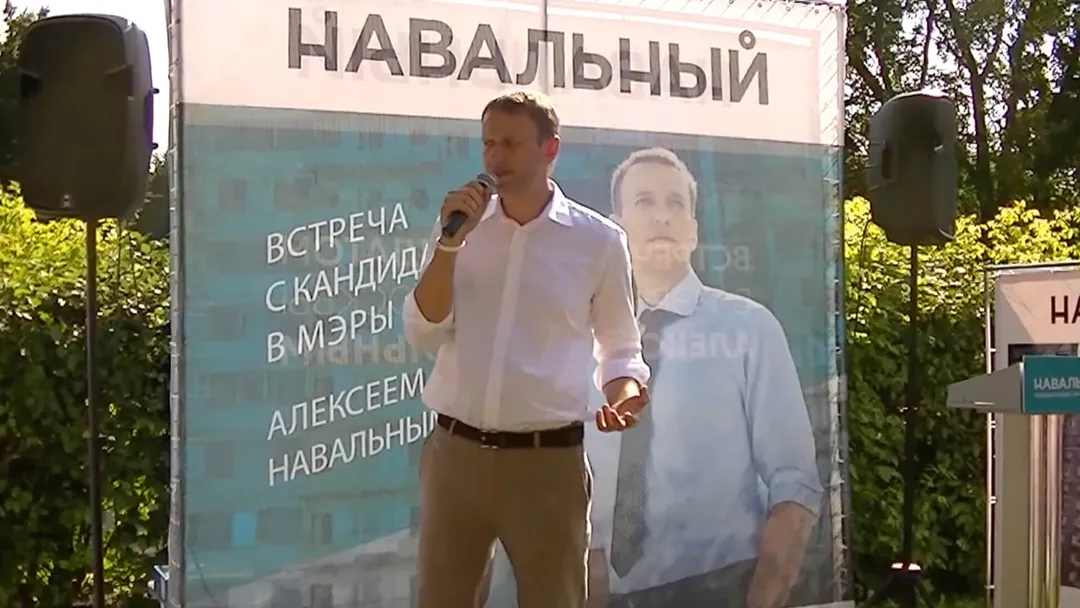
... nothing original. This is simply done in
all normal cities. There is nothing
impossible here, no need to invent anything. It’s just that
right now, decisions about carrying out
the biggest construction projects are made not
because someone decided that what’s needed is
the North-Western Chord (a major Moscow highway project). No, they came into
an office and said: "Your budget is somehow
too large, 1.6 trillion,
let’s cook up something
for 80 billion." And so they cooked something up. This is not
an exaggeration. Look at what
is happening with the reconstruction of Leninsky
Prospekt.
At first they said: "We’re going to carry out
the reconstruction of Leninsky Prospekt. Anyone
who is against it is an idiot." Now, with the election approaching, residents have
raised hell. Sobyanin came out and
said: "All right, we won’t do
the reconstruction of Leninsky Prospekt."
After the election, our man will say: "Let’s
go ahead and do it after all." Is anyone actually doing any planning? We have
Moskomarkhitektura (the Moscow Architecture Committee), we have
NIPI Genplana (the city planning research institute), we have construction
complexes. Is anyone counting anything at all, or
are we some kind of village with just
chaotic construction? I want to become
the mayor who finally brings
order. A question about migration and
markets.
Well, let’s first assess the migration
situation overall. Do you know that Moscow
ranks first in the world in terms of
the number of illegal migrants? Is that
a normal situation? A proper one?
It’s not a normal situation. Forty percent of all
male Tajiks in the world live in
Russia. In other words, they have practically all moved
here as an entire country. Is that a normal
situation? Right.
I have three clear and sensible
solutions to this problem.
Before I explain them, I first have
a question for those gathered here. Please tell me,
raise your hands if you have been to any
European country. Any one at all.
Okay. And now raise your hand if you
entered that, any
European country without a visa.
How did you get there? You must have had a passport,
probably, he says, of another
citizenship. And which country did you enter
without a visa? Montenegro. Was there Poland?
That doesn’t count.
Montenegro has visa-free entry to
Montenegro. Poland is in the European Union; you need
to get a Schengen visa. So, look,
as far as you and I are concerned,
a visa regime applies. Neither I nor you—we
cannot enter either Germany or
France without a visa. If we go,
for example, to the United States, we will have to give
fingerprints. At the embassy and at the
border, too. And nobody has died from that.
So please explain to me why
any Uzbek or Tajik, even without
an international passport, using only a domestic
passport, can come at any moment
to Moscow. Just buy a ticket and come.
Why are Tajikistan or
Uzbekistan somehow closer to me, closer to us, than France and
Germany? Yes, they are former republics
of the Soviet Union. But we have a visa regime with Georgia (the country),
and with Turkmenistan there is
a visa regime too, right? There is. Nobody died. Everything
is fine, everything works. So what is the difference
for us standing here between Georgia and
Tajikistan, or between Turkmenistan and
Uzbekistan? None. Therefore, the first measure
that needs to be introduced—a normal, not
don’t worry, we have plenty of balloons, we’ll give you
another one. But a normal legal
measure is to introduce a visa regime with
the countries of Central Asia and the South Caucasus. I,
by the way, am the only candidate who
is openly advocating this. All the
others are wavering this way and that.
This is normal. They don’t let me into
Germany without a visa. They don’t let you in either. It is
normal if we do not let in
citizens of other countries. That is how Germans protect
themselves, and that is how we should protect ourselves.
Measure number two is
a measure against those contractors and
companies for whom it is very profitable
to hire illegal workers now. Right now, if you
hire an illegal worker,
the labor is cheap, and if you get caught, it’s
a small fine or a small bribe. I have
drafted a bill stating that
if a company is caught using
the labor of illegal migrants, it
is disqualified. That means it will never again
get access to city
funds. This is a measure that will actually
work.
And measure number three. Within a year, we will
introduce a rule under which any
commercial or state
organizations that use
budget money will not have the right to use that
budget money to hire foreigners.
If it is a fully commercial
enterprise using its own money, that is not
our business. Let them hire whoever they
want. But all these contractor
organizations, these state unitary enterprises, district maintenance offices, and so on,
and so on, that work with our
money, must use our money to
hire Russian citizens, and they have the money
to do that. Or even Muscovites. The money
is there. We hear a lot of tales
and myths about this. You’ve surely heard
this one: "If all the Uzbeks leave
Moscow, we’ll be buried in filth." Have you heard
that?
Yes. They say it all the time. So, if the Tajiks
leave Moscow, there will be no one to clear the snow
cleaning. Heard that?
Well, we do live in Moscow, after all.
We have for a long time. And the truth is that
before 2003 there were no
migrants in Moscow. There weren't any. In most
cities in Russia, there are no migrants.
In Russian cities with populations under
500,000, there are no migrants at all. In
Belarus, there are no migrants at all.
Take the ranking of Russia's most well-maintained
cities. There are no migrants there. By adopting
these three basic
rules, we can seriously limit both
the number of migrants and the number of
crimes associated with these
migrants. We will definitely do this,
because my job as mayor is to work
for Muscovites, not, as I said at the very
beginning, to drag them here because they
kick back to me from their salaries
10,000 rubles every month. Next question.
Yes,
let's keep in mind there are a lot of people, one
person, one question. Pick the main one.
May I?
I'll repeat it for everyone afterward.
A question. The first question is about the financing of
the election campaign. You know that
United Russia is constantly outraged:
"Oh, Navalny's election campaign
is being financed improperly."
Indeed, in terms of the size of our
campaign fund, we are second only to Sobyanin.
Sobyanin has raised, I think, 1 ruble there, and
we have now raised 35 million rubles. What they can't get over
is one simple fact: the sponsors of
our election campaign are
ordinary people. Twenty, or by now around
25,000 people have sent us 100,
200, 500 rubles. That is exactly how
our election
campaign is financed. United Russia simply
cannot calm down. They cannot wrap their heads around the fact
that there are people
who sponsor an election
campaign, that there are people who
send their own 500 rubles for an election. We
compiled statistics on who sends us
money. You know, I myself was simply amazed
by this figure. What do you think? Just
tell me, who is that representative,
the typical representative of the population, in terms of
gender and age, who donates the
largest amount of money on average?
Young people.
Pensioners,
You say young people, pensioners. But for some reason you
are thinking average. The typical
donor for us is a 60-year-old woman.
They still give, that is, these are still
small sums, around 500
rubles, but they donate even more than
young people. I am very proud of this fact,
because our election campaign is
the first election campaign in
Russia to be financed
by actual ordinary people. For me, that means a great
deal, because I
have spent many years
proving to everyone, to you and to myself,
that I can live by the same principles that I
demand from officials. Our Foundation
Against Corruption (ACF) is financed in exactly
the same completely transparent way. You can go in
and see who earns what salary, who
does what, their last name, first name,
patronymic, and what each person's work statistics are.
We have been doing this for many
years. It is hard work, but in
return people donate money to us,
because they are confident that we will use that money
properly, and we
do use it properly. That is exactly
why people continue now
to fund us. That is exactly why
yesterday 35 internet entrepreneurs,
not very big names, not very
wealthy, but nevertheless they quite
openly declared that they support
Navalny and will, among other things,
help finance his election
campaign. Gazprom will not finance
me, and I don't need it.
And all those utility companies,
they finance Sobyanin and everyone else. But
naturally, the people who send me their small amounts of money are a hundred times
dearer and more important to me,
and so are the entrepreneurs who
openly
are not afraid to support me. And the second
question was about my fate.
As I understand it, this is a question about all
these criminal cases and so on. Well, you
know that I have already even been
jailed once, right? And yet here I
am, standing before you speaking. And at
every meeting where I am asked
about this, every time I tell
residents: thank you very much, because
it was thanks to you that I was released. Precisely
thanks to you, thanks to those who came out
into the streets, thanks to those who were outraged.
And for the first time in the history of this government, we showed
that we do not believe it has the right
to imprison anyone without proper trial or investigation,
on the basis of any fabricated
charge. And we do not want things to
be that way. And something happened that I myself
did not believe in when they led me to the cell.
Of course, I understood that I was not going to spend five years
in prison, but if someone had told me
that people would take to the streets and that the
next day I would be released, I would never
have believed it. So my
fate, grand as that may sound,
is entirely in your
hands. As long as I have the support of
the public, they cannot do anything to me
No. No one is going to jail me, and we ourselves
will put everyone else in jail with you.
Alexei, may I ask you a question?
Yes, of course. Go ahead, ask your question.
Well, I want the microphone passed in turn. Don't
hide it. So, many residents among us
and Muscovites in general are interested in this:
why does Sobyanin publish decrees
that don't work? I would like
this question to reach Sobyanin
personally. Please, if possible, pass it on to him.
If he issues such decrees and they do not
work, why are they published in the press?
Specifically, this affected everyone with water meters.
Specifically, it was published in all
the newspapers that water meters
did not need to be inspected. It was. Let Sobyanin
answer us in the press or on television
why his decrees do not work. Otherwise our
district will not go to the elections. Many
Muscovites and local residents will agree with me.
We simply will not go to vote at all.
All right, wait. I liked everything you said
except for the last conclusion. It's just that if
you want to get something across to Sobyanin,
you should know that Sobyanin is waiting for you not
to go to the polls. Sobyanin understands that
he can win only with low
turnout. If the entire protest
electorate says, "Our protest
consists of staying
home," Sobyanin says, "Excellent,
thank you very much." What is your name?
My name is Lidia Petro... On Putin's elections
our district was among the best
it was noted. Look, in our
district things have become better, if our people and we
think it over for these elections too.
Lidia Petrovna, you demanded the microphone so decisively
from me that I
expected some kind of unpleasant
question for me. But as you can see, you are asking
a question for Sobyanin and asking me
to pass it on to Sobyanin. And why do you think,
Lidia Petrovna, and everyone gathered here,
why Sobyanin refused to go to
a debate with me?
He's afraid.
Exactly. Precisely because he
is afraid that I will pass on a question from
Lidia Petrovna.
That's all. Because his people are here
and he
his people are here, of course his
people are here. Representatives of the district administration are probably standing here
writing everything down,
filming everything, and so on. But, Lidia
Petrovna, here's the conclusion. Everything you said is right. I came here
precisely because all these laws and
all this outrage—I share it with you
too.
The very same laws that do not work
for you also do not work for
me. But if our conclusion is that we
simply won't go to the polls as a sign
of protest against Sobyanin, that's like the story
of the rabbit: "Don't throw me into the briar
patch." Sobyanin is just waiting for you, as a
sign of protest, not to go vote.
Then he'll bus in his Kyrgyz voters
on three buses, and they will vote at
every polling station, and he will say, "You know,
I won with 85 percent.
Muscovites have trusted me again. Muscovites
have placed their trust in United Russia. Many thanks
to the people of Moscow."
Are we really going to let ourselves be deceived like that?
That's all. Therefore, Lidia Petrovna, I share your
outrage, but the tactic of struggle
is wrong. Please, the right
question. Well, I don't know. Go ahead. All right,
good. Thank you. I wanted to ask a question,
well, it probably connects somehow with
what has just been said.
Naturally, you are a practical person,
a realist. You understand that all these
people at the trough
are not simply going to hand everything over to you. What
they have, so to speak, acquired through "backbreaking labor,"
right? You understand? And yet the position
of mayor is, after all, a position of
an administrator. How are you going to
combine administrative work and
politics? They will put spokes
in your wheels. What then? Won't it turn out that
all this obstruction
will produce, so to speak, poor
performance, and then they will say to you, "Well,
there you are, you became mayor, but you still can't
deliver, can you?" Thank you very much.
Excellent question. Indeed, could it not
turn out like this: you elect me mayor,
and then they take everything away from Moscow,
all the money, take it all away, and it turns out
that bang—tomorrow there's no hot water
anymore. That won't happen, because
Moscow is very rich and very large. And
the specifics of the budget process and
the tax code are such that
it is impossible to take this money away from Moscow, from Muscovites, from the mayor
of Moscow. And in Moscow we
can pursue a completely independent
policy. You are right to say that
there are many administrative functions, of course. But
we should remember that, broadly speaking, the job
of the mayor of Moscow—and 90 percent of the mayor's time—
goes to what? He travels around, cuts
red ribbons, and hands out
certificates of honor. The main task
the mayor of Moscow must solve is
to establish proper principles for
building a team, so that all the people
working in the top positions
at city hall know that stealing is hard,
stealing is difficult, stealing is dangerous. And if
you steal, you will be fired, and if
you are caught doing it, you will go to jail.
This is not some abstract thing that
I’ll explain it with a simple example that
I also bring up at every rally.
Please remind me, what is the biggest
corruption case in
Russia right now,
other than Kirovles.
Serdyukov. Right, Serdyukov. Please remind me,
is Serdyukov in prison?
No.
Has Serdyukov even been charged?
No.
Serdyukov is still driving around in a
Mercedes
provided by the Defense Ministry, and he still has
an official flashing beacon assigned to him. And Vasilyeva, his
accomplice, where is she now?
In a thirteen-room apartment.
That’s right, as you say, under house
arrest she is allowed three hours a day
for walks. And during those walks she gets
photographed in jewelry stores
buying jewelry with honestly earned money,
apparently. Yes. What’s more, let me tell you,
my friends, since not all of us here are
lawyers, probably,
and in Vasilyeva’s case,
house arrest is formally
classified as restriction of liberty, which
will later be counted toward her sentence at two days for every one.
If Vasilyeva is ultimately sentenced, say,
to two years in prison, then she will be
released immediately,
because she will have effectively already served it
under her very strict house
arrest. What I’ve just told you is not news
to you.
Everyone knows this. These are the openly declared
principles for shaping
the bureaucracy in Russia: steal, grab,
skim. Nothing will happen to you if you
observe the main conditions: political
loyalty, the right portraits on the wall, and
kickbacks to those above you. And then you’ll be
just fine. I want to become the mayor who
will, with the support of Muscovites, carry out
a normal personnel policy. There are
examples of this. In Singapore, when
Lee Kuan Yew took charge, the city, populated by
Chinese people, was also full of folks
inclined toward corruption. He said,
that in order to defeat corruption,
I jailed half of my friends. But now
there is practically no corruption left
in the city. And there won’t be any in Moscow either, because I
want to be the kind of mayor whose
officials all follow their
instructions. And if you do not follow
instructions, you get fired. People are
adaptable. In Moscow City Hall, the city is
run by tens of thousands of people. And if those
tens of thousands of people see
that the leadership lives by the right
principles and really does fire everyone
and jail people for corruption and for failing to follow
instructions, they will all fall into line and everything will
start working here the way it works all over
the world. Your question.
Alexei, could you please explain how you
view
the part of Moscow’s budget financing
that involves attracting
investment, and our
business community—
TNK, Rosneft, Gazprom, Norilsk
Nickel, MTS, Beeline, and so on?
How do I view the business community
that finances the Moscow budget—
Rosneft, TNK, Norilsk Nickel?
Some of those you mentioned have already
re-registered elsewhere. In fact, a mayor
should not have any special attitude toward them. Right now, I
as a shareholder view these
companies negatively, because I know that
they are robbing me as a shareholder and you as
the owners of the country’s natural resources. But
as mayor I want only one thing: for these
companies to pay taxes into my budget. And
I have no good or bad
attitude toward them. All that needs
to be done is to act according to the law.
No preferences, no special advantages,
no special arrangements. Pay your taxes
and that’s it. That is exactly the job
of any mayor. Yes. Next question.
A question. I have this question for you,
Alexei—could I have the microphone too, please?
Yes, please. Alexei, our
only hope really is
a change of mayor in Moscow, because even this
small park where we are all standing
is now supposed to have a road run through it via Strogino.
That means it will no longer be here;
instead there will be a six-lane highway here.
Alexei, we, the residents of this district—you
can hear this roar right now, and we hear it
at 5:00 in the morning and at 2:00 at night. We are
asking you very strongly to stop this
construction of highways through residential neighborhoods,
because the Fourth Ring Road
would have cost many times less than these
highways running along streets all across Moscow.
They are planning to remove the Mnyovniki floodplain
from protected natural area status solely so that this
expressway can pass through it. I understand that we
have already discussed the expressway, but I want
to say that it will be
impossible to live here. We really will have to,
as Sobyanin advised us, leave
this city. But I do not want to leave
this place. I was born here. My ancestors lived here
back in the days of the tsars (the Russian emperors). And
so for me this is, this is my
home place. So, Alexei,
please do everything you can to make sure that
highways do not run through residential neighborhoods.
They promised a crossing on Vershinina Street,
underground, above ground, whatever kind.
There will be no such crossing. There will be a crossing near
in Oktyabrskoye Pole, and here on
Berzarina Street. This entire square, all the way to the
railway tracks, will be destroyed.
So, residents, I’m asking you very strongly, don’t
stay asleep. Please write letters to the
mayor’s office. We have one month left while they’re still willing to listen to us.
After that, they’ll only
spit on us. Thank you very much for
Thank you very much. You seemed to begin by saying
that, uh, you’re practically certain that I
am winning this election, and ended by saying
that, as you put it, in a month they’ll
spit on us. If we win the election,
no one will be spitting on us. Our last
hope is ourselves, my friends. We
ourselves. If we believe that we are the ones who create power,
then everything will change.