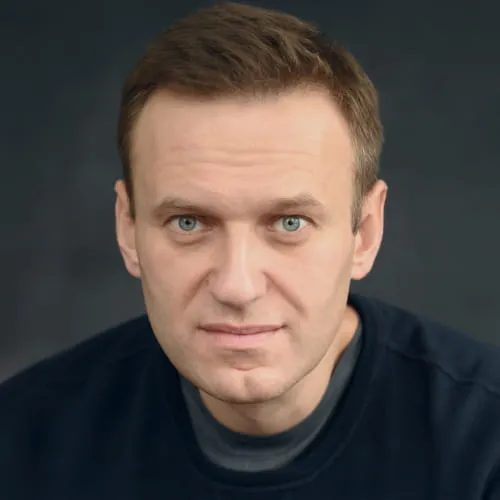
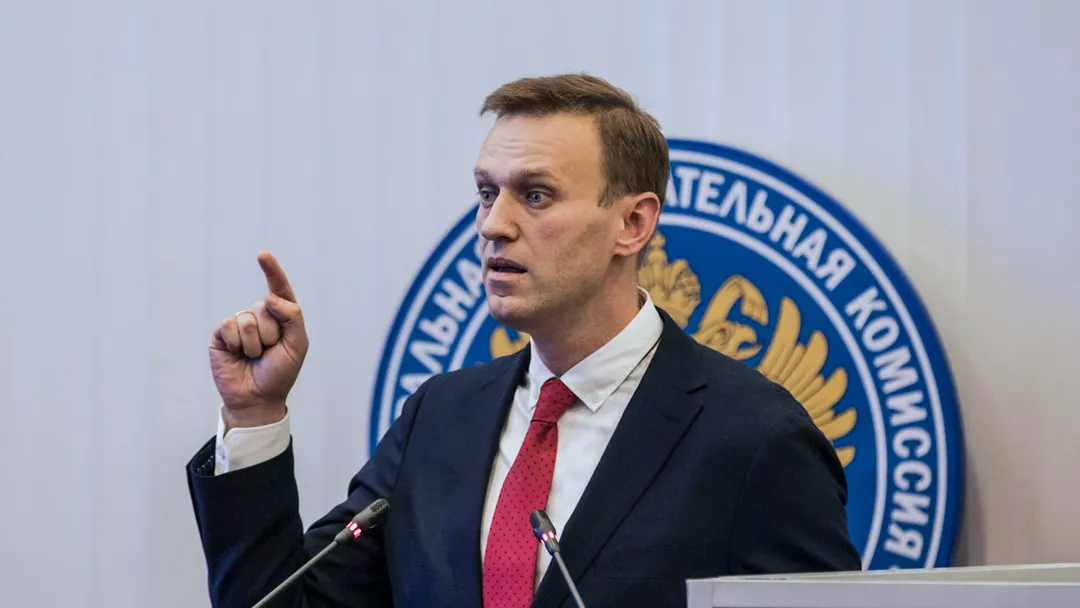
Alexei Navalny’s Speech at the Central Election Commission
Please, before we make a decision,
I am also speaking about the cases in which we
have given the floor to Alexei; this is very
Please, the podium is yours.
Thank you. Good afternoon.
I do not like the Central Election Commission
and I assume you do not like me very much
either, but a strange thing is happening.
Namely this:
I am constantly doing your job. Here I am,
for the second time in my life, speaking at a meeting
of the Central Election Commission, and all the while
I keep saying the same thing: how can you, guys, make it so
that more people come out to vote,
so that the citizens of Russia
who over the past 18 years have completely
stopped believing that elections have any
effect, would nevertheless believe in them again and
go to polling stations in order
to make a conscious choice
and influence what is happening in the country.
And the amazing thing is that I keep urging you
to do exactly that, urging and urging you, and you keep
saying no. Last time I spoke here,
I spoke in support of the lists of opposition
parties that were running only in certain regions—in
Novosibirsk, Kaluga, and Magadan, as I recall,
and I remember exactly what was at issue here,
and by the way, I went on a hunger strike because you did not
allow people onto the ballot in Novosibirsk.
You did not allow Vannikov. That was under your
under your
predecessor, but the essence of the commission, as you know,
has not changed at all.
I look at you now, and it is the same thing.
On the one hand, it is an amazing
celebration of life.
Some wonderful people come in,
respected people, and they have every right
to participate in elections. But we see no
real political activity, and here everything is
so nice—you congratulate each other on
the New Year, wish each other
success, and rejoice at how wonderfully everything
is going. On the other hand, whenever I come here,
somehow it always turns out that
things do not work out for us for some reason. And yes,
however inconvenient it may be for you, well, you
Thank you very much, and please do not
interrupt. All right? You may be seeing me
for the first time, and I am glad, but your colleagues
have seen me before. After all,
I did not come here as your guest; I came to
an institution, and this institution under
Mr.
[Churov] and under Ms. Panfilova works
in exactly the same way. It weaves some kind of
legal lacework.
Borisovich, you spoke so eloquently that
I was listening in admiration. As a lawyer, I thought: my God,
what a well-spoken man, and all of it is so
beautifully constructed, and so many words
were said, with so many different references, even
to the international convention on the protection of
human rights. But over all that lacework there is
a huge sign:
you are not allowed to participate in the elections.
We will not allow onto the ballot those who speak out
against corruption; we will not allow onto the ballot
those who are not afraid to challenge the current
government; we will not allow onto the ballot those who are
actually conducting
a real election campaign. That is the
big red sign hanging here.
There were demonstrations here of 100,000 people.
Those people who gathered at the demonstrations
declared that the authorities, the president,
together with the Central Election
Commission, had falsified the elections,
deceived millions of people, and stolen millions
of votes.
They stood here and told you all this.
You changed some formal things, but
you continue to do exactly the same thing. To all
these people, you continue to say: you are not
admitted to the elections; we will not let you in
ever, anywhere, because you disturb
our small, cozy world in which
there is us, there are candidates who do not even
try to fight for votes, and there is
a predetermined election result.
Previously it was achieved more through falsification;
now it is achieved more through barring people from running.
So, what I want to say is that even
all your legal constructions, Boris
Borisovich, I am addressing you directly, are absolutely
wrong, despite your remarkable
biography. The Constitution of the Russian
Federation
which, even if legislation specifies things further,
does not thereby cease to be
substantive law—in it, in black and white,
it is written plainly, in black and white, that
legally competent citizens have the right to run for office
if they are not being held in places of deprivation of
liberty. The Central Election
Commission is, of course, a gloomy place, but not
so gloomy
that it can be considered a place of imprisonment.
Therefore, I have the right to run in this election.
Moreover, it was said here
by the rapporteur on my case, on
the previous matter, that the
verdict had been reviewed many times
by various instances. Well then, I inform you
that my verdicts were reviewed, and I
proved in the European Court that those
verdicts had been fabricated.
There are direct rulings to that effect. Moreover,
dear friends, I want to point out to you
that you really should no longer have the right
even to utter the words
"international convention" or "European Court,"
because there was a special decision
reviewing the way the Russian
Federation
implements the judgment in Navalny v.
Russia, and there was a specific ruling on that.
is legally established and must
be accepted by Russia, stating that the state
of the Russian Federation failed to comply with
the ruling of the European Court, and it separately
stipulates that Alexei Navalny must
be allowed to participate in the election, because it is obvious to everyone
and there is no need to pretend
that you do not understand that these
cases were fabricated in order
to keep me off the ballot. That is
the whole point of this entire scheme, and everyone
understands that perfectly well. But I came here
not even to engage in any kind of
legal debate, although the last thing I will
note on the legal issue is that you
are being misleading when you say that
the Constitutional Court considered this, and
it considered a similar provision
in the law on guarantees of electoral rights
yes, but presidential elections are governed
by a different law. That law was not
the subject of review. Since we
... but of course I
did not come here to engage in casuistry. I
came here to declare that
I represent a huge number of
voters.
You may treat that with irony,
or you may treat it without irony,
but I am saying with complete certainty that a decision
by the Central Election Commission, if
such a decision is made, to deny me access
to the election will exclude millions of people from this
election, and will exclude millions of people altogether
from the political system, because it will not
give them any opportunity whatsoever
to participate in the election. And your decision today
is exactly about that. It was said
in the phrase:
"We have nothing to discuss here; this
does not constitute any kind of conflict
or subject of doubt for us." So you do have
a subject of doubt. Why not
build a whole system of attempts to prove
to yourselves that somehow you are such
good people, and that when you go home later
you can look in the mirror and say, well,
I am a decent person, because look
at how much we said. No, that is not
the case. If you do not allow me to run in the election,
you will be making a decision not against me, but
against those
How much time do I have left? Two minutes?
All right, thank you very much. A decision against
those 16,000 people who nominated me yesterday,
against those 200,000
volunteers who are working in
the election campaign, and against those
millions of people who are demanding,
who have been appealing to you throughout the year and
saying one simple thing: we demand that
Navalny be allowed onto the ballot. And this is not about
Navalny; it is about the fact that there needs to be
a candidate who will finally come to
the election and say plainly everything
that is happening in our country right now, describe
our reality, the lack of
prospects, the poverty, and so on, in plain
language.
I did that, and that is precisely why you do not
want to let me into the election. In closing, I
want to
say this to you once again: you are not robots, and from what I can see
you are very much alive; one could
touch each of you, rosy-cheeked and well-fed. You are
an independent body, and I understand everything
that is going on in your minds, I understand
the difficulty of your situation, but surely
once in your life you can do
something decent, not even
heroic. No one is standing there
with a gun to your temple. A simple thing
based on the law can be done, not
for me,
but in order to fulfill your function in
the election commission. This is your
profession, your calling. You
spend your lives on these elections.
So it turns out that you are spending your lives
keeping someone out of an election. You can
do the right thing once in your life.
Do it. And if it is not done,
I assure you, a huge number of people
will not go to this election; they will actively
boycott it, they will speak out
against this election, they will engage in
an election strike, and I assure you, we
will be active. And I assure you, no one will
recognize either the election process itself or
its result. Thank you, thank you. Well, first of all,
I would say that we are certainly not cookies here
that are supposed to please someone.
It is assumed that officials are servants
of the people, and you should work for the good of
every person who is seated here.
Each has a serious biography, and more than once
Excuse me.
has faced very difficult things head-on, and
if he makes his choice, then it is
on the basis of his principles, convictions, and
he has the right to them; it is not only you who have
convictions. Let us move on
to the question. So, we are not going
to try to please you or anyone else; we should
simply perform our functions. Do
what you are supposed to do. And ma'am, please do not
interrupt, please. Alexei...
I can handle this myself here, I can manage.
...
I can handle it. I am not addressing the lady right now; I was
interrupted three times during my speech.
If you want to ask a question, I will answer you. Please tell me,
please.
Your convictions can be viewed in different ways.
One may agree or disagree, but
is it within the competence of the CEC (Central Election Commission)
to remove or in any way decide issues related to your
convictions? What does that have to do with
to the circus
Let me put it this way before I answer.
Yes, perhaps we were more than
anyone else interested in the fact that you came.
to the elections, if there had been full grounds for it and
you would have received the percentage that corresponds
to your popularity, excuse me.
Well, since there are facts—here is one of them.
What does this have to do with clearly
complying with the law as such?
Can you answer for the difference... you
Once again, you are referring to some
heroic fact from your biography when
you are caught manipulating things.
The elections—as soon as we say, look,
in Saratov Region, at all polling stations
in a row, 60.60 and 22 percent.
Alexander, let's not get sidetracked.
You come out and say, “In my youth I did
heroic things.” Congratulations to you, many
thanks for doing heroic things.
You came here, and we pay your salary.
I pay your salary—not for your, yes,
not for your heroic deeds, answer already.
It is so that you do your job and
try to do it well, because you have
the opportunity—and are you ready to hear my question?
Please listen, press the
button so you won't be tempted to speak.
The microphone says—thank you very much, so
the Central Election Commission
is an independent body that makes
independent decisions when it
makes a decision.
Being a political body as well, it
also looks at the context of what is happening. This
context and all the facts that
as I know, the point is that
the verdict existed, it was overturned, it was
proven that it had been fabricated; legally, I in
court proved it, you understand. I went to court and in
court proved that this case had been
fabricated. The other one was also fabricated, even
all the administrative cases—they came in person to
clarify whether the CEC has the right to carry out
a direct ruling from the ECHR (European Court of Human Rights), or—I still want
a precise answer—does it have that right or
not, after all?
The CEC, let us say—what does it follow?
The laws, or those decisions that
are adopted by the Constitutional Court, or old practices?
Please come out from there and sit down
here, and declare that you are once again running in the
presidential election. Then I will
debate with you with pleasure, I will do that.
If you have just asked me a question, then let
me answer. Or is the time regulated?
Tell me.
Fine, you have a minute and a half. I
need one minute out of that minute and a half. I answer you
that the CEC must take all facts into account.
The facts are as follows: first,
the decision was overturned by the European Court
of Human Rights, which is recognized
by Russian law as part of the judicial system. Second,
there was a special hearing where
the question was considered whether
Russia had complied with the European Court's ruling, and the answer
was no, it had not. Navalny should
be allowed to participate in the election. Therefore, you, as
people sitting, excuse me, on my back,
I would like
as a taxpayer, for you to get on with
your job,
study all these facts and issue the decision
that you are obliged to issue on the basis of
the law. Don't laugh. It may be unpleasant for you
to think about, but that is the reality: you are officials sitting
on my back, and on the backs of those people whom you do not
want
to let into the election. Do you have any more questions for me?
Questions? Back in Soviet times (the USSR), I actually
worked hard in industry, while you, as far as I
have seen, think everything can be sorted out by
collecting money illegally and
brainwashing people—well, naturally, you know...
All right. Personally, I am glad that you revealed your
true face. Please, let us end our
discussion.
I was about to sit down, I was returned
to the podium only briefly. Please—five, five, that's all.
I won't. Better to just move on, everything
is clear—you are afraid to say it. You were given
Dear Aleksandrovna,
[applause]
Dear audience, including
that part of it which later burst into applause
and greeted the vivid
speech of Mr. Navalny. But I
would like to draw your attention to two
circumstances. First,
all the greatest achievements
and all the greatest crimes in the history of
humanity were committed in the name of the people
and on its behalf. That is the first point. Second,
it was said here that, you see,
it is a celebration, we congratulate some people, and some
we allow through, while others we do not allow through.
So, I would like to draw your attention,
dear colleagues, to the fact that we
allow through only those of our
fellow citizens who do not have
a criminal conviction, and in particular under Article 160
of the Criminal Code of the Russian Federation.
I will not go into the substance
of that provision.
I would also like to draw attention to the fact
that the European Court of Human Rights
does not have the authority to overturn
the decisions of national judicial authorities. From this
point of view, I would also like to say
that there is an established
legal order. Either we live in a
state,
or we do not live in a state. So,
if we live in a state that
has a solid rule-of-law system, the foundation
of which is the law currently in force
the Constitution of the Russian Federation
I believe every citizen is law-abiding
citizen
acts in accordance with all
the provisions established in
our men are like that, just wait
dear colleagues, dear...
I am addressing you first regarding these
these statements claiming that the European Court
has overturned the sentence handed down against
me and have
absolutely no basis whatsoever, because when and
if, to be more precise, this sentence
is reviewed on the basis of the decisions of
the European Court of Human Rights
this sentence will be invalidated
believe me, that will be your first
proposal: let us register it, and we
will support you. But in this situation, the issue
concerns the law and compliance with it
this law applies to us, as our
so-called officials, and this
is imputed to every citizen on whom
the duty rests to comply with
the Constitution and the laws currently in force
dear L. Alexandrovna
the speech... the key point...
made me even more convinced that
the position
I was trying to set out in this
proposal that I submitted for your
consideration is the only
adequate option consistent with the law
for resolving this matter. I ask you to support the
proposal. Thank you, esteemed...
... members of the chamber, I would advise...
still, your people, those
who support you—you really do
have support. We looked at it here
indeed, in 20 or 21 regions there were
held
meetings there, with somewhere between 500 and 1,750 participants
in St. Petersburg (Russia's second-largest city) there was support; overall
in total, taking part in these meetings
were about 10,800 people, yes. But
strictly speaking, notarization, however,
was only present where there was, let's say,
a notary—only in Moscow
present. In the other cases, according to our data,
if we are mistaken, that can be challenged, but there were no notaries
there, that is, they
but these were, in essence, a demonstration
of support. That is good, I believe
it would be very useful for you to gather the most
independent experts—both foreign and
Russian—as I do, as I gather
what some call harsh opponents, those who
criticize us, and I am very grateful
because they allow us to identify
some of our mistakes. Thank you, they think through
some complex
problems, in fact. Gather them
and hold a roundtable. We are not claiming
a monopoly on this issue, but sort it out. We
really do not have—you tell me
that we are monopolizing the right, that you have us
as some unique, one-of-a-kind politicians
in the opposition who do nothing but talk
about corruption. But look at
the difference. Well, as soon as I come here
there sits Smagulova, and Grigory...
and Ilyinsky—what does he say? Nothing less
harsh; in fact, even harsher words
he simply says them more competently—a person with
a biography who truly has
risked his life, I know that, and has had a great many
troubles, you understand
and attentive. And there are other very
respected candidates there as well; I will not
name names, and they are no less
oppositional and, excuse me, quite capable of
scolding and criticizing the authorities. We simply
do it competently and clearly, therefore
so pull yourselves together. If, as I understand it, my
people here seem pink to you, or at any rate certainly
not blue, well
or whatever color—you may
insult us as much as you like, dress me up in
uniforms, draw caricatures of me, and
I will take it calmly. I think that
my own life experience allows me to treat it
calmly. I am ready to meet with your
public groups, with your young
wonderful people who will
ask any questions—I will answer them all. If you want,
I will hold a meeting
honestly and openly. But let us at least
be honest on all sides, so to speak
I am ready, open, and prepared for an open
dialogue
even despite all those insults
that people allow themselves
and I will survive that. Dear colleagues,
Nikolai, did you want to add something to
what was said? Yes, thank you. I would like to say
that today's discussion on all
these issues related to the adoption of
the decision of the Central Election Commission
now, at this final stage,
has allowed me to form the impression
from my observations that during the discussions none of
the participants in today's discussion
allowed themselves, in my view, any rude
or outright indecent
remarks addressed to a member of the Central
Election Commission
while you, in relation to the Central Election
Commission—none of today's participants
allowed themselves even a single
hint of any personal
characterizations. At the same time, when we
declare that our participation or non-participation in
the elections determines the fate of the country or
the fate of some other constituent entity in
the country, let me remind you that there was a mayoral election in
Moscow in which you took part. I
was not working at the Central Election
Commission then either; my experience is limited, but
It seemed to me that the decisions made there were not always
necessarily the right ones.
Perhaps that was the correct decision, but let me remind you: voter turnout
in Moscow at that time
was just over 30 percent, so
to say that participation in the election
determines voter turnout is probably not
entirely correct, and to claim credit for it
by saying, “If I show up, then the voter will show up too,”
is not right either. We saw this in the most important,
largest federal subject of the Russian Federation
and your participation in this election campaign
essentially did not really
have any visible effect on turnout. So what can we say about
the scale of the country as a whole? And if today the list of participants
has not yet been finalized, everyone
understands that turnout will be fairly
high, and all sociological
studies and all agencies say so, regardless
of how they feel about this or that
politician in our country. Therefore,
trying to predict what and how things will unfold
and trying to influence people’s minds
which may not yet always be burdened with
any life experience at all,
is a very thankless task, and a very
dangerous goal, because later, when
disappointment sets in, they
become harsh not toward
those they were opposing, but toward
those who instilled in them not entirely
righteous goals and led them down the wrong path.
And it seems to me that in this case
we, as adults, bear a responsibility
toward these children and should
feel it. Perhaps I speak this way
because I am a teacher; I worked for almost
thirty years in a school.
And I know what it means to deceive a young
person who looks at you and makes
an idol out of you. And it seems to me that this task,
these methods and mechanisms
used in working with children,
they are very—well, how should I put it—not merely
provocative; they are immoral. And all of us
in this work, when we work with
young people,
need to be careful and cautious. They
will remember everything they saw, everything that was said,
and everything that happened. There was a period in
my life when, looking at the president
of our country, I cried—I was ashamed of
the country. I can name that president even
today, based on my life experience. And
of course, each of us makes a choice in
this campaign—all those who are watching us now,
all those who are listening, in this presidential
campaign, will make their choice.
But one should not make a choice when
the very formation of the list of participants is
unlawful from the outset, and you understand this better
than many—better than many others—having a legal
education. You understand that the Central
Election Commission here today, in
this hall, has not adopted a single
unlawful decision.
Not a single one. You are pushing us onto a path
we must not—and never will—take. Thank you.
Thank you, thank you. And I
would like to say that, of course, it has already been proven more than once
that trying to blackmail us
is useless, as is threatening us. But as for the millions—let us
see what happens with those millions. We
shall see; as they say, history and time
will judge, and the election results will be judged.
Please, Gennady Malkin, and then
we will wrap up. Yes, please. I did not want
to speak, but Alexei
Anatolyevich’s remarks finally convinced me
that this person is not even
planning to run in the election at all. But if
he denies his criminal conviction—an obvious fact—
then, as Oleg Borisov rightly said,
the European Court of Human Rights does not
have the authority to overturn the verdicts of our courts.
Elections are a rational and multifunctional process, and
it is
clear that Alexei Anatolyevich has an entirely
different goal.
Therefore, let us make a lawful
decision, because there is no point
in refusing to hear what we are saying; one can
argue here endlessly, but that is, so to speak,
a dead end. That belongs somewhere else.
Well, you agreed—thank you. I would like
to say that the CEC includes representatives
of six parties: the Communist Party of the Russian Federation, Yabloko, A Just Russia, and
other parties as well. We have different opinions,
we may hold different positions, we argue, and
many votes are cast against proposals when necessary.
So with one sweep—just like that—to brand
us is not appropriate. Of course, you have the right
to what you say here, and much of what we say is also for you,
but we are speaking above all for those
young people who are with you,
who admire you,
for whom you are an idol, so that they too
might think more, and sometimes look more
critically not only at the so-called
“bloody regime” that you
denounce every day, but also at
you, as their idol.
Dear colleagues, may I put it to a vote? And he
himself—may I briefly say a few words in support?
Briefly, please.
Very well. Dear colleagues, fate had it that, unlike you, I
had occasion, unlike you,
to become acquainted with the political talent of
Alexei Anatolyevich
four years ago, when I took part together with him
in the election for mayor of Moscow.
And if we speak to the substance of the issues
that Alexei has just raised here, personally
I see no danger whatsoever in allowing him
to take part in this election—
if there were no legal
obstacles to it. And
in general, all of his reproaches, especially,
Let’s say I attribute my stoutness to
the emotional intensity.
So, well, his eyesight is good; we
looked each other in the eye, but...
Let me emphasize once again that
I would have had nothing against his
participation in the election, if not for
the regrettable circumstances connected with
the requirements of the law. I allowed myself
just a minute, so to speak, to remind you
that in 2009, when I was the leader of
a faction of one of the opposition parties,
I led my
faction, together with others, out of the hall
in protest against the lawlessness that took place
then during the elections in Moscow, and I also
took an active part in other
protest actions that were
aimed specifically at the shortcomings of
the electoral system and the mass
falsifications that had previously occurred in
many places. And perhaps that was partly
what motivated my decision
to personally join the Central
Election Commission in order to, well, at least
to prevent this, so to speak,
as much as possible. But precisely because of
the fact that Alexei and I
Anatolyevich both took part in the election and were
rivals, he showed a much
better result than your humble servant.
Well, first of all, at the time I filed
a complaint with the Moscow City
Election Commission stating that there had been
1.5 metric tons of illegal campaign
materials discovered in favor of candidate
Navalny. Yes, and even then I became convinced
that legal norms in relation to Alexei
Anatolyevich somehow have
a kind of exclusive character. Any other
candidate would, of course, have been removed from the race for such violations,
but he
continued
his campaign, and quite successfully at that,
because of that.
And, Larisa... in order to preserve, as it seems to me,
the integrity of the collegial decision
of the Central Election Commission, I
am concerned that my participation may be seen as a conflict
of interest in this
particular vote, and I ask for your
permission not to take part in this vote.
Well, that is entirely your right.
Yes, we certainly have neither
authoritarianism nor
— excuse me — any dictating here.
You are free and independent people.
You represent an independent institution, and
I have read a few things about it, yes — the CEC is an independent
institution, and we will not tolerate any orders or shouting from outside
the country.
We do not tolerate that. We make the decisions
that correspond to our convictions
and our professional judgment, so that it is clear to everyone.
As for Aleksandr... Oleg, if you wish,
I am ready to meet with you,
to meet and answer
your supporters’ questions. I am absolutely not
afraid of any questions. I believe that
dialogue is a great thing, and you
are young, with good prospects, but as
the saying goes, everything is still ahead of you.
If there are questions, please, we are ready,
and our colleagues are ready as well, excuse me, to answer all
questions. I also meet with others
in an informal setting. Please, if you
consider it necessary.
Dear colleagues, if we may proceed to
a vote, then I am putting to a vote the
draft resolution before you
on refusing to register
the group of voters created to
support the self-nomination of a candidate for the office of
President of the Russian
Federation
— Alexei Anatolyevich Navalny — and his
authorized representatives.
Please vote: who is in favor, who is against, and who
Then what about you — are you abstaining, or is it as if
you are not here at all? Well, as if
he is not here. All right, then let us
count what we have.
Twelve votes in favor. Yes, good. Dear colleagues, with that
our agenda is exhausted. That is all, yes.
Approved.