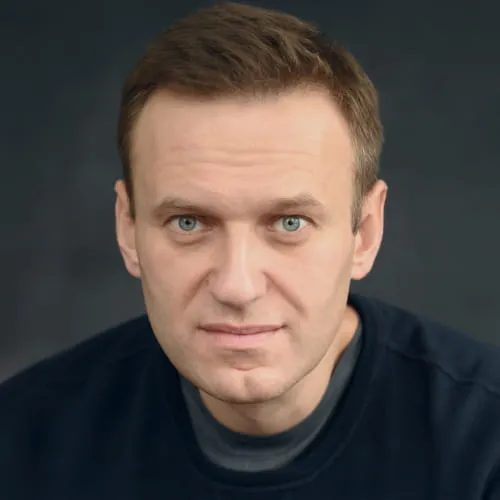
How Vladimir Putin transferred $1.75 billion to his son-in-law

Hi, this is Alexei Navalny from the Anti-Corruption Foundation.
And now I’m going to tell you
how Vladimir Putin handed over
almost $2 billion to his son-in-law, and
why we at the FBK (Anti-Corruption Foundation) sued him over it.
The whole point is that Russian
law contains a concept called
a conflict of interest. And how does that
work? If you are a public official and through your
actions you do something that makes
your family, your relatives, or your friends
richer, you are required to declare it.
For example, if you are the Minister of Agriculture
and you allocate a subsidy to a company
owned by your relative,
you are required to disclose it. You submit
a document to the government saying:
I have a conflict of interest. After that,
the government decides whether it is corruption
or not, whether such a subsidy can be issued
or cannot be issued. But in any case,
you are legally required to declare it.
And if you do not declare
a conflict of interest, then we have
a 100% violation and 100% corruption,
because you are concealing that fact. Now
let’s move on to Vladimir Putin. As is well known,
he has a daughter named Katerina
Tikhonova. And this Katerina Tikhonova
has a husband named Kirill Shamalov, which means
Kirill Shamalov is Vladimir
Putin’s son-in-law. And this very Kirill Shamalov
owns a large stake in Russia’s biggest
chemical company,
Sibur. It is a giant petrochemical
monster left over from Soviet times,
an enormous enterprise. How
Shamalov became its co-owner
is a separate question, but right now
what matters to us is the legal fact:
Kirill Shamalov, Putin’s son-in-law, owns
a significant share of Sibur. And here is
the remarkable part: one year
after Putin’s son-in-law became
a co-owner of Sibur, that very
Sibur received an investment from the state
of nearly $2 billion,
and not in the form of a loan
from a state bank or in any other
familiar format, but directly, straight from the so-called
National Welfare
Fund—that is, from the place where
we keep our treasured petrodollars,
which are supposed to serve
future generations,
to secure our pensions when
the country eventually runs out of
money. In other words, straight out of this
national wealth, they take almost $2
billion and hand it to Putin’s son-in-law. And now, my
dear friends, please guess who
signed the order
transferring the money to Sibur. The answer: Putin himself,
Vladimir Vladimirovich. So what we have here is
simply, well, an ideal
picture of a conflict of interest.
The president of the country personally signs
a document under which enormous benefits
and colossal sums of money go to a company
owned by his son-in-law. So what should President Putin do
in this situation?
President Putin should simply act
according to the law. Under the law, he is required to declare
his conflict of interest to his
immediate superior. His
immediate superior, under the
Constitution, is the people of the Russian
Federation—that is, us. He must address us
in any form: an order, a public
statement, even during his annual call-in show—however he likes.
He is required to declare it. He should
say: Dear people, I have just
allocated $2 billion to a company, and that company
belongs to my son-in-law. You surely won’t think
there is some corruption here? Here are
all the documents for this deal; everything is clean
and transparent. You do not suspect me of
anything improper. But what happens in
practice? Putin stays silent, his son-in-law stays silent,
Sibur stays silent, the press stays silent. There are no
details of this deal. Well, what does
that look like? If everyone is silent and
some strange deal is taking place, it looks very much
like corruption. And if the situation
looks like corruption, then apparently it is time
for the Anti-Corruption Foundation
to step in. That is, we sent
an entirely official appeal to
Vladimir Putin himself, to the prosecutor’s office, and
filed a lawsuit against Vladimir Putin with a very
simple demand: we demand that he be compelled
to publicly declare the conflict of
interest, because that is what the law requires.
This is a completely classic situation in which
he is violating that law. I am sure
that in this situation no one can
say that we are nitpicking at Vladimir
Putin or somehow being unfair to
him, because we are not demanding anything from
him that cannot be demanded under
the law. And regardless of how you
personally feel about him—whether you love him, whether you
fear him, whether you adore him, whether you
hate him—you probably also think it is right
for the president of the country
to declare a conflict of interest in cases
where he is required to do so. If
you agree, help us
spread this video. Subscribe
to our channel and like this video too.
Tags