A major broadcast on Belarus. Tsikhanouskaya. Strikes. Special forces officers.
Good evening, everyone. In Moscow, it is exactly
20:00, 8 p.m., which
means the program is live on air,
*Russia of the Future*, and I’m your host, Alexei
Navalny — or, this week, the man who, as
the Belarusian border guards, as it were, left in a puddle
— that’s what the Tsargrad TV channel called me,
Tsargrad, which, like many other
official media outlets, was very pleased
that I spoke, commented, and wrote a lot
about the Belarus agenda — and I will continue to do so.
For the third week in a row, my mug
is dedicated to Belarus, and it can’t really be
dedicated to anything else, because
the events are truly astonishing —
fantastic, historic, regardless
of the outcome — and they are happening
right now. I’m very glad that some of you are watching
my program now, when of course everyone
wants to watch streams from Minsk
and get the latest news from Minsk and
other cities about what is happening there.
I want that too.
But, by the way, our guys from the
studio will keep me updated, and if something
happens, they’ll feed it in,
and I’ll tell you about the very latest
events taking place in that
country. Without a doubt, that is the main topic
of our program today, of course:
Belarus. So much has happened,
but we’ll try to sort it out, more or less,
and remember — it’s important to remember — certain
things, at least the sequence
of what happened, because this, well,
directly concerns us. It is very
instructive. The questions I’m seeing — your
questions — are all about this:
how will this affect Russia? Can it happen
in Russia? What would happen in that case in
Russia? All of this is very close to us, and we will
discuss all of it.
Let me remind you that you can
become sponsors of our channel, and
we have a link below, and through that
link today you can send not only little ducks
but also little KamAZ trucks that
we drew especially for those who
want to send them. And half of all
donations that you send today by
buying something with Belarus-themed
designs, we will of course send to our
brothers and sisters in Belarus, to those — well, to those
fundraisers where they are collecting money for
supporting political prisoners, supporting
the injured, supporting families, and the new
initiative to support striking workers — to them
we will send half of all the money. So
go ahead, click that link,
send little ducks, little BelAZ trucks,
small flags, and so on. Belarus
is, of course, dominating the information
space. However, I saw a very
accurate, very instructive, and
in some sense unpleasant meme for any
Russian politician, and certainly for
the Russian media. Please show that meme.
Do you have it there? Yes, there it is.
You see, it’s that famous kind of thing, like:
“Opposition figure…” and then, just a moment ago,
some other opposition figure… any Russian opposition politician,
just recently was saying:
“Khabarovsk, Khabarovsk, Khabarovsk…”
that Khabarovsk is the center
of the world, the most important political event
in Russia — which is still true, by the way — but
everyone has already forgotten it; everyone is discussing
nothing but Belarus, and that
really does seem wrong. I
will try
to correct this mistake that everyone is making.
Well, strictly speaking, we are not — we do not
ever get distracted from our Russian
agenda. I just want to remind you once again:
yes, we should all follow
everything that is happening there, but also remember
that events in our own country must not
go unnoticed, and some
very important events, like what is
happening around Khabarovsk and around
KushTau, desperately need our
attention and informational support. If
we do not pay attention, that will not be
very good. But I decided to begin, nevertheless,
with the miracle vaccine, because into
this entire dense news agenda,
with Khabarovsk, Belarus, and various
global events, protests in America,
different people are trying to wedge themselves in, including
Vladimir Putin. And he, desperately
seeing these information clouds, seems to have thought:
I’ll break into them, and for that
he came up with a mega-hit. He said that Russia
had invented a vaccine. More than that, this vaccine
had supposedly been tested on one of Putin’s daughters. The daughter
was not shown. As we remember, he usually
refers to his daughters as
“that woman doctor” and “the other woman,” and
basically no one understands who exactly
they are. We all know where they work,
we’ve seen their photographs, but Putin
still does not want to be specific. Nevertheless,
he apparently thinks it is perfectly
normal to lie himself, obviously, that
this vaccine was tested on one of his daughters,
and in general to lie about
the vaccine. And let me brag a little:
remember, I already
— this was when I was still recording from home,
it was during the active phase
of self-isolation — I said that this complete
failure in the fight against the coronavirus
— and it was unquestionably a complete failure —
of the Russian state and Russian
medicine, they would try to compensate for it
with falsified statistics, but everyone still
saw that it was a failure. They will try
and then smooth it over with statements saying that
it was Russia that defeated the coronavirus and
that Russia invented the cure — that is exactly what
happened, in fact. It really wasn’t hard
to predict. We know that Putin
lies constantly, that he lies outrageously,
and of course he loves to declare
that he has supposedly outpaced everyone, every country in the world.
And that’s exactly what happened: two seconds later, Putin
announces the invention of a
miracle vaccine. As far as I know,
this morning, for the first time in
the world, a vaccine against
the new coronavirus infection was registered. I know
that this vaccine, as you said, was
made on the basis of 1S
viral vectors, but in my view the advantage
is that it is based on
a human adenoviral vector, and I
received it myself.
And it works — it more precisely forms
stable
antibody and cellular immunity. That is
also something I know very well, since one of
my daughters got this vaccination.
I think that in this sense she often took part in
the experiment. The main thing, of course, is that in
the future we can ensure the unconditional
safety of using this vaccine and
its effectiveness.
I hope that won’t be the case. The idea was very
simple: that everyone would rejoice and cry out, “My God,”
“a triumph of Russian science,” and on top of that
Putin’s daughter, risking herself — just imagine —
testing it on herself, sacrificing herself, and
there she is, almost at death’s door, but
still, it was Russian scientists who
invented the vaccine, the disease is retreating,
doctors are applauding and hugging each other,
Russia, and Vladimir
Putin’s family personally, have saved humanity.” The idea that
was in the heads of the Kremlin PR people
who came up with this whole thing was, of course,
exactly that.
We simply ran into and overlooked one
simple thing: the fact is that tens of
millions of people who, since April
— or even earlier, for some since April,
in fact since the beginning of the year — have simply
been endlessly reading articles about
the coronavirus, so all of us here have
more or less become expert epidemiologists.
And we all know perfectly well that vaccines against
the coronavirus are being developed in dozens of
countries, that there are, say, 36 laboratories
working on them, and besides that we
also understand very well by now the stages by which these
vaccines
are made and developed — this is something
that has been discussed endlessly. And so this
Putin-style lie that Russian
scientists invented, registered,
tested, and are already ready to use
the vaccine on a mass scale — it was so obviously
false that it provoked nothing but ridicule.
And even the World
Health Organization, which is very, very
loyal to Russia, said
something like, “What are you talking about? What vaccine? What
exactly have you invented there?” because there cannot yet be
the so-called third stage — that is,
the stage with mass testing,
the third phase, in which
large groups of people are involved. In other words,
vaccines are the kind of thing that
humanity makes all the time, and there is
a very clear protocol for how to make vaccines.
And we have been taught by bitter experience that when
certain drugs
are made outside this clear protocol,
they cause a great deal of harm. Therefore, in
principle,
there are plenty of laboratories that can say, “Oh, we
have developed a vaccine” — there are tons of them. But laboratories
that have gone through all testing stages and
published all their reports in respectable
proper journals — there are also many of those, but
far fewer. In Russia, none of this
is happening. The Doctors’ Alliance released a long video
about this. It is important, actually,
to understand this, because, well,
several times I was written to by representatives
of various state-funded organizations who
said, basically, “We’ve been told that
everyone will be mass-vaccinated with this
new vaccine. What should we do — get vaccinated
or not?” On the one hand, you don’t
want to become anti-vaxxers and
join that sect which
claims that vaccines are harmful. On the other hand,
is it necessary to do this?
The answer is, of course: absolutely not, you must not
get vaccinated. You should do it when the vaccine is properly
ready. At 29 seconds, the Doctors’ Alliance
explains that no one does it this way. It is
necessary to conduct three phases of clinical
trials on volunteers.
On the official website of the World
Health Organization, only six
companies out of 26 are currently conducting the third
phase. Let’s find our Gamaleya Institute here.
Look — it is stuck at only the first
phase of clinical trials. Carrying out
mass vaccination with an insufficiently studied
vaccine is the same as
conducting experiments on people who
do not even realize what they have
signed up for.
Again, 4,000 people are watching us live.
For those who have just
joined and are indignant, asking why I’m
not saying anything about Minsk or about
Belarus — I will talk about it.
That is the main topic, but we also have Russian
news
that we also need to discuss. And so,
the final, let’s say, blow that already
destroyed it
All of this is Putin's lie about some miraculous wonder.
Of course, the vaccine was indeed developed.
The newspaper *Fontanka* got hold of
the report by those very doctors who
— the doctors and scientists who actually created it,
who, in fact, invented this vaccine — and
in their report, as they are supposed to,
they clearly and dryly describe what exactly
they came up with, what they did, and
what research they conducted on the matter.
It says there directly:
there is the term “titer,” which will be used now.
Used.
Putin also used it in his speech.
A protective titer is, essentially,
the strength of the vaccine's protection. In the official
report it says that the protective titer
for this miracle remedy Putin talks about
is currently unknown.
The duration of protection is unknown.
Clinical trials to study and assess
its practical effectiveness have not
been conducted — that is what the people who
invented this vaccine honestly write.
But Vladimir Putin couldn't care less.
What matters to him is saying: we were the first to invent it, we
will start vaccinating, and we
will save humanity from the coronavirus.
Moreover, speaking of
vaccination, if you are being offered
the chance to get vaccinated, you should look at
another page of this report, which
has been published. There, the people who
developed the vaccine honestly write — the specialists
acknowledge that adverse
events, in terms of how often they occur,
can be classified as occurring
frequently and very frequently. In other words, they
honestly write that there are a great many
side effects.
They may occur constantly, but
everyone keeps quiet about it and speaks only in
some kind of triumphalist tone.
There is no doubt that Russian
scientists will undoubtedly make a major contribution to
the fight against the coronavirus, and our vaccines
will be remembered as one of the inventions of the year.
The names of the people who fought
the coronavirus will be written into the golden records,
and there will be many people there
from different countries — and ours will be among them.
But there is no need, at the cost of
the health of our fellow citizens, who are now
being injected with a vaccine whose
adverse effects occur frequently
and very frequently, to try to help Vladimir
Putin solve his image problems.
The claim that we were the first to invent it,
the first to roll it out,
and that we already have everything ready — that is complete
nonsense, of course. It is important to understand that. 54
thousand people are watching us, and I have
several questions about a rather strange word
— Kushtau — which many of you
may not have heard of, and that is a mistake, because what
is happening in Bashkortostan (a republic within Russia) right now is
potentially a protest on a scale
possibly even bigger than... well, or at
the very least, even now...
Few people know about it because
first Khabarovsk (referring to the mass protests there) consumed the entire news agenda,
and now, naturally, Belarus
has taken over the information agenda.
But meanwhile, over there,
major events are taking place.
Banzai3476, please comment
on the situation in Bashkortostan around Mount Kushtau and
please tell us more about it.
About the man appointed by Putin — Khabirov.
Radiy Khabirov is the kind of
corrupt official who was once
driven out of Bashkortostan, then taken in
and embraced by the Kremlin.
Later, the Kremlin appointed him mayor
of one of the small towns outside Moscow.
He was kept there as a kind of temporary placement,
and then, once the way was cleared, he was sent back to
Bashkortostan. A monstrously deceitful, monstrous
and corrupt
person, absolutely incapable
of organizing normal work.
That is precisely why Bashkortostan had one of the
biggest failures, by the way, in the fight
against the coronavirus. You remember those
horrific hospitals that turned into
hotspots for the spread of the coronavirus?
That was Bashkortostan.
The central...
It was the central, I think,
the Republican Hospital in Ufa, and so
on and so forth. I have spoken about this a lot here.
So, in Bashkortostan right now
the following is happening: there is
something there called the Shikhans.
These are real standalone mountains — there are four of them.
These mountains are remnants — and here the important thing is
not to get it wrong, so that later people who know
the subject do not laugh at me,
people who really understand geology.
It is a reef from an ancient sea, formed
millions of years ago, when on
the territory where Bashkortostan is now
an ancient sea once splashed, and
some marvelous ichthyosaurs swam there.
That is how these reefs were formed. Now they are solitary mountains.
And Mount Kushtau
has, naturally, like all such mountains,
become something people lived beside and saw as a strange
standalone real mountain inside which
there are remains of that ancient
flora and fauna of those times. Naturally,
all such mountains acquired for local
residents a certain sacred
significance, which is why many people call it
a sacred mountain.
But they are made of a kind of limestone from which
soda ash can be extracted.
Soda ash can be extracted in many places, but here it is simply easier.
all of this by simply tearing apart these
very mountains, and one of the four such mountains
has already been leveled, and now they want to level the hill that
So what happens in practice is this:
there are these oligarch guys who want
money, and these oligarch guys
come from the Ministry of Natural Resources
and the leadership of Bashkiria (Bashkortostan, a republic in Russia) says there
while some Bashkirs (the indigenous Turkic people of Bashkortostan) are running around it
shouting, “Don’t touch our mountain,” but basically
the mountain is money, so let’s just
dig it up and turn all of it into soda ash
sell the soda ash, make a ton of cash
— why do we need this mountain anyway?
And somehow it turned out that in this story
the local residents do not agree with framing the issue this way
and for several months now
there has been a fairly active standoff going on
involving security forces
and, naturally, some “athletes” (a common euphemism in Russia for hired muscle)
who are brought in and start fights with those
people who are protecting this mountain
But what is actually happening there is a mass
protest movement, with fairly large demonstrations. Let’s
watch 36 seconds of what
the latest rally in defense of Mount Kushtau looked like
[applause]
We are paratroopers.
We call on everyone to defend
our homeland, defend our environment, and
defend this natural monument.
This is a really big deal, I mean
it’s a major confrontation in a republic with
a large population, and again, it
echoes Belarus — Bashkiria (Bashkortostan) in terms of its
political landscape is much the same:
completely cleared out politically, and the territory is always
subject to totally rigged elections
no one is ever allowed into these elections
it’s total lawlessness on the part of the authorities, with a super-
rich, brazen elite that
claims it cares about
the interests of the people, while in reality
it is making
huge amounts of money for certain local oligarchs, and
right now there is a genuinely major protest underway there
effectively on an all-Russian scale
So first of all, people need to keep watching it
and second, it needs support. This is
very, very important, and even despite
the fact that various remarkable
events are happening in other parts
of the country, and in Belarus in particular, I’m
being told, people are writing that there are
mass protests going on there, but nothing especially
out of the ordinary is happening there yet, so
66,000 people, stay with me
and don’t switch over to the live feed
directly from Minsk
I almost forgot — a user with the nickname More
is worried and asks what happened to your background
Alexei, that’s the main question today
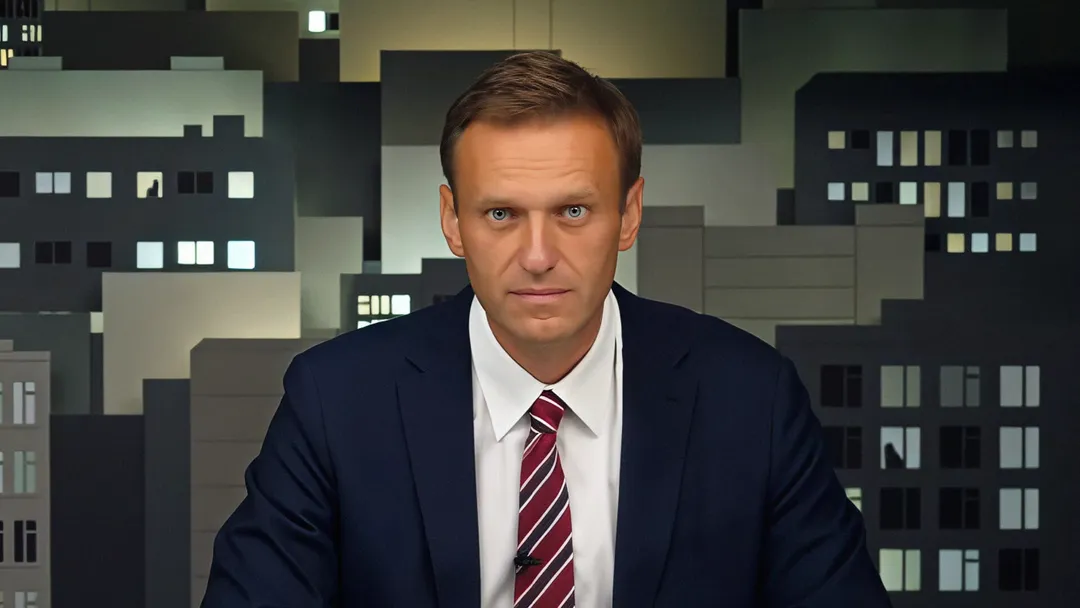
Indeed, we updated our background. It is
still made up of homes — the cities where
you, my dear viewers, live — but we
made it more three-dimensional. Great, well
let’s put it this way: it so happened that we
today, let’s dedicate the change of our
background to the amazing, astonishing
events we have seen, the events
of the past several weeks, which
for those watching, have practically just
flowed one into another from the perspective of Russia
First, Khabarovsk was astonishing, and then
even more astonishing was what
has been happening in Belarus. It’s incredible.
I understand that it may seem a little
funny that I’m dedicating the change of our
background specifically to these events, but
let me dedicate it to all those brave people who
went out into the streets of cities to
the east of us and to the west of us, and
who powerfully surprised everyone — Khabarovsk
has been protesting for 34 days now
in a row
Protest is the kind of thing that stays alive
when people pay attention to it
when people protest
they walk the streets, they show both
themselves and others by their actions, so they are not just
expressing that protest — they are also
desperately, desperately in need of
informational support, especially when
it is not in Russia’s spotlight, especially now
when, well, I don’t even know — independent media
independent politicians, opposition
politicians have stopped paying attention
because something more
interesting has come up, fully in line with the
meme I used to open the broadcast
Khabarovsk has been marching for 34 days in a row — that is
magnificent. They came out on Saturday, and they
are still continuing to come out every
day, although right now we are seeing
the implementation of what was
a fairly obvious forecast I
talked about: they would wait until
little by little
public attention weakened, and as soon as
it did weaken, several
people were arrested and jailed for 15
days. That’s exactly what is happening, so
it is extremely important to keep following all of this
Well, and in fact, what
is happening internally is, of course, still
fueling the protest, and
perhaps the Kremlin’s hopes, or the hopes
of those who would like the protests in Khabarovsk
to stop, these protest actions
that Governor Degtyaryov would somehow prove himself
in some way
make a few foolish
moves, then make a few sensible ones and
somehow compensate for it, have absolutely not
come true
In fact, Governor Furgal
who was arrested — when he came in, he made
two very popular decisions that
You brought him down right away.
to the very peak of people's affection, people's love, and...
and everyone said, what a great guy, well, these were such
obvious things, but you did them, so what a
good job. First of all, he banned officials from
flying business class, and that really
had been irritating everyone, because Khabarovsk is far away
tickets are expensive, and people are forced to rely heavily
on air travel
because otherwise you can't get anywhere.
People really suffer from the fact that
tickets are expensive, and then officials say,
you know, we're also going to fly business class to
Khabarovsk. That infuriated everyone, and Furgal
canceled it and was supported for it.
And the next thing—they had this
local issue, a very strange one. Once,
the previous administration bought a yacht. I mean,
you'll see, because, well,
there's no sea nearby, apparently, but they
bought a genuinely huge personal
yacht for an enormous amount of money, and that too
naturally drove local residents
absolutely up the wall—they were
very unhappy. Furgal said, basically, I
don't understand why the administration needs
a yacht. I'll sell this yacht, and he put
it up for auction. People liked that too.
What does Degtyaryov do? He reverses
both decisions. First, he brings back
the possibility of this project to me
show me—show me first the part about
[music]
business class.
At first, fine, he cancels this
ban on using business class, and this
was explained by—I saw funny,
really funny comments from various officials
who said Degtyaryov did this because
you know, it's the only
opportunity for officials to get some sleep, well,
they work so much, they're such
hard workers, they have sleepless nights, they're out there
walking around Khabarovsk, fixing things, solving
people's problems, and then with such red
and inflamed eyes they end up on the
plane.
They get business class, a big reclining
seat, they're poured champagne, they drink it,
and then that's the only, the only
chance for them to get some sleep. So there you go—
Degtyaryov brought back their chance to sleep, which
made people in Khabarovsk very angry, and
he withdrew this yacht from auction. It had been listed,
really—well, a yacht in
Khabarovsk.
In the Russian Far East, it was a strange
exotic thing. Sure, you can
sail on the Amur River, of course, but still
it's still a rather strange, exotic
thing, so, well...
It's not as if there were huge numbers of people wanting to buy it.
You can't say there were. It could have been
moved elsewhere and resold; in that case they would have
sold it, but the officials didn't want to
sell it.
And now Degtyaryov has decided to keep it in
regional ownership, but effectively at the
disposal of himself.
Using the favorite trick of Khabarovsk
officials—and federal officials in general,
but Khabarovsk ones especially—you'll
see why in a second—they brought out children, and the children
you see, some kind of children's school there
declared that, dear
Uncle Misha, we ask that this yacht be
given to us, the kids, and we, the kids, will
sail on it along the Amur River. Oh, let's
watch this video.
Mikhail Vladimirovich, we are addressing you
with a very unusual request. So, who are we?
I am the director of the regional education center, I am
a student and an activist in the Russian Schoolchildren's Movement,
I am Viktor Liman, a 6th-grade
student.
I am the chair of the parents' committee.
Katseva, Pavel Krupkin. As of today,
we know that the fate of a very
interesting asset is being decided: the boat *Victoria*, and
we would very much like it not to go
to officials and not to leave Khabarovsk Krai (region)
but to go to our children. The regional education center
includes IT-Cube and Quantorium (children's technology education programs)
it is a center for gifted children from all across
Khabarovsk Krai, and it would be very
interesting for us, in our Quantorium,
and in other projects, to have such an
extraordinary, amazing vessel.
Right—a vessel, a huge luxury yacht.
Its upkeep costs 1 million
rubles (about US$11,000) .
And now it's supposedly being given to us for this
some kind of Quantorium thing, so the kids can
ride around on it. I mean, this is absolutely
fake, of course, and for every resident of Khabarovsk
it's one hundred percent obvious that this is fake
because before this they
had another scandal of a different kind where, in the end,
kids were involved too. There was a
bathhouse.
An elite bathhouse that was attached to a
sports center, and all the officials used to go there.
Mikhail Degtyaryov was saying, why do we even need
a bathhouse at all? And at some point this center
together with the bathhouse was put up for sale because
basically it's not the state's job
to maintain various centers and bathhouses. I mean,
it's rather strange that this is being kept
on the state balance sheet, so they decided
to sell it. And for that too they brought out
special children who said
along with coaches who came out and said
let's keep this facility because we,
the athletes and the athletes' children, need
to steam our bones too so that
we can score goals and hit pucks better there. Let's
watch—just a second—about sports, boxing...
I want to give a small example about
For 10 days in the city of Khabarovsk
the junior team held a training camp
of the Russian national boxing team
or rather, three members of the Russian national team,
that is, the elite of junior boxing, and for
the 10 days of this training camp in the city of
Khabarovsk, they had, as I see it, four
recovery activities, that is,
a banya (Russian steam bath), a little massage, a bit of
speed work. So why am I saying this?
Because our sports infrastructure in Khabarovsk
has gained the opportunity
to go outdoors and carry out
recovery activities at this
facility. It is simply absolutely
wonderful, and I think sport would
keep developing further and further in this direction.
"Recovery activities" sounds freaking
amazing. "Recovery activities"—I wonder what that
actually means. Well, obviously the officials there
asked
an actual athlete: "Come here, say something
so they’ll keep it in public ownership." And he
said it, and the bathhouse was kept in public ownership. It
still belongs to city hall, and in it, still,
officials keep steaming away. And here too
Degtyaryov pulled out some children who
said, "Please keep this in
public ownership, this amazing vessel," that is,
a huge yacht, and they will keep it in
public ownership because Degtyaryov already
liked the idea from the children not to sell the yacht,
and they will keep it, and people will continue
riding on it. I’ll interrupt my
story about what is happening in Khabarovsk
because we need to turn to Belarus
and to Orenburg, because it is precisely in
Orenburg—show us the photo—there
right now, unexpectedly, people came out and formed
a huge human chain in solidarity with
Belarus, with Minsk, and that is very cool.
It’s great that this is happening, and we hope
that it will happen in other
Russian cities as well. And because of that,
I’ll talk about it in more detail, of course, in the
later part of the program where I’ll be
talking about Belarus. But you can really
feel inside Russia a general
desire to help Belarusians,
that kind of desire. I mean, there was
something similar during the events in Ukraine and so on,
but there was still at least some split in
Russian
society. Now, it seems to me, there is definitely
this kind of consolidation: everyone really wants
and wishes Belarusians well, and that goodwill is
connected precisely with the movement that is now
taking place, and that is why it is so encouraging.
By the way, about Orenburg, I was asked
a question—I see it here too—whether there will ever be
Smart Voting in Orenburg. I’m not ready
to say off the top of my head right now; we have
Timofey Platonov asking there
whether there will ever be Smart Voting in
the Orenburg region.
If there are elections to the regional legislative assembly or to the
city council,
I don’t remember offhand, and I won’t lie, but of course there will be.
Of course, in all major cities
there will be Smart Voting candidates.
Register. But the main thing we see
is that in Orenburg there are definitely people who
absolutely need Smart Voting.
If they are even supporting Belarus,
then they certainly will not
oppose the liberation of Orenburg from
the United Russia occupiers, so
that’s really great—well done.
I’ll go back now, jump back,
fly across the whole country, jump
from west to east.
Khabarovsk—there, in conditions where
the media spotlights stopped being directed
at this city, as I already said, this is a kind of
slow, creeping counterrevolution: people began
to be detained, arrested, and once again
they are pushing the theme that outsiders,
some kind of sinister international forces,
are involved. And again, there is this peculiar new
thing with children: here, our grandpas got the yacht back,
the grandpas didn’t want
the state-owned bathhouse to be sold, and then there
arrived some astonishing
in Khabarovsk
female defender, absolutely wild,
quite clearly someone who was actively
shown and quoted on
the federal TV channels.
They even cobbled together a whole segment around her, and
she was saying that these are international
forces, that children are being used by sinister
protest organizers. Let’s take a look.
It’s a minute and a half, but it’s exactly the kind of
important nonsense that nevertheless
shows the Kremlin’s general idea of how
Khabarovsk is supposed to be covered.
I have a lot of questions here. Why has Putin
been silent about the situation in Khabarovsk for
a month already? Rambler users are asking.
He is not commenting at all. What can he say—that people
have risen up against me? First they kind of
send out these kinds of
auntie-type women in order to deceive
everyone at first, and only later will Putin speak.
A wild woman: in the heat and in pouring rain, in
the crowd on the streets of Khabarovsk, adults walk
together with their children, both teenagers
and little kids, in the rain.
There was such heat—how could we
know whether the child would not
need rescuing or would not be exposed
to heatstroke?
There is another threat to life and health.
According to this public figure, the danger is that in
a crowd, small children may simply not be
noticed, whether by pedestrians or
drivers. In order to keep the protest heated up, in order to attract
attention to the protest,
universal attention not only at the
Russian level, but also internationally
of course, it is possible that someone will need
victims, and those victims, first and foremost,
could be children
therefore, I would like to call on all
parents to act prudently
members of the public, clergy,
healthcare representatives, and ombudsmen are already saying
that parents themselves have seen the other
side of such mass events: children
are being used for propaganda by the organizers
of the rally. A parent
materials were used about the black-clad people when
children were simply crossing the street while a
procession was passing by; these moments were captured
and as of today, the only way to protect
their own interests and the interests of their children is through
a court ruling
those, however, who voluntarily bring children with them
according to human rights advocates, not only
violate the principles of the Convention on the Rights
of the Child, but may also face criminal
liability
because of the risk to which a minor is exposed
the most astonishing thing is that
this gathering of nomenklatura-style
crooks, this bureaucratic clique, sits there and
they call themselves not
human rights defenders, while little
pedestrians may go unnoticed
by vehicles or by protesters, I mean
it is simply disgustingly hypocritical nonsense, but
it is being said because something has to be
said, and
they need to talk about international forces
because the slogans being heard now
in Khabarovsk after thirty-four, thirty-five
thirty-four days are really
an absolutely unprecedented thing for
Russia; in fact, even by global
standards, this is quite a rare thing,
for it to go on for a whole month, and even to bring in
in a single city, literally one separate city
such momentum — that practically never happens, and
the slogans sound very radical there
and, by the way, one slogan was directly
borrowed from Belarus: 10 seconds
that was chanted at the latest rally
[music]
Putin, 2 percent — the same direct copy
lifted from “three-percent Lukashenko,” and in general
it has been very interesting to watch this
how Belarusian flags are appearing in Khabarovsk
while in Belarus, at the
protests there, Khabarovsk has been noticed many times
and the flags are this kind of, well,
really, in both places the situation at some
point looked hopeless, but in
Khabarovsk it now looks very
difficult, while three days ago, on Sunday, in
Minsk it all looked as though
there was no hope at all, not even close, and now
people are reminding each other of Nevsky
Khabarovsk — they have become sister cities there
brother cities, and another slogan that
is now the most popular
slogan at the Khabarovsk protests
and it is precisely because of it that Putin does not want
to say anything — he does not know what to say and does not even
understand from which angle to look at it
uh
[applause]
what can you even say here — how do you want
Putin to comment on this, when
there have, by the way, always been in Khabarovsk
relatively large
protest actions; when we held the first
“He Is Not Dimon to You” rally, a large march came out in Khabarovsk
there was a large column there that personally
surprised me, but here you cannot say that this is
youths or schoolchildren, because
the scale is too large, and any
person can see that these are simply the most
ordinary people, most often middle-aged
or older than middle-aged; they come out
and chant, “Putin has nothing to say in response,” and
he does not want to discuss it at all, so
he is waiting for it to die out on its own; apparently they are not
sitting in the Kremlin discussing it — “they cannot
go on forever, can they? They cannot keep
marching forever; it will become very
cold there very soon,” so they are waiting until we
stop paying attention, until in
Khabarovsk people stop marching, in order
to smother everything there. Khabarovsk,
stay strong, we are with you. Strike action — now I
am moving on to discuss Minsk, and the key thing
happening there right now is
of course the strike movement. I
have been saying for several weeks in a row that
Khabarovsk, pay attention: a strike
may seem difficult, but it really
is not a simple mechanism, but first of all
it is fairly safe for
participants, and if you set it in motion and
start doing it, then you simply grab the authorities
by the throat immediately — that is very important, and
well, at the very least this issue needs to be
studied. So, Khabarovsk, stay strong. 81
thousand people are watching us live
I
am moving on to discuss our brotherly
republic, thanks to these absolutely
truly amazing people. They will be written about
in textbooks. This is not some kind of
completely astonishing shift that
appeared out of nowhere — not even close
no, it did not appear out of nowhere
because throughout all these events there was
the largest Telegram channel in Belarus
one of the largest media outlets, one of those
openly opposition ones, but what
is happening with them now, how they have become
the de facto organizers of all this, is
absolutely astonishing. So
thanks to them, we are now in huge numbers
watching various videos from
In Belarus, just before
the program, a short little
video appeared from the town of Smorgon
that someone posted on Instagram. I want
to begin my story at the end, with this
video. I want to show it because
it answers many, many questions
— questions like whether the army will
open fire, whether victory is possible,
whether there is light at the end of the tunnel, and so on.
This video shows what it all looks like
in the small town of Smorgon, where
troops were brought in,
what the military does. Here are the troops, and here are
the protesters, and what happens when
the military meets these protesters.
Smorgon, Belarus
This is something extraordinary, really.
It is truly the best kind of thing,
the kind that brings you to tears, because it shows that
not everyone in uniform is the kind of hellish fascist
we have been watching in shock over
the past week. We did not expect to see
anything good come out of these clashes.
What happened was beyond the pale.
And this morning we saw that people in uniform
can be completely different. They say outright:
we swore an oath to this people. At last,
that phrase was spoken: we swore allegiance
not to that mustached man,
not to his evidently deranged interior minister,
not to some generals,
not to anyone else — we swore an oath to the people.
And this is obvious. They are saying in Zhodino
— where, in fact, I am simply going
to share my thoughts about what
is happening, go over the chronology, and
give you the latest news about what
is happening in Belarus, so that those
who do not watch all the streams I do
can still follow along — and in
Zhodino, which is now a very
important city,
a strike is taking place there.
BelAZ began striking there, and earlier today
the beginning of this protest was shown. Then
the Belarusian state media said:
oh, everyone has returned to work.
Why did they return? Because the mayor
of the city promised that at eight o’clock
in the evening he would come to the strikers and meet
with them in a large gathering. We were just discussing
that I would start the program at 8 p.m. and
that there probably would be no meeting.
My guess was that he would deceive them and not come.
But he came. And let us see what
the people are chanting at the most
famous enterprise in Belarus, which, by the way,
is one of the genuinely profitable
enterprises that supplies
equipment to the West as well. In other words, this is
not some failing enterprise — this is a place where workers
earn decent money and it brings profit
to its shareholders. Zhodino.
And
sky
this is
[applause]
Riot police
out of the city, and let them out — that is what the people are chanting,
the people working at BelAZ are chanting.
This is the very heart, the core of Lukashenko’s entire regime.
I will show more videos,
including some amazing ones from today
featuring labor collectives, and this is
of course a real game changer. Pasha Bulakhov
asks whether Lukashenko might hold on.
We hope not.
And today’s videos specifically from the factories
of course give the greatest
hope for that, because previously it was believed
by everyone — and above all by
Lukashenko himself, and by Russian
commentators, and the Russian authorities,
and all the others — that
I have many questions here.
About the position of the Communists — Ilya Baronov asks:
what
Alexei, how do you feel about
the fact that the Communist Party of the Russian Federation supports
Lukashenko? The CPRF issued a statement
saying that working people are for Lukashenko,
because, well, blah blah blah, the workers
and all that. Though not all Communists, by the way.
Rashkin, for example, released
an excellent statement today saying, you know, I am on
the side of the people.
If the police are beating the people, then I understand
that something is going wrong. But overall,
the CPRF is generally for Alexander Grigoryevich (Alexander Lukashenko),
because, supposedly, the working man loves him. And
why do I call this a game changer?
Because the working man is now in the city of
Zhodino
standing in the square and chanting. A real
working man — literally,
a man who was standing there at the conveyor belt,
wiped his hands,
with some oily rag, and said:
come on, guys. He walked out, and he is not chanting
‘Lukashenko’ or anything like that,
not saying ‘let’s go beat up the hipsters,’ not repeating
that nonsense which, excuse me, was once
sold to us as the truth: that workers
from Uralvagonzavod (a major Russian tank and railcar manufacturer) would come to Moscow and
clear everyone out. No — they come out and say: riot police,
out of the city, because enough of
detaining us. And let them out — that is,
release all those people who were
arrested. And earlier today, according to official Belarusian statements,
6,700 people
had been arrested and detained in Belarus. That is
a great many people, and
after all, this is a country with a population
of under 10 million. All of
Belarus is smaller than Moscow. It is as if in
Russia, imagine if they arrested
300,000 people — three hundred thousand people — in
On the scale of Russia, Belarus has just been given that.
These are arrests on such a massive scale, I mean, everyone
knows someone who has an acquaintance
or a relative who has been arrested, and that alone
of course, is very important. Alexei,
please comment on the statement
by the popular Belarusian singer Max
Korzh.
What do you think he meant, and how
do you feel about the fact that he pushed your
comment down? It seems to me he didn’t delete my
comment — it just moved
down.
And, by the way, I don’t think everyone should
pile onto Max Korzh and somehow
drag him through the mud. He just may have
phrased his thought not very successfully,
and he did call for peaceful
protests.
And that was the right thing to do. He also refers to
and talks a lot about the Armenian experience, but
the thing is,
sometimes an unfortunate choice of words in a situation
when everyone is completely on edge, furious, and everyone
is speaking from one side or another
— and that’s understandable, you have to take a side: are you for
these people or those? It seems to me that given the fact
that Korzh, right before
the election, released a song that, well,
spoke rather indirectly — and by the way, people don’t write how to stress Korzh’s name,
Max Korzh — sorry,
please.
Right before the election, he
released a song that can certainly
be interpreted as, well, a kind of support for
Tikhanovskaya and for people in general, and as fairly
anti-Lukashenko, and so I
I think that in my comment
I wrote exactly that: it was poorly
worded, that’s all. And he really
did phrase it badly. But it seems to me —
I don’t know him personally — that he’s a good
person, and most likely he is on the side of the people. I
have no doubt that his position will somehow
become completely clear. Here’s a strange
question, but still — all right, look,
Platonov asks Alexei: what do you think about
Dud’s post? And should he
go to the scene and cover
the protests? The post is excellent. Dud addressed
riot police officers, police officers,
but why should he go there and
cover the protests? That too is a rather
strange idea. He is a Russian citizen;
he can speak out. I’m also a citizen of
Russia — should I be there? I say quite
openly and without hesitation whom I
support. I transferred money and publicly
wrote about it —
for the treatment of the injured, for all these things, and
if they start raising money to support
the strikers, I will definitely send them
my own.
Those would be, in fact, Russian rubles, and
Lukashenko could say, “See, that’s where
the foreign money is.” But what is there
to do there?
Should people — or should I — go cover a rally? No,
a person should be doing
their own work, and in that sense these
seem to me like rather strange complaints. Well,
let’s go back, rewind — it feels like
it was really a very long time ago, a week
ago, I ended the program on a kind of
sad and solemn note, saying that
Belarusians, hang in there, things are going to be
very hard, because it was clear
to everyone that they were not, of course, going to vote
for Tikhanovskaya in the official count, mostly, and we
didn’t really expect there to be such a
level of voting for her, but we understood
that Lukashenko definitely did not get anything even close
to 80 percent, after which he would
rig the election, people would take to the streets, they
had said so, and basically everyone on
Tikhanovsky’s side — Tikhanovsky himself, sitting in prison —
his whole concept was that
the election should be boycotted because
everyone was sure they would not
register anyone, and Lukashenko
tried to fool everyone and
registered Tikhanovskaya, his wife. But he
said that regardless — that is,
even if no one is asking us to — we will boycott
this election, but we will go out into the streets and we will
not recognize it. Therefore,
whether participation or boycott, in any case
the Belarusian opposition said that on the
night after the vote people would come out, and we all
understood that they would be beaten. That was, basically,
a fairly simple, banal, and
obvious forecast: people would go out, unhappy, and they would
simply be beaten on Lukashenko’s orders, and
in fact this had been made clear in advance —
the sides had effectively spelled it out. Lukashenko
said it, his interior minister
said it, I showed you the address
— the protesters said they would go out, and
knowing how militarized the Belarusian side is,
we understood that nothing good would come
of it. And in fact that is exactly
what happened. And moreover, already on
election day, around midday, across the republic
they shut down the internet so that
everything would be clear to everyone: Lukashenko’s real percentage
was so low
that he wanted no communication whatsoever
between people. He did not want these
protocols, these tally sheets, and people saw that at several
polling stations there had in fact been no
falsification. He did not want there to be
any communication at all. And for Lukashenko, as
was rightly said by
Nilov on the program, what mattered to him was
a blitzkrieg — that is, it was necessary to
act fast. They were standing ready,
at eight in the evening; from nine people would start coming out,
we’ll crush them, we’ll beat them, we’ll...
We are intimidating people; we are ready for this, Lukashenko said.
Dmitry Navosha, quite rightly, was preparing for this.
One of the best of them, the editor-in-chief
of Sports.ru, himself Belarusian, understands very well
what is going on there, and one of the best commentators
on what is happening there.
He wrote, absolutely correctly, that Lukashenko
was not preparing for an election; he was preparing for
war. He was ready to have everyone beaten
on the day after the election, to intimidate them, and
essentially that was the point. But look at the tone
he used.
He spoke at the press conference, well,
once everything had already become clear, when it was already
after the internet had been shut down.
He gave a press conference. The only
decent journalist there was from Deutsche Welle,
and he asked him the right question:
look at how brazenly Lukashenko answered then.
Why, as the sitting head
of state, do you allow such
unprecedented pressure on your
main opponent right now, Svetlana
Tikhanovskaya? “I have four main
opponents.”
“I do not consider this person my main
competitor. It was you who made her
that poor woman into the main competitor, and she
sincerely admits herself that she
does not understand where she has ended up, why she
got there, or what to do at all. So there is no need
to inflame the situation here. And you too,
Deutsche Welle,”
“No one has carried out any repressions in violation
of the law, and no one will.
Obey the law, follow
the law, and all this talk about
repression or anything else will disappear. The law, and
nothing but the law. If you break it,
we will respond. And so far we have responded mildly,”
“mildly. And honestly, I have always
held back the law enforcement agencies. There was no need
for them to go further. I told my people: they are not worth
taking any
repressive measures against. Sorry for letting you in on
that secret.”
“They are worth nothing politically.”
That is already there: we will shut off the internet,
like, the police want
to beat them, but I will tell them to beat them only a little,”
and the vilest thing in this speech
is that Lukashenko and Putin always literally
repeat this line: just
obey the law. That is, they invented
completely repressive laws, they took away
all rights, but it is still something written
on a piece of paper. They say: we wrote it
down on paper.
Obey the law, and if you do not want to,
we will crush you. And so the lesson here
for everyone, the important thing, is to stop
repeating this filth ourselves and stop listening to it. And when
others say again, “obey the law,” the answer
to that is: go to hell with
your laws. I say this as a lawyer,
you understand, because these are not laws,
they are complete filth.
The fact that they came up with them through
an illegitimate Duma (the lower house of Russia’s parliament)
or, in Belarus, through
an illegitimate Supreme Council,
does not change the fact that these absolutely repressive laws take away
rights, and then they tell us: obey the laws.
We must not obey them. If a law says
that you do not have the right
to go out into the street, then that law
simply contradicts our basic
inalienable rights. If a law
contradicts the fact that we are human beings with rights,
then it is no law at all. An unjust
law must not be obeyed. Obeying an
unjust law is precisely the most
real, genuine crime.
So, they shut down the internet, and then
a star emerged, of course — these wonderful
people. As I said at the beginning, this program is about
them; textbooks will be written about them. Three
young men — as I understand it, based in Poland —
they have a Telegram channel. It
was already large then, already one of
the biggest media outlets in Belarus, and at that time it had
400,000 subscribers. Now, I think,
it is already around 2 million. The last time I
looked, it was 1.7 million. So
it has been growing at simply colossal,
colossal speed. And in a situation
where truly everything there had been
completely wiped out — I mean, literally everything there
had been destroyed, everyone jailed, and it was unclear what
could be done — this Telegram channel, in many ways,
well, as it looked from Moscow, at least,
probably,
people who are in Minsk
may correct me or say that
events unfolded a little differently,
but unquestionably one of the organizing
roles
belonged, of course, to this Telegram channel
and this team.
They, first of all, especially starting on
Tuesday, began clearly broadcasting the message:
we go out, we declare a strike. And already
from election day itself, they
very clearly and explicitly pushed the idea:
we go out. Also because
the few official leaders
who remained
could not say this out loud.
Tikhanovskaya could not come out and say,
“Guys,”
“let’s go out into the streets,” because the very next
second her head would have been smashed
with a baton, and she herself would have been sitting in a cell
together with all the members of her campaign staff.
So she could not say it. It was
the Telegram channel that said it, and everyone
understood that, so they went out.
That, of course, was absolutely crucial.
The thing is this:
well, which happened in part
thanks to this Telegram channel,
people understood what the result there had been.
What is distinctive about Belarus, and about
this situation in particular, is that nobody knows
what the real election result actually was.
There is not a single person there—not
the Belarusian KGB, not Lukashenko,
not the observers, not those women
teachers on the election commissions—nobody
knows the election results. Nobody.
Because the polling organizations
have been destroyed, and exit polls are banned.
The elections are falsified in such a way
that there is no—as I have explained many times
about our elections—guys, you are mistaken
if you think that Putin has
something like a white folder
and a black folder, and in the white folder—or
maybe in the black one—is the fabricated
result, while in the white folder there is
the real result, and he opens it. That is not
how it works. What happens is, these teachers stuff ballots
and write down
"we have 90 percent," whatever it was supposed to be
in practice.
Nobody knows, especially in Belarus, because there
they simply rewrite these protocols, simply
rewrite them, but
therefore all our ideas about what
the real election result actually was
are based on two things. First:
the general feeling among Belarusian citizens,
who were simply asking one another
who they voted for, and all
social groups, already on the day
of voting, were telling each other they voted for
Tikhanovskaya. Well, nobody was really voting for
Lukashenko, or for that
some random girl, whatever her name was,
some local puppet candidate—nobody was going to vote for them either. And second:
nobody would have voted for them. And second:
several commissions there—literally about 80 in
the whole country—but located in completely
different places, in cities, in villages, and so
on—reported honest results.
They counted honestly, found the courage—it is genuinely
dangerous there—but they found the strength
to go outside and read out
the honest result. Let's look at one
of those commissions where, well, this really was
an honest distribution of votes:
Anna Kanopatskaya — 20 votes. Andrei Dmitriev —
24 votes.
Alexander Lukashenko — 277. 1,203...
[applause]
And the analysis of all these protocols—
again, this is not like, you know,
if in our case you just take protocols from
some district like Khamovniki (a central district of Moscow), where everywhere
there will obviously be a high level of voting for
the opposition, if we are talking about the Moscow mayoral election,
and then immediately take protocols from
Gagarinsky District—I won everywhere there—but
there were also some completely different districts
where it was not me who won, but Sobyanin.
That is how it is structured, and so, well,
it is clear that in the more modern parts of Minsk
the voting is one way, while in the villages
the voting is different. But here these
protocols are spread out, and they include
ones from villages too, and even in the villages the rough
picture is that Tikhanovskaya clearly
won in the first round, and everyone more or less
knew that Lukashenko was unpopular, but
his exact level of support was unknown. And this, of course,
this realization, this sudden revelation,
confirmed on paper, that
it turned out that in reality nobody
had actually voted for him—this was, of course,
absolutely crucial. But then, already later,
of course, the next day there came
simply documentary proof of how
the falsifications had been organized.
It is a two-minute clip, a full two minutes, but it is important
to listen to it. Vitebsk.
So, members of a commission are sitting there,
the kind that had wanted
to count honestly and go out to the people, because
Tikhanovskaya had called on people in the evening to go to
the commissions and simply keep watch,
put pressure on the commissions so that
they would count honestly. And so they
did count honestly, and then the district head came to them,
and someone recorded him, and here is
the kind of conversation he had with them. Let's
listen for two minutes.
How did you manage that? Well done, everyone still
counted everything.
And according to you, 5...? That means add some more.
Let's put it this way.
But let me say that your colleagues
counted things a little differently more often.
... honestly, I
went through every single
page of theirs, checking whether the count was correct.
Three days earlier, it was somewhere around seventy-five
percent for... whereas here you have a very
large gap, around 15.
This basically disrupts the overall picture
that had been taking shape.
Therefore I do not want
you to be the only ones who, for some
reason,
guided by who knows what—common
sense, a sense of pride,
responsibility, and so on—have broken away from
the general line. On that subject, I have for you
a very firm proposal: change
the protocol and radically change the numbers.
...
So, I am prepared to agree that for
Tikhanovskaya
a sufficient number of people in the neighborhood voted.
I will not even explain the reasons to you,
or speculate: some followed their hearts,
because, well...
Someone else was the main wallet behind all this.
The problem is, we have other tasks and
other problems that are fundamental.
...the population, when it comes to our
future, you want it to be at least
an interesting vision, yes, he has
a bright future. Did you notice? He
says that things need to be changed radically.
the votes between the third and fourth
candidate, and he agrees, fine, so be it.
He is ready to accept that Tikhanovskaya
will get at least something, yes, and
and this very word, "radically"—well now,
that really opens your eyes, because
as I already said on the program, for this
it is a very important part of the narrative.
Putin and Lukashenko, unlike everyone else, they
say, well yes, there were elections, but their
supporters, the authorities, say, well, yes,
there was a choice, and of course they may falsify it,
but you understand that he still got
the majority.
Well, sort of, probably yes—and that was what everything
rested on. Everyone knew that for 20 years there
Lukashenko would rig the election, but, like, still
he still got the majority anyway, right?
But here, no—here it is radically not the case, and in that
sense, of course, people took to the streets, and that
was it—no one drove everyone out, and all
the others too. That is, the main heroes, of course,
are those heroes, those people who came out
into the streets and called on everyone else to join them. That is
the key thing.
An election is great, but elections without
a call to go out into the streets—and Tikhanovsky
sitting in prison was even calling
for a boycott, not for people to go out into the streets—
that is the key point: when, in response to
obvious injustice, you go out
to defend your rights. And that is the key
lesson of Belarus. So right now, on
Instagram, the number one tennis player of the Republic of
Belarus in tennis,
Aryna Sabalenka, a 22-year-old woman, simply
a genuinely honest and brave person, wrote a post
on Instagram: "I can't believe that all of
this is happening in my native, peaceful
Belarus... revolution..."
...same idea, synonymous.
"I haven't been able to sleep for the fourth night already. I can't
watch the cruelty toward
people. Why? Please stop the
violence. Take care of yourselves and of my
loved ones, my dear Belarusians." Well, there you go.
A normal person, obviously. Of course, she
absolutely is—but she is an athlete in an
authoritarian state.
She depends on Lukashenko for everything, she
depends on this regime for everything, but she still wrote it,
she still said it—good for her.
Fine, maybe it was awkward, maybe her coach fell
to her knees and said, "Aryna, don't write this, because
if the revolution doesn't win, they'll
destroy you there, and you won't be
any kind of athlete anymore." But at least she
didn't write, "Come on, let's rip off Lukashenko's mustache,"
she simply wrote about the violence.
Anyone can write something like that, and those
people who started writing
a few days ago and are writing now—they
are, of course, the real heroes.
There is a video not from a city, but from the settlement
Druzhny. You really need to pay attention to it:
the population is 9,000 people, and about 1,000 came out into the streets.
This once again shows us
the proportion—just as he said. And this
crooked district head said the numbers had to be
changed radically. How radically?
Now Tikhanovskaya's—and in general
the broader Tikhanovskaya position—is hitting
Lukashenko hard. Let's watch.
[music]
[applause]
The population of this place is 9,000 people.
Of this town—but of course it
is called a town, with all due respect to
it, but really it's an urban-type settlement
—basically just a large village.
The OMON riot police are leaving the town, and this is exactly what—
as Kremlin political analysts love to say—
to put it mockingly,
the "deep people"—those very people, the base
that Lukashenko could count on.
But that's it now, it's all gone. You no longer have any
"deep people" behind you, there is
no base at all. So, returning
back to what was happening then, on
voting day last Sunday:
Lukashenko speaks, and people understand that
all of this is a complete lie, all propaganda.
They simply start preparing everyone en masse,
because first, all of you will be beaten, and
second, there is already this talk that foreigners
used some kind of technology—and there was this absolutely hellish
30-second video about it. I won't even
repeat it; I'll just summarize briefly.
A "biohacking system"—that's how it was described,
though in completely different terms. It's just a level of sheer madness
on state television:
they show one idiot
spouting his lying nonsense, and
a bunch of other idiots sit there watching,
nodding their heads. And just imagine
the Belarusians in the streets: the president said
you'll be smashed, arrested, out there in the streets,
there's already some kind of militarized setup,
the internet has been cut off, and on television
they are showing "biohacking." How must
those people have felt? "For 30 seconds, biohacking
was tested during the Belarusian elections.
It was a new, dirty but
high-tech
system involving psychographic
social hacking, a kind of hack on
the emotional level of mass consciousness
of people.
The puppet masters are now using this technology on
strong, stable Belarus..."
without any real grounds for carrying out
a revolution
to test it out, perhaps in order to
later sell this technology to
some other states, where similar
methods would be used
to try it out from—well, to what extent
this is really—well, it's nonsense to us, it's
funny, we laugh, ha-ha, because here in
Russia, I mean, we also have nonsense on
television, but this was still just too
much
But there, people were actually living in it, and so they
sat at home and understood that now
they had to go out into the streets despite all of
that. As I promised, the news that is just
coming in, I’ll be giving to you during the
broadcast. A video has just appeared showing how
the Gefest manufacturing plant in Brest has also
joined the strike. And those
people who went out into the streets that night, on that
crucial night, made it possible for
others to join them afterward
Brest, Gefest
strike in the workshop
[applause]
[applause]
ah
ah
[applause]
[music]
[applause]
workers are walking through the shop floor and chanting
political slogans, and you just want
to say: so, what do you think of that, Alexander
Grigoryevich Lukashenko?
Where are your 80 percent? They made it up. I
was arguing with our guys, and I said that
they’d give Tikhanovskaya 15, and there were different
bets, including one bet that they’d give her 6
percent, or maybe 7 percent
I mean, I roughly
estimated it, and thought he’d award himself
a very high number, but surely he’d have enough conscience
to at least show that she had
substantial support. No, there’s no conscience
there at all, and that’s why Tikhanovskaya was
given such a tiny number, and that’s why people were so
outraged. But then, further and further across
Belarus, people began coming out into the streets
just as, broadly speaking, we all understood would happen, just as
had been stated. Let’s say the main news
was that there was very high activity in
small towns, and in some
ways it was even easier to protest there, because
by that time, absolutely all
the riot police forces and everything else had been
pulled into Minsk. In small towns,
in relatively modest-sized cities—not
the very biggest ones—if we’re talking about
the march in Brest, 10 seconds of which took place
on the night after the election
Well, the city of Brest—you all know it, it’s a large
city. But here’s video from the city of Molodechno
which, to be honest, I don’t know much about as a city
Molodechno
but judging by the fact that I don’t know it,
it’s a small town. Nevertheless, there too, people
came out into the streets at night
[music]
So, without any doubt, already
immediately after the election, on the night after the election,
a mass movement began. Again, I won’t
tire of repeating: this was under conditions of real
fear. Here, before every
rally, we hear the same thing, right?
We announce a rally, and then somewhere
they arrest me the day before, or while I’m on my way out,
and before that the police start saying:
the police will use all measures against those unlawfully
assembled; the police will harshly
suppress violations
But even so, they say there will be beatings there
in Belarus—and it was stated quite directly
at the presidential level
that they would simply crush you there, beat you all senseless
And what’s more, in Belarus
it is known that people were killed there
that opposition figures disappeared there, and
later Lukashenko’s henchmen, when they
left and emigrated to Germany, gave
interviews and described in great detail
how they had taken part in the murders of political
opponents. So there, it is a major thing
to go out to a demonstration in the city of Pinsk
Here are 15 seconds of that nighttime footage from Pinsk
after the election
[applause]
And now Locker Men writes to me: show
the footage from Belarus—obviously, show
the footage of the savage beatings of people by riot police, and in
Belarus they’ve already seen it, while you perhaps
haven’t. I think many people here have seen it too
many
But then this is exactly what began, meaning
the situation was clear: people said they would go
into the streets, and Lukashenko and his whole gang
said, all right then, you came out—well, we’re surprised,
of course, that people came out in small towns; we’re
surprised that so many came out in Minsk, but
no problem—our rubber batons
won’t wear out anytime soon, and our
rubber bullets—we are ready to use them
immediately. That too was a kind of
revelation, you know. After all, firing
rubber bullets is
a serious matter; it rarely happens in
Moscow—over all this time, maybe only an isolated
case of using such
weapons. But even where they are used often,
it is still considered an emergency measure. In
Belarus, they simply
started right away with exactly this kind of
mass beatings and the use of rubber
bullets—50 seconds
of what was happening immediately after the election
[music]
[music]
Ah.
we get around it.
These were completely performative,
punitive actions. I wrote about this for you,
but on this subject, in a long post on
Instagram. But I'll repeat: these are important
points. People very often asked, well,
like, why did Lukashenko do this?
This madness wouldn't appeal to anyone, when
they ran into a café there and started
rushing in, dragging people out—it was obvious
that there was a camera in the café, or someone
was standing there with a phone. All of this would be filmed and
uploaded to the internet. But thanks to brave
people there, it would leak out somewhere anyway.
No one would like this. 37 seconds.
Let's watch the footage from the café.
him, along with his equipment, just to take him away.
Not yet, not at all.
They were dragging people out from everywhere, from shopping malls,
there was a person—you saw it there somehow.
Well, first of all, they pulled him out of the café and simply
led him away. But then, when they ended up
in these detention centers—in Belarus, the system
of law enforcement is set up so that, unlike here,
as usual, the authorities took them to the police station; at the
station you spent the night, then they took you to court,
and from court to a special detention facility—they have these
centers.
Well, like holding cells and various temporary
detention centers before trial.
The most notorious of them is, well,
Okrestina, which became infamous this time
because people living in neighboring buildings,
people who happened to be nearby,
could simply hear the screams from the beatings—that is,
people were being beaten and tortured. And they weren't even
forced to keep quiet about it, like, 'don't talk about this.'
No—they were doing it almost with pleasure,
showing it off and doing it demonstratively. Here, at the
police station—let's take a look. People are being taken to the
station, how they beat them and drive them out into the street, and
the OMON riot police beat them, line them up against the wall in the street, and
they kill them there—they really kill them.
And all of this was filmed. And actually,
with Lukashenko—coming back to the question we're discussing—
100,000 people watched this live.
We're discussing the question of why, why he
would do this—because it was truly bestial
cruelty, and no one would like it. I mean,
even if you're pro-Lukashenko,
all that 'Batka' (Daddy, a nickname for Lukashenko) stuff and so on—yeah, like, you
still just see people being beaten,
clubbed with batons, beaten to death, shot,
for no clear reason. No one would like that.
Simply for humanitarian reasons.
But Lukashenko did it. It was
a matter of principle, and next to the word
'blitzkrieg,' the key point was that it was important for him
to crush it on the very first night,
so that there would simply be nothing left. And in this
there was an absolutely rational
calculation: Belarus has a lot of OMON riot police, there are
internal troops, the army, and so on. But still,
how many people can you actually detain?
They simply understood that if
80 percent voted for Tikhanovskaya,
or 60 percent—whatever her real margin of victory was in
the first round—if there was a real mass
movement,
you couldn't disperse all of them. This OMON force,
plus the internal troops—maybe around 20
thousand people, twenty thousand people.
If they're working around the clock, divide that by
three shifts.
So that they could at least get some rest
every other day, that means across all cities—and
in small towns, too, where 10,000
people came out—how are you going to disperse everyone? Well, they
can't all work at once; they get tired, and
they understood very well that, first of all,
after 3–4 days, all these OMON officers, no matter how
brutalized they might be, would have no
strength left. I don't believe they were somehow
turned into beasts by being given
lots of pills, because that's nonsense,
and the claim that they were supposedly given methamphetamine
is also a complete lie.
I mean, in any case, regardless
of the degree of their brutality, after
three days they wouldn't have the strength to keep
running around.
Besides, as I've said many times about
Russian protests: yes, they detain
us, but don't be too afraid of these detentions. Because
once they've detained people—how many can they
detain? A thousand? After that they
start releasing everyone in Moscow. Once it's more than
a thousand people, they stop detaining anyone—not
because they feel sorry for people, but because there's nowhere
left to put them.
Because every police station is already full of people
sitting there, because there are so many detainees,
and so many relatives of theirs,
that it becomes impossible to deal with all of it.
In Belarus, they were cramming
30 people into a cell meant for eight, but
even so, there's still a limit to how many you can
stuff in. That's exactly why the day before yesterday and
yesterday they already stopped detaining people and dragging them
off anywhere.
And they understood that either we
terrorize
people with horror so they don't come out—that
works. You allow videos like this to be released,
videos of someone being beaten, and so
a person who's getting ready to go into the city
thinks, 'Maybe I'll go protest'—and in front of him, here
here, a mother falls to her knees, and here
here, a wife falls to her knees, and there
the children are crying, 'Don't go, they'll kill you.'
Well, you can see these videos—go online
and watch them. Look—they beat people there,
smash cars, and don't drive anywhere, absolutely don't,
and you say, 'I'll just go
stand in the courtyard,' and then they show videos
of how these
degenerates, like Uruk-hai, in helmets come into the courtyard.
they force one person to his knees, and then
one of them runs up and, well, you saw it on
I’m not going to show you that video
I don’t want a hundred thousand people
to watch it. Believe me, that video exists
if you haven’t seen it yourselves: he runs up and hits
him in the back. He’s just kneeling there, and
then they hit him in the head, he falls, and they keep beating him
with batons in courtyards — that’s what was happening
and people come out, shouting something from
their balconies, and they fire at them
through the windows with their, their rubber
bullets, and
it was an absolutely performative thing, it
was done so that on the first day
everyone would be terrified, to create that kind of horror
so that, basically, no one else would
come out, because they understood that for four or five
days of protests across all the cities, they wouldn’t
hold out, and there was nothing they could
do about it, because any authoritarian
regime — whether Putin’s or Lukashenko’s — any of them is
like a bloated toad
a power structure sustained solely by
everyone thinking the toad is very formidable
There’s that great poem about the cockroach
remember how the cockroach frightened all the animals
and then a sparrow flew in and
ate the cockroach, because that’s exactly how it works
it’s set up. We just sit there thinking
what can we possibly do against Putin, I mean
what can anyone do against him — and it was the same there
for 26 years Belarusians were told: where do you think you’re going against
Lukashenko?
He’s popular, they kept saying, but where
can you go against Lukashenko? He’s popular and
he won’t joke around with you. And then they said
well, basically, they’ll crush you, like all those
Russian propagandists saying they’d stuff you in a barrel and
this is no joke, it’s not like
liberal Moscow, where OMON (Russian riot police) only
hits you in the face with a baton once
there, like, three people will beat you in the
face with batons for many, many minutes in a row
and then they’ll take you to a detention center
or to a holding facility, and without any concern for
the cameras, they’ll keep pounding you. And so they
used all of this to intimidate people, just terrorized
them, because, you see, in reality
they can’t keep doing it for long, but
of course it looked
truly shocking — 31 seconds of how, right there
on the streets, they demonstratively knock people
down
Mom
Yes, but this is still that same video
where a man forces him onto
his knees and then beats him — there, you can see it
there, that’s a mother there, and a child
is saying something to her, and of course that child
I mean, people really were just
afraid to leave their apartments, and the people
who did go out at night, and then
especially on the key, decisive night
which, of course, was the night from Monday to
Tuesday
when it was no longer just frightening, but
it was already clear what kind of nightmare it would be when you
went out, and you understood that you’d come back
covered in bruises, with holes from those rubber
bullets, understanding that it would be just
some kind of horror. You’ve already seen two videos
that were also circulating fairly widely
showing how
soldiers were also demonstratively being issued
live ammunition. Why? So that on
the first night they beat you,
and on the second night they’ll simply
shoot you — that was exactly the message
Let’s show this video about live
ammunition. There’s a lot of swearing in it, so there will be
a lot of blanked-out bits — we’ve
bleeped it out
They’re being issued live ammunition, damn it, and
the guys are ready
[music]
g
the boys here are loaded up
and by evening
too
[music]
This is a good psychological exercise
for everyone who is now giving advice
to Belarusians or speculating about things — just
put yourselves in the place of people
who saw all that brutal beating
of those people
and then saw videos of how
soldiers were being handed live ammunition
and still went out into the streets — and of course that
was an absolutely extraordinary display of heroism
real, genuine heroism, that they
did that. Separately, there was this whole
kind of Lukashenko-era nightmare,
this monstrous idea that they needed to beat
drivers, or just, like, attack
passing cars, and it seems to me that this
was also done, unquestionably, by design as
an intimidation tactic. Everyone understood that this
would be filmed, and the message there was precisely
that we are so completely
out of control here that we’ll just
drag people out of their cars
smash up and wreck the car. If you’re not
afraid of ending up with a bruise or a hole
from a rubber bullet, then we’ll just
trash your car. Arresting people
and attacking motorists — that
became something of a trademark of the Lukash
enko regime
So now let’s watch
a minute and a half of them smashing cars
[applause]
[music]
The thugs had full run of the place, and they act like
someone got into the car, yes, to hide — I
understand how they ‘solve the issue,’ in the end, I know
damn you all — when they beat you, I guarantee it
That speaks for them — you beat them several times.
Often it's just a mess in the head, yeah, aimed at some old man.
the old man in the cap
even though you're a smart girl
That's clear.
This is how people are provoking our...
The old man with the arrows went home — I would...
the police are in pursuit
There are bandits here — go wash up, you pair of viruses.
[music]
[applause]
[music]
They lick.
[music]
Well, I mean, it's all about being demonstrative.
An old man is riding along in a cap and shorts, and then he gets hit.
They smashed his mirror, the bastards — I mean, somewhere...
So, his own little darling, his car, and there they...
they're polishing off your broken mirror — a big deal.
For him, it's an absolutely serious matter...
Not to mention that it's sheer madness.
A police officer confronting someone like that...
A typical gopnik (street thug) — even a gopnik would never do that.
Two hooligans might do something like that, and...
it was just openly, demonstratively done.
They smashed the mirror first, and then beat him up badly too.
And right in front of everyone, they led him away somewhere.
Just right there, in front of everyone — it's absolutely...
monstrous. Right now on Pushkinskaya Street in Minsk,
103,000 people are able to...
watching us live. I won't... I will show you...
I will show you everything that's happening — the most
interesting thing is the enormous number of people, and
you see, now you can already compare then and
now.
First of all, there are no longer enough police forces.
Second, of course, this is already
a turning point. And if a day and a half ago, at
night — especially on the night from Monday
to Tuesday —
OMON riot police were firing these rubber
bullets simply at apartments, at windows
from which people were shouting at them, now already
people
are hanging out — give me 6 seconds, let's look.
Flags — these sort of semi-banned
flags are being hung from balconies and windows.
[applause]
So this is what's happening in Minsk
right now. I want to show you
a short video clip where a girl from
Minsk describes it very accurately. I
thought exactly the same thing: Lukashenko, he
yes, he wasn't dispersing a rally, he wasn't dispersing
a demonstration — he was simply, literally
beating people demonstratively. That was the whole point.
The point was precisely just to beat them, and the
order was this: no need to come in
and push them back, and force them out, and
block them — just go and beat
all those, all those who don't like my
regime. Let's listen to this girl in
Minsk: they dragged a man out of his car because
he had simply honked at them, and they beat him.
Or simply a car, as if it were the most terrible of...
A woman was covering the man. This does not look like
the dispersal of a protest — this is genocide against peaceful
citizens.
My friends are being held there simply because
they were walking down the street, not bothering anyone.
This must not happen. We can make this
a peaceful process now.
Indeed, very often we simply see
such absurd acts of intimidation
and terror. Here's the video I wanted
to show: there, a Yandex Taxi car somehow
didn't please them, and they just
like a real group of Uruk-hai (orc warriors from *The Lord of the Rings*), to the horror of everyone
riding past in a minibus, attack
the Yandex Taxi. Let's watch — 43
seconds.
[music]
[music]
[music]
The level of... this is...
my connection.
This hadn't happened here before.
We're alive and well.
You see, even aesthetically, this is...
it's made to look like some kind of shooting gallery — like death squads.
No identifying insignia, no faces visible.
No — I mean, just look at what they're doing, even visually.
When you show a person this
image, it would never occur to anyone
that these are police officers. Of course, these are
just some kind of guys, you know,
and on camera it looks like some kind of movie —
bandits, movie villains.
But this is what was happening on a mass scale in
the streets of Belarus. There were cases where
situations when
police officers lowered their shields, especially in
smaller towns, thereby showing
that they were, well, with the people, and
at that moment they received very strong
support from the people, great visible
relief from people who could see that they had
finally lowered their shields. One moment — 22
seconds, let's watch.
[applause]
[music]
[applause]
103,000 people are watching live
the latest news about what is
happening in Belarus. Zhodino
is a very important city — BelAZ, the giant dump truck manufacturer, is located there.
And there's a strike there, at this absolutely symbolic
enterprise for the republic. I already
showed you a video of how the mayor of the city of
Zhodino
did, to be fair, keep his promise and came
to meet people, and was met with chants of
"OMON, go away" and "Release the people."
The mayor fled. And now, a little over an hour later, the information is this:
the mayor ran away, but the people
stayed. Let's see what it looks like
now. You'll recognize the slogan, yes: one for
all and all for one — and it shows how, well...
How closely related Russia under
the leadership of such a villain and
Belarus under the leadership of a villain
It’s just that in Belarus, the villain is of course also
well, very, very insane in that sense.
Belarus seemed like the more hopeless
state in terms of a real struggle
by the people for freedom, but that really is true, that’s
yes, let’s say it as it is: all of us
understood it, we just didn’t say those words
beforehand.
Because you can’t say things like that
to those who are going to take to the streets anyway.
The idea was basically: if you
go out, they’ll go out, and all of them there
will be beaten, battered, and nothing will change,
because this man is simply ready
to devour the whole country and everyone in it, but
he won’t give up what’s his. We won’t
say too much too early, but still,
a lot of things are similar, things are changing, and
to wrap up this little overview: on the first day,
everyone was beaten, and on that first day there began
the preparations for the beatings on day two. That was
the key day, from Monday into Tuesday.
Lukashenko spoke, and he
very clearly started saying that, well,
it was all about the unemployed,
everyone who has no job, and therefore everyone who
walks the streets: go get to work.
Get off the streets, and no fake
employment certificates—we’ll track every one of you down. And, well,
still demonstrating that same
beast-like determination that everyone will suffer
who simply walks the streets.
3 minutes, 3 seconds.
that he’ll make life miserable for all of you, all those who
want to work, who strive to work,
must have jobs and, accordingly,
wages.
Everyone who is not working today must be
looked into; they must be offered work.
The core of all these so-called
protesters are people with criminal records
and the unemployed today. They have no jobs and
are wandering the streets and avenues.
So I am asking nicely and warning
everyone who doesn’t have a job to get one,
and I want to warn some of our
our
so-called, to put it mildly, bourgeois citizens
God forbid anyone should issue
fake employment certificates to anyone. Everything
must be honest and proper. That was
that was Monday. Today is Thursday. 104
thousand people are watching live, and
now this news has come in that
really shows perfectly that you
bastards puffed yourselves up and said you would crush
everyone.
But you failed to crush them, and now
everyone who spread information, who
went out into the streets, achieved this
news. So far there isn’t much video yet,
just the text: Belarus’s interior minister
Yury Karayev, a truly deranged
guy—I showed him to you on the previous
program—who, with that smug face of his,
said: we will carry out any task, it may be hard for us
physically, but we’ll crush them all.
I’m quoting him.
I take responsibility and apologize for
the injuries to random people at the protests
who got caught up in it. So, well,
of course, he cannot admit there that
this is simply a gang of thugs
and that he, like a thug, was directing other
thugs, but still
the fact that they’re now talking about injuries
means the authorities understood
that a few more videos like these, with these
beatings, this torment, these
tortures,
and people would really start hanging them, you know.
It’s a partisan land, after all. I mean, it simply
changed everyone’s attitude, yes.
No one wants this anymore. After all, it had all been sold
under the banner of “stability”: we’re for Lukashenko
because of stability. But when your
stability, you know, exists amid
the screams of detained people, whose cries
can be heard in the neighboring building next to the police
station, that is no stability at all.
No one wants that kind of stability, and
that’s why, of course, this
Belarusian minister is already there
apologizing. Why? Because in
some place called Serebryanka, a name
you’ve probably never heard before, this many
people are standing by the roadside right
now. Let’s watch video from Serebryanka.
[music]
[applause]
This is already happening on a mass scale, in every
city, in every populated place
across Belarus. Today I also saw—someone
sent it to me in the last hour before the broadcast—
someone cheerfully posted a photo:
a village—I won’t lie, I don’t remember the
name—89 residents, and something like 20
people came out onto the road like this,
waving flowers, holding up flags, and
passing cars are honking at them. This is
a truly mass movement.
There are a lot of questions and criticism about Tikhanovskaya,
and this absolutely needs to be discussed
because precisely on the question of
Tikhanovskaya, from what I’ve seen, opinions
among Belarusians and Russians—well, Russian citizens—
have shifted
and split. And it seems to me that the comments
that are being voiced so much in Russia
are absolutely unfair and
wrong, often downright stupid, and I want
to say this because it concerns the fact that
Tikhanovskaya is now in
Lithuania, and many are saying: she fled—how could that be?
She abandoned her people and ran away.
And that’s why, to my surprise,
it’s being commented on this way. I also wanted to speak on
this matter. First, let me start with
the way events unfolded. Lukashenko understands
that they are going to lose. People are being beaten, and he says
that they will continue beating Tsikhanouskaya
and everyone else. He says this at a time when
she had not yet disappeared at the Central Election Commission, and he calls
them “little sheep.” Twenty seconds later, we hear about puppet masters.
One of the lines of attack is that these puppet masters are in the Czech Republic.
Today, supposedly, the Czech Republic is already running our
joint campaign headquarters, where, excuse me,
these “little sheep” are sitting, understanding nothing about
what is wanted from them.
I ordered this information to be released to the media
so that you could see
what they want.
That’s the picture.
Andrei Fadin asks me why
opposition leader Tsikhanouskaya left
Belarus and did not stay with the people until
the end. Pasha Malakhov asks: Alexei, how do you
comment briefly on the interrogations and the sudden
disappearance of Tsikhanouskaya? On Tuesday, Tsikhanouskaya
went to the Central Election Commission and went inside,
then disappeared for several hours. No one could
find her. Later, it was apparently reported that
she had in fact left the building, and the next
morning it emerged that she was in Lithuania.
And naturally, the Russian media in particular
started savoring the story: she ran away. And all this
—at the beginning I mentioned this absurd thing—
this very week they were calling me
“Alexei Navalny, who was put in a puddle” by the
Belarusian border guards, because
I had supported Tsikhanouskaya.
Naturally, the border guards were spreading
videos supposedly showing that she had fled.
Everyone was relishing it. To my surprise, as I
already said, many otherwise reasonable people in
Russia also started saying: ah, she ran away
and abandoned her people. But Tsikhanouskaya
has shown herself to be one of the heroes of this whole story.
Not only her—all the women, to a great extent.
In fact, it’s an astonishing thing.
As for the events in Belarus, we do not know how
they will end, but they are already
historic, and today in particular is a new,
obvious turning point.
A great day in the history of Belarus, and
the defining feature of this day and of all these
extraordinary events was, of course, the role
of women—the enormous role women played
in this entire story.
Specifically, those three women, and specifically
Tsikhanouskaya personally, as well as those who
came out yesterday and today to these
peaceful rallies—the women who were there
rising up,
forming chains like that, protecting everyone
else and speaking out against violence.
I wrote about this on Twitter today:
perhaps this was a revolution
that will one day be called
the revolution made by women.
There was an interesting exchange: people write,
basically, “What about the men? The men are the ones being beaten
and jailed.” That is absolutely true, that is exactly
how it is. In fact, the price has been paid
and is still being paid by people
whose ribs are being broken, who are sitting in
these detention centers,
in cells meant for six people but holding 30
people, who are being beaten; there are dead
and maimed people there, unquestionably. But the
distinctive feature of what happened is that
women, precisely as women—not just
as part of the crowd like everyone else—
Yes, people make revolutions; if one happens,
it is made by people—both
men and women—but here women as
women played a truly
important role, demonstrating: you may
jail all our husbands—and they did jail them,
they are still in jail, and we do not understand
what has happened to them—but they did this.
And Tsikhanouskaya is an accidental person in politics,
a teacher, a housewife. You cannot
imagine it. Guys, I have held many
meetings with voters and large rallies
and all that, and
believe me, it is a very great
stress, even for someone who wants
to do it and knows how to do it. It is hard.
On all those trips, she was holding three
rallies a day. I have done that too.
When I was in Moscow, I held 35 rallies
a day across the regions, covering several
cities.
It is the kind of work after which you simply
want to lie low quietly for a week
so that no one bothers you. But I
am still a politician, and I want to do it, and
this is my profession. I had a team that
helped me, a large structure. Tsikhanouskaya and
all the others found themselves
thrown into all of this without money, without
a proper team, just a large number of volunteers.
She did not know what to say, she did not
understand things fully, she was terribly afraid that something
would happen—that she might say something wrong, blurt something out, and then
it would all be quoted against her.
Endless provocations, pressure, the police—
you understand that your result
will never be announced as the true
result. You understand that your husband,
who is sitting in prison and whose situation is unclear,
has already called everyone into the streets.
They will come out, they will be beaten, and most
likely you will be jailed for it. In Belarus,
there were also threats being spread, like
“we’ll take away”
“the children.” They do that. She is a woman who, like
everyone else, fulfilled her role as a symbol,
as a unifying figure,
by 146 percent.
Then the following happened to her, and
she was taken into the Central Election Commission—well, I saw that too.
Comments: why on earth did she go to the Central Election Commission?
Why did she go to the Central Election Commission at all?
But just imagine how this works.
If I were going somewhere like that, you know, I’d go with lawyers,
or with a support group, and then suddenly—bang—
I find myself alone. I also went into
Russia’s election commission offices to submit documents, but when you
arrive and hand them over, once you’ve crossed that threshold, you’re
not allowed any further—and then, suddenly,
the door shuts, the guards close it, and that’s it.
You’re alone, and they won’t even let your lawyer in.
As for the fact that she went in and then, after some time,
came out, ended up in Lithuania,
and released the following video address,
which, for some reason, deeply
outraged many people. Let’s watch it—37
seconds. “Dear citizens of the Republic of
Belarus,
I, Svetlana Tikhanovskaya, thank you for
taking part in the election of the head of state.
The people of Belarus have made their choice.
With gratitude and warmth, I appeal
to all the citizens who supported
me all this time.
People of Belarus, I call on you to show prudence and
respect for the law. I do not want bloodshed or
violence.
I ask you not to confront the police,
not to go out into the squares, so as not to put
your lives in danger. Take care of yourselves and
your loved ones.”
And this video started being circulated by various
pro-government Belarusian channels,
and it spread everywhere. And notably,
in Belarus, nobody particularly condemned it.
Well, who would? Everyone there understands perfectly well
how the country works. But over here,
that night it started:
“What she did was wrong, she left…” But then
it became clear fairly quickly that, obviously,
this video was not recorded in Lithuania, in safety;
it was recorded in
the Central Election Commission,
more precisely, in the office of the chief official there.
That video was made there—
it’s obvious she was reading from a piece of paper.
I mean, there
they matched up the sofa and
the blinds on the windows—it was clear.
So, guys, just imagine
a person—a woman—who never
wanted to be involved in politics, but did
all of this anyway: she traveled to rallies, she
spoke publicly, she gave interviews.
Come on—try giving even one interview yourself,
with tricky questions being thrown at you.
She went through all of that, and then she found herself alone.
Imagine it: she walks in, and there are
all these ghouls and Uruk-hai (orc-like villains from *The Lord of the Rings*),
these witches from the election commission; her husband is in
prison. What did they do to her there, that she ended up
reading from a sheet of paper like that? Do you have even
the slightest doubt that they could, for example,
have shown her a video of her husband being beaten, or a video
of her husband with, say,
a gun held to his temple,
or something like that? Do you really doubt
that they were capable of doing that?
These people—Lukashenko and his Interior Ministry—were beating
people in plain sight, on the streets of Minsk.
In detention centers and special holding facilities,
they force people into stress positions, simply beat them and
torture them. Do you have the slightest doubt
that they could, for example, have beaten
Tikhanovsky nearly to death, or
tortured him? I hope that didn’t happen, but
they could have forced him to record a video message to
his wife, saying, basically, “Read whatever they want.”
Do you have any doubt that they
told her: “You will read this, and after that
you get out of here to Lithuania and keep quiet. And if
you say even one word, your husband is
finished.” I have no doubt that’s exactly what happened, judging
by the fact that she is clearly in a state of
shock right now and staying silent. I do not doubt for
a single second that this is what happened, because
listen—if they were simply
actually
beating people, with several dead, as I
already said earlier—Belarus has long
been known for the fact that
several political
opponents disappeared, and there are already public
statements and interviews saying they were killed.
There are people who said they
took part in those killings
on Lukashenko’s orders.
Do you think they would stop short of
having the news come out the next day, on
Tuesday, saying, you know,
“Tikhanovsky died of a heart attack”
or “hanged himself, having realized the terrible things
he had done against the Belarusian people, and
took his own life”?
Do you have any doubt? I’m not even talking yet
about the fact that she went in alone, and they could have told her:
“Right now we’ll deal with you here ourselves—
nobody will know. Either you go to Lithuania now,
or you go to a cell right now, where we’ll do
terrible things to you, and we’ll take your children away.”
Besides, all the staffers
from her campaign headquarters were effectively being held hostage there,
along with close associates.
You’re standing there with no real alternative in front of you:
you know, either you read from the paper and then
get out to Lithuania and keep quiet, or
you sit in prison right now. We won’t even touch you,
but you’ll simply hear, from behind the
wall, your campaign staff screaming
as we shock them with electricity and tell them
we’re doing it because you,
Tikhanovskaya, refused to record
just one little statement. Of course she recorded it.
She was dealing with monstrous fascists,
the vilest, most deceitful people on earth.
Of course she recorded that address and
she left. But she is, as it were, finished—
and he remains the sitting president.
the elected president of the Republic of Belarus
second, she is a symbol of resistance
as a symbol, all of this works perfectly well from
Lithuania, and there is nothing for her to do in Belarus right now, and
and her physical presence there would make
her husband's situation, I believe, even more dangerous
so let's leave aside these beautiful
phrases about why she isn't there with her people
yes, she is with her people, she is with her
people, it's just that circumstances and life
can be different, can be difficult, and in
some situations it is absolutely right
to record an address like that; she played her
role brilliantly. Those who saw that
address simply went out into the streets even
more, because it was obvious what had been done to
her, because it was clear, so to speak,
what kind of authorities you are dealing with, and
that was very important, and simply, on
her face, everything was written there, and, by the
way, the current behavior
also confirms it perfectly. Belarusians
know how their authorities are structured, and they all
understood it absolutely correctly. Let's
understand it too and not make demands of people
or reproach them for something unnecessary
she is absolutely a hero, and all the women—I do not
insist on this despite the fact
that I see such indignation from some
part of the men over something or other there
you know, like, calling people feminists
whether you switch on feminism or not, but
the outstanding political role of women
in Belarus in this revolution is obvious
and unquestionably heroic, just like that of the whole people
of course, everyone did this, but women
did it in such a way that they broke the spine
of this—well, that means we have
video from, from, from the settlement—show me
once again, I couldn't at first
pronounce it correctly—yes, Machulishchi, I
hope I'm saying it correctly, population 8,000
people. The latest news from Belarus
the adventures of a special forces officer in the settlement of
Machulishchi, population 8,000
[applause]
[music]
[applause]
[music]
[applause]
[music]
[applause]
uh
[applause]
uh
[applause]
107,000 people are watching us live
on air. That was the settlement of Machulishchi, 8,000
people, and essentially what happened was
this kind of symbolic action
which is now very popular in the
republic, and in fact it is very important
everyone talks about, well, a split among the elites, a split among the elites
and that is exactly how a split among the elites happens: when
there is a demonstrative, even if on a
small scale, at the grassroots level, shift
of loyalty in the right direction, that is,
these people, these special forces officers, were showing that we
serve the people, and if our uniform has become
a symbol of fighting against the people, then it is better
to throw this uniform away. This is very important, and
it is happening in the streets right now
Russia's reaction is very interesting
after all, it is not only us
107,000 people, and then however many more
watching with bated breath and wondering what
exactly is happening there
the Kremlin is watching too, obviously talking to
Lukashenko and not understanding what to do. There are also
a great many questions about whether
Artem... Alexei...
our authorities will start cracking down even harder
after watching the protests in
Belarus
I mean, whether they will receive more powers
whether they will expand the National Guard (Rosgvardiya). It is clear that
for Putin, one of the main conclusions will be
that under no circumstances should you allow
candidates into elections. I have often
talked about Tikhanovskaya, and precisely on the question of
elections or no elections, boycott
or no boycott, before registration
Tikhanovskaya's position, and Tikhanovsky's
position, and that of the absolute majority of other people,
was that we would not go to these elections, we
would not participate in them, despite the fact
that there were three formal candidates
Tikhanovskaya appeared there, and she
turned the elections into actual elections, and she
turned all of this into a campaign, but
remove from this great structure
her and Sviatlana Tikhanovskaya, and everything else
falls apart, and no one already
knows whether everything that happened later
would have happened if people had come out as
the finale of a boycott campaign, as had originally
been planned—no one now
knows. But we
have seen very clearly here that a candidate,
a real honest candidate, makes
a campaign nationwide and political
rather than just some kind of... if it had been some nobody there
then people would not have
come out, and no one would have emotionally
reacted to all of this at all. There was
a candidate, and that is exactly why all this happened
therefore the main thing Putin wrote in his
little notebook as point number one, and circled in bold, was
no candidates at all. Allowing candidates
is the main instrument, and here I will
allow myself to say a phrase that I have
been saying for the last two years, even longer
I said that, guys, our main
political demand should be
the admission of all candidates to elections, because
that is the main working instrument. There, in
her notes, it says: under no circumstances let anyone
in. In ours, it should be written:
to demand the registration of candidates in
the elections, because as long as
we are willing to accept, in elections, a candidate like
Sobchak or someone else, well,
nothing works out, because people are taking to the streets
not for Tikhanovskaya at the ballot box,
or in the streets, but for everything—for that broader, generalized
collective cause. Even if they bring in the wonderful
Grigory Yavlinsky, whom I
have a good opinion of, still
those kinds of candidates are not enough.
That is a very, very important point, and
so now, of course, Russia—both the people and
the authorities—is watching all this very closely,
and it is very interesting that the Kremlin
clearly
doesn’t really understand which
strategy to choose.
At first they thought, as these types often do,
that people there might make a bit of noise, but basically
he wouldn’t mess around, he would simply
crush everyone, wipe them out, and so,
everything would stay as it is. But still,
since he seemed to show some hostility,
we’ll treat this cautiously.
And there is even, in fact, a kind of
split among the propagandists.
On some federal TV channels,
they praise Lukashenko and talk about what a
great, smart idea it is. We do not, of course, condone
police violence,
but it certainly works, so
Alexander Grigoryevich did well to disperse
that whole gang. That’s one
part of the propagandists, led by
Skabeyeva. Twenty seconds—let’s take another look
at how, when Belarusian OMON (riot police) are criticized for
their brutality, they also say:
“Take note: in Kyiv they failed to disperse
the crowd, and the Maidan (the 2013–2014 protest movement in Ukraine) began—began and has not
ended for six years running, whereas
here they cut it off in practically three days. We
naturally do not support police
lawlessness, but it is clear that this tactic, this scheme,
works. It is, of course, very important
not to allow a Maidan—another Maidan in
Minsk.” That is the main refrain in everything
they say. And then there is the truly deranged stuff,
starting with Skabeyeva and ending with
people who are completely off the rails, but also in United
Russia—a very ridiculous deputy, Fyodorov, from
the movement—well, a United Russia deputy, Fyodorov—
who says that everything
happening in Belarus is, of course,
staged, and there is no blood there at all.
Where you think you see blood,
look closely—there is not a single dead person, and all
those who were supposedly injured—there were even
some shots of them smearing something on themselves
in an alley and then running out. In other words, it is
all fake, all a performance. Everything
they show us on television, including from
Belarus, is just a show, simply
a show.”
“A movie—with fake blood, costumes, all that. Sharon Stone
likes acting in films like that. There are movies like that,
but the reality there is completely
different, and we simply do not know the real situation
there, deep down, and we do not see it because
the information space is not ours. And anyway, once again,
there are no options with Belarus:
either it is a fatherland within
the framework of a Union State with Russia,
or it is the liquidation of the Belarusian people
for the purpose of cleansing this territory of
undesirable elements after
its annexation by foreign occupiers.”
That is already entering a hot phase.
So, especially for that lunatic from United
Russia, let’s show what is happening right now
in the settlement of Ivenets. This is a
settlement with a population of 4,000—in other words,
literally a large village.
If Deputy Fyodorov and his colleagues from
United Russia think that all this is
staged, then, you know, that would require a pretty large
film crew to organize
these mass scenes in absolutely every
population center in Belarus, including
the settlement of Ivenets. Let’s watch.
[music]
[applause]
[music]
and
do you want to?
[music]
4,000 people live in the settlement. This is probably
the largest number of people gathered in one place at one time
in the entire history of this settlement. But
this means that these grassroots movements
108,000 people are watching us on Max by.
Alexei, Max by asks me: why, in your
view,
did Lukashenko force Tikhanovsky and his team to emigrate?
Why doesn’t his inner circle understand
that the protest is not
for Svetlana,
but against him? There was a very clear
calculation in this. First of all, in their
scenario—mad as it was—you have to understand, this is a man
who has been in power for 26 years, surrounded by equally
fanatical idiots. You saw that
interior minister—it’s just
these are very often abnormal people,
completely detached from reality, and
for 26 years they have been operating in a totally
warped system, with hellish toadies around them, and who have
their own enforcers at their disposal. So
in their conception, they beat everyone up,
and then they take the leader
who is supposedly directing everything. They jailed one,
then they take another woman,
Tikhanovskaya, and force her to record on
paper, “I call on no one
to go out and protest,” so some people
will stop protesting. And then they
send her abroad, and everywhere they will write their
little articles saying that she ran away and abandoned us.
She stirred up this mess among her own people.
And now you and others have to deal with the consequences.
So she herself called people out into the streets,
then left for safe Europe, while here,
look, people are being shot at,
hit with rubber bullets and beaten with batons.
It was a bad idea, of course, simply
to try to demotivate people who
by saying, well, your leader has left, your leader
has betrayed you, so you should leave the streets, but
that no longer worked, because everyone
understood perfectly well that the leader, the leader in the sense of
it seems to me,
the organizational leader, of course, is
more likely no one than any of the existing
politicians. Continuing on Russia, well then,
what we have here is not schizophrenia, it's
a deliberate split: on the one hand,
some part of the Russian, sort of pro-
Putin side says Lukashenko is doing
the right thing, while on the other hand, through the mouth
of people like our Italian friend,
Vladimir Solovyov,
they address Lukashenko. Listen carefully
for a full two minutes, and I'll play it for you. This isn't
just a funny video of how Solovyov
suddenly changed his tune and is scolding Lukashenko. Through Solovyov,
a set of political demands is effectively being voiced
to Lukashenko,
basically: if you want people to be friendly to you
and support you,
then behave this way and do these things.
Vladimir Solovyov, who obviously
is not saying this on his own, is singing the Kremlin's
tune.
I'll repeat once again so there are no
illusions:
I cannot support Lukashenko. I do not
support the position of the Communist
Party of the Russian Federation, which
believes that what is happening now in
Belarus is
a forceful seizure of power, because
Lukashenko—well, no, Lukashenko is not
behaving like an ally of our country.
Lukashenko is not even remotely trying to be one.
Lukashenko detained our people.
Lukashenko's rhetoric
is extremely anti-Russian; Lukashenko's approach to
our country is basically: give, give, give. But he
claims to be an ally, as if he loves us so much.
At the same time, he still has not recognized
the obvious facts.
He did not recognize Crimea, and he behaves
as if everything is just a bargaining process. I do not think that
the Russian Federation
—this is my view, at least for now—
until our citizens are returned to us and until they
start treating our country with respect.
Listen to what is being said there.
He went crawling to Ukraine, trying to make official
overtures, practically trying to kiss them on the mouth,
and they basically told him to get lost,
flat out.
It's not even Zelenskyy talking to him; he ended up
with Poroshenko. Poroshenko is lecturing him,
Poroshenko,
whom nobody wants—a thief, a killer, a bloody
monster—and Poroshenko is the one teaching him,
a man who was kicked out of the presidency,
thrown out with a boot to the backside, so to speak.
In his own country,
an oligarch is teaching Lukashenko about democracy and how
people ought to live, and Lukashenko is practically groveling
before them, putting on this whole performance.
And with Zelenskyy too—so what, did that help him at all?
Not in the slightest.
Waldemar really tore into him there,
but he actually said important
things, because that is exactly how it sounded, like
you didn't listen to us, you were talking
to Zelenskyy, what exactly were you trying to pull here
with all these people? Well, now you're getting it. Don't
do that. If you want to be liked, do
what we told you to do. That's very important.
This is where the political demands come from:
don't be friends with them, recognize what you were told to recognize,
and generally behave yourself, because
you may be a so-called brotherly state, but still
you've been showing a bit too much defiance,
showing off far too much.
And now the people are waiting for you, and you
have to decide:
either they will devour you, or come to us
and we'll help you. The only big
question is this: a lot of people have asked me too,
will Putin help Lukashenko, and so on?
But how exactly can Putin help Lukashenko right now?
What—send in troops, take 20,000
National Guard troops and fly them
to Minsk?
Technically, that's probably possible.
It's probably even possible to deploy that
National Guard force so that it, I don't know, would
beat up and disperse 20,000 people there
—everyone.
Or shoot them. Well, if they start shooting,
their own forces can do that too, if they begin using
live weapons; there will be nothing to be done.
Everyone will have to scatter. But what can
Putin actually do right now? That's a big
question. And by the way, the latest
news is very important: while this program
was coming out, several important developments happened.
The head of the Council of the Republic
—we can show this—the head of the Council of the Republic
(the local parliament, that is),
Natalya Kochanova, said that the authorities do not
want fighting or war, and addressed
Belarusians, saying: "The president has heard
the views of labor collectives and has
ordered a review of all cases
of detentions that took place in recent
days, and intensive work is now underway in
that direction. As of this evening,
more than a thousand people have been released
on the condition that they do not participate in
unauthorized events."
The adults were released into the custody of their parents against signed acknowledgments.
By their parents—well, you see, they’re still kind of
still trying, just a little, to puff themselves up,
to act important, calling the unauthorized
rallies that—but they’ve already moved on to beatings.
Move the hockey aside—but supposedly they knew nothing.
Alexander Grigoryevich (a patronymic form referring to Alexander Lukashenko) is outraged, he—
you know, was simply distracted at that moment, he
was reading an interesting book and had no idea
what was happening in the republic. Of course, he gave no
orders, naturally.
And now the minister—108,000 people, she
is watching, but those who joined later already
heard the interior minister had already stated
that their chief ghoul there, the main one
after Lukashenko, said that he was taking
responsibility for the beatings.
The head of parliament says Alexander Igor—
still knew nothing, then heard about the labor
collectives and gave instructions. You see how
softly they’ve laid it out, because, as I already
said, they realized that a couple more videos of
beatings and people would simply start hanging them. That’s
an important point. And here the question becomes:
so how exactly can Putin help
Lukashenko now?
To paraphrase Vladimir Solovyov (a Russian TV host) from
the previous video, where he said, well,
“Did Lukashenko help you? And your Zelenskyy—”
so to speak—well then, has Lukashenko
been helped by your Putin? Now, a bit about
the conspiracy theories that
they’ll move troops in, annex
Belarus, seize this, seize that—it seems to me
that all of this
is simply unrealistic for a number of reasons. First of
all, it’s a large country of 10 million people
with a fairly large army, and
generally speaking, how that army would behave in
the event of, I don’t know, the arrival or deployment
of Russian troops—that is, is a
war between Russia and Belarus possible? The answer is no. Well, yes, in
2013, if you asked anyone whether a war was possible
between Russia and Ukraine, they also
would have said, “Are you crazy? Of course not.” So
getting involved is possible, but a real
military confrontation with a country of 10 million
in the center of Europe, bordering
EU states—well, it seems to me that
even the most reckless guys in
the Kremlin can hardly imagine that.
Second, there’s a specific factor here after all:
Ukraine and Belarus
are two very different things, unquestionably.
Every time people talk about Ukraine—
“a brotherly people,” Belarus “a brotherly people”—and
these are the stereotypes people are used to repeating.
But still, let’s honestly
admit that in the case of Ukraine there is
this constant opposition—let’s call it
Western Ukraine, a kind of
“Banderites” (a loaded term in Russian discourse for Ukrainian nationalists) who look to the West,
speak a language we don’t understand, we don’t
understand them, and therefore we don’t
like them.” Yes, that exists, and along with it there is
also, it seems to me, a fairly
noticeable, unquestionably existing
everyday level of chauvinism toward
Ukrainians. There are “our Ukrainians”
in the east, and “not our Ukraine” in
the west; in Kyiv it’s all mixed together, and
there are those there who don’t want to, who talk about the Right Sector (a Ukrainian nationalist group),
and if we want to teach someone something—well, that is,
they’re sort of dissatisfied, and in principle
you can whip some people up
against Ukrainians. But to whip people up against
Belarusians? Seriously? I mean, yes, all I ever
hear about Belarus is that someone starts
joking about potatoes, breaks into a smile, and
says, “Come on, they’re our brothers,”
we have a Union State with them (the Russia-Belarus supranational framework),
and when you leave and enter, at the little booth
it doesn’t say
“Entry to Russia.”
It says, “For citizens of the Union
State of Russia and Belarus.” That’s
not just some cliché. And most importantly,
there is no people considered more brotherly.
And if they say, “Look, they’re running around there,”
“fighting the police,” and then some
federal TV viewers are sitting there and being
told, “This is another Maidan (the Ukrainian protest movement associated with the 2013–2014 revolution),”
well, you can’t show people there
speaking some alien language
—not to mention that Belarusian,
of course, but generally speaking everyone
speaks Russian there.
And even when they speak Belarusian,
you can still understand what they’re saying, and in
that sense
there is absolutely none of that level
of xenophobia toward Belarusians.
There’s none at all, and no desire to conquer them either. I mean,
who would do that to a Union State partner?
It would be like annexing Oryol Oblast (a region of Russia),
in the mind of even an
imperially minded person. I mean, if
we’ve already created a Union State
with them, then what exactly is there to seize,
and why? In that sense, any kind of
intervention looks, frankly, to me
completely unrealistic, and it’s unlikely to be
supported by society. So it’s unlikely
that Putin can really help Lukashenko much right now.
My guess is that he
is simply calculating the options right now:
that Lukashenko will be discarded, and then the Kremlin
will start doing what it is very
good at doing—namely,
stirring things up, basically. I mean,
the country is small, and they’re roughly
estimating how much money they’d need
to buy off
all the politicians, all the mass media,
bring in their own oligarchs,
take part in privatization, and simply
turn Belarus into some kind of trash heap,
like, you know, the way they talk about Ukraine—
So it turns into some kind of endless...
struggle: all politicians are corrupt, all media outlets are
bought and paid for.
And most likely, I think the Kremlin's Plan B
is to take Grigory...
to evacuate some portion of the police officers,
to pull them out as well, and once again we will have to
have Russian taxpayers support
police officers. On the other hand, we are already supporting
a whole lot of Ukrainian police officers,
and now we'll also have to support a whole lot of
Belarusian police officers who committed
crimes against their own people,
who will come here. And the broader idea going forward
is simply not to let Belarus become
a functioning state, first and foremost through
bribing politicians, through bribing the media, because
it's obvious that any transition period
will be very difficult. Even if we imagine
some ideal, rosy scenario,
a rosy scenario where Lukashenko steps down or simply
announces a new election and says, "Guys, I
realized I was wrong, I'm calling new
elections," and then in those elections
Tikhanovsky, Babariko, and Tsepkalo at a minimum take part,
and there are also veteran opposition figures there,
and others come in from abroad,
and can you imagine what
will start there? I mean, the right thing will start:
real politics will begin,
competition for votes. But then everyone will say, "Look,
the opposition used to be united, and now look
it's fallen apart and now they're all fighting
among themselves." I've said this many times
and I'll say it again: people who say
the phrase
"the opposition figures are fighting among themselves"
are idiots. It's very important to understand this, and under no
circumstances should this
stupidity be repeated.
It is politicians' job to argue
with each other. They are not soulmates; right now they have temporarily
united around
Tikhanovskaya, and that worked great, but
if there are new elections, each of them will run
independently. Babariko will have a lot of money,
while Tikhanovsky probably won't,
because he doesn't have any money; he
has only just gotten out of prison. Meanwhile, Tsepkalo
has international connections, and each of them
has their own platform, and naturally they will
start competing. And this is where we're already
looking far
ahead, and really dividing the skin
of the bear before it's been killed; of course we are
dividing the skin of someone else's unkilled bear,
a Belarusian one. But we simply must not
get drawn into this whining discussion: "Oh, they've all
fallen out, and look,
the opposition has split and started fighting
among themselves." There is no such monolithic
thing as "the opposition"—these are different
people with different views. Right now they
have come forward and
in this situation, in the only possible
proper and natural way, the main
opposition figure
is the one who organized all the protests, and
but what happens next will be
a very complicated process, and that difficult
process of building a normal
state can very easily be
torpedoed if you are a rich,
corrupt, malicious, and deceitful neighbor,
and Putin's Russia
—though the Kremlin is not Russia, but the Kremlin is
certainly such a neighbor. Now, on the latest
news coming in—show us
the photo of the order from Belshina, one of the, you know,
largest enterprises, Belshina in the city of
Bobruisk, is going on strike, and
this is already an appeal from the trade union committee.
That is, we have seen many
I want to talk about this in detail now,
because it seems to me that the most
important thing happening right now
is that this is no longer just workers making statements—this is
an appeal from a trade union committee. You yourselves
understand that all trade union committees
in Russia, and even more so in Belarus, were
completely under the authorities' control.
And now they themselves are already going on strike.
Why did I myself at the start of the program sing praises
to the Nexta channel, even though I don't
know a single person there personally,
and it's just some young people? They took
it upon themselves starting on Tuesday. I even
wanted to show that post which
I think was historic in their
Telegram channel—please show it,
let's take a look at it—where they very
clearly, for the first time, formulated what
needed to be done. It came out on Monday, yes,
when
it was the night after the election, everyone was stunned,
dispersed, beaten down, and there were no people
who could clearly formulate, well,
there was no leader who could
say it. Nexta took that role upon itself, probably
along with other channels; I simply know less
about this than those who live
in Belarus, but from here it seems to me that
that is roughly how it happened. It took on
a leadership function and declared it. This is
also a very important thing. There is also a lot of
talk about a supposedly leaderless protest,
about the scope of a leaderless protest,
about how a protest worked without a leader—
that's all nonsense.
There is never such a thing as a leaderless
protest, period. Someone still
has to formulate some kind of message.
The only question is that it does not necessarily have to be one
person, and here it was some three young guys
sitting in Poland. And basically it was clear what needed to be done:
it was basically clear what needed to be done.
You either had to go out into the streets or surrender, but
they simply made use of the information...
They told the outlets this clearly, so that’s how it is.
Guys, we’re doing this—and everyone started doing it.
And after that, they did the most
right thing, it seems to me, in this
situation in Belarus: after everyone had been beaten, they called on people
They said: we go out at night
to protest, and during the day—go out at night
to demonstrate. The way they phrased it was exactly right,
because we don’t just need to
stop working—we need to declare
a strike. And there was a very clear and
unambiguous call for an indefinite strike. When I
read that, I was thrilled, because
I’ve been talking for several weeks about a strike in
Khabarovsk (a city in Russia’s Far East)
as an important mechanism, and in Belarus
especially against the backdrop of
the beatings, it’s an incredibly powerful tool
that is relatively safe
and even quite safe, I’d say.
A strike is the kind of thing where they’re not
shooting at you, but you strangle the regime
even faster. That’s exactly why—just now I quoted
the statement by the speaker of parliament,
and ours says he listened
to labor collectives, because it’s one thing when
people are running through the streets.
Of course, that frightens them most of all, but they
have this attitude: we don’t
pay attention to that, and with these people
we speak differently.
It’s another matter when workers from BelAZ (the Belarusian heavy truck manufacturer) come out and
say: we’re joining the strike. When
no one had officially declared it, that was actually a bold
step. And it wasn’t at all obvious that
it would work, because when we look at
our experience with strikes, there were some
in the early 1990s, and before that all the way back to 1916
or 1905. As for foreign parallels,
you can recall the strikes
during
what was it called—May, well, in short,
the events of 1968 in France,
that whole front, that anti-
de Gaulle movement—strikes went on there
for many, many days, until
those rebellious anti-Gaullist forces
succeeded, succeeded in getting
de Gaulle to call early elections. So this
took many, many days—you should think of it as
a marathon, a difficult strike movement
that took a long time to build momentum. Then, of course, there was
the Polish
Solidarity strike movement, but that was a long time ago too. And
the last probably successful political
strike of this kind that people still
remember was in Yugoslavia, when Milošević
was being overthrown. It took six days
of the main mine being on strike before
Milošević agreed to meet the demands
and step down as well, after the election, and Koštunica
came to power, basically.
So this call in Belarus to urge
strikes
was absolutely the right thing to do, a very
brave move, but a very non-obvious one,
because in Belarus everything is tightly controlled, plus
a huge number—the majority—of
enterprises are in state
ownership. There are many private companies too,
but they’re unprofitable. In other words, everything is totally
dependent on the state. And it’s one thing
to organize a strike at a private
enterprise, and another thing entirely at a
state-owned one that is under absolute control.
And
it worked. That’s the most
astonishing thing, and to me it completely
changes everything that happened there, it seems to me.
And as far as I followed it, the first to join
and openly declare it was the Zhabinka
sugar factory, and of course those
people who were the first to say it—because
that’s how a strike works—it’s very
frightening to be the first, the first to say
“I’m striking,” just as an individual
worker, because what if they don’t
say it too—those behind you, your colleagues—and
they simply fire you alone, and you’ll look like a fool.
You said “I’m striking,” they fired you, and no
strike happened. And it’s just as hard for an
enterprise to say: we’re first. Well, the
sugar factory
announced a strike, thugs came to you,
beat you with batons, drove off, and everyone
else laughed at you—ha ha, the strikers.
And those people really are
simply incredible.
The Zhabinka sugar factory, which, as I understand it,
is where the strike movement began,
the movement that has already forced—we can say that now—
Lukashenko to begin
negotiations with the protesters.
Knowledge.
da di da
Almost simultaneously with it, the Vekovsk
sugar factory, the electrical engineering
Kozlov Electrotechnical Plant,
from there—10 seconds of how it all began,
because it’s important to see: these people
are ordinary workers in hard hats and coveralls,
they
but the real heroes, of course, the real super-
heroes, are those who went out into the streets.
Superheroic people like Tikhanovsky (Sergei Tikhanovsky, Belarusian opposition figure),
who have been sitting there for a long time already, in those
detention centers, and they were the ones who started all this. And without those
Tikhanovsky videos and those first trips,
apparently none of this would have happened at all. But
the people who were first to declare a strike are
also absolutely heroes, of course, and to me
Kozlov.
And then what happened was what actually always happens when
one brave person, then a second brave person,
and we know, broadly speaking, that
the strike movement, the trade union movement,
it—it almost always, more often than not,
wins. So—don’t ask, just watch the video.
The video about the dismissal is ready now.
I’ll write that later, but for now I’ll finish talking about the strike
movement. It always wins, it
forces the authorities to meet demands.
It always works, but being the first
is very scary. But once there are already some
first examples, everyone sees: well, there they are, at
their sugar factory, they declared one.
Nobody ate them alive, nobody killed them, and
it becomes clear: what can you really do to them at night?
What can you do to them? Sure, you can bring in
OMON (riot police), but you still can’t force them to work,
you just can’t. So they declared a strike, and
they did.
They’re not blocking the road or anything, they’re just
there in the factory yard, and
then it started, one after another.
Then something happened that, to me, was also very
symbolic.
As often happens, one person
does something brilliant, and it really
changes the situation. At the Khimvolokno plant
this happened: there was a meeting, so
they were announcing a strike, the plant managers were sitting there,
the workers were sitting there, and someone—some
great guy, older already judging by
his voice—did something that later
happened at absolutely every factory, and
it was incredibly inspiring. And I’m sure
this is what worked: when Lukashenko
and his people, his ministers, and everyone else,
the police, saw these videos, they
understood that, well, maybe they
hadn’t completely lost yet, there was still a long
story ahead, but they definitely had not
won already. When someone at the
Khimvolokno plant said: all right, let’s see who
voted for Tikhanovskaya—everyone stand up.
A legendary, historic 47 seconds.
[music]
This is it.
[applause]
[music]
[applause]
There it is, you see. By now we’ve already
seen lots of videos from different factories, and they’re
all great, but back then this really was
something else: there they were, ordinary workers,
standing there in their work uniforms, and Lukashenko always
said, “They’re mine.”
And now they stand up and shout, “We voted
for Tikhanovskaya,” and what can you do about that?
How can you counter that? You can’t, because
it’s obvious nobody paid them, nobody
is pulling their strings—what U.S. State Department?
They’re not oriented toward any foreign
countries, they don’t know foreign languages, they’re just ordinary
normal working people, and all of them
voted for Tikhanovskaya. That, of course,
was important—a very important thing. That’s exactly why,
by the way, that’s why there
But as I understand it—and correct me
if I’m wrong, people who live in Belarus—maybe
I’m missing some of the finer details here,
but it was exactly there, after these first
videos, that even the regional head of internal affairs (police) came.
And there, too, a couple of
exactly the same things happened.
There was this kind of spontaneous vote.
A spontaneous vote—let’s watch 23 seconds.
It’s very interesting: so a police officer with
some kind of police leadership
came there, and they decided to play this
game too: who voted for whom for president?
Lukashenko.
[applause]
There, you see? The police chief was
sent over to the factory, because at the factory
a big plant had started making trouble, so they sent
a police officer to sort things out
with them, but the same thing happened there too. He
simply realized just how much of a
minority he was in, and as that police officer was leaving
he said that he was offering
an apology for the fact that police had beaten
factory workers without justification, and that
it would not happen again, and that they would not detain
anyone, because you can’t push against that.
These are the kind of men who
can break through anyone themselves, so messing with
them is obviously not a good idea. Next, this
was also, of course, very important.
[music]
Events at BelAZ also mattered, because it is an absolutely
symbolic place, as I already
said. It’s a profitable enterprise. In
Belarus there are many automotive enterprises—some
operate at a loss, some are profitable. BelAZ is
without question a profitable, functioning
enterprise that supplies products to
the West. Seven seconds: the workers simply
come out of the workshops—there are many of us.
This was always presented as
BelAZ: look, Alexander Lukashenko
with his supposedly remarkable, remarkable
Belarusian socialism had created this, and there he
had this model enterprise.
It was supposedly socialism,
but also a great enterprise operating at
an international level.
And then it turns out that everyone there is against him.
That was very important. That’s why
the mayor came to BelAZ right away. I
already showed you at the beginning of the program
how events developed, how he came there and
they were chanting at him there too, “Take OMON away” (riot police),
but it was also important that he came
there immediately, as soon as some number of people
from several workshops—it was obviously not all of BelAZ, of course—
came out. There are, I think, 6,000 or maybe 11,000 people working there.
Clearly not everyone came out, but
as soon as they saw that workers were coming out,
the mayor immediately drove over and spoke
with them at the factory gate: “Here are our bosses.”
Just look at the picture we have here.
Don’t be shy now.
Raise your hand for Lukashenko again, you know,
raise your hands, don’t be shy, nobody...
knows nothing
[applause]
there's your answer to those percentages
of the presidency—so there you have the real truth
the truth that the people rose up against
honestly, honestly, you can see it all—well, the people
rose up, honestly, we voted—so what
what more do you want, and now there's nothing you can
do about it
the latest news about what's happening
Malinovka
*Wedding in Malinovka* (a famous Soviet musical comedy)—everyone knows it
it's become a household name for a locality
but this is the real Malinovka, in Belarus
a small settlement—you can see what's happening there in the video
it's simply that now, already at night,
people are still, in effect, standing there
with balloons by the roadside, and cars are amazingly
honking—Malinovka
[music]
[applause]
[music]
ah, and this
continuing on what seems to me to be the main
story—the story with these strikes, and
this whole scenario of who voted for whom
was repeated everywhere, and of course it
worked brilliantly everywhere, and it makes
just an enormous impression on all the
local authorities and so on, because
say, in some city, the mayor gathers there
with the police chief, and they're discussing, like,
how right now we'll break it up, we'll round people up
and where we'll keep the detainees, but
after this, they can no longer do that
because the mayor says, basically,
hold on, where exactly? Everything here will come to a stop
right now—none of them will work
and tomorrow they'll get even angrier and they'll come
and they'll burn my
district administration building to the ground, right here because of you
and they'll hang the police chief on the fence
do you want that? I don't
and the police chief is in the same position—very
interesting—there was a construction plant
a major construction enterprise, I
don't remember exactly what it's called, I won't lie
but it was one of the large construction enterprises
44 seconds
[music]
[applause]
you can see what an uncomfortable situation
an official immediately ends up in—there's
nothing he can do if you have an enterprise there
a town-forming enterprise, I mean, you
really understand there are thousands of people at
that enterprise, and if they go on strike then
there's nothing you can do about it
besides, again, those enterprises
are inside secured areas
and if you try to storm them, they can simply
beat everyone to hell—well, all sorts of things
can happen there, and we've seen
history knows that when people tried
to suppress by force
strikes at enterprises specifically, it was
very difficult and fraught with all kinds of
consequences, because the workers at that
enterprise, having—I don't know—simply
knowledge of the plant, its mechanisms, in my
view, the fenced-off territory, and so on, they
can resist quite fiercely
so nobody wants to let it get to that
and it seems to me that this
has already become a step toward the next thing
all political analysts endlessly tell us
about a split among the elites, and in Belarus the elite
seemed completely monolithic, yes—like
there it is, that mafia sitting there, it's been there for 26 years
repeating all this nonsense, loving Lukashenko
because he gives them lots of money, and they're ready
to kill, to shoot anyone for him—but then
the people who came out on the night after the election
especially those who came out from Monday
into Tuesday, then the women in the streets, in
those chains, lining up in human chains
speaking out against the violence, and then
the striking enterprises
they, of course, immediately widened
this crack, starting at the grassroots level
and
one of the symbolic things as well
that is now happening on a mass scale
first one person, then a second
person—Russian propagandists, take note,
were laughing, saying these special forces officers
weren't real
one of them had supposedly been in Germany, and another
had the wrong cockade—but now it's already
an absolutely mass phenomenon: statements from various
security officers saying they're throwing away their uniforms
because they don't want to be part of
those who are waging war against the people. Here's a short compilation
a short clip of a special forces officer in which he
throws away his uniform
I'm ashamed of you, so-called
brothers—come to your senses
Long live Belarus. Greetings to everyone from the Belarusian
special forces brotherhood of Belarus—it no longer exists
no, guys
this is already a disgrace
of the Republic of Belarus
I took an oath to protect my
people, and I am ashamed of the kind of
lawlessness now coming from the security
structures, and especially the internal troops, and
I was once proud to keep this
uniform as a memory of the oath I gave
to my people, but that oath has been
betrayed. I no longer need this uniform
and at first it seemed to them that they were somehow in between
Lukashenko and all these people. I
even feel a little personal
responsibility for police captain Gora
Yemelyanov, who wrote on Instagram
a post saying that he had posted his
ID
and wrote that he was leaving the police
that he should, he really should be
with his people, and he posted
these confirmations proving that he was
indeed a police officer, and I said: 400 likes
and of course people noticed right away
I posted it everywhere and said,
guys, let's support him — 400 likes
we need a million—well, I don't remember exactly, but he
got, if not hundreds of thousands,
of likes. Then they arrested him, they
summoned him supposedly to process some
documents, and as soon as he walked
into the building, they detained him there for
allegedly taking part in unauthorized
events. Basically, like: oh, so you decided
to step out of this whole mutual cover-up,
so we'll detain you. But then there was
this idea that they wouldn't be able to jail
everyone who refused to do it. But that
didn't last long, because again,
police officers and military personnel are just
ordinary, normal people, just
normal people, and they see what's
happening: they beat someone there, beat up a neighbor,
they see cars being smashed up,
some old man's mirror got broken, and so
on. They don't want to be part of this. They
are leaving en masse. This local police officer did too
because, after all, he talks every
day with the people around him, and in the end he
records a one-minute video, also understanding
that he could be jailed for it. That's why it's so
scary and hard to be the first, but still he
records it and posts it. Here's an excerpt
from the local police officer who was one of the
first. My name is Ivan Nikolaevich Golos
and I am
an employee of the internal affairs bodies
serving as a local police
inspector
Colleagues, we swore with you to protect
the Belarusian people, but instead we
have left them at the mercy of just one man
who violently seized this
power and now does not have the courage to
stop the bloodshed
by returning power to the people. Colleagues, I
call on you to stop this violence and not
point weapons at peaceful, unarmed
citizens. I, Ivan Nikolaevich Golos, in 2015
swore allegiance to the Republic of
Belarus and its people. I am not resigning from the
internal affairs bodies
but I do not intend to carry out criminal orders
Svetlana Georgievna Tikhanovskaya,
you are my lawfully elected president, and at
this moment I am awaiting your orders on
protecting the Republic of Belarus and its citizens
Colleagues,
I urge you to stand with the people
So this
officer, in principle, acted exactly
as he was told to by
his conscience, the law, and his oath
At first, of course, they laughed at these
videos: haha, some fool, now we'll
find him and crush him. But then one, two, three, four — after that
it became a process that can't be stopped
and this process, of course,
is happening because it's clear that everyone
can already see where this is going, and more and more people are
joining in — and it's no longer just
special forces or police officers, but officials too, and
an official from the presidential administration, moreover
a fairly high-ranking one
namely Artyom Proskolovich, deputy
head of the department for legislation in
law enforcement and military affairs
of the Main State Legal Directorate
of the Presidential Administration
of the President, writes: I no longer
consider it possible
to remain a lawyer in public service
And another person, one of the heads
of the investment department of the Minsk City Executive Committee
in Belarus, still retains, so to speak,
the dignity to record a video address. That is,
in terms of status, this is basically
comparable
to a deputy minister in the Moscow city government
recording a video address saying that he
does not want to be part of all this
Eternal memory and
the Kingdom of Heaven to those who were killed
I hope Belarus will rise above this filth
Peace, love, freedom, and remember:
good always triumphs over evil
Thank you for your attention
I hope that all those responsible
will answer for what they have done
Long live Belarus
You understand, an official from the Minsk City Executive Committee
comes out and says: good always defeats
evil. Long live Belarus
This is important, and the feeling it creates
spreads instantly
instantly — that this can be done, that it's no longer
frightening, and that's the most important thing, right
And now even the military, who were brought in to intimidate people,
the very same military who were issued
live ammunition, were posting videos
saying: guys, we have live rounds, so
don't mess with us. And then, in a 13-second clip showing these
conscript soldiers being transported, you can see what signs
they are making to the protesters
[music]
[music]
[applause]
So yes, this is already just
a process that cannot be stopped
Of course, different things can
happen; politics rises and falls
In fact, on Monday evening
it seemed that everything had been crushed
that the attempt was over
that the Belarusian revolution had ended, and that we would see only
mass arrests of people, mass
repression — that the regime would simply become a hundred times
Worse still, three hours later, deep into the night there,
in the dead of night from Monday into Tuesday,
it became clear that no, people had not given up.
They would hold out through those three days, and they had already
developed some coordination, and everything
changed. Tomorrow it may change again,
and Lukashenko may somehow do something there,
may start something. He is, of course, a very cunning man, and
without a doubt, politically speaking,
he simply, almost instinctively,
senses what needs to be done, so
he will try to turn the situation around. But in
any case, you can't unmake this—
you can't put the minced meat back through the grinder; this can never be changed now.
No one will ever again believe that he truly has
real support behind him,
that the army is loyal to him, that he truly has
the mass support of a loyal police force, that
the people supposedly love him,
that workers' collectives support him. Even
if tomorrow he suddenly decides to
drown everything in blood, and these little soldiers
who are hesitating now do in fact start
shooting at the people, and power thus returns,
still, the situation that existed
a week ago, last Thursday,
will never come back.
And that is, of course, very important. Today, a very
remarkable group joined the protest: the Minsk
Philharmonic. Here are 48 seconds of people there—
employees of a flagship institution, also a state-run
organization, one hundred percent dependent on
the authorities. I mean, my God—and on top of that,
they won't find another job, you understand. If you
work at some factory, you might
move to another factory. But if you
work at the philharmonic, where are you
supposed to go work? And yet,
they still came out. 48 seconds.
[applause]
[music]
[applause]
[music]
and
[music]
uh
It says: "They stole from me."
[music]
[applause]
[music]
[applause]
[music]
[applause]
You're quite rightly reminding me here that I
am commenting on all this in a rather
optimistic tone, as if
everyone has already won. But Artyom, for example—Vazhenkov,
a former lawyer
from our Tver headquarters, an employee of
Open Russia (a Russian civic movement). He went there, and I was reminded—
Artur Bavrin writes: our
comrade Artyom Vazhenkov, formerly of the
Tver headquarters, is right now being held
hostage by Lukashenko. We ask for
maximum publicity for his immediate
release. Absolutely—do it. I'm speaking as if
victory is just around the corner,
and as if everyone will be released, but
Vazhenkov was arrested and accused there of
being one of the organizers of the protests,
and clearly they are trying to make him and several others
the centerpiece of a case claiming
that they are the organizers of everything
that is happening there, and to jail them for
some completely insane
terms. Of course, we demand the release
of him, and indeed of all the people who
are currently detained, regardless of their
gender, nationality, or citizenship. All of them
must be released. I hope that
the strike movement, by the way,
which has made as its first demand
[music]
the release of all political prisoners,
will achieve this in the coming days, I hope.
But still, we need to remember that for now
this has not yet happened. And very importantly, doctors
have joined the action in an organized way.
They had taken part before, and they were beaten.
There are many videos showing doctors who
came simply to provide help to everyone,
being detained there, arrested, beaten down
just like the others. But nevertheless, they
were organized and today already took part in
these actions. 29 seconds of doctors.
[music]
with, uh,
[music]
[applause]
It's great that key, broadly
recognizable public figures in Belarus have started
speaking out publicly about this. You know,
of course, the name Darya Domracheva—probably the
most famous Belarusian
athlete—also said that she
demands an end to the violence in the streets.
This is very important. Right now, of course, the voice
of every person—any well-known
Belarusian, even moderately well-known—
rappers are speaking out too; honestly, good for them,
because this matters a lot. Because those
kinds of opinion leaders—well,
forgive the simplification—
I mean the people who have lots of
followers on Instagram,
people watch them, read them, and they
are literally changing public opinion
in real time online. It is very telling that while
lower-level police officers have so far
been followed by TV people,
who, especially in an authoritarian
state—let's say it plainly—are
effectively politicians
of a fairly high rank, especially
the well-known ones. They are part of the regime,
an essential part of the regime—its propaganda. And
there is Vladimir Burko, who on Belarusian TV
for a long time hosted a program about the army, and
is, in a sense, one of them
a public face of the Belarusian army, but this
lavishes praise on it in every possible way
he outright resigned, and along with him he effectively took
at least 13 people with him. He recorded
a video address. Let's watch it. He
it's very important, and it appeared, I think,
the day before yesterday or yesterday even, so
he did this at an early stage, which
is important. Hello everyone, my name is Vladimir
Burko. I am a presenter and, until
recently, the host of the military
program *Arsenal* on the Belarus 1 TV channel.
I'll start with the main thing right away: I am no longer
the host of this TV project. I left of my own accord, not
without complications. In fact, I unofficially
was the public media face of the Ministry of Defense
of the Republic of Belarus. I hosted
a program whose creation involved
a large team of amazing
people, professionals, each of whom
I will definitely hug when I see them, and I
am sure they will return the gesture.
Never, not even in my worst nightmare,
could I have imagined or thought
that the soldiers and equipment I
spoke about could be used
against their own people, against peaceful
civilians, against women, and God forbid,
against children.
There it is: a real face from television.
A real presenter with a real voice.
A presenter like that saying something like this—
it really gives the impression that
you're watching an official TV broadcast, but
he is saying, in that same official voice,
things that are absolutely right, and
that changes the situation, and it's genuinely
great. Even Jared Leto, by the way,
responded today—he turned out to be a very receptive person, and
that was absolutely the right approach. There was this idea:
Belarusians who spontaneously organized themselves online
were basically making coordinated runs
at various celebrities—Elon Musk,
they wrote to him today, and he even replied somehow, I
mean. They were just showing up everywhere and saying,
"Guys, support us, because this
is very important right now."
The peculiarity of this moment is that there are many
international events happening, and indeed
the global media are talking relatively little about Belarus
at the moment.
Soon, it seems to me, they will be talking
about it a lot, because the situation here is changing.
So they kept coming and writing
to all kinds of celebrities, and those celebrities
did offer support. Jared Leto, for example,
even posted a special photo
and wrote, "I stand with Belarus," on his
Instagram. A lot of people saw it.
It may seem small, but it is from such small things that
this is built—this political work,
the kind of work every person should be doing.
When we see that an entire nation has set about
this political work, they have achieved
success. I very much hope that Belarus
will succeed too. It really
may sound like a cliché—"a brotherly people"—but truly the closest of brotherly
peoples, and people who suffered under a yoke
even worse than the one Putin and United Russia
have now established in Russia.
So, of course,
any success they achieve will also be our
great success—and simply our
pure, sincere joy.
For our Belarusian brothers and sisters, all those people
who are making whatever contribution they can—
through strikes, through spreading information,
through going out into the streets when they are afraid—they
are simply real heroes, and we
must treat them that way. Those
women who ran Tikhanovskaya's election
campaign, those who were imprisoned
long before the election—Babariko and
Tikhanovsky—these are simply among the most important
people, and each of them made a contribution to
today's historic day.
To close the program, I want
to show one last photograph, a photograph that
appeared from Minsk: a projection
onto a building of a symbol that, well,
had effectively been semi-banned just a couple of
days ago. It is the coat of arms from the previous
constitution, which Lukashenko actively
fought and continues to fight against, and in general his
regime was in many ways a struggle against
everything that had been adopted earlier, when
Belarus became an independent state.
And now something like that can appear on the
streets of Minsk, and basically there is no one left
to run over and beat the people who
made that projection.
That's wonderful. All of us have touched
a historic moment. Wow, amazing—*Žyvie Belarus!* ("Long live Belarus!" in Belarusian)
We wish everyone success, but don't
forget Khabarovsk, don't forget something
else—don't forget what still lies ahead for us
to do, all this work. So let's
start doing it. It begins with
registering for smart voting. Thank you all very much.
See you on Thursday. Bye.