Bentleys, Palaces, Murders: How the North Caucasus Works

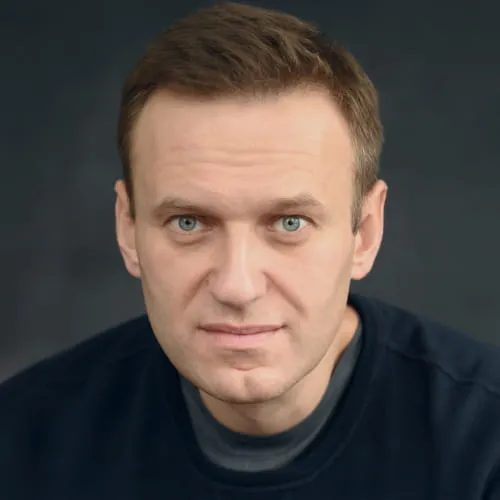
Hi, this is Navalny. Here are two unrelated
facts.
First, people are constantly asking me to do
an investigation about the Caucasus.
Second, since the end of last week I’ve been
getting spammed with a link to a video about
home renovation. Seriously, I was sent
the link to a video called “DIY suspended ceiling made of
drywall” 100,000 times.
What is going on, I thought. A prank? A flash mob?
I clicked on it and immediately noticed that
the comments under the video were full of my
last name, in the sense of: “Navalny will be here
any minute.” Well, I came.
I watched the video and, honestly, was blown away.
At the Anti-Corruption Foundation, we looked into
the situation so I could tell you about it, and
thanks to a suspended ceiling made of
drywall,
here is my video about the North Caucasus, and I
highly recommend that everyone watch it
to understand—and be horrified by—how
power is structured in this part of Russia, how
an entire region can be robbed, stripped bare,
people can be killed, and yet those responsible still
openly enjoy fantastic
wealth while remaining
public officials.
[music]
Back to the beginning—to our video
about drywall. Its author, Ruvim, is a
construction specialist from Rostov-on-Don.
The video really is about renovation; there’s
no trick to it. His channel is fairly
popular: 130,000 subscribers,
millions of views.
But from the very first minutes of the video, it’s
just—wow.
[music]
The filming, the views, the grounds, the house itself—
naturally, I couldn’t shake the feeling
that this looked like something we ourselves had filmed,
only somewhere on Rublyovka (an ultra-elite suburb outside Moscow).
Where else could someone build something like this? Ruvim,
the host of this channel, very
intriguingly teases where exactly he’s filming this.
A 2,000-square-meter house
on a huge plot, with lots of impressive,
interesting design solutions—and all of it very
far from Moscow, very far from St. Petersburg.
Today we’re going to tell you how things work
out in the provinces, far from Moscow, far from
St. Petersburg.
He flew in from Rostov-on-Don
by plane and so on, but of course that only
made us more curious.
So, without waiting for the video
to end, we start figuring out
where exactly this wealth is. We turn
to the details. First, the footage
is recent: the video came out a week ago, and in
the shots there’s no snow and the sun is shining.
So it’s the south. Second, one of the workers
says he lives in Pyatigorsk,
so this must be somewhere nearby—you wouldn’t
haul workers halfway across the country for this.
Third, the foreman Lyokha’s Instagram appears on screen—
hi, Lyokha—and there are dozens
of photos of this house, from the construction phase onward,
and everywhere the hashtag says Cherkessk. Next, we
simply open a map of Cherkessk, the capital
of Karachay-Cherkessia, and this gigantic
thing immediately jumps out. But
see for yourselves: this is what the
republic’s capital looks like from above, and this is what
this giant palace on the river in the center
of the city looks like.
It’s located next to the city’s main
park, and I’m sure every resident
of Cherkessk has driven past it
many, many times. In short, we establish
the exact location of the property
by around the fifth minute of this
video and feel terribly proud
of our own cleverness and investigative instincts.
But by the end of the video, we
end up feeling very stupid, because
none of this would have been necessary
if Ruvim hadn’t just gone ahead and plainly said:
“We’re in Cherkessk, in the city of Cherkessk.” But in any
case, now we know with 100 percent certainty
where this house is located, even if
the people in the video deny everything and
claim they filmed it on the Moon.
Now, of course, we’re very interested
in how much something like this might cost. If it
were on Rublyovka, then a 2,000-square-meter house and
8.5 hectares of land would come to, well,
around 6 billion rubles. But we’re not on Rublyovka, we’re in
Cherkessk, so let’s subtract the cost
of the land entirely—let’s assume
it’s free. But the house still had to be
built. And not only is it 2,000
square meters, plus outbuildings and landscaping,
but the interior is hardly finished in cheap paneling.
You can gather some details from the videos,
for example that the ceilings there are 12
meters high.
That means there will be an enormous
7-meter chandelier hanging
down from the ceiling. And in just one
room, the decorative plasterwork they show
how to install weighs almost two tons. In short,
the total weight of all the plasterwork—without the drywall, without
anything else—is massive.
All in all, we estimate
this property at about 1 billion rubles, and
that raises a logical question: who, in
one of Russia’s poorest regions, where the average
salary is 24,600 rubles, where even the governor
officially earns 74,000 rubles a
month—who can afford to spend
1 billion rubles on a house?
So we dig in to find out the name of this rich man.
We look at the property record extract and don’t understand
what’s going on. In reality, it’s a 2,000-square-meter house,
but on paper it is listed as a
recreation facility.
a wellness complex with an area of 310
square meters (about 3,340 square feet) — so we immediately understand this is not
just a rich man, but a man
who knows how to make the state
do what he wants
if you don’t live in Karachay-Cherkessia
then this surname won’t mean anything to you, well
just as it didn’t mean anything to me myself until last week
but believe me, residents of the republic watching
this video have already understood that we are talking about
people everyone there knows, and who
can afford anything. The owner
of the luxurious house is Ansar Alievich Kaitov
Ansar is very young — he isn’t even 18 yet
but he is already famous. Here he is at his
high school graduation, riding in a Mercedes with
flashing lights and firing an automatic
Kalashnikov rifle
Sweets are bad for you when you’re lying in Rosstat (Russia’s federal statistics agency)
which means no gift
This is certainly a wonderful start
A successful young man speeds around with
flashing lights and fires a Kalashnikov,
only taking breaks to oversee the construction of a house with
two tons of stucco in every room, and
what have you achieved? But we understand that
even if Ansar Kaitov graduated from school with
straight A’s
he still could hardly have bought himself a house like this
Naturally, it came to him from his father. His father
is named Ali Kaitov, and this is exactly
the moment when our video stops
being entertaining. Using this one
estate, registered to a 17-year-old
student
we are now going to crack open the door to
how the world of the North
Caucasus — and Karachay-Cherkessia in particular — works today
Karachay-Cherkessia
is a poor republic, humiliatingly poor, and
you are about to see why everything there
absolutely everything has been divided up
among a few families
having joined together into intricately intertwined
clans that have split among themselves literally
all the money that comes into the region from
the budget — every last kopek, whether it is gas,
electricity, beautification, roads — everything
has been carved up: parliament, government, courts
major enterprises, resorts — absolutely
everything is controlled by a small group of people
blood relatives who, over
the course of decades, have been robbing those who
live on this land. You already know very well about one of these
families — they are in
the news every day. They are the very same Arashukovs
led by Rauf Arashukov,
a senator from Karachay-Cherkessia and, at the same time,
a murderer and a corrupt official
and the leader of a group that, according to
the Investigative Committee, stole more than 30
billion rubles from Gazprom (about $330 million), but
the Arashukovs are not an exception. The Kaitov clan
does exactly the same thing. They have divided up
the republic. Yes, it sounds like the plot of
a film about a post-apocalyptic future, but
that is exactly how the North Caucasus is organized
in modern Russia
We pulled on just one thread — the one tied to
the owner of the house from this video — in order
to tell you who it belongs to, but
what we pulled out was a snake pit of incredible
scale, the size of which we still
cannot fully comprehend
Here is what we ended up with: it is
a gigantic scheme — just one
incredibly wealthy family
They live better than any of you. They
drive Bentleys and sports cars, live in
palaces with exotic animals, their
wives are covered from head to toe in
diamonds
They party around the world, travel,
enjoy life — and almost all of them are
government officials
The owner of the house — I’ll say his name again — is
Ali Kaitov
He is the son-in-law of the former president
of Karachay-Cherkessia
that is, he is married to the daughter of the former
president. Their child, in whose name the house
is registered, is therefore the president’s
grandson. The land around Ali’s palace is registered to another grandson, a 19-year-old
the land around Ali’s palace is registered to
Ali Kaitov was and remains a very influential
man in the republic. He was a deputy
and owned a factory, but now he could probably
already be aiming for governor with relatives like these
but one small circumstance stands in his way
One small circumstance: in 2004
when he was 27 years old, during
a child’s birthday celebration
he killed seven people at his country house
including another deputy. They had apparently
fallen out over business. This mass
murder made headlines in all the media at the time, in
2004 — understandably so. After all, the former president’s son-in-law
had killed people. We are talking about
the kidnapping and murder of seven Circassian
businessmen. What’s more, all of this
happened at his home, and as the investigation established,
it happened on his orders. On top of that, the bodies
of the victims could not be found for a long time because
Kaitov and his accomplices took the
corpses into the mountains, covered them with tires, and
burned them in a mine. Even for the North
Caucasus, such a crime was something
extraordinary
The relatives of the murdered men organized
mass protests and stormed the administration building
Immediately afterward, residents
staged a real uprising and riots
in parliament, and left only when
Dmitry Kozak, who flew in from Moscow,
assured them there would be a trial. There was a trial, and now I ask you this
what do you think, how much
should a person who organized
such a mass slaughter receive?
When he gets out, you just shrug your shoulders
and say, well, of course,
someone serving a life sentence would never be released.
You’re sure a person like that will never get out.
But Alik Kaitov is sentenced to 17 years
in prison.
By partial aggregation of sentences,
the final sentence imposed was
17 years of imprisonment, with
the sentence to be served in a correctional
maximum-security penal colony.
Local media immediately began publishing
reports about the killer’s conditions in custody: for him, in
prison, they made a special cell
consisting of two rooms; people could calmly
bring guests to see him.
And he himself could leave and return
to prison whenever he wanted. And after that, for K
there came a full-blown era
of humanitarianism.
His sentence was gradually reduced — first because of special
circumstances, then because of minor children — and in
the end,
less than 10 years later, Kaitov was already
free.
Here is a 2014 photo of him with the very familiar
Rauf Arashukov (a Russian politician later arrested on serious charges), Rauf
captioning it: “Kaitov, my brother.” So for
the murder of seven people, Kaitov served
less than ten years. Let me quote the well-known
human rights advocate Andrei Babushkin,
who said on the subject: “Such a generous
sentence reduction I have never seen in our
country. This is the first case of its kind.” While
Kaitov was in prison, his father-in-law Mustafa Batdyev
stepped down — though of course not because of
the mass murder. What a trivial detail, right?
And a few years later, it would seem that after
serving time, Kaitov should have been left at
rock bottom, unable to find any decent
job: his father-in-law was no longer president,
and he had formally divorced his wife. But here you and I get
a perfect illustration of how
family clans in the North Caucasus
work. Look at the chart again.
Here is Kaitov’s father, Zaur — he too was
a government official, heading the forestry
agency of the Karachay-Cherkess Republic
(a federal subject of Russia in the North Caucasus).
But that is not the important part right now. Here is his
uncle, a much more serious figure:
Magomed Kaitov.
He was called the energy king
of the North Caucasus. Recognize the wording?
Arashukov was also called a king —
the gas king. I assume one might get
the impression that this uncle
built some kind of
successful energy business that
made him an oligarch. That is, of course, not
the case. In 20
02, he was appointed head
of the Caucasus energy management
company by our “effective manager”
and liberal,
Anatoly Chubais. Chubais, incidentally,
also awarded Kaitov an order for services
to the Russian electric power industry. As a
result of that powerful appointment,
Magomed Kaitov looted
the republic clean.
He stole through utility tariffs — literally from
every resident of Karachay-Cherkessia, straight
out of their pockets. I would tell you myself how he
did it, but better to let
Putin explain it instead — he surely wouldn’t lie, right?
“The energy system
of the North Caucasus region is
to a significant extent controlled by one
family — the family
of Mr. Kaitov. Consumers make payments
for supplied electricity into the accounts
of affiliated companies.
Then part of the funds received
is cashed out through shell companies
or appropriated by family members.”
Thank you, Vladimir Vladimirovich. Magomed
Kaitov was arrested and charged with embezzling
4 billion rubles (about $120 million at the 2013 exchange rate). This was in 2013.
“In Moscow, for 48 hours pending a court decision,
Magomed Kaitov, former
general director of the joint-stock company
IDGC of the North Caucasus, has been detained.” Then
a miracle happens — the same kind of miracle as with
the prison term for mass murder — and we
see Magomed Kaitov on his children’s Instagram,
of course
free. In other words, even if he did serve time,
it was purely symbolic.
If you think that a stern reprimand,
an arrest, and being personally exposed by Putin
somehow affected the life or
wealth of the Kaitov clan, then you are
badly mistaken.
Here is the daughter of the man who stole 4 billion,
the energy boss.
Dzhamilya, founder of her own
“intellectual women’s salon,”
driving around in a Bentley with red upholstery.
She hangs out on luxury boats practically nonstop,
with singer Valeriya, at the Rotenbergs’ (a powerful Russian oligarch family) dacha,
and sails with them on a yacht. Here she is with her
brother, recently released after serving time for mass murder,
in Paris, and here they are again in the south of France,
traveling together. And since she has to travel so much,
she flies by private jet.
She loves Putin — and when standing before Putin,
what else can you say? Her sister Karina lives
in New York and works as a DJ and singer.
She is an official ambassador of the Chanel house in
Russia.
*Tatler* and all that. And here is the wife
of the “honored energy executive” Kaitov,
Madina, also with the Rotenbergs, also on
a private jet. However you look at it,
it all comes down to money. All of them are included in our chart.
Look: here is the family of Kaitov’s own brother,
the killer’s brother — naturally, also a government official.
heads the Karachay-Cherkess door
I mean,
road construction funded by the state budget in
the republic doesn't stop him at all from
giving his wife Madina
a Bentley with a bow on it. And just look at their home
interiors—so refined. Vacationing on a yacht in
Ibiza, the UAE,
Monte Carlo. The child is dressed well too—
ready for school, primer in the backpack, a bunch of fashionable
moccasins—ready for school. You're about to
either laugh or cry, I don't know. So who do you
think is standing there in those gilded
home interiors?
The head of the Karachay-Cherkess door—this is
his wife's father.
Madina Karabash's father, Albert Aliyevich, at that
time was the chief of police
of Karachay-Cherkessia, deputy minister
of the republic's internal affairs ministry. On Facebook
you can find a photo of his younger son
Islam. He is
a prosecutor. If you already feel like banging
your head against the table, hold on—this is Russia, this
is happening right now. These are the people
who have seized an entire region, and this needs
to be talked about. We're returning to the main
to the Kaitovs, to the house and the renovation video
that started it all.
What I'm getting at is this: how does the life
of
Alik Kaitov turn out after serving time for a mass
murder? Just fine, ladies and gentlemen, everything is
perfectly in order. Here's a Bentley
Mulsanne that he bought shortly
after, pardon the expression, getting out of prison.
It was registered in Moscow. Price:
more than 20 million rubles. His eldest son drives it around—
Aslan, 19 years old. What were you driving
at 19? So, he gave the Bentley to his son.
He gave it away.
Now there's no Bentley, so something has to
be done—buy another one, of course.
A Bentley Bentayga SUV was bought in
2017. Cost: 15 million
rubles.
There are plenty more cars too, lots of Mercedes—
this Mercedes, that Mercedes, a set of BMWs. All
of these are cars for Kaitov's teenage children in
Cherkessk.
And guess in one try what Alik Kaitov
starts doing immediately after his release.
He headed the company Integrated
Utility Systems Holding, formerly
known as the Cherkessk City
Electric Networks.
I don't even know whether it's necessary to explain
that among the founders of this company are also
the
wife and daughter of the mayor of Cherkessk.
[music]
[applause]
How they manage the power grid has already been
explained to you by Putin—they simply steal from
every payment, appropriated by members
of the family. Only one important question remains.
It's just hanging in the air, I can feel it:
where is the current head
of the republic, Rashid Temrezov, looking while all this
corruption is unfolding right under his nose?
And Rashid, who now is also tied to the Kaitovs—well,
here's where he's looking: straight into the camera lens,
holding Kaitov's eldest son close
—Aslan, the one who drives the Bentley
Mulsanne around Moscow, if you've forgotten.
They call the head of the republic
of Karachay-Cherkessia 'dear uncle'—dear
Uncle President, a former subordinate
of our killer. Before heading
the republic, Temrezov worked
as general director at Kaitov's energy
networks. When the murder investigation was underway,
local media called Temrezov Kaitov's right
hand man. The boldest even wrote
that he was at that very dacha (country house) on the night of the
murder. Look at this
wonderful president of the republic. He
shouldn't blur together in your mind with the faceless
mass of other governors, because he
even if only formally
bears responsibility for what is happening in
the republic. Listen to how much he loves
Putin. Hypothetically, suppose you
could speak with any political
leader who lived at any time, in any
country—who would you like to talk to?
Who? Who would I like to talk to? Once again,
I've already spoken with the winner of the
president of Russia. No comment.
No comment at all.
We also owe him that Russian-speaking-challenged
Mr. Arashukov in the Federation Council, and
by the way, I assure you, there is still exactly
the same kind of second senator from the republic—Akhmad
Salpagarov.
Only he steals money from capital
construction. So then, dear Uncle
President officially earns 74,000
rubles a month, but wears watches
worth nearly 40
million rubles—and not just one. Here's another Patek
Philippe for 4 million, and a gold
tourbillon for 2 million.
And here you can see one peeking out—worth 5 to 6 million,
or here, look, another wonderful
black one—2.5 million
rubles. They are absolutely shameless—not even
crooks, but criminals, murderers, bandits. They
completely take over entire regions and
can do whatever they want there, of course
in close coordination with Moscow. Do you think the
Kremlin doesn't know, or isn't involved itself?
Just imagine: all of Karachay-Cherkessia
has a population of only 465,000,
less than the population of Tula, but
even out of such a small federal
subject, these clans
still manage to squeeze out tens of billions.
rubles
they literally robbed
everyone there; the state's very purpose right now
is to enrich these
specific families, and the Kremlin benefits from it
it sends subsidies there and then
gets kickbacks in return and covers it all up
with its usual, 'Well, what do you expect, this is'
the North Caucasus—it's always like that there, that's how
it is supposed to be.' That means there's no need
to invest money in development
in the North Caucasus republics
I don't see it that way, and I don't think
there are many people in the Caucasus who consider
what is happening
normal. In any case, I'm very glad
that I was sent that very video about
drywall, and now many more
people will learn about what is happening in the republic of
Karachay-Cherkessia
By the way, this is the answer to the question,
'What should we do with the North Caucasus?' Well, don't
encourage these clans that rob everyone
and don't release murderers from prison
—then everyone there will live
much more prosperously, and everything will become much
calmer. Separately, I really want
to say a huge thank-you to those
few in number but still existing
independent Karachay-Cherkess media outlets and
bloggers who, no matter what,
have continued all this time to write about Protikal
Anna
about all those disgusting Rozhkovs and these
Temrezovs. Thanks to their articles, posts,
and videos, in a relatively short time
we managed, at least partially, to understand and
reconstruct the real picture
of what is happening in the republic. You
are wonderful, brave people and are doing
very important work. Subscribe to our
channel
the truth is told here