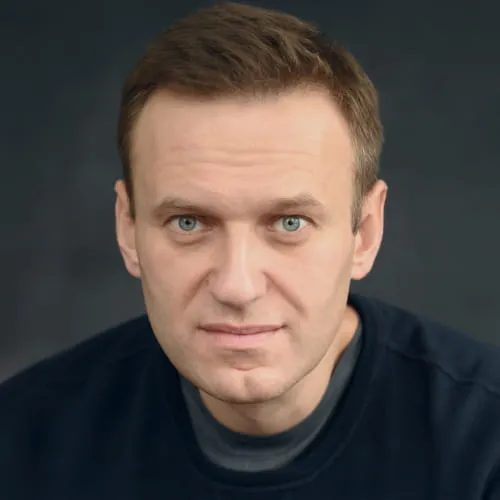
Navalny’s Circles: Migration and the National Question (full version)
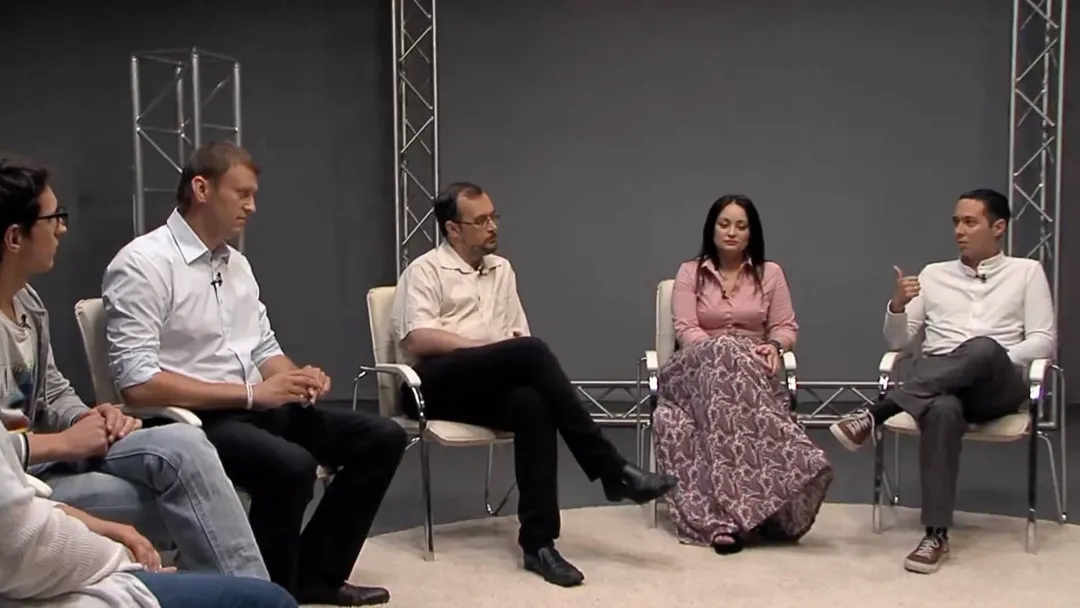
Friends, thank you very much for coming.
Today, our topic for discussion is this:
it is a very sharp, very painful issue for everyone.
Opinion polls show that when Muscovites (residents of Moscow)
talk about Moscow’s problems, the first thing
they put at the top of the list is immigration, and more broadly
the issue of peaceful coexistence,
the coexistence of people of different
nationalities in Moscow, is a question
that is truly painful and always provokes
huge arguments, and for us it is very
important to discuss, because in our
platform, with which my team and I
are going into the election, we probably have the
toughest position on migration. I am
quite often criticized for my, for my
position in general regarding
some
the issue of the peaceful coexistence of different
people, and I am criticized for the slogan “Stop Feeding the Caucasus”
(a Russian nationalist slogan about ending federal subsidies to the North Caucasus), and so on. I am very
grateful to you for coming and for discussing all
these issues here with me in an
open
discussion. Probably something harsher than
deportation and that special operation that
Comrade Sobyanin staged at the market, we are unlikely
to see, of course. So your position
may be the toughest in the platform, but not
the toughest in practice. I believe that what
Sobyanin is doing is not even a tough
position — it is simply hypocrisy. They
react: well, a situation occurred —
Dagestanis at the market beat up a police officer, and
in response they created a concentration-camp-like facility in
which Vietnamese people are being held. There is neither
any practical sense in this, nor any real fight against
illegal migration. There is nothing in it
except a TV news segment saying that the authorities
of Moscow have built a camp. In that sense,
I am instead proposing a systemic solution
that many people do not like, for example,
a visa regime with the countries of Central Asia and
the South Caucasus. But I believe this is a systemic
solution that will reduce the number of
migrants in Moscow, and it does not
involve building camps.
We do not need camps. Because if
all undocumented migrants in Moscow were put into
a camp, it would hold 2 million
people. The point is that there is also this
myth that a huge number of people
who came from Tajikistan all
dream of settling in Moscow and
staying here. That is not true. More than
half of them have families and children there; they
want to return. But they do not have that
opportunity because there is nothing for them
to do there. So if these communities were somehow structured
and if some kind of work were carried out with
them, I think that already
now, strictly speaking, this work
is partly being done. But if it were
supported by the city hall, then of course
much more would be possible. Well,
Look, sorry for interrupting, but this
is completely opposite to my point
of view. Denis is telling us that they
come because things are bad there; let us
make life better there, and then they
will probably be more likely to stay. But it seems to me
that this is not the task of the mayor of Moscow, nor
the task of Russian citizens, to improve life in
Uzbekistan. Especially since our
ability to influence life in
Uzbekistan is, after all, fairly
limited. If a visa regime applies to me and all
of you for Germany
or France, I do not see anything
wrong with introducing a visa regime
for Uzbekistan and Tajikistan.
Well, perhaps we can wait until
life improves there, and after that
reconsider it. But during the transition, what
what will happen during that transition?
Let us say we begin introducing a visa regime. In
Moscow there are a lot of migrants right now. What
happens at that moment if we
reject the option of a camp in
Golyanovo (a district in Moscow)? A normal transition period —
six months, during which everyone must
return and obtain a visa.
Technically, how? Technically, a person
has come here now without a visa, and often
even without an international passport; we tell him
that in six months you will thereby become
undocumented. You have six months
to go back, arrange
a visa for yourself, if you get one, and come back
here again, if we allow you to return.
Alexei, well, right now we already have a filter:
a work permit, and all the
legal procedures people go through. Yes,
you are adding a second filter — visas — which
there hits undocumented migrants too,
most likely. But there it will most likely simply
increase their costs, uh, and further feed
the Russian corruption machine. Yes, they
will somehow set up a channel for issuing
these visas through a little window in the consular
department somewhere in the Russian embassy
in Tajikistan, and people will come here
anyway — it is just that someone will
profit from it as well. Second, we will hurt
our compatriots who live there
for business and so on, and so on. So,
to what extent is introducing visas really
a systemic solution to this
issue? First of all, unfortunately, none of
our compatriots are really left there anymore — it is
a very small
number.
We would be better off deciding to
bring them all here at public expense already; they are
practically not there. That is the first point.
Second, introducing visas is not
the only mechanism. Yes, it is the main
framework decision. But what I intend
As mayor of Moscow, what I intend to do is this:
to make sure that migrant labor here
is simply used much less.
Why are there so many migrants here?
Because every street cleaner officially
earns no less than 30,000 rubles, but
the real
salary is 15,000 to 20,000 rubles. They simply
kick back part of their wages, so
it is profitable to keep them. They are slaves—cheap and
rightless slaves who can be housed
20 people to a room, who can be
put up in five-story buildings awaiting demolition and exploited.
When I become mayor, I will simply introduce
a ban on hiring foreigners for those
organizations that operate using
budget money. If it is a private
organization, fine, let it hire
whoever it wants. But if it is budget
money—landscaping, major repairs, and so
on—they have enough money to
hire Russian citizens. That is the first point. Second,
we must introduce disqualification for
hiring migrants.
So the issue is not about introducing visas
or banning citizens of Uzbekistan from
entering, or making entry more difficult. We need to make sure that
there is no situation at all in which 2 million
citizens of Uzbekistan coming here
can come here hoping to find
work. You could say right away—even so, yes, you
are proceeding from the assumption that, okay, we have
a corrupt housing and utilities sector, yes, everyone there
is skimming money, and that is why they maintain a workforce without rights. That is
bad for the migrants themselves, bad for
the city’s economy. We will remove them, and then
some Russian people will appear who, from
Vologda and various other provinces,
will flock to Moscow to work as street cleaners in
housing and utilities for, say, 30,000 rubles or whatever
normal salary we are going to
pay them. I understand this thesis—it
is appealing, sound, logical, but it raises
some practical questions. As far as real-world testing goes, I
know of only one experiment so far in
the capital, where several management companies
really did completely отказаться from
using migrant labor and hired Russian workers instead. As a result,
residents are now bombarding them
with demands to bring the migrants back. Why?
Because Russian people do not go to work
for 30,000 rubles. It seems to me that this is a fact. Even here,
even people from villages probably would not. This
can only be tested empirically.
Perhaps several pilot
projects need to be launched and tried, yes. But those
Russian people from villages who would go
to work for 30,000 rubles—I do not see them. I do not
see students who would go
work part-time as street cleaners for 30,000 rubles
in their first or second year, and so on.
In Soviet times, street cleaners were Tatars.
That is, for a very long time in
the municipal services sector, we have had
migrants working there—or rather ethnic minorities were there even before
the Revolution. Yes, it is a big myth that
all housing and utilities work across the country is done by migrants. This
is simply not so. We are talking about Moscow. And then
I have a question for everyone: how much is
migrant labor actually worth? How much
should it cost, and why is it that
it ends up costing less than the labor of a Muscovite?
Because he has no insurance, because
he does not have a guaranteed
eight-hour workday, he has no
vacation, he has no benefits, and
no taxes are paid for him. If I, as mayor,
am upholding the law, then it is simply
impossible to pay a person
a salary of less than 45,000 rubles. His labor cannot
cost less. If someone’s labor
costs 88,000 rubles or 15,000 rubles, well, that
already means corruption. That is impossible.
And I am absolutely sure that if we take
a migrant and a person who came from
a migrant cannot cost less. On what basis
could he? Only because his rights
are being violated. And in that sense, paradoxical as it may seem,
it seems to me that I am much more
of a defender of migrants’ rights than those
people who forbid me to introduce
a visa regime. This is not about a ban.
It seemed to me that it was wrong
that my proposals were immediately described as
contradicting your position. That is not the case.
These diasporas should not exist in the form of
some kind of underground
communities—or, if not to say gangs. They
should be legal structures, well, with
which some kind of dialogue is conducted, with which
certain contentious issues are identified.
Some of these people may possibly
integrate in some way, and so
on. And here it is especially important that
there are specialists who work with
children, and so on. But it seems to me
that the quickest and easiest solution
to the issue is when the most active among
these people leave, and
fortunately, with our
help.
Then we will end up with a wonderful Egypt nearby.
Well, all right, okay. No, that is much better
than what we have now. But look, you
mentioned 40,000 to 50,000 rubles—a rather
nice figure. Yes, some of my
reporters work for a little more
money than that, but most for less. In fact,
most work for less.
Absolutely right. Yes, associate professors at Moscow State University
earn one and a half times that. This is all also connected with
corruption, with
many other things. But look, where are we
going to get that kind of money for housing and utilities? If
everyone there officially gets 30,000 rubles
as the salary of housing and utilities workers—well, on average—and we
add 20,000 rubles to the figures you mentioned,
that comes to 15 billion dollars, I think, per...
800,000 housing and public utilities workers—that’s about 10
billion dollars, with Moscow’s budget at 15
As for that, we already have a budget deficit. I
understand that fighting corruption
could free up, yes, substantial funds if
the Rotenbergs and others like them were removed from public contracts
we would have some money left, but isn’t it
too unrealistic a salary? Look,
first of all, we are guided by the opinion
of Muscovites who do not like such a
large number of migrants. This is simply
a political fact: 80% of Muscovites
are unhappy with the large number of migrants
and I, as a Muscovite, am also unhappy about this. I
believe this system is wrong.
Second, as for wages, the minimum
approved standard tells us that
there cannot be, in Moscow,
a janitor with a salary
below that. Money is already being allocated—they are
colossal sums. Moscow’s budget is 1.63 trillion
rubles, and we can pay a fairly
high salary for that very difficult, in
fact, work. I do not want now
to compare a janitor with, as you say,
an associate professor at Moscow State University. I want to speak only about
the janitor, because an MSU associate professor is
some kind of federal employee, whereas my
janitor is a person who performs
hard work, and he should receive
good compensation for it. Besides, this is very closely
connected with
a gigantic economic
problem of the country: low
labor productivity. In our housing and utilities sector,
labor productivity is 10 times
lower than in the United States, for example. That is, where
they have one person working, we have
10 people working, and it is precisely because of
the huge number of migrants and the fact that
it is profitable for officials to bring in
migrants that our labor productivity
does not increase. Therefore, strict
control in this sphere is needed. To say that
Russians will work more
productively than migrants—I am not saying that.
Russians and non-Russians alike—any
managers of property management companies must
increase labor productivity so that
a person of any nationality
working for a legal wage would increase
their productivity. Where
10 people are working with things like these
to mow a lawn, all that is needed there is one tractor, that’s all.
That’s it. May I ask a question that
really concerns me?
80% have a negative attitude toward migrants, yes,
but this is being created, after all, this is
created easily—the ethnic card is the easiest
one
to play. To explain something that is not
there are many problems—problems, of course, yes—but it is being
created. Tell me, this is exactly what I want
to say: the mayor has plenty of opportunities to play
this card, yes. At the moment when
things get difficult, when there are problems with housing and utilities or with
anything else, the card is pulled out of the pocket
—the ethnic one—and played: everything is
the migrants’ fault. Or, on the contrary, the mayor could
work to create some other
policy. Yes, because this is not
some kind of objective
reality in itself—this 80% is, in fact, created
including by the mass
media, by what the mayor says
and by what someone else who is often on
screen says. So how would you work with that? Well,
first of all, what I see from the side of the
federal authorities is precisely this kind of
ritual “friendship of peoples” (a Soviet-era slogan about ethnic harmony), with no
incitement that I can see. I see that everyone
is living together just fine. Rahmon comes
—Putin meets with him
embraces him and agrees on new
quotas for incoming citizens of
Tajikistan. So I do not have the impression
that anyone is deliberately playing a special card.
I have a clear sense that
objective reality in Moscow is fueling
these sentiments, including everyday
xenophobia, and denying that would be
pointless. Moscow ranks first in the world
in the number of illegal
migrants. Is that a normal situation? It is
an abnormal situation, and citizens are simply
objectively outraged by it. I
see my task not as
playing any card, but simply as
reducing the number of illegal migrants.
There should not be so many of them here. The
number of illegal and legal
migrants in Moscow should be
reduced by 70%, and we can reduce it
without insulting or humiliating anyone
and without violating anyone’s national
dignity. It can be done, and we will do
it, absolutely. Excuse me, but the majority of
people, uh, on the streets—yes, the majority of
Muscovites, including my colleagues from
whom we worked at Rosatom, could not
tell a Buryat from an Uzbek, they could not
tell a Tuvan from a Kyrgyz person. Excuse me, and
trying to explain to them that these people had the same
Russian passport was
useless. That is, it took me
a certain effort to explain: guys,
where is he actually from? How do you know? That is,
they say, if they speak their own language, then they must be
—yes, okay, they do, yes, they speak
their own language. But that does not mean that
they are labor migrants here, that they are—well, what exactly is
the problem here? I, I can—let’s say I am
a public authority. My task is not
to distinguish people by appearance, but by
passport, yes. After all, beatings are not handed out according to
passport, but we are looking precisely at the
passport. But most often Muscovites are
talking about people who, to them,
somehow don't look the same, who don't
look the same either
are partly lumped in there too. Yes, that 80% includes
the North Caucasus as well — all those dances there
on
Manezhnaya Square, the legendary Dagestani
wedding gunfire. Yes, and those terrible
Chechens and so on — all of that gets included
in the same category. Yes, here I agree: when people
talk about migration, they include everything in it
the North
Caucasus too. A question for you as well: then why
isn't there a visa regime with Ukraine
and Moldova? Moldova is the second-largest source
of migrants after — or third after — Uzbekistan
and Tajikistan, the South Caucasus, and so on.
Why do we talk about Central Asia
for example, and not about them? There is, I believe,
no racism in this, but there is
an objective fact, which is that
most of the arriving
migrants from Central Asia and
the South Caucasus are young people, residents
of rural areas, and their way of
life simply stands out
to Muscovites (residents of Moscow); they actively dislike it.
Those coming from Moldova, from Ukrai-
well, perhaps by some cultural
codes — forgive the expression —
they are closer in mentality, in their way of
life, in their habits of living in cities.
Quite simply, people come from
Uzbekistan — genuinely poor
young people from the countryside — and they are not
used to living in cities. Besides, they
are willing to accept a very bare-bones existence. They
are willing to live 20 people in one
apartment. What are they supposed to do on the weekend? Well, they
go out to the park, grill some
shashlik (grilled meat), sing songs — they also need
some kind of leisure, right? They're people too. This
is very noticeable; their way of
life is noticeable too, and their
religiosity is somewhat unusual
for Muscovites; the level of everyday
religiosity among Muscovites is very low
in reality, whatever people may tell us —
very low. But among these people the level
of religiosity is very high, and that
stands out to Muscovites. They see
that a large number of people have appeared in the city
who live according to
some other rules and cultural
codes. That causes irritation, it
creates tension. After all, we're talking about
a big city, a city of many millions.
At the same time, okay, we have
people with Asian features, but we don't have
representatives of other races there, so
does that mean there is room here only for those
people who match us in terms of
cultural codes? Listen, what even are
cultural codes? Say a person comes from
Kazan — a Tatar from Kazan. Yes, his
cultural code is exactly the same as mine.
Or a Buryat from Ulan-Ude, or especially from
Irkutsk — what, is he a Buddhist, or is he going to
perform some religious rituals somewhere? His
cultural codes are exactly the same as
mine. And in that sense, it's an interesting
situation: people are outraged by migration,
they are outraged by Central Asia, but the issue of
those same Vietnamese and Chinese
is raised much less — by an order of magnitude less —
because even though they seem to have different
cultural codes, still, to put it
plainly, their everyday behavior is less
noticeable. Then may I ask a question about
socialization and adaptation? Because
all of this is fine, but we're talking about
a given reality. This is what migrants are like.
All right, but children go to school, and this
is exactly where the mayor has enormous
resources. So how can the education system be adjusted
in such a way that in five
years, those who could potentially
end up not being socialized would instead be
fully
socialized? Yesterday we had a similar
meeting on education issues, and we
spoke with Moscow teachers.
This really is a major problem
that the mayor is obliged to solve. In any case,
there is a certain number of migrants here;
in any case, there is a huge number
of these migrants' children, and they go to school. We
have classes where most of the children
do not have Russian as their native language, and
their families speak another language, and
the task of Moscow City Hall is, of course, to allocate
additional funds in order to
socialize these children and eliminate
entirely
any kind of segmentation
into national schools, because that would be
a ghetto. We have two bad options, two bad choices.
Either we
leave them on their own, and they have no prospects
in life because their Russian is poor,
they get failing grades, and then they become
criminals, and so on. Or we
teach them in their native language, and that is also a ghetto,
and in the end they do not
integrate into society. We have to make them
Muscovites. That's what inclusive education is called:
helping the school adapt.
Exactly, exactly. And in
that sense, the budget has the resources. This is
not that much money; this is more
a staffing issue, a matter of methods, a matter
of approaches. But this absolutely needs
to be done, because I myself, in my own
courtyard, see an astonishing situation when
there
a fifteen-year-old Uzbek boy
has grown up in Moscow. He is a Muscovite; he even
dresses exactly like my children, but
he helps his parents instead of
to go to school, and people don’t like that.
No one likes it. A fifteen-year-old child should not
be helping their parents work.
Sweep the yard, maybe—but he should be going to school,
just like my children. Otherwise,
when he turns 18, he’ll say, well,
excuse me, I’m just as much a Muscovite (a Moscow resident) as anyone else. I grew up here,
I’ve never even been to Uzbekistan, and
I have no prospects in life at all.
This is an extremely important issue that plants
a kind of time bomb under all of us. Maybe let’s come back to that,
and return to an interesting question,
about the differences between Central Asia, yes,
the emigrants from there, and Russian citizens
from the North Caucasus, and so on.
There really is a mixing going on among Muscovites,
yes. How, as mayor, would you
help manage that distinction? What should be done
about poor rural youth from
Dagestan, partly from Ossetia,
partly from Kabardino-Balkaria, Karachayevo-
Cherkessia, and so on, who also
come to Moscow with the same
Russian passport, but also with
a somewhat different cultural code—what
should be done with them? Here, the answer
may be only one: law and order. Three
identical hooligans—a Russian, a Dagestani,
and a Chechen—should all be treated
the same way. No one should be asking questions,
No one should specifically persecute
a Dagestani hooligan because he is
Dagestani, but no one should specifically
shield a Chechen hooligan because
someone first has to call Grozny (the capital of Chechnya) and
find out whether he has an uncle who’s a prosecutor, and whether
there will be complications, whether someone will come
from the President Hotel with a gold
pistol to get him released from the police station.
Equal treatment for any
offenders—that’s the main thing, and it seems to me
the only possible approach here
is this. We know that people are treated
differently; we know it’s simply a fact that
the Moscow police segment them.
Some may be additionally repressed for not being ethnically Russian,
while others, because they are not ethnically Russian,
are treated
more softly or with special consideration.
That is exactly what must be absolutely
eliminated, that’s all. And everyone should understand:
if you commit an offense on the streets
of
Moscow, then it will be strict but fair for everyone,
regardless of nationality. But what
about things that aren’t crimes? We immediately
jumped to the criminal extreme,
but
what about dancing on Manezhnaya Square, for example? If the law
allows it, then fine. How is dancing different
from drinking beer there by people who came
from Golyanovo (a Moscow district), for instance?
Let’s ask—I'm interested too.
May I? As I understand it, a large part
of the Caucasian community, in general,
doesn’t like the dancing on Manezhnaya Square, and
doesn’t like gunfire at weddings either. Are there
any mechanisms by which the community itself
can influence its own members? Well, honestly,
first of all, I don’t like the word
“diaspora,” because after all, we are citizens
of the Russian Federation, and accordingly
we live in our own country, and we
cannot be a diaspora.
A community, perhaps. Excuse me, but the diaspora itself
really loves the word “diaspora” and
likes to exploit the fact that it is
a diaspora. That is very wrong,
actually.
That’s not how it should be done.
Actually, as this discussion has gone on,
a few thoughts have occurred to me.
First,
it’s not entirely clear to me how
the cultural code of someone from Kazan
who comes to Moscow really differs
from that of someone from Tashkent, because I do not think
they are all that different. Because the difference
between a Tatar and an Uzbek is the same as
between a Russian and a Ukrainian. That is,
those are Turkic peoples, these are Slavs; some live in cities and have for many years,
in a modern environment, while others live in
villages. That is a matter of social class, not
ethnic or developmental differences.
So, honestly, I don’t really understand
this kind of
segregation. I have a question about
the issue of
introducing a visa regime. If we
say, for example, that we make the decision
that Russia introduces a visa regime with
the countries of Central
Asia—we all agree that we have
an absolutely colossal level of corruption, and
where is the guarantee that in our
consulates there won’t be the same corruption, and
that we won’t end up with essentially the same system
anyway? Absolutely—that is, those who come will be the ones who
have arrangements with representatives of our consulates, and so
on. So will this fundamentally change
the situation? There is no guarantee, but at least
we will have a mechanism. We can say: we will not
allow in more than 500,000 people a year,
and that’s that. Right now, that mechanism does not exist
at all. Right now, any citizen
of Uzbekistan or Tajikistan, even without
an international passport, can simply buy a one-way ticket
and come here. That situation
is abnormal. I understand that even if
I manage to get a visa regime introduced tomorrow,
the police won’t change, nor will
the border guards—no one will change
overnight. But even so, there will at least be
a mechanism. That is the most important
thing. Thank you for
the answer. One more question regarding
[music]
the North Caucasus—what uncle are we talking about there, and is it necessary
to ask there whether he should be punished or not. So,
moving on, but on a mass scale I don’t think that
this is any kind of trend. And as for
if we’re talking about the majority of people from the Caucasus, I
think that, all the same, they are in a
position of being discriminated against.
[music]
citizens from the North, from Central Asia, and
the North Caucasus, and on the other door
it says “Russian Federation.” So you think
that this is normal?
I think it’s not normal, but
you understand, these things happen
because of certain objective preconditions.
You see, when
we criticize those who discriminate against people
on the basis of ethnicity, we should not
forget those people who provoke
all such discrimination and all the rest. In fact,
the scandalous incidents of recent
years, which may even have been connected
with some kind of street violence, which
arose, after all, from the fact that someone
commits a crime, and then the police
treat him in a special way. We
see that, unfortunately, that same
North Caucasian youth just loves
to push this kind of
machismo, all those things like “whoever is with us,”
or, as they say, “whoever is not with us is beneath us,”
“the Caucasus is strength” — it simply turns into
a cult and this kind of swaggering. Besides,
we should remember that Muscovites (residents of Moscow) who simply
have never served in the army
ignore this problem.
Xenophobia is, to a large extent, brought back from
the army, where people encounter
these ethnic groupings, with
dedovshchina (violent hazing in the military) along ethnic lines, all these
well-known cases, yes — naked soldiers with
“Dagestan” written on them — and they bring
back from the army a level of xenophobia that is
completely
off the charts. This has to be fought, and it has to
be fought, it seems to me, from both sides.
Here, well, let’s put it this way, on the one hand, those
who already live in Moscow should uphold
the principle that everyone is equal before the law, but on the
other side, it seems to me, there should be
firm condemnation of any
of these things, and so on. When in
Grozny, women are shot at with
paintball guns because they are wearing
short skirts, and then Ramzan Kadyrov
says, “Well done, I’d give them all
medals” — well, that, that of course
infuriates everyone else in the country.
I have a wife, I have a daughter.
Naturally, I just — the quote that
I saw today when I looked on Wikipedia
at what Navalny writes — yes, but that’s only one
side of the coin, right? I know lots of
guys from the Caucasus.
They’re all intelligent — all the guys from the Caucasus I know, you
are all intelligent guys from the Caucasus.
But that’s exactly what I’m talking about: this is
how public opinion is formed. What
I saw
was only that. But that’s completely untrue — you are all
nice, good guys from the Caucasus. Which of
you here is a governor? Tell me,
please. There is no governor among you. I
see the governor — the president of Chechnya —
who is not just some nice guy from the Caucasus, who
supports violence against women
who simply put on a dress. That is what
that exact quote is there, and it alone
is what forms public opinion,
because that public opinion
is shaped not by my quote, but by the fact that I am
quoting Ramzan Kadyrov, that’s the point.
Public opinion is shaped by the fact that an official
vested with enormous
powers allows himself such
a statement. Naturally, it throws everyone into
a rage. If I were just saying this and
were simply quoting some guy
named Maga from Makhachkala, they’d say, well, so what?
There’s Maga here, and here
there’s a good Ibrahim. But here we’re talking about the president
of the republic, so public opinion
is shaped not by me, but by them themselves. Sorry, but
you know, I’m from Chechnya. I’m not
Chechen; I’m a representative of an ethnic
minority in Chechnya as well. So for me
it is actually very hard to imagine
a situation where, for all of Kadyrov’s shortcomings,
Kadyrov would say that
representatives of ethnic minorities,
for example Nogais, Kumyks, and Tatars, should
have their movement restricted within
the Chechen Republic, that they
cannot move from one municipality
to another. But who here is proposing
that? No one is proposing anything like that, and in
Russia no one is proposing that. But I
do see an objective fact: when you turn on Chechen
television — well, I can’t watch it
in Moscow except on YouTube — everyone is in
headscarves, and everyone knows that this is
Kadyrov’s instruction that all presenters should be
in headscarves. And I understand that this is
an unlawful instruction, an instruction that
directly contradicts my Constitution.
If, unfortunately, the authorities of Chechnya themselves, and to a
lesser extent Dagestan, but regularly
this happens, themselves want to do
some unconstitutional things on
their own territory, setting themselves apart from me, well
then why be offended if I
say, excuse me, stop feeding the Caucasus?
Alexei, no one is offended when you
say “stop feeding the Caucasus,” because
you have explained many times that this means
stop feeding the Caucasian elites, and
that is perfectly clear. The other question is
that you are now running for office,
so what are we supposed to do in this situation?
Stop funding the representative office.
Dagestan's office in Moscow, for example—well, judging
by all appearances, it is also funded by
the federal center. The question is different:
in the recent past, you took part
in the Russian Marches, and you are supported by
Sputnik i Pogrom (a Russian nationalist media outlet), you are supported by Doni
perhaps when you become mayor of Moscow,
won't you in some way be indebted
to the nationalists, to those people who really
propose deporting people without even looking at their passports,
restricting movement, and so on?
Because I don't like this kind of
collectivist approach, where there are
some Caucasian guys, they came here and
shoot, leave, block people's way, and
so on. I'm 18 years old, I was born in
a high-mountain Dagestani aul (mountain village). I have a
Russian passport, under the Constitution,
by birthright. So there you go. And shooting—
maybe I've fired a shot at a wedding sometime, but
even so, I don't like this attitude. And
I want to be sure that the promises
that you are so eloquently making to us here,
you will actually keep, because
you have a completely different constituency—
constituency.
The national question—this is an important question. I
am probably the only politician in Russia
—and I am very proud of this—who
is in a normal dialogue both with
the liberal part of the political spectrum
and with those who are usually called
nationalists. I would simply call them
the more conservative part of the
political spectrum. And I was supported by
parties ranging from NAROD and December 5, which
can more likely be considered liberal
parties, to the National
Democratic Party. I truly value that,
in fact, precisely because
I
am running for Muscovites. They are different.
A huge number of Muscovites have
everyday xenophobia; they say
all sorts of foolish things like
"let's punch those people in the face because
they're not like us"—well, they are mistaken, and
we need to engage them in dialogue. Some people
are mistaken, some are not, but in any case these are
people who will vote for me.
And even if they do not vote for me,
I still have to remain
in dialogue with them. How will you
balance relations with
representatives of—different representatives of
different political camps? Exclusively on the
basis of the law. Here I have
exactly
a clear position that I stand on
with both feet, and no one will
push me off it. I don't care what anyone's
nationality is. If you are Russian but
you shoot at a wedding or dance
lezginka (a traditional Caucasian dance) on Manezhnaya Square, I consider that
a violation of public order. If you are
Dagestani and do the same thing, that is
also a violation of public order. Muscovites
want me to put a stop to
violations of public order, so everyone who
dances lezginka will be treated equally:
taken to the police station and fined
1,000 rubles (about $10). But why don't they detain those
guests—guests from, from southern
countries, let's say—who dance near the exit,
near the exit of metro stations? Right now in Moscow
you can observe scenes like this: well,
Indians are standing there and dancing. But these are still
different things. Yes, they entertain Muscovites,
they do not create any tension, they
entertain people and earn money that way.
You see, it's a subtle matter.
[music]
And the legal system is structured in such
a way that in different parts of the country the same
event can be interpreted as
a violation of public order and
a public offense—well,
not a crime, but an administrative offense.
Well, you are violating
public order. Look, for example,
you go out into the street naked. Well, where is the
violation? It seems like no violation at all—I'm just walking
down the street naked,
not touching anyone, not bothering anyone. And yet
it is petty hooliganism, and we
understand that if you walk naked down the street,
maybe in Gelendzhik (a Black Sea resort city) that's just, well, a person
walking naked down the street. But in Moscow, even
if you go out in swimming trunks and
ride the metro, that's a violation.
These are subtle matters. That is exactly why society
created courts, society created
jury trials, society created ways to assess
particular events and actions. Therefore,
we need to approach everything reasonably, not
discriminate against anyone on the basis of nationality,
but at the same time firmly
put a stop to certain things. If you are Russian
and sitting on the street drinking vodka, that is
the same kind of administrative offense
as if you are Dagestani and firing a
traumatic pistol (non-lethal handgun) in the street. I
can say that I am ethnically Chechen,
and as you can see, I am without a
headscarf in Chechnya. Yes, well, by the way,
they wrote that one should wear long skirts or trousers,
and since I'm wearing trousers...
No, the point is that in Chechnya no one
forces anyone to wear headscarves there.
Those who appear on television wear headscarves, even hijabs,
but that is their choice. Yes, it is their
choice—or is it an instruction from management?
An instruction. But if she does not want to wear it,
if a woman does not want to, then she simply
does not go to work at
television. That's first; second,
you talk about a cultural code there, right?
I agree that what irritates us is not the Caucasus itself.
We’re also irritated by people who don’t know how
to behave properly. Yes, that depends on
upbringing. Maybe it stands out more clearly
because people from the Caucasus often have a very
distinctive appearance. Yes, especially
when they dance lezginka (a traditional Caucasian dance), when
they drive around the Eternal Flame (a war memorial) in a jeep, but
that is not
the problem of the Caucasian community as such.
It is a problem of the upbringing of a particular
individual, and of law enforcement.
If he were sure that
if he were detained, then later
his rich father could buy him out, then he wouldn’t
behave that way. Right? If he
had doubts, or if he were sure
that he would go to jail for it, he wouldn’t
have done it. Yes. But for some reason it doesn’t irritate people nearly as much
when nationalists who come out
to rallies throw beer bottles at
the Eternal Flame—that never seems to bother anyone.
I’ve never seen anyone react the same way when nationalists
climb onto the Eternal Flame; it seems like
it happened in the middle of the night. Yes, practically every
weekend I hear swearing and shouting
right outside my window—people cursing, yelling,
fighting—and that is considered normal. But when someone
dances lezginka, and when, as you say, people display
what you call pronounced religiosity—how is
that bad? Pronounced religiosity? They
don’t pray namaz (Muslim prayer) in the streets except, yes, during
holidays, because there aren’t enough
mosques and they have nowhere else to go. There are too few mosques in
Moscow, whereas there are far more churches.
But they have nowhere to go, and because
on holidays they perform these
prayers and sacrifices in the street, people say, yes, they slaughter
rams. I have never once seen that. I’ve lived in Moscow for 13 years
and never seen anyone slaughtering rams somewhere
out in the street. Not once. I don’t know, maybe
someone else has seen it. And how exactly is this
pronounced religiosity expressed? They don’t smoke, they don’t
drink. Is that bad? I’m talking about
imposing it, yes. If a girl wants
to work in television in Chechnya, she
has to wear a headscarf. That, that right there,
is in fact a criminal offense.
What is being done there is simply a criminal
offense. If you say, yes, go into
public service, but you must wear a headscarf,
that is a criminal offense which, unfortunately,
in Chechnya is committed quite
openly. There is also the reverse situation,
when in Moscow someone wants
to apply for a job and is told, “We won’t
hire you only because
that”},{
or when someone is expelled from university only
because a girl refuses to take off
her headscarf. Look, we need to distinguish
between the question of whether one may wear certain
religious symbols in public places. In France
it’s the same issue, but France and Russia are different
situations.
I also think that in Moscow
schools it would be undesirable if girls
went around in hijabs. I think that is
wrong. Why is it wrong? Well, you were
talking about naked people and so on,
yes. Well, okay, but if a girl comes in a hijab,
goes up to the board and recites
“By the Curving Seashore” (the opening of Pushkin’s *Ruslan and Lyudmila*),
what exactly is the problem, professionally speaking, with the fact that
the girl is wearing a headscarf? Because we are striving for
a situation where, yes, on the one hand, everyone can
live as they want, but on the other hand,
if these are children, if it is a children’s group in
which relationships are complicated, then there should
be some degree of uniformity in clothing
and appearance so that they do not
have any problems. We ourselves talk
about inclusive
education and everything else; we must
integrate these people. After all, it is not the children
who decide whether to wear a hijab or not.
It is the parents who put it on them or do not
put it on them. So the hijab is a choice? The point is
that it is prescribed by their faith; they
are required to wear a hijab, obligatorily.
If the children themselves perhaps want
to take it off while at school, then
their parents will not allow it. That is the first point. And second,
this logic can be taken to absurd extremes, you understand.
“Our faith prescribes that we
be photographed for our passport wearing a headscarf.”
“Our faith prescribes,” people say, “that we,”
Orthodox believers, should refuse a taxpayer identification number (INN). Our
faith tells us that the passport is the number
of the devil. Our faith prescribes that we
go off into the forests.” But that leads us to
absurdity. In fact, those are not the same thing at all.
And
an INN and a headscarf are completely different things.
And
all the same, I believe that restricting
people in their constitutional rights is
wrong. You speak of equality,
and we are saying: we are not going to
tear hijabs off anyone in the street—God forbid,
of course not. But a child is still a person
who does not yet have full legal capacity; he or she
does what their parents tell them. And in
Moscow schools, it seems to me, I would like
to strive for a situation where
children at that age are not too heavily
focused on this. I would also object to the introduction of
the foundations of Orthodoxy in school, so that children do not
fixate on it. I think that
this is a matter that belongs to the school council
and local deputies. If the school and
the parents do not want classes on Orthodox culture—well,
personally, for example, I am not against the foundations of
Orthodox culture. My wife is against
introducing the foundations of
Orthodox culture in school. She believes, simply on the grounds
that the curriculum is already
overloaded. If the parents’ committee
They say that we don't want this subject.
It shouldn't exist, Alexei, we more or less...
We're the generation that grew up with the idea that
we don't talk about religion, we don't
know anything about Orthodoxy, or Buddhism, or
Christianity—well, about nothing at all, not about
Islam either. And so what happens is
that people come out
for Easter, people come out for Hanukkah, and
people come out for Oraza Bayram (Eid al-Fitr), and other people
have absolutely no idea what it is.
So maybe this is exactly where it would make sense
to talk about it and explain what it is,
that is, to draw attention precisely
But okay, to draw attention to the fact that
all of this unites people—I don't think that's
the state's job. That's a matter of upbringing,
it's the school's job, and above all it's the job of
the family.
Some people study well, some
study poorly, some are more educated,
some less so, because that's how their family
raised and taught them. I don't think
we need to conduct some special
awareness campaign: dear Muscovites,
please understand Hanukkah, and that you need to relate to it in some special way.
Rather, what we should do
is simply educate people.
You can inform people about it, you can
say: Hanukkah is this kind of holiday,
Oraza Bayram is this kind of holiday, and exactly
the same with others—it's simply information.
This problem arose because
over the past five years, Muscovites have suddenly
been watching in surprise how the entire Prospekt
Mira avenue is filled, as far as the eye can see, with rows of backs,
and that simply unsettles and frightens them—they
have never seen anything like it before, and for that you can't
judge people too harshly, because it's
simply something new. There are people who
want to explain to others what Hanukkah is
or what Oraza Bayram is, and so on.
They should be given that opportunity. That
would be very good. It seems to me that
what happens
in education is still extremely important, because
education is an enormous resource—it's what
we will have in a few years' time, and
it seems to me that some kind of educational
policy is needed here.
As a Muscovite,
what I want from the new mayor is for the terminal
metro stations to be connected by light
surface rail transit—that's specifically what people want from us.
As a person of Caucasian
ethnicity, I still find it fairly
comfortable to live here. I'm used
to not paying attention to fools. I just
want to say that lezginka
—this stumbling block that for some reason ended up being
classified as a disturbance of public
order, even though it's performed during the day—
is a very beautiful, ancient dance.
I enjoy watching people dance,
whatever their ethnicity.
And I know for sure that if someone were
dancing in the square in Makhachkala, say,
I don't know, doing
a squat dance, people would stand there and applaud
with
pleasure. As for
housing and utilities, I think it would be great if
everything were genuinely calculated
and based purely on economics, yes—on the cost of
labor, how much money the city has. If
you can mechanize it, then you need fewer people,
and so on. That would be excellent.
Try a couple of pilot projects where
there would be, say, no migrants at all,
but instead internal migrants
of Russian ethnicity, or any other
citizens of the Russian Federation, and just see what happens.
Try it, yes, because that would already give
us some factual basis for
understanding: okay, this is how many
quotas we actually need for people from Central
Asia. And then everything in your program is
very well written—how to bring this into the
legal sphere, how to fight corruption,
and so on. But as for the Caucasus, yes, and
drawing boundaries—well, it seems to me that if
you look at it, these people have
drive and energy. If you look at
how many Dagestanis there are, you know,
where the greatest number of these well-known
figures came from in Soviet times—let me think—
athletes, military pilots, yes, well,
Dudayev was also well known. So if
you worked with communities, that is,
all these advisory councils usually
degenerate into complete nonsense, but
if you tried to find a mechanism to give people
goals and say: listen,
dancing lezginka on Manezhnaya Square
and hitting on some vocational-school girls may
or may not be okay—but you could do
something bigger and more
ambitious: go to Yamal, build a good factory
or an LNG plant there—not necessarily for Timchenko (a Russian businessman),
for someone else, for example.
And that, of course, is already a federal matter, that is,
that's where you run up against
the limits of application. Yes, but it could
serve as a model for the rest of Russia.
Possibly. The thing is, actually,
from what you were saying, Alexei, I didn't really
understand who exactly counts as a Muscovite, because
many people who live here do not have
Moscow propiska (official residence registration). And I've lived in
Moscow for seven years—seven and a half. I have neither Moscow
propiska nor Moscow registration. I
studied here, and now it turns out that
I'm often not in Moscow. But nevertheless,
I identify precisely with this city. And
likewise, I would like Moscow
to be a city where
it isn't frightening to live, and where there aren't any
certain narrowly one-sided cultural...
a cultural code that everyone should
conform to. Everyone is different, everyone has
the right to be themselves, but at the same time everyone
observes the law and order and does not
not
interfere with anyone else. It would be possible
Yes. Well, I would probably, of course, increase
the number of mosques, because this is
necessary for Muslims living in
Moscow. And before me, someone said on one
of the federal channels, or on Moscow
— Moscow 24, a wonderful channel — that it would
be possible to make a program that would
tell and show not only the dances
and songs, yes, of the peoples living in Russia,
but also their inner culture, their ethics, how
they communicate within their families. Yes, that would
help many people understand one another. Moscow
24 too, I would say, is not the most...
channel. Maybe I
just like it.
...so that people would not be afraid of one another
because of their ethnic differences, because
in fact
the people who even write a great deal
in blogs about how people from the Caucasus
are so bad and all that — I am sure that
many of them have not even had any
experience, let alone negative experience,
of interacting with people from the Caucasus. This is
some kind of background noise that really
ought not to exist. I would really like it if
people
would, um, actually
interact with one another and see that, in fact,
this is just another human being, and cultural
differences are, in fact,
secondary. As for me, I don't know, I do not
experience absolutely any difficulties or
problems connected with my background,
but even so, I would simply
author's glasses
hide... would like
I would like, I would like it if
a police officer were a real representative
of the law, so that what is written in the law
would actually be enforced, and that the
promises you make today
would be fulfilled. That is the main wish.
That is all. Nothing more is required.
Exactly. Well, that is why I am running for mayor:
to finally make sure that
the law, and any police officer, any
person vested with authority and holding
office, treats me and you
exactly the same. Do you believe in fair
elec
that sooner or later we will achieve fair
elections — that I absolutely, certainly believe.
I believe that it depends on us
whether there will be fair elections or not,
fair
elections. Friends, thank you very much. For me it is
very important that you came
to talk about this rather difficult topic
for us.
And it matters to me that you shared your
advice and views. On some things I agree with
you, on others I do not, but in any case it is
useful to hear criticism, because first and foremost
to me you are not
representatives of some communities, nor
representatives of one nationality or another,
but Muscovites (residents of Moscow).
Thank you. Thank you very much, truly.