5 Steps for Russia
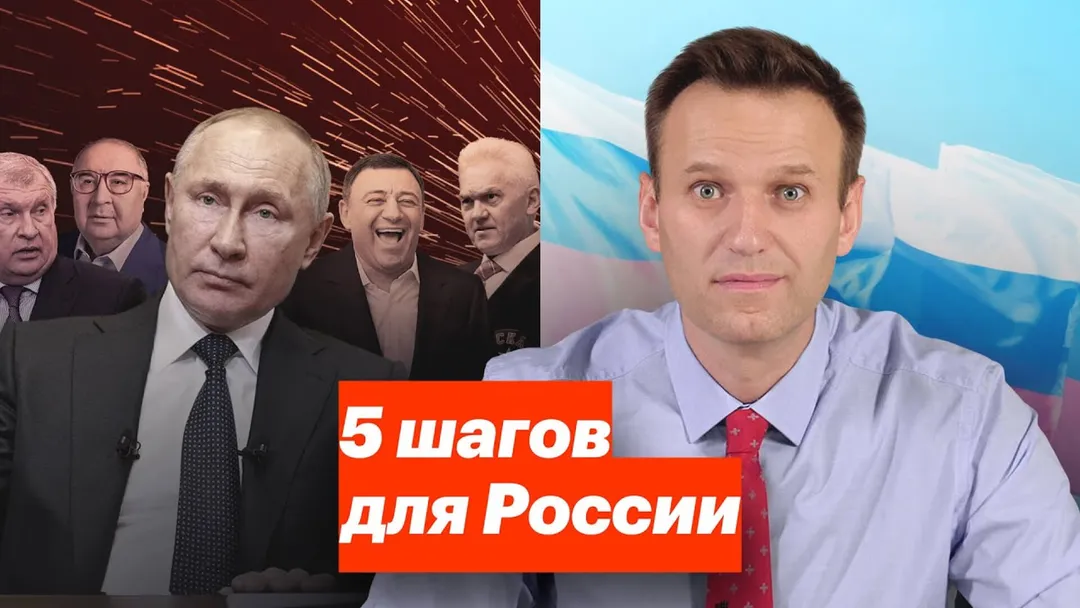
What if you found out that somewhere you have
120,614 rubles hidden away
— well, your mood would probably
improve, especially now, during
the crisis and quarantine.
Well, the pleasant surprise is that there actually are
not just some abstract 120 thousand
614 rubles for every citizen
from infants to the very elderly, and this is
not some abstract estimate of all
Russia’s wealth, and not current budget money
used to pay salaries and
pensions.
These are specifically reserve funds that
citizens and organizations paid in taxes.
This is how the state works: everyone
pays taxes, the government collects them,
and then spends them on all of us to make
our lives better and safer. In our case,
the government did not spend part of those taxes
but saved them instead,
creating a reserve, a financial cushion
for a crisis. And according to
the Central Bank, as of March 1, 2020,
into the pillowcase of that financial
cushion, we had stuffed almost 18 trillion
rubles, or
if you recalculate it per citizen,
120,614 rubles each. And I am
recording this very important video
so that Russian society
can finally start discussing how
we are going to survive now, during
the epidemic, quarantine, and isolation.
Can we really not ask for $800
until next month?
What will happen to
the economy, small businesses, and jobs,
and why can’t we use
this cushion made up of our
accumulated tax money, these reserve
funds, to help ourselves
at least a little? This is the 21st century.
Fourteen planes were sent to Italy,
but what about helping people here?
People in Russia can see all of this.
The hard fact is that in the near future
we are going to live a little worse. Maybe you
are sitting at home in fear right now and have lost
your job. Maybe you are still receiving
some kind of salary while staying at home.
Maybe you work in the public sector or for a large company.
Maybe you are a pensioner.
And maybe you are still receiving your pension. The latest
poll shows that 50 percent
of working people have already seen their incomes fall. But even
if yours have not fallen, you will still
become poorer, and prices will rise for everyone.
Two months of quarantine will eat up as much as 10
percent of GDP.
Cafés will go bankrupt, hair salons will go bankrupt,
suppliers will suffer losses,
and then the chain reaction begins — it will affect
everyone. The entire global
economy is under threat, and really no one
disputes that. The argument is about something else: all rich
developed countries, both East and West,
are acting in similar ways right now. They are saying:
we are requiring people to stay home,
people and businesses are suffering and taking losses,
and if they become poorer, it will be bad for everyone.
So what is the solution? Give people money. It is hard to imagine, but even
such super-
capitalist countries as the United States,
Germany, the United Kingdom, and Canada are now
simply handing out money directly to citizens
and entrepreneurs. In Germany,
if you are a private entrepreneur,
you just submit an application, and within a week
you receive from €5,000 to €15,000
and you do not have to pay it back — it is simply so that you
can survive. In the U.S., the government will send you
$1,200 per person — about 90,000 rubles.
In Canada, everyone will receive
$2,000. Spain is doing the same,
and so on and so on. Even
countries that are not rich are trying. For example,
Georgia is poorer than Russia, but
there they completely canceled utility payments
for the duration of the epidemic. In other words, in all
countries huge sums are now being spent
to directly support the public and businesses.
The Russian government, however,
takes a different view. It does not
consider it right, as President
Putin said, to “squander the reserves.”
And Moscow Mayor
Sergei Sobyanin put the idea even more bluntly when answering the question
of whether people should be helped directly. He
said that if everyone were helped, the budget
would burst.
I am not saying all this
just to criticize Putin once again. No,
what we really need is a nationwide
campaign: Five Steps for Russia. If
the authorities are currently taking the position that they will give
nothing, then pressure must be applied until they
change their position. Putin and his government
are politicians, and they still depend on
public opinion and approval ratings.
It is just that right now, paradoxical as it may seem,
there is no organized force loudly
demanding direct financial support.
Business is silent, the people are silent, and on television
they say everything is fine. Why give
money to people who are not asking for it?
Of course, the best way to demand something
from the authorities is to take to the streets, but under
epidemic conditions that cannot be done. We
are all sitting at home, online.
So let’s organize an online campaign. Since
other mechanisms are unavailable, you and I
know what we want. Our demands are reasonable,
and they are supported by the majority
of respected Russian economists.
Russia’s reserves contain more than
enough money to pay for everything that is needed
without harming anything else.
right now, pay every adult 20,000 rubles (about $215)
and 10,000 rubles (about $110) for
each child; if the quarantine continues,
then another 10,000 rubles (about $110) for everyone in May and June. Third,
completely cancel utility and housing-service payments for the entire
period of the epidemic. Fourth, allocate two
trillion rubles (about $21.5 billion) in non-repayable
payments to small and medium-sized businesses. And fifth,
cancel all taxes for small businesses
for one year. As you can see, our
national financial cushion would still have
money left over. In addition to financial aid, we demand
that they stop misleading us and using
strange terms like “self-isolation”
or “non-working month,” and clearly, in accordance with the law,
call it what it is: quarantine, so that not
only citizens have obligations,
but the state as well, which, by the way,
is obliged to compensate for losses caused by
such emergency situations. So,
what needs to be done? First, there are scientific
studies that say if
an idea strongly takes hold among ten
percent of the population, very soon it
will be supported by the entire population. In our
situation, it’s even simpler: 99 percent of people
are ready right now to support all of this;
they just have no idea that someone
is demanding it. Our goal is the first 15
million people. Just tell everyone,
discuss it at home,
share the video, cite the numbers,
explain that this is realistic, that it is
not fantasy and not populism. It’s one thing when
people are generally dissatisfied
and generally want help, and quite another
when 15 million people, and then the whole
country,
put forward five clear and specific demands
backed by economic calculations.
They say to the authorities: we worked, we
paid taxes, and now we want this
reserve to make our lives easier. If you
do not do this, then we will never again,
under any circumstances, vote for you.
That is not some circus put on by complete
madmen; that is already a conversation
the authorities will be forced
to listen to. Second, we must
formalize these demands and collect
signatures for them. Yes, yes, yes, I myself am skeptical
about online petitions; I have launched them
many times, and not once were the demands
fulfilled. However, here it will be an important,
appropriate, and very simple tool. There are
three main platforms for petitions:
the Russian Public Initiative (an official state platform), where
everything is official. We collect 100,000
signatures, and the government will have to
give some kind of response. Any public
initiative that collects at least one hundred
thousand verified signatures on the
internet must be submitted for
consideration by the federal parliament.
VKontakte petitions,
where we need to collect 3 million
signatures. This will be a huge campaigning
tool. Change.org
is a popular platform; here we need
one million signatures. To make it easier for you,
we
have created a single website called
“Five Steps for Russia.” There
you can find a brief version of the demands, a detailed
description, and links to all the signature platforms.
The task is to make sure that within
a week, there are several million people in the country
who know about the Five Steps,
support them, and have signed for them on
at least one platform, or on all platforms.
Each of us has enough free time
right now, but not enough money.
Whether we receive help
from our own national reserve depends
only on us.
We need these Five Steps for Russia. Let’s
make them happen.
