The Moscow Mayoral Campaign
Background and Context
After the protests of 2011–2012, public pressure forced the Russian authorities to restore direct elections for regional leaders.
In Moscow, this immediately created a problem for Sergei Sobyanin. He had been running the city since 2010, but Muscovites had never elected him mayor. The next mayoral election was scheduled for 2014. That gave the opposition another year to prepare — and for Sobyanin, another year meant additional risk. A longer campaign could become competitive, and his reappointment might no longer be so predictable. As late as February 2013, Sobyanin publicly denied plans for an early election, saying that Moscow needed to “work, not engage in politics.”
A few months later, however, the authorities reversed course. The election was moved forward and compressed into a short campaign — effectively a political special operation designed to prevent the opposition from organizing a campaign and to ensure an easy victory for the incumbent. For the authorities, the election was meant to be a controlled performance: a quiet reappointment of Sobyanin for another term. He even ran as an independent candidate to avoid association with United Russia. But things turned out differently. By this point, Alexei Navalny had become the country’s best-known opposition politician through his anti-corruption investigations and campaigns against United Russia. He decided to run — and to fight for victory. What followed was the campaign that revived politics in Moscow and turned Navalny into a real candidate capable of leading Russia’s capital.
Navalny Enters the Race
Navalny decided to run at a moment when his chances seemed almost nonexistent. The Kirovles trial was already underway. Prosecutors were demanding a prison sentence, and most observers believed the authorities would never allow him onto the ballot.
In early June 2013, rumors began circulating about Sobyanin’s possible resignation. On June 3, Navalny stated publicly that he would run if elections took place.
If there is an election, I will take part in it for as long as I have the opportunity to do so.
Alexei Navalny
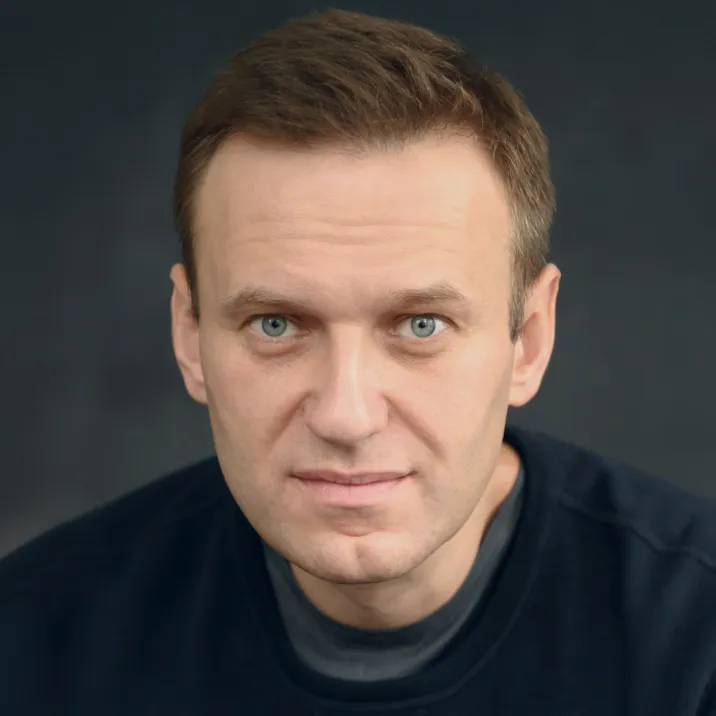
The following day, the rumors were confirmed. Sobyanin resigned, Putin reappointed him acting mayor, and elections were scheduled for September 8 — only three months away. At the same time, beginning on April 17, the Kirovles trial was underway. Prosecutors were seeking a prison sentence for Navalny, and in these circumstances his participation in the election seemed almost impossible. A major public campaign against the case was already underway.
Navalny now had to run two campaigns at once: exposing the fabricated criminal case against him and asking Muscovites to elect him Mayor of Moscow.
Navalny decided to seek the support of the RPR-PARNAS party, which officially nominated him on June 14. This removed the need to collect a huge number of voter signatures.
But another obstacle remained. To get onto the ballot, candidates had to overcome the municipal filter — collecting signatures from more than one hundred municipal deputies, most of whom were controlled by City Hall.
It was an almost impossible mechanism, designed specifically to keep opposition candidates out of elections. On June 24, 2013, Navalny published a LiveJournal post saying that his campaign headquarters was already working at full capacity and that its main tasks were campaigning and overcoming the municipal filter.
Collecting municipal deputies’ signatures became its own challenge. Many deputies agreed at first and then backed out after receiving pressure and phone calls from City Hall.
At one point, representatives of the mayor’s office offered to hand over signatures already collected by United Russia deputies “on behalf of Acting Mayor Sobyanin.” Navalny and his team refused the offer and insisted on using the signatures collected independently by the campaign. By mid-July 2013, the filter had been overcome: Navalny received the required number of signatures and was officially registered as a candidate. It was proof that even with limited resources and under pressure, the system could still be challenged
The Campaign and the Trial
July 2013 became the moment when Navalny’s campaign and criminal prosecution collided directly. The Kirovles trial had been underway since April, and by July it was clear that the verdict would be guilty.
On July 17, Alexei Navalny was officially registered as a candidate for Mayor of Moscow. The campaign celebrated a small victory: for the first time, an independent opposition candidate had made it through the entire bureaucratic process.
The next day, July 18, everything collapsed. The Leninsky District Court in Kirov sentenced Navalny to five years in prison on fabricated charges of organizing embezzlement at Kirovles.
That evening, spontaneous protests broke out in Moscow, St. Petersburg, and other cities. Thousands of people took to the streets, including to Manezhnaya Square in Moscow. But on July 19, Alexei Navalny and Pyotr Ofitserov were unexpectedly released pending appeal. On July 20, Navalny returned to Moscow. Thousands of people met him at Yaroslavsky Station carrying white ribbons and flowers.
First of all, I came here to say thank you. Believe me, I understand very clearly that if it were not for you, neither Ofitserov nor I would be standing here today for the next five years. We are a huge and powerful force, and I am glad we are beginning to realize that ourselves. Ahead of us is a major and difficult campaign — seven weeks of nonstop work. And this is only the beginning. We are going into this election — and we will win.
Alexei Navalny
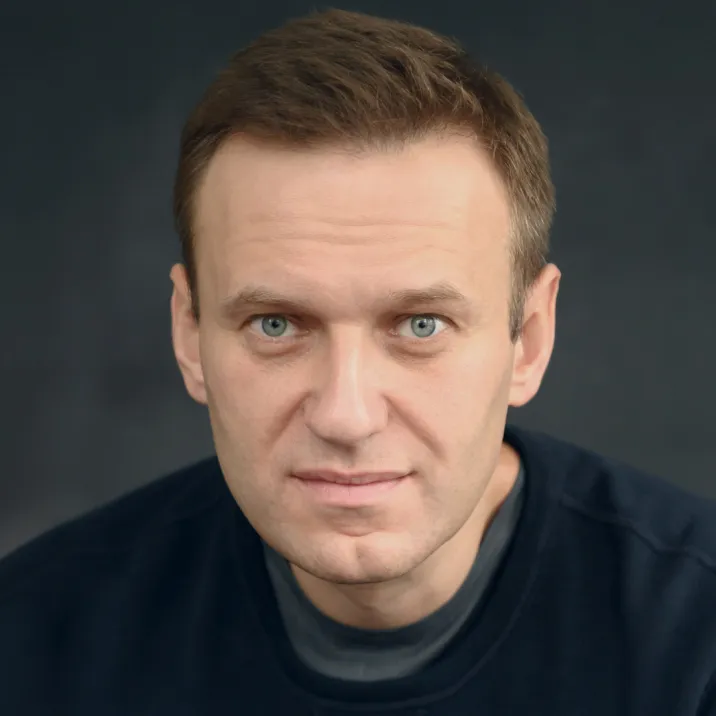
That day became a turning point. What had begun as an unlikely campaign became a real political movement. Navalny emerged from the courtroom not as a convicted man, but as a legitimate opponent of the authorities.
Active Campaigning
After returning to Moscow, the campaign resumed in full. By late July and throughout August, campaign cubes and pickets began appearing all across the city. Volunteers handed out newspapers, met with residents in courtyards, raised donations, and organized campaign events in different districts.
Navalny’s meetings with residents took place almost every day and attracted dozens, sometimes hundreds, of people. After each meeting, campaign newspapers were printed specifically for the district where it had taken place. Navalny also gave detailed interviews to show Muscovites that he was ready to represent their interests.
Televised debates took place in August, and Navalny participated alongside the other candidates. But because of the authorities’ fear of open political competition, the debates were broadcast only as recordings.
On September 6, the final campaign rally and concert took place on Sakharov Avenue. Alexei and Yulia Navalnaya appeared on stage together with musicians supporting the campaign. Journalists estimated attendance in the tens of thousands, making it the largest political event in Moscow that year.
Election Results and Aftermath
The Moscow mayoral election took place on September 8.
According to the official results, Sergei Sobyanin received 51.37% of the vote and Alexei Navalny 27.24%.
Navalny refused to recognize the results. He called supporters to a rally at Bolotnaya Square. The campaign filed 951 complaints about violations and demanded a second round of voting.
After the results were announced, a rally took place at Bolotnaya Square. Speaking to supporters, Navalny said that despite the falsifications, the campaign had proven something important: real politics was still possible in Russia. After the mayoral campaign ended, Navalny launched a new civic initiative called People’s Deputy. The project grew directly out of his campaign platform and became a continuation of his political work outside elections.
The idea was to use Moscow’s law On Civic Legislative Initiatives and activate a mechanism that allowed citizens themselves to submit draft laws to the Moscow City Duma. Under the law, an initiative group that collected 50,000 signatures in support of a bill gained the right to introduce legislation. The first initiative was a bill on transparency in housing and utility tariffs. It required independent audits of utility company tariffs and would have made the approval process and hearings open to the public. Despite public support among Muscovites, the bill was not adopted by the Moscow City Duma, where United Russia held the majority. It was for this reason that Alexei Navalny, his campaign team, and supporters began preparing for the 2014 Moscow City Duma elections. From that point on, participation in elections at every level became a regular part of Navalny’s political strategy.