Persecution by the Authorities
The persecution of Alexei Navalny by the Russian state escalated gradually: from detentions, pressure, and the first criminal cases to house arrest, exclusion from elections, physical attacks, the destruction of his campaign network, poisoning, prison, and ultimately his killing. With each passing year, the pressure intensified because previous measures had failed. Navalny did not give up and did not stop fighting. One of the earliest episodes dates back to the mid-2000s, when Navalny took part in opposition rallies and the Dissenters’ Marches.
At the time, this was not yet a personal campaign against Alexei. But the political environment was already structured in a way that any dissent triggered a response. The violent dispersal of the Dissenters’ March on April 16, 2007 prompted Navalny to launch a collective action project aimed at resisting unlawful actions by the security services.
Participation in the Dissenters’ Marches and other opposition actions of the mid-2000s was an important political experience for Navalny. But at that stage, he was still one of many figures in Russia’s democratic movement. In 2011, Navalny actively campaigned against what he called the “party of crooks and thieves” ahead of the parliamentary elections in December, and pressure against him intensified sharply.
After the falsified election results were announced, a protest took place at Chistye Prudy. Far more people came than anyone expected.
Navalny was detained and sentenced to fifteen days of administrative arrest.
By the early 2010s, the pressure had become personal and systematic. As Navalny emerged as one of the country’s most prominent anti-corruption politicians, the authorities moved from short detentions to criminal prosecutions. The central case was Kirovles.
At this point I have four criminal cases — or maybe six. I’ve lost count myself. And I don’t care. Let there be one hundred and twenty-four of them. I will still say what I want to say, and I will still speak my mind.
Alexei NavalnySpeech at the rally on Bolotnaya Square on May 6, 2013
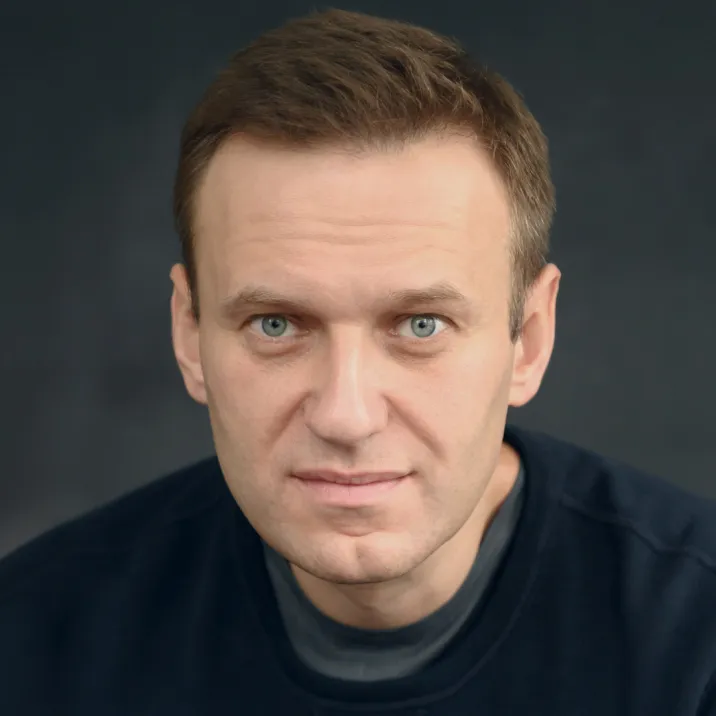
The 2013 Kirovles sentence made it clear that criminal prosecution would be used to restrict Navalny’s political activity and keep him under constant threat. But it also showed that the authorities feared their own decisions. That evening, spontaneous protests broke out in Moscow in support of Navalny — the largest unauthorized protest of those years. The very next day, Alexei Navalny and Pyotr Ofitserov were released pending appeal. It was a rare moment when public pressure worked immediately and quite literally pulled Alexei out of prison.
The next major stage was the Yves Rocher case. This case targeted not only Navalny himself but also his family. Alexei’s brother, Oleg Navalny, received a prison sentence, while Alexei was placed under restrictions that were later expanded into house arrest. The logic behind the persecution became especially visible here. The goal was not only to hinder Navalny politically, but to pressure him through those closest to him.
After the Yves Rocher case and house arrest, it seemed the authorities hoped to push Navalny out of politics and keep him permanently constrained. The opposite happened. In 2016, Navalny announced his intention to run for president and launched a nationwide campaign. Regional headquarters opened across the country. New investigations appeared. New volunteers joined. A new political energy formed around him. At that point, the persecution entered a new phase. The objective was no longer simply to limit Navalny personally, but to prevent him from turning support into a national political movement. That is why 2017 became a year of constant pressure on Navalny’s regional campaign headquarters. In some cities, authorities disrupted openings through pressure on landlords and venue owners. Elsewhere, police, provocateurs, and local administrations were involved. In Tomsk, volunteers were targeted before the headquarters even opened: door handles were filled with construction foam and car windows were painted over. On the day of the opening, police arrived claiming there was a bomb threat and evacuated the building. Navalny ended up speaking from atop a large pile of snow outside.
Similar incidents repeated across the country and quickly became routine. In March 2017, during a trip to Barnaul, Navalny was attacked with zelyonka — bright green antiseptic dye. He continued the trip anyway, opening headquarters and meeting supporters. But the incident was important. It signaled that the campaign now faced not only administrative restrictions but physical violence. A month later, on April 27, 2017, the attack in Moscow was far more serious. Outside the Anti-Corruption Foundation office, Navalny was splashed in the face with zelyonka mixed with a caustic chemical. His right eye was badly damaged.
The injury proved severe: he lost around 80% of his vision and later required surgery.
After the 2017 campaign and Navalny’s exclusion from the 2018 election, the pressure did not ease. It intensified. The authorities were now targeting not only Navalny’s political ambitions but the entire network built around him: headquarters, the Anti-Corruption Foundation, regional coordinators, volunteers, and supporters.
By then, Navalny had created a nationwide political infrastructure. It became the next target.
In 2019, the pressure became especially large-scale. The authorities first designated FBK a foreign agent after arranging a transfer from abroad. They then opened the so-called FBK Case. Simultaneous raids took place in dozens of cities: campaign offices, employees, coordinators, volunteers, and even relatives were searched.
The authorities used the case as a pretext to paralyze Navalny’s operations. Computers were seized, bank accounts frozen, and the authorities attempted to make normal work impossible.
That same summer came another disturbing episode. After a short administrative arrest, Navalny was taken from detention to hospital with a severe reaction that was never properly explained. Even then, it appeared to be another link in an escalating chain.
A year later, those fears proved justified. In August 2020, Alexei Navalny was poisoned. The persecution had entered a new phase: from pressure and isolation to attempted murder. A Novichok nerve agent was found in his body.
Later, Navalny published an investigation identifying FSB officers involved in the attack and publicly named Vladimir Putin as the person who ordered it.
After returning to Russia on January 17, 2021, Navalny was arrested directly at the airport.
On February 2, the court converted Navalny’s suspended sentence in the Yves Rocher case into a real prison term: three and a half years in a penal colony. Taking into account the time he had already spent under house arrest, he had two years and eight months left to serve. At almost the same time, the authorities moved against people around him. New raids were carried out, including at the homes of Anti-Corruption Foundation employees, his wife, Yulia Navalnaya, and brother, Oleg Navalny. The formal pretext was the so-called “sanitary case.” In reality, the aim was to put simultaneous pressure both on Navalny himself and on everyone who continued political work around him.
In spring 2021, the authorities took the next step and demanded that the Anti-Corruption Foundation and Navalny’s headquarters be designated “extremist organizations.” The decision opened the way for the complete destruction of the network that had been built over many years. Employees, coordinators, supporters, volunteers, donors, and even people who had at some point simply worked with the headquarters came under threat. Regional campaign leaders in several cities received prison sentences. In March 2022, Navalny himself was sentenced to another nine years in prison in a new fabricated “Fraud Case.”
On August 4, 2023, the court sentenced Alexei Navalny to nineteen years in a maximum-security penal colony on extremism charges.
Prison became a separate instrument of constant pressure. Navalny was repeatedly sent to SHIZO — a punishment isolation unit where prisoners are kept in even harsher isolation within the colony itself. By February 14, 2024, he had been sent to SHIZO twenty-seven times, spending a total of 295 days there. These were not isolated punishments. It was an almost continuous chain, with new terms often imposed shortly after the previous one ended. Even by prison standards, the terms were unusually long. A single placement in SHIZO is normally limited to fifteen days. Navalny repeatedly received exactly these maximum terms, one after another.
Beyond SHIZO, the prison regime itself was repeatedly tightened. On February 1, 2023, Navalny was transferred for six months to PKT (cell-type confinement) — an even harsher regime involving prolonged isolation and restrictions on visits.
After the August 2023 extremism verdict, he was expected to be transferred to an even stricter facility. In December 2023, he was moved to IK-3 Polar Wolf in the settlement of Kharp beyond the Arctic Circle — one of the harshest penal colonies in Russia.
On February 16, 2024, Alexei Navalny was killed in IK-3 Polar Wolf in Kharp. The prison service stated that he had fallen ill after a walk and lost consciousness. The day before, he had appeared by video link in court, joked with participants, and appeared healthy.
SHIZO and PKT were not used as exceptional measures for serious violations. They became a method of constant physical and psychological exhaustion: denying visits, restricting letters and parcels, and making life inside the colony unbearable. It was a prison within a prison.