Alexei Navalny’s conversation with Council of Europe rapporteur Jacques Maire
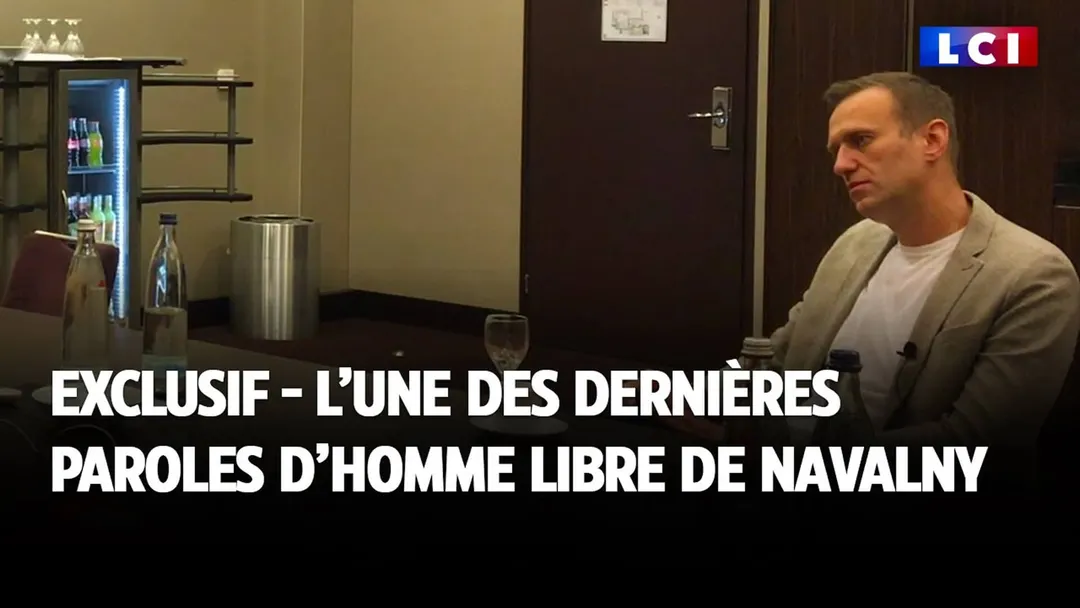
It was the routine of my work.
It was routine for
me in my work to be followed
and monitored on all my
business trips.
This surveillance was carried out by the
police or by the FSB. They
monitored me everywhere, all the time, in
Moscow or elsewhere.
You know, it's very easy to
spot them. They follow you everywhere and
pretend to be on the phone.
Two days after I was poisoned,
there was a very long and very
strange article that said, "Navalny was under
close surveillance the entire time."
Look at his schedule.
And so they published my exact
schedule even though no one was
supposed to know it.
So I think those FSB officers
who were responsible for my
surveillance tried to protect themselves
by saying,
"You see, we have nothing to hide,
we didn't do anything suspicious."
This poison squad was classified secret even
within the FSB itself. In reality, nobody
knows of their existence. They are not
like other FSB agents.
It wasn't always the same
people?
No, it's a regional unit. The
surveillance is the responsibility of the
regional FSB.
Otherwise, I would have seen the same people
all the time, which defeats
the very idea of surveillance.
So the plane lands, and then there is an
alert about your health; you
suddenly fall ill.
Had you noticed anyone acting
strangely on...?
No, it was the most ordinary flight,
nothing suspicious.
That's the whole beauty of
poisoning.
No one can know exactly at
what moment you are poisoned, or
how.
People wonder why choose
Novichok, because it is very complicated to
use.
But thanks to the bottle that was
recovered, we know that it happened
at the hotel.
Without that bottle, we
would have been convinced that
the poisoning took place at
the airport.
In fact, nothing suspicious happens
even when you've been poisoned
maybe 10 or 12 hours earlier.
Another investigation by Bellingcat shows
that the FSB is currently developing a
new method they call
nano-encapsulation.
It allows someone to be poisoned not
only through ingesting
food, but also simply through
contact.
The person only feels the effects
several days later.
Yet there was nothing strange to notice
beforehand.
That same day, there was a fake
bomb alert at the airport.
Do you know if an investigation was
conducted to find out who was behind
this fake...?
Well, uh uh Russian government—
The Russian government claimed that
Germany was responsible for that
false alarm.
Because Germany—
Yeah.
They insisted several times that this
email came from that country.
And that fuels all the conspiracy
theories. According to them, I was
poisoned by the German or European
secret services.
We have a real epidemic of fake
bomb threats in Russia.
And all of them are sent by email.
In reality, you can more easily
trace a phone call, whereas
emails can be completely
untraceable.
As far as I know,
there was no investigation into this
false alarm.
What is interesting
is that under Russian law,
any false alarm automatically
triggers a criminal investigation.
And here, there was none.
And it was the first time that a
false alarm originated from a foreign
country.
In fact, no one knows where it
came from.
We don't know the details. What
is certain is that it was indeed a
bomb threat.
When we landed,
one of my
associates spoke to a paramedic,
and he told him that the airport
building had already been evacuated.
But who sent it?
Nobody has any idea. The Russians
just said, "It's the Germans'
fault."
Let's talk about the pilot.
He overrode the alert. He
landed anyway.
Do you know what happened to him?
No.
I try, but not too much.
I'm afraid it might cause him trouble.
Because the truth is, that guy saved my
life.
So I try not to contact
him so as not to cause him
problems.
So then, you arrive at the hospital and... and
what happens?
Yes, that's an interesting question.
Because the initial reports were
published everywhere.
According to the first medical report, they
gave me atropine.
And then there was the claim that
it wasn't a
poisoning, that it was some kind of
diabetes or something like that that
had developed.
And then the medical authorities
began to deny that they had given me
atropine.
But my press secretary who was there
saw the paramedics' reaction.
They thought that it was an
intoxication, some kind of overdose.
Because the symptoms are the same.
The person falls into a coma.
So at first glance, immediately, the
paramedics knew it was an
intoxication, and that's why they
gave me atropine.
Because the basic emergency treatment is
the same.
By giving that medication, you buy
time, time to reach the hospital.
So the atropine was given to you in...?
Yes, in the ambulance, that's for sure,
but maybe also on the plane.
Because there was a doctor on...?
No, the airport first responders
boarded the plane
as soon as it landed.
For initial first aid.
And they waited for the ambulance from
the hospital. It took about 20 minutes
to get me off the plane.
It was an incredible mess.
So it was probably those—
Has the person who gave you [it] been identified?
Yeah, yeah, yes, yes, yes.
Because we heard that the head
of the hospital was promoted.
Yes, yes, of course.
Once again, it's a situation that is
both complicated and
simple at the same time.
Because... because the head of the hospital, the one
responsible for this false diabetes
narrative, was promoted
and became health minister in
his region.
And do you know what happened to the
doctor who gave you...?
No, no, no, it's the same case as
with the pilot.
I try not to draw too much
attention to his case.
Do you think it would be a problem if
we asked, for the investigation, to get
in touch with...?
I think it's a good idea to
contact them, but of course, it will be
complicated.
And it will be all the more complicated to
do so without the FSB finding
out.
If the FSB realizes that you are
looking into them,
they will put pressure on them.
It's not impossible that they would have you
meet fake doctors or
fake nurses.
There has already been that kind of
absolutely incredible story with a German
doctor
who supposedly evacuated me.
You've surely heard about that
story.
Supposedly, they were taken from
the plane to the hotel by FSB
agents, and there, the FSB agents
allegedly brought them to the hospital, but without
my wife knowing.
While my wife and my entire team
were running around the hospital trying
to
track down those famous
German doctors.
But the FSB agents literally
formed a bubble around them.
They brought them into intensive care
where I was.
They examined me and said,
"He is ready to be transferred."
Then, still surrounded by FSB
agents,
they escorted them out of the hospital, despite the
fact that my loved ones tried as best
they could to block their car
to question them.
Yet the FSB agents managed to
rush them out of the hospital anyway.
Right after that, they held
a press conference,
saying, "You know, the German
doctors examined him and they
confirmed that he cannot be transported
in his condition."
But that was a lie.
It's a story worthy of a
Hollywood movie.
Between the time you entered
the hospital and the time you were
transferred to Germany, how much time passes?
No, a little over 48 hours.
In fact, they waited nearly 48 hours
to obtain authorization to
evacuate me.
They also feared that beyond those
two days, the Novichok might become
undetectable.
Do you think there is something for us to
investigate on our end regarding what
happened during those...? Could we
question the hospital in Omsk where you...?
Well, if they agree to let you visit
the hospital in Tomsk,
yes, but the diagnosis they
gave me was ridiculous.
From a strictly medical standpoint,
it didn't hold up.
They didn't give me proper
treatment; it was a cover-up
operation, and we have the evidence for it.
What kind of treatment did you receive
during your...?
Nobody knows.
Nobody knows. My wife was only
allowed to see me once, and
after that I was isolated.
Did you get access to your file?
10 days later, after various
procedures, they finally agreed
to release the medical reports from
the hospital.
And they stick to their story.
Supposedly, I fell into a coma
because I was too hungry.
Because I allegedly had diabetes.
It's ridiculous. I've never had
diabetes.
And they insisted, "Yes, you do have
diabetes." I replied, "No, I
have never had diabetes. I can
prove it.
I don't have diabetes. I even have
official medical tests to prove it."
Do you think there could be other
evidence that we could...?
I think the best way
would be cooperation between
the Russian authorities and the Council of
Europe.
President Putin stated that
I was being monitored by the FSB.
But officially for other
reasons.
The best thing would be to question
those agents and talk to them.
You cannot question them
officially, but speak with them.
Just to clarify a simple point:
why were there doctors and chemists,
wherever I went,
and why didn't they take
the same plane,
taking flights on different
days, but going to the exact
same place where I was staying?
That would be crucial information.
So
for you, the existence of this kind
of team tailing you and
preceding you, that was a revelation?
Yes, I was in absolute shock.
For years, I had had no
doubt that I was being watched,
but this very specific squad with
chemists and doctors
shadowing me,
even on very short trips,
and whenever I spent the night
somewhere away from home,
they were there.
Yes, that was quite a
surprise.
Are you aware of any
precedent for this?
Yes, of course, there is Vladimir K—
Kara-Murza, I think you
know him. Yes, of course, but I mean
this:
this team of chemists and
doctors was unprecedented. Oh
yes, it was unprecedented.
We heard of something similar with Trotsky.
Trotsky.
Ah yes, not a very pleasant
historical example.
And yes,
it was the same thing.
We know that under the Stalin
regime, there was a special group
composed of people who tracked
Trotsky.
They attempted to assassinate him the
first time without success,
and then a second time.
Apparently, about twenty
people had prepared for it for
years.
Yes,
of course.
Here we have the exact same thing:
people who prepared for
years.
So in your view, their mission was to
kill you?
Of course, there is no doubt about it.
As you already know from the
latest Bellingcat revelations,
I had already been poisoned once before
on an airplane.
But I didn't feel any symptoms.
Then the same thing happened to my
wife.
So I don't have the slightest doubt that
these people were tailing us to
kill us.
But you know, it's not so easy
to poison someone.
It takes a lot of preparation.
Even if you are the FSB, you cannot
just walk into my hotel
and say, "Open the door."
There are security cameras.
You have to be able to get away.
You must operate with total security.
And even in total secrecy from
other FSB agents.
So it's a very
dangerous operation.
And they had to prepare for a very
long time.
I'd like to return to what
happened in Kaliningrad and what
happened to your wife. In your view, that was
a mistake?
Nobody knows.
For my part, yes, I think that was
a mistake and that you were the
actual target. Yes.
She must have eaten or touched something
that was originally intended for me.
Nobody knows. These people are insane;
maybe she was a target, [or] it was
probably a mistake on their part.
We believe the work done by
Bellingcat opens up many leads.
Do you think these
revelations could have an impact on
the authorities' reaction?
Yes, of course. And what kind of...?
They realized they had been
caught;
it will be very difficult for them to
deny it.
They tried to deny it, but it's very
difficult now,
and they don't know all the
new information that might be
the truth.
So I think they've become
both more aggressive and more
defensive.
At first they simply issued an outright
denial,
saying,
"Nothing happened, he poisoned
himself."
That's their standard playbook:
churning out different versions to
create confusion.
But now, with the identification of
these real individuals, with their photos,
they've been confronted by
journalists, by investigators.
That's why it's good that this
article was published.
You can always ask general questions
to people: "What do you know about
Navalny's poisoning?", but now with
the photos, you can ask
specifically whether they saw these individuals.
Is this like the Khashoggi
case, where they protect the...?
Ah.
That is the core question.
Everyone knows who ordered
Khashoggi's murder.
Yet they prosecute the low-level operatives
and shield those who gave the orders.
In my case, while in theory one could
imagine this was an
FSB operation without Putin being
aware,
that might perhaps allow for
a compromise regarding prosecutions.
But I am entirely certain: this was a
direct order from Putin.
So they protect everyone who
took part in it.
And do you think these Bellingcat revelations
are covered by Russian media,
that they have an...?
On national networks, they make
fun of this investigation and they make
fun of me.
Yet it is very different from what
used to happen.
Before August 20, it was strictly
forbidden to utter my name in any
way whatsoever.
Now,
it is brought up constantly.
They claim I am a CIA agent,
an extremist, a fraudster, a
criminal.
Yet the reality is,
they talk about it non-stop.
It's been the number-one topic for 4 months.
That could have two outcomes. The
first is making you more
visible and better known across the country; but
on the other hand, it's a way to
polarize debate in public
opinion.
No, I would say that among those who do not
support Putin,
and who perhaps don't support
me either,
the fact remains that for
everyone, this poisoning is
terrifying.
Because even if these people dislike
me,
they don't like
the idea either of a clandestine hit squad
operating inside
the state.
As for those within the elite
close to Putin,
they are the most terrified of all,
because they realize that this
could also be used to kill
them.
Well, let's look at the rational side of
Putin's decisions.
There are two interpretations.
The first:
over the past 3 to 4 years, they
never found the right moment to
achieve their goal.
That could be one interpretation.
Or the second interpretation could
be:
August
2020 was the right time, perhaps
June or August, and they decided to strike at
that exact moment.
We know the first attempt
occurred some time earlier, about
2 years ago.
And then there was another attempt in
Kaliningrad in July 2020.
And then another in August.
So I think they had received
the order to launch the operation.
Maybe that first attempt
on the plane was them trying
to measure the amount of poison
required.
Maybe it wasn't an
attempt to kill me.
Maybe it was; you know, some
experts told us there are no
trials with Novichok,
because you cannot run
tests with this substance.
It is utterly impossible to
test it in the field.
It's impossible. It can only be done
in a laboratory.
That is why I survived the
first time.
Just as Yulia survived the first time.
Because it is an extremely,
extremely difficult substance
to use.
You need a lab.
I assumed the situation in Khabarovsk
or Belarus
was the trigger. But it
appears they started doing this
much earlier. They certainly received
the order to prepare and launch this
operation
after I declared my candidacy for the
presidency of Russia.
I traveled extensively.
They didn't follow me for a
certain period, and then
they started following me on every single
trip.
Right from the moment I announced my
presidential bid.
Yet as you noted, someone
set up the entire apparatus and
rolled it out at least 4 years ago.
Because you have to assemble
teams of doctors, teams of
chemists who will start
following me.
It requires preparation, an
infrastructure
to pull this off.
The rest
is just assumptions.
But yes,
they were waiting for an opportunity.
You know, I travel with a group of
people. It isn't very easy
to carry out this poisoning in such
a way that no one
notices.
Because it is of course easier
to poison food. But
several people would have died, and
it would then be hard to explain it away
simply with diabetes.
What was it? Diabetes?
They waited for the right moment to
take action.
And the idea of poisoning is tied
to the fact that they want to make you suffer
before killing.
Because they could stage a
car accident, for instance.
I can't tell you that it's
truly painful.
Nor can I tell you
that you don't suffer at all.
It's a terrible feeling.
But poisoning rather than
a car accident
leaves a lot of room for
speculation and alternative versions.
It's hard to be certain about
anything; there is no evidence.
It's suspicious, but who knows
what really happened?
And then the second objective, which is
perhaps the main one behind choosing
poisoning, is that it is
terrifying.
People start to feel afraid. That is
one of the advantages of poisoning.
A lot of people start to be
scared.
Even here in Europe,
some European politicians say,
"They can just put a substance on my
door and that's enough, I die.
I don't want to mess with that."
People are afraid of these
mysterious deaths.
And I think that's the primary
goal.
And Putin enjoys the idea of people
being afraid of his absolute power.
It's very clear that you place
the blame on Putin.
Because you think he sees you
as a threat?
Not just me,
not me alone,
but also
all the people I represent.
There are more and more of them in my
organization.
We have conducted many investigations,
and we aren't afraid to take part in
rallies, protests,
meetings;
we travel
all across the country.
We don't just stay in Moscow,
unlike the vast majority of
the opposition,
which is simply found in Moscow and
Saint Petersburg.
We aren't afraid; we
also work everywhere across the
regions.
We aren't afraid to investigate
Putin's personal corruption.
And on top of that, we have plenty
of support.
Our organization is still able
to operate in an entirely
independent way. Because we rely on grassroots
donations, with many people sending us
very small amounts, so that
they cannot shut down our
activity
using standard methods.
Yet you have many enemies because,
how to say,
you expose high-level
corruption at the very top.
I watched the Medvedev film, which is very
interesting.
We have a lot to learn from you.
You have been harassed constantly over the past
10 years.
Did you never feel
that the threat could reach that
level?
Again, that's an interesting
question.
Because before, if someone had told me
that Putin wanted to kill me, I would have
said, "No."
What we knew
was that I could be thrown into
prison.
I could be harassed.
That kind of thing.
And you know, killing people with a
chemical weapon,
it sounds crazy.
And honestly, if it wasn't for the
laboratories stating it, I
never would have believed that it was
Novichok that I had been given, because
it's
completely insane.
And yes, that's what I thought, that
it was an illusion, that it was crazy.
They wouldn't use such
methods unless to kill people they
deem to be terrorists,
spies, or traitors.
So against political opponents, they
use other methods.
Like defamation campaigns
and imprisonment.
But clearly, that was a huge
mistake on my part.
A big, big mistake.
According to our information, the way
Putin handled it was by
banning your name from any public
speech. It was a sign of contempt,
a way of saying: we pay no
attention to such an
insignificant person.
He said literally the same thing
today.
He called me "the patient."
"The Berlin patient."
Once again, that implies that to him,
I'm an insignificant person. And
so why would we bother?
"Who is he
for us to...?"
That was it, that's my—
Yes, exactly, they act like that.
Still,
the question is: if I am so
insignificant,
why have they been tailing me for 4 [years]?
Of course,
they realize
that it's not about me.
It's about the people I represent,
whom I try to represent. That's
millions of people who don't want
to live in a country where all power
is concentrated in the hands of a single
person.
At least half the country wants
Russia to be a normal European nation.
And he wants to do everything to crush that
way of thinking and those political
movements.
We have now reached a point
where you are looking ahead to the future.
You were harassed, your apartment
was seized.
New charges were filed
to dissuade you from returning.
Hmm.
So, if you go back,
will they put you in...?
That's a question I'd like
an answer to.
Yet I have no idea. They
make threats constantly.
They seize my apartment, my
bank accounts, and they send
very clear signals and messages:
"Do not return." But I have no idea
what will happen. Will I
be arrested at...?
Or maybe afterwards. Maybe it
won't happen right away, and they'll wait
until everything settles down, and only then
arrest me.
Or maybe not. I have no
idea.
And as of right now, they have no
idea either.
They simply don't want
me to come back.
Just to avoid having that problem.
And to avoid having to make a
decision. Because their preferred
option is for me to just be another
émigré. They're weighing it. But they don't
know precisely what they will
do or what will happen.
What do you think will happen to your
movement or your foundation if you
do not return?
Everyone knows how the
organization works.
Because the truth is,
I already spend a good deal of time every
year in jail.
So they are used to it,
and they've learned to operate without me.
Naturally, it will be harder.
It wouldn't be
fatal. The organization could
carry on; it could function.
Yet it would be more difficult when it comes
to motivation and morale.
Are there other people who
can take the...?
Yes, of course.
There are other people who can
lead the fight and who are well known.
The organization has been running without me
for months; it is working very
well. There are other people who
could lead it.
Broadly speaking,
I think that if he killed me, it wouldn't
change anything.
Because there are other people
ready to take my place.
And I think there is something
personal for Putin regarding
this bizarre quirk, the fact that he never
utters my name.
You have never...? No, I have
never met him.
And he never mentions my name.
I don't know why.
Even though he has, yes, a very high opinion
of himself; he sees himself as a tsar or
architect of Russia.
And you know,
that's not the kind of person who is
afraid.