Alexei Navalny’s interview with blogger Ruslan Sokolovsky
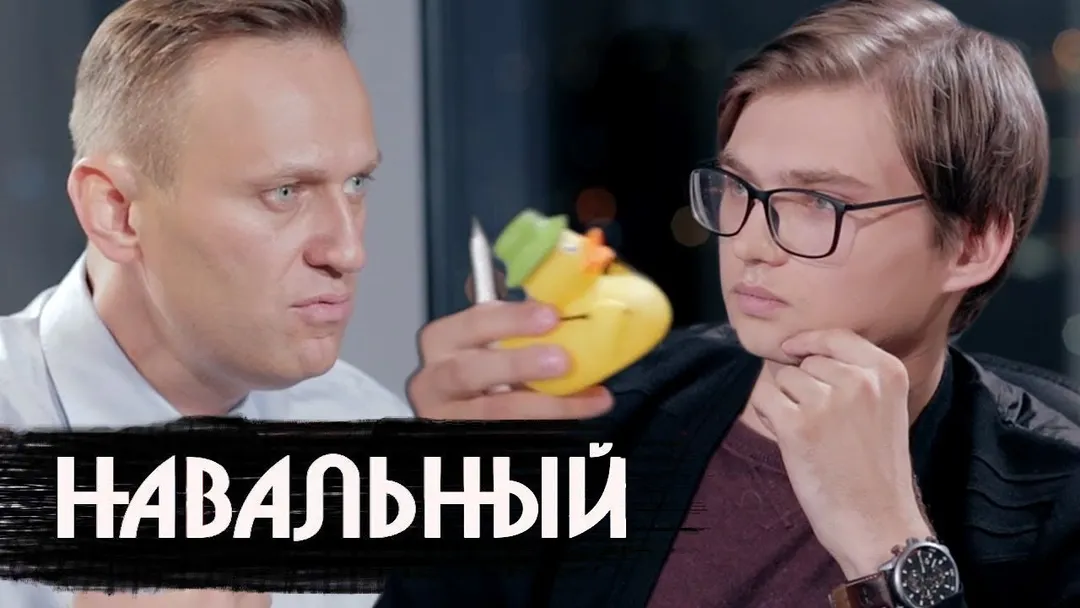
How and why did you end up in St. Petersburg? I
came here to hold a rally
and meet with my supporters. We
opened a campaign headquarters here
at an early stage of the campaign, and it is working quite
effectively. At this second stage of the campaign,
we are already holding meetings not just with
volunteers, but large street rallies
to which I invite everyone. Well, what do I mean by
large?
This is our second rally during this
campaign tour.
Yesterday we spoke in Murmansk, and
the rally there went quite successfully. Today
in Yekaterinburg there was a truly
amazing rally. It is hard to say
how many people were there. According to the estimates
of the journalists who were there, it was
probably one of the largest
political rallies of recent years
in Yekaterinburg.
It was amazing. I love this city and often
come here. I feel that I understand
the people of Yekaterinburg. I have good
relations with Mayor Yevgeny Roizman
and support him however I can, and he
supports me in return. So,
today’s meeting was wonderful, and I
think we achieved our goal.
In general, when opening headquarters—specifically
Navalny’s headquarters in St. Petersburg and in other places—there are
problems. Here in Yekaterinburg, not really. Well,
everywhere we opened headquarters at the
first stage, some thugs would run after me
throwing eggs and doing other things.
At one point I was completely covered in brilliant green antiseptic (zelyonka, a common Russian antiseptic dye often used in attacks).
Here specifically, I remember, it was very funny:
wherever I went, two
guys followed me carrying an American flag behind me
so that I would appear to be walking against the backdrop of
the American flag. And then they
photographed it and posted those
pictures somewhere, enjoying their clever
political spin tactics.
But there were no major problems. Still,
after all,
Yekaterinburg is notable for the fact that it has
its own political culture, and
despite the fact that the authorities do pressure
the opposition, here they are usually less
prone to falsification. Here they practically do not
detain people during rallies, and there are very few
arrests. In other words,
Yekaterinburg, at least, still holds on
as a city with a
more or less democratic tradition.
Actually, an acquaintance of mine tried to open
a Navalny headquarters in a very small
town—the town where he was born, in
Shadrinsk. It has only 60,000 residents.
He went to the local people there, and they told him
that they would beat him up there, that crowds would come after him,
that the Cossacks would deal with him personally
—that was said to him directly, in so many words.
In the end, he was unable to open the headquarters, although
he did go around with Navalny badges and
all that.
These kinds of problems often arise in
the regions. And in general, how often do Navalny’s
supporters specifically encounter
violence and this kind of problem? First of all,
your friend is a wonderful person. We
open what we call people’s headquarters
when, in small towns, we do not have
the money to pay for
renting premises. People simply come to us
and say: we have a space,
let’s open a headquarters ourselves—a people’s headquarters.
Most of the time, in 99
percent of cases, all this talk about
being beaten up is, of course, simply
made up. That is how they try
to intimidate people. But of course our
campaign, because it is real, honest,
and sincere—and they know that—
we hold huge rallies. We
do not pay anyone to attend. Today
there was a rally here in support of
the governor, and they were paying 1,000 rubles (about 1,000 RUB) for people to take part.
And it is offensive and unpleasant for the authorities that
people come to us for free because
they support us.
And they resort to violence. Literally
yesterday—well, the information here, the reporting here,
is constantly distorted. Look, I have just
come from a rally in which
obviously several thousand
people took part, and the police said there were 1,400. People
who were there just laugh.
The authorities lie constantly. But as for violence,
yes, that exists too. Just yesterday
the head of our headquarters in Moscow, Nikolai
Lyaskin, was simply ambushed
and had his head smashed with an iron pipe.
That is horrifying.
It really is horrifying, and it happens in
some regions in particular, though fortunately
not very often.
But of course they hate our
campaign because, you see, we are the real thing.
Here, people really do get their
heads broken.
They smash whatever they can and even set things on fire.
Are you not afraid of meeting the same fate as Nemtsov (Boris Nemtsov, opposition politician assassinated in 2015)?
And of what happened to him? If you are afraid of something
in Russia, then you simply should not
go into independent politics. But I am
a normal person; I do have a sense
of danger, and I have no particular desire
to enjoy that feeling of danger. But
I believe that the things I believe in,
the things I am striving for, are more important.
A person who is fighting, say, against
property developers here in Yekaterinburg
is in even greater danger.
A person who works on human
rights in Chechnya or Dagestan is
in extreme danger altogether. I...
Compared with those people, still very
normal. In Dagestan recently there were
major problems, even scandals
connected with the fact that people there were being killed
specifically LGBT people and minorities. What
do you think about that? Because for the most part
the media were shouting that none of it was true, that
it was all lies. And what is your attitude toward LGBT people?
Based on the data from those programs
that is available, I certainly believe that
such facts did occur. They denied it somewhere
in pro-Kremlin media outlets and a couple of other state media sources,
but the facts presented by independent
sources show that during the
"purges," killings were carried out—essentially
executions of homosexuals. But this is an
disgusting phenomenon: they were killing people
simply because they had a different sexual
orientation. Guys, I consider all people
equal, and no one should be punished
oppressed or discriminated against simply because
they have
a different faith or a different sexual
orientation. Of course, there are certainly people
with conservative views, religious
people who may not like it. They
can state their position, they can
protest—fine, that is their right. But
violence and murder—
of course, the people involved in that
must answer before the law. And in general,
can this be linked
—the oppression of certain social
groups—with the economic
situation in a country? That is, the poorer it is, the
more oppression there is? It seems to me there is a direct
correlation.
Since the authorities cannot respond adequately,
they cannot explain to you
why wages have gone down,
they cannot explain to a pensioner why
the subsistence minimum is rising, prices are rising, but
the pension is not increasing, and so they
simply distract the public's attention
by pretending there is some kind of offended
outrage. Now across the country, in droves,
there are people going around claiming they were offended on behalf of
their Orthodox faith. On the other hand,
there are also droves of those who think that
Islam has been insulted; others say that
some family values have been insulted, and so on.
Really, where did all these
religious people suddenly come from? Not long ago
this was an atheist country, and now suddenly
—just think about it. Of course they do this
because they have nothing to say in answer to the question
of why people in Russia are becoming
poorer every day. I understand that this is exactly what
it is connected with. First of all, we have
the law on offending believers, and also a great many
extremists have suddenly appeared
who have emerged
out of nowhere, and lately more and more of them keep
appearing. Take me, for example:
I am already listed as an extremist—very
clear, just like a sniper and other extremists, apparently
because I myself am a bit of an extremist in
the eyes of these people. Well yes, indeed, and
recently I was even added to the list of
terrorists and extremists, and on that list
there is a person who carried out the terrorist attack in
Beslan (the 2004 school siege in North Ossetia). So essentially I am on the same list
as those people, and there is not a single
procedure according to which I could
get off it. Do I even have any chance of getting
out of there?
You do have a chance to get out of there. That
chance is tied, in general, to positive
changes in the country. As long as these people remain in
power, they will keep tightening and tightening everything,
screwing down the screws—not even just tightening the screws;
when we say "tightening the screws,"
that usually implies some kind of, well,
rational action, pressure
on those who oppose you. What the authorities are doing now
is simply chaotic
mad movements. The main trend in Russia
has become
this kind of strange
schizophrenic-looking conservatism,
endless grievances,
endless offense-taking. This trend
is completely obvious.
It has been operating for many years,
this tendency dates directly from 2011, when in Moscow
clear protests began. Yes, there was
the Pussy Riot case, there were those first
high-profile trials about insulting
the feelings of believers; hooliganism was turned
into, in quotation marks, a perfect singular case.
Exactly right, it keeps growing constantly
and it will keep growing. Back then, in 2011,
everyone was shocked by Pussy Riot, but
no one could then have imagined that people would be
jailed for likes and reposts.
Now this happens daily,
weekly, and no one
pays attention anymore. It will keep getting worse
and worse; people will keep ending up on
these extremist lists, and the only way to get off
them is by changing the government in Russia
because this clique sitting in
the Kremlin cannot stay in power
in any other way except by declaring
everyone extremists. Because I was
included on this list, I am now required
to live on 10,000 rubles a month (about 100 euros / 110 US dollars). By law I am
allowed to go to the bank in person
I really sympathize with you.
Would you be able to live on 10,000 a month, on
10,000 a month?
It is extremely difficult to live on that. Nevertheless,
in Russia there are quite a lot of people who
receive that amount or even less in
the regions. But as I understand it,
because of these regulations, they cannot
open a bank account for you; you are prohibited
from doing things that would allow it.
but only 10,000 rubles (about $100), no bank cards
no electronic accounts at all
nothing
Listen, I truly sympathize, I know
that on these lists, alongside real
terrorists, they just include everyone
people charged under Article 282
it absolutely poisons their lives, makes
normal existence impossible. This stupidity, this
idiocy, is a manifestation of the authorities' idiocy
Even if I don't like what you did there
you offended someone in a church, fine
I understand
but all of that deserves, I don't know,
administrative proceedings, a fine
but when a young person is put, for life,
on a list and deprived of the ability
to earn a living, deprived of the chance to
live normally, and effectively treated as a criminal
without really being a criminal—what is there to say
Even politicians love sports, but not everyone
knows that sports can also be a way to
make money right from home, sitting at
your computer, and all you need for that
is this link in the description, because there you
will find one of the most
authoritative in Russia, in the entire
Russian bookmaker market
and on top of that, it's also my
regular sponsor, and recently they have also
started offering esports betting
which I think is really cool. You can
vote with your ruble for your favorite team
in Dota and things like that
So this video is a great reason to follow
the link in the description and win money
in the world
Life on 10,000 rubles (about $100): so which is better after all
Doshirak (a popular instant noodle brand), beef or chicken? I knew that
out of all my many photos
and there are a lot of them, some are great, heroic even
on my profile, nobody cared about them
the only one people cared about was the photo with
Doshirak. It's probably my most popular
photo right now. Back then I ate chicken flavor, but
overall I prefer mushroom, of course. And you probably
did too, when we were in pretrial detention (SIZO)
we got into Doshirak
I was more into instant mashed potatoes
I don't like them, I mean, when you
mix them up, they turn out kind of
like sand or something, so I
there, people would just dump in
seasoning and somehow survive on it, but
still, in SIZO (pretrial detention)
there's a more developed kind of
fast-food culture, because people stay there
for a long time. You spent a long time there; I spent three
months there, while in a special detention center
when you end up there, I was there for a maximum of
twenty-five days, and Doshirak is
fine. Though it really is very
tasty, but by the fourth day, when
you eat it, you can literally feel the acid
burning through your stomach. Of course it's
a terrible, unhealthy thing. Well yes, when I was in
SIZO, I lost about 10 kilograms (22 pounds), so
it's a great way to
do a lot of reading and lose a lot of weight at the same time
You could start a beauty blog and talk
about how you lost weight by being labeled an extremist
especially since phones do sometimes circulate there
Right now I'm basically sitting here without money
in fiat currency, and I have to keep all my
savings in bitcoin because I'm not allowed
to use ordinary money
the state has forbidden it, and I
simply have no other choice left. I know that
the Anti-Corruption Foundation
receives a lot of bitcoin donations. In light of
that, how do you feel about bitcoin, and in
what way do you work with bitcoins?
Yes, we collect them; that's our position
Quite a small number of organizations collect
bitcoins; we do. But if I'm not
mistaken, it's about 11 or 12
percent of the total amount raised. Well, that's
substantial. We're happy that we started
working with bitcoin, but for us it's
of course not decisive. I noticed
a very interesting thing: all these
bitcoins that came into the account were
as a rule cashed out very quickly
If all those bitcoins had been kept in the account
then because of the rise in the exchange rate, the Navalny Foundation
would now have 20 to 30 percent
more money. Yes, but bitcoin also fell sharply recently
very sharply, of course. Yes, we are
working with it, but
but we collect money in order
to spend it right away. We have an election
campaign: whatever we receive, that's what we
spend. So as soon as someone
sends us bitcoin, we sell it; we don't wait
for its price to rise. Volkov calculated
my campaign chief, that we lost a fairly
substantial amount. That is, if we
had kept those bitcoins and waited for a good
moment, we would have made much more
But we don't have that option, nor do we have that
goal. We don't make money on bitcoin; we
collect donations that way. I
believe the state should leave
cryptocurrency alone. Bitcoin is developing
and thank God for that, and let it
continue to develop perfectly well without the slightest
attention from the Central Bank, the Finance Ministry, or anyone
else. I don't understand why officials
keep meddling in it
I recently made a piece about cryptocurrencies
blockchain, mining, and ran into the following
problem: essentially
it was even blocked on VKontakte, they wouldn't allow
it to be promoted. I got in touch with the press office
we discussed it, and they allowed us
to advertise cryptocurrencies specifically
because apparently that's what they decided there
right now—even Gref and Putin are involved there
got carried away, I was a member, but at the same time all my
acquaintances who are blockchain specialists still
say you should work with a Western audience anyway
because there’s more money there, and because
there’s no risk there that all of this
will suddenly just be banned. Lugovoi (Andrei Lugovoi, a Russian politician linked to the Alexander Litvinenko poisoning case), who
brought polonium into the story, into
the ranks of blockchain experts, and for some reason
Fedorenko, who is an expert in
criminal law, and it’s not clear why all of this
all of this
counts as a panel of blockchain experts. What do you
think—in short, does the future of
cryptocurrencies in Russia specifically have any future? I think that
as with any
new technologies, IT technologies, with
new trends—they’ll talk about them a lot
and all of this in the Kremlin
many people seem to think there is some kind of
silver bullet, some magical thing
called blockchain—some kind of blockchain, everyone now
is talking about it, it’s all very much
“let’s implement blockchain everywhere.” No one
understands what it is, but the discussion goes on endlessly
they’ll allocate money, they’ll
even create some kind of state corporation
for blockchain, all that money will be stolen, but
no proper implementation will happen
because, sadly, we haven’t seen
successful implementation in Russia of nanotechnology
or any other technologies, because the essence
of this regime is, by definition, hostile
to anything new. It’s just that there are people sitting there, and
for them the technology is actually very simple:
you allocate a state contract, and from that
you skim off 30 percent, whereas
blockchain is, after all, a technology of
transparency. For example, blockchain would have allowed
us, in Rosreestr (Russia’s state property registry), to prove that the children of
Chaika (Yury Chaika, former Prosecutor General of Russia) falsified
registry extracts retroactively in the
records, if it had been based on
blockchain technology. That’s one small
reason why they will never
implement it, because it would not allow the Kremlin
to tamper with documents. So I’m afraid
that in Russia this won’t happen. What do you think of the idea
of a decentralized blockchain for
voting specifically? I am
a supporter of remote voting
using various technologies. A few years
ago I was in Estonia
and specialists there explained how
they introduced internet voting. It’s one
of the few countries where it actually
works. Even back then it was already possible
to verify it properly without
blockchain technology, and now it has become much
easier
So yes, I’m an enthusiast for all of this. I
believe that, of course,
at the current stage of development, nothing
prevents us from using it for voting
it would bring in far more voters
that is, people wouldn’t need to go to polling stations
and more people would vote. Since we’ve
started talking about voting and about
the already familiar issue of polling stations, how do you
assess your chances
of taking part in the 2018 election?
I’m not a political strategist or a political scientist, I
don’t engage in that kind of analysis—how many
chances I have, whether it’s 25 or 28 percent
I’m a politician, I do politics in a fairly
straightforward way, and I see that there are people
who support me. I see that
there are huge numbers of people who
are against corruption, who support normal
development for Russia, who want
Russia to have at least some
prospects, who are unhappy with what is happening
who are unhappy that the same person has been sitting in the Kremlin
for 18 years, and that their views are not
represented in elections. That’s why I’m
traveling around cities—I came to Yekaterinburg
got up on stage, there were several thousand people there
I asked them to support me
and they did support me. So I will
keep traveling and working with public opinion
in order to force the Kremlin to put
my name on the ballot
and force them to let me take part in the election
I fully understand that they have absolutely no
desire to do that, because ours is
a real campaign. We call everything
by its proper name. I’m not afraid to name
names, I’m not afraid to expose
specific people and their corruption. All of that
is very unpleasant for them. Of course they would not
want to see me there—they would rather see
their nice, familiar Gennady Andreyevich
Zyuganov, Vladimir Volfovich
Zhirinovsky, and all the other old
trusted comrades. How do you feel about the fact that
a large part of your electorate
is specifically young people? Because
in your circle and among your supporters, young
people are the ones saying that Navalny
is 18-plus and trendy
I’m very happy that young people are
part of this movement. I really
like that. But I wouldn’t agree with your
assessment, because by definition your
social circle is made up of young people, and that’s great
that’s wonderful. I’m genuinely proud to have become
the kind of politician who has attracted the interest of
young people, who believe that I
represent their interests, and I will try
to continue representing their interests
But, for example, today at the rally
half the people were fairly mature
middle-aged and
elderly. When I took part in the
2013 Moscow mayoral election, we
even conducted a special analysis and
saw that, in my case, these were mainly
votes from pensioners—that is, to us
young people came too
probably first and foremost because
we use YouTube as a means
of communication. For us, YouTube is
extremely important. I really regret not
starting this earlier. If I had newspapers
or television at my disposal, I would
work more with older people. But
since I can record videos on
YouTube, and younger people watch them, that's
good. We will involve
and use young people so that
they, in turn, can persuade
their relatives—their mothers and grandmothers. I have
a question that is specifically of interest here
to young voters: what do you think about the current
state of education in Russia, the Unified State Exam (EGE), and
what will happen to it in the future if you become
president? It doesn't work. I believe
that the EGE system does not work. It is
basically fine overall, but simply for
an obvious, objective reason, it cannot
work. We have entire regions
in the North Caucasus
that are champions at gaming the system, and the nature of the game
is such that either everyone acts honestly, or if
one region acts dishonestly, it
renders the whole system meaningless—it's game theory,
essentially. Exactly right. So the
exam is generally a normal thing, but in
modern Russia it does not work. The exam
has not become a tool that would ensure
that everyone is equal—whether you're a school student from
Yekaterinburg, Moscow, or Makhachkala, you would have
equal chances of admission.
No well-connected sons or
daughters would push aside
a talented student. Unfortunately, this
doesn't work. Overall, in Russia, the situation
with education is monstrous. Look at our
universities—they no longer make it into the top 100 best
universities in the world. This is a catastrophic
situation. We see Chinese universities
occupying many places in the rankings, while Russian ones are simply
absent. Russia's education system is
underfunded; there is no money in it.
Our teachers, instead of teaching
their students, are endlessly filling out
papers—endless reporting for
all kinds of supervisory agencies.
This system is wrong, rotten, and
I repeat, it is first and foremost
underfunded. Russia must
increase spending on education by
at least 50 percent.
After school or after university, many people
end up in the army. As a pacifist, I
absolutely do not want to end up in the army.
I know that many people simply
want to buy their way out of all this, and
this obligation to serve in the army breeds
corruption.
Personally, I like the system they have in the United States:
a professional volunteer army, where if someone wants to serve, that
person goes and then receives
benefits and so on. What do you
think—should compulsory military
service in its current form in Russia be abolished? They
buy their way out of it—that is corruption first
and foremost. A conscript army is highly
inefficient and pointless. There is an interested
mafia-like lobby in the Ministry of Defense and
in local government bodies that
sit on draft boards and receive
money for helping people dodge service. Let's be honest:
in wealthy regions, very few people
go to serve in the army.
The draft from Moscow is extremely small. Why?
Because there is more money in Moscow. In Moscow, people simply
buy their way out. So the conscript army
has effectively turned into a tax on the poor.
If you don't have the money to buy your way out,
you go serve. This is a monstrous
and unjust system, and you are absolutely
right: we can see that modern armies
are more effective in their professional
form than in a conscript form. There is only one
conscript army that appears
effective, and that is Israel's. But Israel
is a special country that
has long been in a state
of near-constant war, so it cannot
be taken as an example. Of course, Russia should
move to a professional volunteer army.
It is better and more effective, and we can
afford it—Russia has enough money.
Let's move further along the life of an ordinary
Russian: after school, after the army, he
often ends up in prison. And you see,
the ordinary person feels...
Up to 90 percent of the people who were
locked up with me, whom I saw in the cell, as
everywhere, were imprisoned because of drugs.
Many of them were simply caught with
a stash—what was it, 7 grams
of marijuana or a couple of grams of ecstasy—and
that was it: they got around 10 years, because
everyone is now charged with distribution
instead of possession, of course.
If the question is what you think about
the decriminalization of light drugs,
because as things stand now,
20-year-old guys go in and come out 10 years later,
and you're using exactly the right word—
decriminalization. I am very often asked
about legalization
of drugs, legalization of marijuana. That
is impossible at this stage of society's
development. In fact, it has not happened anywhere—
not in the Netherlands, not in U.S. states
where it is permitted. It is not
legalized; it is decriminalized, meaning it
can be used. That is, one must understand
that drugs are evil. Of course I am against
drugs, but when we look at Russian
prisons,
they are packed with young fools who
are serving time under Article 228 (Russia's drug possession law),
and they are given monstrous sentences—as if for murder.
People don't usually get sentences that long, compared with what they get there for
a gram of hashish.
Yes, he was carrying a gram of hashish, and that is
an offense, a crime. This is something
the family should deal with, this is something that should
be handled in its own way. To lock him up for five
years is sheer madness. That's why I
think that, of course, perhaps the mayor of your
city will strongly condemn me for such
statements. After all, he is a well-known
public figure and categorically
opposes this. He believes people should be treated well
and that drug users should be treated, not
sent to prison for 10 years. We have somewhat different
views on this problem. I believe that yes,
decriminalization is necessary, because
society cannot defeat
drug addiction and the drug mafia by locking everyone up for
five years, and we can see this in Russia, for example.
They keep jailing everyone indiscriminately, and yet
still, in terms of sheer scale,
we rank first in the world for heroin use.
The drug mafia exists, which means this
obviously does not work. So we need to
adopt
the experience of developed Western countries, which
have shown that methadone, for example,
therapy is needed, and that decriminalization is needed
for small quantities that people obtain for
personal use; that there is no need to run after them; that
the police have a more important task,
namely, fighting large-scale wholesale
drug dealers, the real
drug mafia. Just catching some
student picking up a stash drop, well yes, you
got what is called a result,
you gave him five years — and who is better off because of
that?
He is in prison,
he will become a hardened criminal, and that's all.
I suggest we move on.
When I was there for a season, for the first time
for three months straight I watched television
because it was the only
source of information. It was a special kind of torture, yes.
Absolutely. Every day there were video
reports about how somewhere again
someone was detained, someone was fined,
someone was jailed for prostitution.
I don't understand that. Why, if a woman
takes money for this, is she then
somehow liable for it? After all, this is essentially just
a more simplified arrangement than what
happens in reality. And what do you think?
Specifically, I would not agree that this is
a simplified version of what happens in
reality. It is some completely
misogynistic assertion, but it has
of course, no relation — it has absolutely no
connection to reality. Prostitution is
certainly a negative phenomenon in our
society. And note that in
many countries there is punishment not for
selling sex, but for attempting
to use such services. And why
is it not like that in Russia? Because in Russia,
basically everything is broken, because in
Russia all these so-called massage parlors
are advertised in ordinary newspapers and
exist semi-legally. Why? Because
each of them is protected by
the local police precinct, and all these places
pay bribes to local police officers,
and they only get caught when someone needs
to stage some formal raid.
When the state, first and foremost, is dealing with
such a complex shadow sector as this,
and wants to regulate it, it should
focus, in my view,
on the medical aspect. In terms of
the number of HIV and AIDS cases, we are already overtaking
African countries. Recently we saw,
we heard the shocking news that here in
Yekaterinburg there is an AIDS epidemic. Therefore,
the state's primary task is
to make sure that this part of life,
which apparently will always exist, which is
negative but impossible to eliminate one hundred percent,
does not become even worse; to make sure that
they do not spread infection to one
another, that there are none of these
gangster practices, that these girls are not
killed or kidnapped there,
that they are not forced into slavery,
that they do not become drug addicts — in other
words,
at least make sure that this social
evil is not multiplied by everything
else. And from my point of view, that is
the state's task. But it does not
work, because right now for the
state machine this is simply off-the-books cash,
just bribes that they pay to
the police. Again, the problem is corruption.
Of course, I believe that in Russia,
if you dig into almost any problem, sooner or
later you end up at corruption. Let's move on to
other issues — for example, religion. Here in
St. Petersburg right now they are trying
to build a church on the water, even though there is already
a high density of churches there, and they want
to build another one, even bigger and even more expensive,
even grander, and people are organizing whole
pickets around the site to make sure
the builders cannot get through. So how do you determine
whether this church is needed? That is a question for the residents of
Yekaterinburg.
I am not one of them, and in that sense my
position here is simple. It is obvious that there is
public outrage: thousands of people
are taking to the streets, which means a large part
of society does not want this church. Therefore
I believe this issue could be
decided in a city referendum.
But the authorities are actively insisting on it because
that is how the authorities are structured, because first of all,
as we know, this church is being built by two
of your local oligarchs, who are tied to
The copper business—we understand perfectly well that
bribes were paid for this,
and this whole decision is being pushed through with their money.
If they want
to build a church, no problem. I flew here
by plane and saw that there is quite a lot of
space here where churches could be built. There is no need
for that
to fill in the city pond,
which is a local landmark.
I believe the question of the church should be decided
by the residents in a referendum. But the way
the authorities act, when they disperse
people, when they simply keep pressing
everyone to accept this church—this is
a disgusting situation. If you want to build
a church, you copper oligarchs, find a plot of land
that is not already some kind of
landmark, and put it there.
What is it, has the whole world narrowed down for you
to this city pond, that you want
to destroy it? They are simply brazen people who
have started to feel like masters of life.
They liked this spot, pointed
their finger and said: right here, in the center, we’ll put
up a monument to ourselves—and now they are trying to force
everyone into it. Is it hard to be
Orthodox in Russia, considering
the scandals that constantly flare up
around it? It’s not easy. I am a believer, an
Orthodox Christian, and
I do not feel that, as a believing
Orthodox Christian, I must show solidarity
with all these people who call themselves
Orthodox, with some madmen
who try to burn down a movie theater.
I do not consider any of them Christians. They are
pagans—people obsessed with certain
symbols, with material
things. But in essence this is paganism,
idol worship.
And idolatry, of course, has
nothing to do with the Christian faith.
It disgusts me to look at all these
former members of the Communist Party
of the Soviet Union,
who were atheists by office,
and now have instantly signed themselves up as
Orthodox believers. But they are liars and hypocrites. I
am not part of all that. I am a believer,
but that does not mean I have to support this filth, and
I do not think that just because I am a believer I
must support jailing people
for some likes and reposts. Is it easy for me to be
Orthodox? That’s a tricky question.
Have you ever used
psychoactive substances? No, no. Well, coffee—
okay, that was a trick question, because you probably
meant coffee. But coffee is a psychoactive
substance—a drug, from that point of view.
Then kefir would count too, or something else. Yes,
of course, the definition of drugs is
so complicated that a great many things can be called
drugs—coffee included. But I would say
the situation with drugs is actually
quite simple. Coming back to all this, in our country
the state and the police create
hysteria around marijuana.
They imprison people for small
amounts of hashish and so on. Let me say again:
drugs are evil, unquestionably.
But alcohol—
specifically vodka, which is sold in
every store and at every feast—is more dangerous
than heroin in essence. Well, not more dangerous
than heroin, but it is definitely more dangerous than
marijuana or hashish. It is definitely more dangerous
than these plant-based
drugs. And this is not just my
claim—this is established scientific data:
alcohol is a more dangerous
drug, one that causes more
addiction. And indeed, every
single day we read in the news about people
being stabbed in kitchens with kitchen
knives because people simply,
forgive me, got drunk and then
started stabbing each other. And we do not hear about
someone smoking marijuana and then
running around with a knife because they had some kind of
delirious episode and killed all their relatives.
In that sense,
once again, the hypocrisy of our state
lies in the fact that it imposes
alcoholization—it simply imposes it, and
keeps alcohol prices low, or holds them
at such a low level,
while at the same time attacking other kinds of
drugs that are like alcohol, just of a
different origin. I saw photos online
of you at the Russian March (an annual Russian nationalist demonstration).
The photos are quite old, but they
are completely normal. I
went to the Russian March several times. I
believe I was right to do so. I do not think
that Russian nationalism must necessarily be
some frightening or scary
ideology. I see nothing wrong with
people who hold
nationalist views, provided they
do not resort to violence, provided they are not
some kind of national chauvinists.
Why get nervous about such moderate views? Well,
when someone says, “Let’s go out
and start cutting up everyone with curly
hair,” then of course that person should be treated as a criminal.
According to our state’s view, I am a
nationalist.
That is despite the fact that I am half Tatar
and half Russian, despite the fact that I
constantly say that I am a cosmopolitan. They have
labeled me a nationalist, and therefore an
extremist. I really do not see
any problem with someone being
a Russian nationalist—there are plenty of such people,
by the way. What we are seeing here is
civic nationalism, and that is a proper,
normal thing: love for one’s own people and
thanks to Tatar nationalists
the Tatar language is being preserved as Bashkir
thanks to nationalists, the Bashkir language is being preserved
language is one of the most important things; nationalism is
the essence of any people, and I am not in the least bit
ashamed that I take part in Russian
marches. I cannot, of course, I do not
solidarize with any such
misanthropic things, but I do not
see anything wrong with these
events taking place, and I spent a lot of time
trying to create a certain
political alliance between democrats
and liberals and a modern kind of
Russian nationalists. And if you
look at the slogans of Russian
nationalists in 2011–2012, they
essentially sound like human-rights slogans. That is exactly
why, by the way, the nationalists
were crushed, and
organizationally and politically as well. The Kremlin
hates them for their slogans, because it
needs a kind of imperial
nationalism, the sort that says: we will seize all countries
and our people will sit in Riga—well, all that
sort of thing—and that kind of intimidating nationalism
that is directed outward.
We need a nationalism that will
set as its goals the preservation,
growth, and flourishing of the Russian people,
which does not contradict the development and prosperity
of any other people on the territory of the
Russian Federation.
That is the kind of nationalism we need, and that kind of
nationalism the Kremlin considers dangerous. How do you
specifically feel, then, about
cosmopolitanism? Well, cosmopolitanism, broadly speaking,
is essentially the view that
all these nations, all these
countries, are unnecessary, and that in fact
there is only humanity, and I do not impose on anyone that I am Russian.
I am Russian.
I feel Russian; I like
feeling Russian and speaking
the Russian language, understanding that it is my
native language. And at that Russian March (a nationalist demonstration in Russia),
there are some people marching there
who are deeply concerned with the fact that they are Russian and
think about it constantly, thinking about, say,
the mission of the Russian people. Fine, I like that.
But there are also some people who
believe there should be no borders,
no nations, nothing at all. I do not impose anything; for me
that is neither good nor bad.
As long as people, within the framework of their
views, do not start trampling on other people's
views and do not start oppressing anyone
else, I absolutely do not care.
If Russian marches are not being broken up with batons,
then I have no complaints at all.
I have nothing against cosmopolitans. Agreed. I have
a couple of questions specifically about YouTube.
How much do you earn from the YouTube partner program
or from ads in general?
We do not do any advertising at all. You must admit,
it would be strange if I said,
"Putin is a thief, crooks belong in prison, Medvedev (former Russian president and prime minister)
should be jailed—buy your ticket on Aviasales." That
would be strange. So we do not run advertising
that
at all, because
after all, we have political content.
We think about that constantly,
all the time.
Costs are rising; we have a live-streaming channel,
we spend money, and we
understand that
both on my main channel and on the
Navalny Live channel, we could
be making serious money, but for now
we are still a little hesitant
to go that route. But we think about it constantly. When
you become president
—I say that optimistically—will you
continue making videos on YouTube?
For a presidential candidate, YouTube
is television. There will not be any president
who, in my view, should consider it important for the state to own
or control television, by the way. But when
I become president, I will try to be
a normal president who is busy
with work, and despite all my love for YouTube,
a president should not have time
to record some videos—apart from a New Year's address,
perhaps. I think that
since it is a huge audience, and it
is growing and developing, simply
the president should use YouTube
as a communication channel. But look
at Obama, at Trump; go to
Trump's campaign website—he had all
his platform points presented as short
video clips. So of course I will
use them, but it is unlikely that I
will be able to record those video blogs with
pictures and funny jokes.
And that whole era will probably be over, but
we will do many other right things.
Today I have these two
wonderful gifts here.
There is a book about Bitcoin, which I will give away, and we
also have a fishing rod, which I will give to subscribers.
The book about Bitcoin will go to
Gasparyan. And the fishing rod will go
to one of you, those who are watching this
video on YouTube. And one very interesting point:
could you sign this fishing rod today?
Someone will get the fishing rod with an autograph from
Navalny. With pleasure. All right, guys,
the person who gets it will be someone who takes part
in some contest, and the winner will be the person
who reposts this video using the link in
the description, and after a week I will choose
the winner and send it to someone by mail with
Navalny's autograph. Take part in
the contest. Well then, thank you very much.
This was the Bitcoin Class team.
That is all for today. Thank you, Lucy.
big hose, thanks for the invitation