Alexei Navalny’s interview with the project “Russians Are OK!”
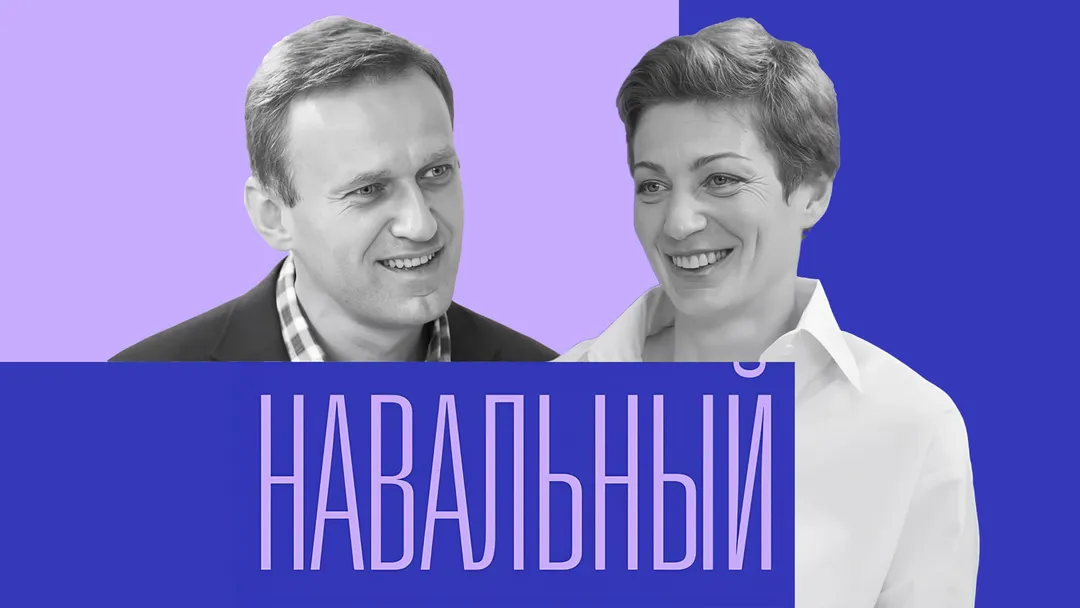
Let's imagine a pleasant thought
experiment: I am the President of the Russian
Federation. Moral superiority is not
enough. If workers have forgotten—come
to me, please, and I will help you create
a union, draw up a collective agreement,
and make sure that in this
you understand what you're doing. But if they took
you away, then you are definitely cogs in this system.
I'm sorry, of course, but you don't understand a damn thing
about how this works, yet you love
to make sweeping statements
and emotional judgments.
[music]
[music]
[music]
Alexei, how is the FBK (Anti-Corruption Foundation) operating now? As I understand it,
basically everything has been smashed up,
the accounts are frozen,
you're labeled a foreign agent, and things are working very
well—it's hard for us to produce video versions
of our investigations. Still,
the FBK's main job is to conduct
the investigations themselves. We do them—we do them
for the record. And this banker, in a country where people
can't get free medication for months,
goes and buys his mistress a yacht and
a plane. So maybe VTB Bank is
paying for the prime minister's wife's flights,
and that's corruption. Or some oligarch is paying
for him—that's corruption.
Or a controlled foundation is paying, as
we described in the film *He Is Not Dimon to You*—that is
corruption. They just raid the studios,
take away all sorts of things here where we are,
lighting equipment, cameras—
they carry everything off. They've done it three times already. We
were forced at first to buy it all again, and now
it's clear that the strategy is
simply to rob us every one to three weeks, and
we just can't keep buying it.
And people send us money after
each of these raids—they try again
to send us money. But where are they supposed to send it?
We have a complicated system, but they
freeze the accounts within 24 hours, and
whatever comes into the account in that time, we manage
to use—say, I don't know, 300,000 rubles (about $3,300),
to pay salaries. After that, it's
blocked again. Plus, now we're simply
forced to switch over
to things like Bitcoin and, I don't know, PayPal, and
basically to some other kinds
of fundraising, because we
simply need to pay salaries, we need
to pay rent, and in the end we need
to rent equipment, because
buying it now has become pointless.
Have your own accounts been blocked? No, actually
they've blocked everyone around me.
Private individuals—seven FBK employees,
staff members from the regional headquarters—something like 150 or
160 people have had
their personal accounts frozen, the ones where
their scholarships are paid. For some, they even froze survivor benefits
for the loss of a breadwinner. There are a huge number
of absolutely monstrous stories like that.
Apparently I'm in the eye of the hurricane,
which means it's calm here for now, and
nothing has been blocked yet. How do you work with
the foreign agent status, and what does it actually threaten
you with? Honestly, we haven't really
dealt with it much, because we were absolutely
convinced that anything at all could happen to us, but
that they could never designate us as foreign agents,
because
we have never had a single kopek
from abroad. But in this country, never say never.
Well, first of all, there's an enormous amount
of reporting—you have to file reports,
basically keep a whole extra accounting system
just to prepare the paperwork. Second, you have to
label all of your materials as
"produced by a foreign agent," and it's
not very clear what exactly counts as your materials.
We'll have to figure that out later. Do I simply have to
put that label on a YouTube video that
isn't owned by—on a YouTube channel that doesn't
belong to the FBK? My main channel, which
is registered as Alexei Navalny, or the channel
called Navalny Live,
legally has nothing whatsoever
to do with the FBK. Should we put the label on the website? We do.
And as far as we understand, their
strategy is that they
demand that you hang some kind of
"foreign agent" sign on yourself.
If you refuse, they'll fine you.
Case two: could there come a moment when
the total amount of fines exceeds your revenue, so to speak?
Yes, it already has. That's exactly the point.
We're bankrupt already, in business
terminology, so to speak—potentially.
A huge number of people and I
held a meeting the other day—there was me,
Zhdanov, Sobol, Alburov—the total
amount of insane claims filed personally against us as private
individuals—
from the metro, from the police, from the National Guard, from
the prosecutor's office—now stands at 40 million
rubles (about $440,000). It's obvious that even if you added up
all our assets together, you wouldn't get to 40 million rubles,
so that's what they've done. And as for
the FBK, it's even stranger there.
They first announced that we had laundered
a billion rubles, which exceeds by several times
all donations received over all
the years. Then they announced the figure of 75 million
rubles (about $825,000)—that is, still
they declared all donations over all the years
to be some kind of criminal money, and now
every FBK account and every
FBK employee's account, and almost all
regional headquarters staff accounts, simply show minus 75
million rubles. That's how
the blocking is carried out, essentially speaking.
But in that case, it is simply a financial
shutdown — that is, the organization will not
be able to operate. The company announced
"Romashka," not LLC, I don’t know, Alfa
Bank, Sberbank, and so on. Still, we are
a group of people united by a single idea, and
of course, right now, organizationally, our
work has become more difficult, but many people
have, on the contrary, found more personal
motivation to do what they were doing, and
everyone understands that the actions
the authorities are taking against
us are, broadly speaking, part of the same pattern of how they
seize businesses in particular. People get angry.
This month they are working not through lawsuits
so much as through pressure. How much pressure can each person
withstand? How long can you endure pressure?
I don’t know — apparently it is some kind of infinite
quantity, it seems.
Our experience, by the way, shows
that this is how it works, and that in a meritocracy, people driven by conviction
ultimately turn out to be the most
intelligent people, and the most
professional people.
The bridge there is a little... 1.25 percent
much less, but people come to us
from the outset — people who are ready, who
want to do this, who find it interesting
after all, political work, and I
believe we have the most interesting job.
There is no more interesting job in Russia than
ours. So if you want to live an interesting
life, as long as you understand that this
increased pressure is, essentially, retaliation
for the Moscow elections.
you can handle — that is, this is the result of our undeniable
success, which
this has reached people who are satisfied
with our... part of it falls on us because
But many are being pressured simply because they
say things that you — that I — do not like.
And they started putting more pressure on us
because we beat them in the elections.
For a long time, the Kremlin built this
system in which there is the systemic
opposition and the non-systemic opposition, and they
believed that from any electoral
process, from politics, they could exclude the non-systemic
opposition — exclude us. We have no party,
I am not allowed to take part in elections, and
so on and so forth. But we came up with
a scheme in which we simply took
the systemic opposition like a club and started
using the club of the systemic opposition to hit them over the
head.
It was quite unpleasant for them. I certainly
take enormous pleasure from
the fact that in Moscow, in the elections,
a greater number of people, in absolute
terms, voted for opposition
candidates than for United Russia candidates. We truly
defeated them in the elections.
[music]
[music]
Obviously, in this situation there is only one way out:
one.
Urgently go on vacation. In this
situation, it is obvious that you need to cut
costs and focus on long-term
partnership.
Guys, what was that just now? You had a cappuccino?
Thanks for the tip — it’s probably time for you
to get some rest.
What, sorry? Perhaps you would like
anything else? No, thank you.
I’ll write it down now. Uh-huh, yes.
[music]
Oh my God.
[music]
[music]
Sometimes you need to take a break right
now. Especially for such spontaneous
decisions, there is the OneTwoTrip app.
[music]
With the app, you can plan your entire
vacation: flights, hotel, car rental,
train and bus tickets. The more often you
travel using the service, the more
cost-effective your trips become. OneTwoTrip
returns up to 10 percent of the purchase price in bonuses.
of the purchase price.
[music]
Download the app using the link in
the description. In 2018, you gave an interview to Yuri Dud (a well-known Russian journalist and interviewer),
in which he repeatedly
and consistently
tried several times to convince you that you needed to
cooperate with someone, to call on people to vote
for others.
And you categorically refused.
You said: why should I... and you were really
outraged, saying: why should I
transfer my votes? Votes are not
transferable.
But it turned out that votes are transferable after all,
and that campaigning for others is possible. No,
it’s not like that. Every election is different; you cannot
speak about elections in general. We are dealing
with fairly cunning, malicious, and greedy
people sitting in the Kremlin. For them,
every election is a new election. For the State Duma elections,
we do not understand yet
whether there will simply be a fully
proportional party-list system, or, as they seem to be saying now,
there will be a fully majoritarian
system — that is, 450 districts. In Moscow,
every election is absolutely unique. So
what changed?
What changed is that in 2016, in the
elections, no decent
candidates were running at all, if you remember.
In 2016, the whole discussion of, let’s
endorse someone in the elections, which
was being discussed on Facebook, in fact
boiled down to: let’s vote for
Yabloko candidates. Well, back then, in
2016, I said that despite all my
affection for Yabloko candidates, I myself
There was a time when being with Yabloko was super mega.
Pathetic candidates—they're nice people, but they
have absolutely no chance in the Moscow City Duma; every one
of those we put forward, including those who were removed,
every one of them would have won. As for the State Duma,
we were being urged in advance to vote for people
who wouldn't get any votes at all. Shlosberg
is possibly the strongest candidate from
Yabloko. Dud mentioned him. So how much did he get there?
How many votes did he get—did he come fourth or sixth?
He got 4 percent in his own
Pskov Region.
There wasn't a single strong candidate there,
and back then there weren't really any decent
candidates at all, and there was no campaign, no
expectation of anything. Still, our
decision to take part this time was strategic.
It was driven by polling data and
our understanding of what is happening in
politics. The system was simply shifting.
This is connected with the increase in the retirement
age within the traditional pro-Putin
electorate—those people they keep
dragging out to vote all the time. So they have
about 15 percent, and they split that group
with the decision to raise the retirement
age. Some of them, so to speak, after that conversation,
felt offended and started thinking about it. So
now any district administrator
or housing office chief understands that at their own
polling station, if they bring in 1,000
people—whereas before those 1,000 people
guaranteed victory or a strong
result for Putin and United Russia—now
out of those thousand people, three hundred
will come to vote but, on principle, will
vote against them because they
got angry over the retirement-age
increase and, more broadly, over falling incomes
over the past six years. The campaign for the
State Duma will already be different because
they have seen and analyzed
the strategy with which, unquestionably,
we dealt them a defeat in Moscow.
So in the State Duma race, you definitely
shouldn't expect anything like that again.
There won't be that kind of leeway again, and as for money—we still won't have much.
We don't especially need a lot of it; that's one advantage of how we work.
I mean, we do need money because we
sit in offices, pay people,
pay salaries and so on. But our work
is very, very inexpensive. That's probably one
of the main reasons why it has been
The average salary is a bit higher now, but still
we're still that kind of organization—
Spartan and very efficient. And because
if we needed a lot of money
or some kind of luxurious lifestyle,
we wouldn't have survived. As it is, we have
ten thousand people who are ready
to send small donations on a regular basis
every month, and that money is enough for us. I'll ask
the traditional question: all those fat cats were sitting there with us
up against the wall—hands up, please.
Asterisk. No—why didn't they jail you?
And why did they let you out? With my own ears—or
eyes, I don't remember anymore—I read that, from
old connections, I still have sources
in various places. Not long before you were released, someone wrote to me:
"They're going to let Navalny out," and
the person says, "I don't understand why." The person himself
doesn't understand why. I don't understand
why either. Do you understand why?
Why the devil let you out? Why jail you in the first place?
Well, so that you couldn't coordinate
the coordinators, and
I had plenty to do there, fine—but why was it necessary
to jail all the candidates, including, frankly,
even the weakest ones? And why weren't they
allowed onto the ballot? Did they want to offend someone?
They're not zombies, they're ordinary people. It's just—fine,
there were lots of names, including weak candidates; this
wasn't just about one or two people, but they simply
decided to go hardline—like, right now
we're going to steamroll everyone here. After that,
why did they let you out then? Because
at first they escalated, and then they saw
a rally of 150,000 people, then they
realized a lot from those 150,000.
No, well, maybe it was 120,000—I don't know, it doesn't matter.
It was a very large rally.
Yes, it was very, very large,
unexpectedly large. And most importantly, they
saw the same thing we did:
the polling showed it, and all of it was hurting them.
They were jailing everyone, and of course for me
it was, on a human level, extremely unpleasant
to look out the cell window and see them being led
across the yard escorted by ten
OMON riot police officers—poor Yulia Galyamina among them.
But I understood that all of this would lead to one thing:
in the election, we'd simply crush them.
Because no normal person
approves of any of this. There was one faction
of crooks saying, "Let's lock up
everyone—that's the most effective way
to solve it." And at some point there was another
group of crooks saying, "No, but
we can ride this out—or let's at least
let people go, or start letting them go, or
let Navalny out, and then maybe
the rallies will get smaller and the tension around him will ease."
But notice—that's exactly what happened.
A lot of smart people—Konstantin Sonin, for example—
was writing columns this long every
day in *Vedomosti* and elsewhere about what they
needed to do to avoid such a
big defeat. He wrote that they shouldn't
arrest anyone, should release everyone, and
register a few candidates, and
everything would work out for them. If only all those
Kremlin crooks had followed not the
advice of some
political strategists around Kiriyenko, but had followed
the advice of some wonderful liberals,
things would have gone much better for them. But they
can't do that. First of all, they consider
themselves very tough, and for them
This is fundamentally important, but, like, you know...
to steamroll everyone into the asphalt and all that.
To dominate — but that won’t work here.
Listen, in the end they let all of you out.
Among professional politicians, there are people
who
went to these rallies
— unauthorized ones — which
professional politicians, including
you, urged people to attend, and now they’re in jail, right?
I know you help, that you’re doing something.
But even with that help, how do I put it — people
are sitting in prison, and it’s like a tram has run over their lives.
How do you even live with that? I couldn’t.
I really couldn’t.
Well, that’s probably the hardest thing for me, through my
work. But we understand perfectly well that this is
a strategy they’ve developed through many years of practice.
You call people to a rally, and
for that they’ll jail some random person,
just a completely random person, someone who has nothing to do with it.
The “24 guys,” the Bolotnaya case (the prosecution of protesters after the 2012 Moscow rally), the Moscow case —
it’s all the same story, about how
while they edge around the leaders, they simply
lock up unfortunate random people
in order to demonstrate: here they are,
ordinary random people; here are their mothers crying;
here are their wives and husbands suffering. And all of this is already
basically the norm. I mean, of course, this
follows a script and keeps repeating.
For years. Should we maybe stop calling people
to unauthorized rallies? This
hasn’t been going on for years — it has been going on
for hundreds of years. It is, in principle, a basic
strategy followed by all
authoritarian leaders. If you do nothing,
there’ll be no one to jail? No — in fact, they’ll still
go on anyway, they’ll just
take some ordinary random people, simply because
this regime devours people. It will
keep devouring people regardless, and
if we stay home,
we won’t make things better — we’ll make them worse.
Looking ahead, say, two years from now, we
still have to resist. And in response they
will respond.
Right now, for the time being, they’re jailing people. Our, our
actions have gone that far.
But what if the actions, what if the actions become
more forceful? Where is the line where you
say: no, that’s it, from this point I can’t call on
people to go anymore, I can’t call them to
unauthorized actions? I just have my own
understanding of what needs to be done. There is a set
of things I believe in. I have it, and so do
my associates, and a huge number of
people who go out into the streets, exposing
themselves to a certain risk, have an understanding
that this is the right thing to do, an understanding
that they are standing up for their country,
for their own future. After all, people go out
for that very reason.
Exactly. And because of that, yes, there is risk. But if you
don’t go out, then you have no future at all.
None whatsoever. I see how people
make these decisions, including young
people, because, for example, in my company
young people work there. Of course, in
there is probably something reckless in this, and maybe even
yes, because I’ll say this: it seems to me that
people do not fully realize the consequences. There is something
very harsh about it.
All these songs about it — here we simply need to
stop engaging in this kind of
psychological masochism. It is Putin
who is imprisoning these people, not those who organize
the rallies. The ones guilty of someone being
jailed are Putin, his courts, his
Investigative Committee,
and all his various Kovalchuks, Rotenbergs, Timchenkos, and the rest.
Their capital protects and sustains these imprisonments. Therefore we
absolutely must continue fighting
what is stealing our future, by different
methods. But when it comes to going out to a
rally, everyone makes that decision
independently. If we do not
go out into the streets, we will never achieve anything.
Organize it?
As is well known, an airplane is one of the
safest forms of transport.
But some passengers still
don’t believe that. They are afraid of flying and
try to overcome their fear.
They fight their fear by every means available
and become very exhausted in this
unequal struggle. We know for a fact
that flight attendants among themselves call such
exhausted passengers “Mr. Cargo,” because
they often lose the ability
to move around on their own.
[music]
Cargo like Mr. Cargo requires
special attention. It is fragile and
unstable, and that can become a major
problem. But you have nothing to worry about
if we are handling your cargo, because we
are always there, no matter what happens. The
Express.ru delivery service takes care
of your cargo, no matter how frightened it may be.
Express.ru
is a courier delivery service operating since 2001.
The company provides courier services
to corporate and private clients.
Details at the link in the description.
You can organize it, but not call on people to come?
That sounds odd. You yourself — well, you, you
organized the rally.
But you say that when it comes to an unauthorized
rally, everyone decides for themselves. It’s impossible
to play games here. I say it as it is. I tell
people directly what is in my head.
I tell them honestly. I come
to the screen, to the camera, and through
YouTube I say: I am in courtroom 17,
where they are obviously about to place me under arrest for
calling people to the rally on the 27th. But if they
send me to jail for that, then that quite obviously
means I am calling on people to come to the rally on the 27th at...
Mary, at 2:00 p.m.—guys, there is no such thing as
an unauthorized rally being illegal
Can they arrest us unlawfully? They can. But I believe
the situation is such that we still
have to come out, and I’m saying that plainly,
in so many words, and I’m not going to
engage in any kind of
political spin here. We may be organizing, but
whether you go or don’t go is up to you, and if I
call on people, I simply call on them—I don’t
I saw how Azar, for example, said about the, about the
rally that yes, I’m among the organizers, but
I’m not going to urge anyone at that moment, saying, well,
that was nonsense. I mean, everyone
urges people and says certain things
based on their own understanding of the situation.
There was that situation with your wonderful
organizing committee and the march in support of Golunov (Ivan Golunov, Russian journalist), as I
remember—there was no ambiguity there, you were one of the
ones who—
who first called people to the rally and
then said, oh no, hold on—
No need to twist my words. What I said
was this: look, for me it was like this.
So to speak, I expressed my position quite plainly.
It was an instinctive feeling. I’ve known Vanya (diminutive of Ivan),
I’ve known Ivan Golunov from the newspaper *Vedomosti*
since sometime in the 2000s, I don’t even remember which year. We
worked together at RBC (a Russian media outlet). When you
when, say, I don’t know, a relative of yours
gets taken away, you feel this immediate
outrage. I know him very well too.
I was probably among the first, you know,
because you understand that you’ll do everything—you’ll call
anyone, talk to anyone, and
take any action you can.
That’s, well, a kind of expression of
your sense of injustice. May I ask a question?
Please, go ahead. Elizaveta,
don’t you feel, the way you live, that you project
an air of moral superiority, not
just in scale?
Oh, like this: “So, you called people to the rally, right?”
I didn’t call people. Don’t pin those laurels on me.
Together with Timchenko and Kolpakov,
we did—listen—
Listen, here’s my question, I’m confused. I’m talking
about the facts, without broadening it: you didn’t organize it,
but journalists threatened the authorities with
a huge rally, and they,
frightened by that, immediately released
Golunov.
The rally happened, and two people were jailed over it.
What I’m asking is this, without sugarcoating it:
how do you live with that?
Yes, and your answer should be: “I live with it just fine,”
because you didn’t force me or anyone else to go
to that rally. I went there, and I was
jailed—not by you, not by Kolpakov, not by
Timchenko. I was jailed specifically by the regime,
by Vladimir Putin, and he is to blame for all of it. If
people don’t come out and don’t threaten the authorities
with rallies, then Golunov would still be sitting in jail
to this day. I’m not a child, you understand that
the process of getting him released was complex.
You have to understand, there were negotiations at every
level. So to portray the whole situation as if
a crowd came out to protest and therefore
he was released, because someone even threatened
to go out to a rally—I think that
was only one factor. I know my own story. I’m
sitting here in front of you now, and probably if
I had been imprisoned in 2013
for five years, I too would only have gotten out recently.
But I spent those last five years
free exclusively because some
people said, yes, like over Manezhnaya (Manezhnaya Square protests in Moscow), and
they went out, and I was released. Some people—I
also came out then. But that’s exactly what I’m
trying to explain to you: it’s this instinctive
sense of injustice. I came out not even
because you were in jail, but because it
was unjust.
You see, I made an internal decision
about why I was doing this. With Golunov,
the degree of organization was as follows: for
myself, inwardly, I decided that I would go, because
this was simply unjust.
That’s all. Nothing more. That was my role in it.
Same for me. And I’m sure that for all
the people who go to rallies, it’s the same
thing. I feel that I—I just can’t
stay home. And probably everyone’s
range is broader. I can’t do it
for just one issue; I’ll go out for major
reforms, I’ll go out because of
political prisoners, I’ll go out because of many
things. I’ll take to the streets over 120 different things,
or 20.
And someone else might do it over three, or maybe 400.
But really, what you said was very
good: an instinctive, internal
sense of injustice. I understand that
things should not be this way, so I go out, and all the
rest follows from that.
[music]
In a recent interview, Vladimir, rather skillfully,
Sergei Guriev, who gave an interview
in several parts, very successfully, very
thoughtfully, actually said that the elite
is afraid of you. Did you hear that? In all your
I listened carefully to all of Guriev’s interviews. I consider
him a very smart man. But did you feel anything
when he said that the elites
are afraid of you? He’s told me that many times,
and
I—I don’t really understand what
the “elite” in Russia really means, because after all
the degree of it
varies greatly, and they are very, very different.
They’re very different. Well, of course it’s obvious that
someone like Igor Shuvalov
or Arkady Rotenberg is afraid of me, because
without question I would send them to the
defendants’ bench. Of course they should
be afraid of me. But there is an opinion—which, however,
I don’t entirely share—that there is some kind of
well-meaning but cowardly Russian
Business is so worried, so worried.
And they’re a bit afraid of me too, because they think that
if and when I—or people like me—come to
power, things will become very
difficult for them. But actually that’s not the case. I don’t
see why they need to be afraid. You don’t understand
why?
I do, because business in general
is afraid of everything. I’ve seen it in
Hong Kong—how business is afraid of absolutely
everything. Although, generally speaking, those people
in Hong Kong—every other interview I do there—
I ask people, from America all the way
across many other countries in between, questions
about things adjacent to politics—not even
politics itself, just something around it: how do you
feel about this, how do you feel about
that—and maybe 70 percent of them tell me,
“We’re not going to talk about that,”
because we’re business, my business is outside
politics. So this is a trait of business, unfortunately:
to be afraid. I don’t see any
big problem in the fact that all these business
guys, well, somewhere or other, when they meet me,
say, “Great, well done, good,” and then
later in some interview they say, “We don’t
support this,” or whatever. Where
are they telling the truth—when they shake my hand, or
when they speak in interviews? Hell if I know. But
in the real world they do shake my hand. I’m not
forcing them to.
Most often they live by this idea:
a free currency with no borders is
the dream of any businessman or investor.
It’s quite possible that soon such a currency
will be crypto.
There’s only one way to learn to understand it:
try it yourself. Recently we released
an interview with Viktor
Prokopenya, the founder of Currency.com.
It was the first officially regulated crypto exchange in the CIS (post-Soviet countries).
Especially for viewers of the channel
Russian Norms TV, he launched a
New Year’s promotion.
The first 1,000 viewers of our channel can
receive a genuinely valuable gift:
a token worth from $10 to $7,000.
Register using the link in the description
right now, become first in line, and
you’ll be able to compete for a whole bitcoin.
By the way, you won’t be able to stay in first place for long:
it won’t last.
The lucky winner isn’t a bureaucrat and can easily
be replaced.
Invite your friends into the game using
your unique link. You will not only
extend your subscription by 6 months, but also
receive half of the exchange commissions
from the friends you invite.
For now, this is a high-risk financial
instrument, and only you can decide
whether it’s worth using. Register
via the link in the description.
[music]
Still, you understand
that there’s a set of points in themselves that
business finds off-putting, yes, but
the main point is, fundamentally, a lack of
understanding. In other words, there will be a different scenario,
something different—and we’ve already
gotten used to that. We understand that, yes, we
have these kinds of risks, we can calculate them; they can
take everything from us, people’s incomes can
fall,
investment doesn’t flow in—but somehow
we live with it. Now something will change, and it may
change for the better, or it may for the worse.
So just in case—because
business needs predictability. This
unpredictability is the main thing. And it
doesn’t concern only me; it
concerns any politician. I don’t
think it’s absolutely any politician,
because, well, in different countries
it’s different. It seems to me there are a number of
pain points that people
react strongly to. I’ll just name
some of them for you. For example,
from our recent discussion—I mean,
we were debating, and you said, “We will move
toward trade unions.”
Yes, and we are moving toward them very actively. If
I had a big company,
I’d be alarmed, let’s say. I said that because
trade unions are anti-capitalism.
Because there are stories about how trade unions
have simply driven companies into bankruptcy, and
trade unions with all those
social payments and all that—
business can’t grow. It’s amazing:
when you talk to wonderful,
smart people like you, and you
demonstrate some kind of—sorry—
completely made-up idea of growth. But fine,
here you have two systems: Russia,
where there are basically no trade unions at all—they’re simply
a subdivision of the Presidential Administration
(Russia’s executive office), and that’s it—
here, right here, the Presidential Administration.
So don’t push that theory on me.
Whereas in America and in Europe there are
trade unions, and many people are very
unhappy with them, and they play an active role in
politics and in the economy. But we see that
America and Europe are thriving with those terrible,
as you call them, anti-capitalist
trade unions.
And we have no trade unions, and nothing is
thriving at all here.
Because, generally, it’s all very well to say that,
Europe and America are different. Are we going to discuss
Europe now, or America? Let’s
do America. Fine, let’s discuss America. In
America, trade unions are a response to
extremely harsh treatment of people under
labor law.
Because in reality, firing someone—that whole
thing you see in movies, where a person with
with a box in hand, got up and walked out, really.
So firing a person is cheap and,
overall, fairly quick.
That is why, in response to this, there emerges
a trade union movement as a response. In
America, capitalism is capitalist capitalism,
so that is one situation. In Europe,
the situation is completely different, and in America there is
economic growth; in Europe, not so much. Right now, who are we
copying from? Well, let’s look.
Compared to us, they—even compared
to us—have this kind of
economic growth. In Europe, no. Fine,
what model are we choosing, what model of
relations? That is, what kind of
capitalist relations? We cannot copy some
ideal normal version; we are looking at the real
situation. Right now, we are going with trade unions.
Why? Because we do not have such a thing as
people leaving with boxes like in the movies. But we
do have this kind of thing: when they shut something down,
it hurts more. And here, they say, you get five months’ pay.
That is, theoretically, five months’ pay. In practice,
people were thrown out onto the street beyond the red line,
at the tuberculosis clinic in the city of
Kurgan, and they simply say: write a statement
and you will be on some kind of unpaid
leave. These doctors are left in limbo,
not knowing what to do. If a person
consistently
if a person knows their rights and
consistently, so to speak, keeps
pressing the issue, labor disputes in court are decided in
people’s favor. All of this is inherited from the
Soviet Union. Or are you telling me
stories instead of real history? Do not
tell me I do not know real history,
because over the last year and a half I have
spent more than half
of my time devoting it, among other things, to helping the
trade union
of doctors first and foremost. Nothing like that—
even if a labor dispute
can still be won at work, and you
are talking about doctors or teachers—do you
really think that with state
institutions you are going to win? No chance. And
first of all, they get fired. But the bigger
problem is that they are not
paid. In America there is a minimum
wage, and in Europe it exists almost everywhere
too. In Russia, it exists theoretically, well,
that is, first of all, it is not really adequate,
it is a poverty wage, and no one actually pays it; they
manipulate what counts as the minimum wage.
This relates to the fact that in America, if
you
do not pay wages, that is outright
a crime. It is a different matter. And here,
it is supposedly the same, but here you have to go to the prosecutor’s office, and
then it gets buried under various, various
paperwork, different formal arrangements, so to speak. If
you think that
capitalism should be a simple
system, I think capitalism should
be complex, and there are many factors in it. There
are employers, there are workers, there
are trade unions. Why, after all,
should workers not have the right to unite
in order to defend their rights?
Why? How exactly would that get in our way?
There will not be any railroad barriers, I mean,
I am telling you how a businessperson thinks.
That is, if he now enters into an alliance with
trade unions, later he will have to
negotiate with them. And as a politician,
that is how one acts—one negotiates.
The difference between you as a journalist
and some businessperson who
theoretically does not think about this at all is that
there is no abstract issue here in Russia; there is simply a real problem, and I
am dealing with it as a politician—a real
problem. In Russia, for example, there are three and a
half million medical workers—doctors and
nurses—and they run around
shouting, “For God’s sake, how did this happen? We were supposed to be this
sacred cow,” and instead they are being pushed around
with no protection from anyone. I come into politics
and say, “Guys, I will defend you,” and I do not
think that I need to start the conversation from
the other side. I know about specific
doctors at the Moscow oncology center on
Kashirka (Kashirskoye Highway area); they are being driven out, fired, and they
come to us and say, “What on earth is going on?
We just want
the mold to be removed from the children’s wards, and instead we
are being thrown out. People cannot get
insulin.” A doctor comes to me and says,
“Well,
it is not even about us, but it is very hard for us
to treat people when it says that
insulin is free, but in reality it is not.”
This is an important issue. What do we have to do with it?
Let us move on to trade unions—come on, better yet,
look, starting from the doctors.
These are not, at times, some abstract citizens or demons of life—you
are talking now as if real life were somehow beside the point, but life is
not unreal; what is unreal are these fairy tales about
some businessmen floating around in a vacuum, you understand?
I mean, if inside my company
a trade union is created—yes, yes, I will
embrace it.
There is nothing bad about that, nothing at all.
Because then I will have a collective
agreement.
I do not know why anyone would object—let them create one.
In principle, then I will have
a collective agreement. Workers, if you have forgotten,
please come to me, I will help
you create a trade union, we will make
a collective agreement.
I just want to make sure that in this
case, if they create one,
a collective agreement, then on top of that I will still
have to give up everything I have and then some?
And then what? Suppose your workers came to
you and said: “But things are already fine here, we already
have normal conditions, no one is mistreated here.”
Why would I need anything extra? No.
Come on, just understand one simple thing.
They’re discussing it from the point of view of private interests, while I
am reasoning from the standpoint of everyone’s interests.
I’m not saying that private business should
be destroyed or that it should suffer.
I’m saying there has to be a balance
of interests.
Right now there’s another recent conflict like this.
It concerns Aeroflot flight attendants.
I wanted to say thank you as a former board member.
You’re a former member of the board of directors
of Aeroflot.
So, as a board member, you sit there
on the board, and your job is now to care about
making sure the company is as profitable as possible,
so that it, so to speak, lives
long and happily, as they say,
and so that the shareholders
are satisfied. As a board member, you
have to think about that. And I’m thinking
about that too. But you, Alina, are thinking about the unions.
That’s exactly the point: your view is simply too narrow
on all of this. As a board member,
I’m looking at the bigger picture.
Business has a narrow view? Well,
naturally, a person who owns
a business wants to get
a lot of profit, to maximize it. But
a normal businessman—and most of them are like that,
actually—they do look at the bigger
picture. Why should profit maximization
necessarily come at the expense of
lower wages? I was in Aeroflot,
I argued with them: they shouldn’t have spent hundreds
of millions of rubles on that damn Tina
Kandelaki (a Russian TV personality) — they gave her money and she
spent it who knows where. And my answer
is this: there are a few of us there,
unfortunate flight attendants, who want
the flights to be distributed more fairly—
short-haul and long-haul ones.
If extra spending is needed for that,
then let’s cut Tina Kandelaki’s costs instead,
and give that money to the flight attendants.
That sounds nice, but in reality this is
an entirely systemic issue, because
the number of flight attendants on each
flight is fixed. If you have
that kind of pressure—this isn’t the 1990s,
some kind of endless Ayn Rand fantasy—it’s impossible.
That’s not how things are arranged now.
So there are two approaches.
First, no one said that
the absence of a collective agreement
means low wages. It doesn’t mean that.
That’s not what I was talking about, and that’s not what it means.
It means flexibility
for the employer in decision-making, that, well,
in a certain sense, they have
more rights. Yes, but there are two approaches: either
business grows faster, so to speak,
earns more money, and people
become richer as a result; or there’s another approach,
a more risk-sharing, Keynesian approach.
There’s another approach.
Republicans and Democrats—we, through
taxes, redistribute things, yes, because
we believe that the economy is not working very
efficiently.
Elizaveta, basically, if sitting here
—imagine that a virtual
Sergey Guriev (Russian economist) were sitting here now, looking at you
with a very kind expression, the way he always
does, and saying in his gentle manner:
“You’re saying…”
“Elizaveta, your understanding of this is very simplistic,”
“these two approaches—because
business does not necessarily have to thrive
by cutting spending on
professional training.”
I didn’t say cutting. But in our country
business in particular thrives
by earning more.
Arkady Rotenberg earns more, but
he doesn’t pay higher wages. Rostec
buys 5,000-square-meter apartments,
but Chemezov doesn’t pay higher salaries.
I’m not disputing that, and I’m not objecting either.
I haven’t analyzed wages there in detail.
Forget Rotenberg for a second—but when private
business grows, then along with it grows
the prosperity around it. True, for
that business to grow, it needs
low taxes and maximum flexibility.
No, no—when we’re talking about
this, please look at Russia here, because
in reality, these are not low taxes at all.
But it is still said, they still claim,
that Russia has low taxes and some kind of
what they probably also call
“flexibility,” and that business is growing here.
I’m in Russia: there are sanctions and
international isolation, and there is a terrible
judicial system. What sanctions? Sanctions
are nonsense compared with that.
The judicial system—I won’t argue with that.
Fine, the judicial system, sanctions—
what other problem is there? But before
the sanctions appeared, business in
Russia was growing. Business in Russia, right after
2008, had recovery growth, and
after 1998 in Russia there was a new
wave of growth too, you understand.
You see, our economy stopped growing
in 2013, when there were neither
sanctions nor protests, and oil was at $120
a barrel. Nevertheless, in
2013 everything stalled and could not
keep growing.
If taxes are increased—well, anyway, I didn’t
say that about taxes. I believe that
taxes in Russia need to be cut; they are
enormous, especially payroll taxes.
I’m saying that people need to be paid more,
that they should take home more money, by
reducing payroll taxes and
giving businesses the ability to pay more.
At the core, the solution comes down to this basic point:
that
for business, we need to create
a normal political system,
a normal judicial system, and the abolition
of excessive government
regulation. That is what will allow business to grow.
But at the same time, in parallel with that, we
must offer people the ability to organize into
trade unions, the introduction of a minimum
wage, and all the other things
that are successfully used in the most
thoroughly
capitalist countries. And a new question:
Are you talking about small business, or is this for
everyone? For me, this is for everyone — for
Yandex, this would of course be abolished — well, not
abolished, but changed. What I need is
lower payroll taxes in general, among many other things.
So this is not only for small enterprises.
It is also for Yandex, and even for Lukoil,
and even for Rosneft — for everyone, although
they will never be normal companies
if they belong to people like Igor Sechin (head of Rosneft).
Across the entire economy, there is simply
an unbearable tax burden.
As for the details, we can leave them aside for now,
because right now it simply makes no sense
to discuss particulars. Our general approach
is that the tax burden
on wages in Russia is such that
you cannot really pay fully official, transparent salaries here;
you have to resort to some hellish schemes,
endlessly cashing out money
in order to pay people under the table,
and so on. As for small business,
we need to abolish almost everything —
almost all regulation — and free them from it.
Yes, perhaps even at the first stage they
should be exempted from all taxes
and fees altogether, because right now,
in Russia in 2019, small business is
not even really business — it is a means of survival
for people. If someone is doing something,
paying themselves a salary and also creating one
job and paying someone else
a salary, we should practically kiss them for it.
And here I am talking specifically about
administrative regulation:
licenses, endless permits for
trade, permits to sell alcoholic
beverages, and so on and so forth.
If you are a small business,
you are constantly running around instead of
working, going to the authorities and asking them for something,
while they ask something of you. We need
to make it possible for them simply to
exist and prosper without being entangled with
the state, because they are the foundation of the Russian economy.
If you take the RBC 500 index (a ranking by the Russian business outlet RBC),
those companies in the middle — the very unglamorous ones —
are not small business; they are very much
medium-sized business, and they are very
sensitive — and they would certainly appreciate it if
they are highly sensitive both to trade unions and
to any sudden changes. You are not really addressing
that segment at all, whereas
these are exactly the people who are growing,
who are, so to speak,
the workhorses that give people
jobs and wages, and whose wages
are rising. What matters more to them?
They are conservatives who are probably afraid of you.
I do not think so. On the contrary, they are exactly
the ones in the most vulnerable position,
and they have it the hardest, because their
companies — medium-sized businesses —
may be worth 100 million rubles,
but under a normal political system they
would be worth 1.2 billion rubles. That is many times more.
There is a difference — a real difference.
And that is precisely why they do not have
enough of their own
administrative leverage to be able even partly
to deal with the state on anything like equal terms.
They are always in a subordinate position.
Whereas the big corporate monsters
have the ability to keep several
deputy ministers on their payroll, and so they solve
their problems that way, while the mid-sized firms cannot.
It seems to me that you are probably
overstating that influence — for business to keep someone
on the payroll, that is not really
the era we live in anymore. I think that was left far behind
back in 2003. Fine, but then
where did all those deputy ministers get those
apartments and those cars that we
show in our investigations?
Some of them may be making money from
public procurement, but a significant share of them
simply receive it directly.
So, we will help small business and dispossess big business?
No, and not the middle either, so to speak. That is not what I am saying.
All right, then I am probably expressing myself
not clearly enough. Try to say it clearly.
We will help all business, because
what business needs first and foremost is
deregulation of the economy and a normal
judicial system. Second,
there must be decentralization of the state overall.
These are three measures that will help
all business. The main idea
behind paying higher wages lies not in
trade unions
and not in setting a minimum wage,
but in economic growth. Without economic
growth, there will be nothing.
[music]
I want to read you a list and
ask what these
companies have in common.
Intek, PIK, Magnit, VkusVill, Wildberries, and so on.
These are wonderful large
companies that were built through the efforts
of people in a fairly toxic environment.
They did not privatize some
factory or Norilsk Nickel; they actually
grew from scratch. That is how I see it — did I get that right?
Yes, but there is something else that they all have in common.
What unites them is that they all rely on difficult—
migrants, to one degree or another, and—
I have to say, my God, they use
migrant labor. I am not against migrants, and
the whole talk about migrants—please, there are
Yandex Taxi and Yandex Delivery, we know that
the sales staff at Magnit, and so on, and so on,
and so on—they all use
the advantage of cheap labor.
People who came to Russia to improve
their living conditions, and thanks, among other things, to
the fact that they make use of this
advantage—these are the companies that
have become successful.
They have good profits, and we
are proud of them. No, their advantage was
the use of different kinds of labor.
One of the things that goes into this—
you say it happened thanks to migrants.
That is one of the reasons, just as
for example there are companies in Silicon Valley
that use the labor of
Ukrainian programmers, and Russian and
Belarusian and Indian ones, and cheaper
labor from abroad—this is
a competitive advantage: lower-cost
labor. Among other things, one reason for this is
the availability of legal labor
migrants for whom it is very easy to come to
Russia and very easy to find this kind of
work here, and that provides it. Why do you
want to change that? Why take away this
advantage from them? If you introduce
a visa regime with the countries of Central Asia,
which you are proposing, that will automatically
—
lead to it. Let me explain it to you in simple terms.
Don't pretend that this contradicts what I said.
Addition.
People use the labor of
Ukrainian, Belarusian, or any other
programmers; nevertheless, a visa regime
does not stop them—they work remotely, first of all. Secondly,
people can come here
to work, including as Yandex taxi drivers, by obtaining
a visa, just as Russians or Poles
or Ukrainians go to Germany to work
as drivers by getting a visa. There are no
problems with having a visa regime, and the most
developed countries function perfectly well with it.
Where?
You just named a list of eight companies, but in a
developed country you could make such a list
of 228 companies, and all of those
developed countries have a visa regime with
Tajikistan and Uzbekistan, and excuse me,
but no local business owner or
his business has collapsed because visas were introduced for
them. How many are there in America? In America,
no one really knows how many undocumented migrants there are.
No one, in fact. It is one of those
same things with Russia too: 12 million
people—Moscow is a city of 12 million—and
all these people work somewhere.
Well, in America they are more liberal about it. What
does that prove? It proves the following:
that even America, despite having
visas, cannot cope with the problem of illegal
immigration; America is the richest
country in the world, everyone runs there. Why?
And why do undocumented migrants go there
even though visas exist? And, as you like
to say, it is a normal country.
Because even with all sorts of problems,
people still live there in conditions where, even with
illegal migration and the risks
it brings, it is still more выгодно
to come and work at any job.
A question for you for a second, and for other
supporters of open borders: if America
tomorrow—let's say the United States—
were to introduce tomorrow a changed visa
regime with all countries south of the Rio
Grande,
what would happen? Would that somehow help
American business grow? I will return to
Russia now: so, in Russia, if
visas are introduced, nothing fundamentally new will happen.
That is, migrants from Central Asia will still come to Russia
from Central Asia
either legally or illegally, of course, and in
any case many of them will come illegally. That is, if
you ask me, much less will change—if even America
cannot cope with illegal
migration, then Russia, with all its porous
borders, official corruption, and all the
chaos that exists in Russia, certainly will not cope either.
It will not cope. If America, with all the power of its
state, has not solved this problem—
No, listen: America attracts
migrants.
I explained what will happen if you introduce visas.
Well then, corruption will increase, because
for people—for those people—because for
the people who come here,
it will be a matter of life and death.
Do you understand? They are already in a subordinate
position now, and they will become even more
subordinate. That is, they will
simply come illegally and live
like slaves.
You know, right now at least they can
do it legally: they can come,
pay small fees, and—
you talk so much about migrants as if
you know their lives very well, but I roughly see
how they live.
For example, I can be proud of the fact that
among all Russian politicians, I
spend the most time together with
migrants—I sleep
next to them on neighboring beds, they
ask me questions, they think aloud, and I
first of all discuss visas with them, and
most of them, paradoxical as it may seem,
are in favor of them, which seems paradoxical to me.
I know very well what introducing visas would mean.
how migrant labor is organized, how they live, and
all the problems they face
for example, they are often simply not paid
their wages. You know, they are simply
hired by the thousands on construction sites, and it is even easier to
have the cops and the Federal
Migration Service called in
by the construction site owners, and they take them all away so that
they do not have to pay wages. So when I
talk about legalizing them, and I get this long question
asking me to respond, I say that
of course, the problem of illegal
migration will never disappear, because
there is a rich country and there is a poor country
and people flee from the poor country to the rich one. That is
natural. If we want at least
to begin putting this system in order, and I
believe that every foreigner
who comes to work
from Pakistan should have a proper
work visa, proper medical
insurance, and minimum labor
guarantees. He should work under the same rules
with vacation once a year. He should also
work no more than 8 hours a day
and so on and so forth. Well, let's talk about
what is realistic — things like private
visas, at least some kind of registration, some kind of record
they should be accounted for; right now everything is just
simply happening as it is now. Once again, they
arrive and in principle they enter legally, but
they are legal — yes, technically they are legal now
right now there are simply no illegal migrants
no, they are all perfectly
legal now, which is already good. The only thing
they need is simply to go to the FMS (Federal Migration Service)
pay that fee of theirs — I do not remember exactly what it is now
— and legalize themselves that way
That is the whole point. Why, if they are all legal,
if you and I went right now
to Elektrozavodskaya metro station
and saw two police officers standing there
next to some unfortunate man, most likely from Central Asia,
we both know perfectly well — thank you for that
analogy
because most likely he did not want to spend 4,000
rubles (about $40) or 1,000 rubles (about $10), or he simply does not have it
for him that is just a lot of money, and he did not
go to the FMS and did not register. If he had
been officially registered with the FMS
he could have politely told them
goodbye. But isn't that exactly what I
am proposing? What you are proposing is
the following: in essence, it will not be one thousand
or two or four thousand, but for them the cost of this
legalization will be much higher. The price will be
much lower — of course higher — of course lower
Even now, what I am proposing is precisely
to legalize them. So why do you
call it a disaster? You know yourself that
they have no medical rights, no insurance
they are completely without protections, and if something happens
they can die. What is stopping us from adding to
registration a work permit,
FMS registration, medical insurance, the right to take
driving tests in Russian or in some
other language, whatever? In America, for example, you cannot
drive for Uber with just any license; you cannot do it
with a Russian license. Let us add all of that, and on that
list one of the items will be a visa
Why? Because based on all this
practice, I know one thing for certain:
all developed countries do not let in
just anyone — not even me — without a visa. I do not understand
why I should let people in here
from poorer countries — but that is a completely
different issue. The point is, I
understand that, and I will insist on it, because that is how
the system works, because it is better, because
it has been proven many times that it is better. The people
who adopted these rules in Germany, in
the United States, in Switzerland, in Singapore, in New
Zealand — in all the countries that
rank at the top
among developed countries with the highest
wages — there, society and the state
determined that yes, this is the right approach
They did not solve
they did not solve the problem of illegal migrants, nor
the problem of legal migration, but you can at least begin to address
these issues; otherwise you are nowhere
near solving the problem
But if you do not introduce a visa regime
you cannot even begin to solve these
problems
A police general from the Interior Ministry and the FMS told you — that is no secret —
that we have from five to
ten million illegal migrants, that is,
plus or minus five million people, and we ourselves
do not even know exactly how many are here
Why should we copy the worst practices of the United States?
The United States has a visa regime, and if the
United States did not have a visa regime with
Uzbekistan, then all of Uzbekistan would tomorrow
be heading not to Russia but to the United States. But they would never
do that — they are not fools there
Why should we be fools? People from
Uzbekistan will come not because
someone here is handing out benefits
or because they are especially needed here; they come
because there is poverty there, Alexei, because
life there is very hard. Look, I still want to
try to persuade you: right now, under
the current absence of a visa regime, you yourself said
five to ten million — those are the real figures. Well,
that is what some official, one of those responsible, says
So that means that with
relatively open borders
10 million people are somehow working
in Russia, and overall it is not a catastrophe. That is,
with open borders, more than that are not
exactly storming in here. Well, out of 140 million, roughly
that is how many come, have come, and keep coming
Let us say 10, plus or minus 2 more — that is,
8 to 12 million. So all the demand for Russia
is exhausted by those 12 million, and you see
you are already doing the subtraction yourself, because
in 2007 — in 2002 — their visas...
They come here not because there will somehow be a demand for them,
not because there is some kind of constant
demand.
It’s simply about the standard of living: right now in
Russia, wages are low, so they
come here less often. In 2007,
the gap between Russian and Uzbek
wages was bigger, so more of them came.
If tomorrow, say, Uzbekistan’s economy
— it has gas, after all — if suddenly tomorrow the economy of
Russia starts growing, another 10
million will come here, unfortunately.
Otherwise, yes, absolutely right, it won’t start
growing. But what I’m saying is that, overall,
the basic approach is this:
we currently have 50,000 people
arriving annually, while our population is shrinking —
200,000 people leave the country every year, and
that, in fact, is a monstrous thing
that is happening to the country right now.
The problem of migration hasn’t been solved anywhere, but
the starting point is still
a visa regime.
If you have a huge number of
Muslim countries with poor populations,
low urbanization, and traditional social structures,
that makes a big difference, because the United States
attracts, for example, migrants from
Latin America, but migrants
from Islamic countries, for example, they do not let in.
Because that, too, is generally considered
a violation of human rights, probably.
On the surface, it looks like a violation of human rights.
Authorities in all countries associate
crime with newcomers, but in fact
statistics show that labor
migrants commit the fewest
crimes, because they come to work hard,
and why would they get involved in
anything else when they came here to work? I’ve
seen this many times: they get fired from a construction site, or
someone breaks a leg, and there is no medical
insurance. So what does he do? He calls
his cousin and says,
‘Bro, bring me, please, 1
kilogram of heroin, because I have to
find some way out of this situation.’
That’s how an organized flow
of illegal immigrants will emerge, whereas right now
it is unorganized. Wait a second — but right now they are
legal.
They will become illegal, they will have even
fewer rights, and their situation will be even more constrained.
It will only get worse. No, listen, that’s not
true at all. I’m telling you,
it will be exactly like Mexico with this
system. I’m sorry, but you don’t understand a damn thing
about how this is structured, yet
you love making sweeping claims.
An emotional judgment, an emotional
judgment. But I’m simply telling you
that I speak with migrants
directly, every day — well, not
every day, but for two months a year, very
often I talk to them, so I know
what I’m talking about.
They suffer from this — the people
who come to work suffer more
under this regime. The main thing I
encounter is not just my conversations
with migrants, but also my understanding,
my understanding that in all developed
countries there is a visa regime.
It’s not a panacea, and all of this is still
very complicated. It doesn’t solve 30 percent
of the problems, but it does solve 70 percent of them. And
we don’t have a visa regime, and we’re trying
to invent some kind of workaround that simply doesn’t
work in Russia.
Yes, yes, there are countries with which there is no — well,
for example, tell me,
please, a country in the Americas that doesn’t have one. There isn’t one. With
Israel,
there is a regime; Afghanistan — with whom is there no visa regime?
With us. We have to admit that
economically, Russia is not as
attractive as the United States
of America.
And so, in fact, it is beneficial for Russia,
beneficial, for example, for those companies that
— I’m saying it is beneficial — to attract these
migrants. It is beneficial for us to have visa-free travel
with Israel and, I don’t know, with
Switzerland, with all developed countries.
But with Central Asian countries, it is not beneficial for us; ideologically
perhaps it makes sense for us to have visa-free travel with
Israel; perhaps it is beneficial for us to allow in, in a
political sense, visa-free travel with developed
countries. Economically,
it is beneficial for us, and it is genuinely beneficial for companies
that people can now come freely and
register easily for, I don’t remember how many
hundred rubles, and then you say, ‘What are you doing?’
It’s not easy for them, and besides,
a work permit is still
hard to obtain there anyway.
Still, it’s a fact: all these
migrants who come here, they still
live like slaves, like slaves, and they are
completely without rights. That’s because
the system is built that way. Okay, then
that’s victim-blaming — so you’re saying
migrants themselves don’t know their rights,
so they live like slaves, whereas they could
live differently? Of course these people
are rightless here and now.
And saying that this somehow helps only
the economy grow — that doesn’t help.
What I want is this: if you turn the Federal Migration Service (FMS) into
an organizing institution, like the ‘My Documents’ public service centers,
then in the Beautiful Russia of the Future (a Russian political phrase meaning an ideal future Russia), it will
work like ‘My Documents,’ only a hundred
times better. A large part of this problem
would disappear.
Then there would be no need
for us to live under this kind of arbitrary power.
We’ll fix everything and make it normal, but at the same time
there will be a visa regime, there will be electronic visas.
There will be visas, documents, and the right to
work, and the requirement to buy
insurance. In that sense, we will make life easier
both for ourselves and for emigrants, because
once again, because what we are doing is
introducing what is necessary, while a great deal
of what is unnecessary will be abolished.
[music]
Let’s talk about another painful issue
that is also related to
the economy. I’ve spoken several times
with people who lived through
it—and we did too, in a sense—
the easing of the sanctions regime.
I mean the Soviet Union, and with people
who were older than we are now
and who say: do you understand that
even the sanctions that were imposed
on the Soviet Union were never fully lifted?
The Jackson–Vanik amendment was repealed only recently;
it remained in force until quite recently. What’s more,
it had long since lost any real relevance,
because it was, so to speak, about
the Jewish question—that is, the process
of lifting sanctions
is a very long and complicated story,
regardless of who is in
power. Two presidents came and went before
that repeal finally happened.
I think some of the sanctions
—the Crimea-related sanctions—will remain with us for
many, many years. But they are the least
problematic. Any sanctions create problems, but
what are called the Crimea sanctions
are, well, something that involves
some fairly minimal restrictions.
I’m not ready right now
to clearly and substantively
rank all these sanctions, but my
understanding is that the Crimea-related
sanctions are the ones most likely to remain.
For political reasons, neither Europe
nor the United States will be able to lift them under a different
or next president, whoever that may be.
They will clearly stay for a long time. Here I’m simply
relying on the opinion of authorities in this
field.
As for the other sanctions, they will go away,
and I am sure fairly quickly, if
the current form of Putin’s regime goes.
What makes me think that? Because the main
reason for imposing sanctions is the war
in Ukraine. That is what made Europe
and the United States anxious and alarmed, because
for 70 years they had been building a space
where there were no wars, where everyone lived under conditions
—apart from Yugoslavia—
and in Yugoslavia the whole world got involved, rightly so,
and for many people it ended
quite badly. But overall,
the entire system
of security had been built so that Europeans, Americans, and
everyone else believed there would be
a zone where this sort of thing would not happen—where
tanks would not be firing and people would not be carrying
their
belongings on their backs, and refugees would not be
running somewhere. And then suddenly, in the center of Europe, we
started a war. So naturally all
the European countries and the United States were thrown into panic.
If there is no war, the sanctions will be lifted. I
think that is too idealistic a view.
Take exactly the same example:
under Jackson–Vanik, Jews had long since begun
to emigrate, but the sanctions were not lifted for another 15 years.
No one made any significant effort
to repeal those sanctions.
Jackson–Vanik could have been repealed long ago, but
it had effectively stopped functioning anyway.
It was just renewed every year. I’m not saying that everything
will be easy, of course. The question of lifting sanctions
will depend first and foremost on
what administration is in power there,
in European capitals and in the United States. There will always
be different views; there will always be people
who will say, ‘But what about
Crimea?’ That is exactly the issue.
Let’s imagine the future for a moment.
Let’s leave Putin aside for now
because these sanctions were imposed because of him.
He also introduced
idiotic countersanctions which, from the point
of view of the economy, are even worse for us. I
can imagine how we could repeal
the countersanctions—that is actually much easier. But with
Crimea, what do we do? Because there will always
be some senator or group of
senators who say, ‘They want to lift them
already?’
Well then, let them put everything back in place first.
Let them end the war, and Crimea—there will always
be a political camp that will
demand a zero-option solution.
And in fact, that will not even necessarily be tied
to Russia; it will be tied
to the domestic political situation in the United States.
There will always be such a camp. Our
task, through foreign policy efforts,
is to make sure that this camp remains in
the minority. If we reach an understanding with the
administration, we will stop once the war
is over. As I understand it,
the question is: what needs to be done about Crimea?
Another referendum needs to be held in Crimea,
you say? Suppose
—suppose it says, ‘We want
to remain.’ Well then, so be it.
We will follow the wishes of those people. Do you
think that would make it
legitimate? It will always, always
be disputed by someone. Of course, someone
will challenge it. But if it is done
that way, if the referendum is fair,
then
its legitimacy will increase.
It will never become one hundred percent legitimate;
several generations would have to pass,
or more likely, the issue would simply fade away.
only when Russia fully comes in
the European Union and Ukraine — that really won't, no
have any significance when this, I mean
at some point, in the case of Donbas, the idea is that
what is being proposed is what Vladimir
Putin
and what everyone else signed: to hand over
control to Ukraine
hold new elections there, give them
some form of local self-government, I mean
it will always be a very painful process
when blood has been spilled, people say, people
feel they are different, and have felt themselves
to be enemies; they were killing each other recently, so it will be a very
painful process that will
start, break down, start again — the main thing is to want to do it
to do it. That is, if we want to fix something there
we can put it in order fairly quickly, but
right now Russia's policy
is based on the idea that Ukraine must
become a failed state, that Ukraine must not
succeed at anything, and of course Donbas is
the main lever. No matter what remarkable
achievements Zelensky might accomplish there
or any other president, in the economy, in
social policy — you can always
pull that Donbas lever and then
everything will go completely off the rails
and the only issue in Ukraine's domestic
politics will once again become war — not
war or no war, but soldiers, conscription, and everything will collapse
10,000 people have already died, that's enough, and I'm
saying that this cannot simply be reset to zero
just like that, and it will not be healed in
the next 50 years. How do we make it so that
it can at least begin to heal? Leave them
alone. That's basically it. So, if I
were to imagine a pleasant thought experiment
in which I am the president of the Russian
Federation — do you often picture yourself that way? Well, I
often put myself not exactly there, but I do imagine
situations in which I'm riding around in, say,
a 12-meter-long car, I imagine
situations involving difficult decisions, what I would
do in that situation. So of course
he has to make, every single day,
a hundred very difficult decisions, and I think
about this. The decision is that we
must understand that objective reality
and our own interest lie in ensuring that
Ukraine becomes a prosperous state
the better things are in Ukraine, the better it is for us; the
richer Ukraine is
the richer we are. We need to leave them alone
and let them do what they want
together with Germany, Europe, and the United States, we move
on Donbas within the framework of these
agreements already signed by Putin
and that's it. I don't want Ukraine to always
dominate Russia's foreign and domestic
policy so heavily. It seems to me Russia
and everyone else have all grown tired of it
it seems to me that what it does — I mean, in the
PR sphere it dominates, but it seems to me
that this is, roughly speaking,
an ideological war with the West on
Ukrainian territory. That's how it has always been, yes
and the question is this: perhaps for
Russia and for the United States, a situation in which two
sides perceive each other as
geopolitical adversaries
may go so far that turning back
will be very, very prolonged, and it is not
really about Ukraine — especially since
Ukraine is clearly gravitating now
having been pushed away by Russia
toward the West. I think that with
Russia's current image
in the world, the situation will be either
neutral or bad, but not good
Russia's current image in the world is shaped
by a very small number of factors
first, the war in Ukraine; second, the Skripal case; and
third, Litvinenko; fourth, the hacking of those
emails by some murky hackers; these are
these four absurd motifs
in the press campaign
but that's an American campaign, though
a campaign of a fairly, well,
I mean, clearly provocative and
irritating, so to speak, biased portrayal
of Russia. That is, if something is written about Russia
then it is automatically bad
well, I wouldn't put it that way; at least I
don't really see some kind of, you know, sharp line there
I don't see that. But this is precisely an internal
political factor. If everyone in the world
— the rest is hard to make out —
for me this really hits a nerve
I mean, to such an extent that, well,
you start to feel embarrassed saying you're from
Russia. I watch your program, and it's wonde...
there are lots of wonderful Russians or Soviet-born people
or just wonderful people
I came, I recently met with you in
Palo Alto — every other person there is Russian
you just walk around and don't even realize. There are
also a significant number of people
who will not give interviews in Russian
because they don't want in America to be
somehow associated with it. And the problem, the problem
is one we largely created ourselves. If we
decided in this cartoon
to portray ourselves as villains, then well, there's no need
to be offended that everyone else will then
position themselves as the good guys in contrast to us, while we
are the villains. In a way that's actually good
in fact, nobody wants to spend their
time on some kind of struggle with us. If we have
a normal country, everything will change
very quickly, if we stop sending
those two idiots who were in the middle of
a city poisoning someone with chemical
weapons. But then who would
be rewarded, stumbling around, in order to
cover up...
to fix this, it is not enough simply
to stop — enormous effort is needed
I don’t begrudge any amount; what we need is
not to prove anything to anyone or do
special nice things for them.
We need to do good things for ourselves.
The unique and wonderful thing about the situation is
that we need to do good things
for ourselves — to tell ourselves that,
to put it this way, Russians deserve
to finally live well, truly well.
To hell with Ukraine and everyone else.
We’re going to build our own wonderful,
beautiful state and be friends with everyone.
We’re in a unique situation where
we don’t need to fight anyone; we can
trade with everyone and make money from it,
good money, really good money.
And when we stop harming ourselves and doing
this truly pointless nonsense that irritates
the establishment, including the Western establishment,
and when we finally start getting richer and
become a more attractive trading partner,
everyone will love us and adore us.
You were just saying, quite relevantly, that Russia
will become a wealthy European country.
Russian people like to reflect on
how special they are. Yes, it will be
a completely distinctive but civilized
European country. What historical
grounds do you have for thinking
that this will happen?
Was there ever a period in Russian
history when it was, as you say,
a normal European country?
We don’t need any historical
grounds. I simply have life itself, the people
I see around me. I can see that
things are actually great, that everything is developing.
One of the things — actually, it’s frustrating, the agenda
has shifted to a positive agenda — one of the things
that I kept thinking about,
when people talked about Europe, was that I see
that these are the same people. How wonderful
it would have been for Russia if not for these
20 lost years. Just look at the internet
or mobile communications. I don’t think all
20 years were lost. Fine, since 2005,
or from 2000 — but really, since 2007 we’ve
been in completely lost time.
And there was the global crisis, the global
crisis — but others emerged from the global crisis,
someone got out of it. We...
We — since 2007, we’ve been bombing Voronezh (a Russian idiom meaning harming ourselves to spite others).
Every year, we make things worse for ourselves.
Still, 145 or 150 million people live here,
people who earn money every day,
they buy things, they buy
clothes or ice cream, they buy
cars, so some kind of
development exists anyway — there’s some even in North Korea.
There is some. It’s just that we are here,
when we could be over there. That’s exactly what
I’m trying to say: ours is not
some horrible, monstrous country.
It’s a normal country, but we could live
much better; we could have done much
more. Why did I mention mobile
communications and the internet? They’re excellent examples of
how the areas of growth the state
didn’t interfere in really took off here.
Our internet is better than in Silicon Valley.
We have Yandex.
That was our spaceship,
the one we launched.
And in general, it’s a super high-tech product.
Who else has their own Yandex?
We can be incredibly cool, and we will be,
if we stop bombing Voronezh (that is, hurting ourselves).
I regret to say
that economic growth is achievable,
unfortunately, even in countries with authoritarian and
even totalitarian regimes. Here’s an example:
China. The Chinese model, much to my
regret, proves to me that within
a single generation,
400 million people can begin living
radically better lives without economic
freedoms.
So why are you arguing? We, we, we
are living much better now than we were
in 1999 or in 2000.
By 6 percent on average — all right, and another
key point: to achieve all this
wonderful progress, of course, as everyone says,
you need independent courts. But where do you get
such a large number of
honest, let’s say untainted,
people, and how do you change this
system overnight? You don’t need that many — seven
million. To staff the system, you need to find 200,000.
For that system, they can all be found.
The issue with the courts right now is the whole system around them.
What is the problem? In practice, judges
are appointed by the Presidential Administration,
or rather, in reality, by a personnel commission
on which
the FSB (Russia’s security service) sits. They decide who becomes a judge and who
doesn’t. That’s the first point. Second: an ordinary judge
is effectively in bondage to the chief judge,
who, through the way cases are assigned,
simply manipulates everything. Third: where do judges come from, and how?
How do people become judges? A young woman
comes to work there as a court secretary,
while also completing
a law degree by correspondence. Five years later, there she is — and they’ve
trained her, drilled her like a circus bear,
trained her to do this and that,
trained her to say the phrase:
“Please sign to confirm that you’ve
been informed; sign to confirm that your
rights have been read to you.” Beyond that, they don’t know a damn thing
and can’t do a damn thing. There are
four provisions of the procedural code,
civil and criminal, that they’ve learned
to apply — like a trained monkey — and
that’s it. And these are our judges.
Add a few former police officers,
a few prosecutors, and that’s
the judicial system we have. But what kind of...
No bar association anywhere
where the professional level of the people is
incomparably higher than in that secretariat.
We do have courts and police,
and the academic community is quite
large, and
we have people to replace them with — the main thing would be
the will to do it, because
for example — I mean, I have never
thought the courts were sufficiently independent. They
never were; throughout the 1990s they were not
independent. All through the 1990s they sat there...
There’s that well-known saying, remember:
"Once I take something on, I’ll see it through" — well, they started
watching them, but they were never independent. That’s one
of the reasons why I, once a big
admirer of Yeltsin and that whole crowd
— that whole gang — am no longer one, and now, as of
2019, I hate them all for it,
because they did absolutely nothing about
the courts. For their own purposes, they left this whole
— excuse me — Soviet-era system
in place. The chairman of the Supreme
Court, Lebedev, tried dissidents for
distributing the Bible, and now the same man
upholds sentences against people who, supposedly,
have offended the religious rights
of citizens. Back then, they should at least have
started replacing at least those
who had already been shaped by the old system. Business people used to say
that at a certain point, all jokes aside,
there emerged a fairly
competent commercial arbitration system, not at all
entangled.
I sued Surgutneftegaz and Rosneft
and so on, and everywhere in this wonderful
arbitration system I lost, despite the fact
that it was plainly, 100 percent, written there that they
had to hand over the documents, and they did not,
and they declared me a bad-faith shareholder.
Back then, what they needed was not
to purge at least the most odious judges
who had stained their reputations
and who handed down illegal rulings every day,
political rulings, back then, during
perestroika (the late-Soviet reform period). They needed
to be replaced.
People needed to be given at least a little
independence. They were afraid to do it
because
the courts, for the then-presidential administration,
for that whole gang,
for Yeltsin, Yumashev, Chubais — they needed
courts under their control, because they
thought they would manage them well.
Like: yes, the courts are under control, but
we’ll only ask them for good things,
that’s all.
And in general, it seems to me all leaders fall into
that trap. Yes, in fact, one of the problems
that happened in Georgia — and this is the main thing —
and what the new people in
Russia must not do, is say: well, let’s
reform everything here, but the courts
we’ll keep in reserve, because I’m a good guy, I
won’t, so to speak, abuse them.
Make a note of that and remind me of it
for sure, if it so happens that I
end up holding some position of power.
I need this shown to me.
I’ll remind you of it very clearly. You say
you’re for freedom of the media. Yes — well, I don’t remember...
No, of course, Mikhail — yes, Mikhail Leontyevich.
That’s a different matter, but when you criticize the media,
you come close to a line.
They may be wrong about some things,
or they may be right, they may justify
their decisions — the media often make mistakes. I spent more than 20
years in the media.
The media make mistakes all the time, everywhere,
and often write nonsense. But the way you
react
when the media write something that seems to you
incorrect
is just, well, wild. A good example
is your constant conflicts with
*Vedomosti*, when, I mean, at least
I can imagine how that system works from the inside.
You understand that in fact
they may have messed up, or they may have
simply worked that way — that’s how it is structured.
Or people make mistakes, or people make
certain judgments because they
are sincerely mistaken. But you steamroll
over them immediately like a tank.
Absolutely I do, and I consider it very important.
Just as you remind me, so I, with all
my great respect for the media, and despite everything,
while believing that independent media
are an absolutely crucial thing for
Russia’s future, indeed for any
normal society — still, if they can be harassed like this,
that is exactly why I want them to remain media. I’m from the
newspaper *Vedomosti*. But it’s easy to discuss this with
you, because the newspaper
*Vedomosti* during your time as editor-in-chief
there effectively became
my
godparents in the profession.
Put that on the record.
And when you covered me — yes, when I was suing
oil companies, you were there, writing columns.
When I was suing companies, and you
were covering it — *Kommersant*, for example, did not
write a single article about it, ever.
*Vedomosti* always wrote about it. I kept
thinking: who are these people? I didn’t know anyone there
at the time. You were simply writing because it
mattered — these were important
stories, and you wrote important news.
And then you named me Person of the Year.
And after that, for me, you simply became
the model of how
the media should be organized, and I lived with the illusion that there was
some institution that would remain that way forever.
And then, when you were no longer there,
*Vedomosti* was devoured; they turned into
something like — well, not quite the same, but gradually...
Censored, lightly: I can't stomach this, I...
I absolutely, unequivocally refuse to allow *Vedomosti* (a Russian business daily) to
compromise. That was my main
newspaper. I read it for years, and it
belongs to me as a reader too,
it was a kind of public asset, and even now it is
an asset. How long that will remain so—and Demyan
Kudryavtsev—unclear. Let's leave that aside for
now. I can't just leave him out of it, you know.
The conflict wasn't with Kudryavtsev over some abstract issue,
it was with specific authors,
specific articles, about which Demyan, I'm
sure, had nothing to do with them—he had his own priorities.
Still, my main conflict
had nothing to do with that at all.
My main grievance,
my fundamental grievance with *Vedomosti*, is that
Kudryavtsev headed Sobchak's campaign headquarters
while at *Vedomosti*. Everyone there knew about it, and no one
wrote about it. In other words, they knew and
lied in every article they published, and that is exactly
the point.
And we had talked about it before, in an interview.
Demyan said he did not head the campaign, as he
claims—not necessarily. I asked him
about it directly; I interviewed him.
But John said that *Vedomosti* should have
established that this was not true, that he had
an office there and was running things. Everyone knew that.
Everyone knew it, and you know that perfectly well, and everyone around
knew it too, and everyone at *Vedomosti* knew it, but they
lied, and I can't let that slide. But we
have to admit this. It's much harder for me to admit
than to admit that I was editor-in-chief,
and the editor-in-chief is the person
in an authoritarian role: neither you nor I
determine the editorial policy
of *Vedomosti*.
*Vedomosti*'s editorial policy
is determined by the editor-in-chief, who
looks at the world based on the conditions
they are working under. I'm not talking right now
about procedure—no, wait a second—rather,
it is specifically the editor-in-chief who decides what
is important and what is not for the news
agenda.
You sound puzzled, but I'm saying this quite plainly:
they must—we make certain demands
and we should make demands
of politicians, and in exactly the same way
we can make demands of—well,
in an informal sense—they have their own
agenda, their own business interests, they
think they cover business and
politics and everything else, and when they lie or
deliberately keep quiet about something, I don't think
—I mean, with everyone else I wouldn't
care.
But with *Vedomosti*, I don't think I should
stay silent, because it's my newspaper. Well, even if
it stopped being mine a long time ago,
I still have nothing to lose by reading it, and this is my
deep frustration: there's almost nothing left to read there, but I
found it in others too—I've forgotten the exact point—but this kind of thing
is so glaring that I think with it
this is the most important basic institution, without which
nothing good will remain for us. But
at the same time, I do not think that you journalists
are some kind of saintly, wonderful
people. I have to disabuse you of that. In fact,
everyone thinks so, but let me boast a little: I
have written more texts in my life than
most *Vedomosti* journalists, and I
—friends—I myself have been doing
journalism
or something close to journalism for years,
and therefore I believe I am fully entitled
to criticize both individual journalists and
individual media outlets. But overall,
I consider the media as an institution the most important thing,
the most important, and that is precisely why, Nastya, it is
sometimes possible to cross certain lines in some situations.
You can do it—there is no criticism without some degree of personal address.
When criticism is given without
Alexei, I categorically do not
agree with that. *Vedomosti* would never allow itself
to write
on its social media—I don't know—something like 'a cello case'
or 'a corrupt politician.'
You can't resort to insults, and you can't make it personal,
in my view.
To say that you—I'll tell you about
adjectives: that is making it personal.
We had a rule like that at *Vedomosti*:
don't use adjectives like
'wonderful',
'vile'—well, 'a crook' is actually
not an adjective but a noun: 'crook.'
No, that's not neutral—it is both a factual claim and a judgment.
If it's true, then saying that about a newspaper means it is
true. I think that a torrent of lies is exactly that.
And besides, 'crook' does not necessarily mean
someone literally stole something; a crook is someone who steals,
deceives, a fraudster.
He is definitely one of those things, no question.
Demyan Kudryavtsev is destroying my newspaper.
I'm not obliged to call him anything else than a crook, and
I am not saying that he stole anything.
I am saying that he is a crook.
I've just explained that he
while being
the publisher of *Vedomosti*, headed
the campaign headquarters of one of the candidates, while at the same time
the newspaper was publishing columns about how wonderful it was
that a woman was finally running in the election, and
everyone at the paper knew that
their publisher was heading the campaign of a pro-
Kremlin candidate. Well, they should have written about
it. I regret that they didn't. They didn't all need
to resign; they simply needed to write
some kind of disclaimer, or he should have
publicly disclosed it. If he denied his role, we could prove it.
If not, then I'll be damned—I'm
sure that no one at *Vedomosti* failed to know that
he was heading the campaign. Well then, if they didn't know,
they should all have resigned, because if they all
did know—but if these journalists who
cover politics don't know who is who...
heads the candidates' campaign headquarters, although this
was known—everyone in politics knew it, as if
they should all be fired. Answer me
please. And since we're at it, I really
think—for me, you have always been someone who
perhaps there one of the main reasons for
there is no investigation, honestly. But tell
me, please, give me permission
to call Vladimir Solovyov a crook and
Dmitry Kiselyov too, while we're at it
if you can prove it. I mean, it would be easier for me
it would be easier. Vladimir Solovyov
made that—from the lake side, and right away
we see a large three-story house with
an attic
in front of it, a small pier, a private
swimming pool, neat gardens, and several more
outbuildings nearby. This is
the Italian house that grew in his
we turn and fly around the house. Its
area is more than 900 square meters
thank God, it was built before Solovyov
so it looks quite nice
not politics—I don't need, so to speak, to
recruit anyone. Just say the phrase
looking right here: Alexei, can you call
him that? I will say that if you
have facts—I mean, I live by this
paradigm: if I have facts, I do not
have to hide the facts
you are deliberately dodging the questions. I am answering
as best I can, and then formulate
the question more precisely. Do you allow
the following phrase to be used? You would begin:
"Solovyov is a crook because he
bought two villas on Lake Como
and at the same time, appearing on
Russian propaganda channels
he talks about how terrible Europe is." I think that
you can make such value-laden
judgments if you have an evidentiary
basis that you can immediately present. Vladimir
Rudolfovich
Elizaveta, in your life, do you want
to ask me: the death penalty—for or against? Against.
I am fundamentally against it
the inevitability of punishment is what works here
there is a huge amount of research, it seems to me
I think
answer—80 percent of voters... I
understand you, that this is not a popular
point of view. In the U.S., and here, support for the death
penalty remains; in any European and liberal
country, it is not necessarily a majority there
but a substantial number of people
when a person is emotional, when they are
shown someone—this is also like with
journalists—not an abstract thing, but
they show: here is someone, he killed these children
everyone says, we must kill him in return
and it is hard to argue with that. So here
we need to think about the bigger picture. The bigger
picture is that
crime, including all these
murderers, is stopped by the inevitability
of punishment, not by retribution. Besides
when it comes to Russia, the rate
of judicial error is so high, or
the rate of outright falsification is such that we simply
cannot allow ourselves this. It will not improve anything
What do you think—will they lift
the moratorium? No, I think this is simply
such a political ploy in order to
discuss it and once again provoke a kind of
clash between the conservative and liberal
publics, but it will not work. Maybe among
the liberal public it still
can provoke a clash and shift
the agenda. Two years ago
various people, knowledgeable people, told me
that in the Kremlin it was being planned
to run a campaign discussing the introduction of the death
penalty—in other words, so that this
would become some main topic of discussion
they probably used this
Saratov murder for that. The way
this discussion is going, I can see that this is exactly
what it is. How do you feel about
the claim that Navalny is a Kremlin project?
For me, that is already a marker now, I mean
well, obviously it does not—no, it does not annoy me at all
I simply consider such people either
crooks or stupid. I know everything about myself
voters can be stupid too, but
yes, voters can be stupid. About
voters I am not speaking. Voters could have
calculated it clearly, but people who
claim that they understand something
and then make such statements—one immediately
understands some kind of nonsense. What I
know is that they are lying, and my activities
over all these years have been quite transparent, yes
I mean, everything I did—I wrote about all of it
it was all actively covered
by journalists, plus all these Kremlin
guys are constantly filming me and
posting my emails and everything else
under the sun, and they film me on vacation, they film
me there, they film everything. When I walk down the street
two people walk behind me who
film me nonstop. They came here—they did not
come with us only because we kind of managed to shake them off
from them
but almost always they are filming me, and
therefore my—my life is so visible
that, it seems to me, only a somewhat dim person
could suppose such a thing
Did Dasha's admission to Stanford weaken
your position?
I think it strengthened it, strengthened it. I think that
it strengthened it because after all
for me this is a very important part of my
positioning. I am not asked about this very often
I mean, I value
education very highly. The fact that I was at Yale, I also
consider a very great advantage of mine
because I understand how the system there works
the system. The fact that my child was admitted, as
I think he’s talking about me as a parent.
who would be able to
teach a child something—I value that.
I understand the value of a global education.
It’s great that American universities and
global universities, let’s call them that,
are much better. In other words, it’s better to go to a
university that ranks higher,
one that is in second or third place,
than one that is ranked 122nd. That trump card—
that people will say, “Navalny sent
his child abroad without understanding how
the payment system works.”
Stanford is known as one of the most expensive
universities. In what you said about how
the elite are evacuating their children abroad—well,
yes, that is definitely used against me.
A lot of things are used against me.
Some of it is just nonsense, outright fabrications used against
me, but I believe that
strategically, over a long
period of time, of course, it works in my favor.
Can you explain again how you managed
to get in without having to pay?
It’s a simple system, which, again, I only
kind of understood how it worked when
someone first came up to me and said:
students from Russia don’t usually apply, and I asked,
“So what does it cost?”
They said, “Well, look at the statistics.
Most of our students
at this university study almost
for free, or entirely for free. It’s the same at
Stanford. I simply got the paperwork, went to the
bank, got the statements, sent them there, and
they saw that my annual income was less than,
I think, $120,000. If it’s below $130,000,
that means Stanford pays the tuition,
and I only have to pay for housing,
or maybe not even that—there’s something like
up to $25,000 a year you still have to pay
for food and things like that, somewhere around that amount, a bit less.
If your annual income
is under $60,000, then even housing and
food are covered by Stanford, but you’ll have to
make some contribution yourself, somehow.
Something like that. So actually, for me,
my biggest expense was
renting an apartment. Now there’s also
the dorm, but it’s set up in a fairly
interesting way. They really
lay out a financial plan:
what we expect from you as a student, how much
your parents will pay, and how much
you will pay and need to earn yourself.
They provide campus jobs, and how much
that is—I can’t say, because there’s a
figure, roughly, and in general it’s on the website,
but you actually get a letter saying
that you are not allowed to disclose it—it literally
says so. My idea was that even
just so it would be discussed less, I should speak
openly about it, show everything, publish all
the documents—but it explicitly says that
you must not publish them.
Where and what should you study to build
a successful business?
This is a question I constantly ask in my
interviews on the Russian Norm project.
People basically say that you take someone’s
21st-century daughter—well, why can’t you just study
technology, since it effectively
brings together all the necessary subjects from
a concept like the iPhone—these things somehow
seem to take all of life into account for some reason.
Constantly.
But to this day, people still won’t be able to create
something completely new, something meaningful,
from scratch.
Accordingly, you need to learn how to
create new things. We finish our formal
education at 22, or at best by 30
years old.
We get our degrees, and yet the most
successful businesses, statistically, are founded by people
at 45.
The world changes so quickly that over those 15 to 17
years, your knowledge becomes completely outdated.
Entrepreneurship, meanwhile, requires
constant renewal, constant innovation.
And the people who build companies
and run businesses don’t have two years—
not even two months—to prepare for an exam.
That’s the reality.
Specifically for entrepreneurs and
executives,
together with the business institute at
Berkeley and UC Berkeley, we developed
a unique educational program in
the Valley. It will take place at the end of February
2020. You simply cannot afford
to miss this course: 10 days of intensive
classes led by top
professors from Berkeley and
Stanford University, practical
workshops with active participant involvement,
meetings with entrepreneurs and
investors from Silicon Valley, and
an official certificate of participation from
the organizers. The participant application form,
pricing information, and participation terms
are available via the link in the first comment.
How will you earn money? The same way
I do now. I have an individual entrepreneur status,
and the account hasn’t been blocked yet,
and I work as a lawyer, mainly on
cases in European courts right now. I mean,
I receive
fees from people—right now from
one person, for example.
Actually, I can even disclose this information without any problem:
through Zimin (likely referring to Boris Zimin, Russian philanthropist),
for the past few months, he has been
supporting me. Zimin and I agreed that I
would organize some kind of work, projects,
for which he would effectively pay me
a fee. And that includes work
with organizations involved in defending various people.
people at the European Court of Human Rights
It’s a big undertaking and requires
a lot of coordination. I work on this,
including as paid work, and
how much exactly is confidential information, but you
will see it in the next declaration
that I publish. Actually, we
have nothing—nothing particularly new compared
with my previous declaration.
A little, well—I mean, it’s hard for me to pay
for both the dorm and a rented
apartment at the same time, but I have fairly few
expenses. My lifestyle is pretty simple.
Let’s keep it simple: what’s your athletic
goal? I wanted to run 10 kilometers in under 50
minutes. No, wait—what’s your current time?
Right now, if I ran a 10K all-out,
for time—at the Moscow Half Marathon
I once ran it in 58 minutes, I think, or maybe 59.
So you haven’t broken 50 minutes yet.
Well, I mean, it’s probably hard—people probably laugh at
a goal like that if they run a lot,
but I was only 46 seconds short.
Oh, so you didn’t break it either. See?
See, I’ll be improving slowly, but
actually I’ve clearly changed
my goal a bit. I made my running goal simply
to start enjoying, say,
a five-kilometer run three times a
week. I enjoy it when I run
in a nice place. When I run
near Avtozavodskaya, close to home, I mean
I’m more forcing myself. If you’re somewhere
where there’s a park nearby
or if you at least make it to Luzhniki (a major sports complex in Moscow) and
run there along the river, then of course
it’s much easier to get into it—you end up running
two or three times more.
After 5, you’ll automatically get there, but
I’m just afraid that then it won’t be
enjoyable for the first 10K, that
it’s important—really important—not to quit, right?
That’s why I don’t want to make it so that
running becomes associated for me with
some completely unpleasant
feelings. I already had a hard time making myself
run, and I’m proud that I’ve kept it up for almost a year now
with regular runs—really
regular—and I want to keep that going.
That’s okay. Thank you—thank you so much.
[music]
[music]