Alexei Navalny’s interview on TV Rain’s Hard Day's Night. Part 1
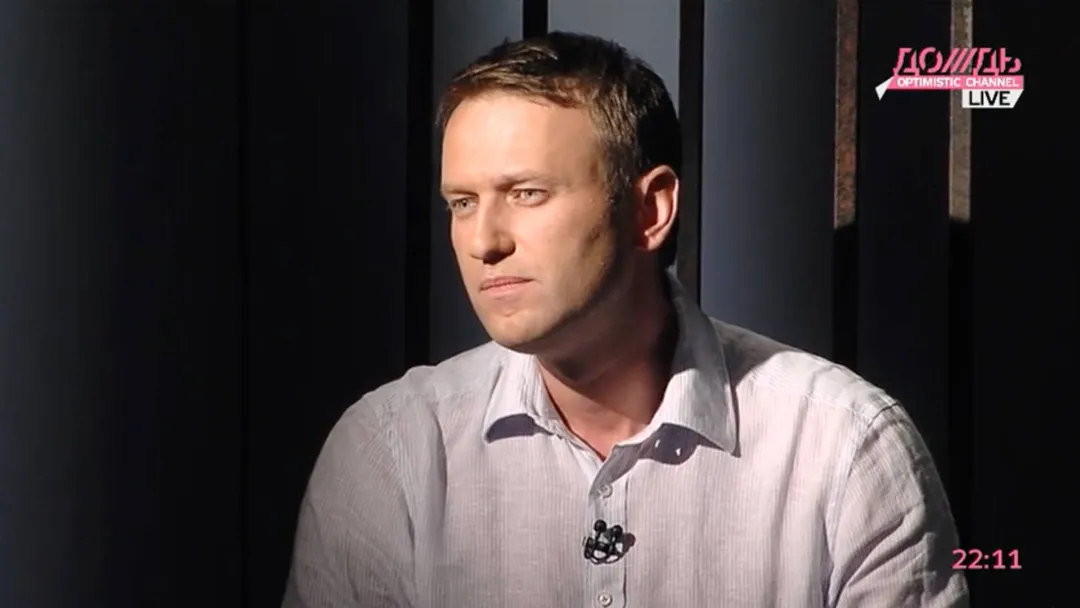
This is the program *Hard Day’s Night* on air
on TV Rain (an independent Russian TV channel). Good evening. My name is
Tikhon Dzyadko, and today I am pleased
to welcome our guest. He is
a politician and, until recently, a candidate for
Mayor of Moscow, Alexei Navalny. Alexei,
good evening. Good evening. I am glad
to welcome my colleagues, who
will be asking our guest questions
along with me: TV Rain host
Maria Makeeva. Good evening.
Hello. And my colleagues from other
publications, from other media
outlets: Svetlana Babaeva, editor-in-chief
of Gazeta.ru. Good
evening. Good evening. Tatyana Lysova,
editor-in-chief of the newspaper *Vedomosti*.
Good evening. And Galina Timchenko, editor-in-chief
of Lenta.ru. Good evening. Good evening.
Hello, Alexei. We have all been
watching closely how
the election campaign in Moscow unfolded, how
the election itself was conducted, how the
voting took place. The election has been held,
the inauguration has taken place. You did not recognize the results
of this election and filed
a claim in court. We all more or less know
how court appeals
over election fraud usually end. Will you
ever recognize this election or
not? Its results?
We want a fair judicial
review. We want
the election results to reflect
the will of Muscovites. And if the authorities
stole 2 or 3 percent of the vote, then of course we will not
recognize them. We have filed 952 lawsuits. I,
as a practicing lawyer, as someone
who spends a lot of time in court,
understand perfectly well how all this may
be handled. But this time,
first, we are going to approach it much more
seriously than parties usually do when
challenging election results. That is
the first point. And second.
Well, sooner or later, somewhere,
there has to be a fair
judicial review. If that does not
happen and we do not get the stolen
votes back, then of course we will not recognize
the election results. But do you really, really
allow for the possibility that you would accept
a court ruling that declares this
election fair? Listen, a lot of different
things have happened lately, including to me,
some of them surprising. Why
couldn’t one more surprising
thing happen? And the courts could, at some polling stations,
over obvious violations—these
already notorious
home-voting registers—
they are simply falsified from top to bottom, they
were compiled by social workers. We know this,
we have proof of all of it. Therefore
the courts should invalidate the voting at
several polling stations. That would lead
to Sobyanin getting his lawful
49.5%, and there would be a runoff. In any
case, the voters—my voters, our
voters—are demanding this. The headquarters
of our volunteers, those hundreds of people
who are working, are demanding it.
So we will pursue this in
court. Alexei, let us suppose that
similar situations have happened before, as we
remember, including after federal elections, yes,
and there was a great deal of outrage. Yet the
elected Duma took its seats and began
working. So, hypothetically, your
next steps—what will you do if
your claim is rejected? What then? Will you
call on
your supporters to march on City Hall, on the Kremlin?
Or do you accept things as they are and
start thinking about how to run,
say, for the Moscow City Duma? What will you do? We
will act, first of all, according to
the circumstances. Second, everything you
mentioned, we are already doing—except that
we have not yet marched on the Kremlin. In any
case, look, this is an important part
of the political process. Hundreds of thousands of
people voted. We owe it to those
hundreds of thousands of people, and to the millions of everyone
else, to show and prove that
their votes were stolen. United Russia stole them,
Sobyanin stole them. This is
important for us in terms of the next
elections. We have already begun preparing
for the Moscow City Duma. And challenging these
illegal actions is an important part
of that preparation. And we simply need once again
to explain it to people. We have just published
a newspaper with a print run of one million copies, in which, among
other things, we explain how the votes were
stolen. This newspaper—we did not publish it
simply to
boost our own egos or do some petty harm
to Sobyanin. We are working with
voters and showing that,
first, we, as responsible people,
responsible politicians, are defending their
votes. By the way, these court
proceedings, even taking into account that many
volunteers are working on them, will cost
a fairly large amount of money. But we are doing it.
This is how we are consistently
following through. We said that we were going into
the election with a specific platform, with specific
bills. Those bills we
will introduce. We said that we would
appeal this to the very end. In principle, we
will have to litigate 951 times. That is
quite difficult, and it will involve
dozens of lawyers. But we will
do it. We will demonstrate to everyone that
we are not just the main political force
right now in Moscow and, apparently, in the country as a whole, but
we are the main organizational force,
politically. We can do these important
things, and we will keep doing them. Masha,
about what people are expecting.
both from you and from the voting results.
Why do you think so many people may have
voted for you? Mikhail Khodorkovsky, a few
days before the election, through his
lawyers, as often happens, sent out a
statement, an article, urging people to
vote for you. You probably
read it, and he explained it, in particular, by saying
that of course you would not become mayor, but
perhaps if a lot of votes were cast
for Alexei Navalny, then he would not
go to prison. And I know people who
ultimately voted for you for that reason
alone. What is your own sense of it now?
Does the fact that such a large number of
people voted for you somehow
tip the scales? On that score, I have
absolutely no feeling at all. You know,
there are people you can somehow sense,
even if you have never seen them once.
Putin is definitely not
someone whose
actions I can understand or predict
in any way. There is, uh, simply our
knowledge of how he acted before.
But what is going on in his head?
Why did he first say I should be jailed,
and then say I should be released? And what will he
say now? I have no idea. I do not even
try to predict it, and it does not
interest me. I have said many times
that the things I cannot
control, I prefer to
ignore. This is, first and foremost,
one of those things. Because if you sit
there thinking about whether they will jail you
or not, you will simply go mad,
instead of dealing with the
important things that I, as a
politician, am supposed to be working on. So
you do not think about this at all, then?
Well, how much can one think about it? I have
already thought about it a great deal. I have discussed
it with the foundation's staff. We have
a plan and a procedure in case I am
isolated. They have opened
a million criminal cases against me, and they will probably open
more. I understand that this government
has wanted, one way or another, to isolate me for
quite a long time already. We
discussed this months and years ago with
my relatives, with my wife, my mother,
and my father. Criminal cases have also been opened
against them, as well as against my
brother. If we keep
sitting around thinking, "Oh God, they will jail us,
they will repress us here, or carry out a twenty-
fifth search," well, that is no way for a person
to live. A person gets used to everything. I have simply gotten used
to the fact that, uh, criminal cases have been opened
against me, that I may be jailed, and
everyone keeps asking me whether I am afraid
that I will be jailed. No, I am not afrai— Well,
colleague, what kind of plan is there in case of your
isolation? Organizationally, I mean.
Look, I am the director of the Anti-Corruption Foundation,
I am the person who
determines the foundation's strategic
development. I oversee some of the most important
investigations. I do not want
a situation where, if I am
isolated, everything stops tomorrow. That
is why it exists. I understand what
it is, what will happen, how it will
work: a particular person takes over
one or another area of work, but I
simply do not want to name those
people now, the people who
would be in charge instead of me, so as not to
make things easier for those who might
want to paralyze the work of our
foundation. But we have a Plan B, we have
a Plan C. And for me, as someone
who deeply values what he has
built over the past few years, of course it
would be the biggest and most terrible failure
if something so, really,
trivial and commonplace by today's
standards happened. If they jailed me and everything
stopped and collapsed. The only
one doing investigations in the country is
the newspaper Vedomosti. No one else. That
would be a shame. So you do have
successors, not just one successor but
many of them, politically as well. When
we say "Navalny," and "Navalny" is written everywhere
on the signs, I can say with complete
sincerity, without any hypocrisy, that
this is, really, well, collective
work. Today I published
an investigation into Yakunin. My own,
for example, personal role in this
investigation was very modest. I
practically did nothing there. It is people
who do everything. The staff of the Anti-Corruption
Foundation do most of the
work, while I just sit here and think about how
to go on. I think we will return both to Yakunin and
to the court cases. For now, let us
stay on the subject of the election.
Please, Galina. Ah, Alexei, you know,
I have
when I was watching the rally on Bolotnaya (Bolotnaya Square in Moscow, a major site of protest demonstrations), I
was in the newsroom, watching it,
naturally, online, since
I was running the newsroom. And then
some of my staff came running up to me afterward
and said, "Galya, what was
that?" I said, "You know, you can
say that a fairly major
politician has just been born." Yes, that politician was born then.
And now he is sitting in front of me, and he
is saying: "Instead of, and instead my
the party, I will lead the party." He says:
"My foundation." So, in other words, it had not yet been born,
it was still only just taking
its very first steps in the Anti-Corruption Foundation
(an anti-corruption NGO). But you said that you
would run, that you would have the People's
Alliance party. I wanted to ask you: what
will its ideology be? And what would you
say to me, for example? Here I am, the leader of the
People's Alliance party, I... I get the impression
that if there are several questions in one
question... No, it's one question. Well, I
mean... Wait, you asked me about
what actually exists. The question was
what Plan B is if I am
isolated. We do have a Plan B regarding
certain political
projects. The People's Alliance party, as you
know very well, is not being registered. They
have refused to register it. Recently we
had another court hearing; we appealed that
decision, and we were denied again. We can see
that the authorities do not want to. They are simply afraid
of the People's Alliance, and they are afraid
to register parties that they
cannot, one way or another,
control. That is why the People's Alliance now
exists in the form of, well, people,
including those standing in the square,
in the form of supporters of various kinds. But
the main thing that makes a party a party
is a piece of paper from the Ministry of Justice.
That piece of paper from the Ministry of Justice is missing right now. If
there were an election tomorrow, the People's Alliance
would not be able to take part. And once again, as in
this election, I would have to go to
another party and say: "Guys, can I
use your paperwork in order
to run in the election?" And which party
would you go with then? Would it be the RPR-PARNAS party
or the Civic Platform party? Right now
it is obvious that, of course, it would be the RPR-
PARNAS party, because among the existing
parties it is the most independent. And in this
mayoral election they supported me, although
for them too it was quite a
stressful and crisis-like situation. I
came to them and said: "Right, let's
get everything out, put it on the table for me, hold
your political councils and congresses now, and nominate
me for mayor." For them, too, this was a
long political process. There are
people there who do not like me, there are people
who do not like one or another of my
political positions. Nevertheless, they
somehow swallowed their pride
and nominated me, even though they had their own
candidates as well. If an election were called tomorrow,
then most likely, of course,
we would work with the
RPR-PARNAS party. Alexei Anatolyevich, you
said they are afraid to register it. But
forgive me, they were not afraid to let you onto
one of the key— to allow you onto
one of the key
elections of the political cycle, yet the party
they are afraid to register. There you have it. Nevertheless,
we can see that the party is not being
registered. Look at the list of parties.
There are, what, probably 60 or
70 of them. And you will see that among these parties,
well, these are simply some kind of
completely nonexistent fakes, and there is
a well-known figure here in Russia,
Andrei Bogdanov. He registers them
20 at a time. Parties are registered on the same
day at the same legal address
by the same people. All these parties
are registered. One of the very few
real, existing parties with real
regional branches, the People's Alliance, is not
registered for a very obvious
reason. If there were Moscow City Duma elections tomorrow,
the People's Alliance would
seek to hold
primaries and put together a list that
would win that election and deprive United
Russia of its majority in the Moscow City Duma.
Of course they do not need a party like that. Why
would they want it? They need projects
that can be manipulated in one way or
another. I think that now, after these
elections, the Moscow mayoral election, when
we nevertheless managed to achieve a
result that no one expected, and
above all the Kremlin did not expect,
they will be even less inclined
to register the People's Alliance. Let's move
on, please. Well, will you try
or have you already decided in advance? No, we will try,
of course. We are trying to maintain
a consistent position. If we
said that we would register the
People's Alliance, we have already held a congress twice.
The first time they found fault with
our congress, so we held a new one. The second
time they found fault with the congress again; we already
appealed the first refusal in court,
and we will appeal the second one as well. We will once again
hold a congress, a gathering of all
regional branches, which, by the way,
is very expensive. This
is not just a congress: you have to invite the Ministry of Justice,
bring in people from the regions.
and hold the regional meetings all over again. In other words,
the law is structured in such a way that creating a party,
while observing all the formalities,
is practically impossible. But we are going ahead and
complying with all these formalities. And we were
told—incidentally, in the official
refusal—that the reason for the refusal was that two people
had changed their place of residence. But it is obvious
that over the course of six months during registration,
some people will of course change
their place of residence, and they found some
minor. On that basis
the People's Alliance was not registered. Yes,
I'm listening. It feels as though you
you’re explaining to all of us in advance why you
won’t be registered, and why you... Let me tell you
a story. Look, he’s already
been denied registration. If
they do register us—if they do register us—
that’s wonderful. If, yes, if they register us,
I’ll say: excellent, now we—let’s say—we are now
systemic politicians. Though I already am
a systemic politician. This whole thing is some kind of
nonsense—systemic, non-systemic. A person
either becomes a politician or does not,
depending on whether they want to or not. There are
a great many so-called systemic people here who
call themselves systemic politicians, but
they are not politicians at all
because there is not a shred
of independence in what they do. Any
person—I don’t know—who walked out of their house and
made a few independent,
normal, honest political
moves—you’re a politician. Any person
who stood there on Bolotnaya (Bolotnaya Square, a major Moscow protest site) and at the
rally you were talking about—for me, that person is
ten times more of a politician than all
those idiots now sitting in the
State Duma and who are incapable of a single
independent action or
independent decision. If
we’re registered, great—we will
use our party as an
additional political instrument
for our work. Are we right to understand
that your goal is to,
uh, within those very same legitimate
procedures, uh, run for the Moscow City Duma, or are you
still—what legitimate procedures are we talking about,
tell me. Within the framework of a party. Within the
party. That’s the kind of signal coming from the Kremlin,
right? Tell me, people who simply
go out into the street and, for example,
come out and say, "We support the rights,
we defend animal rights, and for that purpose
we’re holding a picket." Is that a legitimate
procedure or an illegitimate one? It is
a legitimate and normal form of political
activity. But it’s not only—not even primarily—rights
of animals that you’re concerned with,
so presumably that would not be enough
for you. So, the goal of my
work is not simply to win
some percentage points or to register
a party. That is absolutely not an end in itself. I
want to change life in this country. I want
to make life in this country better. I want,
forgive the banality, for there to be
less corruption in this country. I want that
very badly. If, to achieve that, I need to
register a party and then
have that party win elections—and if I
see that this is an effective political
course of action—I will do it. Please,
uh, Alexei, please tell us,
returning to the party,
uh, look at the Moscow City Duma: for all that
I admit that you ran
an absolutely amazing campaign, in the
Moscow City Duma elections—well, in the mayoral election
32.2% of Muscovites turned out. Do you
understand that elections to the Moscow City Duma are
not just boring? People simply do not
understand why they need the Moscow City Duma at all.
So why engage in that sort of thing?
The Moscow City Duma is the body that
reflects the political representation
of Muscovites. Right now the Moscow City Duma, as it stands,
effectively does not exist, because at present
it is 95% United Russia. Nevertheless,
the Moscow City Duma is a critically important body. It
determines the development of the city of Moscow; it
shapes Moscow’s budget. All those
bills that we are demanding
Sobyanin adopt, we will pass through the
Moscow City Duma. The laws that will change
the life of the city—I will pass them. If, if I could
control whether people go to the polls
for the Moscow... It doesn’t matter how many turn out,
the Moscow City Duma will still be formed, and there will
be 45 people sitting there. Excuse me, it just
creates the impression... I remember how, in this very
studio, on the program with Dmitry Dibrov, you
said that you wanted to be President
of the Russian Federation. Then
a few months passed, and you said, "I want
to be mayor of Moscow." Now a few more
months have passed, and you say, "I’m going to run
for the Moscow City
Duma." Lower and lower each time. Tikhon, you’re
taking this out of context. When I was
asked about the presidency, I said
that I would fight for any office
that would allow me to change the country and
life in it. These elections, once again, are
not an end in themselves; they are a political process.
They are an opportunity to apply effective
political pressure. But these
elections came about completely by chance. I
think that when some guys were sitting in
a room with cigars, plotting how
they were going to stage a Moscow mayoral
election, it never once crossed their
minds that I would end up
taking part in it, and that it would all end
with a result like this. They had a completely different
picture in mind. Nevertheless, we used these elections
to build up
political pressure. It seems to me
we did so quite effectively. So we will
use whatever instruments
can be used. As I said when
answering that question, I said that I
would take part in every election
that it makes sense to take part in. Alexei,
forgive me, please, but at that same
rally you said that a genuine
opposition had been born. Yes, I think I
am not misquoting you. You are not. But
look, in my memory the Russian
opposition has been born several times.
Unite. You have a good memory. Oh, I
have simply been around for a long
time. So, no one has ever managed to unite
even once in their life. At that same
rally, you said: "I am ready to accept them,
meaning those who lost."
into our opposition. That is, I am ready
to bring them under the force that I brought
out onto the square today. Am I right? I am ready
to accept anyone—well, not literally anyone,
but all of these people in whatever form. If
Dikterev says some
sensible things, at least,
Dikterev, to me, is not United Russia.
The political task is to reduce
the political representation of United
Russia. That is the technical task,
that is precisely what it consists of. Right now
the State Duma is working like a mad printer,
because United Russia has a majority
there. If it did not, there would be none of these
academicians now running around in panic
in front of the State Duma building at an
unauthorized protest, if
United Russia did not control
the majority in the State Duma. So, of course,
I will work with everyone, but I do believe
that these elections really showed
that a new opposition
movement has been born. What gives you confidence that
you will be able to unite it? So far, no one
has ever managed to unite the Russian
opposition at all. Just look
at what is happening. This sudden surge of, so to speak, affection
for you happened rather quickly,
didn't it? And we have seen this happen before.
There can be no certainty about anything. Yes.
The only question is that one has to
try. Just because we have seen this
negative experience and we know plenty of sad
stories, what is that supposed to tell me?
Alexei, you know, the editor-in-chief of Lenta.ru
knows plenty of sad stories and knows perfectly well
that no one has succeeded. So shall we
all just go home, go to sleep, and do nothing
at all? I live here, I am not going
anywhere. I have one country, one
life. In this life, and in our
country, I want to do what I can
do. Whether I succeed or not,
I will do everything possible. What does it mean
to unite the opposition? Let us
discuss that. We are all adults here.
We understand perfectly well that a significant
part of what is called the opposition
exists precisely in order not to unite with
anyone. There are entire
projects that have been kept going for many
years because in every election they
serve as spoilers one way or another. These
elections in Moscow showed that yes, there were
parties that were constantly causing trouble there,
and someone was running around with an angle grinder,
someone was shouting that I was stealing
their program, but none of that had any significant
political effect whatsoever.
That is, well, they are, of course,
spoilers, but they shave off only about
3 percent. Which you were short of. I was not
short by those 3 percent for
example, if Yabloko had gotten zero,
and I had an extra 3 percent, there still would not
have been a second round. What mattered to me
was for them to get not 3 percent but 13,
so that the pie would simply be divided more
evenly. That is all. My complaint about
this systemic opposition is not that they
take votes away from me, but that
on the contrary, they get so few votes because they
do nothing. Look, we ran a
fairly effective election
campaign, more or less spontaneously raising
some money here and there. And, all in all,
we did very little of what
we had planned. But all the other parties,
which receive hundreds of millions of rubles
from the state budget, sit there with their machines, with
deputies, with huge infrastructure,
did absolutely nothing. That is
the complaint. I have heard so much
that I hardly know where to begin. Ah, well,
all right, about the academicians who, as you
somewhat dismissively
put it, are running through the streets.
Dismissively, yes. You could say
I was urging them as well
not to run, but to stroll
through the streets. You seemed even to express
an intention to join in on Crimea, as far as
I understood it. Today I did not express any such intention.
I was asked to publish this
information. When I was formulating my
position on the reform of the Russian Academy of Sciences (RAS), it is important,
it was very important for us during this
election campaign, because there is
New Moscow, Troitsk—who
asked you to spread this
information? For example, the editor-in-chief
of the newspaper *Troitsky Variant*, which is
the main publication of this kind—small, but
quite authoritative in that community. There are
people we are in contact with, there are people
from the Russian Academy of Sciences, among others, with whom we
worked during these elections. We had
a special meeting. Who support you
or with whom you simply have
contacts? I would say—I assume
judging by the voting results, and I
assume that many of them
voted for me, because they
live fairly compactly in one area. I can see that
I got many votes there. We
met with this community, we
discussed things, we argued about some issues.
When I formulated my position
on the Russian Academy of Sciences, which I published there in the form of an
article, I held many meetings with these
people. And now I am helping them.
as best I can. First and foremost,
in terms of information. Alexei, tell me,
you published information about the Russian Academy of Sciences (RAS)
yesterday, if I'm not mistaken? No, yesterday I
just published information saying that
that, that, that there would be a rally, yes.
But originally, you published the information about RAS
because someone asked you to,
in particular the editor-in-chief of the newspaper
*Troitsky Variant*. Today, for example,
you published information about Yakunin. Was that
also at someone's request?
Everyone around me asked me to do that — passengers of
Russian Railways (RZD) keep asking me nonstop: "Please publish
information, Alexei, about
Yakunin." Because we don't understand
why the tickets are so expensive. Jokes aside,
how often do people actually come to you with
requests to publish something? Well,
not directly, no. We have a special
mailbox — I write about it often — where
you can send me any compromising
If you have any information about
corruption at the TV Rain channel (an independent Russian TV channel),
please send it. I'll publish that too.
You can sign it anonymously.
"Gadfly" or "Well-Wisher." I'll sign it
just with some squiggle. It won't be clear what kind of
what kind of who. Exactly. As far as
possible, we'll verify it, this
information. If it can be verified and we
see that it's accurate, we'll
publish it. And if it can, so to speak,
be formalized — if on the basis of this
information one can file a report of
a crime, sue in court, and so on — I
publish it if it's interesting. If
it's very interesting, really striking, but
it's impossible to verify. Say you send me,
for example, the number of Vladimir Putin's Swiss
bank account. That can't be verified,
so publishing it
would be pointless. Ah, Alexei, excuse me,
please, may I...
Uh, well, for almost two years now I've been hearing from various
commentators, including former
editors of the newspaper *Vedomosti*,
the only investigative
newspaper in Russia. Yes. People saying, saying
that you very often
by publishing your investigations, show up
professional journalists. That this is
exactly the kind of journalism
everyone is now trying to aspire to. So,
do people who work professionally in
investigative journalism have to
take you as a model? Recently, for example,
Mr. Levkovich followed your example,
publishing information about a birthday party. Yes,
and it turned out to be the wrong one, at the wrong place, at the wrong
time. And Alexei Navalny went ahead and
repeated it. Well, first of all, it turned out that
they really had published this
investigation. Some facts there were not
verified; they mixed up two birthday
celebrations. Then, as it turned out,
there really was an extravagantly lavish
birthday party. I published this
information — I simply reprinted it. But when
it turned out that it wasn't correct, I made
an update. Well, that's a normal situation
that happens sometimes in this line of work. I didn't
publish my own
unverified investigation. I took it
from a fairly respected publication.
That's fine. But all the subsequent
information concerning
the real estate of this wonderful
minister, Manturov, was all correct. So
in other words, you behaved entirely in
accordance with the media law.
You published the retraction in the very same
place. Yes. Yes. And it was the first time in
the history of my blog that I explicitly
put an update at the top saying that this had
indeed been incorrect. Well, such things
do happen. Please, go ahead.
But for some reason you are very actively
exposing Yakunin. I saw in your
office a gigantic chart. I understand
that it's a huge company. In a huge
company you can always dig something up.
But I want to ask you,
when we spoke for
an interview and discussed which, uh, which
social groups,
which types of business might
support you, you said very clearly that everything
connected with the state, with
state contracts, monopolies —
that is not your
support base. And it's clear why, uh, and
it's clear why you concentrated your
exposé efforts precisely on them, because
through them you expose, uh,
state policy. Yes. But tell me,
please, when we were preparing for
this, uh, this program, a question came up:
"Suppose you became
president, and you had in your hands
those same
monopolies. Would you break them up,
split them apart, change the system of
management
or what?" Or would you wait until
someone from below started exposing
the corrupt directors of your own
monopolies? Of course not. I, pardon me, in
the newspaper *Vedomosti* published several
years ago a column on all the ways
to turn Gazprom into a decent company.
All these state-owned companies, and in general
large companies, large
holdings in Russia, need
corporate governance reform; they
need basic transparency in
their basic corporate procedures.
Naturally, there must be a policy under which
that prevents the transformation
of companies into some kind of monsters,
that buy up everything. Take Rosneft, for example — it is
really just something incomprehensible,
that simply buys up everything in sight.
Why? Chubais carried out the energy-sector reform,
everyone praised it highly, and then
for some reason Sechin went and bought all that
energy infrastructure back. Half of it went to
Rosneft, half to Gazprom. Gazprom
has also turned into some kind of incomprehensible
monster that buys up everything in sight. They
already control 70% of the economy. That is
absolutely unacceptable. The strategy should
be different. So, as for this — say,
if I became president tomorrow, where
should we start? There is no need to destroy anything.
We need to introduce proper procedures,
appoint independent directors,
follow the corporate governance rules
that exist in
Britain and the United States. These are the things we need
to do, and they will fairly quickly make
companies more transparent and less
corrupt. The state, as the owner of
these companies, should
respond to corruption and act
as the injured party. For example, what do I
run into? I am constantly filing complaints about
Gazprom, Rosneft, and all the others.
I say about VTB: "Here, 100 million have been stolen,
here is all the evidence." And the investigators tell me,
"Ah, sorry,
there is no injured party. VTB does not recognize itself as
the injured party. The Ministry of State Property does not recognize itself as
the injured party. Rosneftegaz,
a shareholder in Rosneft or Gazprom, does not recognize itself as
the injured party." There is no
injured party, sorry. So the state
must act as that injured party and
defend its rights for the benefit of,
ultimately, the citizens. All right, let us
take a short pause here. We will now
break for a short commercial on the air of
TV Rain (Dozhd TV), then come back,
and continue the Hard Day's Night program with Alexei
Navalny. M.