Alexei Navalny’s interview on the Hard Day's Night program on TV Rain
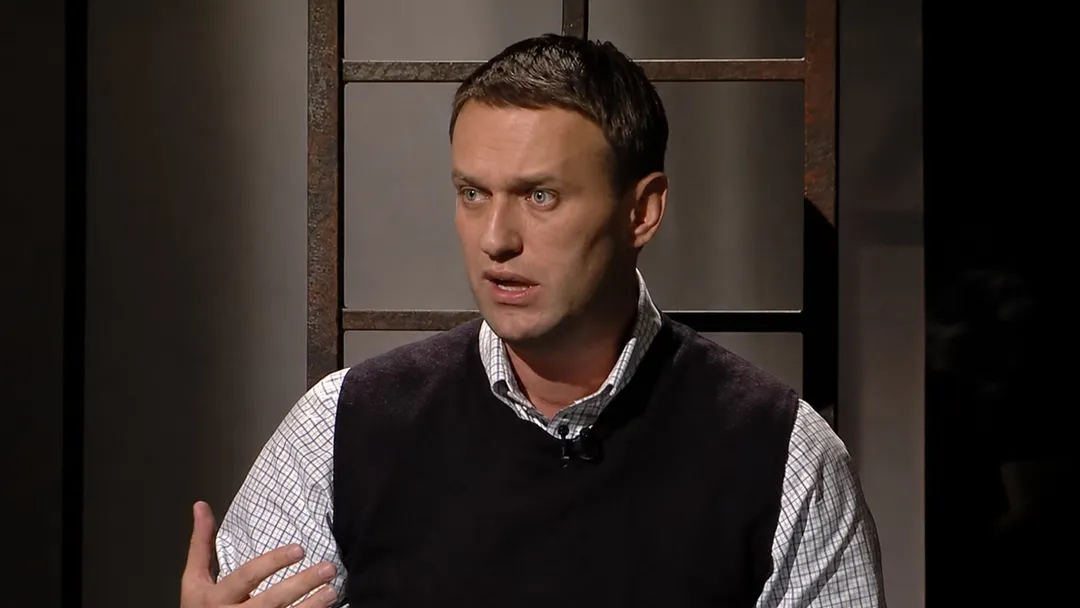
I welcome the audience of the TV Rain channel.
My name is Tikhon Dzyadko. On air is
the program Hard Day's Night. Every
Tuesday, interesting guests come here to our studio.
I am glad to welcome here
just such a person.
He is blogger, lawyer, and politician Alexei
Navalny. Good evening.
>> Good evening.
>> Joining me in asking Alexei
Navalny questions today will be my
colleagues. They are the editor of the investigations desk at
the newspaper Vedomosti, Irina
Reznik. Good evening.
>> Good evening.
>> TV Rain's senior chief producer
Renat Davletgildeev. Welcome.
>> Good evening. Deputy
>> editor-in-chief of TV Rain
Maria Makeeva. Good evening.
>> Hello. And political
commentator for TV Rain, Yulia
Taratuta. And Yu- Yulia, welcome.
>> Hello.
>> Listen, Alexei, today on your
Twitter you wrote that tomorrow at
Pushkinskaya Square, half the square will be handing out
all sorts of interesting
things, namely tents. What for?
>> I retweeted a message from one of
the activists of RosAgit. RosAgit is
a network that, in fact, no one
organized. It organized itself
before the State Duma campaign to
distribute materials about United
Russia, yes, the party of crooks and thieves.
RosAgit's great achievement was, in many ways,
introducing this very meme: United
Russia, the party of crooks and thieves. People in
different cities are joining together,
distributing materials, badges, everything,
anything at all. They,
>> these people, some of them, decided to hand out
tents. It seems to me this is precisely the kind of
sign that the protest will escalate.
Are they planning to stage a Maidan (a mass protest encampment like Kyiv's Euromaidan), or what?
?
>> They are planning to stage a Maidan, they
support a Maidan, and by doing so they
are demonstrating to everyone that yes, we want
a Maidan. You saw that famous
poster that everyone
kept reposting. We came on
the fourth, we came on the twenty-fourth.
And what next? This is their answer,
these people's answer. Next comes escalation,
you can call it a Maidan,
a Tahrir (a reference to Cairo's Tahrir Square protests), whatever you like. In fact,
>> Do you support that strategy?
>> I support a strategy of escalation, if
you like. Yes. For a very simple reason. And
what other strategy should there be? Have our
demands been met? Hardly.
>> And what is escalation? What exactly do you mean
by the word escalation?
>> By the word escalation, I mean the idea
of protest intensifying. There were peaceful
protests, peaceful protests in
which hundreds of thousands of people across
the country took part. We saw demonstrations of
100,000 people. And the protesters
put forward very clear and very reasonable
demands. Not one of those demands
was met. Even the most
ridiculous one, the dismissal of that
good-for-nothing crook Churov. Even that
demand, a purely ritual one, was not
met. So it is obvious. The situation
specifically—what does it amount to?
>> I spoke about this at the rally. There is
nothing secret here, nothing sensational
has happened. One fine day, people
must come out into the streets and not leave until
their demands are
met.
>> And the tents are for that.
>> The tents are part of that, yes.
>> So you said there were peaceful protests, and
now there will be non-peaceful ones. They will be peaceful
protests. When people sit in a tent,
what is unpeaceful about that? Everyone sits
calmly in a tent, drinks tea—a peaceful
protest. There is nothing, nothing new here
to invent. Over the course of
its entire history, humanity has invented,
established, used, and accumulated experience
in certain specific forms of
resisting a tyrant.
Going out into the streets and staying in those
streets for some period of time—this
is a form of peaceful protest.
>> And where do you want to stay? I don't want to stay anywhere yet.
And that's why I said
that it is very important to understand that this is
a spontaneous thing. Just some group
of people who don't care about all the
organizing committees, the existing Facebook
groups, or any leaders like me or
some other people—they simply said:
"Okay, we bought the tents ourselves with our own
money, we will hand out the tents to our
activists, we will go out into the streets and
stay on those streets." This shows
that if people themselves are starting to do this,
then sooner or later it will happen.
It will simply happen. Let's understand that it
will happen.
>> Yulia, please. I understand that
in your view, escalation means that
previously the rallies were exclusively
authorized. Well, we were dealing with
like that, and now today, I read
on your Facebook, that out of all the possible
scenarios for March 5, you are choosing
an unauthorized rally and are calling on
people to come out for it.
>> Escalation means that it is not that we are
choosing the most radical option
from among several possibilities; we have no
other options. We acknowledge that
completely honestly and openly, and we say:
"Yes, that is exactly how it will be." If Moscow City Hall
brazenly declares that
all the squares in Moscow are occupied and that
we should please go to Bolotnaya Square (a central square in Moscow associated with protests),
my answer to that is: thank you, goodbye.
We no longer need any of your
permissions, because, incidentally,
by law we do not need any
permissions. If before there was a long,
tedious process of saying, let's go and
ask some, I don't know,
some Olennik or some Gorbunkov
or someone else, now I believe that we
should not be asking for anything at all. Our
demands are absolutely lawful and
entirely appropriate, and they are supported
by a huge number of people, by
at least a majority of Muscovites
for sure. Why should we go around
begging something from a person who
it is entirely unclear on what basis
is sitting in that office? Still, you have a negative view
of the current authorities and
believe they are not what you would
want them to be?
>> There is no authority. No,
>> no, no. What I meant was that in this way
you are acknowledging that it may
resort to aggression, and that you are prepared,
obviously, to bring people out against
an aggressive regime, under police batons. There is
no authority. After the December 4 elections,
at least representative power
became completely illegitimate. There is
simply a group of people who, by force of
circumstance, for historical reasons,
have usurped this very power, yes.
And they have no moral right whatsoever
to make any kind of
demands of us. Alexei, to put it more simply, you are talking
about legitimacy and moral right,
while Yulia is talking about those who give
specific orders to a specific Second Regiment
(likely a police or internal troops unit). That is exactly what I am getting at.
So then, if some representatives
of this clan of crooks and thieves give
an order to some Second Regiment
to do something, well, then when
that Second Regiment comes out into the street, it
will see, I don't know, 20,000
people standing in front of it.
>> I do not think this will lead to any
violence. Most likely, it will lead to
a situation where that Second Regiment will be standing there,
and opposite it there will be
people. And we will see an absolutely classic
situation which, as I already said,
has existed for thousands of years: when a pharaoh
once gave the order and his Second Regiment
also came out, met the people, and it all
ended with something happening to the pharaoh.
That is, well, what do you think you can achieve now?
Even if the people are not
dispersed with batons, they will sit there
for a week, two or three weeks, and then
they will go home; they will not be shown on television,
and the country will never know about it.
>> That is not so. You see,
the only
>> a single rally, the one that
took place on December 10, led to the fact that
both Putin and Medvedev proposed to the country
a political reform that was completely
unprecedented compared with everything
they had done in the previous ten years.
Today, at first reading, they approved a
bill every provision of which both
Putin and Medvedev had previously rejected. Medvedev
said that for another 100 years we would
be appointing governors. And now
they have introduced a measure under which governors will once again
be elected. So major changes have already
been achieved. Yes, political
reform is mostly a fake and
an illusion, what they are offering us. And
therefore we must increase our
pressure in order to—what is it you think
we will achieve? We are seeking one very
simple thing.
Political reform, new elections to the
State Duma within a year,
and a presidential election within two years. And
that is all. It is very simple. We are not demanding
that we be given something extraordinary, I don't know,
money for everyone in the square. Elections. Simply
elections. Listen, you fully
understand that the current system
has no intention of stepping down, at least at the present
moment, and accordingly
a calf is starting to butt heads with an oak tree (a Russian expression meaning a hopeless unequal struggle),
the people are standing in the square, the Second Regiment
is standing there, and neither side leaves. What happens next?
>> Next,
the situation cannot remain static; it
will develop one way or another. I already
said that people came out
on the tenth. By your logic, well,
They came out, well, and were looked at from
a little window in the Kremlin, and they said: "Yes, people
are standing there; in the morning they spread butter on bread, and right away they start thinking
like the people." And all of it ended in nothing.
But it didn’t end in nothing. We
can see that the protests that have already
taken place have led to tremendous
changes both in public consciousness and in
politics. Why is that not enough? You
say the changes are tremendous.
So maybe somehow this
>> They are tremendous compared with what
came before, but compared with what
we need, what all citizens of
Russia need, they are not tremendous at all. As I
already said, we want elections. We want them
not for some abstract reason, but
because the December 4 elections were
falsified. This is acknowledged
by absolutely everyone. We do not recognize them and
we want nothing more than new elections.
>> Sergei Parkhomenko was just on our news
literally a moment ago, and he said he
was very, very pessimistic
about how events would develop
on the night of the fourth to the fifth, and so
on. He even used the word war.
Do you somehow think that, so to speak,
the second regiment will just stand nearby? Very
optimistic. And I am absolutely sure that
there will be no war, because this
war is not needed by anyone, and this government
of crooks and thieves will not be defended by anyone with
weapons in their hands. That’s all—they are simply
trying to scare us, wear us down, and so
on. Everything the authorities can
use to counter us,
they are already using. These are methods of
endless manipulation, deception, and so
on. And this political reform
that is now being proposed is, in
essence, one element of that. Everyone
is being told: "Well, leave the streets,
go play the merry game of party
building, create 25 different
parties and start
competing with each other sometime around 2015
or so. Or let’s say we’re giving you
the opportunity to register with 100,000
signatures, but starting in 2016. Get ready for another
25 years for all of that." But in this way
they will not
be countering us. There will be no war.
Who would be fighting whom?
State employees? Russian Post workers bused into
Luzhniki (a major Moscow stadium), fighting with Bolotnaya Square?
The combat brigades of pro-Kremlin
youth movements, who fought with
those guys who were heading to
Revolution Square?
>> What combat brigades? Did you see these
combat brigades? There were eight people there.
There were eight football hooligans there,
provocateurs, no. Well, let’s be, let’s be
fair. So far, since the moment of
the success of the democratic process, since
the first rallies, the authorities have not once
used force. That is, we are talking about
authorized, about authorized
actions. People came out as if for a celebration.
So far, yes, there has been a kind of, albeit
carefully calculated, but favorable treatment of
the demonstrators. But what if the authorities use
force,
>> if the OMON riot police encircle them?
>> Didn’t that happen on December 5? That’s a
strange question. What do you mean, what if they do?
It has already happened. On the fifth, I was jailed
for 15 days; force was used. On the sixth
everyone was beaten, right? And they arrested
>> Whom? Well, roughly speaking, it’s one thing
to beat up a dozen people, another thing to bring in
tanks. Oh, tanks. Come on, let’s not
make up nonsense. What
tanks? What are we even talking about? This is where we need to
tone it down. My use of the word
escalation probably scared you. I said escalation. You
immediately started thinking about tanks, tank—
>> You cannot give us guarantees.
You can get guarantees at the savings bank (Sberkassa, a Soviet/Russian savings bank). Who is supposed to give you
guarantees? There are people who
come out with their own demands.
Who is supposed to give you any guarantees?
There are people who are outraged, insulted,
and humiliated. They take to the streets with
just demands. Some
crook in city hall says: "I do not
allow you to come, and here you are
telling me: 'Give us guarantees.' Why are you
demanding guarantees at all in this situation?
You say confidently that the authorities will not
use force. You cannot give that
guarantee. You are not the representatives of Russia,
are you?
>> I cannot guarantee that a meteorite
won’t fall here. Yes. Nevertheless, we can see
how events have developed. And I see
the mood of the protesters. It is absolutely
peaceful. And just because 10 people decided
to hand out tents tomorrow, we immediately
say: "Well, the authorities will probably use
tanks." Great. So we’ve gone from placards
to tents, and immediately the response in our minds
is tanks. What?
>> You mentioned tanks, and they did not give them the square,
just as was being recalled a couple of days ago,
Excuse me, Igor Ivanovich Sechin,
Deputy Prime Minister.
>> Igor Ivanovich Sechin can remember whatever
he likes. What I mostly remember
when I hear about Igor
Ivanovich Sechin, the company Rosneft, and
the company Gunvor, which enriches Igor
Ivanovich Sechin. So, to protect
his Swiss bank accounts, Igor
Ivanovich Sechin would be ready to use
tanks, helicopters, and in general anything
at all. But I’m not at all sure
that the people sitting in those tanks and
helicopters are ready to defend the Swiss
bank accounts of Vladimir Igor Sechin. That’s
really the point. Well, понятно.
>> Alexei, imagine that. In fact, people are saying
that you’re practically Sechin’s agent, right? So
let’s recall whom you were going after in your
blogs — mostly Sechin’s top competitors,
that is. As for Rosneft and Gunvor, that
was the case. Let’s ask
Rosneft what its relationship is with
Gunvor. By the way, Gunvor is not Sechin,
let’s put it that way — it’s Timchenko. That’s a completely
different matter: Timchenko and Rosneft. Rosneft,
which trades through Gunvor on Gunvor’s
terms. But you didn’t go after Rosneft
the way you went after Sechin’s other
enemies — Deripaska during Rusal’s IPO, right?
Rusal, Kostin when you were tangling with VTB,
well, there are plenty of examples.
Transneft, when Sechin was dealing with
Tokarev — you admitted that there
you took money from Belkovsky. Belkovsky is a
person,
>> I took money from Belkovsky. Excuse me,
you’re lumping everything together. When
Belkovsky partially financed
the movement Narod, that had nothing to do with Sechin,
please note, it has absolutely no
connection to him.
>> You decided to write a couple of unpleasant articles
about Deripaska.
>> Who told you that?
>> That follows from your correspondence. I
>> You should verify how authentic
that correspondence is. So, of course,
I took no money whatsoever for any
correspondence. That’s the first point.
Second, Ira Uzhvyta, as an employee of
the newspaper Vedomosti and its
investigations desk, you remember very well how
all these cases developed, including those
against Gazprom. The first time people started
saying that the terrible
Igor Sechin was behind me was when
>> Gazprom is also Sechin’s enemy, by the way.
>> Exactly. When I started this whole
case against Gazprom and everyone said, "Well,
so it means the criminal case against Gazprom
was commissioned by Sechin through Navalny." But based on
the shocking investigation by the newspaper
Vedomosti, whose objectivity we do not
doubt, I think you found
the origins and all the sources
from which I first got the initial
documents on Gazprom and how this
investigation developed overall. So here
the situation is this: with regard to Rosneft, I mostly
deal with arbitration
proceedings — requests for documents
and so on, and so forth.
>> I haven’t read anything that devastating about Rosneft
in your blogs. For example,
yes.
>> Apparently, you haven’t read my
blog carefully — half of it is devoted to
requests for documentation.
It’s one thing to request documents; it’s another
to write about how VTB managers
make money there by shady
means. There’s a big difference, after all.
>> All right. But, my friends, this is exactly what I’m not
— an agent. That’s precisely what I’m getting at.
So, right now, here in this studio and in
this chair, I can’t present you with any
other proof except: believe
me, fellow journalists, I am not Sechin’s
agent — I am nobody’s agent — and it seems to me
that my activity, which
you observe quite closely,
as I see it, proves perfectly well
that I am no agent at all. And
>> Since we’re talking about agents,
people are also now saying that Alfa
is one of your sponsors. Well,
at least, people are saying that,
>> Who is saying that?
>> Well, we can discuss that later.
>> That part — that’s the public part
of the information. We’re talking about one of the former
top managers of Alfa, a former
top manager at Alfa, Vladimir Ashurkov, my
good friend, whom I
met a couple of years ago, who
simply appeared one day by writing me a letter
saying, let me help you. He helped
me, helped and helped, until it got to the point that
>> as an Alfa manager,
>> it ended with him having to part ways with Alfa
because of it. You fired him
just a month ago, and before that he had been helping you
for two years?
>> He helped me with expertise. He
indeed now, when we have created
a foundation that will finance my
activities, will become one of the
public donors of this foundation. And he
came forward—a much bigger donor, who said
he is in no way a co-owner of Alfa, he
is not an oligarch; this person, as far as I
understand, was fairly highly paid
but he was only a manager, and, uh,
he invests a certain amount every year,
which is not some gigantic,
shocking sum. Another one came forward. It is the son
of the founder of VimpelCom. Also indirectly
connected to Alfa as well. Somehow it all leads there. Maybe
you could name someone else who wasn't
connected to them. Well,
Khodorkovsky.
>> Since your newspaper ruined my entire
fundraising campaign and so on, I am not
prepared to name everyone else right now, but
I assure you,
>> What do you mean? But if—if you assume
that they are public figures?
>> Well, they are people, after all. And I am not ready to say
right now, okay? I had a whole
campaign—20 brave people who
were supposed to proudly declare: "We are funding
Navalny and we are not afraid." But then there appeared
an investigation by the newspaper Vedomosti, which
published all of this ahead of time.
The FSB came to Kselnikov's bank. To
Lebedev, the FSB came as well. And Shurkov began to be
pushed out of Alfa, and so on.
>> Yes, he had already been killed before that.
>> So, in any case, we will find those 20
brave people—they exist, and they will all
declare themselves publicly. Ah, well, for now there are
not exactly 20 of them yet. And they definitely
will be there. And how many are there now?
>> 12.
>> The 12 friends of Navalny.
>> It doesn't matter. The 12 friends of Navalny.
It doesn't matter. What matters is the fact that there will be
people who will fund the foundation completely publicly and
transparently. That's all, and I
will become—I hope to become the most, if
you like, my ambition is to
become the most transparent, well, I don't know,
opposition figure in the country, one for whom
it is absolutely clear
where the money comes from and what it
is spent on. All accounts will be open, and everyone
will see where the money goes. You are all
interested in the question of money, so it will be
fully disclosed.
>> Then explain why you take money.
Here is my last question about money,
at least: why do you take money
from former Yukos lawyer Pavel Ivlev?
>> Well, "take money"—I work, I am
a lawyer, and he hired me as a lawyer
for his case. He pays me, and you even
know how much he pays me. I have
a legal services agreement, and so on.
Yes
>> well,
>> well, explain to me why. You yourself,
basically, were trashing Khodorkovsky when
you met with investors.
Listen, I was not trashing any
Khodorkovsky. My opinion of Khodorkovsky
and of Yukos has not changed at all compared
with any comments
I made before. I have always said that
yes, in Khodorkovsky's first case there were
violations, and like any oligarch, he
committed tax crimes. He is in prison
not for that, even in the first case. The second
Yukos case is an absolute mockery and
abuse of justice. And
overall it is all simply completely pulled
out of thin air. I am Pavel
Ivlev's lawyer; he in turn was
a lawyer and a defendant in the second case,
which is entirely fabricated. And Ivlev was
merely a lawyer who was
persecuted here and who was
forced to flee abroad. I was at
his home; he lived like an ordinary lawyer,
someone who lives quite modestly,
and was forced to flee to New Jersey. I
am defending Ivlev. Not only do I
earn money, I also do not in the slightest
bend my conscience. And as for why Ivlev
might need Navalny, when he has
an excellent lawyer on the second
case, Rivkin, yes, who is familiar with
all the details.
>> Have you even seen the case file?
>> I have seen it; I have even read it.
>> There. Well, then you see—well, for anyone,
to read it, how many months would have to
go by? You simply would not have time left for your pickets.
You simply would not have any time left.
>> That is the problem. That is exactly why I have
very few clients, yes, such as
Ivlev. And
>> Are there others like Ivlev? Uh, people like
Ivlev, criminal defendants specifically like
Ivlev—no, there are none, but of course there are others.
>> You have so many of them. Everyone knows only one.
It gives the impression that
you have only one client. That you do not have just one
client—but I do not have just one client. And all of them,
well, all my clients, they are
registered. The money is not even transferred
to me directly. The money is transferred to
the bar association. They withhold taxes, and
then transfer the money back to me. So
all of this is actually completely
transparent, but it is governed by
attorney-client privilege. So even if I
I would have liked Ivlev to agree to open up.
after your calls, so I
confirmed that yes, Ivlev is my
client. Otherwise, without permission, I can't even
say anything. I'd get punished for that.
>> Well, there are 10 at least.
>> But 10 of what, exactly? Clients.
>> You have to measure it not in clients, but in
money. You understand? It's like
if I asked you how many programs
you host. Twenty. So if you host 20
programs, you're a good TV presenter, and if
you host one, then you're a bad
TV presenter. That's not the point. Yes.
>> Well, does Yuvlev hire you as a political consultant?
How so, Ira, I beg your pardon. Yes,
>> Right now, on this program that I host,
we're going to take a short break. We're going to
commercials, after which we'll return to the studio.
A reminder: our guest today is
Alexei Navalny.
The program Hard Day is back on the air. knows.
A reminder: our guest today is
Alexei Navalny. Please,
Mashmakiev. I just have a huge list here
of questions from viewers, who sent them
through every means of communication, social media,
even by email. So I'd like to read out two of them.
Were your publications on the eve of the scandal in
Hong Kong commissioned, or was that simply the
most relevant event at that
moment? That's one of the questions. But
I'd rather focus on something else. I
have here a fairly long statement of sorts
— an emotional one — but it
reflects how people see you. The broader
public, in my view. 'I don't see
any logical explanation for why he is
still alive and well,' the author writes.
How does he himself explain this surprising
circumstance? After all, he makes life harder
for quite a large number of very
influential and wealthy people. For example,
my dad is absolutely convinced that Navalny
is an FSB man (member of Russia's Federal Security Service) or works for them and
is carrying out certain scripts.
>> Well, Reznik already explained it. I'm a CIA agent. Who
could touch me? An agent.
>> How do you yourself explain the fact
that you are still alive and well?
asks a young woman named Yulia.
>> Well, you understand, how can I explain these
circumstances?
>> I think that, honestly, this doesn't
worry me very much, and I, uh, don't see how
what I do is actually much
more dangerous than the work of any
regional journalist, let alone
a journalist working in the Caucasus
or any person who, in the city of
Lipetsk, is fighting the local mayor because
the mayor is stealing from housing and utilities. Those are far more
dangerous things than what I
do.
>> You call for a change of power? How?
>> I call for a change of power? Well, there are people
who call for a change of power — I don't
know — more effectively than I do, less
effectively than I do; yes, there are
quite a lot of them. And why should that
be someone's failure to do their job? Maybe
because
>> Maybe you just have protection
— just admit it,
>> Maybe I do have protection. And in fact, the most
common version is
that my protection is the newspaper Vedomosti,
which is constantly writing something about me.
You understand? There are a huge number
of conspiracy theories here
that simply cancel each other out
when it comes to these supposed protectors. So once again,
my friends, I can't prove anything to you
about things like this with anything except
my own words — why I'm alive, I cannot prove to you.
So once again, I'm simply telling you:
believe me, dear friends. So,
there is no protection, no sponsor
behind me, no person standing
at my back. And I'm alive because, well,
because I'm alive.
>> All right, if we're not talking about life and death, but
just about some ordinary things. Well,
we remember — and again I'll go back to the
era before the democratic changes.
People were being dragged out
of their apartments before our eyes, or on their way out of them
— they were simply grabbed on the way to the metro. And
you yourself mentioned the Caucasus,
journalists in the Caucasus die. Yes, there have been
a great many different
tragic cases. But with you, the story was not about
life or death at all,
but simply that you were not touched. In
principle, you weren't even detained for 15 days.
First of all. And when they did finally
try to bring a criminal case against you, it
fell apart. That raised questions among people.
Why was the criminal case handled so carefully,
so delicately?
By the way, here you are —
an absolutely fabricated criminal case.
It didn't fall apart; nothing is
happening there. Two weeks ago I was again
questioned. It's not that we want you
to be jailed; it's just a question.
>> Well, yes, it does start to seem that you
are very disappointed that nothing
happened to me. Uh, well, look, again,
I don’t want to exaggerate any of the
terrible dangers that I face.
A criminal case has been fabricated against me.
I’m being followed, and even my wife is being followed,
all the time, by some rather ridiculous
surveillance team, and it harasses my family,
because they watch her—how she
takes the children to school and what she buys
at the store.
>> By the way, do you have security with you? Yes.
>> Well, lately I’ve been trying not to
be alone as much. I’ve had to give up
driving myself,
because, well, at this point,
someone could jump under my car, and then
they’d say, "There you go, Navalny ran over a woman
or something like that." I try to behave
more cautiously. It’s quite a... I’m
forced to change my lifestyle in
a way that makes it, well, less
comfortable. I mean, I’m actually
a completely ordinary person.
Are you afraid for your own life?
>> I’m not afraid, but I do try to take
precautions. The kind of precautions
that, well, an ordinary person would take.
I’m absolutely
ordinary. I live in Maryino (a residential district of Moscow) in my
apartment, just as I always have. My children
went to school in Maryino, and they still
go to school in Maryino. It’s just that now I
try to make sure that no one comes
to the children at school, that...
>> Well, who could come to them? The FSB (Federal Security Service) to the children
at school? No,
>> to the teachers, to the principal.
>> With a demand like what? Expel Navalny’s children?
Navalny’s children.
Nothing like that has happened. I hope
it won’t.
>> There are things—look, there are things—
that are impossible to control, at
least for me. I can’t know
whether my phones are tapped, how many
cameras are installed where, or who might be
plotting something, and so on. So I
try not to think about those things too much.
I distance myself from them, because if
I spent all my time thinking that I
might be killed, then instead of doing
something useful, I’d go insane.
>> Yulia,
>> well, at the very least you know that your
mail is being monitored. We know that now too, right?
And I have a question too: you
mentioned caution. There’s an
impression that during
the State Duma campaign you were very
forceful. You’re saying now that
you’re the author of the slogan about the party
of crooks and thieves. And yet, in the
opinion of most experts,
it won the current Duma elections. Yes,
people voted for another—for any party
except United Russia. We observers have the impression
that during
the presidential campaign you are behaving
much more calmly and cautiously. Is that
just an impression, or are you actually... To be honest,
I simply don’t know why you
say that. What exactly should I be doing more
aggressively? I don’t know—using more
swear words, or banging my head against
the wall? I understand very clearly what needs
to be done—what, at least,
my personal strategy is. For me, everything
is very clear: what needs to be done—first,
second, third. And that’s what I’m doing. And
it seems to me that this is not substantially different
from what I
was doing during the Duma campaign.
Well, you spoke on Sakharov Avenue,
but at Bolotnaya, I mean
the most recent Bolotnaya rally, you didn’t. Why?
>> Well, because the organizing committee decided
that new people should speak. If I
had wanted to speak and had really pushed for it
like some of my colleagues,
of course I would have spoken.
>> And why didn’t you want to? Why didn’t you push
for it?
>> Well, because I believe there shouldn’t
be a situation where the same
opposition figures appear endlessly. Everyone
is unhappy that it’s always the same
five people coming out. So I said, "Guys,
instead of having just one person come out, let’s
>> let’s rotate these people. And I’m ready myself
to give up speaking too, if we’re going to
have some kind of rotation. That’s perfectly
normal. I don’t want everything to, uh, end up
hinging on one single person.
>> You don’t want to be the leader. Sorry, you don’t
want to be the leader of the protest
movement. You—you don’t want that. Am I understanding
you correctly?
>> You can’t appoint anyone as the leader
of a protest movement. If you’ve noticed,
a defining feature of this
protest movement is that
no one is organizing it. It comes about
on its own. And it would be a big mistake
to think that there is some organizing committee
that is arranging everything. It’s the people.
who happened to find themselves on the crest.
>> You can't appoint yourself. I don't want to. Those are different
things. Do you want it or not?
>> Yes or no? Want to be what? I am, in fact,
part of the movement.
>> Naturally, I want power in order
to change it. Otherwise, everything is lost.
All of it is lost.
>> What kind of power do you want?
That place in the political power structure
that I will be able to occupy through
fair elections. Yes, when we achieve
free and fair presidential elections,
I will take part in them. There will be
candidates. I am sure that from everywhere there will come
some remarkable people who
will also want to be president. And there will be
competition, and I will compete
with them. Whatever place I take.
>> That's clear with them too. So you as well,
meaning, you want
>> Want what? Well, I already said, I'm not going
to play coy. You see, the thing here
is that for some reason you think that I have
some hidden motive, but I'm telling you
everything absolutely plainly.
There will be elections, we will secure elections,
and of course I will take part in them. Tell me,
do you have the sense that the people who
come out to protest rallies, to some
significant extent, are coming out for
you? For example, after the rally in
St. Petersburg on the 25th, when
the crowd after your speech
was chanting, "Navalny, Navalny," did you have
the feeling that these people are
your potential voters?
>> I'm not inclined to exaggerate my own
personal popularity. Well, it would be
stupid to deny that, evidently,
quite a large number of people
support me. Maybe not even
me personally, but rather some
of the work I do,
it's not that they love me, it's that they hate
corruption. And when they shout
"Navalny, Navalny," what they're really shouting is:
"Down with the party of crooks and thieves."
>> What a modest man you are, Alexei.
Tell me, after the rally on Sakharov Avenue (Prospekt Akademika Sakharova in Moscow),
did representatives of the authorities, the Kremlin,
or anyone else try in any way to get in touch
with you? Did they take note of your popularity?
>> Never in my life. Once I saw
Voloshin in person once here. It was
at Red October (a former Moscow factory complex turned cultural venue). And I have never in my life
wait, everyone captured it.
It was some kind of roundtable; there were
about 10 people there, discussing nationalism.
>> I have never in my life seen any
Surkov, nor anyone from the Kremlin, neither
big nor small. Sechin—I saw Sechin
at a shareholders' meeting. Yes, Sechin
I have seen, yes. And
Kudrin—yes, I really did see Kudrin
at the rally. In fact, that's all.
>> So there was no conversation at all.
No "Let's cooperate, Alexei," nothing like that.
I still very much count on the fact
that for most reasonable people—and although the Kremlin
is full of crooks, they are
in their own way rational people.
The work I have been doing for many
years speaks clearly enough to the fact
that I have nothing to cooperate with them on, and
no reason to. This is absolutely not about cooperation, but about
dialogue.
>> What kind of dialogue? What does dialogue
mean? That they reach out to you and
say, "Alexei, let's..."? These negotiations are happening,
these negotiations are taking place in a
wonderful public format. We
stated the demands of Bolotnaya Square (the Moscow protest movement),
these and these. Here is the resolution; these are the things
we demand. In response, they said:
"Okay, here's your political reform."
We say: "No, that kind of political reform
won't do. We will take to the streets again
again." And that—that is dialogue. And
there is no need to think that dialogue means
that Putin and I have to sit down somewhere and
start sketching things out on pieces of paper. No,
>> So for you, the negotiator is Putin
exclusively? Well, with whom else, and about
what, could negotiations be held? With Volodin,
with whoever. This government has one
main backbone holding it together. That is
specifically Vladimir Vladimirovich Putin.
There is no need to negotiate with anyone else,
with any other people. It is
completely meaningless. Really, with whom, about what
would one talk? Who are all these people? Of course, in terms
of political mechanics, Putin
can grant a mandate to, I don't know, whoever.
To Volodin, to his grandmother, to anyone at all, and
say publicly: "This person is vested with the authority
to conduct negotiations." Then
the opposition, in the broad sense of the word,
must also come up with some mechanism
that will identify a legitimate
person and say, all together: "And we
authorize this person."
>> I see.
>> And when Kudrin was standing there with you on
the stage, what were you talking about, first of all,
exactly? Maybe he was the one who...
suggest meeting and come to an agreement about
something? He didn’t. Well, we did talk about something.
I said, "How
wonderful it is to see you here. It’s a pity
you didn’t come to the VTB meeting." Well,
he sort of smiled and went, "Ha-ha, hee-hee." Well,
that’s that. What mainly interests me is
the VTB story. He was the chairman
of the board of directors, the supervisory
board. So much happened precisely in those years,
when the things happened that
I’m now investigating in these criminal
cases, and which take up
an enormous amount of my time.
>> So he didn’t suggest meeting with Putin.
He didn’t suggest it.
>> He didn’t. He didn’t have that kind of
authority, and to give him full credit,
he said right away that
no one had authorized him to conduct any
negotiations with anyone on Putin’s behalf. So,
as I understand it, besides me there were
a million opposition figures who talked with him about
this or that. And all of it
ended in nothing.
>> Well then, tell us, are you going to create
why have you still not
>> Let’s be clear, my friends. What
is a party? A party is some kind of
piece of paper from the Ministry of Justice, saying “party” and
bearing a stamp. You’ll be president. For
that you need a party, dialogue, a program.
The people who support me, and
who don’t just support me but
support me by taking part in my practical
projects, from RosPil to
RosYama or RosAgit, where they hand out
tents. That is, in fact, a party,
because a party is a community
of like-minded people. And what I need to develop,
and what I will be working on, is developing
that community of like-minded people. And in that
sense, right now, at this specific
moment in time, I absolutely don’t care
about the Ministry of Justice. And I’m not going to spend my time
running around to offices and
handing them papers and saying, "Here,
I have a party, please register it for me
please." What for?
>> Look, if you don’t have
a registered party, you can’t
take part in elections at various
levels.
>> Let me remind you that over the last 5 years
there were eight attempts to register parties.
All of them were denied. Now
>> right now, under the laws that
come into force in 2013. And
even under this law, which supposedly says
500 people is enough, any party can still be
removed from the ballot, and so on. Right now, this is
essentially a trap for party-building.
Everyone is being encouraged
to start creating their own party. That means
there’ll be a Kudrin party, a Prokhorov party,
a PARNAS party, a Navalny party,
two nationalist parties,
three left-wing parties, four Green parties
and a gay and lesbian party. And they sit in
the Kremlin, clapping their hands, delighted that
the plan worked. So lots of parties are
a bad thing. I just can’t understand what
people were fighting for. For
>> Lots of parties are neither good nor bad.
What’s good is when people can unite into
parties and are guaranteed the right to take part in
fair elections. Forgive me for such a
banal formulation. But the ability
to create a million parties does not
guarantee us
fair elections. Fair elections mean,
first and foremost, that there will be
a ban on removing these
parties from registration. Right now, for example, in
Moscow there are municipal
elections taking place alongside the presidential election.
Do you know how many candidates were removed from
the ballot? Not allowed to run? 600 people. 600
people were simply thrown out of
that municipal race. The same
thing will happen to these parties that
get registered in huge
numbers. Once again, I fully
support the demands of Bolotnaya and Sakharov (the major Moscow protest rallies),
and so on. There is a very clear
resolution, very straightforward, with five
points. For some reason everyone thought it was
just a declaration, but it is a document
for practical action: presidential
elections, parliamentary elections,
political reform. That’s it.
>> Okay. Fine. But if we’re not talking about
creating a party in the formal sense right now,
do you have, for this party
in either the formal or informal
sense, a concrete political
program? Let’s say that’s all settled. Fair elections
have taken place. An honestly elected
President Navalny, let’s suppose, and
Navalny’s party already has
a majority in the Duma, for example. What
next? One, two, three. How should
Russia develop? In what direction?
For everything good and against everything bad, or
what?
>> For everything good and against everything bad.
So, I very often get—let me
answer right away journalists' favorite question:
So, you've defeated corruption, and
then what? What are you going to do next?
What is your economic program? Well,
I've said quite clearly: "The fight against
corruption is my economic
program. I am absolutely convinced that
the main political and economic,
if you like, slogan right now is:
"Don't lie and don't steal." And I am absolutely
convinced that the fight against corruption is
the only genuinely possible
structural reform that can be
implemented right now, because it does not require
money, it does not require any
major effort other than political
will. And it really is the
key that will allow us to carry out
all the other reforms, because we won't
be able, under the current conditions,
to carry out, say, either pension
reform, or healthcare reform, or
police reform, or absolutely anything else. That's it.
And in the specific situation we are in now,
if tomorrow Putin were removed from
the Kremlin, abducted by aliens, and
they put me there, the only thing, really,
that could be done effectively starting
tomorrow, and that would affect
the life of the country immediately, is
to genuinely fight corruption. How
can this be done? Well,
>> Is it the Georgian path—fire all
traffic police officers? But Georgia is still
a small country, right? Saakashvili
to some extent defeated bribery among
traffic police officers.
>> We have quite a large
number of examples, both in small
countries and in large ones. And there are
very recent examples from countries close to us
like Georgia, and from countries very far from us
like Singapore, Hong Kong, and so
on. And all
experience shows that to fight
corruption, what is needed is the political will
of the top leadership. You need those 50 honest
people who generate a sufficiently strong
political signal and who compel
everyone else to live by
certain moral and ethical rules
and laws. And they can effectively
make it happen. People are adaptable, and those
crooked officials, if they are
really forced to comply, if there is
the inevitability of punishment, begin
to change.
>> And in the current top leadership, do you see not 50,
but at least a few honest people?
You say the people at the top are crooks and
thieves. Is there anyone in the current leadership
of the country who inspires respect or
whom you would approve of for your children to look up to?
>> No, because no one else could have
ended up there. It is a system
of negative selection. If you are not
part of all this, if
you have not joined the mafia clan and
they haven't made you, I don't know,
put a bullet in a hostage's head, then you will not
—in a hostage's head—then you will never
be part of the system. Other people do not
get in there. Look, in fact,
the more vile a given character is,
just take this Kremlin youth
politics—even the most monstrous
thugs, the ones who were busy
putting out fires, as they say, on
Twitter and on the internet, get
promoted. Everyone thinks: this person
is finished, he had some kind of failure, he terribly
disgraced himself—and then we immediately see a promotion.
This system is precisely what elevates scum.
>> And what do you do with them afterward, if, if
power changes and you come to power—what do you do
with them if they are all that bad?
Those who adapt,
adapt. Those who do not
adapt, jail them. If you don't know how,
we'll teach you. If you don't want to, we'll make you. Of course,
the fight against corruption requires that. But here
we very often hear this thesis, from both
Medvedev and Putin, one of their favorite
lines: We will not allow a campaign-style crackdown.
But in fact, the fight against corruption requires exactly
that kind of campaign-style drive. Because fighting
corruption is not about some abstract systemic
measures or endlessly introducing
new punishments, fines for officials, and
so on; it is also a struggle against
specific corrupt officials. It
means identifying those people who
did something wrong and sending them to
the dock. Those are the things that need
to be done.
>> Show trials? Absolutely right.
Show trials. We will never achieve anything
without show trials.
Right now, Reiman, our former
wonderful communications minister—criminal proceedings
have been opened against him in Germany. He
was, in that well-known case,
witness number six. He is known as
an absolutely blatant corrupt official. What is needed
a show trial. He should be sitting
in a cage in the dock. In a cage
an iron cage, a metal cage, he should be sitting there, and
they should show him and say: "Here
is the man whom we will punish to the fullest extent
of the law. And all these Timchenkos
and all the Rotenbergs, and all the rest of them—these
my favorite friends—the system will begin
to change
>> and the system will begin to change, because
this is what is called, on the contrary, not yet
this is a kind of fundamental part
of legal science, yes: what matters is not
severity of punishment, which is what Medvedev is proposing to us,
let's introduce million-fold fines,
but the inevitability of punishment. When
everyone knows that people from VTB (a major Russian state bank),
who stole money on those, my favorite,
drilling rigs, will be sent to prison,
and there they are, there they are—criminal proceedings have been
opened, there they are sitting, uh, on
the defendants' bench, and there they are in
prison. And only that will make everyone else
at VTB Bank, probably,
a little afraid of the inevitability
of punishment and steal a little less.
Why do you think members of United Russia,
and numerous officials,
including regional ones, are completely unaffected
by trips to
America and training there? Under the
Open World program, a huge number of
United Russia members have gone there—dozens, maybe
even hundreds of people. Why does nothing
change? You studied in America yourself, didn't you?
It probably had a positive effect on you
>> Why? That's exactly why I said that for
political change, you need those very
50 people at the top. We will never change anything
from below. So he went on the
Open World program and, let's suppose,
he saw how everything works in the municipal government
of some city in New Jersey, and thought:
"This is so great." If only...
>> Then he comes back to Moscow, and the deputy
governor says to him: "My friend, we're
buying a CT scanner now, so
one million for you and three for me." And all of that,
everything he learned in that city in New
Jersey, falls apart, because
every person, from a traffic cop
to a governor or
deputy prime minister, knows that his
boss is really occupied with nothing
except protecting his own powers and
endlessly... As for those fifty honest people,
do they actually exist in nature, or are you
just assuming they do? I have some—I
have a team that handles
our work quite effectively.
We fund it ourselves. People—
20,000 people, even more by now—
send us money. We report back to
these people. We operate according to
value for money, by
return on investment; we operate
a million times more efficiently than any
state body in the country. I have
a certain number of such people. I
will find those 50. And the people who
will help me and work with me, in terms of
their moral and ethical qualities,
will definitely be 100 times better. And if
they turn out to be worse, then this is where
the well-known principle of Kuan Yew (Lee Kuan Yew, Singapore's founding leader), who was
the governor of Singapore. When asked once again
Lee Kuan Yew
the question, "How did you manage
to defeat corruption?" he said: "I
put all my friends in jail." Yes. Well,
that means the person who is elected
—there is no other way. Either you
introduce the principles of meritocracy, and if
someone turns out to be worse, then he needs to be
fired or jailed, because otherwise it
won't work.
>> And on that note, as all 12 friends of
Alexei Navalny
>> shuddered, we're going to a short
commercial break, after which we'll return to the studio for
the program Hard Day's Night.
Day's
Hard Day's Night is back on the air.
A reminder: today we have Alexei
Navalny here in the studio. Tell me,
Alexei, are you still ready to come out
for a rally under the slogan "Stop Feeding
the Caucasus"?
>> Of course. All the slogans I have
ever proclaimed, I still
support now. And I still think, just as I did,
I don't know, three months ago, when four—
when I went out to that rally, that yes,
we must put an end to the system
of financing the Caucasus that leads
to us feeding these
brazen, bloated elites living high on the hog, while the local
population, in utter poverty, looks at these
elites and understands that it needs to go
into the forest with an assault rifle and fight
these elites. In other words, we are financing
a civil war in the Caucasus.
>> It seems to me that this idea needs to be communicated
more clearly somehow, because nobody
understands it. Everyone thinks that you—I
do communicate it. Well, then if
>> they think you're abstractly against Chechens
in general.
>> What I just said,
quite clearly, I think, I’ve already
repeated a million times, but this is the kind of thing
where, once I’ve started talking about it,
that means I’m responsible for explaining it
more clearly. Well, that’s my
responsibility. So I’m going to
keep spelling it out until it becomes
absolutely clear to everyone.
>> Why “Stop Feeding the Caucasus”? Why not,
for example, “Stop Feeding the thieving”
region, and
>> the thieving elite of the Caucasus republics. Well,
you see, judging by the momentum, first of all,
the slogan is: “Stop Feeding the Caucasus.” I didn’t
come up with this campaign. I didn’t invent it,
no. But I think it is necessary
to support it. Does the slogan bother you or not?
The slogan? Excuse me,
>> This slogan doesn’t bother me, because
I can explain what I mean
by this slogan. And in fact, after
I took part in the rally,
yes, under this slogan, I received
an enormous number of messages
from people in the Caucasus saying,
everything you’re saying is absolutely right, this is
absolutely correct. And this issue really does need
to be raised and pursued
further, because, as I already said, we are
simply financing a civil war by
enriching these
bandits, who drive along broken
roads in Porsches, right? While
everyone else drives around in awful
old Zhiguli 2106s and works in
agriculture, grows wild garlic, and lives
on 5,000 rubles a month (about $50-60/month). We are simply
indeed creating entire classes and
social strata of people for whom going into the guerrilla
or insurgent war is the only
possible way to go on living. And
does Navalny’s position imply the separation of
the Caucasus, and what would happen to it?
>> The Caucasus—well, let’s not talk about the Caucasus in general.
Take Chechnya, for example: is it now
part of the Russian Federation or
not? And a Navalny Russia, if we’re going
to put it that grandly, would
rather imply bringing the Caucasus back
into the Russian Federation in the sense
that on the territory of the Caucasus there must be
the same laws in force as on
the territory of the rest of the Russian
Federation.
>> How will we achieve that? We will achieve it
by the only methods possible,
by imposing that same rule of law,
because all that negative
selection and lawlessness that exists
in Russia exists in the Caucasus
tenfold.
>> “Imposing the rule of law” is the same thing
United Russia says. How would you
actually achieve it in practice?
>> United Russia is not engaged in any
imposition of the rule of law. Take me, for example:
as part of the RosPil project, we monitor, among other things,
how procurement is carried out in
the Chechen Republic. In other words,
the lawlessness there is of a kind
that, for all its problems, you would never see
anything even remotely like in Arkhangelsk Region
ever at all. They simply
send money there, and it gets spent
however they want. They don’t even fulfill
the formal reporting and documentation
requirements. So
>> Right, so what do you actually do? Stop
sending money, or what?
>> What needs to be done is to establish law and order. That’s
what is supposed to be done in a situation where
people fail to submit reports.
If someone didn’t submit one, then
remove them from office, hold them
accountable, and so on. In other words,
all those rule-of-law programs that
need to be applied across Russia,
including the Georgian experience, for example,
with regard to the police, need to be implemented
in the Caucasus first of all—
I don’t know—ten times over. And for that
I would not begrudge the money. What I do begrudge
is giving money, for example, so that
Ramzan Kadyrov can build his
palaces. I begrudge sending money to
Dagestan or Ingushetia when I see
that it simply disappears. But if we
are going to reform the judicial or
law-enforcement system in Dagestan or
Ingushetia, I would not begrudge money for that,
because I understand that these are
investments that will pay off. For example,
I would not begrudge it if we started
cultivating a new elite for the Caucasus, taking
people one by one and sending them abroad
to study, just to pull them out
of an environment where they are completely
stuck in place,
>> Like United Russia members under the Open World program.
Alexei, it may not work out. Don’t you
think that the leadership of, for example,
the Chechen Republic is a kind of
compromise that makes it possible to preserve,
for example, peace?
I don’t, because once again
Let us imagine a hypothetical situation,
that tomorrow, God forbid, something
happened to Ramzan Kadyrov, and then
Chechnya would collapse like a ton of bricks, and in Chechnya there would instantly
begin a civil war of some
completely unprecedented
kind, because there is a Sharia-based
army under Kadyrov, a Sharia-based army under
some other families there, there is an enormous
amount of money there, the
infrastructure has been rebuilt there, and we have simply
armed, with our own money, some
bearded men who
Unlike ordinary soldiers, they
pray several times a day there, and they
obey absolutely no one.
There are also some kind of special battalions.
>> Well, what is so bad about them praying?
>> Well, in the army, prayer is not supposed to be,
at least not as part of drill or military service.
Excuse me, this does not happen in
Arkhangelsk Oblast, and it would not happen anywhere else
either. So with our own money we have
created a Sharia-based army that
lives by principles that are
completely unacceptable in the regular army
of Russia, and that declares that
the laws of Sharia stand above the laws
of the Russian Federation, and that
answers to God knows whom,
not to anyone in the rest of Russia. Well,
those are different things. No one is against
their having priests, mullahs, or
whoever else. But it cannot be the case that
as part of their military training they
pray several times a day.
A Sharia army,
>> because in our country the church is separated from
the state. And I mean, if
a person wants to pray, by all means,
let him pray. But it should not
be part of some kind of
indoctrination or training. And in their case, precisely,
I repeat, they are creating a Sharia-based army,
which will never be part of
the Russian army. These people, equipped with
security service IDs, are simply
some kind of obscure bandits from the woods.
They carry out contract killings and
hide behind those IDs.
>> Look, you know, it seems to me
that during the war of 2008,
which President Dmitry
Medvedev is very proud of, the most combat-ready unit
of the Russian army that took
part in the fighting in South Ossetia
was the Vostok Battalion.
>> Well, those are also myths that have been created. Fine,
let us create a squad of
cutthroats and give it the task:
"Go there and kill someone or
seize something." Perhaps, possibly,
they will act quite
effectively. The only question is: is that
part of the Russian army or
not? That battalion of some
Sulim, I do not remember his surname,
is it part of the Russian army or does it
answer to whom? To the Commander-in-Chief
of the Russian Federation or to that same
Yamadaev? Well then, it answers to Yamadaev.
And the moment something happens there, these
people will instantly say: "Goodbye,
Russian Federation." And they will
feel just fine, because they have
their infrastructure restored.
Enormous sums of money have been pumped in there, and we
have no Russians left there; they were all pushed out of Chechnya,
and we do not have the slightest
ability to influence the situation.
>> And what should state policy be, then?
What should it ultimately be? In Chechnya, there should be this:
law and order, and across the entire country
there can be no other state policy
except law and order. We
must not do otherwise. It is clear that Chechnya has
its national particularities, a complex
system, teips (Chechen clan structures), and so on, but nevertheless
there is no need to pretend or invent anything
special. The laws must operate everywhere
equally. And of course, we must
take into account the clan-based structure there,
the tribal social order, and so on, but
we must not give them the opportunity
to say: "All right, you live according to
a feudal and tribal system." But
that is exactly what we have told them now. They
must live by negotiations. I can imagine,
you arrive in Chechnya and say:
"Hello, in our country the church is separated
from the state." That will not work.
Here one has to speak in some language,
so to speak, that they understand,
>> You know, naturally, when people are told:
"We are no longer giving you money
for nothing." But with accountability, of course, that
will not be popular, because right now the situation is this:
"Ship us oranges by the barrel
(a Russian idiom meaning 'send huge quantities'), let billions of dollars
keep coming in, and all we give you in return
is 99% of the vote for the United Russia party." I
will perhaps just clarify what Masha meant.
At present, in practice, in the Chechen
Republic there is a very powerful Islamic
an Islamic movement, which shows itself in
everything, yes. In the fact that alcohol is not sold there,
that girls who do not wear
headscarves are shot at with paintball guns, and
so on and so forth. How do you
envision getting out of this situation
without pain? Is it even possible,
>> so, this Islamic,
as you put it, this Islamic
movement, yes, it did not arise among
the people; it is being imposed by Kadyrov as
an instrument of control. In other words, his own
ideology, since he cannot
simply promote, in its pure form, the ideology
that we are tough guys with assault rifles,
so everyone should pay us money. He
wrapped all of this in the packaging of Islam. And
now they all go around praying endlessly and
so on. In other words, there is nothing new in
this; in many countries this kind of nationalism
has that smell to it, definitely has that smell,
>> It smells of nationalism. What
>> And your slogans and all these
statements?
>> I do not know what nationalism
you think it smells of. There is nothing in my slogans
that is
inconsistent with the laws of the Russian
Federation. And all I demand
from Kadyrov and everyone else is that
they simply comply with both the spirit and the letter of the law.
That is all. Tell me, do you still
hold
the view you expressed in your famous
2007 video, that migrants were somehow
compared to cockroaches,
that they are potential terrorists and that
citizens should arm themselves?
>> Come on, what are you making up? You watched the video,
so no one there compared anyone to anyone,
we will show it. Let us show
what the equipment says.
>> We have the ability to play the video.
>> Hello. Today we are going to talk about
fighting insects. None of us is
immune from the possibility that a cockroach may
crawl into our home.
Ugh, or that a fly may buzz into the room.
We all know that flies are best dealt with by
a flyswatter, and cockroaches by
a slipper. But what do you do if the cockroach
turns out to be too big, and the fly moderately
aggressive?
Well, Maria, I hope you have enough
courage to admit that, after all, no one
there compared anyone to anything, and that you were
wrong about my video. There is nothing
even remotely like that in it. In that video I
really do speak in support of
the legalization of civilian firearms.
You have put it that way. I have enough courage
to say that I stand by my view. I,
of course, have seen the video. About what? Well,
excellent. Fine. Then it means we
watch the same video and see different things.
>> Well now, you know, some kind of
impression is created. It seems to me
that this impression is created in a completely
appropriate way. People who watch this
video understand that I, as a
person, support the idea that
short-barreled firearms should be made available
and accessible to citizens. That is the point
of that video.
>> Is it not?
>> Why? Now perhaps I have begun
to understand what Masha's doubt is about.
Why is it specifically a person,
shouting something like 'Allahu Akbar'
or something of that sort, who
is presented as the threat? If you noticed,
that video was made in a
kind of, I do not know, perhaps it was not
the highest-grade
humor, but such as it was, the video was done in
an ironic manner. There
>> We had a whole series of them, as far as I
>> A whole series. And there an absolutely
stereotypical image was used
of a terrorist running and shouting something
incoherent, all wrapped up in
black. Yes, if we say to any
person, 'Imagine a terrorist,'
that is the kind of image that comes to mind; it is a stereotype
of the public consciousness, and that is exactly how
he will imagine one. And the idea built into
it was that people need to be given weapons so that
they have the ability to defend themselves against
various attacks, including
such attacks. That is all.
>> Yulia,
>> terrorist attacks. One moment. Do you
still hold to this view,
yes, that people should all be given weapons?
Well, look, 'give everyone weapons'.
At present, Russian citizens already have
hundreds of thousands of units of small arms
in their possession. And nothing terrible has
happened because of it. I still believe that
citizens' access to
short-barreled firearms, specifically
pistols, revolvers, and all
similar weapons, should be made easier. Nothing terrible, for example, is
happening in the Baltics, where people and our
former fellow citizens can go to a store
and buy themselves a pistol after obtaining
a permit through some procedure. In
Moldova, firearms are permitted. And as for the United States, we do not even
need to mention it, right? I still think so
I think so, of course.
>> Alexei, today you repeatedly
mentioned friends who there might
be jailed or not jailed—12 of them, or
13,
>> Yes, no one, no one will be jailed. So then, uh,
you say that you are not
a nationalist, that you are against bad government in
certain republics and in favor of good
people.
>> You said Alexei is not
a nationalist.
>> Alexei, are you a nationalist?
>> Well, I can quite openly say: "Yes, I am
a nationalist, and I can explain what I mean, I
am not afraid, I am not afraid of saying anything like
that, because I can
spell all of this out. I am talking about
the fact that real problems exist.
These problems are recognized by everyone, and they
do exist and strongly affect our
lives." The problem of illegal migration.
What place does Russia rank in the world
for illegal migration? Second after
the United States. And yet the border is
open. The problem of drug trafficking, which
comes along with these illegal migrants,
the problem of Russians as the largest
divided people in Europe, and so on.
These are all real problems. You had here
for example, the liberal politician
Prokhorova. Prokhorov. At every gathering now he
says: "I support visa-based entry
for the countries of Central Asia."
Whether Prokhorov is a nationalist or not is
not important. He believes this is
a challenge, a real problem. After
the United States,
>> in second place. After the United States.
>> Well, in the United States they freely give guns to citizens,
life there is generally good.
Maybe then it is not so terrible. Why should we
be afraid of it?
>> Wonderful. But in the United States, let me draw
your attention to this, there is a visa regime. When you
go, for example, to the United States, dear Masha, you
give your fingerprints and have
your retina scanned. And even citizens of
Mexico, in order to get into the United States, must get a
visa.
>> We were talking about illegal migration.
>> Exactly. Here, all of
Central Asia just up and comes here.
They come here and
stay to work without obtaining any
permits; no visa is required. And I believe
that these processes need to be regulated. And in
that sense, I am more of a defender of
migrants than you are—ten times more.
Because you want everything to remain
as it is. Migrants who
enter here as completely rightless
slaves, work on construction sites, and die from
illness because they do not have
health insurance. And I say:
"What does that have to do with anything? Why are you mixing things up? What
guns? We are talking either about illegal
migration or about guns." It was in
one video clip. One moment. Listen,
please show that clip again, especially for
Maria, four more times, because
she still was not able to grasp
its meaning the first time. The clip
was about guns. If we are talking about
migration, I believe we need to introduce
visa-based entry as the primary measure, the most
important measure for combating illegal
migrants. We have Ramadanovsky, uh, from
the
>> Federal Migration Service.
>> Exactly. When asked how many
illegal migrants we have, they say:
"Well, 5 to 10 million." That is, a margin of 5 million either way
just wandering around the country, and no one has
counted them. That is not a normal situation.
That is why I say: "Let us introduce
visa entry; let them come here, let them
buy insurance, and also enjoy
the rights that all of us
enjoy." I do not want, for example, in my
district, Tajiks with children living in
a basement, and I do not want them to live in
a basement. I want them, once they come here,
to have normal rights, but also to have the same
obligations. Just as
>> people have a strange understanding of what nationalism is.
It turns out that fighting to ensure that
Tajiks who come here have
normal
an incorrect understanding. You know, simply
Vladimir T. also openly calls himself a
nationalist, well, he has admitted as much. And
when he later explained, answering the question
of why he is a nationalist, spelling it out,
he said roughly the same things Vladimir Putin has said
practically the same as you, and in general
it is very similar. You think alike both in terms of
migration policy and in terms of
views on nationalism. At the level of
rhetoric, if you sat down, I do not know,
10 people, they would all say
roughly the same things. Vladimir
Putin, uh, also says many
very correct things on the subject of migration, but
what is wonderful now, again, about
the internet is that nothing can be hidden
any longer. Everything that has been said remains.
There is a wonderful compilation of how in
For 12 years, Vladimir Putin has endlessly
been saying all the right things,
but nothing ever happens. And it goes on
and on. Every year he says we need
to do something about illegal immigration,
but absolutely nothing gets done. And what
is done only leads
to rank-and-file police officers
getting richer by extorting money from these unfortunate
migrants. That’s all. That’s
the big difference. Listen, if
we’re talking about nationalism and
nationalists, you’ve been in fairly close contact
with people like Mr.
Krylov, Dyomushkin, and Belov, but during
the rally on Sakharov Avenue (Prospekt Akademika Sakharova), in which
you took part,
Mr. Belov was leading a group of guys
in the front row who were trying to break through
the police cordon and seize the stage. Doesn’t that
trouble you going forward?
First of all, I think you’re
exaggerating. Belov, of course, definitely did not
— more precisely, he did not
lead any guys there who were
>> In any ideological milieu,
there are huge numbers of various
provocateurs. There are plenty of them among liberals too.
Among nationalists, for
historical reasons, there are many more of them.
That’s why there are aggressive
groups there that are simply
on the payroll of the Presidential Administration,
the FSB (Federal Security Service), and the police. Alexander
Belov is on someone’s payroll too. That’s
>> Alexander Belov has absolutely nothing to do with them.
He wasn’t leading anything. And if
you noticed, he spoke at
the rally on February 4.
>> The fourth. I’m talking about the twenty-
fourth, where he was, he was at the
forefront of those breaking
>> through the cordon. He was standing next to— I didn’t see
him at the forefront. On the fourth he
spoke. The organizing committee gave him
the opportunity to speak. He spoke
and spoke very well, because on the twenty-
fourth some of his other
colleagues from the nationalist movement were speaking.
I think Tor and Krylov spoke.
>> And Krylov. And at that moment he— at that moment he
went off quite normally to
break through the cordon.
>> He didn’t break through any cordon. I don’t
know what you’re talking about. I didn’t see it,
I was standing on the stage, I don’t know where you
were. I was standing on the stage, and I didn’t see
anyone break through. And certainly not Belov;
if he had been doing that, I would have said to him:
“Belov, why are you breaking through the cordon here?”
He wasn’t breaking through anything. I saw it and
was watching,
>> So then that was my mistake, that unlike
Maria Makeeva, I didn’t upload the video.
I’ll have to show it to you after
the broadcast. Okay.
>> Tell me, excuse me. Do you consider
Belov and his associates
to be your direct allies?
You’re not planning to create any party,
at least not for now, right, but
do you consider them your allies?
>> I share some of the political
demands they put forward. I
think that 90% of the country’s population and
a huge number of democratic and
liberal politicians also share
all these views. We have never had, and I
don’t think we will have in the foreseeable
future, any discussion about some kind of
organizational format for creating a joint
organization or anything like that. However,
what is important about Belov and all the
others is the evolution of this very
Russian nationalism, which just five years
ago was absolutely marginal. And those
so-called Sieg Heil types were
not just mainstream — they
made up 99% of the nationalist
community. But what’s happening now is
completely different. Now there are huge numbers
of people there who, in terms of their
views — the mainstream of Russian nationalism
now consists of people who look no
more aggressive than European
nationalists or European
conservatives. Of course, this can’t
be done in a second. You can’t just
snap your fingers and eliminate all the lunatics
running around shouting, “Beat the kikes,
save Russia.” They still exist. But
they have now become marginal figures in this
environment.
>> Do you see it as your task to restore to the word
“nationalism” some kind of original
meaning? I see it as my task
to do everything possible to support this
evolution, so that people who call
for violence or for various stupid things
become marginalized and disappear. And so that
normal people who come out with
normal slogans and normal
ideas can develop and
progress. And by the way, why do you
say that organizationally you
won’t unite with them in some way, if
just a few years ago, as it was
the Narod movement, you did unite with
DPNI (the Movement Against Illegal Immigration, now banned) and with the Slavic
Union.
>> You need to go back and look at some
videos or links online, because
honestly, I don't know.
>> No, I mean, you had, how was it,
on one platform there was the Narod movement,
whose leaders included me,
my colleague from St. Petersburg, Sergei Gulyaev, and
Zakhar Prilepin. That was the Narod Movement,
that we created, which in
organizational terms did not succeed, but
it established an important ideological
trend. Namely, a kind of
European pro-nationalism, that is,
people who speak out,
on this nationalist
agenda, while at the same time fully
sharing European democratic
values. What I mean is that later you also had
a certain—this was important—we held
a conference called
"New Political Nationalism." This
conference had a special declaration
in which there were clearly
set out the most important principles, namely
the condemnation of xenophobia, the condemnation of
violence, and so on, commitment
to democratic values, to a European
path of development, and so on. So this
was a crucial thing in order to
separate out from the nationalist field that
somewhat healthy part of it.
>> Mm-hmm.
Yulia,
>> Alexei, but you
even now speak a little more softly
than I remember you, but do you
understand that for some of your current
supporters, so-called liberals,
just your participation in the Russian March (an annual nationalist rally),
for some, is your only
flaw; for others it's simply, well,
simply unacceptable. At the decisive
moment of the battle, when your ambitions
are close to being fulfilled, whom will you
betray? The nationalists, or will you betray
the liberals?
>> I don't know, Yul, what exactly you remember,
about when I spoke more harshly, but it
seems to me I was saying the same thing
all along. So,
>> I say what I believe and proclaim
the ideas I share, and I set
goals that I genuinely want
to achieve. I absolutely don't care about
some liberals or far-
rightists. I constantly have
some group of crazy liberals
shouting, "Navalny is a fascist." And
a group of crazy right-wingers
shouting that Navalny is an unreformed liberal.
I don't care about these people. And I
don't care who writes
some article or column about me. I will
keep saying what I,
what I believe in, and proclaiming the ideas
that I believe in. If all this is called
sitting on two chairs, then so be it.
>> That's not called sitting on two
chairs. So what's the problem here? I
I, for every question you
ask me—I don't know, how do you feel about
abortion, or how do you feel about guns?
I have an answer to that question. And that
answer does not change. And I'm not going to,
depending on the political climate, tell someone
something like, you know, some liberal
commentator condemned you, so now say
something to the effect that you now think
there should be no visa regime with
the countries of Central Asia. I don't care
about some liberal commentator. Not at all. I
have my own system of views. I
am sure that my system of views
is supported by a large number of people.
>> You say that you have an answer
to any question, but do you have
political
>> No, not to any question, if
>> political mentors, coaches,
perhaps some people you
consult? Well, I have a large number
of people I
consult, and again I try, in order
not to—well, starting with
not letting myself catch some kind of
star syndrome because of my
short-term popularity, and also in order
simply to understand what
is happening—there are many
people, ranging from Yevgenia
Albats and Guriyev among the liberals
to some of the same
nationalists like Solovey, with whom I
regularly consult and talk about
various topics in order simply
to understand their views on what is happening.
The very last question is from Maria Makeeva,
and a very short answer, please.
>> On air you said the following: "I
want to feel like a decent person."
I'm quoting it carefully so as not to
misstate it. That is perhaps truly
a kind of moral motto for our time.
And first I wanted to ask you what
what a decent person means in the understanding of
Alexei Navalny, but I changed my mind and
so I’ll ask instead. So, do you have an ideal?
Can you name some figure
who is absolutely
ideal?
>> I don’t have an ideal, and I follow
the principle: "Do not make an idol of anyone." I
believe that the only possible
way to make a decision at
a particular moment in time is simply
to check in with your inner sense of things.
Well, if you like, that’s a very
primitive, perhaps, uh, projection
of Kantianism, I suppose. Yes, it’s like
the categorical imperative inside you.
You simply have to check in with
yourself and make that decision. I have no
ideal at all. There are a great many
people I respect, but
I don’t want to set up any ideals
for myself. It’s harmful, and I wouldn’t
advise anyone to do it.
>> Unfortunately, our time has come to an end.
I thank our guest. Alexei
Navalny, politician, lawyer, and blogger, was with
us on air. I also thank my
colleagues: Irina Reznik, Rinadovlet
Geldeev, Maria Makeeva, and Yulia Taratuta.
I’m Tikhon Dzyadko, and the program Hard Day’s Night
airs every Tuesday on TV Rain (Dozhd).
Don’t go away — in just
half a minute, a short postscript from
our guest.
Postscript.
>> This is Alexei Navalny. I was on the program
Hard Day’s Night. It’s election week,
the final week before the election. You
know what to do. Come to the polls
and vote for any candidate against
the candidate of the party of crooks and thieves,
Vladimir Putin. Become
election observers, and stand up for your rights.
days It