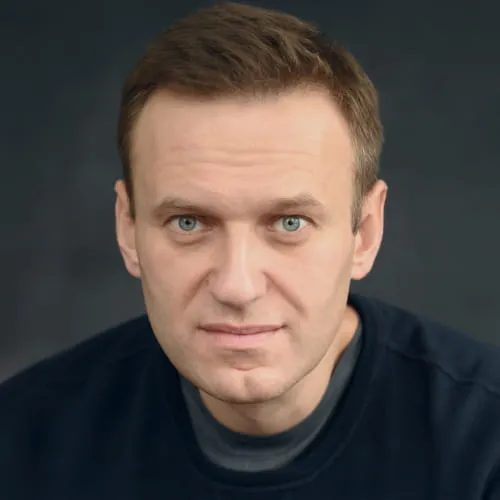
kashin wrote this in Russian Life. Characteristically, it appeared in the "Dramas" section. And, also characteristically for Kashin personally, he couldn’t resist throwing in an insult: he called NAROD "some kind of virtual nationalist organization." Navalny. There is a man named Alexei Navalny — he used to be a party functionary in Yabloko (a Russian liberal political party), then moved on to some virtual nationalist organization, and at the same time hosted political debates in Moscow clubs that were popular for a while — in short, the kind of person who three or four years ago could reasonably have been called a young politician, but now it’s unclear what to call him, because there is no politics left, and the word "youth" quite rightly irritates everyone. Navalny has an interesting hobby — a few months ago he bought several shares in Russia’s largest oil companies, and now, as a minority shareholder, he picks fights with their top management over violations that, apparently, really are numerous in their day-to-day practice. Among the companies in which Navalny is a minority shareholder is Transneft. A few days ago Navalny lost to Transneft in the Moscow Arbitration Court — the reason for the suit was 12.4 billion rubles, according to annual reports, spent by the company on charity in 2006–2007. The plaintiff demanded that Transneft explain what exactly this charity consisted of; representatives of the defendant said the company had the right not to disclose such information, and the court agreed with the defendant. Everyone smiles knowingly, and no one has any particular doubts, but where exactly the money went — no one will ever find out. After all, it’s a commercial secret. I don’t know why Navalny needs these corporate wars. There is surely some unpleasant catch in them; surely Navalny is driven by more than simple-minded love of truth. Maybe behind him loom Transneft’s competitors, the Washington Regional Committee (a sarcastic Russian expression implying U.S. political handlers), and the Freemasons. Anything is possible. But when a state-owned company, for no clear reason, carefully conceals what kind of charity it spent 12 billion rubles on, that raises serious questions, and any hidden agenda becomes completely irrelevant. So where’s the money? Here
People